







I often see businesses struggle to understand their data because they lack a robust ERP analytics framework to interpret it. Without this tool, valuable information remains hidden, preventing leaders from seeing the full picture of their operations.
This disconnect leads to missed opportunities, but implementing modern ERP software transforms raw data into clear, actionable strategies. It bridges the gap between daily transactions and long-term goals, ensuring every decision is backed by evidence.
In this article, I will guide you through everything you need to know to leverage these insights for your company’s growth. Tuklasin kung paano mapahusay ng ERP analytics ang iyong negosyo!
Key Takeaways
|

Table of Contents
What Is ERP Analytics?
ERP analytics is the process of collecting and analyzing data from various system modules to generate strategic business insights. It transforms raw figures into meaningful information that explains not just what happened, but why it occurred.
Executives and department heads rely on this data to monitor performance trends and identify areas for immediate improvement. Operational managers also use these insights to streamline daily workflows and ensure resources are allocated efficiently across the organization.
Why Is ERP Analytics Crucial for Modern Businesses?
Data is a modern company’s most valuable asset, but it holds little value until it is processed into actionable intelligence. This analytics layer is essential for connecting operational details with high-level workforce continuity planning to drive efficiency.
- Unified Data View
It consolidates information from disparate departments into a single source of truth, eliminating data silos. This ensures that every team member bases their decisions on the same accurate and real-time figures. - Data-Driven Culture
Access to analytics fosters a culture where decisions are based on evidence rather than intuition or guesswork. This shift empowers managers to act with confidence and aligns the entire organization toward common goals.
Key Benefits of Implementing ERP Analytics
Adopting this technology is a strategic move that unlocks the full potential of your company’s operational data. The benefits extend across the organization, creating a cycle of efficiency that drives sustainable business growth.
- Accurate Decision-Making
Executives can visualize KPIs in real-time through dashboards to simulate the impact of various business scenarios. This removes guesswork, allowing leaders to allocate resources wisely based on concrete evidence like sales trends. - Optimized Operational Efficiency
The system highlights hidden inefficiencies in daily processes, such as production bottlenecks or waste. Managers can then use these insights to streamline workflows, significantly reducing operational costs and boosting productivity. - Strengthened Supply Chain
Analytics tools enable accurate demand forecasting by analyzing historical sales data to prevent stockouts. This helps companies optimize inventory levels and evaluate supplier performance to ensure timely product delivery. - Enhanced Sales Growth
Sales teams gain a deep understanding of customer purchasing behaviors and segmentation to tailor their strategies. This insight allows for personalized marketing campaigns that drive customer loyalty and increase revenue-related expenses. - Improved Financial Visibility
Finance departments can automate complex reporting and conduct in-depth profitability analysis by product or region. This provides clear cash flow forecasting, ensuring the company maintains sufficient funds for operations and investments.
Types of Analytics within an ERP System
To harness the power of data effectively, it is important to understand the different levels of analytical capabilities available. These categories range from basic reporting to advanced forecasting, each serving a specific strategic purpose.
- Descriptive Analytics (What happened?)
This fundamental type summarizes historical data to provide a clear picture of past events and performance. For example, it generates monthly sales reports that show total revenue per quarter or units sold. - Diagnostic Analytics (Why did it happen?)
This process involves drilling down into data to uncover the root causes behind specific trends or anomalies. If sales drop, it helps determine if the cause was a competitor’s campaign or a supply chain disruption. - Predictive Analytics (What will happen?)
It utilizes statistical algorithms and machine learning to forecast future outcomes based on historical patterns. Companies use this to anticipate product demand for the upcoming season or predict potential equipment failures. - Prescriptive Analytics (What should we do about it?)
This advanced form recommends specific actions to achieve desired outcomes by analyzing various potential scenarios. For instance, it might suggest automatically reordering stock from a specific supplier to meet a predicted surge in demand.
Key Features to Look for in an ERP Analytics Solution
Selecting a system with the right capabilities is a critical decision that determines how effectively you leverage data. Focus on these essential features to ensure your platform is intuitive and technically robust for all users.
- Interactive Dashboards
These tools allow users to visualize complex datasets through dynamic graphs that support drill-down actions. - Custom Report Builder
A drag-and-drop interface enables users to create tailored reports by selecting specific metrics and dimensions. - Built-in BI Integration
The system incorporates business intelligence modules directly into the core platform to ensure seamless data flow. - Real-Time Processing
This feature continuously updates dashboards and reports as commercial transactions occur to reflect current conditions instantly. - AI-Powered Forecasting
Algorithms analyze complex historical patterns and external variables to generate high-precision predictive models. - Mobile Accessibility
A responsive interface or native app allows users to access dashboards and receive alerts from smartphones.
A Guide to Implementing an ERP Analytics Strategy in Your Company
Implementing this strategy involves more than just software; it requires a structured approach involving people and processes. Follow these steps to ensure a successful launch that delivers maximum return on investment for your organization.
- Define Objectives and KPIs
Clearly establish SMART goals, such as reducing inventory costs or increasing retention, before starting. You must derive specific Key Performance Indicators from these objectives to measure your progress accurately. - Identify and Prepare Data
Collaborate with IT to identify necessary data sources and ensure they are clean and consistent. This involves standardizing formats and establishing governance policies to maintain high data integrity across departments. - Select the Right Platform
Evaluate vendors to find a solution that aligns with your technical requirements and business goals. Choose a platform that offers integrated enterprise system analytics and scalability to support your long-term growth. - Train Your Team
Invest in tailored training programs to ensure employees know how to interpret and use the new tools effectively. Fostering a data-driven culture requires teaching staff to trust the system and share insights collaboratively. - Evaluate and Iterate
Conduct monthly reviews to assess progress against your KPIs and gather user feedback for improvements. This continuous iteration ensures the strategy remains aligned with evolving business needs and market dynamics.
Common Challenges in ERP Analytics Adoption and How to Overcome Them
The journey to successful adoption often presents hurdles that can limit the return on your technology investment. Recognizing these obstacles early allows you to develop proactive strategies to navigate them effectively.
- Poor Data Quality
Inaccurate or inconsistent data inputs will inevitably lead to misleading insights and poor decision-making. Conduct a thorough compliance log data and establish strict governance policies to ensure long-term accuracy and integrity. - Lack of Analytical Skills
Employees may lack the necessary skills to interpret complex charts or utilize advanced analytical tools effectively. Address this by providing customized training programs that simplify data analysis for non-technical staff members. - Resistance to Cultural Change
Staff accustomed to intuitive decision-making may feel threatened by or distrustful of a new data-centric system. Leadership must champion the change by clearly communicating benefits and involving employees in the dashboard design process.
HashMicro: The Smart Solution for Your ERP Analytics Needs 
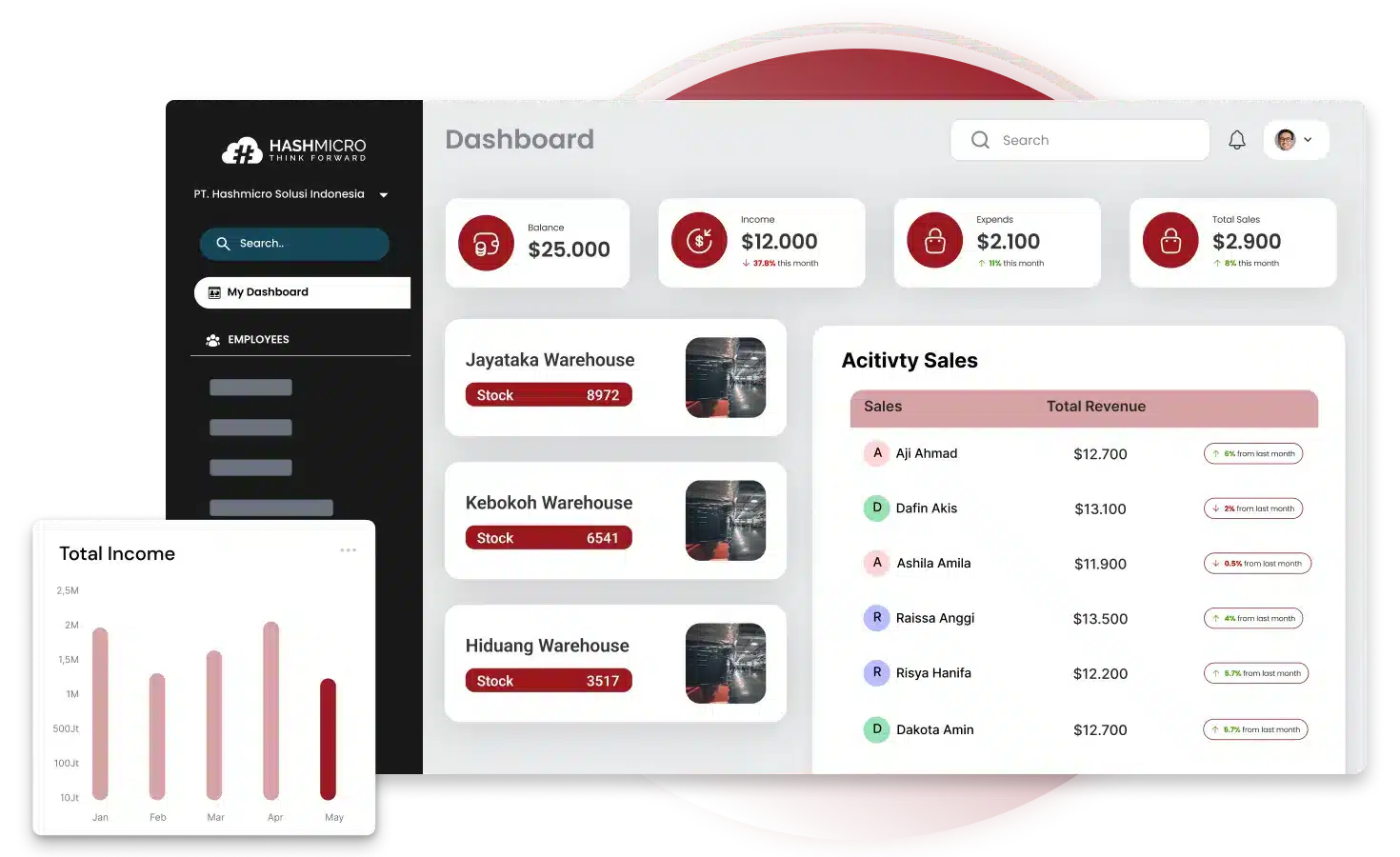
Finding a technology partner that adapts to your unique workflow is vital for building a strong analytical backbone. HashMicro ERP Software offers a comprehensive solution designed to provide deep visibility and scalability for growing businesses.
- Native BI Module
The platform integrates business intelligence directly into the core ERP to unify data sources without third-party tools. - Customizable Dashboards
Users can configure the interface to display specific metrics and visualizations that match their unique role requirements. - Seamless Integration
The system connects data flows across accounting, inventory, and sales modules to ensure information consistency. - Unlimited User License
The licensing model allows an unlimited number of employees to access the system without incurring extra per-user fees.
Discover how HashMicro ERP can turn your data into actionable insights. Start your journey today. Download the pricing guide to find the best plan for your business. Try the free demo and see firsthand how it can optimize your operations and decisions.

Conclusion
ERP analytics has evolved from a simple reporting tool into a strategic engine essential for modern business growth. It transforms raw operational data into predictive insights that empower companies to make smarter decisions at every level.
Utilizing a robust solution like HashMicro ERP Software ensures you have the necessary tools to navigate dynamic markets. This technology embeds intelligence into your operations, enabling you to anticipate challenges and seize opportunities with confidence.
Take the first step toward a more intelligent and efficient operation by seeing the system in action. Sign up for a free demo today to unlock your potential. Pahusayin ang iyong negosyo sa ERP ngayon!
FAQ About ERP Analytics
-
What is the main difference between standard ERP reports and ERP analytics?
Standard ERP reports are retrospective, showing what has happened (e.g., last month’s sales). ERP analytics is forward-looking and dynamic, using interactive tools to answer why something happened, what will happen, and what actions to take.
-
Do I need a data scientist to use ERP analytics?
Not necessarily. Modern solutions like HashMicro are designed with user-friendly, self-service interfaces, allowing business users to explore data. However, for highly complex analyses or custom predictive models, a data analyst can maximize the system’s value.
-
Can ERP analytics be integrated with other business systems besides the ERP?
Yes, many modern platforms offer open APIs for integration. This allows you to combine ERP data with data from other systems like CRM or e-commerce platforms to gain richer, more comprehensive insights.
-
How does ERP analytics help in managing business risks?
ERP analytics helps manage risk by providing early warnings. It can flag declining profit margins, detect potential fraud through anomaly analysis, or predict supplier delays, allowing management to take mitigative action before a risk escalates into a crisis.
-
How quickly can I see results from implementing ERP analytics?
Initial results, such as improved operational visibility, can be seen almost immediately. Deeper strategic benefits, like significant cost optimization, typically take a few months as data accumulates and your team becomes more proficient with the system.
{
“@context”: “https://schema.org”,
“@type”: “FAQPage”,
“mainEntity”: [
{
“@type”: “Question”,
“name”: “What is the main difference between standard ERP reports and ERP analytics?”,
“acceptedAnswer”: {
“@type”: “Answer”,
“text”: “Standard ERP reports are retrospective, showing what has happened (e.g., last month’s sales). ERP analytics is forward-looking and dynamic, using interactive tools to answer why something happened, what will happen, and what actions to take.”
}
},
{
“@type”: “Question”,
“name”: “Do I need a data scientist to use ERP analytics?”,
“acceptedAnswer”: {
“@type”: “Answer”,
“text”: “Not necessarily. Modern solutions like HashMicro are designed with user-friendly, self-service interfaces, allowing business users to explore data. However, for highly complex analyses or custom predictive models, a data analyst can maximize the system’s value.”
}
},
{
“@type”: “Question”,
“name”: “Can ERP analytics be integrated with other business systems besides the ERP?”,
“acceptedAnswer”: {
“@type”: “Answer”,
“text”: “Yes, many modern platforms offer open APIs for integration. This allows you to combine ERP data with data from other systems like CRM or e-commerce platforms to gain richer, more comprehensive insights.”
}
},
{
“@type”: “Question”,
“name”: “How does ERP analytics help in managing business risks?”,
“acceptedAnswer”: {
“@type”: “Answer”,
“text”: “ERP analytics helps manage risk by providing early warnings. It can flag declining profit margins, detect potential fraud through anomaly analysis, or predict supplier delays, allowing management to take mitigative action before a risk escalates into a crisis.”
}
},
{
“@type”: “Question”,
“name”: “How quickly can I see results from implementing ERP analytics?”,
“acceptedAnswer”: {
“@type”: “Answer”,
“text”: “Initial results, such as improved operational visibility, can be seen almost immediately. Deeper strategic benefits, like significant cost optimization, typically take a few months as data accumulates and your team becomes more proficient with the system.”
}
}
]
}