







Have you ever thought about why some businesses thrive while others struggle to keep employees happy? It’s not always about money but something deeper like employee morale. In the Philippines, where work often feels like family, keeping morale high is key to productivity and loyalty.
Picture a workplace where smiles vanish, energy drops and people leave faster than you can hire. Low morale can quietly hurt even the strongest companies. But don’t worry, you can fix this. Dive into this article for easy tips to boost morale, build a great work environment, and bring out the best in your team.
Key Takeaways
|
Table of Contents
What is Employee Morale?

Employee morale is the confidence, satisfaction, and enthusiasm employees feel in their workplace. It directly influences their motivation, engagement, and overall productivity.
When morale is high, employees are more likely to excel, collaborate effectively, and contribute significantly to the company’s goals. Valued and appreciated employees tend to stay loyal, reducing turnover and enhancing workplace harmony.
Why is Employee Morale Important?
Employee morale plays a crucial role in productivity and overall performance within an organization. High morale motivates employees to go above and beyond, ensuring quality output and meeting targets efficiently.
Additionally, strong morale positively impacts retention and workplace culture. Employees are more likely to stay in a supportive environment where their contributions are recognized, promoting long term business success.
Factors Affecting Employee Morale
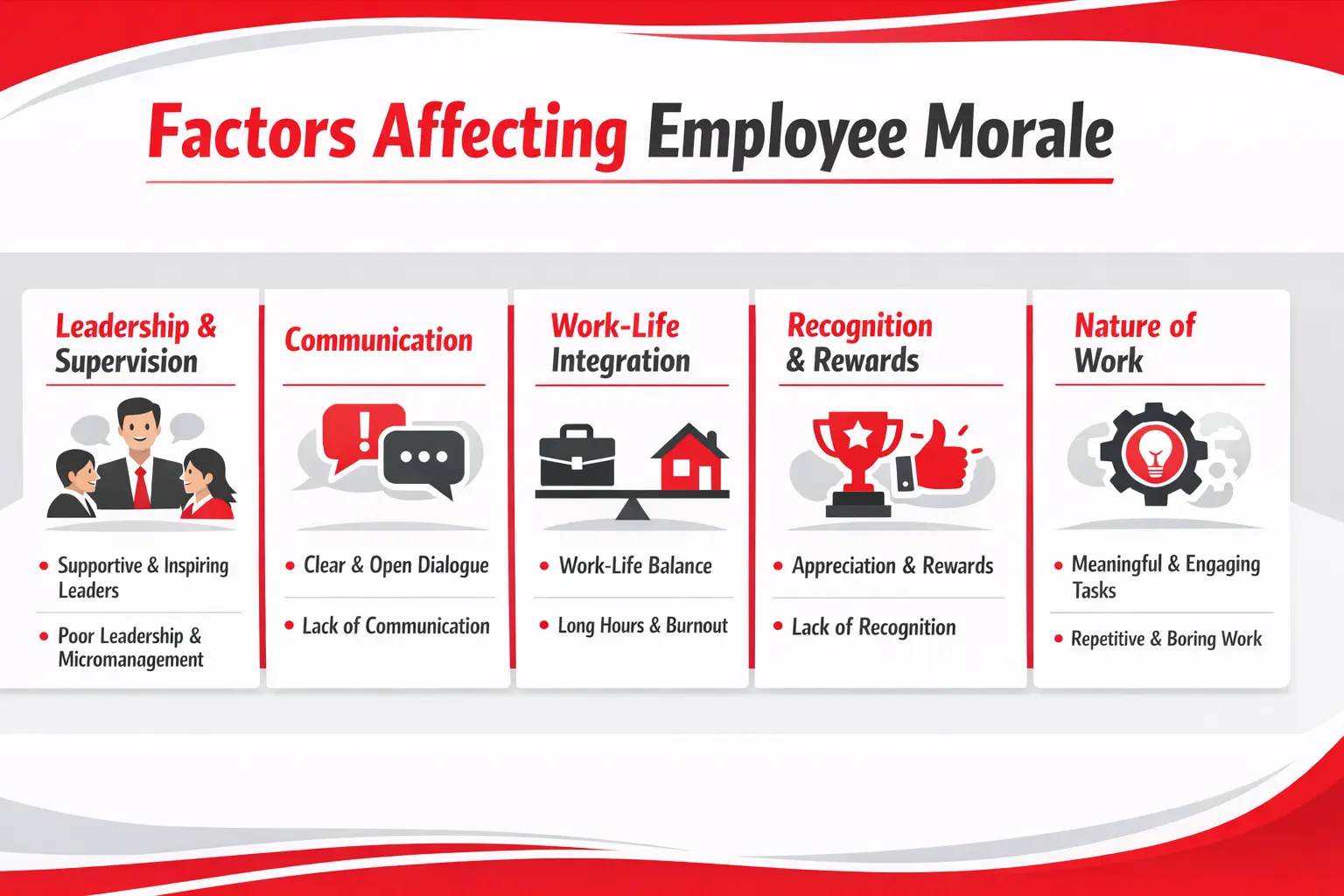
There are a lot of things that could affect the morale in your office. Knowing about them would be a great help in maintaining order and raising the morale of your employees. Some of them are:
1. Leadership and Supervision
Effective leadership significantly influences employee morale by providing direction, guidance, and support. Managers who are approachable and empathetic create a sense of trust and motivation within their teams.
Poor leadership, on the other hand, can result in frustration and disengagement. Employees thrive under leaders who inspire confidence and actively address their concerns.
2. Communication
Clear and open communication ensures that employees feel informed and included in organizational decisions. Regular updates and feedback promote transparency and prevent misunderstandings.
Conversely, a lack of communication can lead to confusion and dissatisfaction. Encouraging two way communication builds trust and improves relationships between teams and management.
3. Work Life Integration
Balancing professional and personal life is essential for maintaining employee satisfaction and productivity. Companies that offer flexibility and support create a positive work environment.
Overworking employees without addressing their need for balance can lead to burnout. Providing flexible schedules or remote work options boosts morale and reduces stress.
4. Recognition and Rewards
Acknowledging employee contributions significantly enhances morale by making individuals feel appreciated and valued. Simple gestures like public recognition or performance bonuses go a long way.
A lack of recognition can make employees feel overlooked and demotivated. Consistent rewards and appreciation foster a sense of belonging and accomplishment.
5. Nature of Work
The type of work employees do influences their level of satisfaction and motivation. Roles that align with their skills and interests boost morale and productivity.
Monotonous or overly challenging tasks without proper support can negatively affect morale. Ensuring meaningful work and opportunities for growth keeps employees engaged.
How to Measure Employee Morale
Measuring employee morale is essential to understanding how employees feel about their work environment. It will help your business address issues and create a positive atmosphere. Here are three effective ways to measure employee morale and identify areas for improvement:
- Employee Surveys: Surveys gather insights into how employees feel about their roles, workplace, and overall satisfaction. Anonymous surveys ensure honest feedback and help businesses pinpoint issues that may be affecting morale.
- One on One Meetings: Personalized discussions with employees allow managers to address specific concerns and understand individual needs. These meetings build trust and open communication, showing employees their opinions are valued.
- Productivity and Absenteeism Metrics: Tracking performance and attendance trends provide indirect insights into employee morale. High absenteeism or declining productivity often indicates low morale.
Measuring employee morale through these methods fosters a better understanding of employee needs. By taking action based on these insights, businesses can create a more motivated and engaged workforce.
Effective Strategies to Boost Employee Morale

Now that we’ve discussed most of the things around employee morale, let’s learn about the ways we can improve the morale of employees in your business. Some of the ways you can implement in your business are:
1. Build Strong Leadership and Relationships
Encourage managers to be supportive, approachable, and empathetic toward their teams. Strong leadership inspires trust and motivation.
Provide leadership training to help managers build better relationships with employees. Positive leadership fosters a collaborative environment.
2. Celebrate Achievements Regularly
Recognizing accomplishments, both big and small, boosts employee confidence and motivation. Celebrations foster a sense of pride.
Use rewards, shoutouts, or team events to highlight contributions. Acknowledging success creates a culture of appreciation.
3. Prioritize Mental Health and Wellness
Offer mental health programs and resources to support employees in managing stress and maintaining balance. Well being drives productivity.
Workshops, counseling, or wellness initiatives show that the organization values its employees’ overall health. This builds loyalty and satisfaction.
4. Foster Team Connectivity
Organize team building activities to strengthen relationships and encourage collaboration. Stronger teams lead to better workplace dynamics.
Whether through virtual meetups or in person events, promoting teamwork builds trust and improves morale across departments.
5. Provide Growth Opportunities
Investing in employee training and development programs enhances skills and career growth. Employees value opportunities to learn.
Providing clear career paths and development plans motivates employees to perform better. It also helps retain top talent.
How to Create a Positive Workplace
Building a collaborative and inclusive work environment encourages employees to share ideas and contribute openly. A positive atmosphere fosters innovation and creativity.
An HRM software can support these efforts by simplifying team communication and providing tools for effective feedback management. It allows managers to track employee engagement, recognize contributions, and respond to concerns quickly, fostering a sense of value and connection.
Encouraging feedback and continuous improvement demonstrates a commitment to employee satisfaction. This approach enhances trust, strengthens relationships, and ensures long-term success.
Conclusion
Boosting employee morale ultimately comes down to creating an environment where people feel genuinely valued, supported, and motivated to contribute. Leadership quality, open communication, recognition, and meaningful work are the pillars that sustain it over time.
For businesses looking for a structured starting point, exploring the best HR software options available today can help organizations align tools with the people first strategies that keep morale consistently high.
Table of Contents
Frequently Asked Questions
-
Why does employee morale matter?
Morale is the overall confidence, satisfaction, and enthusiasm employees feel at work. High morale motivates employees to perform well, collaborate effectively, and stay loyal to the company.
-
What influences employee morale?
Employee morale is influenced by leadership, communication, recognition, work life balance, and meaningful job roles. Addressing these factors creates a positive environment that boosts satisfaction and productivity.
-
Why does employee morale matter?
Employee morale directly impacts productivity, retention, and workplace culture. Businesses with high morale benefit from engaged teams and sustained success.