







When employees feel fairly paid and properly recognized, they tend to stay longer, work harder, and contribute more meaningfully to the organization. That dynamic doesn’t happen by accident it’s the result of deliberate, structured decisions about how a company designs and manages its compensation programs.
This article breaks down what compensation management is, the types of rewards involved, and how organizations determine what to pay their employees including the key factors that shape fair, competitive pay structures.
Key Takeaways
|
What is Compensation?
Compensation is the total package of rewards employees receive in exchange for their work covering salaries, benefits, bonuses, and recognition. It serves as both a practical transaction and a signal of how much an organization values its people, influencing everything from daily motivation to long-term loyalty.
When structured thoughtfully, compensation also plays a direct role in attracting and retaining skilled professionals, reducing turnover costs, and building a workplace culture where people feel genuinely invested in their roles.
What is Compensation Management?

Compensation management is the process of planning, organizing, and overseeing employee pay structures and benefits. It includes salaries, bonuses, benefits packages, and performance incentives to keep employees motivated and fairly rewarded.
Unlike payroll, which focuses on processing salaries and ensuring timely payments, compensation management looks at the bigger picture. It aligns employee rewards with business goals, evaluates market trends, and ensures pay equity across roles while promoting fairness and competitiveness.
Types of Compensation
Compensation comes in different forms, each designed to meet employee needs and motivate performance. Understanding these types helps businesses create attractive packages that boost job satisfaction and loyalty.
There are three main types of compensation that companies offer to their employees:
| Types | Description |
|---|---|
| Direct Compensation | Direct compensation refers to the actual money employees receive, like salaries, hourly wages, commissions, and bonuses. |
| Indirect Compensation | Includes non-cash benefits such as health insurance, retirement plans, housing allowances, and other perks. |
| Non-Monetary Compensation | Focuses on rewards that don’t involve money, like employee recognition, professional development, and flexible work options. |
Understanding these types of compensation allows businesses to design comprehensive packages that meet diverse employee needs. A balanced approach can improve employee motivation, retention, and overall job satisfaction.
How is Compensation Determined?
Determining compensation isn’t just about setting a number on a paycheck. It involves analyzing various factors to ensure fairness, competitiveness, and motivation. Let’s explore the key elements that influence how companies decide what to pay their employees:
1. Factors Affecting Compensation Decisions
Several factors influence compensation decisions, including job roles, industry standards, and company budget. The cost of living and employee performance also play significant roles in determining fair pay. Companies must balance these elements to ensure competitive and motivating compensation packages.
2. Market Benchmarking
Market benchmarking helps businesses compare their compensation rates with industry standards to stay competitive. It involves analyzing similar roles in other companies to identify pay trends and set attractive salary ranges. This process ensures that employees feel valued and companies can attract top talent.
3. Job Evaluation
Job evaluation assesses the relative worth of different positions within an organization. It focuses on responsibilities, required skills, and the impact of each role on business goals. This helps establish fair and consistent compensation structures across all levels of the company.
4. Performance-Based Compensation
Performance-based compensation rewards employees based on their achievements and contributions to company success. This approach includes bonuses, commissions, and merit-based raises to motivate high performance. It encourages employees to meet targets, fostering growth and productivity in the workplace.
Benefits of Effective Compensation Management

Compensation management goes beyond just paying employees; it shapes how they feel about their work and value. Effective strategies can inspire employees, foster loyalty, and significantly impact productivity across the organization.
Here are the key benefits of having an effective compensation management system in place:
- Employee Motivation and Retention: Effective compensation strategies boost employee motivation by recognizing and rewarding their hard work. Competitive pay and rewards create a positive work environment that fosters loyalty and dedication.
- Enhancing Productivity and Engagement: When employees feel fairly compensated, they become more engaged in their roles and deliver better results. Engaged employees are more likely to go the extra mile for the company.
- Promoting Fairness and Transparency: Transparent compensation practices promote trust and fairness within the organization, creating a healthy work culture. When employees know how decisions are made, they feel respected and secure.
By focusing on these key benefits, businesses can create a work environment that motivates, engages, and retains top talent. A well-managed compensation system leads to happier employees, improved performance, and sustainable business growth.
Challenges in Compensation Management
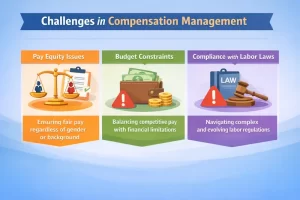 Compensation management isn’t without its hurdles. Businesses face various challenges that can impact fairness, employee satisfaction, and legal compliance. Understanding these challenges is key to building a strategy that supports both the organization and its workforce.
These challenges include:
- Pay Equity Issues: Ensuring fair compensation regardless of gender, race, or background is a major concern. Inequities can lead to dissatisfaction, legal risks, and harm to the company’s reputation, requiring regular audits and transparent policies to maintain fairness.
- Budget Constraints: Businesses often struggle to balance competitive compensation with limited financial resources. Effective planning helps allocate resources wisely, ensuring employee expectations are met without straining the company’s budget.
- Compliance with Labor Laws: Staying updated on ever changing labor law regulations ensures fair treatment of employees and avoids legal penalties. Regular audits, policy updates, and staff training are essential to maintaining compliance and protecting the organization.
By identifying and addressing these challenges, businesses can foster a fair, motivating, and legally sound compensation environment. This proactive approach not only supports employee satisfaction but also enhances the company’s long-term success.
The Role of HR in Compensation Management
HR plays a crucial role in compensation management, acting as the backbone of fair and effective pay structures. They conduct pay equity audits to identify and address wage gaps, promoting fairness and boosting employee satisfaction while minimizing legal risks.
Beyond compliance, HR regularly reviews compensation strategies to ensure competitiveness and fairness in the market. They rely heavily on a Human Resource Management (HRM) system to streamline these processes, making data-driven decisions easier and more accurate.
With an HRM system, HR professionals can manage compensation efficiently, reduce errors, and maintain transparency. Their strategic role, supported by advanced tools, ensures that organizations retain top talent, foster employee satisfaction, and stay legally compliant in an ever-evolving business environment.
Conclusion
Compensation management is the strategic process of planning and overseeing how employees are paid, rewarded, and recognized within an organization. When done well, it creates the conditions for stronger performance, lower turnover, and a workplace where people feel genuinely valued all of which contribute meaningfully to long-term business growth.
For organizations ready to move beyond guesswork and build a more structured approach to paying their people, exploring the available options is a practical starting point. A look at the top HRIS and payroll management tools can help teams identify software that matches their compensation goals and workforce size
FAQ Around Compensation Management
-
How important is performance and compensation management in a firm?
Performance and compensation management are vital for motivating employees and aligning their goals with business success. They help retain top talent, boost productivity, and ensure fair rewards based on performance.
-
What are the 3 P’s of compensation?
The 3 P’s of compensation are Pay for Position, Pay for Person, and Pay for Performance. They focus on rewarding based on job roles, individual skills, and performance outcomes to ensure fairness.
-
What are the 3 C’s of team compensation?
The 3 C’s of team compensation are Clarity, Consistency, and Communication. They ensure transparent, fair, and well-communicated compensation strategies that promote trust and team motivation.