














Have you ever faced production delays because materials arrived late or inventory ran out unexpectedly? In today’s fast-paced manufacturing environment, managing raw materials and schedules is increasingly complex. MRP Software helps manufacturers plan accurately and avoid costly disruptions.
According to a case study, a mid‑sized manufacturing firm implemented an MRP system and achieved a 30% reduction in stockouts after automating inventory and production scheduling.
In this article, we will explores the top MRP software recommendations, research insights, and practical tips to help manufacturers choose the right system. Ready to see it in action?
Key Takeaways
Material Requirements Planning is a digital tool that assists companies in managing procurement, manufacturing schedules, and inventories.
Modern manufacturing relies heavily on MRP (Material Requirements Planning) software, which helps business operations by facilitating effective procurement, optimizing inventory management, and streamlining production.
Businesses can improve customer connections by selecting the appropriate MRP software.
HashMicro ERP System already integrated with the manufacturing system, helps you gain real-time and accurate data to make important business decisions.
Quick Overview of Best MRP Software





Best Because
Best for small to mid-size manufacturers needing affordable, easy cloud MRP
Best Because
Best for job shops requiring quoting, scheduling, and shop-floor management
8 Best MRP Software
Businesses can improve customer connections by selecting the appropriate MRP software. The 8 best MRP solutions are as follows:
1. HashMicro
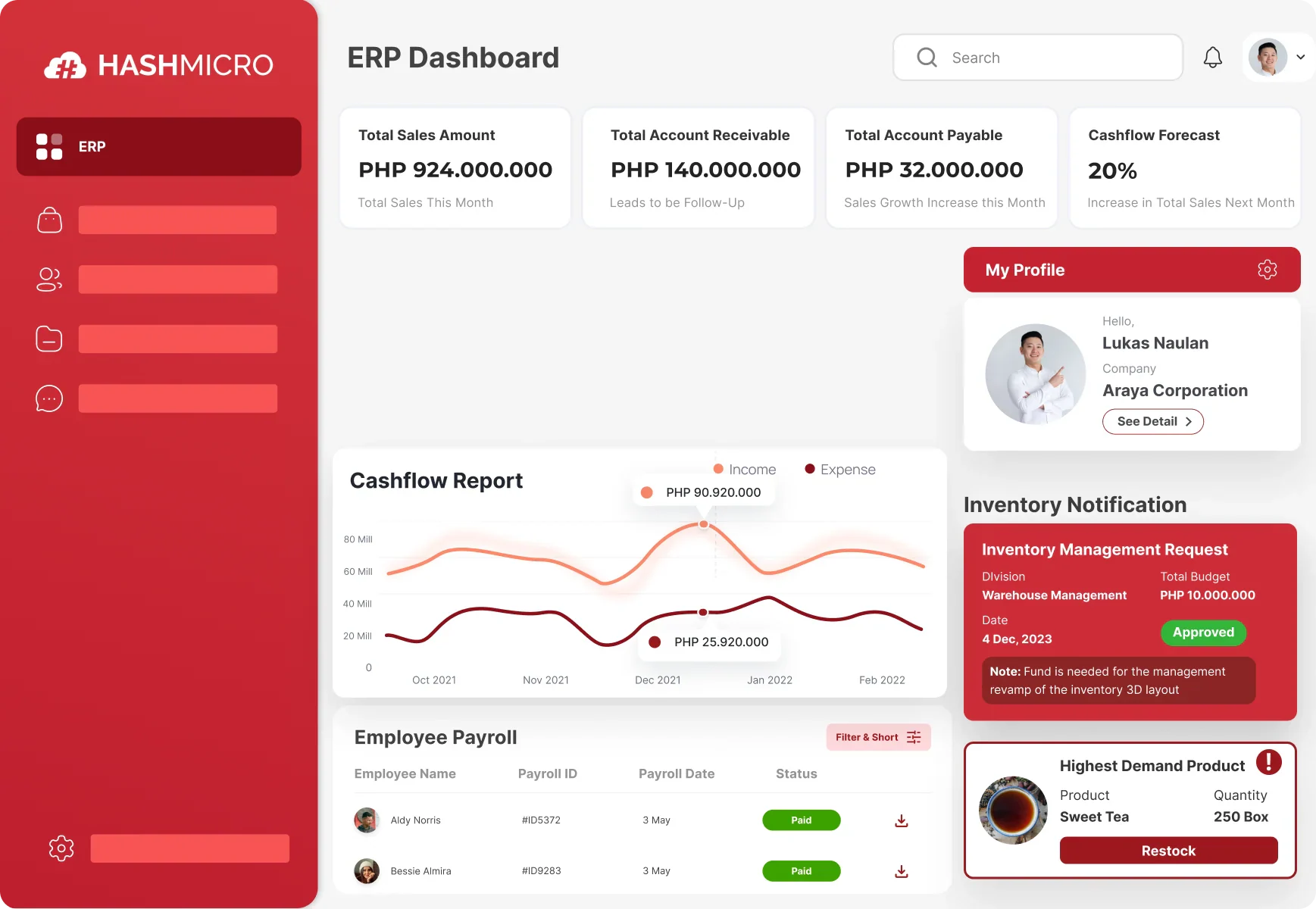
HashMicro ERP Software, which includes MRP software, is a flexible web-based solution for companies in various sectors, such as manufacturing, consultancy, real estate, and more. It makes things easier and guarantees client data is always correct and available.
HashMicro’s seamless integration with other crucial business elements, such as inventory, accounting, and procurement, makes it unique. You can swiftly optimize your company’s end-to-end processes with some of the features and pros-cons listed below:
Key features:
- Kiosk Mode: This feature helps the company oversee the latest updates on each work order from each work centre.
- Manufacturing production scheduling: HashMicro software allows companies to plan production schedules based on demand forecasts based on demand history.
- Forecasting based on demand history: Forecast sales and compare them with actual results, examining market trends and historical data.
- Secret recipe / BoM: Create secret recipes and set them so users can access or create secret BoMs to maintain the confidentiality of certain product formulations or production processes and ensure that authorised parties only access sensitive information.
- Manufacturing requisition planning: Ensures the availability of raw materials and necessary resources, optimizes production processes with better planning, and reduces the risk of raw material shortages and production disruptions.
- Made-to-order completion forecast: A feature to predict the completion time of orders created based on orders from Sales Orders, using historical data and real-time information from the production process.
| Pros | Cons |
|---|---|
|
|
Wanna see how HashMicro improve your business efficiency?

2. Odoo
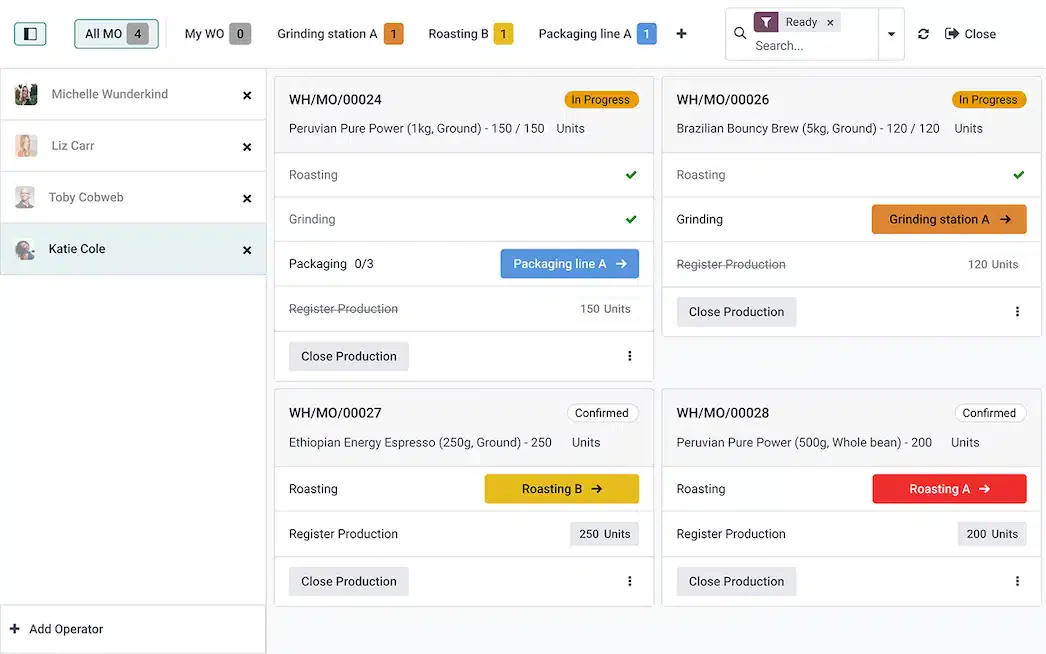
A cloud-based ERP solution with a highly modular design, Odoo is a flexible option for manufacturers who need more flexibility in their business administration. With a vast array of modules and an open-source design that permits considerable modification, Odoo helps businesses adapt the system to various operational needs.
Key features:
- Production planning & scheduling
- Work order & routing management
- Quality control & maintenance
- Integration with other Odoo modules
| Pros | Cons |
|---|---|
|
|
3. Katana
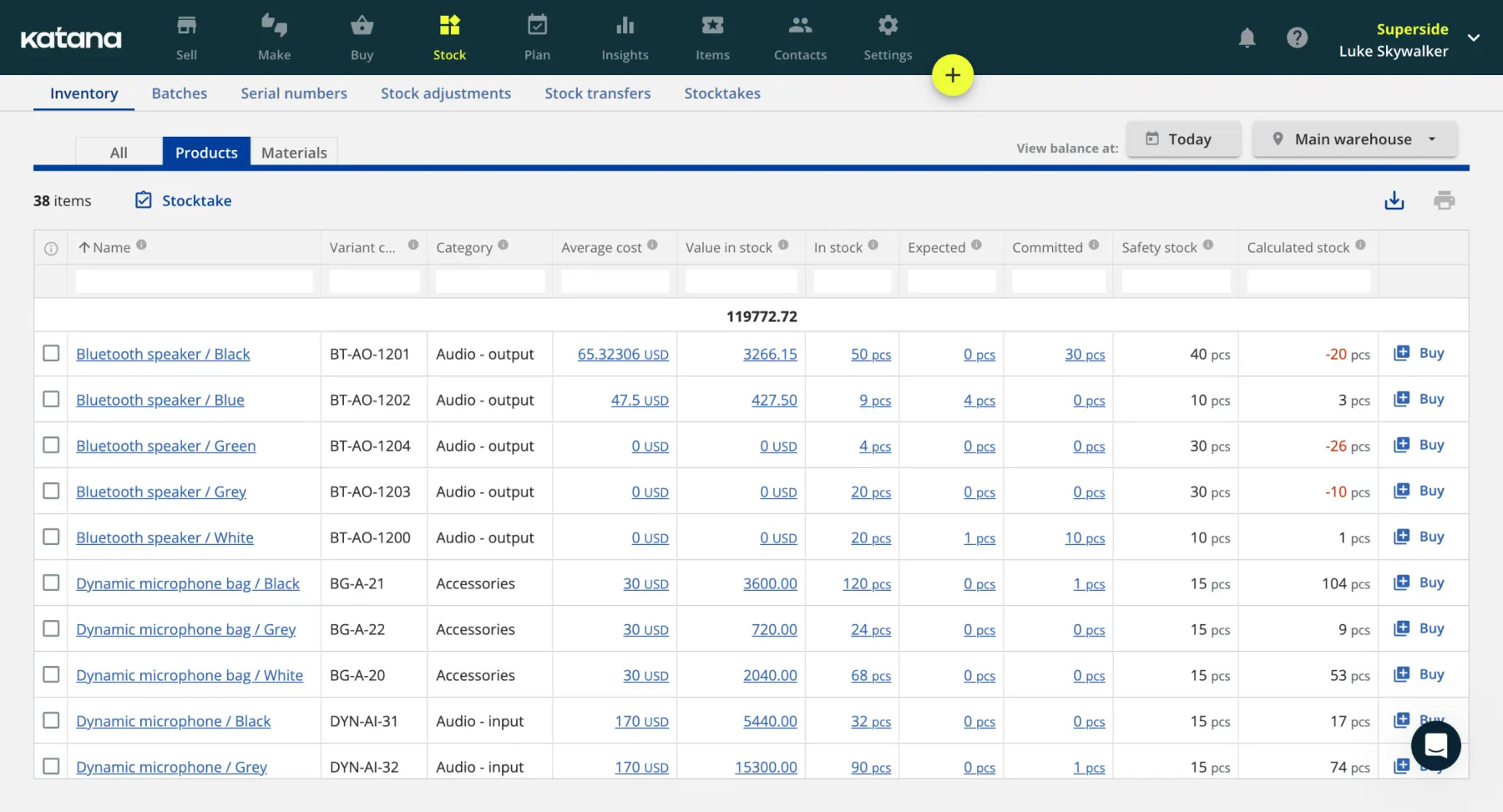
Katana is a cloud-based production and inventory management platform that offers simple and necessary features for manufacturing workflows and smaller stocks. It is a traceability and stock management system that helps businesses with less complex production setups maintain production schedules and workflows.
Key features:
- Sales & order management
- Purchase & supplier management
- Seamless integrations
- Smart manufacturing & production planning
| Pros | Cons |
|---|---|
|
|
4. JobBoss²
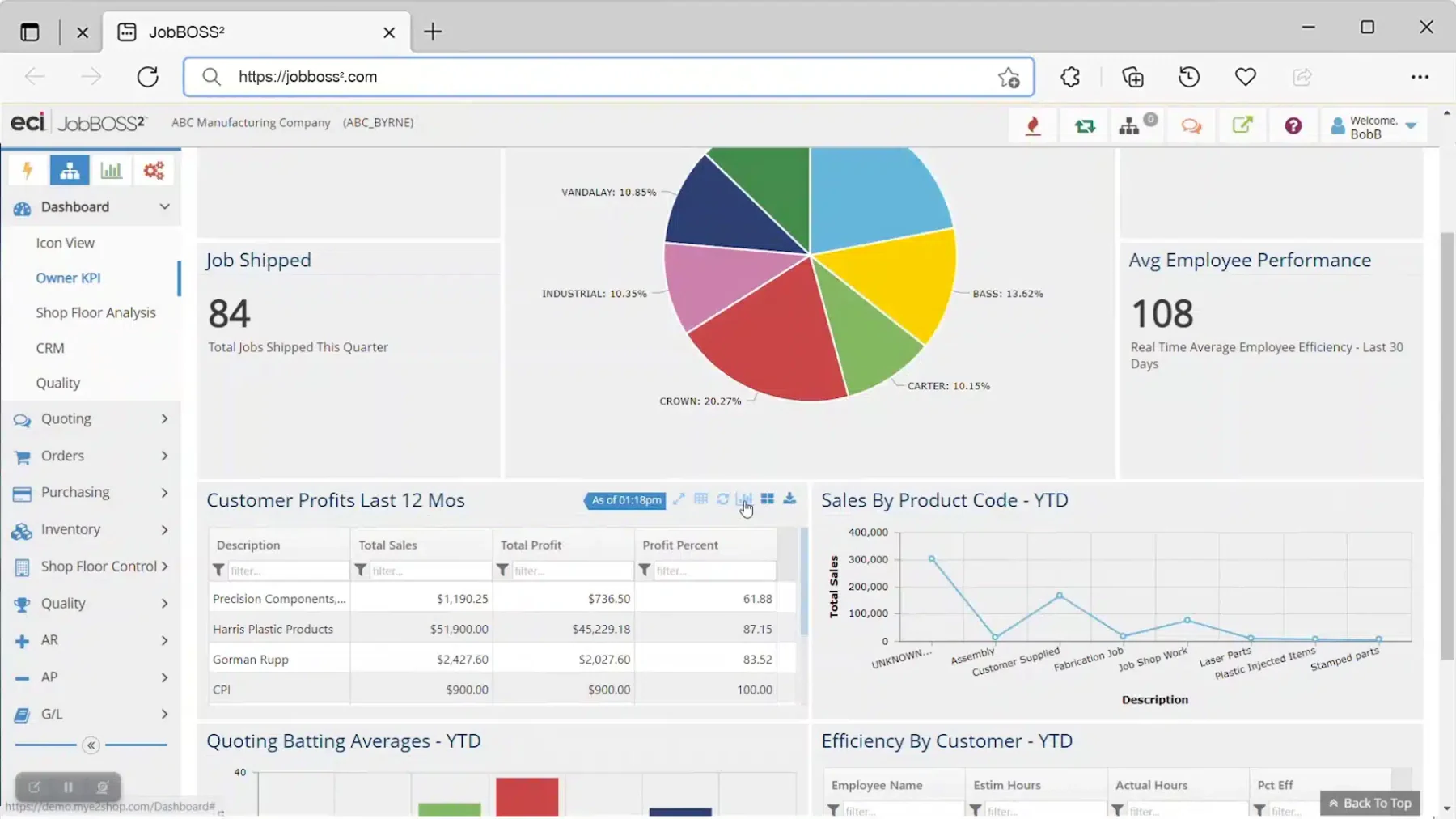
A manufacturing system called JobBoss² is devoted to job shops and shop administration. For medium-sized companies dealing with specialized workflows or short-run assignments, JobBoss² is an excellent choice because of its capabilities that simplify scheduling, quoting, and enhanced shop floor control.
Key features:
- Job tracking & Scheduling
- Inventory & material management
- Quoting & estimating
- Integration with accounting & ERP
| Pros | Cons |
|---|---|
|
|
5. Rootstock
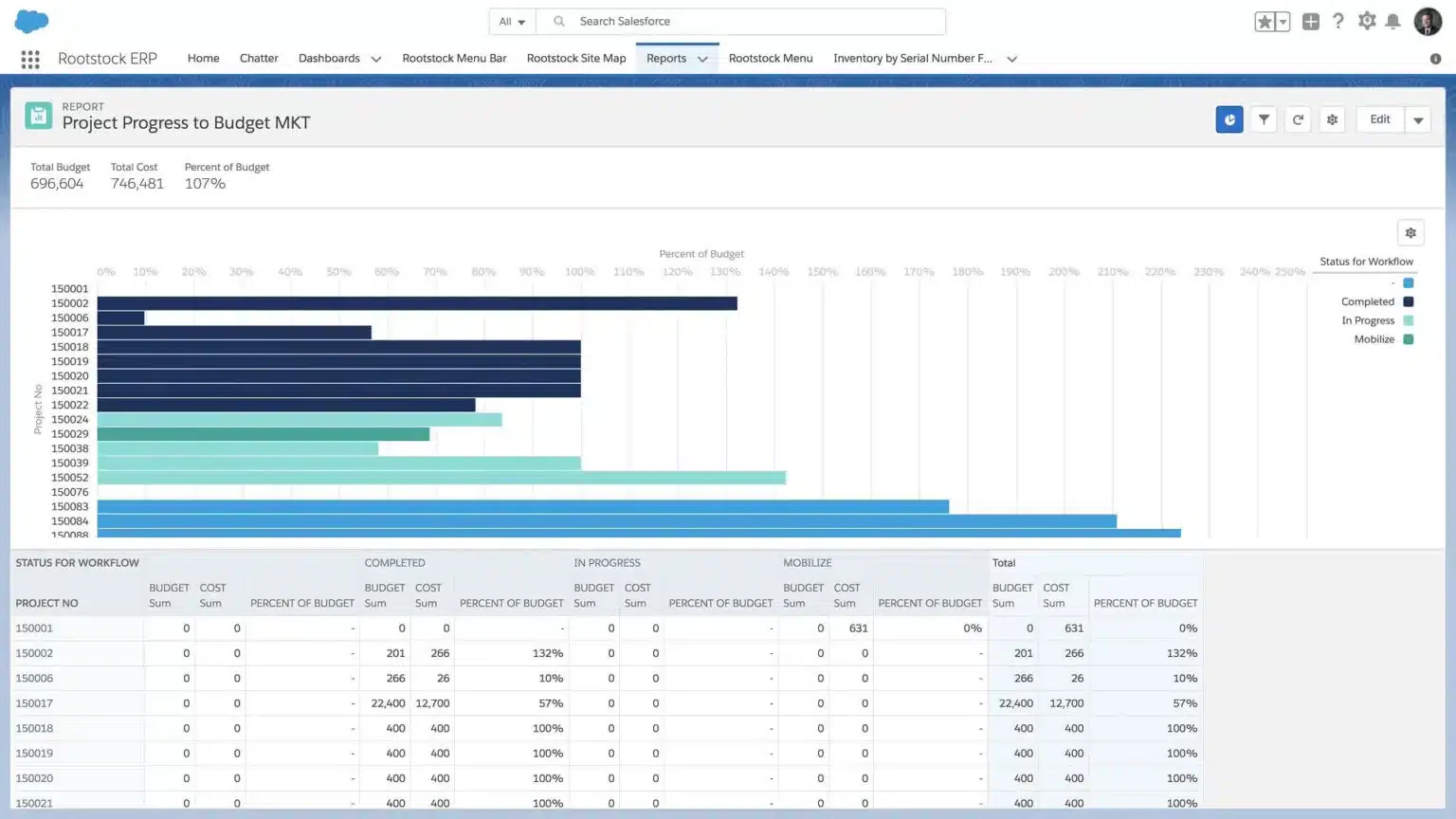
Rootstock is a cloud-based MRP system for supply chain companies, manufacturers, and distributors. Constructed on the Salesforce platform, it suits manufacturers needing a more customer-focused approach because it extensively interacts with Salesforce’s CRM and business operations.
Key features:
- Demand-driven material planning
- Work order & production management
- Inventory & warehouse management
- Integration with Salesforce CRM
| Pros | Cons |
|---|---|
|
|
6. MRPeasy
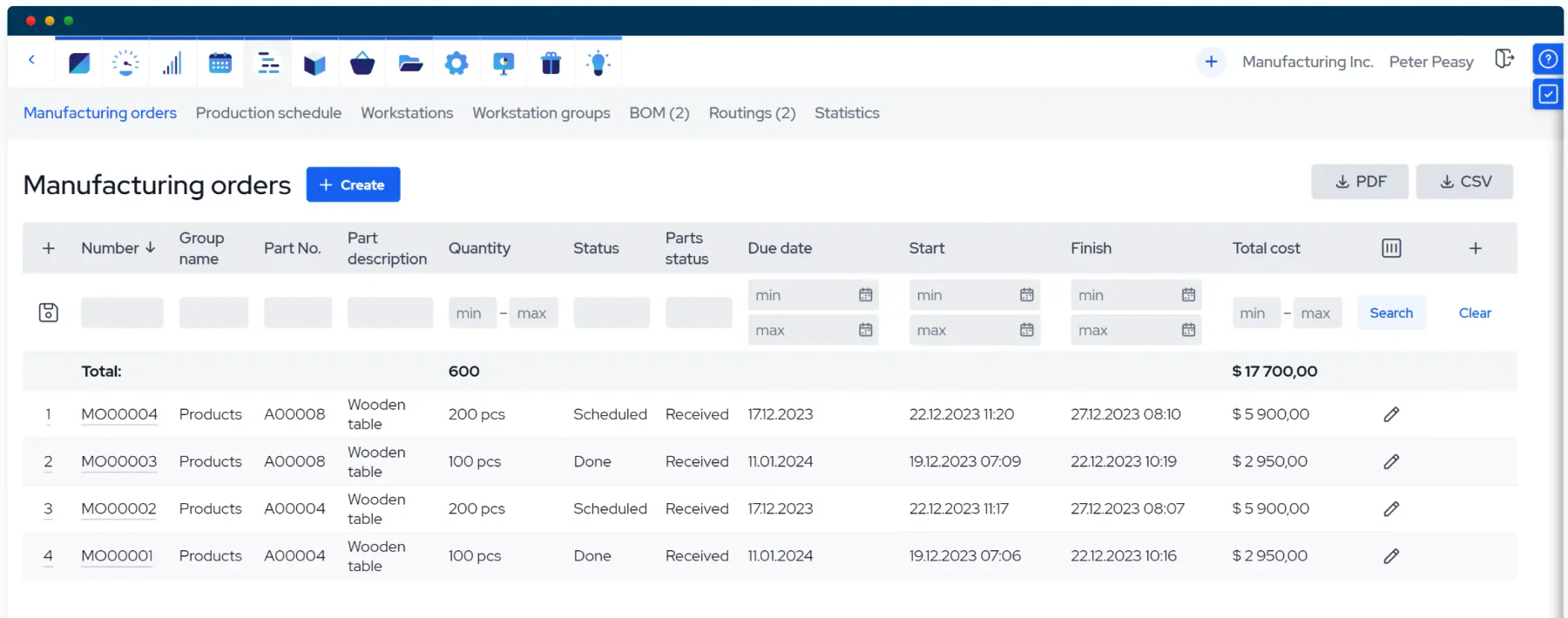
MRPeasy is a robust cloud-based MRP/ERP system made especially for small and expanding businesses. It combines three qualities that small companies love most: scalability, convenience of use, and a superb price-to-performance ratio. It also offers strong manufacturing planning and inventory management features.
Key features:
- Inventory & material management
- Work order & job tracking
- Quality control & compliance
- Seamless Integrations
| Pros | Cons |
|---|---|
|
|
7. SAP Business One
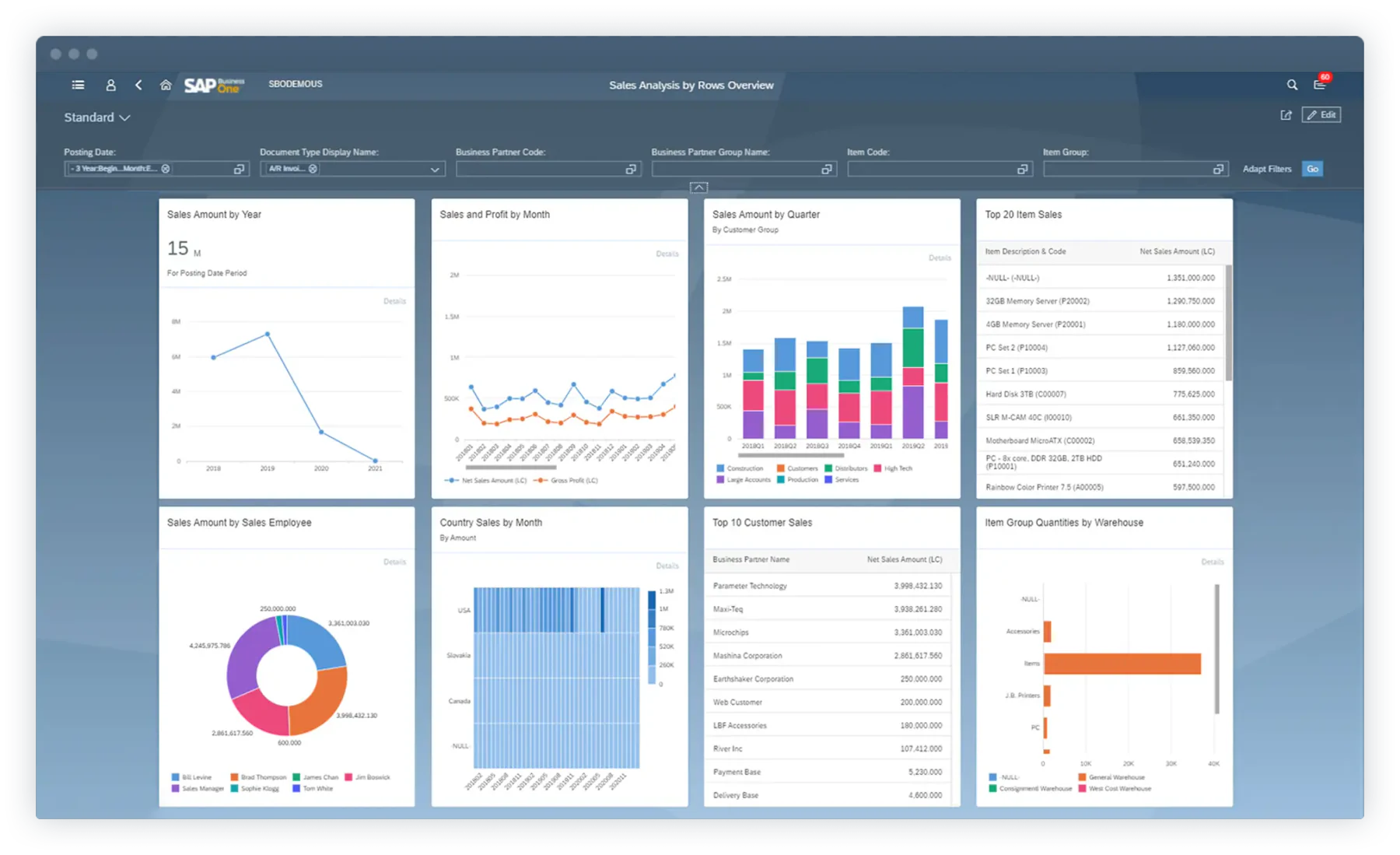
SAP Business One is a good option for businesses that wish to trade the ease of cloud computing for the added security of on-premise software. Because of its on-premise deployment option, Business One is a solid alternative for organizations that value data protection and control, even though it also offers a cloud-based service.
Key features:
- Procurement & supplier management
- Reporting & business analytics
- Sales & customer order integration
- Bill of Materials (BOM) & production management
| Pros | Cons |
|---|---|
|
|
8. SYSPRO
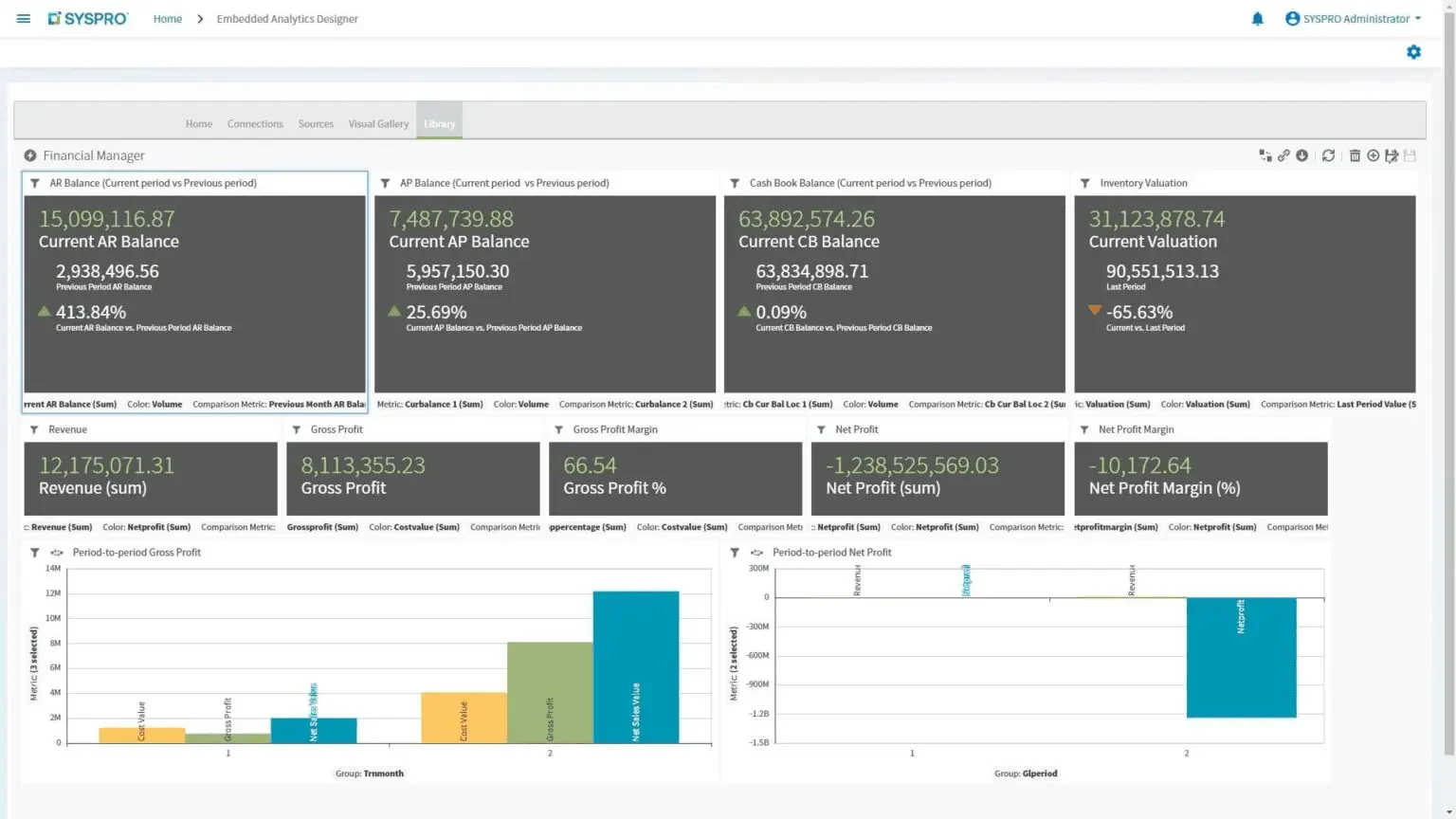
With an emphasis on engineer-to-order processes, SYSPRO is a complete solution that supports a variety of production scenarios. Because of its adaptable and modular interface, SYSPRO is ideal for custom manufacturing since it offers sophisticated scheduling, comprehensive costing features, and good project and quality management tools.
Key features:
- Work order & job costing
- Sales & customer order management
- Reporting & Business Intelligence (BI)
- Financial & cost management
| Pros | Cons |
|---|---|
|
|
Full Comparisson of Best MRP Software
| Brand | Best for | Pros | Cons |
|---|---|---|---|
| 1) HashMicro | Best for companies needing scalable, integrated ERP and MRP with flexible deployment | 1) Transparent pricing 2) Flexible on any device 3) Unlimited users 4) Easy integration with modules 5) Scalable growth options 6) Multiple deployment choices | 1) Advanced features may feel complex for smaller businesses 2) Implementation timelines vary by requirements |
| 2) Odoo | Best for manufacturers seeking modular, customizable open-source ERP | 1) User-friendly interface 2) Fully integrated modules 3) Cloud-based and open-source | 1) Customization often required 2) Steep learning curve 3) Limited advanced features |
| 3) Katana | Best for small makers needing simple production and inventory control | 1) Quick setup 2) Scalable pricing 3) Cloud-based accessibility | 1) Limited advanced MRP tools 2) No built-in HR/payroll 3) Limited offline access |
| 4) JobBoss² | Best for job shops requiring quoting, scheduling, and shop-floor management | 1) Built for custom manufacturers 2) Integrated quoting and accounting 3) Cloud-based and scalable | 1) Not ideal for large-scale manufacturing 2) Customization needed 3) Learning curve for new users |
| 5) Rootstock | Best for manufacturers wanting Salesforce-based MRP with strong supply chain planning | 1) Built on Salesforce 2) Strong supply chain planning 3) Advanced customization options | 1) Expensive for small businesses 2) Requires Salesforce knowledge 3) Not suited for process manufacturing |
| 6) MRPeasy | Best for small to mid-size manufacturers needing affordable, easy cloud MRP | 1) Affordable cloud solution 2) Ideal for small to mid-sized businesses 3) Quick setup and implementation | 1) Limited for large enterprises 2) Basic automation 3) Limited CRM and accounting functions |
| 7) SAP Business One | Best for businesses needing robust on-premise or cloud ERP with strong production modules | 1) Real-time planning 2) Scalable ERP 3) Global support and multi-currency | 1) High cost for small firms 2) Overkill for simple manufacturing 3) Complex implementation and customization |
| 8) SYSPRO | Best for engineer-to-order and complex manufacturing with deep costing and scheduling tools | 1) Comprehensive MRP/ERP coverage 2) Flexible and scalable 3) Industry-specific customization | 1) Complex implementation 2) Requires customization for workflows 3) Higher costs for small businesses |
What is MRP Software?
MRP (Material Requirements Planning) software is a tool that helps manage procurement, production schedules, and inventory. By tracking materials, forecasting demand, and automating orders, MRP system ensures efficient operations.
MRP software helps manufacturers and distributors plan and organize production activities, handle purchases and client orders, optimize shop floors, book inventory into work orders, and more. MRP software is not limited to intricate industrial configurations.
Many modern options are adaptable and scalable to accommodate various requirements. Manufacturing software can be very helpful for companies that add value to a product or item, from repackaging or bundling to building complex machinery.
Benefits of MRP Software
To understand why MRP software is widely adopted in modern manufacturing, it’s important to look at the practical advantages it delivers across procurement, inventory, and production planning. Below are the key benefits that make MRP software essential for improving operational efficiency and output.
-
Reduced inventory costs: Helps prevent overstocking and stockouts by accurately planning material requirements based on demand and production schedules.
-
Improved production efficiency: Streamlines production planning by aligning materials, labor, and machine availability, reducing delays and idle time.
-
Optimized procurement processes: Supports timely purchasing of raw materials, ensuring suppliers are coordinated with production needs.
-
Better supply chain coordination: Enhances visibility across inventory, production, and procurement for smoother supply chain management.
-
Data-driven decision making: Provides real-time data and reports that support smarter planning and faster operational decisions.
-
ERP integration for end-to-end control: ERP MRP software connects inventory, production, accounting, and procurement into one unified system.
Without MRP software, manufacturers risk poor inventory control, production bottlenecks, and higher operational costs that limit scalability and competitiveness.
How to Choose the Best MRP Software for Philippine Manufacturers

To experience the benefits of manufacturing software, ensuring that an MRP (Material Requirements Planning) system satisfies your production and inventory management requirements is essential. The primary attributes and factors listed below could help you make the decision:
- Integration with other systems: The MRP system should easily integrate with supply chain management, accounting, CRM, and ERP (enterprise resource planning) systems, guaranteeing seamless data transfer across departments.
- Production planning and scheduling: Optimizes production processes through staff, machine, and job scheduling and guarantees no delays or resource conflicts during manufacturing.
- Procurement and supplier management: This department assures timely raw material acquisition, tracks supplier performance, and automates purchase orders. It also helps cut lead times and negotiate better prices with suppliers.
- Scalability and flexibility: The system should accommodate growing business needs. As production grows, look for cloud-based solutions and modular extensions that enable adding new features.
- Cost & Return on Investment (ROI): Examine up-front expenditures, license fees, and maintenance charges. The system should provide long-term benefits through waste reduction, increased productivity, and operational simplification.
ERP vs. MRP Systems
Enterprise resource planning systems, or ERPs, are comprehensive software programs that integrate the whole company into a unified digital ecosystem. The following table compares the differences between ERP vs MRP software:
| Features | MRP | ERP |
|---|---|---|
| Scope | Mostly utilized for production scheduling and material planning in manufacturing. | Covers a variety of corporate operations, including supply chain, sales, finance, and human resources. |
| Primary Function | Ensures that production-related items are available while maximizing inventory. | Controls all aspects of company operations, such as customer service, procurement, finance, and human resources. |
| User | Primarily manufacturing companies. | Used by companies in various sectors, including logistics, healthcare, and retail. |
| Cost | Usually lower since it emphasizes inventory and production control. | Higher as a result of the complexity and larger functionality. |
| Modules | Bill of Materials (BOM), Inventory Management, Production Scheduling, Procurement, Demand Forecasting. | MRP, Finance, Accounting, HR, Sales, Customer Relationship Management (CRM), and more. |
However, many Materials Requirement Planning software companies advertise themselves as manufacturers of ERP systems. Our price scheme below provides more information on which systems would be ideal for your business operation.
Conclusion
Businesses in the Philippines might significantly benefit from selecting the appropriate retail MRP software. Choosing one that meets your requirements and helps in client management, sales growth, and efficiency enhancement is crucial
HashMicro’s MRP system is a great option for people searching for a proven solution. It is the perfect solution for resolving sales issues and improving general business operations because of its strong features, smooth integration, and user-friendly layout.
Ang iyong solusyon ay nasa harap mo, get your free demo now and see how it can easily transform your business!
FAQ about MRP Software
MRP software can support BIR compliance when integrated with accounting or ERP systems that handle tax records, invoicing, and reporting.
MRP is used to plan raw materials, schedule production, and control inventory so manufacturers can avoid shortages, delays, and excess stock.
MRP software is ideal for manufacturing companies of all sizes, from small workshops to large factories, especially those managing multiple products, complex supply chains, or high inventory volumes.
Yes, MRP software can integrate with ERP, CRM, and supply chain systems. This seamless integration allows for better coordination between procurement, production, and sales, improving overall efficiency and decision-making.
Costs vary by vendor, features, users, and implementation scope. Small manufacturers usually need to request a custom quote based on their operational needs.