






In the complex world of construction, project success often hinges on the precise management of resources. However, many projects still grapple with significant challenges, such as budget overruns and costly delays.
These issues frequently stem from a single, often overlooked source: inefficient material management. A disorganized flow of materials can lead to waste, theft, and work stoppages, directly impacting profitability.
Implementing a structured material requisition system serves as the first line of defense against these common pitfalls. It establishes a formal channel for requesting materials, ensuring every item is accounted for, approved, and allocated to the correct project phase.
By transforming informal requests into a documented, traceable workflow, companies gain critical visibility into resource consumption. This allows project managers to make data-driven decisions, optimize inventory levels, and ultimately steer their projects toward success.
Key Takeaways
|
Table of Contents

What Is a Material Requisition?
A material requisition is a formal internal document used by a project team or department to request materials and supplies from a company’s warehouse. Its primary function is to authorize, record, and control the issuance of inventory to a specific job or project.
Unlike a purchase order, this document does not involve external vendors; it is strictly an internal mechanism to manage the flow of existing stock. This process ensures that every material withdrawn from inventory is adequately documented.
It’s essential to distinguish a material requisition from a purchase requisition, as they serve different purposes in the procurement lifecycle. A material requisition is triggered when a team needs materials that are already in the company’s possession.
Its focus is on internal stock movement. Conversely, a purchase requisition is created when the required materials are not available in the internal inventory. This document serves as a formal request to the purchasing department to procure the items from an external supplier.
Understanding this distinction is fundamental for any business professional involved in daily operations, as it clarifies the workflow and maintains the integrity of both inventory and purchasing controls.
Why Is Material Requisition Important in Project Management?
The material requisition is more than a simple request for goods; it is the foundational document for accountability and operational efficiency in any project. Without a structured requisition process, a project becomes highly susceptible to budget bloat.
Every project manager and business owner should, therefore, prioritize implementing this system as a core operational discipline. Its importance lies in its ability to transform informal needs into a documented, auditable trail of resource consumption.
By understanding each of its vital functions, you can clearly see how this seemingly simple document directly contributes to your projects’ financial health and timely execution. It provides a systematic framework for managing one of the highest variable costs.
A. Control project budget and costs
Every recorded material request allows managers to track actual expenditures against the allocated budget meticulously. This systematic tracking is crucial for identifying potential budget variances early, empowering them to take swift corrective action.
According to a report by the Project Management Institute (PMI), organizations that neglect formal project management practices, including resource tracking, see a significantly higher rate of project failure.
This process ensures that every material used is clearly justified and aligns perfectly with the project’s financial plan, promoting a culture of fiscal responsibility and preventing unaccounted expenses.
B. Prevention of material waste and theft
A material requisition serves as a powerful oversight mechanism to prevent the unauthorized or excessive use of materials on-site. By implementing a multi-level approval workflow, every request must be verified by an authorized supervisor.
This creates a strong culture of accountability throughout the project team, as each member understands that all resources are tracked from issuance to application. This formal process eliminates the ambiguity of verbal requests.
C. Optimization of inventory management
Data generated from material requisitions provides real-time visibility into stock movement, which is essential for effective inventory management. This information is critical for planning future procurement and avoiding both overstocking and stockouts.
Overstocking ties up valuable capital in idle materials, while a stockout can bring construction activities to a grinding halt, causing significant delays and disrupting the project schedule.
A streamlined requisition process ensures that the right materials are available at the right time, maintaining a lean, efficient inventory that supports an uninterrupted workflow.
D. Basis for accurate auditing and tracking
Each approved material requisition form serves as a legitimate source document for both internal and external audits. This creates a clear, documented trail—whether physical or digital offering complete transparency across the entire workflow.
According to a study by PricewaterhouseCoopers (PwC), strong internal controls are fundamental to mitigating financial risks and ensuring regulatory compliance. This audit trail simplifies verification and provides indisputable evidence of resource allocation.
E. Improved efficiency of the procurement workflow
A standardized material requisition process significantly accelerates the entire procurement cycle. When requests are submitted in a consistent format with complete information, the warehouse team can process them more quickly and accurately.
In cases where the requested material is out of stock, the procurement team receives a clear, pre-verified request. This allows them to immediately create a purchase requisition without going back and forth for clarification and ensuring essential materials are obtained.
</span
Key Components of a Material Requisition Form

To ensure the material requisition form performs its function optimally, it must contain complete and unambiguous information. The completeness of this data not only speeds up the approval process but also minimizes the risk of errors in material picking.
Each field on the form serves a specific purpose, contributing to the overall accuracy and accountability of the resource management system. A well-designed form acts as a clear communication tool between the project site, the warehouse, and the management team.
Understanding each of these components will help you design an effective paper-based form or, more efficiently, select a software solution that provides a comprehensive digital template.
These elements are not just administrative details; they are the building blocks of a transparent and auditable workflow. Here are the essential elements that must be included in every material requisition form to ensure its effectiveness.
A. Identification information
The inclusion of a unique requisition number and the date of submission is fundamental for tracking and archiving purposes. This unique number serves as the primary reference key across all related documents, from approval notifications to project cost reports.
This systematic numbering allows for quick retrieval of documents during audits or when reviewing project expenses. It also helps prevent duplicate requests and ensures that every material issuance is a distinct, recorded event within the project’s lifecycle.
B. Requester details
This section includes the requester’s name, department, and the specific project code or name that requires the materials. This information is crucial for accurate cost allocation, ensuring that material costs are charged to the correct project or cost center.
Proper cost allocation is vital for analyzing the profitability of individual projects and for creating accurate financial reports. By clearly identifying who requested the materials and for what purpose, the company maintains financial transparency.
C. Description of requested materials
This is the core of the form, containing specific details such as the material name, item code (SKU), technical specifications, quantity requested, and unit of measure (e.g., kg, meter, piece).
The more detailed and precise this description is, the lower the probability of errors in fulfilling the request. Ambiguity in this section can lead to the wrong materials being delivered, causing project delays and incurring additional costs.
A clear description ensures that warehouse staff can efficiently pick the correct items, saving valuable time and resources and supporting smooth project execution.
D. Vendor information (optional)
In cases where a requester has a recommendation for a specific vendor, particularly for specialized or hard-to-find materials, this field can be filled out. The final purchasing decision typically rests with the procurement department.
This is especially helpful if the requester has already conducted preliminary research or has prior positive experience with a vendor’s quality and reliability. Including this information provides the procurement team with a valuable starting point, streamlining their workflow.
E. Approval column
This section provides a designated space for signatures or digital approvals from authorized personnel, such as the site foreman, project manager, or department head. It must clearly list each signatory’s name, title, and approval date.
The approval stage is a critical control point that validates the request’s legitimacy and necessity before any materials are issued. A formal approval process ensures that all requests align with the project’s scope and budget.
The Material Requisition Workflow from Start to Finish
An effective material requisition process operates within a structured and logical workflow, ensuring each step is validated before proceeding to the next. This workflow is meticulously designed to strike a balance.
Understanding each stage is key to identifying potential bottlenecks and uncovering opportunities for optimization, transforming the process from a simple administrative task into a strategic operational asset.
From the initial submission of a request to the final update of inventory records, every phase plays a crucial role in maintaining the integrity of the process. This step-by-step flow ensures transparency and accuracy throughout the material management lifecycle.
A. Stage 1: Request submission
The process begins on the project site when a foreman or team lead identifies a need for specific materials to complete a task. They then fill out the material requisition form, either manually on paper or digitally through a software system.
This initial step requires them to provide all necessary details, including the type, specifications, and quantity of materials needed. The accuracy of this information is paramount, as it forms the basis for all subsequent actions.
B. Stage 2: Verification and approval
Once completed, the requisition form is submitted to the appropriate supervisor, such as a project manager or site supervisor, for review. This individual is responsible for verifying that the request is legitimate and aligned with the established schedule and budget.
They assess the request against the project plan to prevent over-ordering or the use of incorrect materials. If everything is in order, the request is approved and formally forwarded to the next department.
C. Stage 3: Request fulfillment
After approval, the form is sent to the warehouse or logistics department. The warehouse staff checks the inventory to determine if the requested materials are in stock. If the items are available, they are prepared for dispatch, and their issuance is recorded.
If the stock is insufficient, the warehouse team notifies the procurement department. This notification triggers the creation of a purchase requisition, initiating the process of buying the necessary materials from an external vendor to prevent any disruption.
D. Stage 4: Recording and inventory update
Once the materials are handed over to the requester, the warehouse department immediately updates the inventory records to reflect the reduction in stock. All processed material requisition documents are then properly archived for future reference.
This final step is crucial for maintaining accurate, real-time stock data, which is essential for inventory forecasting and financial reporting. This diligent record-keeping ensures the integrity of the inventory management system.
Fundamental Differences: Material Requisition vs. Purchase Requisition
In procurement and project management, the terms material requisition and purchase requisition are often used interchangeably, yet they serve distinct functions and objectives within the supply chain.
Confusing these two documents can lead to significant workflow disruptions, inaccurate cost reporting, and a general lack of clarity in operational processes. A material requisition is a purely internal document.
On the other hand, a purchase requisition marks the beginning of an external procurement action. This document is generated when a required material is not available in the company’s existing inventory.
It serves as a formal request to the purchasing department, authorizing them to source and buy the necessary goods or services from an outside vendor. They are two different but complementary control mechanisms that work together to ensure efficiency.
Optimizing the Material Requisition Process with Construction Software
While a manual, paper-based requisition process has long been the standard, it is inherently vulnerable to a range of problems that can undermine project efficiency: lost documents and slow approval cycles.
These issues not only create bottlenecks and slow productivity but also create significant opportunities for data-entry errors. Such inaccuracies can lead to incorrect inventory levels and flawed budget tracking, ultimately compromising the financial health.
In today’s digital age, relying on manual processes is an expensive inefficiency that modern construction firms can no longer afford. Technology, particularly integrated construction management software, offers a powerful solution to transform the material requisition process.
Automation eliminates the friction points of manual systems and provides real-time visibility that is impossible to achieve with paper forms. Here is how automation can revolutionize this critical process and drive significant improvements in project execution.
A. Automation of the approval workflow
Construction software enables the creation of customized, multi-level digital approval workflows. When a requisition is submitted, the system automatically routes it to the correct authorized personnel based on predefined rules.
Approvers receive instant notifications via email or a mobile app, allowing them to review and approve requests from anywhere, whether in the office or on the job site. This digital process dramatically reduces waiting times and eliminates the risk of lost paperwork.
B. Real-time integration with inventory management
When a material requisition is created within an integrated system, the software can instantly check real-time stock availability across multiple warehouses. If the materials are on hand, the inventory count is automatically updated the moment the items are issued.
If the stock is insufficient to fulfill the request, the system can be configured to automatically generate a draft purchase requisition for the procurement team to review. This seamless integration ensures that the procurement cycle operates.
C. Accurate project cost tracking
Every approved material requisition is automatically recorded as an actual cost against the corresponding project’s budget within the software’s project management module. This direct integration provides project managers.
This real-time financial visibility is invaluable for proactive cost control, enabling managers to identify potential overruns early and make informed decisions. It also dramatically simplifies the analysis of project profitability.
D. Centralization of data for better reporting
All material requisition data from every project is stored in a single, centralized database. This consolidation makes it incredibly easy to generate powerful analytical reports, such as material usage per project or trend identification for future material needs.
A centralized data repository becomes a valuable strategic asset, providing the insights needed for more accurate bidding, better resource planning on future projects, and data-driven decision-making at a corporate level.
Optimize Your Construction Management with HashMicro’s Integrated Solution
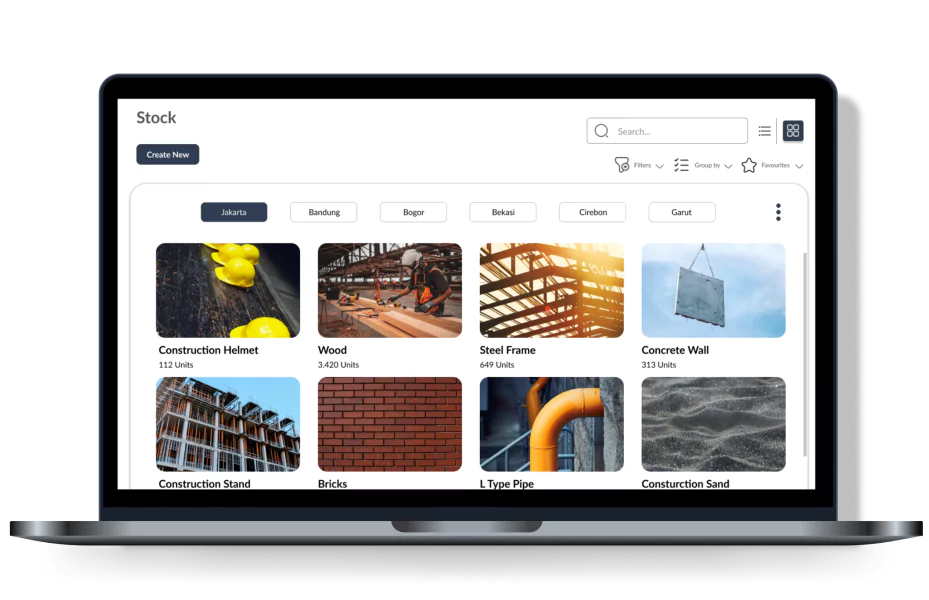
HashMicro provides an integrated ERP system specifically designed to automate and simplify complex business processes, including comprehensive construction management. With a holistic solution, construction companies can overcome persistent challenges.
Through our advanced Construction Suite, companies can digitize the entire material requisition process, from on-site requests to warehouse fulfillment and cost allocation. The system is equipped with features like automated approval workflows.
HashMicro’s system is built on a foundation of full integration among modules, allowing data to flow seamlessly across departments such as accounting, inventory, procurement, and project management.
This interconnectedness provides unparalleled visibility into your entire operation, ensuring that every decision is based on accurate, up-to-date information. By eliminating data silos and manual entry, our solution empowers your team to work more cohesively.
Key Features of HashMicro’s Construction Software:
- Budget S-Curve Management: Provides a comprehensive visual overview of budget planning versus actual expenditure, helping to identify financial trends and potential deviations early on.
- Automated Requisition Workflow: Streamlines the material and purchase requisition process with customizable, multi-level digital approvals that reduce waiting times and eliminate paperwork.
- Real-Time Inventory Integration: Automatically checks stock availability upon request and updates inventory levels in real-time, preventing stockouts and enabling proactive procurement.
- Accurate Project Cost Tracking: Every material requisition is automatically linked to project costs, offering precise, real-time tracking of expenses against the budget for enhanced financial control.
- Centralized Document Management: Stores all project-related documents, including contracts, RABs, and requisitions, in a single, secure database for easy access and improved collaboration.
With HashMicro, your construction company can achieve greater operational efficiency, data transparency, and business process automation. To see firsthand how our solutions can transform your project management, feel free to try our free demo today.

Conclusion
The material requisition is a fundamental component within a successful project management ecosystem, serving as the backbone for effective cost control, precise inventory management, and operational accountability.
By thoroughly understanding its function, key components, and workflow, companies can build a solid foundation to prevent waste and ensure every resource is utilized optimally. A structured requisition process not only keeps projects on budget but also fosters a culture of transparency.
Adopting a specialized solution like HashMicro’s Construction Software can automate and integrate the entire material requisition process, converting it from a cumbersome administrative task into a fluid and strategic workflow.
This allows your company to focus on its core mission: completing projects on time, within budget, and to the highest standard, turning every material request into a measured step toward success. Get a free demo today!

Frequently Asked Questions
-
Who is responsible for creating a material requisition?
Typically, a site foreman, team lead, or project supervisor who identifies the need for materials on the job site is responsible for creating and submitting the material requisition.
-
What happens if a material requisition is rejected?
If a requisition is rejected, it is returned to the requester with a reason for the denial. The requester may need to revise the request to align with the project budget or provide additional justification before resubmitting it for approval.
-
How does a material requisition relate to a Bill of Materials (BOM)?
A Bill of Materials (BOM) lists all the materials required for a project. The material requisition is the document used to formally request specific items from the BOM as needed during different phases of the project.
-
Is material requisition only used in the construction industry?
No, while it is critical in construction, material requisitions are used in any industry that manages physical inventory, including manufacturing, production, and maintenance operations, to control the internal flow of materials.
-
Can a material requisition be changed after it is submitted?
In a manual system, changing a submitted requisition is difficult and can be confusing. With construction software, authorized users can often edit or cancel a request before it is fully processed, with all changes being automatically logged for audit purposes.