






Improving operational efficiency is essential for business growth, but many companies overlook hidden costs caused by unmanaged waste. When waste tracking becomes part of daily operations, businesses gain clearer visibility into material usage. This approach helps uncover inefficiencies that quietly affect profitability.
ASEAN reports show Southeast Asia generated ~150 million tons of waste in 2016, much tied to poor tracking, projected to double by 2030. Inefficient waste tracking spikes operating costs via higher disposal fees, regulatory fines, and resource waste, while hurting long-term performance through sustainability gaps and lost competitive edge.
This guide explains how waste tracking supports better decisions and stronger sustainability efforts. With tools like HashMicro’s Inventory Management Software, businesses can automate waste records and improve accuracy. You can also explore a free demo to see how smarter tracking helps turn waste data into clearer operational insights.
Table of Contents

Key Takeaways
|
What Is Waste Tracking?
Waste tracking involves monitoring, measuring, and recording all types of waste from an organization, following it from its source to disposal. Moreover, it includes identifying each type, its origin, and how it’s managed, which helps inform better business decisions.
Consequently, a tracking system helps management view waste as a business indicator. For example, if a production line produces excessive scraps, it may highlight issues with equipment or planning. Thus, waste tracking aids in pinpointing problems and boosting efficiency and profit.
Why Is Waste Tracking Crucial for Your Business?
Today, due to competition and regulations, ignoring waste means lost profit. Thus, waste tracking is now vital for finances and reputation. With accurate data, companies make better decisions, from optimizing supply chains to improving their brand with eco-conscious consumers.
Furthermore, data-driven waste management promotes proactive reduction over reactive disposal. This helps companies identify cost-saving opportunities and efficiency gaps. According to the U.S. EPA, reducing waste lowers disposal costs and boosts profitability. Tracking reveals these savings. Next, let’s explore its main benefits.
1. Significantly reduces operational costs
One key benefit of waste tracking is cost savings. By identifying major waste sources, companies can target reductions (in raw materials, for example) thus lowering costs. Moreover, improved waste management, like recycling or selling byproducts, further cuts disposal expenses, boosting profitability.
2. Enhances compliance with environmental regulations
Governments worldwide are tightening waste regulations, imposing fines on non-compliant companies. Consequently, a documented waste tracking system proves compliance, especially during inspections and certifications. Proactively managing this not only avoids legal risks but also boosts corporate reputation.
3. Supports sustainability goals and corporate image
In today’s market, sustainability is a key expectation, not just an option. A solid waste management program demonstrates a company’s CSR and environmental efforts, boosting brand image. Moreover, showcasing waste reduction can attract loyal customers, investors, and top talent.
4. Provides accurate data for strategic decision-making
Without data, management relies on guesswork. However, waste tracking uses data-driven insights to reveal inefficiencies in production, supply, and consumer behavior. For instance, a restaurant might optimize menus to reduce spoilage, ultimately enhancing profitability.
Effective Methods for Performing Waste Tracking

Starting a waste tracking program isn’t overly complex; however, choosing the right method is vital for accurate, relevant data. While small businesses may start manual, larger ones require automated systems to effectively track waste and meet their goals.
Each waste management method has its own pros and cons, from costs and labor to data accuracy and ease of analysis. By understanding these differences, you can select the most suitable approach for your business, ultimately maximizing your return on investment.
1. Manual method with logbooks
The basic method involves staff manually recording waste data in a logbook or on printed forms whenever waste is collected. Although affordable, this approach is prone to human error, inconsistent entries, and forgotten records. Additionally, analyzing this data is time-consuming.
2. Tracking using spreadsheets
Using spreadsheets like Excel or Google Sheets improves data organization compared to physical logbooks. They ensure consistency, allow basic analysis, and are low-cost. However, manual input, lack of real-time updates, and collaboration issues limit their effectiveness as data volume grows.
3. Implementation of specialized software (Waste Tracking Software)
For businesses wanting accuracy and efficiency, specialized waste management software is ideal. It automates data collection, often integrating with hardware like scales and scanners. Consequently, it provides real-time, precise data, enabling better analysis and waste management.
Step-by-Step Guide to Implementing a Waste Tracking System
After understanding waste tracking’s importance and methods, the next step is to implement a system. Moreover, success depends on careful planning, team involvement, and a commitment to continuous improvement, fostering a culture of efficiency.
By following clear steps, you make sure the system is both technically strong and adopted by your team. Thus, you spot challenges early and maximize each resource, ensuring smooth implementation and great results.
1. Conduct an initial waste audit
First, conduct a detailed waste audit to establish a clear baseline. By measuring and documenting all waste types and sources, you gain facts, not assumptions. Consequently, this data helps set realistic goals and track your program’s success over time.
2. Set measurable goals and KPIs
After your initial audit, set SMART goals, for example, “Reduce organic waste to landfill by 25% in six months.” With these specific KPIs, your team clearly tracks progress and, as a result, can measure your waste program’s effectiveness.
3. Choose the most suitable methods and tools
After setting clear goals, choose tracking tools that fit your business size. If waste is minimal, spreadsheets may be enough. However, for bigger goals, opt for advanced software or ERP systems that offer automation, real-time insights, and enhanced analytics.
4. Train the team and socialize the program
Even with top tools, success depends on a trained, committed team. Therefore, offer thorough training and explain each person’s role. By fostering ownership and highlighting positive impact, you ensure sustained engagement and program success.
5. Analyze data regularly and drive continuous improvement
Implementing a waste tracking system is an ongoing process. Therefore, schedule regular data reviews, such as weekly or monthly, to monitor KPIs, detect trends, and find new optimization opportunities. This approach keeps waste management dynamic and continuously adds value.
As you refine your waste tracking processes, you may also explore system options that fit your operational goals by checking HashMicro’s pricing through the banner below.

Optimizing Waste Tracking with HashMicro ERP Software
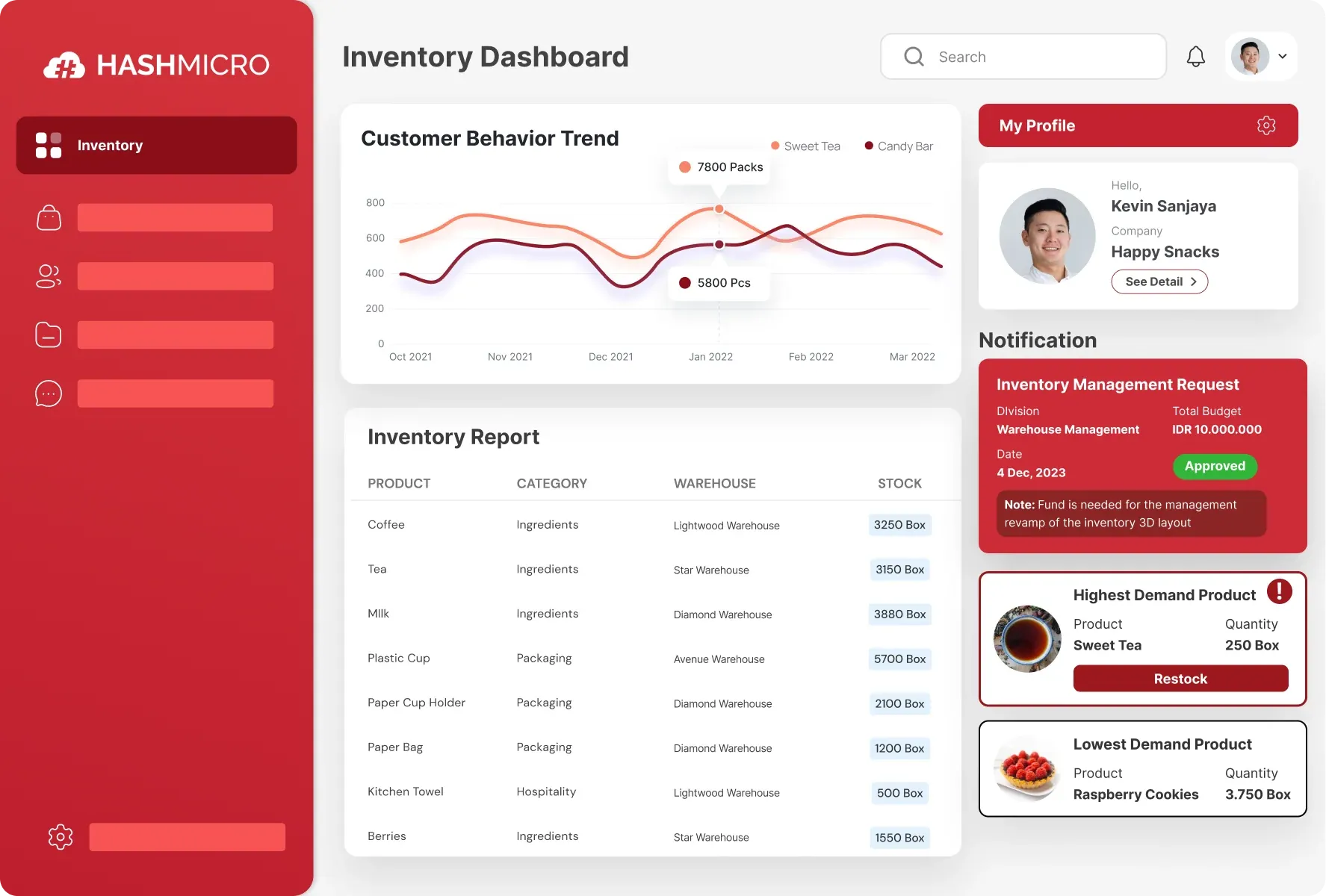
Manual waste tracking is slow and prone to errors. Instead, ERP systems, by integrating waste data, offer faster insights and deeper analysis. Thus, they give a complete view, enabling smarter business decisions in a dynamic market.
Moreover, HashMicro’s Inventory Management Software connects waste data to inventory, production, and accounting for a full business view. Thus, centralizing information breaks silos and boosts teamwork. As a result, decisions are smarter, making waste tracking more effective.
1. Full integration with inventory management
ERP links waste with inventory visibility for real-time updates. This is crucial for those with perishable inventory, helping you spot expiring stock, reduce spoilage, and see financial impact right away.
2. In-depth data reporting and analysis
HashMicro’s ERP uses advanced business intelligence (BI) tools to turn waste data into visual reports, letting managers quickly spot inefficiencies. As Forbes notes, data analytics drives transformation, so targeted changes are made using reliable business intelligence.
3. Automation of data collection for maximum accuracy
Connecting ERP to scales and scanners means waste tracking updates instantly. This reduces errors, lowers admin work, and lets you quickly and accurately track returned products, which is especially crucial for complex business models like dropshipping.
Conclusion
Waste tracking supports operational efficiency by giving businesses clearer visibility into material use and hidden inefficiencies. With accurate data, companies can reduce costs, improve compliance, and strengthen sustainability efforts. This approach helps teams make smarter, strategic decisions.
HashMicro’s Inventory Management Software makes waste tracking easier by automating data entry, connecting waste records with inventory, and generating useful insights. These features help reduce losses and improve process accuracy. With better visibility, managers act faster and enhance overall performance.
If your business aims to improve waste tracking and achieve better efficiency, you can explore how HashMicro’s system works through an interactive product demo. Seeing the tools in action helps you evaluate fit and benefits. Book a free demo today and start building a smarter waste management strategy.
FAQ about Waste Tracking
-
What is the main purpose of waste tracking?
The main purpose of waste tracking is to systematically monitor and document waste generation to identify inefficiencies, reduce operational costs, ensure regulatory compliance, and support sustainability goals by providing data for strategic decision-making.
-
How do you effectively track and monitor waste?|
Effective waste tracking involves conducting an initial audit to establish a baseline, setting measurable reduction goals (KPIs), choosing a suitable method (manual, spreadsheet, or software), training staff, and regularly analyzing the collected data to drive continuous improvement.
-
What are the 3 R’s of waste management?
The 3 R’s are Reduce, Reuse, and Recycle. ‘Reduce’ means minimizing waste at the source. ‘Reuse’ involves using items multiple times before discarding them. ‘Recycle’ is the process of converting waste materials into new products to prevent resource depletion.