









Managing payroll in the Philippines involves navigating complex salary calculations, tax rules, and mandatory government contributions. For many businesses, ensuring accuracy while staying compliant with local regulations can be a continual challenge that directly impacts employee satisfaction and operational stability.
The difficulty is supported by findings from Kittelson & Carpo Consulting, which highlight payroll compliance as one of the top concerns for Philippine companies. With varying regional wage rates and frequent regulatory updates, HR and finance teams often struggle to keep processes accurate and timely.
To simplify these challenges, this guide breaks down the payroll process in the Philippines and explores tools that streamline compliance and automate key tasks. If you want to experience how automation can transform your workflow, you can get a free demo of HashMicro Payroll Software and see how it fits your business needs.
Table of Contents

Key Takeaways
|
What is Payroll and Who is Responsible for It?
Payroll is the structured process of calculating employee salaries, applying tax deductions, and ensuring accurate contributions to agencies such as SSS, PhilHealth, and Pag-IBIG. It is essential for maintaining compliance with Philippine labor and tax regulations while ensuring employees receive their correct compensation on time.
Depending on the company’s size, payroll may be handled by the finance team, HR department, or a designated payroll specialist. Larger organizations often rely on dedicated staff, while smaller businesses may assign payroll duties to a single department responsible for managing employee information and attendance records using HR tools.
To enhance efficiency and accuracy, many Philippine companies adopt a payroll management system or outsource the process entirely. These solutions automate computations, generate payslips, and support timely salary disbursements, helping reduce administrative workload and minimize human error.
Philippine Payroll Regulations
 The Labor Code governs Philippine payroll regulations, requiring employers to adhere to specific wage rules, benefits, and deductions. Essential requirements include the mandatory 13th-month pay, timely salary payments, and contributions to SSS, PhilHealth, and Pag-IBIG, ensuring compliance and employee welfare.
Employers must accurately calculate deductions, such as withholding taxes, following the Bureau of Internal Revenue (BIR) guidelines. To simplify this, businesses can use tools like a payroll system or refer to a sample payroll in the Philippines to ensure accuracy and efficiency.
Maintaining proper documentation, such as payslips and tax contribution records, is essential to demonstrate compliance with these laws. By using organized payroll formats and automated systems, businesses can streamline processes while fostering employee trust and accountability.
Important Components of Salary in the Philippines

To correctly manage payroll in the Philippines, businesses must ensure compliance with labor laws and provide employees with their rightful benefits. Payroll components in the Philippines are designed to adhere to legal standards and promote employee well-being and financial security.
Below are the vital elements of payroll that every employer should be aware of:
1. Cost of Living Allowance (COLA)
COLA is a mandatory benefit for minimum wage earners to help offset the cost of daily necessities. It is automatically added to the base salary of qualified employees, ensuring fair support for their living expenses.
2. Overtime pay
Employees working beyond 8 hours are entitled to overtime pay at 125% of their regular hourly wage. For overtime on holidays or rest days, the rate increases to 130%, demonstrating the importance of fair compensation for extra work.
3. Holiday pay
Employees are entitled to 100% of their daily wage as holiday pay even if they do not work on a declared holiday. If they work on a holiday, they are compensated with another day’s pay, ensuring equitable treatment and compliance with labor laws.
4. 13th month pay
A hallmark of Philippine labor law, the 13th-month pay is equivalent to one-twelfth of an employee’s annual basic salary. It is distributed before December 24 to provide financial relief during the holiday season.
5. Non-taxable benefits
Certain perks, like uniform allowances (up to PHP 5,000 annually) and unused leave credits converted to cash, are non-taxable. These benefits give employees added value without increasing their tax burden.
6. Income tax
Income tax is calculated based on taxable income, with rates ranging from 0% for annual incomes up to PHP 250,000 to 35% for those earning more than PHP 8 million. Employers are responsible for deducting and remitting the appropriate tax amounts.
7. SSS, PhilHealth, and PAG-IBIG contributions
Employers and employees share contributions to SSS, PhilHealth, and PAG-IBIG, ensuring access to retirement, healthcare, and housing benefits. For example, PhilHealth contributions are set at 4% of monthly salary, equally split between the employer and employee.
By understanding these payroll components, businesses can build a system that complies with legal standards and fosters a supportive and fair workplace for their employees.
Aspects of Work Structure and Payroll
Some aspects of the Philippine work structure directly affect payroll. If you’re setting up payroll here, consider the following:
1. Probation Period
Employees often start with a 6-month probationary period, during which their performance is evaluated. Probationary workers may not receive certain benefits, like rice or transport allowances. If their contract isn’t renewed, payroll must include termination and severance pay.
2. Working Hours
The standard workweek is 40 hours over five days. Overtime begins after 8 hours daily and must be paid as follows:
- Regular days: Hourly rate × 125%
- Holidays/rest days: Hourly holiday rate × 130%
3. Holidays
The Philippines observes several regular and special holidays. Employees working on regular holidays must be paid 200% of their daily rate. Payroll must also account for these mandatory holiday payments.
4. Termination and Severance
Regular employees cannot be terminated without just cause, as defined by the Labor Code. Severance pay applies in cases like redundancy, calculated as:
- 1 month’s salary OR
- 1 month’s salary per year of service, whichever is higher.
5. Payroll Schedule
Employers must pay workers at least twice a month, with payment intervals not exceeding 16 days. Weekly payments are allowed, but paying employees only once a month is prohibited.
Keeping these points in mind will help ensure your payroll system complies with Philippine laws.
How is Payroll Calculated in the Philippines?

Payroll calculation in the Philippines follows a straightforward formula:
Gross Pay – Deductions = Net Pay
However, while the formula appears simple, each component—gross pay and deductions—has multiple elements that must be carefully accounted for.
Gross pay comprises the base salary, allowances, overtime pay, and other earnings. Accurate computation of gross pay is crucial to ensure correct deductions. Meanwhile, net pay is the remaining amount after all deductions, which is what employees receive as their take-home pay.
1. Calculating Gross Pay
Gross pay is calculated by adding the following components:
- Basic Salary
- Overtime Pay
- Holiday Pay
- Night Shift Differential
- Bonuses and Incentives
2. Determining Net Pay
To calculate net pay, subtract these deductions from gross pay:
- Withholding Tax
- SSS Contributions
- PhilHealth Contributions
- Pag-IBIG Contributions
- Other authorized deductions
Employers are legally required to calculate, withhold, and remit these deductions to the appropriate government agencies to remain compliant with Philippine labor laws.
The best payroll system is critical for ensuring accuracy, especially when dealing with complex payroll scenarios. By understanding and following this structured payroll format, businesses can meet legal obligations and build trust with their employees through transparent payroll practices.
Common Challenges of Payroll in the Philippines
Managing payroll in the Philippines comes with unique complexities due to strict labor laws and varying tax regulations. Businesses must address these challenges effectively to ensure compliance and avoid penalties.
1. Compliance Management
Navigating complex tax laws makes payroll management a daunting task, with non-compliance leading to hefty penalties. To address this, companies must build a process aligned with regulations or hire experienced payroll providers to ensure accuracy and timeliness.
2. Time-Consuming Processes
Manual payroll tasks like compiling data and calculating salaries consume valuable time that could be used strategically. Automating payroll with cloud-based solutions simplifies these tasks, freeing up resources for more productive activities.
3. Security Concerns
Handling payroll manually increases the risk of data breaches and fraud, such as ghost employees or false wages. Implementing secure cloud software with periodic audits can safeguard sensitive information and prevent misuse.
4. Multiple Input Sources
Using disconnected systems for employee records, leave, and benefits creates inefficiencies and duplication. Investing in integrated payroll software streamlines these processes, saving time and boosting organizational efficiency.
5. Burden on Payroll Teams
Repetitive tasks in manual systems overwhelm payroll teams, lowering morale and increasing errors. Automating payroll workflows not only reduces mistakes but also enhances overall productivity and job satisfaction.
Philippine Payroll Management Workflow

A well-structured payroll process is essential for Philippine businesses to ensure accurate salary computation, proper government compliance, and smooth employee payment cycles. By following a clear workflow, companies can avoid costly mistakes and maintain transparency with their workforce.
Below are the key steps in the Philippine payroll workflow, kept concise while still covering all essential tasks
- Employee data collection and maintenance: Maintaining updated employee records ensures accurate salary computations and compliance with labor and tax requirements. Complete data from government forms and compensation packages supports smooth processing.
- Tracking work hours and attendance: Accurate monitoring of work hours, overtime, and leave days is crucial. Automated timekeeping systems help reduce discrepancies and ensure fair compensation.
- Gross salary calculation: Gross salary is computed by summing basic pay, allowances, overtime, holiday pay, and other compensation. This step ensures all earnings are accounted for before applying deductions.
- Deductions for taxes and contributions: Employers calculate and deduct SSS, PhilHealth, PAG-IBIG, and withholding tax from gross pay. Correct and timely remittance to government agencies is required to avoid penalties.
- Net salary computation: Net salary is the result of gross pay minus all mandatory deductions. This is the employee’s take-home pay and must be computed accurately to maintain trust.
- Payslip generation and disbursement: Detailed payslips outlining gross pay, deductions, and net pay support payroll transparency. Salary disbursements are typically made via bank transfers or digital payment channels.
- Compliance and reporting: Regular audits, accurate reports, and adherence to labor laws help businesses maintain compliance. Organized documentation also supports inspections and internal reviews.
This systematic payroll workflow ensures compliance and fosters employee trust and satisfaction, making it an essential process for any business in the Philippines.
How to Set Up Payroll in the Philippines
 Setting up payroll in the Philippines involves meticulous planning, legal compliance, and structured processes. Employers must adhere to Philippine Employment Laws, the Tax Reform for Acceleration and Inclusion (TRAIN) Act, and specific requirements from agencies like the Bureau of Internal Revenue (BIR), Social Security System (SSS), PhilHealth, and PAG-IBIG.
1. Payroll Options in the Philippines
Companies in the Philippines can manage payroll in several ways, depending on their size, resources, and needs:
- In-house payroll management: Companies may choose to manage payroll processing internally. This means hiring dedicated personnel or a team to handle payroll calculations, tax filings, and employee disbursements.
- Outsourcing to a local payroll provider: Some businesses prefer to outsource payroll processing to a local service provider that specializes in managing payroll. These third-party providers ensure compliance with local laws and regulations.
- Using payroll software solutions: With advances in technology, many companies opt for automated payroll software to streamline payroll processing. These software solutions can calculate taxes, deductions, and payments efficiently, reducing the chance of errors.
2. Steps to set up payroll in the Philippines
Below are several steps to set up payroll for your company:
- Register with the Bureau of Internal Revenue (BIR): Begin by obtaining an Employer Identification Number (EIN) from the BIR. This registration is mandatory to legally employ staff and process payroll taxes in compliance with Philippine law.
- Establish payroll policies and compensation structure: Develop clear payroll policies and a fair compensation structure that complies with Philippine labor laws. These policies should address salary components, allowances, overtime pay, and deductions to ensure consistency and transparency.
- Collect employee data: Gather all necessary documents, such as government forms from BIR, PhilHealth, SSS, and PAG-IBIG, to set up each employee’s payroll profile. Ensuring complete and accurate records from the start minimizes errors and facilitates smooth payroll processing.
- Process payroll calculations: Using timesheets or attendance records, compute gross pay, deductions, and net pay accurately. Employing a reliable payroll system can automate this step, saving time and reducing human errors.
- Disbursements to employees: Once payroll is calculated, ensure employees are paid promptly through their preferred payment method, such as bank transfers. Timely payments are vital for maintaining employee morale and trust in the organization.
- Maintain proper documentation and records: Keep detailed records of all payroll transactions, including payslips, tax filings, and government contributions. These records are essential for audits, legal compliance, and resolving employee queries.
- Ensure data privacy compliance: In handling employee information, adhere to the Data Privacy Act of 2012 to safeguard sensitive data. Implement secure systems and protocols to protect employee records and prevent unauthorized access.
By following these steps, businesses can establish a robust and legally compliant payroll system in the Philippines. This ensures smooth operations and reflects the company’s commitment to professionalism and employee welfare.
Streamlining Payroll Management with HashMicro’s Payroll Software
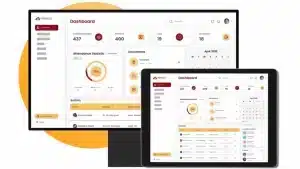
HashMicro Payroll Software automates payroll tasks for Philippine businesses by managing tax deductions, salary calculations, and government contributions. Its integration with BIR CAS and EIS ensures compliance with updated regulations. The system reduces manual work and helps companies maintain payroll accuracy.
Why we recommend it:
HashMicro provides localized payroll automation, helping businesses reduce errors and simplify tax compliance. Its integration with HR and finance tools creates a smoother payroll cycle and supports scalable operations. You can also book a free demo to explore how the system fits your workflow.
The platform enhances efficiency through localized tax calculations and seamless attendance integration. Automated overtime computation and built-in templates simplify payroll preparation. Mobile access ensures employees can view payslips and records instantly, supporting transparency and convenience.
HashMicro offers a range of powerful features, such as:
- Fully Localized Payroll with Tax Calculation: Automates SSS, PhilHealth, and PAG-IBIG contributions while aligning payroll with BIR CAS and EIS rules.
- Daily Worker and Hourly Worker Payslip Management: Generates accurate payslips for multiple employment types.
- Complete Overtime Management Linked with Attendance and Payroll: Calculates overtime using integrated attendance data.
- Mobile Apps for Employee Self-Service: Allows employees to access payslips and submit leave requests anytime.
- Built-in Professional Templates for Contract & Payslip: Provides ready-to-use templates for contracts and payslips.
- In-depth reporting for Leaves, Payroll, Expenses, Overtime, and Attendance: Offers detailed reports for payroll, leaves, expenses, and attendance.
- Integration with Biometrics and Attendance Devices: Connects biometric devices directly to payroll for accurate payroll preparation.
“Localized systems make payroll more reliable and reduce compliance issues. HashMicro’s automated workflow helps companies process payroll faster with consistent accuracy.”
— Angela Tan, Regional Manager
Beyond payroll management, HashMicro supports integration with accounting, HRIS software, and ERP systems, providing a unified approach to business operations. Its customizable interface ensures that the software adapts to your specific requirements, making it a truly versatile solution for organizations of all sizes.
Conclusion
Managing payroll in the Philippines is a critical responsibility for businesses, requiring strict compliance with labor laws and regulations. Accurate salary computations, proper tax deductions, and contributions to agencies like SSS, PhilHealth, and PAG-IBIG are essential to ensure legal compliance and maintain employee satisfaction.
HashMicro Payroll Software provides an efficient and reliable solution for managing payroll processes in the Philippines. Integrated with BIR CAS and EIS, it automates salary calculations, tax deductions, and government contributions, ensuring accuracy and compliance while saving time and resources.
Simplify your payroll operations and avoid compliance headaches with HashMicro’s comprehensive payroll solution. Sign up for a free demo today and experience how HashMicro can transform your payroll process into a seamless and efficient system.
FAQ about Payroll Philippines
-
What are the three types of payroll?
The three common types of payroll are weekly, bi-weekly, and semi-monthly payroll. Weekly payroll is ideal for hourly workers, bi-weekly is used by companies looking for consistency in pay periods, and semi-monthly payroll is popular for salaried employees because it aligns well with monthly billing cycles.
-
Can foreign-owned companies follow a different payroll structure in the Philippines?
Foreign-owned companies must follow the same payroll regulations and labor laws as local businesses. However, they may implement internal payroll policies (like special allowances or bonus structures) as long as these do not conflict with DOLE and BIR rules.
-
Are employers allowed to give salary advances through payroll?
Yes, employers may give salary advances as long as they document the deduction schedule clearly and secure the employee’s written consent. These advances are not considered loans and do not require interest unless stated in company policy.
-
Can an employee request a payroll recalculation after receiving their payslip?
Yes. Employees may request a recalculation if they believe overtime, leaves, or deductions were computed incorrectly. Employers must review attendance logs, government tables, and internal records to correct any verified discrepancies.
-
Do freelancers and contractors follow the same payroll rules as employees?
No. Freelancers and contractors are not covered by standard payroll rules, including SSS, PhilHealth, and PAG-IBIG contributions. They handle their own taxes and remittances, though companies can voluntarily assist by offering optional withholding tax arrangements.