







Warehouse space is one of the most valuable and most expensive assets a logistics operation can have. Yet many businesses unknowingly leave significant capacity on the table simply because their pallet storage methods are not optimized for their inventory type, turnover rate, or facility layout.
Whether you manage a small distribution center or a large-scale fulfillment warehouse, the way pallets are stored directly affects how quickly orders are picked, how safely goods are handled, and how much you spend on labor and infrastructure.
This guide breaks down everything you need to know about pallet storage methods from the foundational concepts to a detailed comparison of the most widely used systems. By the end, you will have a clear framework for evaluating which approach fits your business needs, how to implement it effectively, and why getting this decision right pays dividends far beyond just saving floor space.
Key Takeaways
|
What are Pallet Storage Methods?
Pallet storage methods are the systems and techniques used to organize goods loaded onto pallets inside a warehouse or distribution center.
The storage method determines three main things: how many pallets you can store, how easily each pallet can be accessed, and how inventory flows through your warehouse.
Understanding pallet storage is not just a logistics concern. It is a strategic business decision. The wrong method can lead to excessive labor costs, damaged goods, poor inventory accuracy, and wasted space.
There are two key factors to consider when evaluating pallet storage systems.
- Selectivity: How easily any individual pallet can be accessed without moving others.
- Density: How many pallets can be stored within a given cubic foot or square meter of warehouse space.
Choosing the right balance requires a clear understanding of your inventory and how often specific pallets need to be retrieved.
How Important Is It For Storage Efficiency?
Getting storage efficiency right impacts your business in four key areas.
- Cost: First, it reduces costs. When space is not used properly, businesses may think they need to expand or rent additional facilities. In reality, a better storage layout can often increase capacity without increasing real estate costs.
- Speed: Second, it improves speed. When pallets are clearly organized and easy to access, picking and dispatch times decrease. This is especially important in industries where fast delivery is expected.
- Safety: Third, it improves safety. Poor stacking and overloaded racks can cause serious accidents. A structured storage system with clear load limits reduces these risks.
- Accuracy: Finally, it increases inventory accuracy. When every pallet has a defined location, it becomes easier to track stock levels and avoid shipping errors.

7 Different Types of Pallet Storage Methods
While the outline identifies six primary methods, it is worth noting that industry practice commonly recognizes seven distinct pallet storage systems and this guide covers all of them. Each has a distinct profile of density, selectivity, cost, and operational complexity. Understanding these profiles is the key to making an informed choice for your warehouse.
1. Block Stacking

Block stacking is the most basic pallet storage method. Pallets are placed directly on the warehouse floor and stacked vertically on top of each other without using any racking structure. It requires only flat floor space and forklifts.
However, block stacking has significant limitations. The most critical is selectivity: because pallets are stacked on top of one another, the only pallet that can be retrieved without moving others is the one on top. This makes block stacking inherently a Last In, First Out (LIFO) system, which can be problematic for goods with expiration dates or those that need to be rotated on a First In, First Out (FIFO) basis.
| Pros | Cons |
|
|
best suited for: high-volume, uniform products with a long shelf life and low SKU variety. Seasonal goods stored in bulk before a peak sales period are a classic use case.
2. Stacking Frames
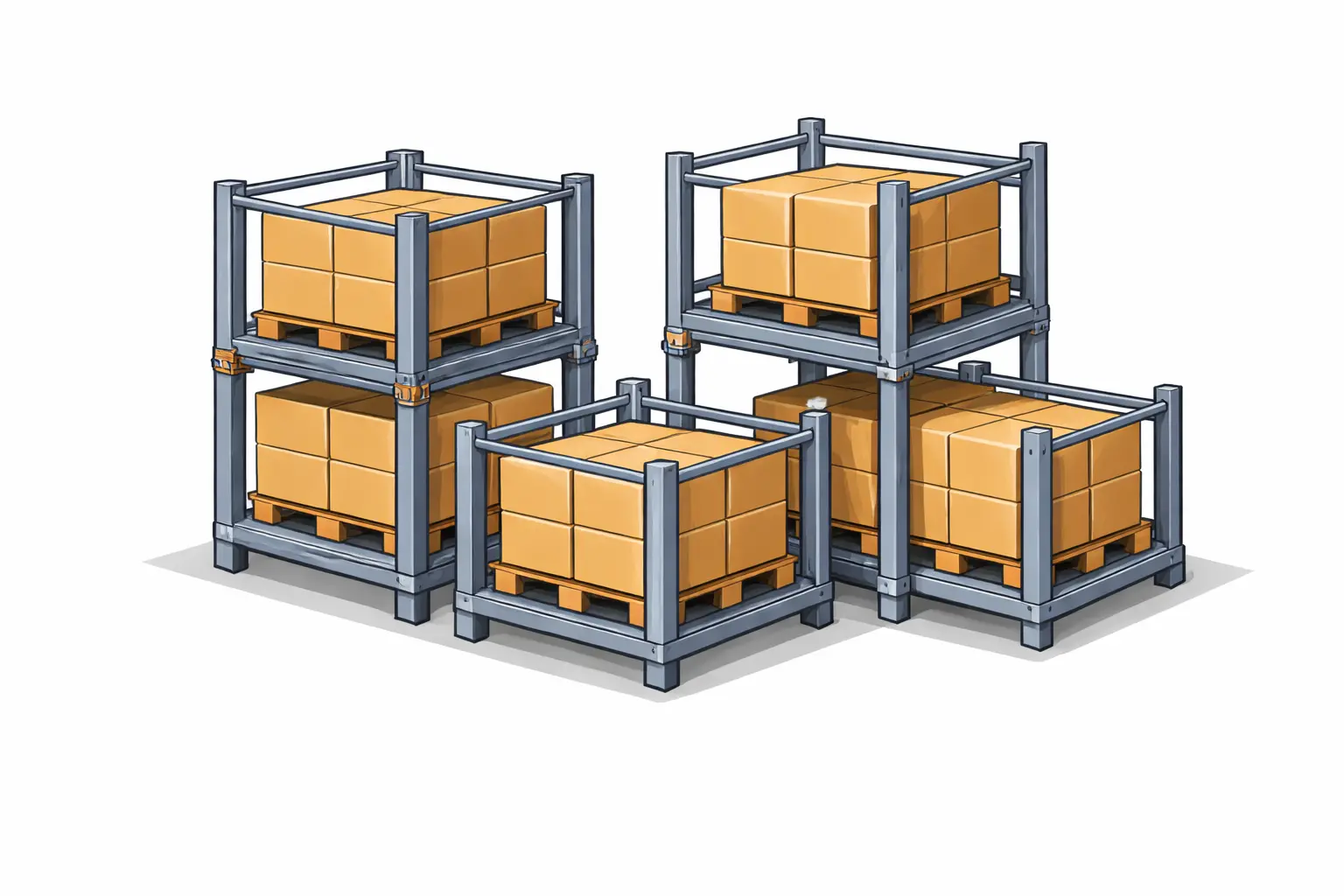
Stacking frames are portable steel structures placed around pallets, allowing them to be stacked safely even when the products themselves cannot bear weight. The frames absorb the vertical load instead of the goods.
This method is a practical upgrade from basic block stacking for businesses that handle fragile or irregularly shaped goods. Stacking frames allow vertical storage without the need for permanent racking infrastructure, which means they can be repositioned as warehouse needs change. They are also significantly cheaper than installing a fixed racking system.
| Pros | Cons |
|
|
best suited for: warehouses that need flexible vertical storage without installing permanent rackin.
3. Selective Pallet Rack
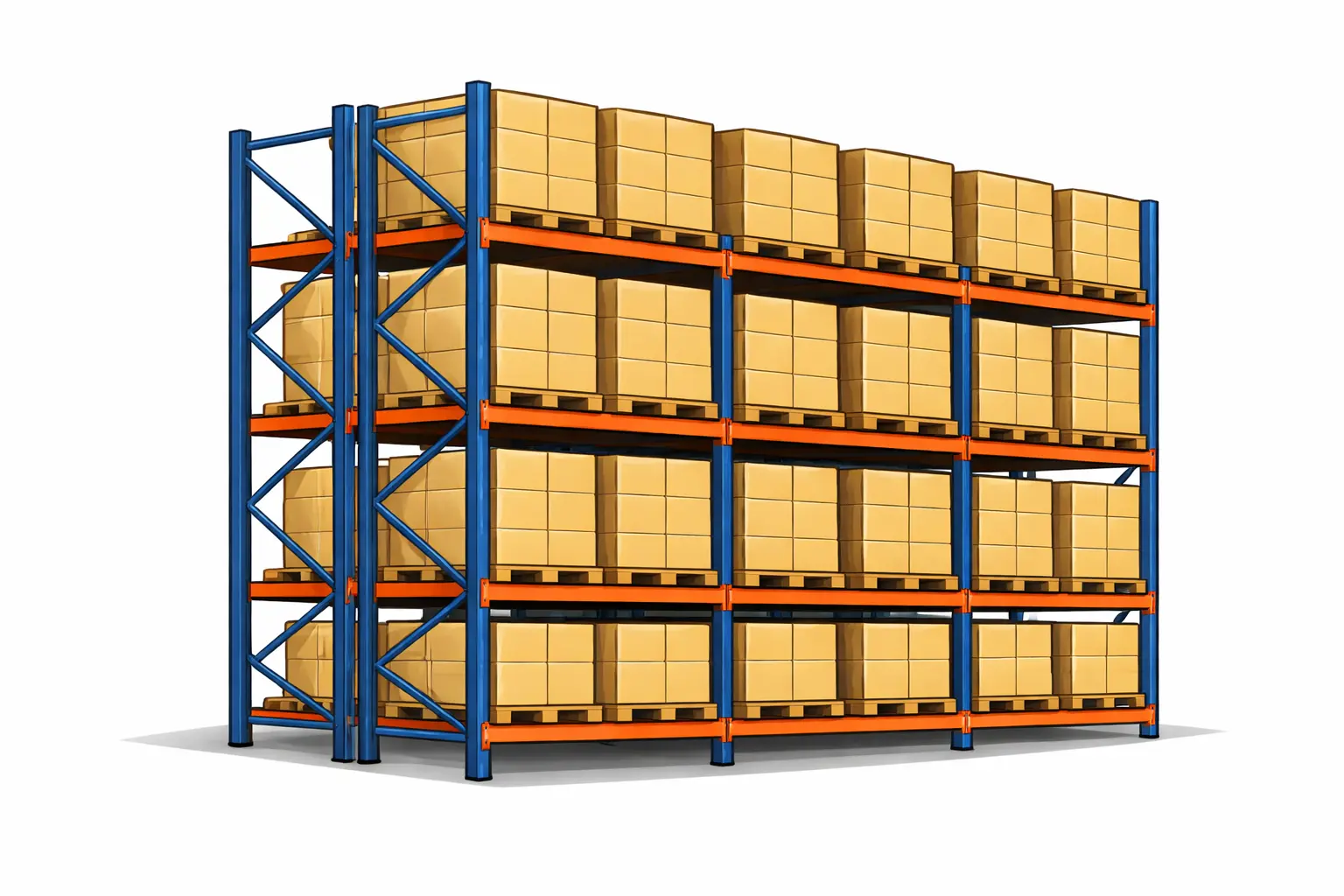
Selective pallet racking is the most widely used racking system worldwide. It consists of upright frames and horizontal beams, where pallets are stored one position deep and are directly accessible from the aisle.
Every pallet stored on a selective rack is directly accessible by a forklift without needing to move any other pallet.
| Pros | Cons |
|
|
best suited for: warehouses with diverse product mixes, frequent picking activity, and a need for real-time access to any individual pallet. This method pairs well with systematic warehouse putaway processes that assign specific locations to each SKU.
4. Double Deep Rack
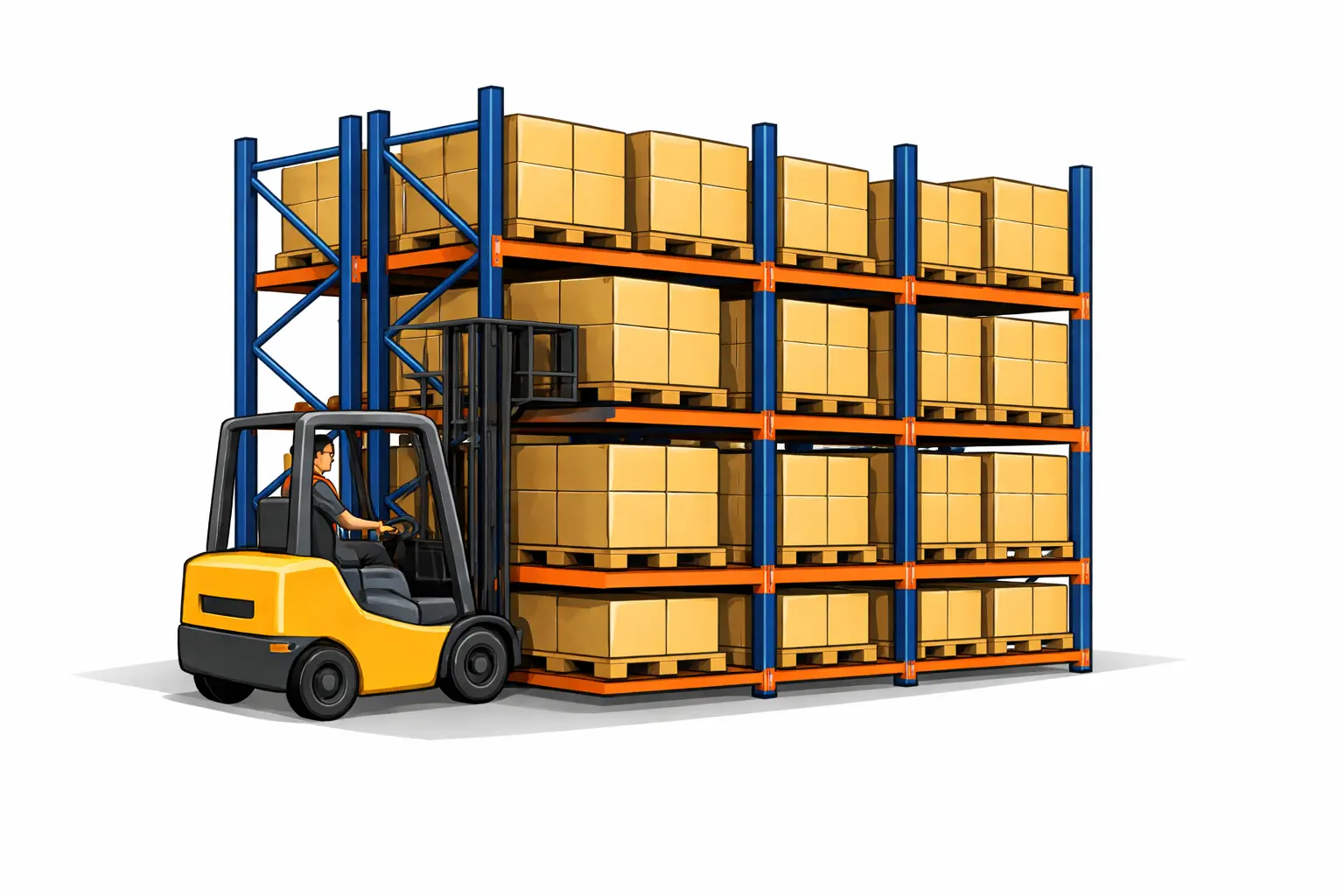
Double deep racking is a variation of selective racking. Instead of storing pallets one deep, it stores them two positions deep per rack row. This increases storage density without completely sacrificing accessibility.
This effectively doubles the storage density compared to standard selective racking while only moderately reducing selectivity, since accessing the rear pallet in any bay requires removing the front one first.
The reduced selectivity means this system is less ideal for warehouses with many unique SKUs where every pallet position must be individually accessible. It also requires the specific type of reach truck, which represents an additional equipment investment.
| Pros | Cons |
|
|
best suited for: medium-variety product ranges where two or more pallets of the same SKU are typically stored together, and where increasing density without the cost of a full drive-in or push-back system is a priority.
5. Drive-in Rack
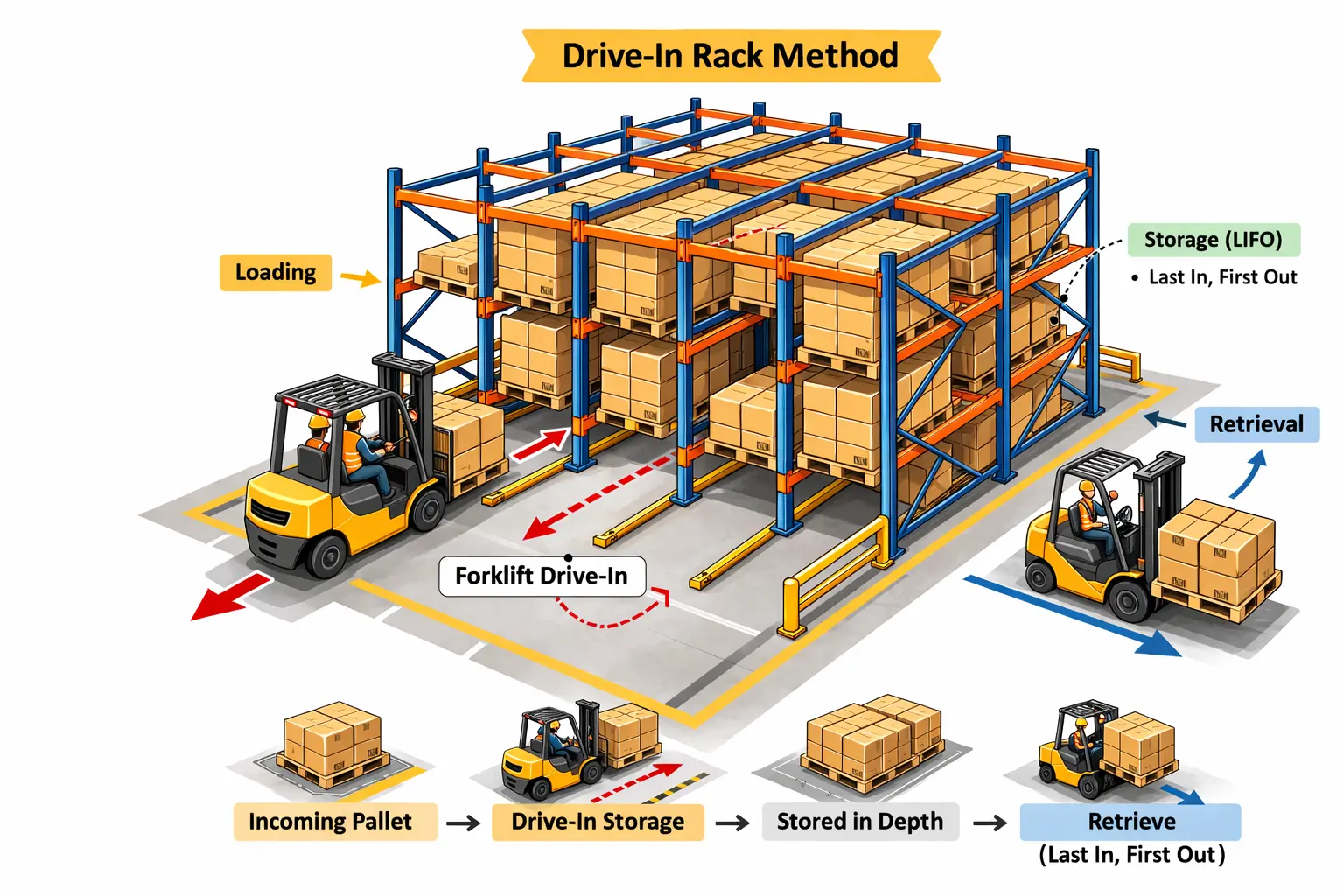
Drive-in racking is designed for high-density storage. Forklifts drive directly into the rack structure to load pallets several positions deep. This significantly reduces aisle space and maximizes cubic storage capacity.
This makes them an excellent choice for cold storage facilities, where the cost of refrigerated space is very high, or for any operation storing large quantities of a homogeneous product.
| Pros | Cons |
|
|
best suited for: cold storage, bulk storage of uniform SKUs, and any scenario where maximizing storage density is more important than individual pallet selectivity. The system demands disciplined inventory management to avoid blocking access to needed pallets.
6. Pallet Flow Rack
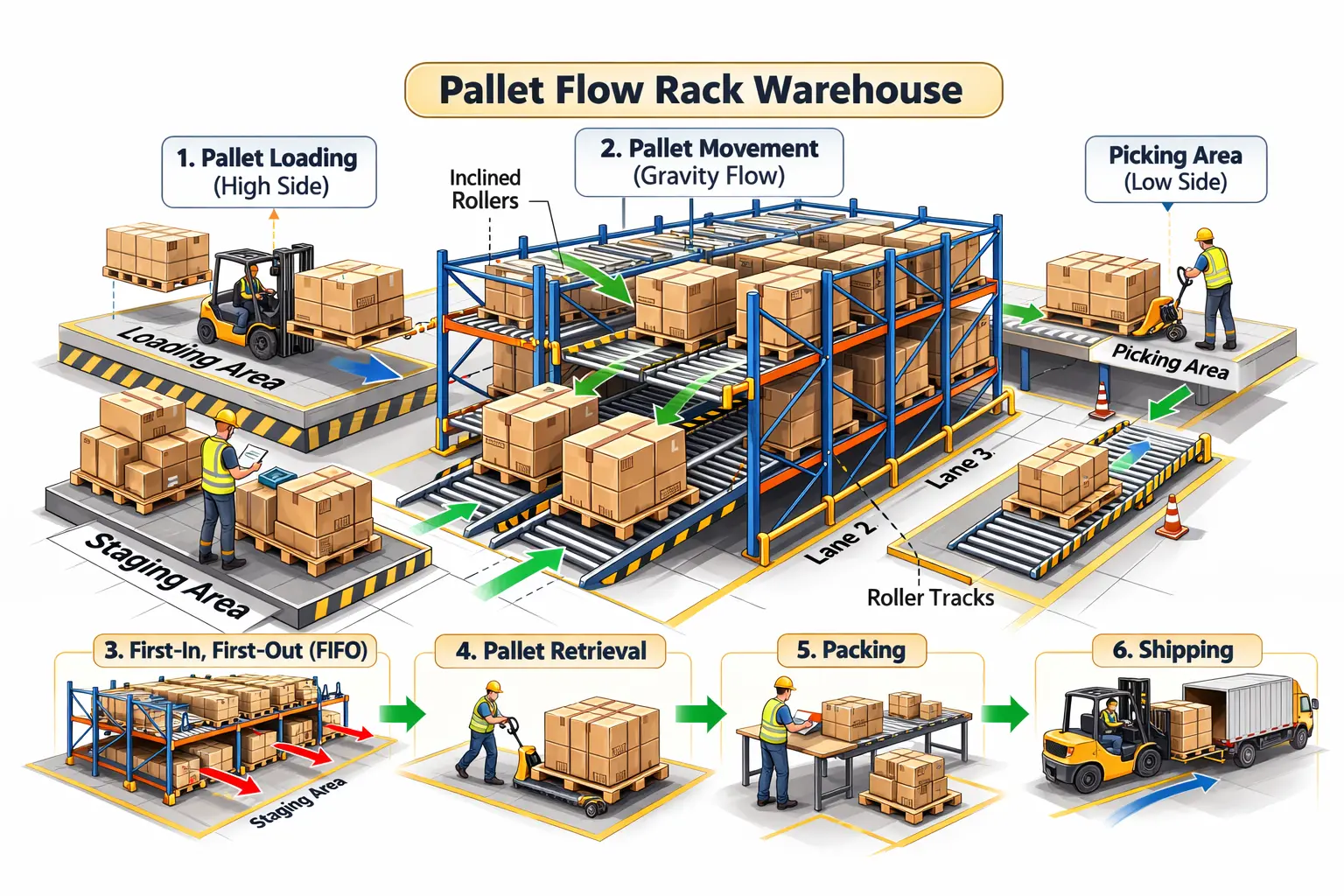
Pallet flow racking uses inclined roller tracks within the rack structure. Pallets are loaded from the rear and move forward automatically through gravity as front pallets are removed.
Pallet flow racks achieve high storage density comparable to drive-in racks in terms of the lanes they can provide while simultaneously offering better product rotation and faster picking. However, they are significantly more expensive than static racking systems due to the roller conveyor components and the precision required in installation and maintenance.
Understanding how different SKUs flow through the system is critical when implementing pallet flow racks. Proper SKU management practices should be in place to ensure that each lane is dedicated to the right product and that flow speeds are calibrated appropriately for the weight and packaging of the stored goods.
| Pros | Cons |
|
|
best suited for: fast-moving consumer goods (FMCG), food and beverage, pharmaceuticals, and any warehouse where FIFO rotation is mandatory and throughput speed is a priority.
7. Push Back Rack
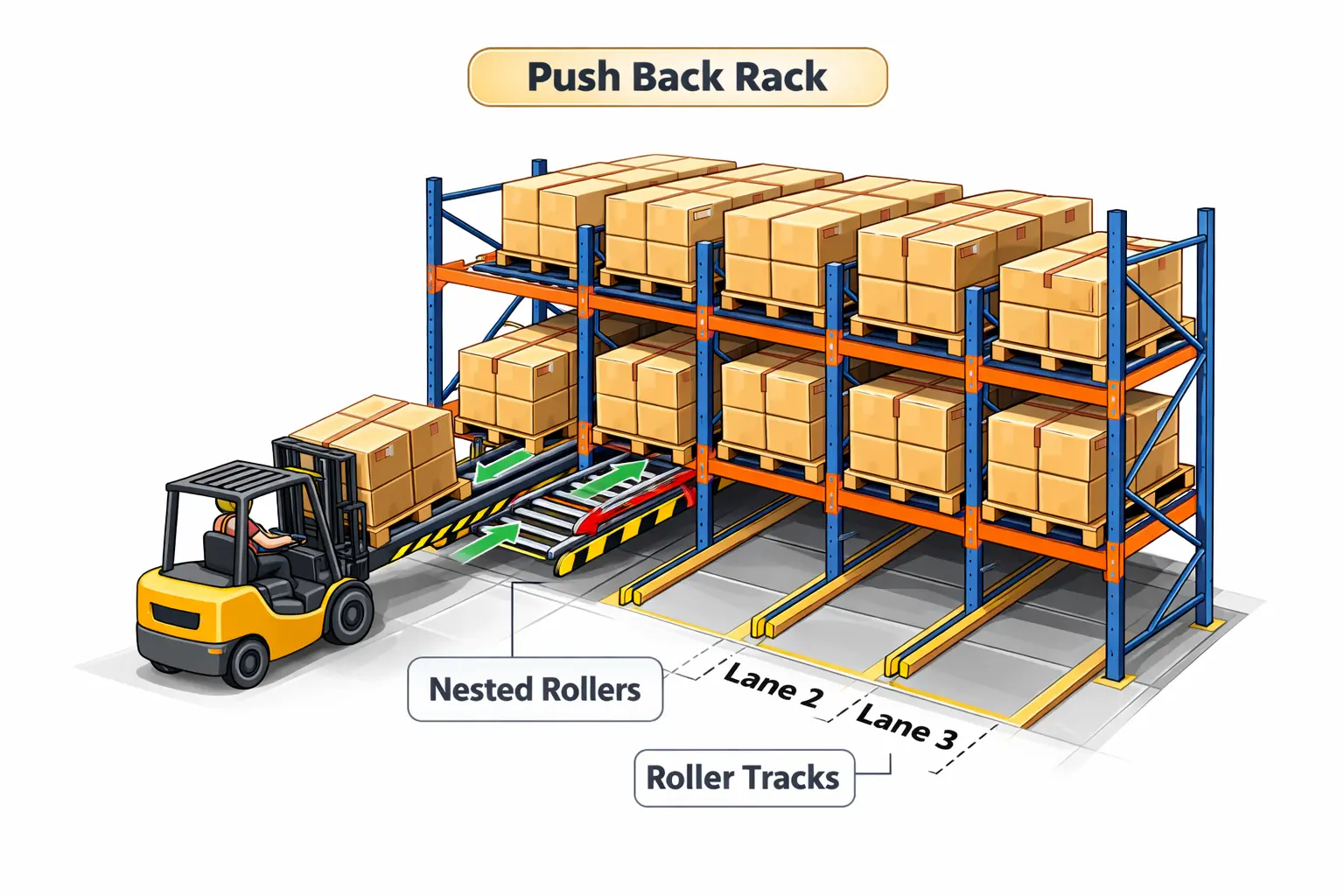
Push back racking uses a system of nested carts or inclined rails. When a new pallet is loaded, it pushes existing pallets backward. When the front pallet is removed, the others move forward automatically.
Push back racks support multiple SKUs per row height (one SKU per lane, but different SKUs on different levels), giving them more flexibility than drive-in racks. This makes them suitable for warehouses with moderate SKU variety that still want to benefit from high-density storage.
| Pros | Cons |
|
|
best suited for: warehouses storing multiple SKUs at medium-to-high density where LIFO inventory management is acceptable, and where the operation needs the high-density benefits of drive-in storage without requiring forklifts to enter the rack structure.
Benefits of Applying Pallet Storage Methods
Implementing the right pallet storage method delivers benefits that extend far beyond simply fitting more pallets in a room. Here is what businesses typically gain when they move from ad hoc storage to a structured pallet storage strategy.
Maximized Warehouse Capacity
The most immediate benefit is better use of available space. By selecting a storage method that matches your inventory profile, you can store more inventory within the same four walls.
In many cases, upgrading from block stacking to an appropriate racking system can increase a warehouse’s effective storage capacity by 40% or more without requiring any additional real estate.
Improved Inventory Accuracy
When every pallet has a defined home a specific rack bay, level, and position inventory management becomes dramatically more reliable. Stock counting is faster and more accurate, misplacements are easy to identify, and discrepancies between physical stock and system records decrease.
This accuracy is foundational to smooth operations downstream, from procurement and replenishment to order fulfillment and customer invoicing.
Faster Order Fulfillment
A well-organized pallet storage system reduces the time it takes for warehouse staff to locate, pick, and dispatch goods.
Systematic putaway and retrieval procedures supported by clear labeling and logical location naming eliminate the searching and guesswork that slow down picking operations.
In high-throughput environments, these time savings accumulate into meaningful improvements in daily order output and on-time delivery rates.
Enhanced Worker Safety
Properly installed and maintained racking systems, combined with clear operating procedures, significantly reduce the risk of accidents caused by falling pallets, forklift collisions, or structural overloading.
This is not only a humanitarian concern workplace injuries carry significant financial costs through lost productivity, medical expenses, regulatory penalties, and reputational damage.
Better Product Quality Preservation
Goods stored on proper racking or frames are less likely to be damaged by crushing, moisture, or temperature fluctuations (when combined with appropriate environmental controls).
FIFO-capable systems ensure that perishable or time-sensitive goods are used or shipped before they expire, reducing waste and the cost of write-offs.
Scalability and Operational Flexibility
The right pallet storage infrastructure can grow with your business. Modular racking systems can be extended, reconfigured, or supplemented as inventory volumes and SKU counts change.
This flexibility means you are not locked into a rigid layout that becomes obsolete as your business evolves.
Integration with Technology
Structured pallet storage methods are also a prerequisite for effective use of warehouse technology. Systems like barcode scanning, RFID tracking, and warehouse management software all depend on pallets being in predictable, defined locations.
Without a systematic storage method, technology investments fail to deliver their full potential. Understanding the difference between an ERP and a WMS is also important here a dedicated WMS is typically better suited to managing the granular location data that a sophisticated pallet storage system generates.
Industry Use Cases for Pallet Storage Methods
Different industries face distinct inventory challenges, and the pallet storage method that works well in one sector may be entirely unsuitable in another. Understanding how specific industries apply these systems provides valuable context for making the right decision for your own operation.
Food and Beverage Distribution
The food and beverage sector operates under strict first-in, first-out (FIFO) requirements driven by expiration dates and food safety regulations. Gravity flow racking systems are widely favored in this industry because they automatically cycle older stock to the front of the lane as new pallets are loaded from the rear. Cold storage facilities in particular benefit from high-density solutions like push-back or drive-in racking, since refrigerated space commands a significant premium and maximizing pallet positions per square meter directly reduces operating costs.
Retail and E-Commerce Fulfillment
Retail and e-commerce operations typically manage large SKU counts with highly variable turnover rates. Selective pallet racking remains the dominant method in this sector because it provides direct access to every pallet position, supporting fast and accurate order picking. As SKU proliferation increases, some fulfillment centers supplement selective racking with narrow-aisle configurations and very narrow aisle (VNA) equipment to reclaim floor space without sacrificing selectivity.
Automotive and Manufacturing
Just-in-time manufacturing environments require precise inventory sequencing and reliable access to specific components at exact moments in the production cycle. Drive-in racking and block stacking are commonly used for bulk raw materials with low SKU variety, while selective racking is reserved for components that feed directly into assembly lines. Automation compatibility is also a growing priority in this sector, with automated storage and retrieval systems (AS/RS) being deployed in high-throughput plants.
Pharmaceutical and Healthcare
Pharmaceutical warehousing demands strict lot traceability, temperature control, and regulatory compliance. Selective pallet racking is the standard in most pharmaceutical distribution centers because it enables clear visibility of each pallet’s lot number and expiration date. Some operations also employ mobile racking systems, which consolidate aisles when not in use, to maximize space within climate-controlled environments while still maintaining full pallet selectivity.
Building Materials and Hardware
Products in this category are often heavy, bulky, and stored in large quantities with limited SKU variety. Block stacking is commonly used for standardized items like bagged cement or boxed flooring, while cantilever racking handles long or irregular-shaped materials such as timber, pipes, and metal profiles. The emphasis in this sector is on structural load capacity and forklift accessibility rather than selectivity or inventory rotation speed.
How to Choose the Best Pallet Storage Methods for Your Business Needs?
Selecting the right pallet storage method is not a one-size-fits-all decision. The best choice for any given warehouse depends on a combination of operational, financial, and physical factors. Here is a structured approach to making that decision.
Step 1: Analyze Your Inventory Profile
Start with your products. How many distinct SKUs do you carry? Are most SKUs stored in large quantities (many pallets per SKU) or small quantities (one or two pallets per SKU)? Do your products have expiration dates or require FIFO rotation? Are they fragile, stackable, or unusually heavy? The answers to these questions immediately narrow down your options.
- High SKU count + low pallet count per SKU → Selective racking
- Low SKU count + high pallet count per SKU → Drive-in or block stacking
- FIFO requirement → Pallet flow rack or drive-through rack
- Fragile, non-stackable goods → Stacking frames or racking
Step 2: Assess Your Order Fulfillment Patterns
How frequently are pallets retrieved? Do you pick full pallets, or do you break pallets down into cases or individual units? High-frequency, random-access picking favors selective or double deep racking. Bulk, infrequent retrieval of uniform stock can justify drive-in or block stacking. Consider your peak demand periods your storage system must be able to handle your highest-volume days, not just your average ones.
Step 3: Evaluate Your Warehouse Space and Layout
Measure your available floor space, ceiling height, column spacing, and door/dock locations. High-density racking systems like drive-in or pallet flow racks require certain depth-to-width ratios to be effective. Ceiling height determines how many rack levels are feasible. The location of receiving and shipping docks influences where different storage zones should be positioned to minimize internal travel distances.
Step 4: Consider Your Budget
Capital costs vary widely across pallet storage methods. Block stacking has essentially no infrastructure cost. Selective racking is relatively affordable. Double deep, push back, and drive-in racks represent a moderate investment. Pallet flow racks are among the most expensive options. However, always evaluate cost in the context of the value delivered a more expensive system that doubles your storage capacity or halves your labor costs may deliver a far superior return on investment.
Step 5: Factor in Equipment Requirements
Different storage systems require different types of material handling equipment. Double deep racks require reach trucks with telescoping forks. Drive-in racks require forklifts specifically rated for narrow-aisle, within-rack operation. If you do not already own compatible equipment, the cost of acquiring or leasing it must be factored into your total system cost.
Step 6: Plan for Growth
Choose a system that accommodates your projected inventory growth over the next three to five years, not just your current needs. Installing a system that becomes inadequate within two years is wasteful. Modular selective racking systems are particularly easy to expand, while fixed-depth systems like drive-in racks are harder to modify once installed.
Step 7: Integrate with Your Warehouse Management System
Whichever pallet storage method you choose, its benefits are greatly amplified when supported by a robust warehouse management platform. A WMS can assign optimal locations to incoming pallets, track each pallet’s position in real time, guide pickers to the right location, and generate the data needed to continuously optimize your storage layout. HashMicro’s warehouse management solution, for instance, is designed to support a range of pallet storage configurations and integrate location-level tracking with broader inventory and order management functions.
Equally important is recognizing when your current system is no longer serving your needs. Signs that it is time to revisit your pallet storage method include rising picking error rates, frequent congestion in warehouse aisles, growing numbers of lost or misplaced pallets, or an inability to accommodate new product lines without significant disruption.
Implementation Steps for Pallet Storage Optimization
Transitioning to a new pallet storage method or optimizing an existing one requires careful planning to avoid costly mistakes and operational disruptions. The following steps provide a practical roadmap for implementation.
Step 1: Conduct a Thorough Inventory Analysis
Before selecting any storage system, collect and analyze data on your current inventory. Document the number of active SKUs, average pallet quantities per SKU, weight and dimensional characteristics of your heaviest and lightest loads, and the frequency at which each SKU is accessed. Pay particular attention to seasonality a system designed around peak volumes may be unnecessarily expensive during quieter periods, while one sized for average demand may collapse under peak pressure.
Step 2: Map Your Facility and Assess Structural Constraints
Create an accurate floor plan of your warehouse, noting column positions, door locations, dock placements, and fire suppression system coverage areas. Measure usable clear height from floor to the lowest ceiling obstruction such as sprinkler heads or lighting fixtures. These dimensions directly constrain which racking configurations are physically possible and how many pallet levels can be achieved. Structural floor load ratings must also be verified before committing to dense, heavy storage configurations.
Step 3: Define Operational Workflows
Map out how goods flow through your facility from receiving to put-away to picking to dispatch. Identify where bottlenecks currently occur and how your storage layout contributes to or alleviates those bottlenecks. Consider the equipment available the turning radius and lift height of your forklifts or reach trucks will determine aisle width requirements and maximum racking height. If you plan to upgrade equipment alongside your storage system, factor in that timeline and cost.
Step 4: Select and Design the Storage System
Using the data gathered, select the storage method or combination of methods that best balances your density and selectivity requirements. Engage a qualified racking supplier or warehouse design consultant to produce detailed layout drawings. Ensure the design accounts for required aisle widths, emergency egress routes, fire safety compliance, and weight capacity ratings for every beam and upright. Request multiple layout options and model the pallet capacity and labor efficiency of each before finalizing.
Step 5: Prepare the Site and Install Safely
Clear the installation area in a phased manner that minimizes disruption to ongoing operations. Ensure the floor is level and free of damage before racking is anchored. All racking installation should be performed by certified installers and must comply with applicable standards such as the Rack Manufacturers Institute (RMI) guidelines in North America or EN 15512 standards in Europe. Post load capacity placards on all racking bays upon completion and document the installation for future reference and inspections.
Step 6: Train Staff and Update Procedures
A well-designed storage system only delivers its potential if the people operating within it understand how to use it correctly. Conduct hands-on training for forklift operators covering safe entry and exit procedures for each rack type, load placement requirements, and what to do if rack damage is observed. Update your warehouse management system (WMS) to reflect new pallet locations and storage rules. Establish a regular inspection schedule and communicate clearly who is responsible for reporting and escalating rack damage.
Conclusion
Pallet storage methods are the backbone of any efficient warehouse operation. From the simplicity of block stacking to the sophisticated automation of pallet flow racks, each system offers a distinct profile of density, selectivity, cost, and operational complexity. The right choice depends on a careful assessment of your inventory characteristics, order fulfillment patterns, facility constraints, and growth trajectory.
What is clear across all scenarios is that a deliberate, informed approach to pallet storage pays dividends in every dimension of warehouse performance space utilization, labor productivity, inventory accuracy, worker safety, and product quality. Businesses that treat storage method selection as a strategic decision rather than an afterthought consistently outperform those that settle for whatever arrangement happens to be in place.
As your warehouse grows and evolves, it is worth revisiting your storage approach periodically. The method that worked well for 500 SKUs may be a bottleneck at 2,000 SKUs. The system that was adequate for manual forklift operations may need updating as you introduce automation. Staying intentional about how pallets are stored and supporting that intention with capable warehouse management technology is one of the most reliable ways to keep your operation competitive and cost-effective over the long term.
Click Here to Get the Free Demo!
FAQ About Warehouse Storage
-
What is the most commonly used pallet storage method?/strong>
The most commonly used system is selective pallet racking. It allows direct access to every pallet, making it ideal for warehouses with many SKUs and frequent picking activities. It is also compatible with standard forklifts, which makes it practical for most operations.
-
What is the difference between FIFO and LIFO in pallet storage?
FIFO (First In, First Out) means the first pallet stored is the first one retrieved. This is important for perishable goods such as food and pharmaceuticals.
LIFO (Last In, First Out) means the most recently stored pallet is the first to be retrieved. Systems like block stacking, drive-in racks, and push back racks typically operate on LIFO.
Choosing between FIFO and LIFO depends on your product type and inventory rotation requirements.
-
Which pallet storage method offers the highest storage density?
Drive-in racking and pallet flow racking generally offer the highest storage density. These systems reduce aisle space and allow pallets to be stored multiple positions deep, maximizing available warehouse capacity.
-
Is high-density storage always better?
Not necessarily. High-density systems save space, but they often reduce pallet accessibility. If your warehouse handles many different SKUs with frequent picking, a high-selectivity system like selective racking may be more efficient overall.