








When a purchase request gets stuck waiting for three approvals, the supplier already moved on to the next buyer. For many Malaysian businesses, this is still a weekly reality — not because people aren’t working hard, but because the process itself was never built for speed or visibility.
The cost shows up in the numbers. Malaysia’s Auditor-General’s Report flagged RM13.07 million in losses from a single flawed emergency procurement process. A 2024 study from Universiti Teknologi MARA found that Malaysian industries are increasingly moving away from manual purchasing toward Electronic Procurement Systems — not as a technology upgrade, but as a way to stop the financial bleeding that comes from poor spend control.
You can explore this article to compare the best procurement software in Malaysia and see what features matter most for control, compliance, and efficiency. Use it as a practical guide to evaluate solutions that reduce risks, improve workflows, and support sustainable long-term growth.
Key Takeaways
|
Applying principles of control and efficiency is the next step in transforming your business operations. Without the right procurement software, Malaysian businesses are exposed to unauthorised purchases, lack of spending visibility, and compliance risks that can lead to significant financial losses.
Before we break down the details, let’s take a moment to highlight some of the best choices worth your attention.
Best E-Procurement Software
Based on my research and evaluation of multiple solutions on the market, the following is a shortlist of the best procurement systems available in Malaysia. These platforms were chosen for their efficiency, user-friendly interfaces, integration capabilities, and ability to optimize procurement processes.



Quick Comparison of 14 Best E-Procurement Software in Malaysia
To help you navigate the options, here is a high-level comparison of the 14 leading procurement systems based on their core purchasing capabilities and support structures.
| Software | Overview | Key Features | Pros | Cons | Why It Fits Malaysia |
|---|---|---|---|---|---|
HashMicro |
Flexible procurement system with strong customization and scalability | Purchase management; Approval workflows; Vendor portal; Supplier rating; Blanket orders; Landed cost tracking | Full traceability; Strong cost control; Backorder tracking; Payment reminders | Can feel complex for smaller teams | Supports SST and upcoming e-invoicing, suitable for SMEs to mid-sized firms |
SAP Ariba |
Enterprise-grade cloud procurement with global supplier network | Global sourcing; Catalog management; Invoice automation; Spend analytics | Extensive supplier network; Strong automation; ERP integration | Complex UI; Higher cost | Best for large Malaysian enterprises with global sourcing needs |
Tipalti |
End-to-end payables automation with global payment support | Global payments; Supplier onboarding; OCR invoicing; ERP reconciliation | Reduces manual workload; Multi-currency support | Some UX and approval limitations | Ideal for companies handling international suppliers |
ADAM |
Cloud procurement with integrated business tools | Inventory tracking; Sales orders; Purchasing; Financial integration | Easy to use; Good notifications | Limited customization; Weaker reporting | Good entry-level solution for SMEs transitioning from manual systems |
Syspro |
ERP-focused procurement for manufacturing and distribution | Industry modules; Scalability; IoT integration; Hybrid deployment | Highly customizable; Industry-focused | Pricing concerns; UI needs improvement | Strong fit for Malaysian manufacturing sectors |
Ecount |
All-in-one ERP with procurement and accounting features | Real-time data; Integrated modules; Custom reports | Affordable; Flexible system | Limited integrations; Occasional issues | Accessible option for startups and SMEs |
Procurify |
User-friendly procurement platform with budget tracking | Budget tracking; Approval workflows; Mobile access; Custom controls | Easy adoption; Strong usability | Limited inventory features | Great for fast-growing companies needing agility |
JAGGAER |
Full procurement lifecycle platform with sourcing and analytics | Supplier management; Contract lifecycle; Spend analytics | Highly scalable; Customizable | Handles large data less efficiently | Suitable for public sector and large institutions |
Coupa |
Unified spend management platform | Invoice automation; Vendor management; Approval workflows | Strong visibility; Easy navigation | Can be complex; Expensive | Best for enterprises needing spend control |
Team Procure |
Procurement system with sourcing and inventory features | RFQ; E-auction; Inventory tracking; Reporting | User-friendly; Good integrations | Performance could improve | Useful for mid-market companies optimizing vendor pricing |
Precoro |
Simple procurement platform for SMEs | Workflow automation; Budget tracking; Supplier management | Easy to use; Fast deployment | Limited ERP integration | Best for SMEs needing simplicity |
GEP Smart |
AI-driven source-to-pay platform | Unified procurement; Analytics; Integration; Cloud platform | Reliable; Continuous improvement | Data handling challenges | Suitable for multinationals in Malaysia |
Salesforce |
CRM-based procurement extension | Vendor management; Workflow automation; Analytics dashboards | Highly customizable; Strong integration | Complex setup; Expensive | Ideal for companies already using Salesforce ecosystem |
Oneflow |
Contract-focused procurement platform | E-signature; Workflow automation; Document collaboration | Strong automation; Secure | Premium pricing; Learning curve | Good for contract-heavy procurement workflows |
E-Procurement Software Explained for Malaysian Businesses
Procurement software is a digital tool that helps businesses manage the purchasing of goods and services. It automates tasks from requisitions and purchase orders to invoice matching and payment, making procurement faster and more efficient.
Beyond automation, modern purchasing systems in Malaysia provide valuable insights through data analytics. It helps businesses identify cost-saving opportunities, improve supplier relationships, and maintain compliance with industry standards. This software is essential for companies looking to streamline their operations and reduce unnecessary spending.
E-Procurement Key Statistics for 2026
Digital purchasing platforms are no longer just for corporations; educational institutions, including academic organizations, are increasingly relying on modern systems to streamline sourcing, supplier management, and budgeting. With growing demand for automation and efficiency, procurement technology is evolving rapidly.
To highlight the impact of digital procurement platforms, we’ve gathered key statistics that demonstrate their growth, challenges, and adoption trends:
- The global procurement software market is projected to grow by 10.20% from 2023 to 2028 due to increasing automation needs and the push to minimize human error (Mordor Intelligence, 2023).
- 37% of procurement teams prioritize cost reduction, followed by 18% focusing on digital transformation and 17% on supplier sourcing (Herrmann, 2022). Schools, in particular, benefit from automation to optimize budgets and reduce unnecessary expenses.
- The top drivers for digital procurement adoption include supply chain management (55.3%), centralized supplier data (38.8%), and automated purchase orders (36.2%).
- 55% of procurement departments report struggling to leverage data effectively without digital tools, underscoring the value of procurement analytics in reducing costs and mitigating risks (PwC, 2022).
- Malaysia’s public procurement routinely allocating over RM150 billion annually, equating to roughly $34 billion USD. Federal operating and development expenditures drive a procurement market that historically accounts for 10% to 15% of the country’s GDP.
As digital procurement processes become increasingly complex, businesses and institutions must leverage modern systems to optimize costs, ensure compliance, and enhance operational efficiency.

14 Best E-Procurement Software for Your Business
1. HashMicro
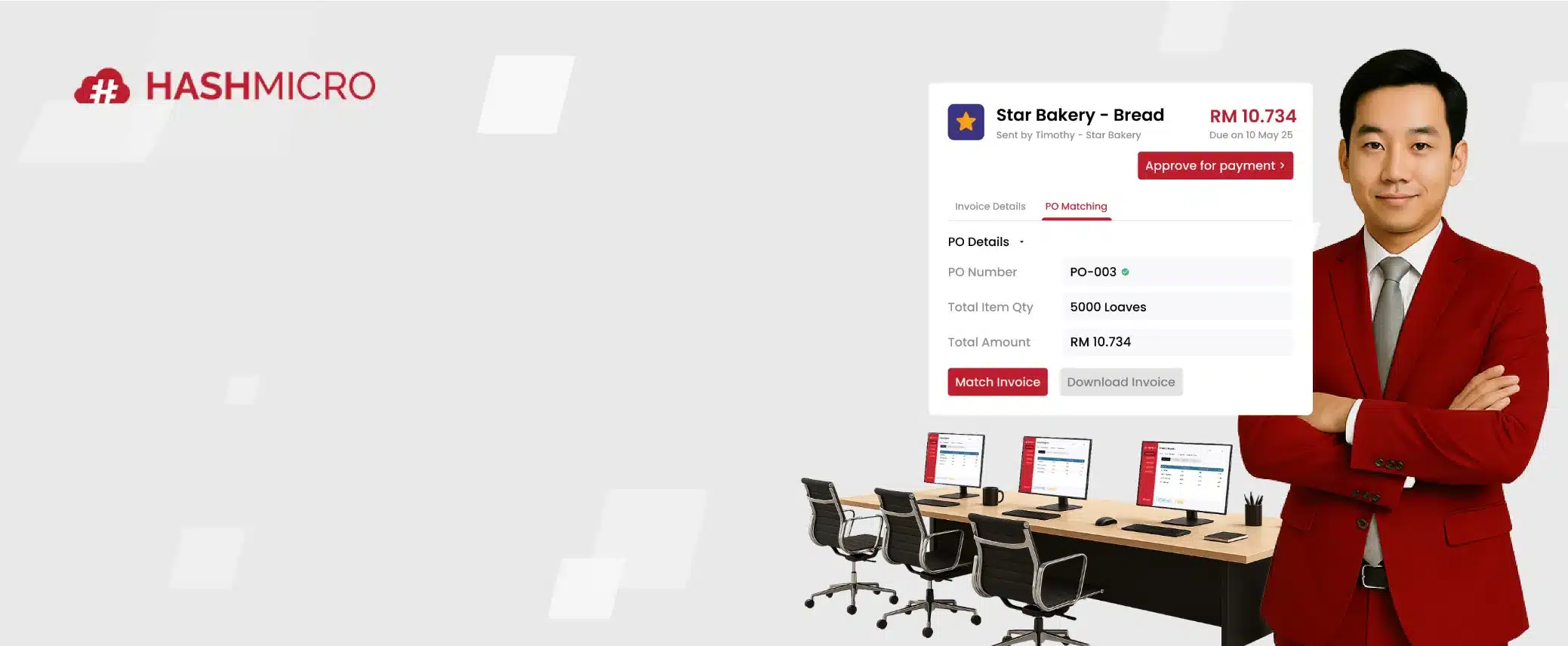
HashMicro Procurement is a software that helps companies manage their buying process more easily and effectively. It is used by more than 2,000 clients, including well-known companies like Abbot, Danone, and Bank of China, demonstrating that the system works across many industries.
The main strength of HashMicro procurement is its flexibility and its design to grow with a business. Since every company has its own way of working, the software can be adjusted to fit each business. It can also connect with other applications that a company already uses, making the entire process smoother and more efficient.
Best Features
- Purchase management: Easily turn purchase requests into orders and send quotes to suppliers.
- Approval system: Approve or reject purchase requests from across departments with a single click.
- Vendor portal: Vendors can share product catalogs and join tenders to offer the best deals.
- Supplier rating: Rate vendors based on quality, price, delivery time, and service.
- Blanket orders: Set up recurring orders at agreed prices and schedules.
- Landed cost calculation: See the actual cost of products by including taxes, shipping, insurance, and currency conversion.
| Pros | Cons |
|
|
Why this suits Malaysian businesses: Built within the Southeast Asian ecosystem, HashMicro naturally aligns with Malaysian operational needs. It supports local SST calculations, is preparing for LHDN’s MyInvois e-invoicing mandate, and offers unlimited user pricing, making it highly cost-effective for growing Malaysian SMEs and mid-sized enterprises. Direct local support in Kuala Lumpur further reduces implementation friction.
2. SAP Ariba

SAP Ariba simplifies procurement by offering guided buying and spot buy capabilities, along with supplier and catalog enablement.
Best features:
- Global supplier network: Access to a vast network of suppliers for better sourcing options.
- E-sourcing and catalog capabilities: Streamlined sourcing and digital purchasing platforms with robust catalog management.
- Automated invoice management: Efficient handling of invoices to reduce manual workload.
- Spend visibility and analytics: Detailed insights into spending for better financial control.
| Pros | Cons |
|
|
Why this suits Malaysian businesses: Ideal for large Malaysian corporations and Government-Linked Companies (GLCs) managing complex, cross-border supply chains. SAP Ariba offers a massive global supplier network, ensuring Malaysian enterprises can source internationally while maintaining strict compliance with local financial reporting standards and enterprise-grade procurement governance.
3. Tipalti

Tipalti is an end-to-end solution that automates the payables cycle, from procurement and supplier onboarding to invoice processing, outbound payments, and reconciliation. It is designed to reduce manual workload by up to 80%, making it a highly efficient option for managing global payments to suppliers, affiliates, freelancers, and partners.
With features such as OCR-enabled invoice scanning, multi-entity support, and ERP integrations, Tipalti streamlines financial operations and supports compliance with global tax laws.
Best features:
- Global payments: Facilitates payments to 196 countries in local currencies.
- Supplier management: Simplifies onboarding and the management of supplier information.
- Invoice automation: Uses OCR to scan and process invoices.
- Financial reconciliation: Offers instant reconciliation with ERP integrations.
| Pros | Cons |
|
|
Why this suits Malaysian businesses: For Malaysian businesses working with international suppliers or freelancers, Tipalti automates complex cross-border payments. It efficiently handles multi-currency transactions (including MYR conversions), ensures compliance with international tax regulations, and streamlines the accounts payable workflow for globally expanding Malaysian tech and service companies.
4. ADAM

ADAM is a cloud-based procurement system that specializes in enhancing daily operations for businesses, aiming to improve sales and revenue.
This purchase order software is equipped with an integrated set of tools that streamline inventory management, customer and contact management, and financial and accounting processes, thereby boosting productivity and profitability.
Best features:
- Inventory management: tracks stock levels and helps maintain optimal inventory levels.
- Sales order processing: Streamlines the process from order taking to fulfillment.
- Purchasing and receiving: Efficiently manages the procurement cycle from purchase to delivery.
- Financial management: Connects payables, accounts receivable, and the general ledger.
| Pros | Cons |
|
|
Why this suits Malaysian businesses: ADAM is a strong fit for Malaysian SMEs looking to transition away from manual purchasing without overwhelming their teams. Its straightforward workflow automation and localized spend visibility help local businesses quickly establish procurement controls and improve operational efficiency without requiring massive IT infrastructure investments.
5. Syspro

Syspro is an enterprise resource planning (ERP) software provider specializing in solutions for manufacturers and distributors. It offers a range of functionalities, including procurement software, inventory management, sales order processing, and financial management.
Syspro’s focus on industries such as food, beverage, and fabricated metal makes it an excellent fit for businesses within these sectors. Its scalability allows for customization to meet the evolving needs of companies of all sizes.
Best features:
- Industry-specific solutions: Tailored features for sectors like food and beverage, electronics, and more.
- Scalability: Ability to add or remove modules as business needs change.
- AI and IoT integrations: Advanced integrations for a smarter, more connected experience.
- Hybrid deployment: Offers both cloud-based and on-premise deployment options.
| Pros | Cons |
|
|
Why this suits Malaysian businesses: Highly tailored for Malaysia’s manufacturing and distribution sectors (such as electronics and F&B). Syspro offers industry-specific sourcing features and deep inventory integration, allowing local manufacturers to align their procurement directly with production schedules, reduce waste, and maintain compliance with local quality standards.
6. Ecount

Ecount is a cloud-based ERP solution that provides features for managing a business’s key functions, including e-procurement, accounting, inventory, sales, and payroll.
It is designed to offer a comprehensive suite of tools to streamline operations, improve efficiency, and reduce costs. Ecount’s real-time data and reporting capabilities enable businesses to make informed decisions quickly.
Best features:
- All-in-one ERP: Integrates multiple business functions into a single platform.
- Real-time data: Provides up-to-date information to support better decision-making.
- Customizable reports: Tailors reports to meet specific business requirements.
| Pros | Cons |
|
|
Why this suits Malaysian businesses: Ecount’s highly affordable, flat-rate monthly subscription makes it incredibly accessible for Malaysian small businesses and startups. As a cloud-based ERP with built-in procurement and accounting modules, it allows local SMEs to centralize their operations and generate real-time reports without high upfront software costs.
7. Procurify

Procurify aims to make purchasing straightforward and efficient. This purchasing software is visually appealing and easy for all team members to adopt, allowing finance and operations departments to minimize process corrections and invoice chasing.
Best features:
- Real-time budget tracking: Keeps spending in check with immediate updates.
- Custom user control: Tailors the system to meet specific organizational needs.
- Electronic purchase order approval: Streamlines the approval process for purchase orders.
- Mobile apps: Provides the flexibility to manage procurement on the go.
| Pros | Cons |
|
|
Why this suits Malaysian businesses: Perfect for fast-scaling Malaysian companies and tech startups that need agile purchasing processes. With its strong mobile app capabilities, local managers and executives can approve purchase requests on-the-go (e.g., while stuck in Klang Valley traffic), ensuring real-time budget tracking and faster turnaround times.
8. JAGGAER ONE

JAGGAER offers a cloud-based, integrated procurement and automated supplier coordination platform renowned for managing the entire procurement lifecycle. It is particularly favored in higher education and government sectors for its scalable, customizable platform.
Jaggaer’s suite includes digital procurement tools, strategic sourcing, supplier management, contract lifecycle management, and spend analytics, providing unparalleled visibility and insights into procurement operations.
Best features:
- Scalable platform: Adapts to the size and complexity of any organization.
- Supplier management: Streamlines supplier onboarding and collaboration.
- Contract management: Automates and manages the entire contract lifecycle.
- Spend analytics: Delivers insights for better spend management decisions.
| Pros | Cons |
|
|
Why this suits Malaysian businesses: Highly suited for Malaysian higher education institutions and large public sector entities. JAGGAER provides deep strategic sourcing and contract lifecycle management that easily handles the stringent compliance, multi-tiered approvals, and high-volume vendor management required by Malaysian government and academic procurement policies.
9. Coupa BSM

Coupa’s BSM platform provides end-to-end processes that drive collaboration among business leaders across supply chain, procurement software, finance, treasury, compliance, and IT.
It aims to give companies the visibility and control they need over their spend management. Coupa is known for its ease of use and intuitive user interface, which simplify navigation and procurement tasks.
Best features:
- Unified spend management: A single source for all spend management needs, offering unparalleled control and visibility.
- Requests and approvals: Centralizes and efficiently manages requests, ensuring they reach the correct approvers.
- Invoices and expenses: Automates Accounts Payable with multi-level automated invoice validation and dynamic approval workflows.
- Vendor management: Integrated vendor onboarding and management solution helps vendors self-service and eliminates silos.
| Pros | Cons |
|
|
Why this suits Malaysian businesses: A powerhouse for large Malaysian enterprises prioritizing strict spend control and visibility. Coupa’s unified Business Spend Management platform helps local conglomerates identify saving opportunities across diverse subsidiaries, enforce corporate purchasing policies, and manage vendor risks effectively in a competitive economic landscape.
10. Team Procure

Team Procure provides a comprehensive set of tools that streamline the procurement process, from request management to warehouse inventory management.
The platform supports RFQ and e-auction negotiations (digital sourcing modules), helping businesses secure the best supplier deals. It also enables the generation of custom reports based on department, project, or category, aiding in data-driven decision-making.
Best features:
- Request management: Simplifies the creation and tracking of procurement requests.
- Procurement management: Manages the entire procurement cycle effectively.
Inventory management module: Monitors stock flow. - Approval workflow: Streamlines the approval process with sophisticated solutions.
- Supplier management: Enhances supplier relationships and performance tracking.
| Pros | Cons |
|
|
Why this suits Malaysian businesses: Team Procure is an excellent choice for mid-market Malaysian companies looking to optimize supplier negotiations. With its built-in RFQ and e-auction modules, local businesses can drive competitive bidding among Malaysian vendors, securing the best prices for goods while tightly integrating with their existing warehouse and accounting workflows.
11. Precoro

Precoro simplifies the procurement process with its user-friendly interface and powerful features. It allows you to create, approve, and track purchase orders with just a few clicks.
The platform manages suppliers, item catalogs, inventory, and more in a single centralized system. Common industries that use Precoro include biotechnology, construction, technology, healthcare, manufacturing, and hospitality.
Best features:
- Customizable workflows: Tailor the approval process to fit your company’s structure.
- Amazon punch-in: Easily transfer orders from Amazon Business.
- Real-time budget tracking: Keep a close eye on your spending and never exceed your budget.
- Centralized supplier management: Manage all supplier information in one place.
| Pros | Cons |
|
|
Why this suits Malaysian businesses: Ideal for Malaysian SMEs that prioritize simplicity and rapid deployment. Precoro offers an intuitive interface that requires minimal training, allowing local teams to quickly adopt automated purchase order approvals and real-time budget tracking without disrupting their daily operations or requiring dedicated IT staff.
12. GEP Smart

This smooth integration across procurement stages makes GEP Smart a versatile tool for organizations looking to optimize their procurement processes.
Best features:
- Unified S2P platform: A single solution for all procurement needs, from sourcing to payment.
- Cloud delivery model: Ensures accessibility and scalability for businesses of all sizes.
- Integration capabilities: Offers full integration with existing systems, enhancing procurement operations.
- User-friendly interface: Known for its intuitive design, which simplifies user interaction.
| Pros | Cons |
|
|
Why this suits Malaysian businesses: Suited for multinational companies operating in Malaysia that require a unified, AI-driven Source-to-Pay platform. GEP Smart helps large local organizations consolidate their procurement data, utilize predictive spend analytics, and manage complex supplier relationships across the Asia-Pacific region from a single cloud-native interface.
13. Salesforce

Salesforce is best known for its CRM, but it can also act as an adaptable purchasing system software. With its procurement plug-in, businesses can manage supplier data, approvals, and purchase orders all in one place. It’s a strong choice for companies using digital purchasing platforms to streamline operations.
The platform offers end-to-end automation, from vendor management to real-time spend analytics. Its flexible workflows and AI-powered reports help improve visibility and decision-making. Integration with ERP and financial tools ensures a smooth and connected procurement experience.
Best Features:
- Vendor and supplier management tools that centralize data and monitor performance
- Automated requisition and purchase order
- Configurable approval workflows for policy
- Real-time dashboards for spend tracking and analytics
- Integration with ERP, inventory, and finance systems
- Cloud-based access for both desktop and mobile
| Pros | Cons |
|
|
Why this suits Malaysian businesses: For Malaysian businesses already deeply invested in the Salesforce ecosystem, this procurement capability provides a flawless extension of their existing CRM. It allows local teams to unify their customer and supplier data, utilizing familiar dashboards and customizable workflows to manage vendor relationships and track spending effectively.
14. Oneflow

Oneflow is an all-in-one digital procurement platform designed to simplify contract creation, signing, and tracking. It allows teams to collaborate in real time, edit documents directly, and manage every stage of the contract lifecycle. This helps businesses keep procurement organized and efficient.
The system automates approval routes, sends renewal reminders, and ensures secure digital signatures. It offers a centralized space to store and monitor contracts, improving compliance and reducing errors. Integrations with CRM tools also enhance productivity and visibility.
Best Features:
- AI-powered contract analysis and clause detection
- Secure e-signature and automated approval routing
- Real-time collaboration and live document editing
- Centralized digital repository for signed contracts
- Integration with CRM and project management tools
| Pros | Cons |
|
|
Why this suits Malaysian businesses: Kissflow’s no-code platform is perfect for agile Malaysian businesses that want to build custom procurement workflows without hiring developers. Local HR, finance, and operations teams can easily design dynamic approval routing that perfectly matches their unique internal hierarchies and standard operating procedures.
How E-Procurement Software Improves Purchasing Performance in Malaysia
Procurement software plays a key role in helping Malaysian businesses manage purchasing with greater speed, clarity, and strategic control across their operations.
1. Improved efficiency: Procurement software replaces time-consuming manual tasks with automated workflows. Activities like creating purchase orders, routing approvals, and matching invoices can be completed much faster, allowing teams to focus on more valuable work.
2. Better visibility and control: All procurement data is stored in one centralized system, making it easier to monitor spending, track order progress, and ensure compliance. This transparency helps businesses make more informed decisions and avoid unnecessary errors.
3. Stronger supplier management: Supplier information such as contracts, performance history, and communication records is organized in a single platform. This makes it easier to evaluate vendors, negotiate better terms, and maintain productive relationships.
4. Cost savings: With clearer data and automated processes, businesses can reduce operational costs more effectively. The system helps identify spending inefficiencies, prevent duplicate payments, and uncover opportunities for bulk purchasing or supplier consolidation.
5. Lower risk and better compliance: Every transaction is documented and easy to audit. This helps businesses stay compliant with internal policies and industry regulations. It also allows teams to detect potential issues early, such as inconsistent supplier performance.
6. More informed decision-making: Digital procurement systems provide real-time insights into spending patterns and supplier behavior. With this information, procurement leaders can adjust strategies, plan more effectively, and support long-term business goals with confidence.
Challenges in Implementing E-Procurement Software Malaysia
Implementing a procurement solution in Malaysia involves navigating deep seated structural and regulatory complexities. For leadership, the primary obstacles often revolve around these critical areas:
- The LHDN E-Invoicing Compliance Gap
Malaysia’s mandatory transition to MyInvois requires accurate data synchronization. Many global tools lack the native capacity to handle specific Malaysian tax formats. Without a direct connection to LHDN, companies face massive manual data entry, which negates the efficiency gains promised by the platform and creates significant compliance risks for the finance department.
- Fragmented Supplier Digital Maturity
Digital procurement relies on active vendor participation. Many small local vendors still operate through informal channels like WhatsApp or email based transactions. If the platform interface is too complex, these partners may resist adoption, which risks supply chain stability and forces procurement teams back into manual, unmonitored workflows.
- Resistance to Process Standardization
Internal friction often arises when departments insist their purchasing needs are too unique for uniform digital workflows. This mindset leads to over customization, which not only inflates project costs but also makes future platform updates difficult to manage. The challenge lies in securing organizational agreement on a single, unified way of working.
- Hidden Data Integrity & The Garbage In, Garbage Out Rule
Inconsistent legacy data is a major threat to project success. Fragmented vendor names and scattered pricing histories complicate migration. Skipping the data cleansing phase leads to flawed spending reports, which ultimately weakens your negotiation leverage with suppliers and provides a distorted view of company finances.
- Post-Go-Live ROI Erosion and Maverick Spend
If a platform is frustrating to use, employees will revert to old habits. This creates maverick spend where purchases are made outside of agreed corporate contracts. To secure projected cost savings, the platform must be user friendly enough to ensure total adoption across the organization and maintain a transparent audit trail.
Types of E-Procurement Software
There are various types of procurement software, each tailored to specific needs in the sourcing and purchasing cycle. For companies looking to improve operational efficiency, especially when scaling, choosing the right purchasing platform for the local market helps prevent inefficiencies and overlapping tools. Below are the most widely used types:
- Source-to-pay software: Offers a complete solution that handles everything from vendor selection to final payment, integrating each step into a centralized purchasing automation platform.
- Spend and accounts management tools: Automates invoice processing and monitors company expenses, helping businesses avoid late payments and maintain financial accuracy.
- Contract management systems: Tracks contracts through their entire lifecycle, from drafting and approvals to enforcement and renewal reminders.
- Purchase automation software: Streamlines tasks like purchase requests, order approvals, and delivery tracking. This kind of purchasing system software helps procurement teams work faster with fewer errors.
- RFP and bidding tools: Assists in managing vendor proposals, comparing offers, and selecting suppliers using structured templates and automation.
- Expense control platforms: Provides insight into procurement-related spending and helps companies stay within budget while optimizing resource use.
- Strategic sourcing tools: Supports structured sourcing projects, category planning, and supplier evaluation to maximize long-term value.
- Vendor management software: Centralizes vendor data, tracks performance, and improves communication with suppliers throughout the procurement software lifecycle.
- Inventory and warehouse tracking tools: Manages stock movement, categorization, and storage to ensure procurement aligns with inventory levels and demand.
Overall Comparison of E-Procurement Software in Malaysia
From our comprehensive analysis, we can now compare the standout choices in greater detail:
Provider
Connection Quality
Bank Coverage
Ease of Integration
Data Enrichment
HashMicro
Tipalti
Coupa
Procurify
JAGGER ONE
What Features to Look for in E-Procurement Software?
The best purchasing platforms available locally help teams reduce manual purchasing work, centralize contract files, and consolidate supplier communication in one place. Ideally, procurement software should provide a unified dashboard to track purchase requests, manage suppliers, approve orders, and process invoices efficiently, so the entire workflow runs faster and stays auditable.
When evaluating procurement software in Malaysia (including online purchasing platforms), focus on features that address today’s pain points while supporting future growth. Here are the most important capabilities to prioritize when choosing the right purchasing system for your business:
| Feature | Description |
| User-friendly Interface | An intuitive interface helps procurement teams and employees submit purchase requests more easily, improving adoption and reducing operational confusion. |
| Automation Capabilities | Automation features simplify repetitive procurement tasks such as approval workflows, purchase order creation, and invoice matching. |
| Supplier Management | Centralized supplier management supports vendor onboarding, communication, contract storage, performance monitoring, and supplier risk evaluation. |
| Integration Flexibility | Smooth integration with ERP, accounting, and supply chain management systems helps maintain consistent data and smoother procurement operations. |
| Spend Analysis & Reporting | Real-time dashboards and reporting tools provide better visibility into company spending, supplier performance, and cost-saving opportunities. |
| Contract Management | Contract lifecycle management helps businesses track renewals, compliance, amendments, and important supplier agreements more effectively. |
| Automation & Notifications | Real-time alerts and workflow notifications help prevent delays in approvals, supplier updates, and invoice processing. |
| AI & Machine Learning | Advanced AI capabilities improve spend analysis, invoice accuracy, and supplier risk monitoring as procurement activities scale. |
| Compliance & Risk Management | Audit trails, compliance checks, and supplier risk assessments help businesses maintain transparency and reduce procurement risks. |
By aligning these features with your workflow, the right purchasing and sourcing solution can improve accuracy, reduce costs, strengthen supplier relationships, and increase operational efficiency, while ensuring your digital procurement system remains scalable as your purchasing needs expand.
How to Choose The Right E-Procurement Software for Your Business
Choosing a suitable procurement platform for Malaysian companies involves carefully considering several factors to ensure that the software aligns with the company’s specific needs and operational workflows.
Here are some key points to consider:
| Consideration | Description |
| Assess Your Needs | Identify procurement challenges and prioritize features such as order automation, vendor management, spend analysis, and system integration. |
| Scalability & Flexibility | Choose procurement software that can support growing transaction volumes and adapt to evolving business processes. |
| Integration Capabilities | Select software that integrates smoothly with ERP, accounting, and other business systems to maintain efficient data flow. |
| User-friendly Interface | An intuitive platform helps users adopt the system faster while reducing training time and operational complexity. |
| Security & Compliance | Ensure the software follows strong security standards and supports compliance with procurement regulations. |
| Vendor Credibility & Support | Evaluate the vendor’s reputation, customer reviews, case studies, and ability to provide ongoing technical support and updates. |
| Cost-effectiveness | Consider implementation, maintenance, and long-term operational costs to ensure the software delivers strong business value. |
| Demo & Free Trial | Use demos and trial versions to evaluate usability, features, and compatibility with your procurement workflow before purchasing. |
To evaluate a purchasing system’s credibility, businesses can review industry forums, online feedback, vendor references, and insights from peers or industry events. Consulting IT professionals and procurement experts can also help companies choose software that matches their operational and purchasing requirements.
For businesses involved in production or supplier-intensive operations, exploring manufacturing procurement software may also be beneficial, as these solutions are often designed to handle more complex purchasing workflows and supplier management needs.
Which E-Procurement Software Suits My Business?
For businesses ready to conduct an in-depth evaluation, the following matrix compares the top 5 procurement solutions based on strategic functionality for the Malaysian operational market
| Software | Key Capabilities | Strengths | Best Fit For |
|---|---|---|---|
| HashMicro | Purchase management, vendor portal, approval workflows, landed cost tracking | Highly customizable, strong integration, full procurement visibility | SMEs to mid-sized businesses needing flexible and scalable procurement systems |
| SAP Ariba | Global sourcing, supplier network, spend analytics, invoice automation | Extensive supplier ecosystem, enterprise-grade capabilities | Large enterprises managing global supply chains |
| Tipalti | Global payments, invoice automation, supplier onboarding, reconciliation | Strong cross-border payment capabilities, automation efficiency | Companies handling international vendors and financial workflows |
| ADAM | Inventory, purchasing, sales order, financial integration | Simple interface, easy adoption | SMEs transitioning from manual procurement processes |
| Syspro | Procurement, inventory, manufacturing integration, AI/IoT features | Industry-specific capabilities, scalable modules | Manufacturing and distribution companies |
| Ecount | ERP integration, procurement, accounting, real-time reporting | Affordable pricing, all-in-one system | Startups and SMEs seeking cost-efficient ERP solutions |
| Procurify | Budget tracking, purchase approvals, mobile procurement | User-friendly, strong real-time tracking | Fast-growing companies needing agile procurement processes |
| JAGGAER | Strategic sourcing, supplier management, contract lifecycle | High customization, strong analytics | Government, education, and large institutions |
| Coupa | Spend management, procurement workflows, expense tracking | Unified platform, strong visibility and control | Large enterprises focused on spend optimization |
| Team Procure | RFQ, e-auction, inventory integration, supplier management | Strong sourcing tools, integrates with accounting | Mid-sized companies optimizing supplier negotiations |
| Precoro | Purchase order tracking, supplier management, budget control | Easy to use, fast implementation | SMEs prioritizing simplicity and efficiency |
| GEP Smart | Source-to-pay, analytics, supplier collaboration | AI-driven insights, unified procurement lifecycle | Multinational companies with complex procurement needs |
| Salesforce | Supplier management, workflow automation, analytics dashboards | Highly customizable, strong integrations | Businesses already using Salesforce ecosystem |
| Oneflow | Contract management, e-signature, workflow automation | Strong contract lifecycle control, collaboration tools | Teams focusing on procurement contracts and approvals |
Conclusion
The shift toward digital procurement has changed how many businesses manage purchasing. With modern procurement platforms, companies can reduce manual errors, shorten approval cycles, and better organize supplier information, supporting tighter cost control across departments.
If you are reviewing ways to improve purchasing efficiency, it may be worth seeing how the system fits your current workflow and approval structure.
Take the next step after going digital by testing whether a procurement system truly fits your workflow and approval structure. Book your free demo with HashMicro today and see how the platform can reduce manual handoffs, speed up approvals, and give you cleaner visibility into spend and supplier activity across departments.

FAQ about E-Procurement Software
-
How does procurement software integrate with other business systems?
Procurement software often integrates with ERP systems, accounting software, and other business management tools to provide a seamless flow of information across different departments. This integration ensures that procurement activities are aligned with financial and operational data and improved efficiency.
-
How can procurement software help manage supplier relationships?
Procurement software aids in managing supplier relationships by providing tools for supplier evaluation, performance tracking, and communication. Features like supplier portals, contract management, and automated RFQ (Request for Quotation) processes enable businesses to maintain transparent and efficient supplier interactions.
-
Is procurement software scalable for growing businesses?
Yes, procurement software is designed to be scalable to accommodate the needs of growing businesses. Many solutions offer modular features that can be added as the business expands.
-
What are the costs associated with implementing procurement software?
The costs of a digital purchasing platform vary widely depending on the features, scalability, and vendor. Pricing models can include monthly subscriptions per user or transaction-based fees.
-
What is procurement software as a service (SaaS)?
Procurement SaaS is a cloud-based procurement system you access via subscription, where the vendor hosts the platform and handles updates, security, and maintenance. It helps teams run purchasing workflows, like requisitions, approvals, POs, and supplier management, without on-premise infrastructure.
-
What are the key capabilities and features of an effective AI-powered procurement software?
It should cover core procurement workflows (PR/PO, approvals, supplier onboarding, invoicing/3-way match) and use AI to reduce manual work and improve decisions. Key AI features include spend insights, smart supplier recommendations & risk flags, anomaly detection, and document intelligence for contracts/invoices, supported by strong automation, integrations, and audit controls.