













Many Malaysian businesses struggle to manage employee training consistently, especially when onboarding new hires, maintaining compliance requirements, and delivering learning programs across multiple departments or locations. A learning management system (LMS) helps centralize training activities, making it easier to distribute courses, monitor participation, track progress, and support employee development from a single platform.
With Malaysia’s ongoing focus on workforce upskilling and digital transformation, organizations are placing greater emphasis on structured learning and skills development. Government initiatives, industry training programs, and increasing demand for digital competencies have encouraged companies to invest in technology that supports continuous employee learning and performance improvement.
To support your software selection process, we’ve compiled a list of the best learning management systems in Malaysia, along with their features, deployment models, recommended use cases, and evaluation criteria.
Key Takeaways
|
Many businesses still rely on spreadsheets, manual tracking, and disconnected systems to manage employee training. Learning Management System provides a centralized platform that simplifies course administration, progress monitoring, and training reporting across the organization.

Why Learning Management Systems Matter for Modern Businesses?
Modern businesses need a structured approach to employee training, especially as workforces become larger, more distributed, and subject to evolving skill requirements. Relying on spreadsheets, email reminders, or manual record-keeping can make it difficult to deliver consistent training, monitor participation, and demonstrate compliance when required.
A learning management system (LMS) addresses these challenges by centralizing training content, learner records, assessments, certifications, and reporting within a single platform. This allows organizations to standardize onboarding, support continuous employee development, and track training outcomes more efficiently across departments and locations.
For Malaysian businesses, an LMS also provides better visibility into training records and workforce development efforts, helping organizations maintain compliance requirements while supporting long-term skills development and operational growth.
Key Features to Look for in a Learning Management System
Before reviewing vendors, it helps to know which capabilities matter most for business use. The features below are the core criteria to evaluate when comparing LMS platforms.
- Course management: HR and L&D teams should be able to build, organize, and publish training content without needing IT support for every update. Look for compatibility with multiple content formats, including video, documents, and interactive modules.
- Learner progress tracking: The platform should make it easy to see who has started a course, who has completed it, and where learners are falling behind. Real-time visibility supports better training decisions.
- Assessment and quizzes: Tests, quizzes, and assignments let you measure whether learners have understood the material. Look for automatic grading, configurable pass thresholds, and retry options.
- Reporting dashboard: Completion rates, assessment scores, and program performance should be visible in one place. Strong reporting is essential for training documentation and audit purposes.
- Integration with business systems: If your company uses HR software, payroll, or an ERP, the LMS should connect with those tools. Integration allows employee data to sync automatically and training records to link with HR or performance data.
- Mobile access: Employees complete training at different times and locations. A mobile-compatible platform supports self-paced learning without requiring learners to sit at a desk.
- Cloud deployment: A cloud-based learning management system removes the need for on-premise servers and ongoing IT maintenance. It also makes access easier for distributed or multi-branch teams.
- User roles and access control: Admins should be able to assign distinct roles to managers, trainers, and learners. Clear access control keeps content and sensitive data secure.
- Scalability: For companies planning to grow or expand across locations, the platform needs to support more users and programs without a drop in performance.
Best LMS in Malaysia Comparison Table
Before exploring each platform in detail, review comparison table below summarizes the leading LMS platforms, helping you identify which solutions best align with your organization’s training requirements.
| Software | Strength | Best For | Pricing Model |
|---|---|---|---|
HashMicro LMS |
Integrated LMS connected with HR, payroll, and business operations | Malaysian businesses and enterprises seeking training management within a unified business system | Custom pricing based on modules, users, and implementation scope |
TalentLMS |
Easy-to-use cloud LMS with strong corporate training features | SMBs and mid-sized companies running onboarding, employee training, and sales enablement programmes | Free plan available; paid plans start from USD 119/month |
Moodle |
Open-source LMS with extensive customisation and plugin ecosystem | Universities, TVET providers, and organisations with internal IT resources | Free self-hosted option; MoodleCloud starts from USD 160/year |
Docebo |
AI-powered enterprise learning platform with advanced automation | Large enterprises managing employee, partner, and customer training | Custom enterprise pricing based on active user model and selected modules |
Absorb LMS |
User-friendly LMS with branded learning experiences and analytics | Mid-market and enterprise companies prioritising learner engagement and reporting | Custom pricing based on learner count, features, and deployment scope |
LearnUpon |
Multi-portal LMS for training employees, partners, and customers | L&D teams managing multiple learner audiences from one platform | Custom pricing based on monthly active users and training use case |
SAP Litmos |
Enterprise LMS focused on compliance and large-scale training delivery | Enterprises requiring compliance training and automated learning workflows | Custom pricing; 14-day free trial available |
Cornerstone OnDemand |
Comprehensive talent and learning management platform | Large organisations combining learning, skills tracking, and workforce development | Custom enterprise pricing based on workforce size and selected talent modules |
360Learning |
Collaborative learning platform built around peer-driven content | Companies that rely on internal experts to create and share knowledge | Starts from USD 8/user/month for the Team plan; larger plans are custom |
iSpring Learn |
LMS designed for rapid deployment of PowerPoint and video-based training | SMBs and blended learning programmes needing fast content delivery | Active-user subscription; G2 lists pricing from around USD 3.58/user/month |
Canvas LMS |
Modern LMS with strong course design and integration capabilities | Educational institutions and organisations prioritising mobile learning and flexibility | Custom institutional pricing; limited free teacher option available |
GuruLMS |
Locally developed LMS with a simple interface and local support | Malaysian SMEs seeking an easy-to-manage learning platform | Subscription pricing; public pricing is not clearly published |
QuickHR LMS |
Training management integrated with HR, payroll, and attendance tools | HR teams wanting LMS functionality within an existing HR platform | Starts from RM7/employee/month; LMS availability may depend on selected HRMS plan |
Tovuti |
Interactive LMS with built-in content creation and virtual training tools | Corporate training and employee development programs | Custom pricing; G2 lists starting price from USD 7,500/year |
OpenLearning |
Social learning platform with course marketplace capabilities | Universities, training providers, and organisations offering external learning programmes | Official organisational plans start from $6,170/year; G2 lists Starter from USD 169/month |
15 Best Learning Management Systems in Malaysia
The LMS market includes everything from open-source platforms and cloud-based learning tools to solutions that integrate directly with HR and business management systems. Below is best LMS platforms recommendation used by Malaysian businesses.
1. HashMicro Learning Management System
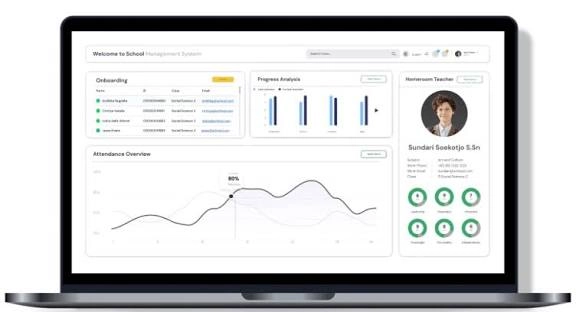
HashMicro LMS is learning platform connected with Malaysia broader business operations. Rather than running training in a separate tool, HashMicro brings learning management into the same environment as HR, employee management, and ERP workflows. This makes it especially relevant for businesses that want training data and employee records in one place.
Key features:
- Online training and course management
- Competency and skill tracking system
- Learning paths and module sequencing
- Training reports and completion tracking
- HR and payroll system integration
- Customisable onboarding and compliance programmes
Best for: Malaysian businesses and enterprises seeking an LMS that integrates training management with HR, employee development, and business operations, supported by local implementation services in Malaysia.
Pricing: Pricing is typically customized based on the modules selected, number of users, implementation requirements, and whether the LMS needs to integrate with HR, payroll, performance management, or other ERP workflows.
2. TalentLMS
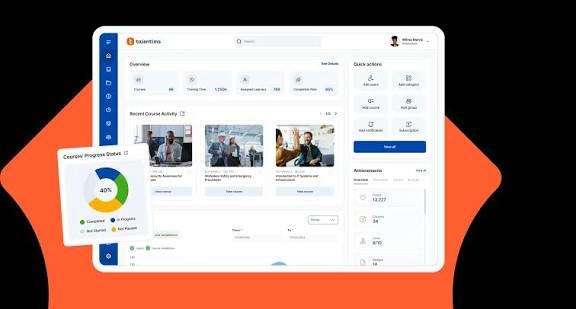
TalentLMS is a cloud-based learning management system (LMS) used by SMBs and corporate training teams across multiple industries. It is known for a fast setup process and a broad set of built-in features that cover most corporate training scenarios.
Key features:
- Drag-and-drop course builder
- SCORM and video content support
- Gamification with badges, points, and leaderboards
- Multi-branch learner management
- API and third-party integrations
Best for: Small to mid-sized businesses running onboarding, internal training, and sales enablement programmes. Also suitable for companies wanting a quick-deploy LMS with a good learner experience.
Pricing: It has a free plan for small teams, while paid plans start from $119 per month for the Core plan, with higher tiers for larger teams and more advanced features.
3. Moodle
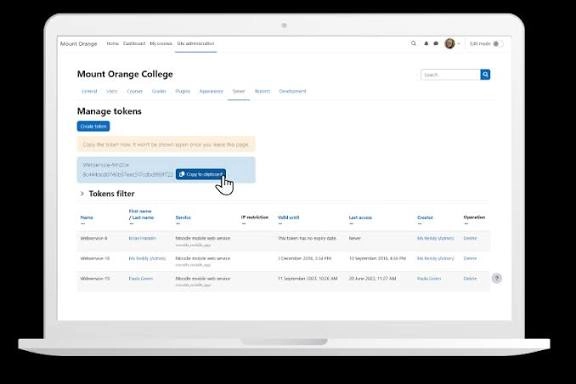
Moodle widely adopted open-source learning management systems globally. It is popular among educational institutions, vocational training providers, and organisations that want full control over their LMS environment without a per-user licensing fee.
Key features:
- Course and learning activity management
- Quizzes, assignments, and gradebooks
- Extensive plugin ecosystem
- Multilingual support
- Role-based access and privacy controls
Best for: Universities, TVET providers, and organisations with IT resources to manage deployment, hosting, and ongoing platform maintenance.
Pricing: Available as a free open-source LMS if businesses choose to self-host it. For companies that prefer a hosted option, MoodleCloud offers annual plans starting from around $160 per year, making it one of the most affordable options for organizations with basic LMS needs.
4. Docebo
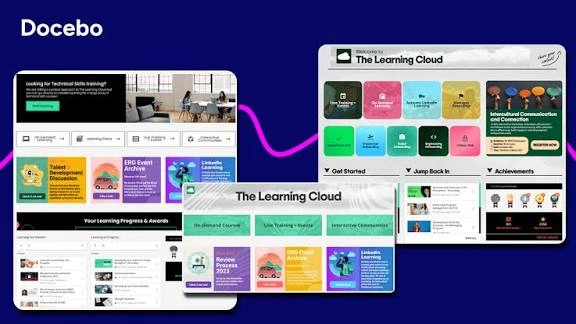
Docebo adapt AI-powered enterprise learning management system built for large organisations with complex training needs. It handles internal employee learning, partner training, and customer education from a single platform.
Key features:
- AI-powered learning recommendations
- Automated learning workflows
- Advanced analytics and reporting
- Multi-audience and multi-portal support
- Salesforce and HRIS integrations
Best for: Enterprise organisations managing large-scale employee development, partner learning programmes, or customer education at scale.
Pricing: Its cost depends on the number of active users, selected learning modules, automation needs, integrations, and implementation support, making it more suitable for mid-sized and enterprise organizations.
5. Absorb LMS
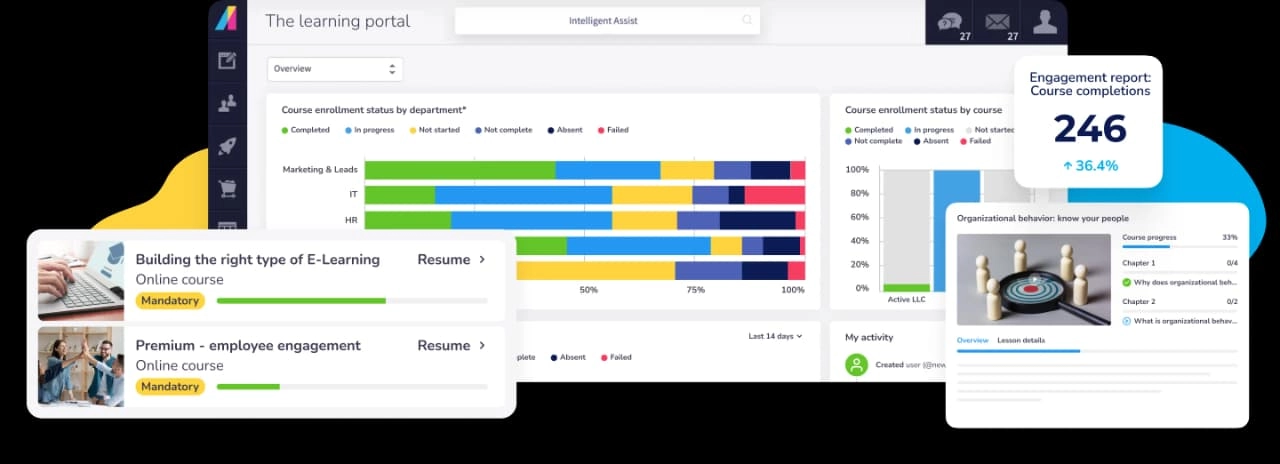
Absorb LMS focuses on creating an engaging learning experience for both learners and administrators. It is used by mid-market and enterprise companies that want a well-designed interface backed by strong reporting capabilities.
Key features:
- Branded learning environments
- eCommerce and course sales tools
- Reporting and custom dashboards
- Instructor-led training (ILT) management
- Mobile learning access
Best for: Mid-market and enterprise companies that prioritize learner experience, detailed analytics, and branded training portals.
Pricing: Its pricing is usually based on learner count, training use case, feature requirements, and deployment scope, so it is better positioned for companies that need a scalable corporate learning platform.
6. LearnUpon
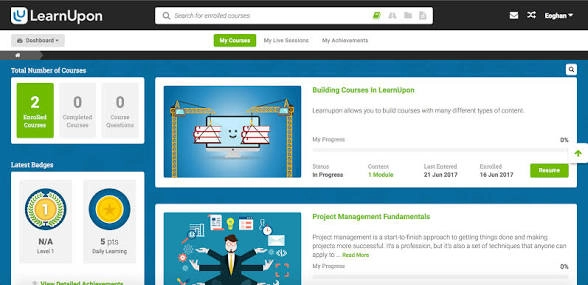
LearnUpon LMS designed for corporate teams that need to train employees, partners, and customers through one platform. Its multi-portal architecture makes it practical for businesses with distinct learner audiences.
Key features:
- Multi-portal setup for managing separate learner groups independently
- SCORM-compatible course library
- Survey, assessment, and certification tools
- Integration with other business platforms
- Dedicated customer success support included in paid plans
Best for: L&D teams managing training across employees, external partners, and customers at the same time.
Pricing: It follows a quote-based pricing model, with plans shaped around monthly active users and training use cases such as employee training, customer education, or partner enablement. This makes it flexible for growing teams, but businesses need to contact sales for an exact price.
7. SAP Litmos
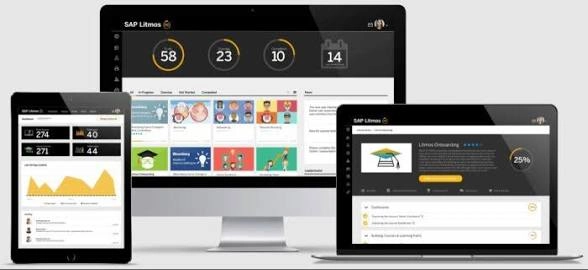
SAP Litmos is an enterprise LMS with a strong focus on compliance training and content delivery at scale. It includes a pre-built content library covering common compliance and professional skills topics.
Key features:
- Pre-built compliance course library
- Automated enrolment rules and training reminder notifications
- Progress reporting and completion dashboards
- Video assessment and virtual classroom support
- Integration with SAP SuccessFactors and third-party systems
Best for: Enterprises requiring large-scale compliance training with automated delivery and detailed progress reporting.
Pricing: It offers flexible purchase options and a 14-day free trial, but final pricing depends on the LMS package, course content requirements, number of users, and business needs.
8. Cornerstone OnDemand
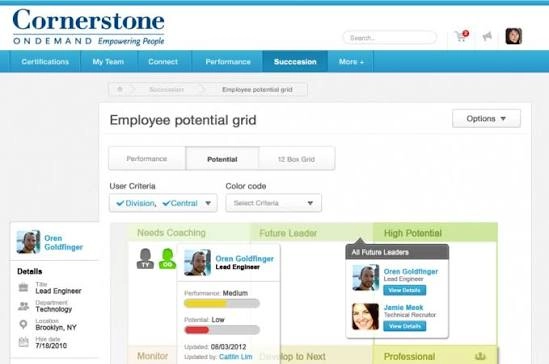
Cornerstone OnDemand is a comprehensive talent and learning management platform used by global enterprises. It treats learning as one part of a broader talent strategy that includes skills tracking and performance management.
Key features:
- Learning paths and certification management
- Skills and competency tracking system
- Compliance training and multilingual reporting
- AI-powered content recommendations
- HRIS and talent management integrations
Best for: Large organizations managing learning as part of a wider talent development and workforce planning strategy.
Pricing: Companies usually need to request a quote because pricing depends on selected modules, workforce size, implementation complexity, and whether the LMS is bundled with other talent management tools.
9. 360Learning
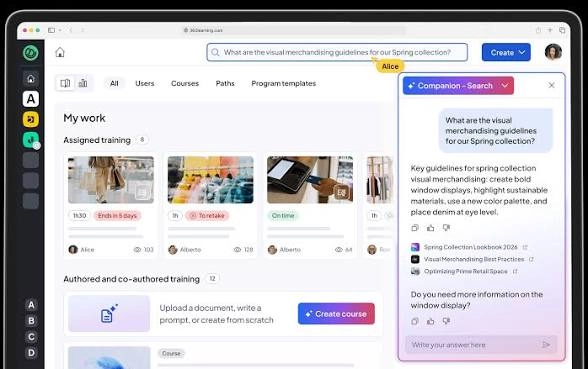
360Learning positions itself as a collaborative learning platform where internal subject matter experts create and share courses with peers. It is built on the idea that peer-authored content drives better knowledge transfer than top-down training alone.
Key features:
- Peer-authored course creation tools with in-course feedback loops
- Discussion and engagement features built into every module
- Completion tracking and learning analytics dashboards
- Integration with HRIS platforms
- Collaborative course review and iteration workflows
Best for: Companies where internal experts create training content and where collaborative, peer-driven learning is a core part of the L&D strategy.
Pricing: Starting price for its Team plan at $8 per user per month for up to 100 users. Larger organizations need to request custom pricing for Business or Enterprise plans, especially if they require advanced collaboration, integrations, and security features.
10. iSpring Learn
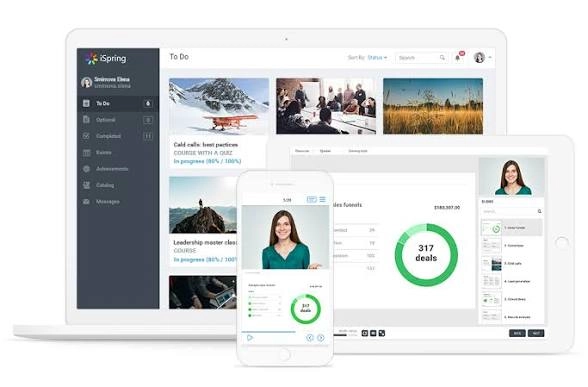
iSpring Learn is an LMS designed to work closely with iSpring Suite, a PowerPoint-based course authoring tool. It suits businesses that already create training content in PowerPoint or video formats and want a fast path from content creation to online delivery.
Key features:
- PowerPoint-to-course conversion via iSpring Suite integration
- Video lecture and screen recording support
- Instructor-led training (ILT) management with calendar integration
- Progress tracking, assignments, and completion certificates
- Mobile-compatible interface for learning across devices
Best for: SMBs and blended learning programmes where trainers produce content in PowerPoint or video format and need a fast path from content to delivery.
Pricing: iSpring LMS pricing at roughly $3.58 to $6.91 per user per month depending on user volume, but businesses should verify the latest quote directly with iSpring because official pricing may vary by plan and region.
11. Canvas LMS
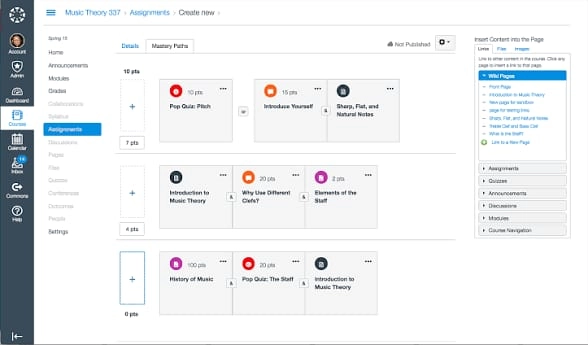
Canvas LMS by Instructure is widely used in higher education and has gained traction in corporate settings through its clean course design tools and open API. It suits teams that prioritise content quality and mobile-first learning.
Key features:
- Multimedia course builder
- Mobile-first learning experience
- Google Workspace and Microsoft 365 integrations
- Learning analytics and reporting
- Open API for custom integrations
Best for: Educational institutions and corporate teams that prioritise course design quality, mobile learning, and flexible third-party integrations.
Pricing: Individual users may access limited free options, but schools, universities, and organizations that need a full Canvas LMS deployment must request a custom quote from Instructure.
12. Gurulms
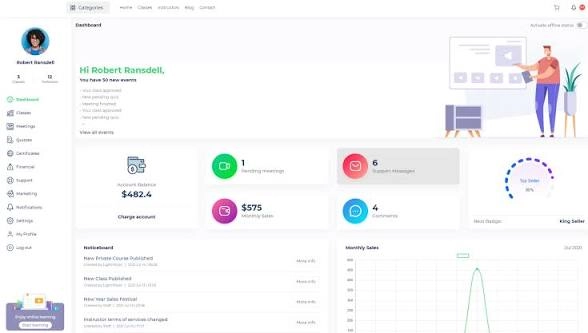
Gurulms developed with Malaysian SMEs in mind. It offers a simpler interface than most enterprise platforms, making it accessible for smaller businesses that do not need deep customisation or complex integrations.
Key features:
- Course creation and content management
- Learner enrolment and progress tracking
- Certificate management
- Simple administration dashboard
- Bahasa Malaysia language support
Best for: Malaysian SMEs looking for a locally developed LMS with local support and a lower learning curve than enterprise-grade platforms.
Pricing: Businesses should verify pricing directly with the vendor before listing a fixed price, especially because some third-party results may refer to different products with similar names.
13. QuickHR LMS
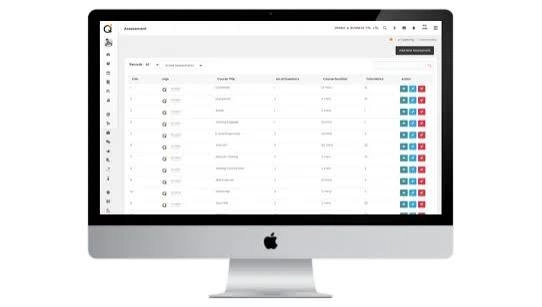
QuickHR is primarily an HR software platform for Southeast Asia, and its LMS module makes it relevant for HR-focused businesses that want training features connected to their existing HR system. It suits teams already using QuickHR that want to avoid adding a separate training tool.
Key features:
- Training records linked to employee profiles
- Course assignment by role or department
- Completion tracking and reporting
- Payroll and attendance integration
- Multi-branch training management
Best for: HR teams in Malaysia and Southeast Asia that want training management within their existing HR system, without deploying a separate LMS.
Pricing: QuickHR publishes Malaysia pricing from RM7 per employee per month for its HRMS plans, with higher tiers at RM14 and RM21 per employee per month.
14. Tovuti
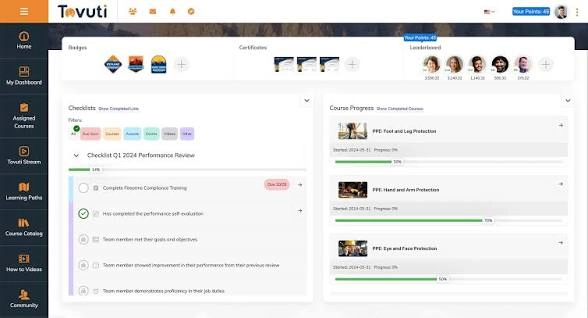
Tovuti LMS designed for all-in-one cloud learning platform known for highly interactive training content. It focuses on learner engagement, offering built-in tools to create gamified lessons, interactive video, and virtual classroom sessions without needing separate authoring software.
Key features:
- Interactive Content Creation
- Live Training Sessions
- Structured Course Progression
- Learner Engagement Tracking
- Course Sales & Monetization
Best for: Businesses that want highly engaging, interactive training content and prefer built-in authoring tools over separate content software.
Pricing: Tovuti uses customized pricing on its official website, with costs depending on learner count, use case, and feature requirements. Its pricing starts from $7,500 per year, so it is better described as a higher-cost LMS for companies that need a more structured learning platform.
15. OpenLearning
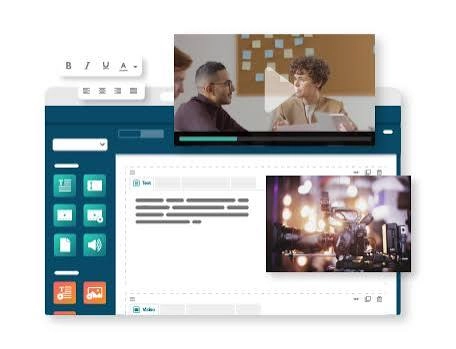
OpenLearning is an Australian-founded cloud learning platform with adoption among Malaysian universities and professional training providers. It supports social and project-based learning, and includes a course marketplace for publishing training programmes to external learners.
Key features:
- Social and collaborative learning tools
- Peer feedback and assessment features
- Course marketplace capabilities
- Mobile learning access
- White-label and institutional deployment options
Best for: Malaysian universities, professional development providers, and training organisations offering courses to external learners or building a social learning environment.
Pricing: OpenLearning publishes organisational plans starting from $6,170 per year, with a 30-day free trial available.
How to Choose the Right LMS for Malaysian Business?
The right learning management system depends on how your business runs training, not on which platform has the longest feature list. Use the scenarios below to narrow your shortlist before requesting demos.
- SMEs with fewer than 200 employees: Choose an LMS that is easy to deploy, simple to manage, and does not require dedicated IT resources. Focus on essential features such as course creation, learner tracking, and reporting without paying for advanced enterprise capabilities.
- Enterprise or multi-branch businesses: Look for a platform that supports large user volumes, role-based access controls, and multi-location reporting. This helps standardize training and monitor performance across departments and branches.
- Education or training providers: Open-source or community-driven LMS platforms can provide greater flexibility for course delivery and customization. They are often suitable for organizations managing diverse learning programs and audiences.
- Businesses needing LMS connected with HR or ERP: Select an LMS that integrates with your existing HR, payroll, or ERP software. This reduces manual data entry and keeps employee training records updated across systems.
- Compliance-focused training: Prioritize features such as automated enrolment, completion tracking, certification management, and audit-ready reporting. These tools help ensure mandatory training requirements are consistently met.
- Budget-constrained teams: Consider the total cost of ownership, including implementation, customization, and support costs. Free or lower-cost platforms can be cost-effective, but additional expenses may arise as requirements grow.
Malaysia-Specific LMS Considerations

Selecting an LMS in Malaysia involves a few factors that global comparison lists rarely address. These matter when your business operates locally and needs a platform suited to the Malaysian business environment.
- Training documentation and record-keeping
Many organizations need accurate training records for audits, compliance reviews, and internal reporting. Choose an LMS that can automatically track participation, completion status, certifications, and generate exportable reports. - HRD Corp awareness
For businesses that utilize HRD Corp training initiatives, maintaining organized training records is essential. An LMS can simplify documentation and reporting, but companies should always verify the latest claim and eligibility requirements directly with HRD Corp. - Multi-branch and distributed teams
Businesses with employees across multiple locations should look for an LMS that supports branch-level user management and reporting. This helps maintain consistent training standards while providing visibility into each location’s performance. - Local language and implementation support
Having access to implementation and technical support within Malaysia or Southeast Asia can speed up deployment and issue resolution. Local vendors may also have a better understanding of regional business requirements. - Data access and security
Training records often contain sensitive employee information, making data security a key consideration. Review how the platform manages data access, storage, backups, and compliance with your organizations security policies.
Conclusion
Selecting the right LMS starts with understanding your training objectives, workforce size, and operational requirements. The most effective platform is one that not only supports learning delivery but also fits naturally into your existing business processes.
For Malaysian businesses seeking a solution that connects employee training with HR and business operations. By centralizing learning management alongside employee data and workflows, it helps reduce administrative work while providing better visibility into training progress and workforce development.
Best LMS depends on your organization priorities, whether that is compliance training, enterprise-scale learning, open-source flexibility, or system integration. Try our free demo to evaluate how well the platform aligns with your business needs and long-term training strategy.
FAQ about Learning Management System (LMS)
-
How do I evaluate LMS ROI before implementation?
Assess LMS ROI by measuring the time spent on manual training administration, compliance reporting, onboarding, and recurring training activities. Organizations should also consider improvements in training completion rates, employee productivity, and administrative efficiency after deployment.
-
How can businesses scale LMS usage across multiple branches or countries?
Organizations should look for features such as multi-entity management, role-based permissions, multilingual support, location-specific reporting, and centralized administration. These capabilities help maintain training consistency while accommodating regional requirements.
-
What are the key indicators of LMS scalability?
Indicators include support for large user volumes, flexible user permissions, multi-branch management, API availability, advanced reporting, and the ability to expand training programs without significant performance degradation.
-
How should organizations compare LMS pricing models?
Instead of focusing solely on subscription fees, evaluate the total cost of ownership (TCO), including implementation, customization, integrations, support, training, and future scalability requirements.
-
What reporting capabilities are most important for compliance-driven organizations?
Compliance-focused organizations should prioritize audit-ready reporting, certification tracking, automated training reminders, completion monitoring, and historical training records. These features simplify internal audits and regulatory reporting processes.