








Managing finances across multiple entities in Malaysia gets difficult when each company uses separate ledgers, expense records, and reporting files. Intercompany transactions, SST treatment, and group-level reporting can quickly become harder to control.
As businesses prepare for stricter tax requirements, according to EY Malaysia’s SST expansion update, companies need to pay closer attention to taxable services and compliance changes. Multi-entity accounting software helps centralize financial data across subsidiaries, branches, or related companies.
For teams still relying on spreadsheets, the issue is not only extra admin work. It can slow month-end closing, increase reporting errors, and make group performance harder to monitor without the right accounting software.
Key Takeaways
|
To improve financial accuracy and manage multi-entity operations more effectively, many Malaysian businesses now rely on integrated accounting software.

What Multi-Company Accounting Software Actually Does?
Forget the textbook definition. In practice, multi-entity accounting software lets you:
- See all your companies from a single home screen without switching between separate files. Your holding company, your retail subsidiary, and your services arm all sit in one workspace, but with separate charts of accounts, bank feeds, and reporting.
- Automate entries between entities. When Company A bills Company B for shared services, the software creates mirror entries on both sides. No more double-checking whether the intercompany amount due on one side matches the amount owed on the other.
- Consolidate without a giant spreadsheet. During month-end close, the system rolls up all entities, nets off intercompany balances, handles currency translation, and produces a consolidated P&L and balance sheet. What used to take your team three days now takes three hours or less.
- Control who sees what. Your local accountant in Penang doesn’t need access to the Johor entity’s payroll. Permission settings by role keep data separated by access level without requiring separate systems.
Hashy AI Fact

Need to know!
Hashy AI for Finance supports your accounting process by auto-generating invoices, tracking payments, and sending interactive reminders directly through WhatsApp.
Request a free demo today!
Shorted List Top Accounting Software in Malaysia
With various accounting solutions available, it helps to start by reviewing a shortlist of top options. The following section highlights the best accounting software for managing multiple entities, based on features, scalability, and relevance for businesses in Malaysia.




Best Because Best for SMEs needing simple cloud accounting with automation.<br />

After reviewing the top shortlisted solutions, it’s helpful to compare them side by side to understand their differences in features, scalability, and support. The quick comparison below provides a clear overview to help you identify the best fit for your business.
| Software | Strength | Malaysia Support | Pricing Model |
|---|---|---|---|
HashMicro |
Multi-entity accounting with intercompany consolidation and ERP integration | Compliant with IRBM standards and supports Malaysian financial reporting | Custom Pricing |
NetSuite |
Scalable cloud ERP with multi-entity, multi-currency, and real-time reporting | Supports regional tax management including Malaysia | Custom Pricing |
Sage |
Structured accounting with strong reporting and multi-entity support | Aligned with Malaysian accounting and reporting requirements | Custom Pricing |
QuickBooks |
User-friendly accounting for small businesses with basic multi-entity support | Supports Malaysian businesses via third-party integrations | Starts from RM70/month |
Wave |
Free cloud accounting with basic invoicing and expense tracking | Limited Malaysia-specific compliance support | Free |
Zoho Books |
Cloud accounting with automation and integration within Zoho ecosystem | Supports Malaysian compliance through Zoho tools | Custom Pricing |
Acumatica |
Advanced ERP with strong multi-entity and financial management capabilities | Supports localization and compliance for Malaysian operations | Custom Pricing |
FreshBooks |
Simple accounting focused on invoicing and expense tracking | Limited compliance features for Malaysia | Starts from RM75/month |
Xero |
Cloud accounting with automated bank feeds and multi-currency support | Widely used in Malaysia with local integrations and compliance support | Starts from RM60/month |
SoftLedger |
Real-time accounting with multi-entity consolidation and API integrations | Supports global and Malaysian financial operations | Custom Pricing |
Why Do Businesses That Manage Multiple Entities Need Specialized Software?
Managing multiple entities adds more moving parts of financial and compliance work. Here’s why specialized software becomes important in handling it smoothly:
Who Actually Needs This (And Who Doesn’t)
Not every multi-entity business needs specialized software. Here’s a realistic breakdown:
| Already needed | Not needed yet |
|
|
The hidden test: Ask your finance team how many hours they spend reconciling intercompany balances each month. If the answer is “more than we’d like to admit,” it’s time.
Top 10 Accounting Software for Multiple Businesses
Navigating the financial landscape of multiple businesses requires robust accounting software. Therefore, we’ve compiled a list of the top 10 accounting software for multiple businesses in Malaysia.
1. HashMicro
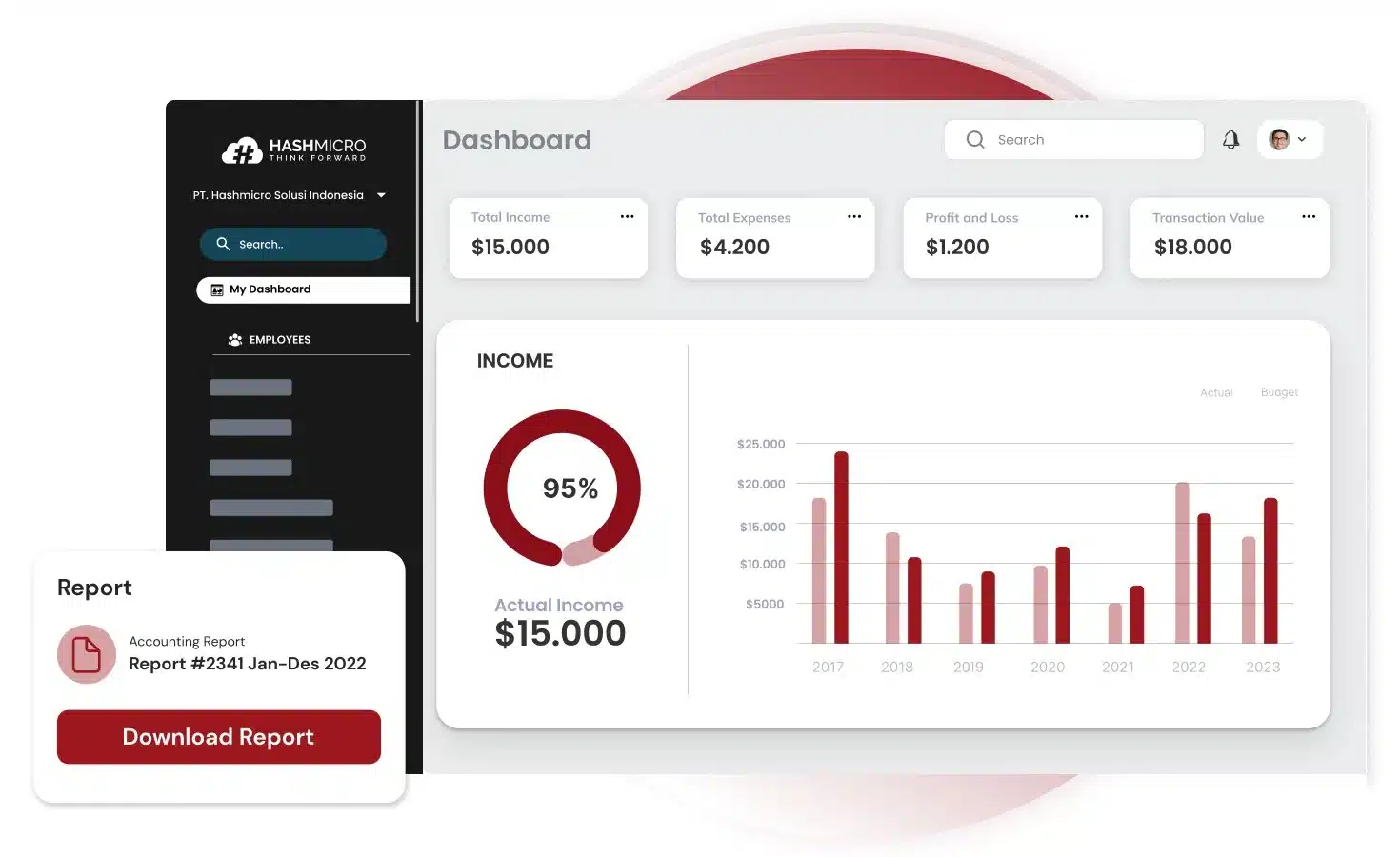
HashMicro Accounting Software is a full-featured cloud system designed to simplify financial operations for business groups. The system integrates key finance workflows, ensuring more accurate results, efficiency, and up-to-date financial visibility across different business units.
HashMicro is used by well-known names, including Forbes, Bank of China, and Abbott. This confidence comes from the software’s stable performance, wide set of tools, and a solid history of improving financial management across diverse sectors.
Features:
- Bank Integrations & Auto Reconciliation
- Budget Forecast
- Multi-company with Inter-company Transaction and Consolidation
- Multi-Level Analytical
- 3-Way Matching
- Budget S-Curve
- Financial Ratio Analysis
Why this suits Malaysian businesses: HashMicro is built with strong local relevance, supporting compliance with IRBM requirements and multi-entity consolidation. Its ability to manage intercompany transactions and integrate with other business functions makes it highly suitable for Malaysian business groups seeking centralized financial control.
Malaysian businesses wanting a localized ERP with accounting, inventory, and operations in one platform.
| Pros | Cons |
|
|
To learn more about HashMicro Accounting Software, click the banner below to view the detailed pricing scheme. Discover the affordable plans tailored to meet the needs of multiple businesses and invest in robust financial management software.
2. NetSuite

NetSuite is a online accounting platform software for multiple clients designed to automate and streamline accounting processes. Its comprehensive features provide real-time insights, enhance accuracy, and improve overall financial efficiency for businesses of all sizes.
Features:
- Customer billing and vendor payments
- Budgeting and forecasting
- Multi-currency management
- Tax management
- Real-time financial reporting
Why this suits Malaysian businesses: NetSuite supports multi-entity and multi-currency operations, making it suitable for Malaysian companies expanding regionally. Its real-time reporting and tax management features help businesses maintain visibility and compliance across different jurisdictions.
Growing companies that expect to add entities, expand regionally, or eventually need full ERP functionality.
| Pros | Cons |
|
|
3. Sage
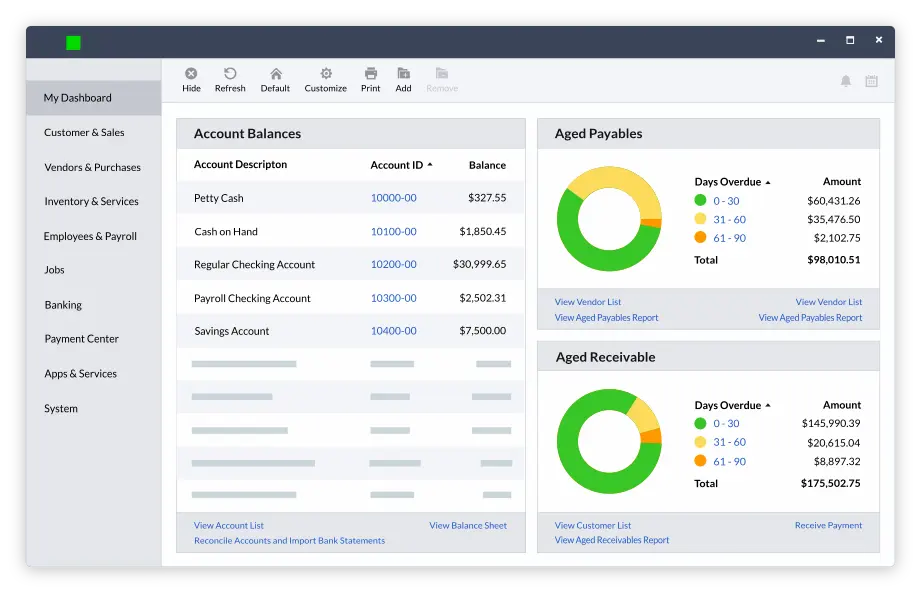
Sage Multi-company Accounting Software is designed to manage the financial operations of multiple businesses within a single platform. It enhances efficiency by offering real-time financial insights, analyzing profits carried forward, and seamless integration across business entities.
Features:
- Invoicing and billing
- Expense tracking
- Cash flow management
- Multi-currency support
- Financial reporting
Why this suits Malaysian businesses: Sage offers reliable financial reporting and multi-entity management, which is useful for Malaysian companies handling multiple business units. Its compliance-ready features help ensure alignment with local accounting standards and reporting requirements.
Finance teams that prioritize reporting flexibility and don't need manufacturing/inventory depth.
| Pros | Cons |
|
|
4. QuickBooks
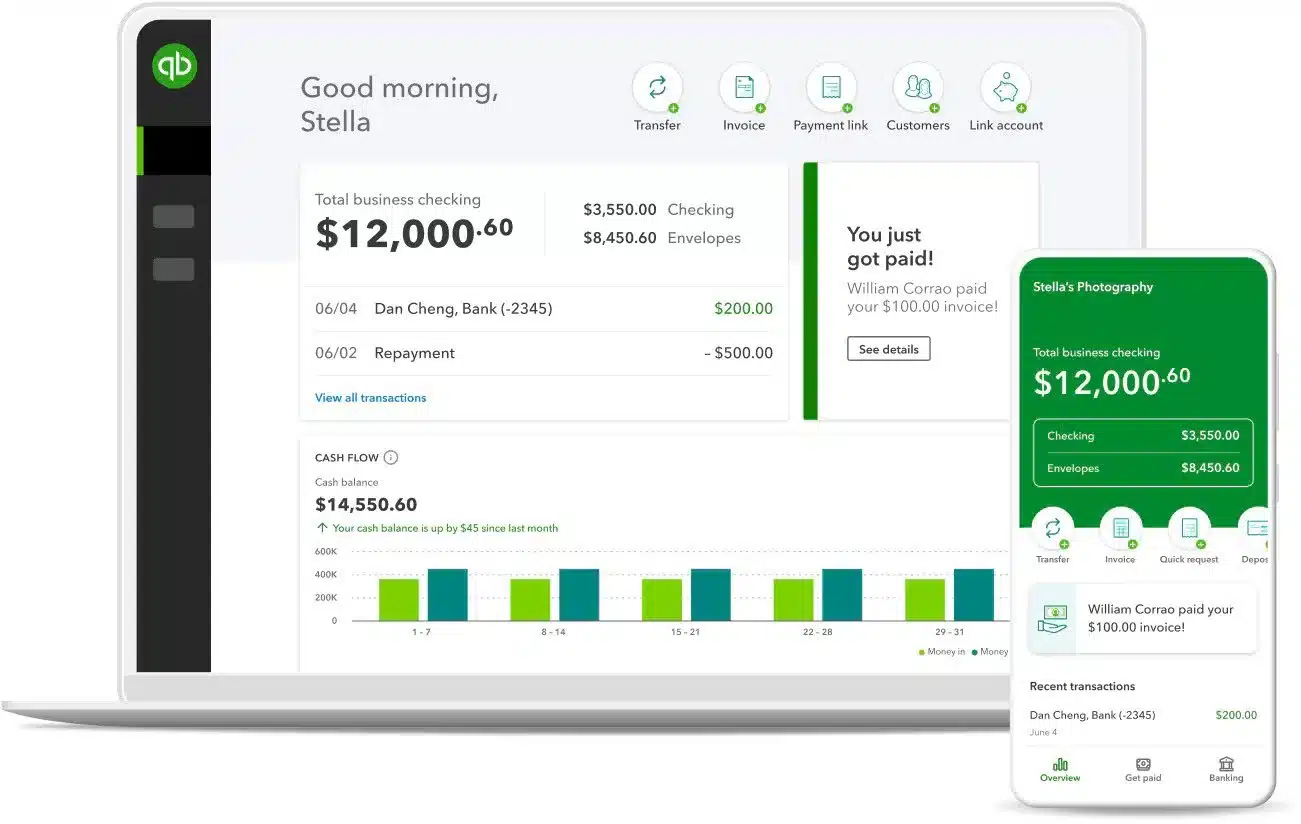
QuickBooks is a versatile accounting software for multiple businesses, providing a user-friendly interface and comprehensive features to manage finances efficiently. This accounting software for multiple clients supports various financial tasks, including invoicing, calculating asset valuation adjustments, and payroll, ensuring streamlined operations.
Features:
- Expense tracking
- Multi-currency transactions
- Automated notifications and approvals
- Task management
- Financial reporting
Why this suits Malaysian businesses: QuickBooks is widely used by small Malaysian businesses due to its ease of use and essential accounting features. It supports basic multi-entity tracking and integrates with various third-party tools, making it practical for simpler financial operations.
Small businesses managing 2–5 simple entities that don't need complex intercompany automation.
| Pros | Cons |
|
|
5. Wave
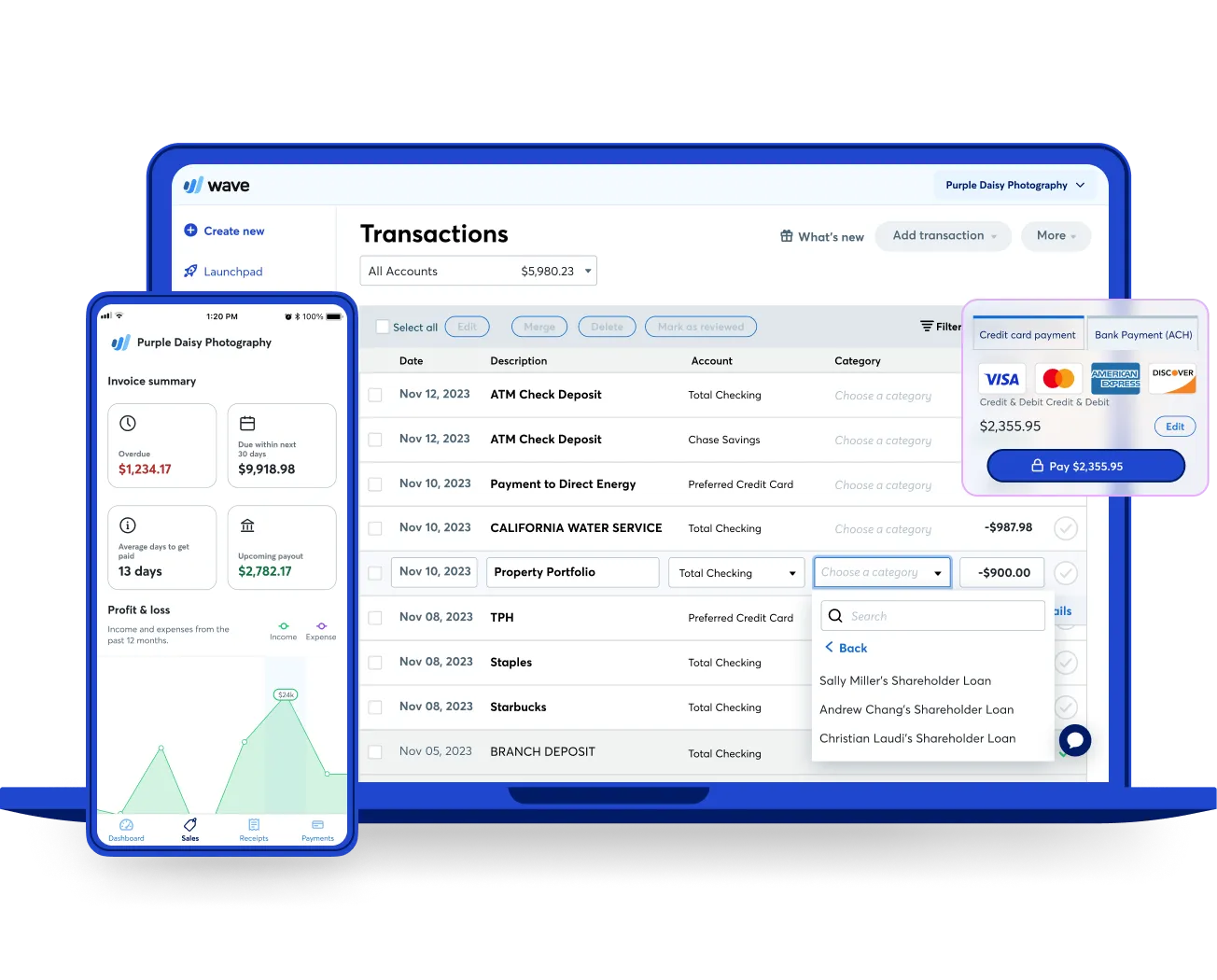 Wave Accounting Software for Multiple Businesses offers a free, cloud-based solution tailored for businesses in Malaysia. This accounting software for multiple clients includes invoicing, expense tracking, and financial reporting, making it one of the best accounting software for various entities.
Features:
- Expense tracking
- Matching bank transactions
- Customizable invoices
- Tax preparation
- Analytics and reporting
Why this suits Malaysian businesses: Wave is suitable for small Malaysian businesses looking for a low-cost accounting solution. It covers basic invoicing and expense tracking, making it a practical option for startups or service-based companies with simple financial needs.
Service-based businesses with multiple brands/entities that need clean invoicing and basic multi-currency.
| Pros | Cons |
|
|
6. Zoho Books
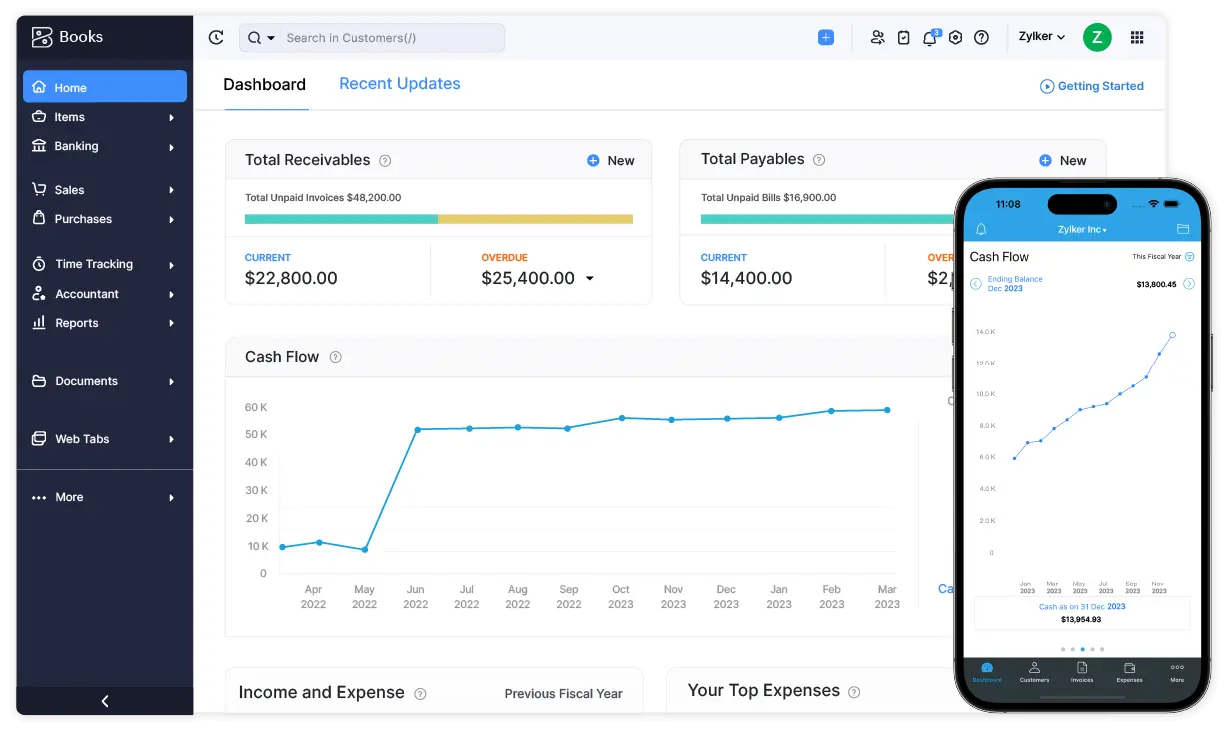
Zoho Books is an intuitive multi-company accounting software designed to simplify financial management for businesses. Its comprehensive features, including automated workflows and real-time financial insights, make it a top choice for accounting software for multiple companies.
Features:
- Bank reconciliation
- E-invoicing
- Project tracking and billing
- Inventory management
- Financial reporting
Why this suits Malaysian businesses: Zoho Books fits well with Malaysian businesses already using Zoho apps, offering integrated workflows and automation. Its features support day-to-day accounting tasks while helping maintain organized financial records.
Budget-conscious businesses already using Zoho's ecosystem (CRM, Projects, Inventory).
| Pros | Cons |
|
|
7. Acumatica 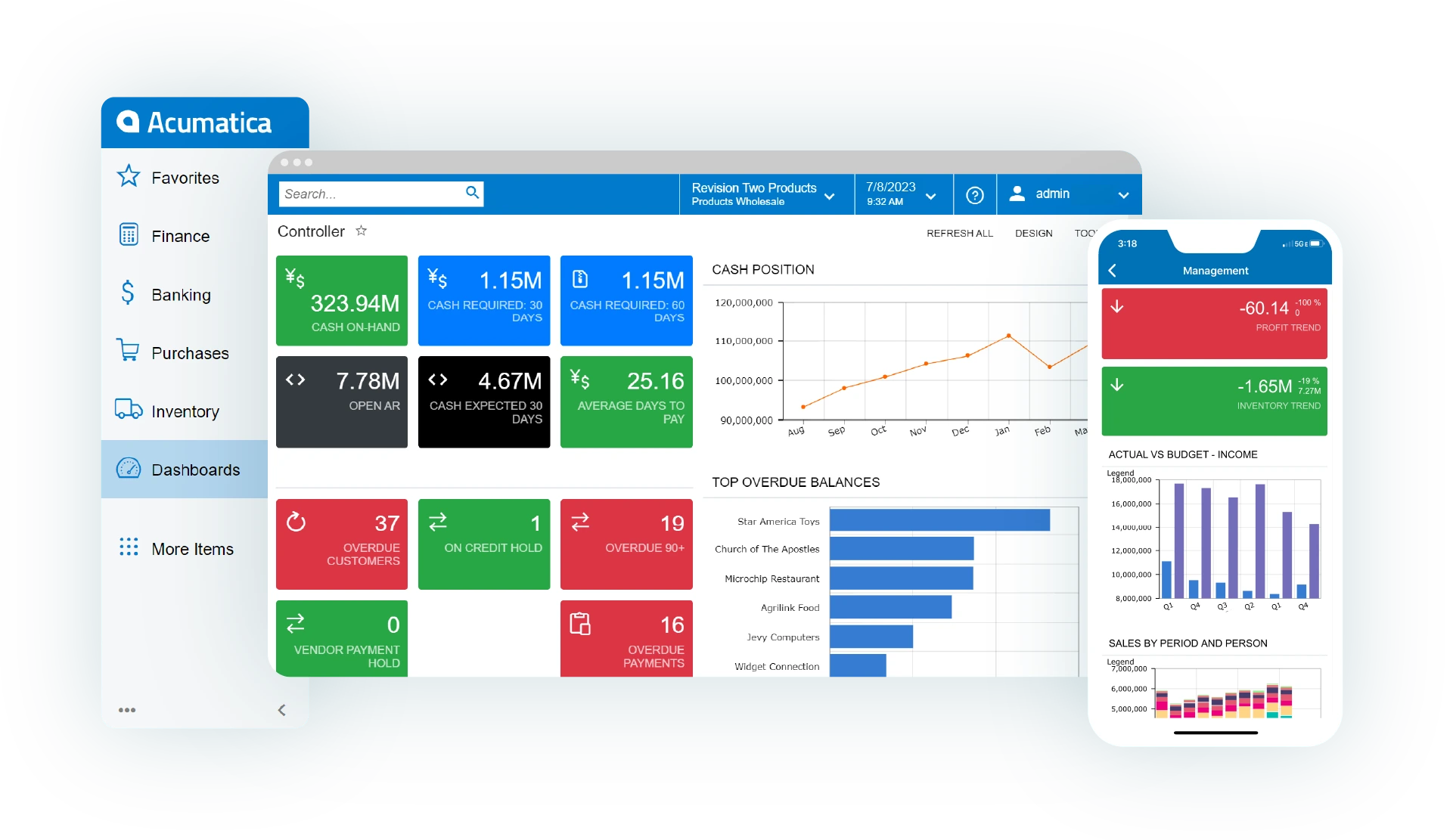
Acumatica provides a robust platform for managing finances across various business entities. This multi-entity accounting software ensures accurate financial reporting and seamless integration, making it one of the best accounting software for multiple entities.
Features:
- Bank reconciliation
- Ledgers and accounts payable/receivable
- Tax management
- Cash flow forecasting
- Tracking and reporting
Why this suits Malaysian businesses: Acumatica is ideal for Malaysian companies in industries like manufacturing and distribution that require deeper ERP capabilities. Its multi-entity support and financial tracking help businesses maintain accurate reporting across complex operations.
Distribution, manufacturing, and project-based businesses needing ERP depth with multi-entity support.
| Pros | Cons |
|
|
8. FreshBooks
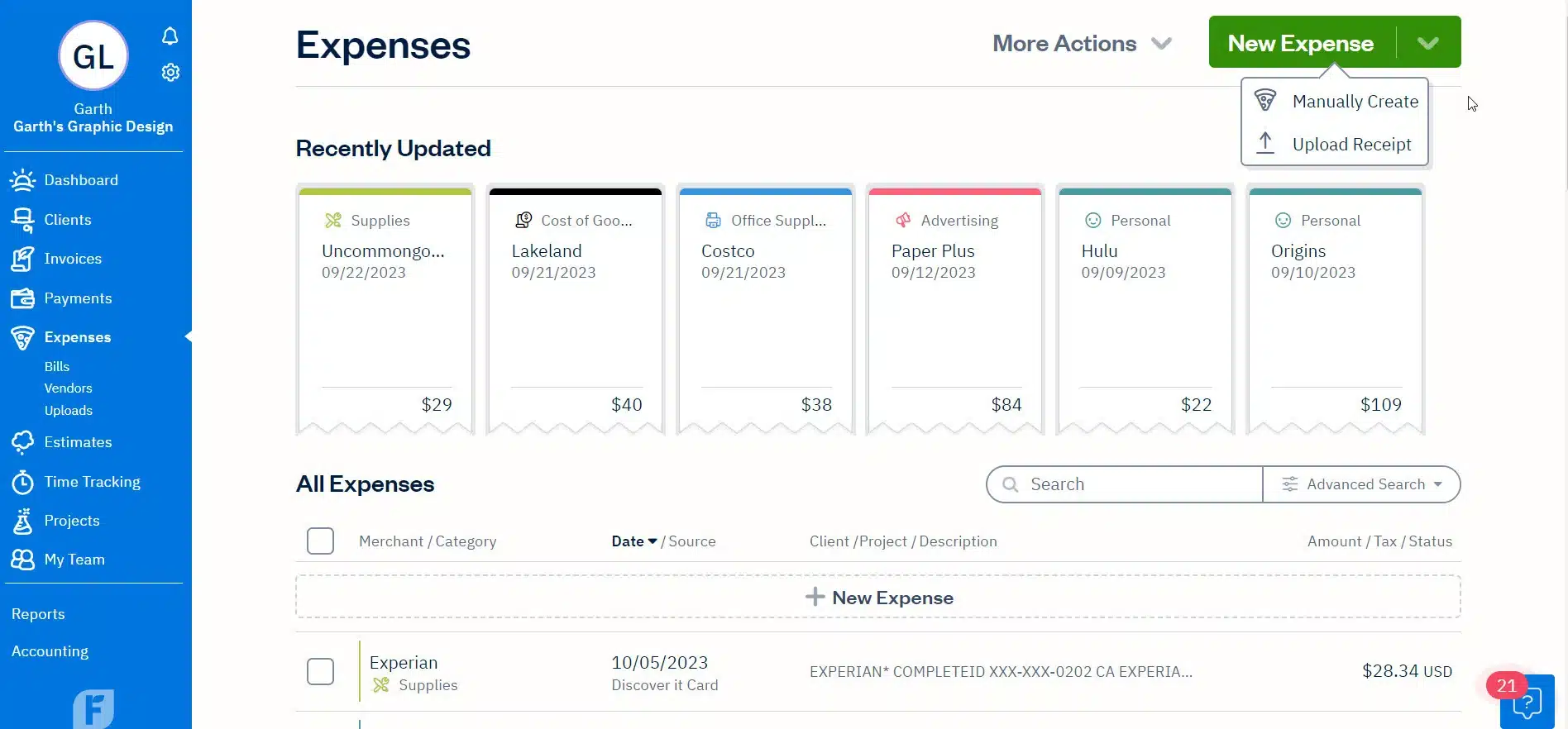
FreshBooks is a popular accounting software for multiple businesses, known for its easy-to-use interface and comprehensive invoicing capabilities. This accounting software for multiple clients simplifies expense tracking and time management, enhancing overall business efficiency.
Features:
- Bank reconciliation
- Multi-currency tracking
- Payment reminders
- Recurring payments and auto-bills
- Mileage tracking
Why this suits Malaysian businesses: FreshBooks is well-suited for freelancers and small Malaysian businesses that focus on invoicing and client management. Its simple interface helps users manage finances without needing advanced accounting knowledge.
Freelancers and micro-businesses running multiple client-facing brands.
| Pros | Cons |
|
|
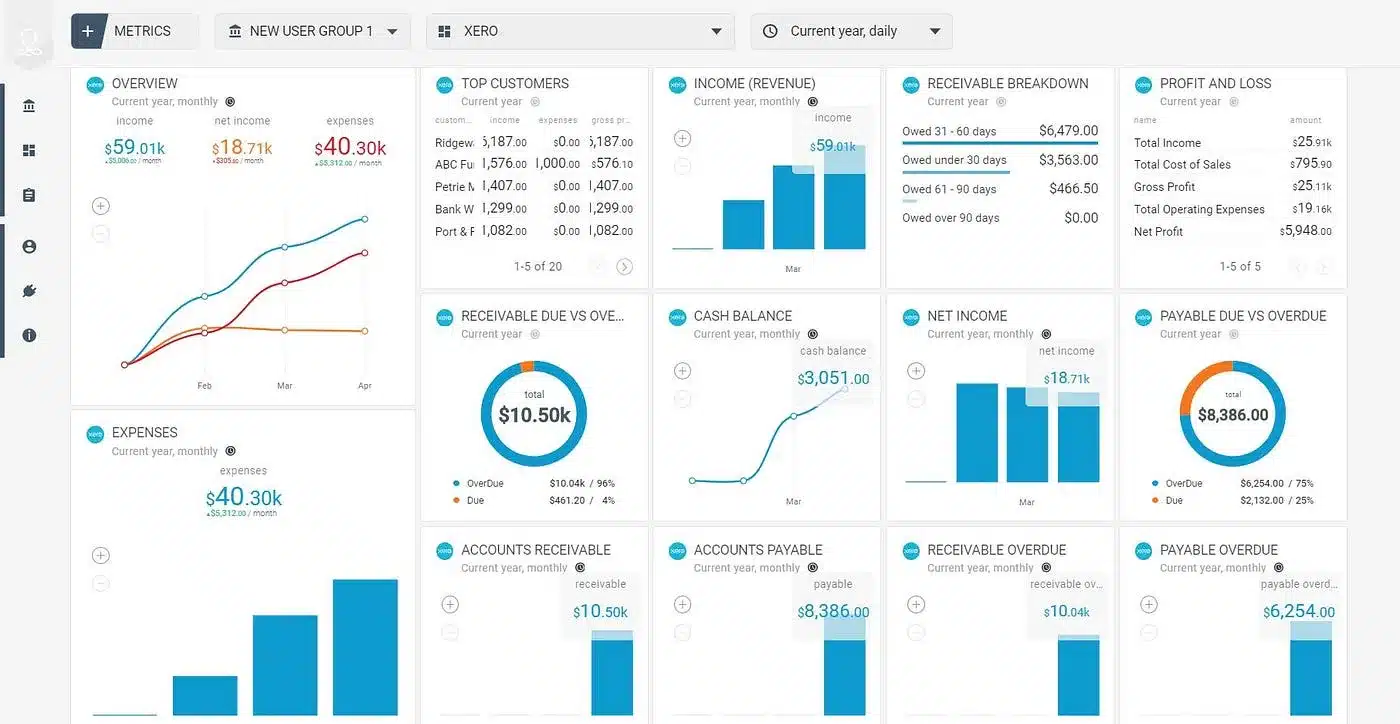
9. Xero
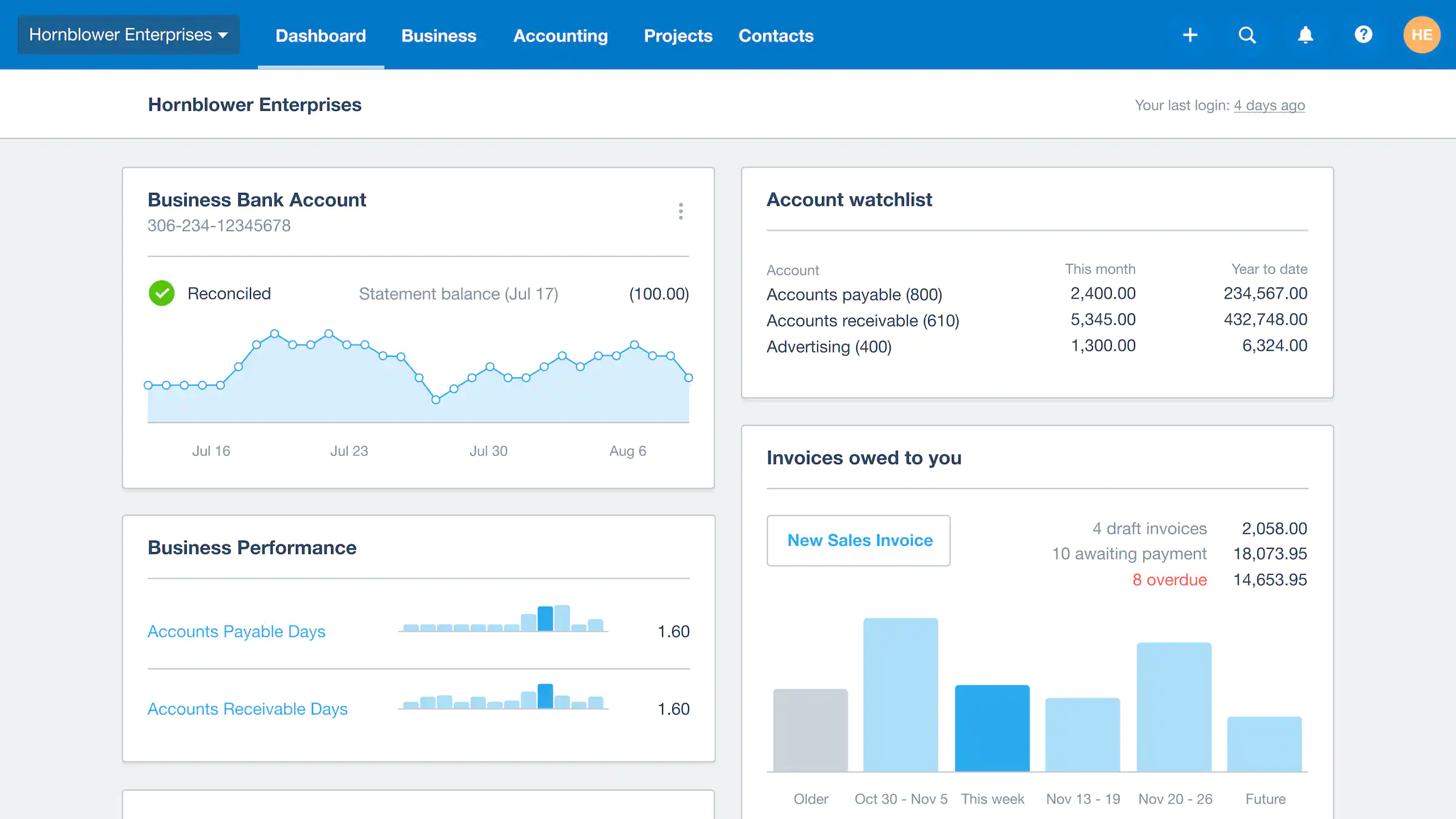
Xero Accounting Software for Multiple Businesses offers a cloud-based platform designed to streamline financial operations. Its features include multi-currency support, automated bank feeds, and comprehensive financial reporting, making it one of the best accounting software for multiple entities.
Features:
- Invoicing and billing
- Accounts receivable
- Expense tracking and claim
- Automated bank feeds
- Financial reporting
Why this suits Malaysian businesses: Xero provides cloud-based accounting with automated bank feeds and multi-currency support, making it useful for Malaysian businesses handling online transactions or international clients. Its accessibility also supports remote financial management.
Side-hustle operators and very small businesses that need free accounting software across multiple ventures.
| Pros | Cons |
|
|
10. SoftLedger
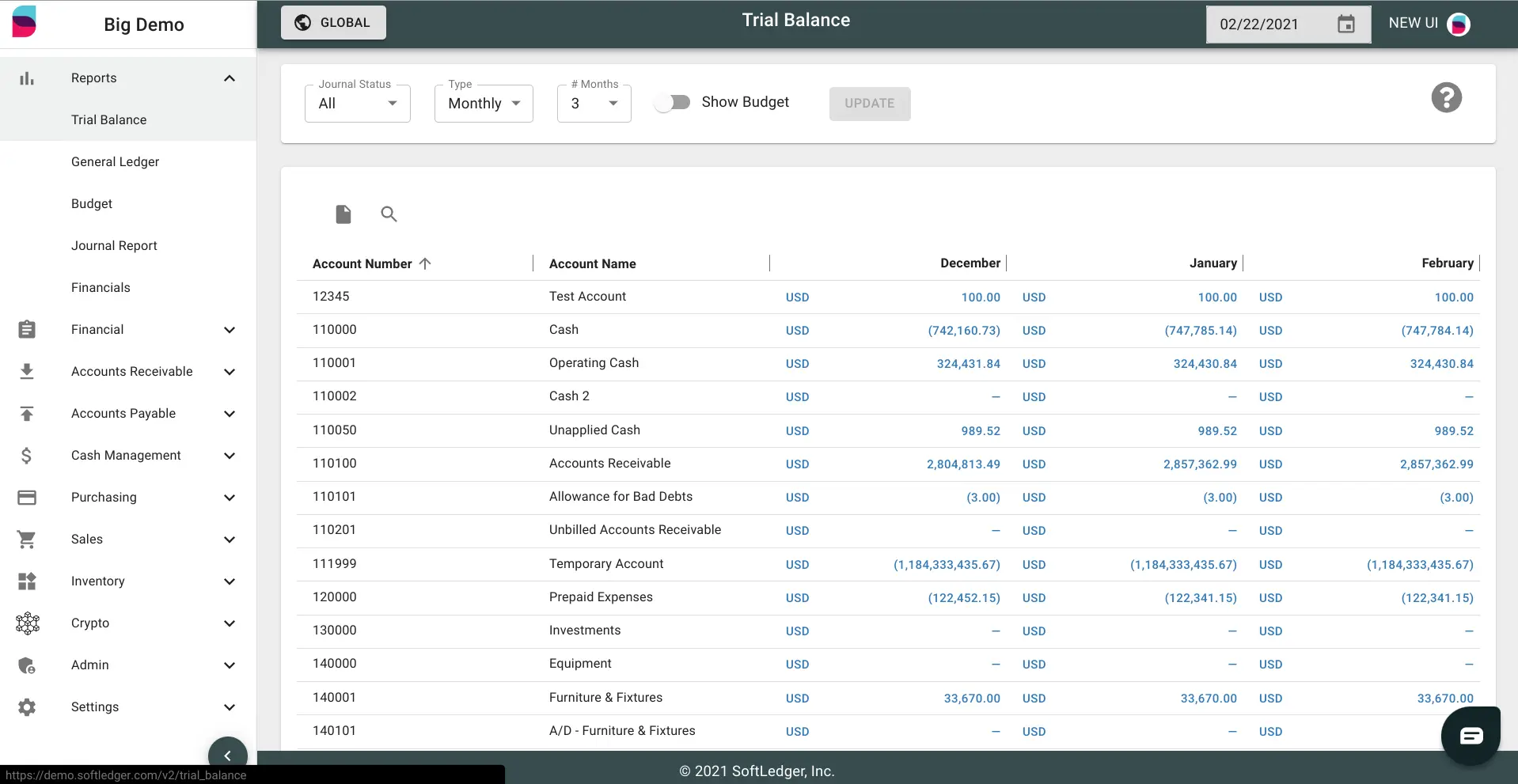
SoftLedger is a versatile multi-entity accounting software that provides real-time financial insights and robust automation features. This multi-company accounting software supports various financial tasks, from consolidation to compliance, ensuring efficient management of multiple businesses.
Features:
- Ledgers and accounts payable/receivable
- Cryptocurrency accounting
- Automated bill tracking
- Bank feeds and reconciliation
- Financial reporting
Why this suits Malaysian businesses: SoftLedger is suitable for Malaysian companies with more advanced financial needs, including multi-entity consolidation and real-time reporting. Its API capabilities also support integration with other systems for more flexible financial operations.
Crypto companies, funds, and businesses needing real-time consolidation with strong API access.
| Pros | Cons |
|
|
Overall Comparison of Accounting Systems in Malaysia
| Provider | Core Accounting Features | Malaysia Support | Integration Capability | Reporting & Analytics |
|---|---|---|---|---|
| HashMicro | ||||
| Netsuite | ||||
| Sage | ||||
| Zoho Books | ||||
| Xero |

Can One Accounting Software Be Used for Multiple Businesses?
A single finance platform can manage several entities. However, multi-entity systems are built specifically to support the needs of multiple entities in one workspace. The software simplifies day-to-day accounting, ensuring accurate group consolidation and improved efficiency.
Also, multi-entity finance systems enable businesses to generate group performance reports, review profits carried forward, record asset value adjustments, and provide a clearer view of overall financial position. Companies can tighten oversight, reduce manual errors, and improve decision-making day to day, supporting better financial management across all business units.
How to Actually Evaluate These Options
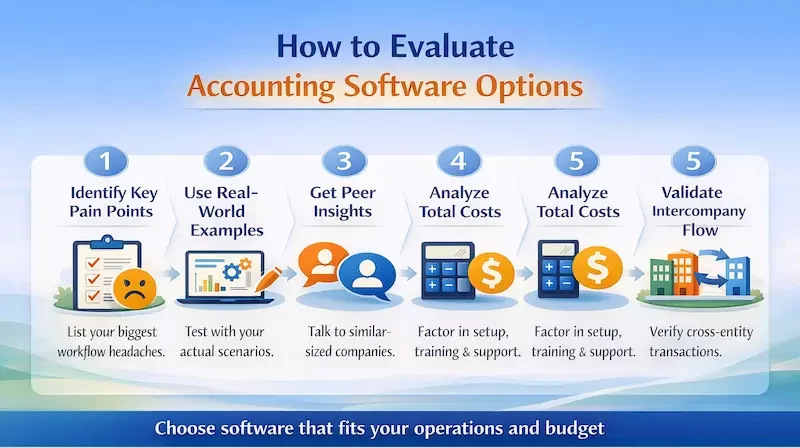
Forget the feature comparison matrix. Here’s a practical evaluation framework:
- Step 1: Map your current pain points. Write down the three things that waste the most time or create the most errors in your multi-entity accounting today. Maybe it’s intercompany reconciliation, maybe it’s currency translation, maybe it’s just logging into five different systems.
- Step 2: Run your actual scenario. During demos, don’t let vendors show you their standard demo data. Ask them to walk through your specific scenario: “We need to record a management fee from Entity A to Entity B, then consolidate both entities into a combined P&L with intercompany eliminations removed.”
- Step 3: Talk to similar-sized customers. Ask vendors for references at companies with comparable entity counts and complexity. A reference from a 50-entity PE firm doesn’t help you evaluate software for your 3-entity business.
- Step 4: Cost the full picture. Software subscription is one cost. Implementation, training, data migration, and ongoing admin time are others. A USD 500/month software that requires USD 50k implementation may cost more in year one than a USD 1,500/month software you can configure yourself.
- Step 5: Test intercompany workflows specifically. This is where “multi-entity support” claims break down. Create a test transaction: intercompany loan, management fee allocation, inventory transfer. See how much is automated versus manual.
By carefully assessing these factors, you can select the best accounting software for multiple entities that meets your needs and effectively manages day-to-day costs and longer-term expenses components.
Which Accounting Software Suits The Most for Your Business?
With many accounting solutions available, choosing the right one depends on your business size, complexity, and financial management needs. To make the decision easier, the following section highlights which accounting software best fits different business scenarios.
| Business Scenario | Recommended Software | Why It Fits |
|---|---|---|
Small businesses or startups with simple accounting needs |
Wave Accounting or FreshBooks | Both are easy to use and focus on invoicing and expense tracking, making them suitable for businesses with straightforward financial operations. |
SMEs looking for simple and affordable cloud accounting |
Zoho Books or QuickBooks | Both provide user-friendly interfaces, automation features, and essential accounting tools for growing businesses. |
Growing businesses managing multiple entities |
HashMicro or NetSuite | Both support multi-entity consolidation, real-time reporting, and scalable financial management for expanding companies. |
Businesses needing customizable and scalable accounting systems |
HashMicro or Acumatica | Both offer flexible modules and ERP-level capabilities, suitable for complex operations and long-term growth. |
Companies prioritizing strong financial reporting and visibility |
Sage Multi-company or NetSuite | Both provide detailed financial reports and insights, helping businesses maintain better control across entities. |
Mid-sized businesses needing accounting with system integration |
Zoho Books or Xero or HashMicro | Zoho and Xero integrate well with third-party tools, while HashMicro connects accounting with a broader ERP system. |
Enterprises managing multi-entity and global operations |
NetSuite or SoftLedger | Both support multi-currency, multi-entity consolidation, and global financial management. |
Businesses needing industry-specific ERP capabilities |
Acumatica or HashMicro | Both are suitable for industries like manufacturing, distribution, and project-based operations. |
Companies wanting cloud-based accounting with automation |
Xero or Zoho Books | Both offer automated workflows, real-time data access, and cloud-based financial management. |
Freelancers or micro-businesses managing multiple clients or brands |
FreshBooks or Wave Accounting | Both focus on invoicing, expense tracking, and ease of use for smaller-scale operations. |
Conclusion
The right multi-company accounting software reduces month-end close time, eliminates intercompany reconciliation errors, and gives you consolidated visibility without spreadsheet gymnastics. The wrong choice creates new problems: over-complicated workflows, underused features, and implementation projects that drag for months.
Start with your pain points, not the feature list. Test with your actual data, not demo scenarios. And align internally before you sign anything.
If you’re running Malaysian entities and want a platform that handles local compliance alongside multi-entity consolidation, HashMicro’s accounting module is worth a look. Request a free demo to see how it handles your specific entity structure and intercompany workflows.

FAQ About Multi Company Accounting Software
-
What is multi-company accounting software?
Multi-company accounting software is a solution designed to help businesses manage financial processes across multiple companies or entities. It streamlines tasks such as consolidations, reporting, and inter-company transactions.
-
What is the best accounting software for multiple entities?
The best multi-entity accounting software should support data consolidation, intercompany transactions, multi-currency, and scalable reporting. Solutions like HashMicro offer automated consolidation and real-time visibility across all entities, making it easier for businesses to manage financial operations at scale.
-
How do I manage multiple client accounts?
Managing multiple client accounts requires a reliable system that tracks transactions, generates detailed reports, and ensures compliance. HashMicro’s accounting software provides powerful tools to manage and oversee multiple accounts effortlessly.
-
What is multi-entity accounting?
Multi-entity accounting refers to managing financial data and processes for multiple companies or divisions under one system. It includes consolidated reporting, intercompany reconciliation, tax compliance, and consistent financial oversight across all entities.