








 Limited to 100 registrants

Let’s face it—just hiring great people isn’t enough anymore. In the Philippines’ competitive business scene, companies that aren’t actively managing their talent miss out on huge potential gains.
Talent management is more than just finding and keeping good employees. It’s about creating a strategy that consistently attracts, develops, and retains top performers to drive real success.
What if you could create a team so aligned and skilled that they practically drive the business on autopilot? Keep reading to discover how the right talent management approach can transform your workforce!
Key Takeaways
Defining Talent Management: It focuses on strategically developing and retaining employees to support goals. This ensures that each employee’s skills align with the company’s long-term objectives.
Core Stages Explained: The process includes planning, recruiting, developing, and retaining skilled employees. Each stage helps build a capable, motivated workforce essential for business growth.
Benefits Explained: The benefits include aligning skills with roles, building a talent pipeline, improving recruitment efficiency, fostering a competitive edge, enhancing employee engagement, and promoting internal growth. Each benefit builds a thriving and strong employees.
Challenges Explained: Skill gaps, labor shortages, difficulties in retaining high-skilled workers, misalignment between talent strategy and business goals, and inconsistent performance evaluation are challenges that will be encountered when implementing talent management.
What is Talent Management?

Talent management is a strategic process by which HR identifies, develops, and retains employees who best support the company’s goals. By aligning roles with employees’ skills and potential, HR ensures optimal organizational performance and growth.
It’s about current performance and future potential, ensuring that employees are well-positioned for both personal growth and long-term contributions to the organization.
Beyond assigning roles, talent management also encompasses opportunities for professional development, such as training, mentorship, and skill-building programs. This structured approach fosters a supportive work environment that encourages high performance and loyalty.
Components of Talent Management
Effective talent management is essential for building a skilled, motivated, and aligned workforce that drives business success. Supported by HRIS (Human Resource Information System) solutions, it involves strategic HR activities that help organizations attract, develop, and retain high-quality employees.
By focusing on specific components, companies can maximize employee potential and foster a culture of continuous improvement and engagement.
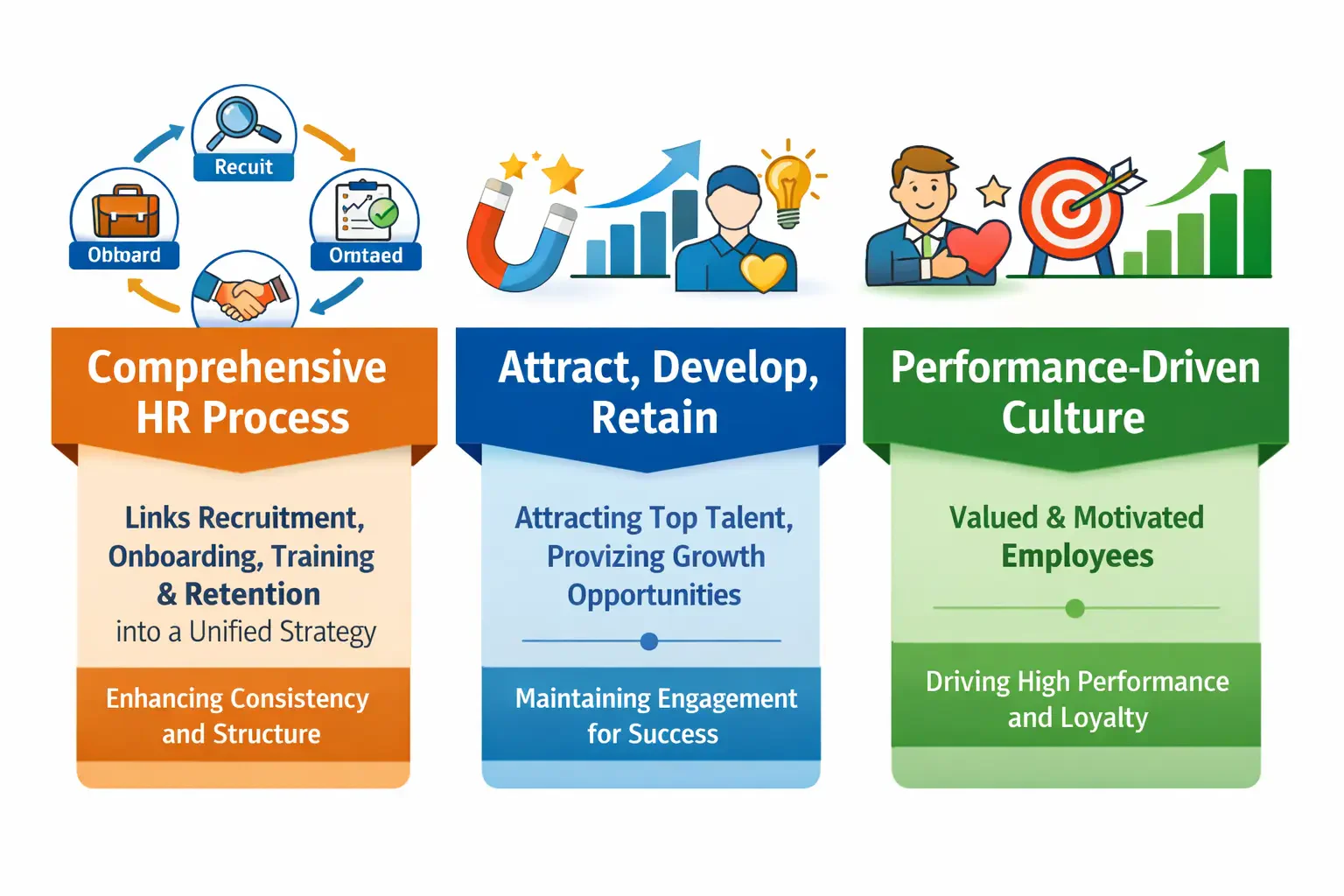 These components create a foundation for a robust talent management strategy that enhances individual employee performance and contributes to the company’s long-term growth and resilience.
The Talent Management Process

Implementing talent management effectively requires a structured, strategic approach that guides employees through each stage of their journey in the organization. These stages work together to ensure that the right talent is brought in, nurtured, and supported as they grow within the company.
The following core stages are:
- Planning: The initial step in talent management, where HR defines roles and job descriptions that align with business goals. This stage lays the groundwork for a streamlined recruitment and development process.
- Attracting Talent: Once roles are outlined, HR focuses on attracting qualified candidates internally and externally. Social media and career platforms help promote the company’s employer brand and attract top talent.
- Selecting the Right Fit: HR uses a structured selection process, including interviews, assessments, and psychometric tests, to identify candidates whose skills and values align with organizational goals.
- Developing Employee Skills: Beyond onboarding, this stage emphasizes continuous development through training, mentoring, and job rotation. Such investments enhance employee satisfaction and support organizational performance.
- Retaining Top Talent: Retention strategies, including career advancement, recognition, and decision-making opportunities, help keep skilled employees engaged and committed to the organization.
- Transitioning for Organizational Growth: It also involves supporting employees through career transitions, from promotions to retirement planning, ensuring smooth changes that benefit both the employee and the organization.
Each stage is key to creating a strong talent management system that attracts and develops talent, builds long-term loyalty, and prepares for future growth.
Benefits of Talent Management for Companies and Employees

Talent management can make a real difference in how a company and its employees thrive. Here’s how it benefits both sides:
- Aligning Skills with Roles: Matching employees with roles suited to their strengths enhances productivity and job satisfaction. This alignment also improves retention and strengthens talent acquisition outcomes, as organizations gain a clearer understanding of the skills needed for future hires.
- Building a Talent Pipeline: Retention strategies help keep top talent engaged and invested in the company. This creates a strong pipeline of skilled employees ready for future needs.
- Improving Recruitment Efficiency: Streamlined hiring processes attract quality candidates quickly and efficiently. This reduces downtime and ensures that roles are filled with the best talent.
- Fostering a Competitive Edge: Regular skill-building and development keep the company competitive in a fast-paced market. This proactive approach positions the company as a leader in its industry.
- Enhancing Employee Engagement: Talent management fosters a supportive work environment where employees feel valued. Engaged employees are more likely to contribute actively to the company’s success.
- Promoting Internal Growth: Offering internal growth and promotion opportunities reduces the need for external hires. This builds employee loyalty and strengthens the company’s internal expertise.
With these benefits, talent management helps build a strong, engaged team that’s ready to grow with the company.
Challenges in Talent Management and How to Handle It

To know what the right steps are is easy, to walk that step is harder. In your attempt to apply the talent management method to your business you will find difficulties that you may not consider before. Here’s the challenges that you may find and how you can solve them:
-
Skill gaps and labor shortages
In the rapidly changing market what was once a priceless talent can become a talent with no price. With changing industries and technological advancement, like the newest advancement in Artificial Intelligence, certain talents can become obsolete in the blink of an eye. This not only force you to train your old employees but can also cause labor shortages in certain fields.
Solution: Conducting regular skills assessments through an employee competency management platform can help identify gaps within your workforce. By knowing the problem, you can invest in tools and educators to upskill and reskill your old and new employees. This not only helps them improve their skills but also creates a learning work culture.
-
Difficulties in retaining High-skilled employees
As said before, talent management is more than just finding and keeping good employees, yet it is still a crucial part of talent management. High-skilled workers often leave before reaching their highest potential due to limited career growth and a lack of recognition. This can disrupt the workflow and it would be costly to replace them.
Solution: Give your employees a clear sense of career mobility, provide regular feedback with meaningful rewards that could incentivise them to stay, have a recognition program so that they feel appreciated, and foster an inclusive environment so that everyone can feel comfortable working in your company.
-
Misalignment between business strategy and worker execution
When making ambitious business plan you have to consider on how to make sure that it aligns with your talent managements. Vague communication, isolated departments, inconsistent goals, outdated processes, and poor workforce planning cause misalignment between the top planners and bottom doers.
Solution: Don’t just make business objective, but also make workforce requirements. When making any initiative ensure that roles, responsibilities, talents, and performance target are clearly translated from strategic plan into actionable tasks.
You can further break those tasks into measurable team-sized goals with a clear outcome. Create an easy communication line between departments, align KPIs from top management down to frontline employees, and equip teams with the right tools and training. Regularly review their progress to align strategy with execution.
-
Inconsistent performance evaluation
Judgement are often subjective and it is the same in the business world. Managers entrusted with evaluating workers performance are influenced by their bias and each have their own standards that may even contradict with each other. This inconsistency creates an unfair, confusing, and dysfunctional performance evaluation which demotivates and reduce the employees trust in the system.
Solution: The first thing that you want to do is to standardize a KPIs that will be used as the criteria for all performance review. Make sure that the managers are trained to judge with only the standard criteria. Promote transparency to keep improving the performance evaluation.
Conclusion
Talent management is essential for creating a high-performing, engaged workforce that aligns with business goals. By strategically managing each phase of the employee journey, organizations can attract and retain top talent while fostering a culture of growth and productivity.
But applying talent management comes with its own challenge. Whether it is a skill gap or misalignment in plan and execution, it all can cause inefficiency in the work culture. With good leadership and the help of talent management software like HRIS (Human Resource Information System) a business can overcome these hurdles.
Frequently Asked Questions
This refers to strategically attracting, developing, and retaining employees to meet organizational goals. It ensures each employee is positioned for optimal growth and contribution.
The main goal of it is to align employee potential with organizational needs. This helps create a skilled, motivated workforce that drives business success.
Management’s primary goal is to achieve organizational objectives through efficient use of resources. It involves planning, organizing, and leading teams to maximize productivity and reach goals.