










 Limited to 100 registrants

Finding the right talent is a critical driver of long-term business success. Talent acquisition is more than simply filling open positions, it involves building a strategic approach to sourcing and selecting candidates who align with organizational goals.
As businesses grow and industries become more competitive, recruitment processes must evolve to remain effective. Companies need structured hiring strategies and efficient screening methods to secure qualified candidates in a timely manner.
According to a report by the Philippine Business Coalition for Women Empowerment, the Philippines is experiencing a talent shortage, with 70% of companies struggling to fill critical roles.
Key Takeaways
Talent acquisition is essential for long-term business success, as it helps organizations attract top talent, improve retention, build high-performing teams.
An effective talent acquisition strategy aligns hiring with long-term business goals by assessing workforce needs and strengthening employer branding.
Recruitment Management Software simplifies hiring with automation and AI-driven insights. Businesses can optimize recruitment and improve candidate experience.
What is Talent Acquisition?
Talent acquisition involves identifying and hiring skilled employees to meet a company’s workforce needs. Unlike traditional recruitment, it focuses on long-term workforce planning by building a strong candidate pipeline and enhancing employer branding.
A dedicated hiring team is key in sourcing, assessing, and bringing in top talent to support business growth. Whether part of HR or a separate unit, this team ensures hiring processes align with company standards and promotes workforce diversity.
Recruitment specialists lead hiring efforts while working on employee retention and engagement strategies. By fostering a positive workplace environment, they help businesses attract and retain top professionals, strengthening overall success.
Why is Talent Acquisition Important?

Hiring the right people is crucial for business success, ensuring companies secure skilled professionals to support growth and innovation. A well-structured hiring process helps attract top candidates and build strong teams.
- Attracting top talent: A dedicated recruitment team focuses on sourcing candidates who align with the company’s culture and long-term goals. This approach ensures businesses bring in professionals who contribute to innovation.
- Reducing recruitment costs: An effective hiring strategy minimizes expenses by improving the quality of hires and reducing turnover rates. By optimizing the process, businesses save time and resources.
- Improving employee retention: A strong hiring approach prioritizes cultural fit, ensuring new hires align with company values and mission. This enhances job satisfaction, boosts morale, and fosters a work environment.
- Building productive teams: Recruitment specialists help companies form high-performing teams by hiring individuals with diverse skill sets. The right mix of expertise and perspectives fosters collaboration, enhances problem-solving capabilities.
- Creating a diverse and inclusive workplace: Strategic hiring promotes diversity, leading to greater innovation and a stronger company culture. Inclusive hiring improves employee engagement and strengthens the employer brand.
- Ensuring business continuity: Proactive hiring specialists build a pipeline of qualified candidates, preparing businesses for future workforce needs. This ensures organizations can quickly adapt to market shifts or leadership transitions.
- Supporting succession planning: Effective recruitment strategies focus on identifying potential successors for key roles. This enables businesses to develop future leaders through mentorship and training.
- Boosting business workforce performance: Hiring talent enhances efficiency, innovation, and competitiveness. With a strong recruitment team managing the process, businesses can drive long-term success and maintain a leading position in the market.
Talent Acquisition vs. Recruitment
While talent acquisition and recruitment aim to hire employees, they differ in strategy and execution. The former focuses on long-term workforce planning to attract highly skilled professionals, whereas recruitment is a short-term process designed.
A dedicated hiring team takes a proactive approach by planning for future workforce needs and strengthening employer branding. In contrast, recruitment prioritizes quickly filling open roles, often without long-term workforce planning.
Beyond hiring, specialists in this field engage in strategic initiatives such as optimizing recruitment processes and fostering company culture. This distinction is crucial, while recruitment fills positions, a structured hiring strategy builds a strong workforce.
Examples of Talent Acquisition Strategies

Implementing the right talent acquisition strategies helps businesses attract top talent and strengthen their workforce. Below are three key approaches that enhance recruitment efforts and improve hiring efficiency.
1. Recruitment Marketing
Recruitment marketing focuses on promoting a company as an attractive employer to engage both active and passive candidates. It involves strategies like employee testimonials, video content, and social media campaigns to showcase workplace culture.
The talent acquisition team uses this approach to build brand awareness and maintain a strong talent pipeline. A well-executed recruitment marketing strategy enhances the talent acquisition process, increasing applications from highly qualified professionals.
2. Source of Hire (SoH)
SoH refers to identifying the most effective channels for finding and hiring top-performing employees. Tracking SoH helps companies optimize their talent acquisition hiring by focusing on high-yield professional employer resources like employee referrals.
Talent acquisition specialists rely on applicant tracking systems (ATS) to monitor and analyze SoH data for better decision-making. By understanding where successful hires come from, businesses can refine their recruitment efforts and attract top talent more efficiently.
3. Social Media Recruiting Strategies
Social media platforms like LinkedIn, GitHub, and Twitter have become essential tools for modern talent acquisition teams. These channels allow recruiters to post job openings, interact with potential candidates, and strengthen employer branding.
Engaging candidates through social media helps businesses expand their reach and attract talent who may not be actively job-seeking. By leveraging social platforms, organizations improve communication and connection with skilled professionals.
Talent Acquisition Task
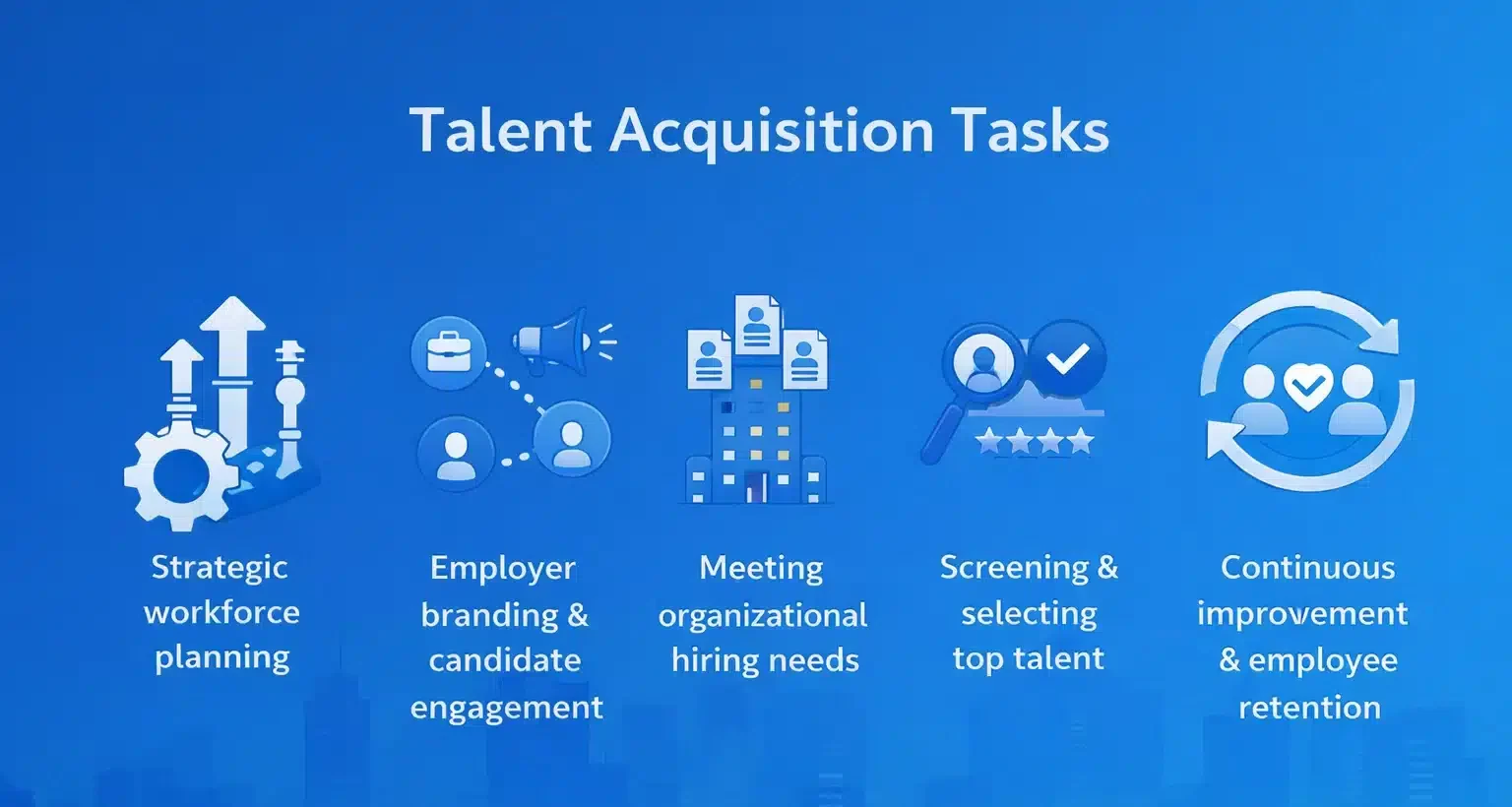
The talent acquisition team is crucial in securing top talent and ensuring a smooth hiring process. From planning recruitment strategies to post-hiring evaluation, each step in the talent acquisition process contributes to long-term business success.
Below are the key responsibilities of a talent acquisition specialist in an organization.
1. Strategic workforce planning
Effective talent acquisition starts with a well-structured recruitment plan that aligns with business goals. The talent acquisition team analyzes company needs, industry trends, and workforce gaps to determine the right hiring strategies.
This includes assessing job requirements, identifying skill gaps, and forecasting future talent needs. By implementing a solid talent acquisition hiring plan, businesses can attract candidates who fit the job and support long-term growth.
2. Employer branding & candidate engagement
A strong employer brand is essential in attracting top talent, making branding a key responsibility in the talent acquisition process. Talent acquisition specialists work closely with HR to communicate company culture, values, and growth opportunities.
Engaging candidates early through branding initiatives helps build trust and position the company as an employer of choice. A well-defined employer brand ensures that prospective hires align with the company’s vision and workplace environment.
3. Meeting organizational hiring needs
The talent acquisition team collaborates with department heads to define specific hiring criteria for each role. Unlike general recruitment, talent acquisition vs recruitment involves a long-term approach, ensuring candidates possess the right skills and values.
Understanding business priorities allows talent acquisition associates to source candidates who fit seamlessly into the organization. This approach enhances retention rates, minimizes hiring mismatches, and improves overall employee performance outcomes.
4. Screening & selecting top talent
The talent acquisition process thoroughly evaluates candidates to ensure they meet company standards. Talent acquisition specialists assess resumes, conduct interviews, and analyze personality traits to determine cultural fit.
Beyond technical skills, factors like adaptability, leadership potential, and workplace compatibility are considered. By carefully filtering applicants, the team ensures only the most qualified individuals move forward in the hiring process.
5. Continuous improvement & employee retention
The role of talent acquisition specialists extends beyond hiring by ensuring new employees integrate smoothly into the company. Regular check-ins, feedback sessions, and mentorship programs help new hires adapt to their roles and workplace culture.
Monitoring employee satisfaction and career development minimizes turnover and strengthens workforce stability. A proactive talent acquisition job description includes fostering a supportive work environment to retain top talent for long-term success.
How to Create a Talent Acquisition Strategy
Building an effective hiring strategy requires aligning recruitment efforts with long-term business goals. This approach ensures companies attract top talent and maintain a strong workforce pipeline.
Using a competency management system alongside hiring tools helps strengthen planning and decision-making. Below are key steps to develop a successful approach that attracts, engages, and retains the right candidates.
- Assess organizational strategies: A strong hiring plan begins with analyzing business objectives and departmental needs. Understanding company expansion and skill gaps help anticipate future hiring demands and ensure workforce alignment.
- Gather feedback from key stakeholders: Department managers, HR leaders, and senior executives provide valuable insights into hiring challenges and workforce priorities.
- Define and strengthen employer branding: A company’s reputation significantly attracts top talent. Employers should assess public perception through surveys, Glassdoor reviews, and social media to align branding with corporate values.
- Create ideal candidate personas: Defining the skills, traits, and experience required for each role helps attract the right candidates. Hiring teams should develop detailed profiles based on manager input and market trends to improve recruitment accuracy.
- Focus on candidate engagement: A positive hiring experience is key to attracting and retaining top professionals. Recruiters should communicate company values, highlight career growth opportunities, and foster a welcoming environment.
- Leverage technology in hiring: Recruitment software simplifies candidate sourcing, evaluation, and onboarding. Automated tools help analyze large datasets and optimize hiring, allowing teams to focus on strategic workforce planning.
Talent Acquisition Tips and Best Practices

An effective talent acquisition strategy goes beyond hiring—it builds a strong workforce that drives long-term success. By implementing the right practices, businesses can attract, engage, and retain top talent.
Here are the best talent acquisition tips to enhance your recruitment efforts:
1. Build a strong employer brand: A compelling employer brand helps attract top talent by showcasing company culture, values, and opportunities. The talent acquisition team should ensure the company website and social media presence.
2. Craft detailed job descriptions: A well-defined talent acquisition job description increases the chances of finding the right candidate. Clearly outlining required skills, responsibilities, and company expectations ensures a better hiring match.
3. Expand recruitment channels: Diversifying sourcing methods helps reach a broader talent pool. Instead of relying solely on job boards, the talent acquisition process should include networking events and industry-specific platforms.
4. Leverage data analytics for better hiring decisions: Data-driven insights improve recruitment efficiency by identifying top hiring sources and candidate behaviors. Talent acquisition specialists can analyze application trends and optimize job postings.
By integrating these cloud-based talent acquisition best practices, businesses can improve recruitment outcomes and secure top talent. A strategic talent acquisition hiring approach ensures companies remain competitive and build a workforce that supports long-term growth.
How to Measure Talent Acquisition Strategy Success
Evaluating hiring effectiveness is essential to improving recruitment outcomes and workforce quality. By tracking key performance indicators (KPIs), businesses can assess the efficiency and impact of their hiring strategy.
Here are key metrics to measure hiring success effectively:
- Number of qualified candidates: The number of skilled applicants per job opening reflects how well a company attracts talent. A high volume of strong candidates indicates effective sourcing, while a low number suggests a need for better job descriptions.
- Offer acceptance rate: Comparing job offers extended versus those accepted helps gauge candidate engagement. A low acceptance rate may point to issues with compensation or gaps in the hiring process that need improvement.
- Time to fill positions: Tracking how long it takes to hire for an open role reveals recruitment efficiency. Delays may indicate bottlenecks in sourcing, screening, or decision-making that slow down the process.
- Quality vs. cost per hire: Balancing cost-effectiveness with employee quality is crucial. Businesses should assess whether new hires bring long-term value while staying within budget to ensure a strong return on investment.
- Ease of hiring and candidate experience: A smooth, well-structured process enhances the applicant experience and boosts engagement. Companies should collect feedback to identify pain points and refine workflows.
- Employee retention and turnover rates: High turnover among new hires may indicate mismatched expectations or ineffective screening. Ensuring job roles are clearly communicated and aligned with company culture helps improve retention.
"Talent acquisition success is measured through KPIs like qualified candidates, time to fill, cost per hire, and retention, ensuring both hiring efficiency and long-term workforce quality."
Key Competencies Required

Effective talent acquisition requires a diverse set of skills to identify, attract, and retain top talent. Below are the essential competencies every talent acquisition specialist should possess to excel in this role.
1. Strong communication skills
Clear and professional communication is essential for a talent acquisition associate, as they interact with candidates, hiring managers, and different departments. Whether drafting job descriptions, conducting interviews, or negotiating offers.
Strong writing skills ensure that job postings attract the right candidates, while verbal communication builds trust during candidate engagement. Without this skill, misunderstandings and poor hiring decisions could negatively impact the talent acquisition process.
2. Empathy and emotional intelligence
A talent acquisition team must go beyond just hiring candidates, it also plays a role in fostering positive workplace relationships. Empathy allows recruiters to understand candidate expectations and create a positive hiring experience.
This competency is also crucial for handling employee grievances and identifying potential cultural fits within the company. A strong talent acquisition hiring strategy includes not just finding skilled employees but ensuring they feel valued.
3. Problem-solving and decision-making
Recruitment challenges, such as skill shortages and require talent acquisition specialists to think critically and make informed decisions. From adjusting sourcing strategies to resolving conflicts in the hiring process, problem-solving skills ensure a smooth talent acquisition process.
Recruiters must analyze hiring trends, optimize interview techniques, and continuously refine recruitment approaches. Being adaptable and solution-oriented enables companies to build stronger, more capable teams.
4. Proficiency in social media and digital tools
With modern recruitment shifting online, talent acquisition professionals must leverage social media and digital platforms for sourcing talent. Sites like LinkedIn, GitHub, and even Instagram offer valuable opportunities to engage with potential candidates.
Effective use of these platforms helps recruiters build a strong talent pipeline, reach passive candidates, and showcase company culture. A recruiter who masters digital tools ensures the company stays ahead in attracting top-tier talent.
Conclusion
Talent acquisition plays a vital role in helping businesses secure the right talent to support long-term growth and innovation. By leveraging the right HRM tools, companies can streamline candidate screening and overall recruitment workflows.
Implementing a structured and technology-driven recruitment system reduces manual errors and improves hiring accuracy. With better visibility into candidate data and recruitment metrics, organizations can make smarter hiring decisions.
Empower your HR team with the right recruitment solution to attract and retain top talent more effectively. Get a free consultation today to explore how automation can optimize your talent acquisition strategy and workforce management.

Frequently Asked Questions
Talent acquisition is a strategic and ongoing process of identifying, attracting, assessing, and hiring qualified candidates to meet both current and future organizational needs. It focuses on building a strong talent pipeline rather than simply filling open positions.
Recruitment typically focuses on filling immediate job vacancies, while talent acquisition takes a broader, long-term approach. It includes workforce planning, employer branding, candidate relationship management, and strategies to secure high-quality talent for sustainable business growth.
Key metrics include time to fill, cost per hire, quality of hire, offer acceptance rate, candidate experience, and employee retention rate. Tracking these KPIs helps businesses evaluate recruitment efficiency and long-term workforce impact.
Effective talent acquisition ensures the organization hires individuals with the right skills and cultural fit. This improves productivity, supports innovation, reduces turnover, and strengthens the company’s competitive advantage in the market.