







Did you know many Filipino businesses waste their best talent every single day without proper human resource development in place? Imagine building your team so they remain loyal, engaged, and always eager to learn while growing their skills in a Filipino-friendly environment.
Take the next step and explore these practical strategies that will boost performance and profitability in your company. Or you could stay stuck in old ways and miss out on the bright future your business truly deserves.
Key Takeaways
|
Table of Contents
Definition of Human Resource Development (HRD)

Human resource development (HRD) is the process of helping employees grow their skills, knowledge, and potential through training, learning opportunities, and continuous support. Unlike traditional human resource management, HRD is future-oriented, it emphasizes skill enhancement, leadership growth, and building a stronger competitive edge for organizations. In recent years, HRD has also evolved to incorporate flexible approaches like human resource outsourcing as businesses adapt to shifting technology, global markets, and rising employee expectations.
The Evolving Landscape of HRD
The landscape of human resource development continues to shift as companies embrace new trends and learning methods to keep their workforce ready for change. Continuous learning now matters more than ever employees must stay updated with the right skills as industries evolve rapidly. When organizations stay flexible and open to innovation, they maintain strong talent pipelines and remain competitive over the long term.
Key Elements of Human Resource Development
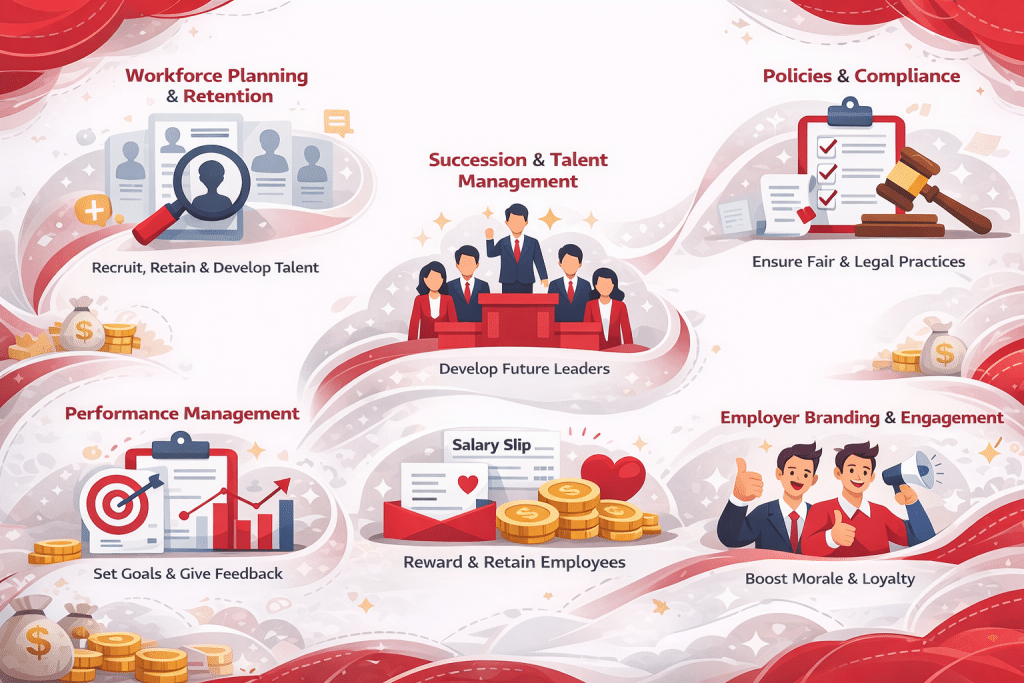
HRD focuses on guiding employees to grow and improve across several interconnected practices. By investing in these areas, businesses can strengthen employee engagement, boost productivity, and secure long-term success:
- Workforce Planning, Recruitment, and Retention: Identify skill gaps, hire qualified talent, and keep valued employees engaged with opportunities for growth.
- Succession Planning and Talent Management: Groom future leaders internally, ensuring stability and continuity by nurturing high-potential employees.
- Policies, Procedures, and Compliance: Set fair rules and follow local laws to protect both employees and the company, promoting trust.
- Performance Management and Feedback Systems: Create clear goals, provide regular guidance, and support continuous improvement to enhance productivity.
- Compensation, Benefits, and Employee Value Proposition: Offer competitive rewards, career support, and work-life balance to attract and retain top talent.
- Employer Branding and Employee Engagement: Craft a positive workplace image, celebrate achievements, and encourage open communication to build loyalty.
Proper implementation of these elements reinforces trust, encourages innovation, and maintains high operational standards across the organization.
Types of Human Resource Development Initiatives
HRD initiatives fall into two main types: formal programs and informal opportunities. Both approaches provide unique benefits, allowing employees to grow through structured training or hands-on experiences catering to different learning preferences and professional needs.
| Aspects | Formal HRD Programs | Informal HRD Opportunities |
|---|---|---|
| Definition | Structured learning activities organized by the company to build skills. | Flexible, experience-based learning that occurs naturally in the workplace. |
| Examples | Workshops, seminars, training sessions, certification courses. | On-the-job training, coaching, job shadowing, volunteer projects. |
By combining both types, businesses create well-rounded development plans that give employees both theoretical knowledge and practical experience.
Training Topics for Workplaces
Training programs help employees feel safer, more confident, and more productive at work. By focusing on core areas such as respectful behavior, skilled leadership, and cultural awareness, companies build a supportive and high-performing environment:
- Harassment and Discrimination Prevention: Teaches employees to spot and stop harmful behavior, creating respectful, cooperative workplaces free of conflict.
- Risk Management, Safety, and Compliance: Helps employees follow safe practices, prevent accidents, and respond confidently to emergencies.
- Leadership and Supervisor Development: Builds clear communication and understanding among supervisors, guiding and motivating teams toward positive outcomes.
- Diversity, Equity, and Inclusion: Encourages employees to welcome different backgrounds and ideas, leading to fresh thinking and stronger teamwork.
With the right training across these areas, organizations build teams that embrace challenges, adapt to change, and grow together over time.
Benefits of Effective Human Resource Development

Investing in HRD helps businesses build strong, skilled teams that can adapt and grow over time. Key benefits include:
- Attracting and Retaining High-Quality Talent: Development programs signal a company’s commitment to growth, encouraging loyalty and reducing turnover among skilled professionals.
- Enhancing Employee Satisfaction and Loyalty: Clear growth paths boost morale and ensure employees feel valued, leading to longer tenure and better contributions.
- Future-Proofing the Workforce: Continuous learning helps employees adapt to technology and market changes, keeping teams ready for new challenges.
- Increasing Organizational Performance: Well-trained employees solve problems effectively, deliver better service, and strengthen a company’s overall reputation.
- Fostering Healthy Working Relationships: Development initiatives build teamwork, respect, and open communication creating environments that enhance creativity and long-term collaboration.
These investments reward both the company and its people, making the entire organization more adaptable and resilient.
HRD vs. HRM
Human resource development focuses on improving employee skills, knowledge, and leadership potential for long-term growth. Human resource management (HRM), on the other hand, handles administrative tasks such as hiring, policies, and compliance. Together, they form a balanced system: HRM lays the foundation while HRD drives capability and advancement. When combined effectively, the two functions help build motivated, stable teams that are ready to contribute to business success in competitive markets.
Tips for Implementing HRD Successfully

Effective HRD implementation requires consistency and approaches tailored to individual employee needs. Starting with pilot programs reduces risk, allowing businesses to refine strategies before scaling to larger groups. Regular check-ins and ongoing feedback ensure alignment with company goals while keeping employees engaged and supported. Recognizing individual differences and celebrating progress creates a positive atmosphere that reinforces morale and loyalty.
Modern HRIS tools can also streamline HRD implementation by centralizing training records, performance data, and development tracking in one place making it easier for HR teams to monitor progress and adjust plans as needed. By combining thoughtful strategy with the right technology, businesses can build a culture of continuous learning that delivers lasting results.
Conclusion
Human resource development is a foundational process that helps employees improve their skills, knowledge, and leadership potential to contribute meaningfully to long-term organizational success. By combining formal programs with informal learning opportunities, HRD addresses diverse learning needs and creates motivated, future-ready workforces. Organizations that invest in HRD consistently benefit from higher employee satisfaction, lower turnover, and stronger competitive performance. For businesses looking to put these practices into action, exploring the best HRM software options available in the Philippines can be a practical next step toward building a more structured and scalable development program.
Frequently Asked Questions
-
What is the main function of human resource development?
Human resource development helps employees improve skills, knowledge, and leadership potential. It ensures they contribute effectively to the organization’s success while supporting their professional growth.
-
What is the importance of HRD?
HRD enhances employee performance, boosts morale, and prepares teams for future challenges. It builds a motivated, skilled workforce that drives business success and adaptability.
-
What is the focus of HRD?
HRD focuses on improving employee capabilities through training, continuous learning, and leadership development. It aims to create future-ready teams that meet evolving business needs.
-
What is the difference between HR and HRD??
HR (Human Resource Management) focuses on administrative functions such as hiring, payroll, and compliance, while HRD (Human Resource Development) focuses on improving employee skills, knowledge, and leadership potential for long-term growth. Together, they complement each other where HR builds the foundation and HRD drives capability and advancement.