






Construction site safety is no longer just about compliance, but it is essential for protecting workers and keeping projects running smoothly. As construction activities grow more complex, safety management requires structured planning and consistent monitoring.
The industry remains one of the most hazardous globally. According to the International Labour Organization (2023), construction accounts for over 100,000 fatal workplace injuries each year, highlighting the need for stronger preventive safety practices.
To reduce incidents and improve oversight, many construction firms are adopting digital systems to monitor inspections, incident reports, and compliance activities in real time. With better visibility into safety conditions, managers can respond faster to risks.
Key Takeaways
|
Table of Contents
Why Is Construction Site Safety Crucial for Project Success?
Safety in the construction industry is the pillar of every project, from planning to handover. Otherwise, you risk financial and legal collapse. Moreover, data from the International Labour Organization shows construction has disproportionately high fatal accidents.
Workplace accidents impact more than medical costs. They can trigger work stoppages, legal claims, and project delays that disrupt cash flow and profitability. Poor safety records also damage reputation, and make it harder to win future project tenders.
12 Golden Rules of Construction Site Safety You Must Implement
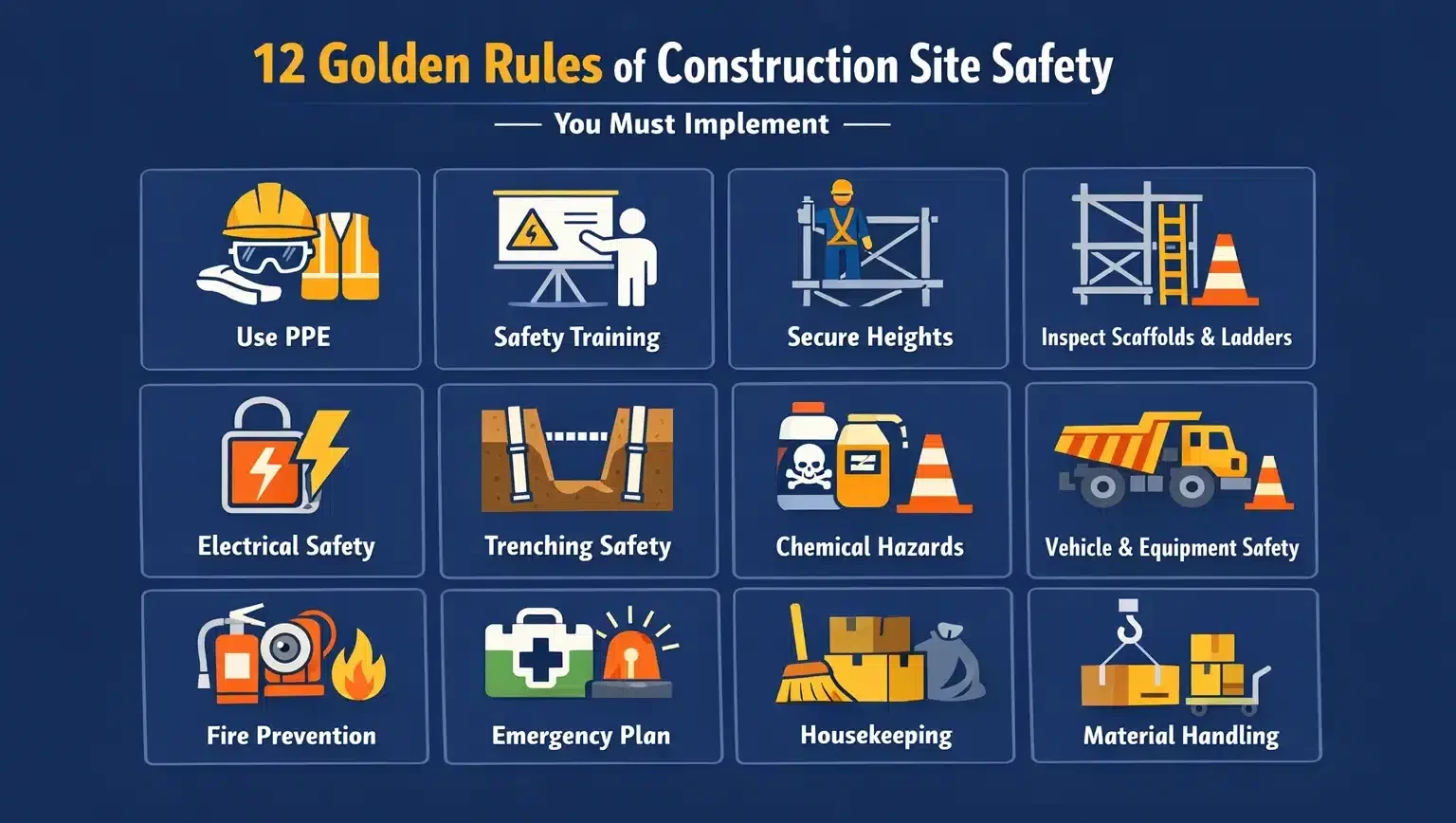
Implementing clear, standardized safety rules is the first step to a secure work environment. These are practical guidelines based on years of accident data from agencies. Each rule helps protect workers and project assets.
Project managers must ensure everyone on-site, from laborers to subcontractors, understands and follows these standards. These rules should be part of worker orientation and reinforced through regular toolbox talks.
1. Mandate the use of appropriate Personal Protective Equipment (PPE)
Every worker must use PPE suited to their job, including helmets, steel-toed boots, high-visibility vests, protective eyewear, and gloves. Management must provide compliant PPE, train workers on proper use, and regularly inspect and replace damaged gear to prevent avoidable injuries on site.
2. Conduct regular and ongoing safety training
Training is not a one-time event for new hires but a continuous process to refresh knowledge and introduce new safety procedures. These sessions should cover hazard identification, emergency response, and safe equipment use. Moreover, documenting each session proves compliance.
3. Secure all work areas at height
Falls from height are a leading cause of fatal injuries in construction, so any work more than 1.8 meters above a lower level must have proper fall protection. This includes guardrails, safety nets, and workers must receive specialized training before starting work.
4. Ensure scaffolds and ladders are safe for use
Before use, every scaffold must be inspected by a competent person to confirm its integrity, proper assembly, and load capacity. Likewise, ladders must be checked for damage, placed on stable surfaces, and set at the correct angle.
5. Implement strict electrical safety procedures
All electrical sources on the project site must be clearly identified and secured to prevent accidental contact. In addition, implement lockout/tagout procedures during maintenance and ensure only qualified electricians install or repair electrical systems to prevent electrocution hazards.
6. Secure all trenching and excavation areas
Any trench deeper than 1.5 meters (about 5 feet) must be protected with shoring, shielding, or sloping to prevent fatal wall collapses. Before excavation, conduct a site assessment to locate underground utilities.
7. Communicate chemical hazards clearly
Every hazardous chemical on the project site must have an accessible Safety Data Sheet for all workers. In addition, containers must be clearly labeled. Finally, workers must be trained in safe handling and emergency procedures for spills or exposure.
8. Manage vehicle and heavy equipment traffic
Establish designated routes for vehicles and heavy equipment, separate from pedestrian areas, to reduce collision operational risk in construction. In addition, use clear signage, barricades, and flag persons where visibility is limited.
9. Provide fire prevention and suppression equipment
Identify high-risk fire areas, such as flammable storage or welding zones, and place suitable extinguishers in accessible locations. Next, inspect them regularly and train all workers to use them.
10. Prepare an emergency response plan and equipment
Every project site must have a clear emergency response plan covering evacuation, assembly points, and contacts. In addition, provide a fully stocked first-aid kit and train several workers in first aid and CPR.
11. Maintain good housekeeping and site tidiness
A cluttered work area is hazardous, increasing risks of trips, slips, and falling objects. Therefore, store materials neatly, route cables away from walkways, and dispose of waste regularly. Good housekeeping reflects a strong safety culture and reduces minor accidents.
12. Use safe material handling techniques
Back injuries from improper lifting are common in construction, so workers must be trained in correct techniques. Whenever possible, use mechanical aids like forklifts, cranes, or hoists. In addition, manage material requisitions to avoid excess stockpiles and reduce handling risks.
How Managers Can Build a Strong Construction Safety Culture?
Construction site safety is not only about rules and compliance, but also about building a safety culture led by project managers. When managers consistently prioritize safety in planning and daily operations, workers are more likely to follow safe practices throughout the project lifecycle.
Managers can strengthen safety culture by encouraging open communication and regular safety discussions, such as toolbox meetings and routine inspections. Allowing workers to report hazards or near-miss incidents without fear helps identify risks early.
Continuous improvement is also essential for maintaining construction site safety. Reviewing incident reports and integrating technology into safety monitoring can help managers ensure that safety standards remain effective as projects grow in complexity.

The Role of Technology in Enhancing Construction Site Safety
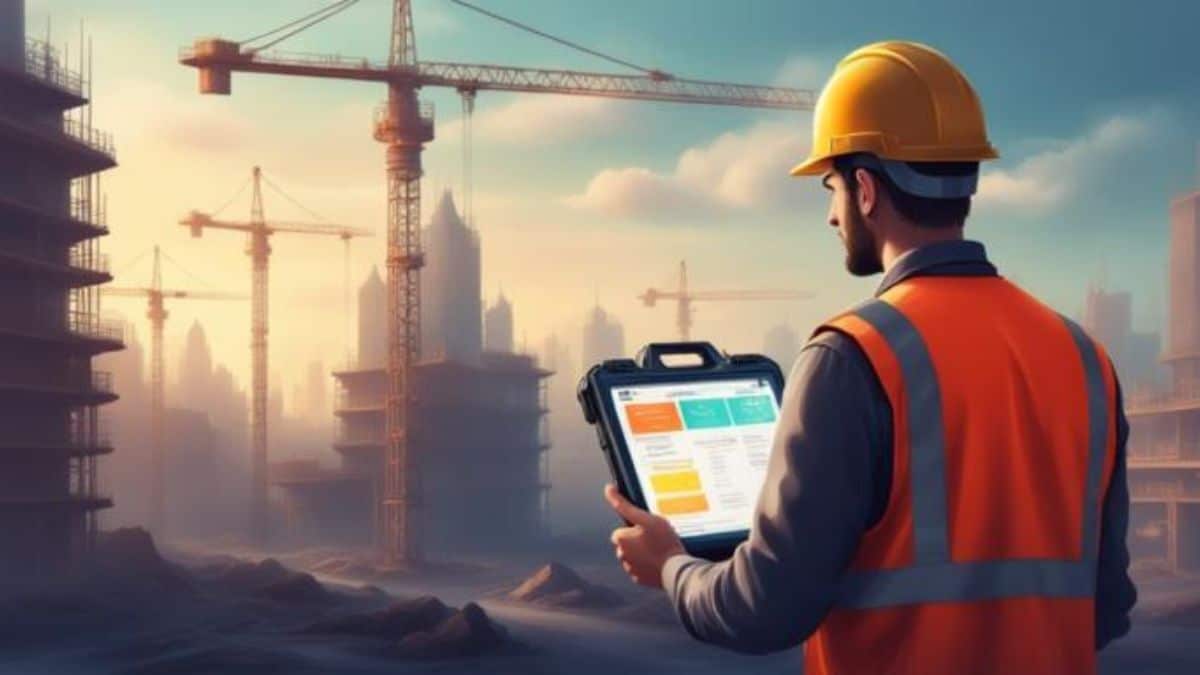
In the digital age, manual paper-based safety management is slow and error-prone. As a result, forms pile up, reports are delayed, and training records are hard to track. Consequently, management lacks real-time risk visibility, turning preventive actions into reactive responses.
The adoption of modern technology, such as construction management software, transforms how companies manage site safety. With a digital platform, safety processes are centralized and accessible in real time.
1. Centralized documentation and incident reporting
Construction software lets workers report incidents or unsafe conditions from mobile devices with photos and details. These reports go directly to safety managers for quick action. In addition, all key documents are stored in one centralized, easily accessible system for audits.
2. Asset management and equipment inspection scheduling
Safety depends on equipment condition, from heavy machinery to scaffolding. With software, you can schedule routine inspections and maintenance, and notify the right teams. In addition, logging each infrastructure inspection helps prevent equipment failure-related accidents.
3. Real-time progress monitoring and resource allocation
The construction system offers a centralized dashboard with full visibility over project activities. Managers can track progress in real time and allocate resources safely and efficiently. As a result, they can spot delays or safety issues early and act before problems escalate.
4. Digital tracking of worker training and certifications
Ensuring every worker has proper qualifications is critical for a safe worksite. Construction management software stores and tracks each employee’s certifications and training. In addition, automatic alerts for expiring certifications help managers schedule timely retraining.
Conclusion
Construction site safety in 2026 depends on proactive planning, consistent monitoring, and strong oversight across every phase of a project. When risks are identified early and safety protocols are enforced consistently, managers can reduce incidents.
Technology plays an important role in strengthening safety management by improving visibility, documentation, and coordination. Centralized safety reporting, incident tracking, and compliance monitoring help teams respond faster to risks.
With the right safety strategy and systems in place, construction companies can build safer operations and sustain project performance. For organizations looking to improve safety management practices, a free consultation can help identify practical steps to strengthen oversight.

FAQ about Construction Site Safety
-
What is the first step to improve construction site safety?
The first step is to conduct a comprehensive risk assessment to identify all potential hazards. Based on this, you can develop a site-specific Health and Safety Plan that addresses these risks directly.
-
Who is ultimately responsible for safety on a construction site?
While safety is a shared responsibility, project managers and company leadership hold ultimate accountability. They must provide resources, set policies, ensure training, and consistently enforce safety rules.
-
How does construction software help reduce project costs?
Software reduces costs by preventing expensive accidents, avoiding regulatory fines, and minimizing project downtime. Digitizing administrative tasks like reporting and inspections also enhances operational efficiency.
-
What are the three most common hazards on a construction site?
According to global safety agencies, the three most common hazards that lead to serious injuries or fatalities are falls from height, being struck by a falling or moving object, and electrocution.