






A cash float is the starting cash placed in a register so staff can accept payments and give change from the first sale of the day. Although digital payments are common, cash still matters in many retail and hospitality businesses. Without the right float, service can slow down, staff can make mistakes, and customers may leave with a poor impression.
Good cash float management means setting the right amount, following clear procedures, and training staff to handle cash properly. This helps reduce errors, improve security, and support smoother daily operations. In this article you will learn how to set, manage, and control cash floats more effectively.
Table of Contents
Key Takeaways
|
The Fundamental Concept of the Cash Float
 A cash float is a fixed amount of money placed in a register before business starts, so staff can accept cash payments and give change right away. It is not sales revenue or profit, but working cash used for daily transactions more efficiently each day.
It also helps businesses check cash accurately at the end of the day. If the opening float and recorded cash sales do not match the final amount in the drawer, it usually signals an error that needs review.
Cash Float Types Every Business Should Know
In retail, cash on site does not serve just one purpose. Businesses usually divide it into different cash funds, each with its own role in supporting transactions, change needs, and small day to day expenses.
The table below outlines the main types of cash funds and their functions in daily operations.
| Type | Description |
|---|---|
| Register Float | Cash in the register for daily sales and change. |
| Master Change Fund | Backup cash used to refill the register. |
| Petty Cash | Cash for small business expenses, not sales. |
How to Set Up a Cash Float System That Actually Works
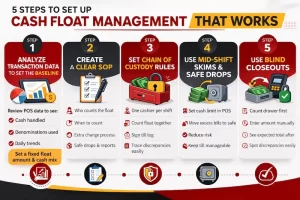 From a chaotic, ad-hoc cash drawer to a streamlined, secure, and accountable cash float system requires a methodical approach. Business owners must treat their cash management just as seriously as their inventory or payroll. Below is a comprehensive, step-by-step guide to implementing a foolproof cash float system from the ground up.
Step 1: Analyze Transaction Data to Set the Baseline
Review your POS data to see how much cash you usually handle and which denominations are used most often. Then set a fixed float amount and cash mix that matches your daily transaction needs.
Step 2: Create a Clear SOP
Your cash float process needs clear written rules. The SOP should explain who counts the float, when it is counted, how staff request extra change, and how safe drops are handled. It should also state how discrepancies are reported and reviewed.
Step 3: Set Chain of Custody Rules
Assign each float to one cashier per shift to keep accountability clear. At the start of the shift, the cashier and manager should count the float together and sign a till log. If only one person handles that drawer, any discrepancy is easier to trace.
Step 4: Use Mid Shift Skims and Safe Drops
Do not let too much cash build up in the register during busy hours. Set a cash limit in the POS system, then move excess bills into a secure safe once that limit is reached. This reduces risk and keeps the till easier to manage.
Step 5: Use Blind Closeouts
At the end of the day, have staff count the drawer before seeing the expected total in the POS. This method helps improve accuracy and makes it easier to spot real discrepancies without relying on guesswork.
Cash Float Errors That Can Cost Your Business
 Even with a solid plan in place, cash management is fraught with potential errors. Human error, complacency, and operational bottlenecks can quickly degrade the integrity of your cash float. Recognizing these common pitfalls is the first step toward preventing them.
| Mistake | Why It Causes Problems | What to Do Instead |
|---|---|---|
| Using one float for all tills | Different stores and registers have different cash needs, so one standard amount may not work. | Set float amounts based on sales volume, traffic, and register location. |
| Cross-till cash exchanges | Unrecorded exchanges can make both tills inaccurate and harder to reconcile. | Require all change requests to go through a manager or central safe. |
| Last minute bank runs | Running out of change disrupts operations and creates avoidable security risks. | Check change reserves daily and prepare extra denominations in advance. |
| Ignoring cash overages | Overages may point to cashier errors, missed sales, or poor cash handling. | Review both shortages and overages to find the real cause. |
How Technology Helps Businesses Monitor and Control Cash Floats
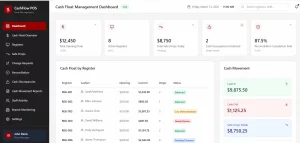 Technology helps businesses manage cash floats with better accuracy and control. Using POS systems instead of paper logs makes it easier to track opening floats, monitor cash movement, and review closing balances.
It also helps teams record safe drops, spot cash differences, and see which registers often run low on change. For businesses with multiple tills, a dashboard makes cash activity easier to monitor in one place.
Best Practices for Stronger Cash Float Management
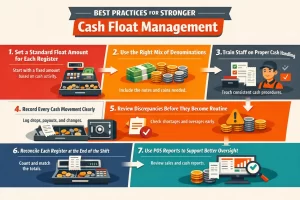 Strong cash float management depends on clear routines and consistent controls. When businesses apply the same process each day, they can reduce errors, improve accountability, and make reconciliation easier.
1. Set a Standard Float Amount for Each Register
Each register should start with a fixed float based on its usual cash activity. This helps staff work more consistently and makes end-of-shift checks easier to manage.
2. Use the Right Mix of Denominations
A float should include the notes and coins most often needed for daily transactions. The right denomination mix helps staff give change faster and avoid delays during busy hours.
3. Train Staff on Proper Cash Handling
Staff should know how to count the float, handle change correctly, and follow the same cash procedures every shift. Clear training helps reduce mistakes and keeps cash handling more consistent.
4. Record Every Cash Movement Clearly
Any safe drop, change request, payout, or adjustment should be recorded properly. Clear records make it easier to track cash activity and review discrepancies later.
5. Review Discrepancies Before They Become Routine
Small shortages or overages should be reviewed early instead of ignored. This helps businesses catch process issues before they become repeated problems.
6. Reconcile Each Register at the End of the Shift
At the end of each shift, the register total should match the opening float and recorded cash sales. This step helps confirm accuracy and identify issues that need attention.
7. Use POS Reports to Support Better Oversight
POS reports help managers review cash activity, monitor discrepancies, and check whether each register is being handled properly. This makes cash float management easier to control over time.
Key Metrics to Track for Better Cash Float Control
Tracking a few key metrics helps businesses keep cash floats accurate and easier to manage. Managers can review figures such as opening floats, cash sales, and end-of-shift balances to check whether registers are being handled properly.
Over time, these numbers also help businesses spot recurring discrepancies and adjust float levels when needed. This gives managers better control over cash handling across registers or store locations.
Conclusion
A cash float may seem small, but it plays an important role in keeping daily transactions smooth and accurate. When businesses set the right float, follow clear procedures, and monitor cash activity properly, they can reduce errors and make reconciliation easier at the end of the day.
Cash still matters in many retail and hospitality settings, so good cash float management remains essential. With consistent staff practices and the right systems in place, businesses can handle cash more confidently and keep checkout operations running well.
FAQ About Cash Float
-
What is a cash float?
A cash float is the fixed amount of money placed in a register before business starts. Staff use it to accept cash payments and give change during daily transactions.
-
Why is cash float important for businesses?
Cash float helps businesses serve customers smoothly from the first sale of the day. It also supports better cash control by making it easier to compare the opening float, cash sales, and final drawer balance.
-
How do businesses decide the right cash float amount?
Businesses usually review POS data, daily cash volume, and common denominations used in transactions. Based on that, they set a fixed float amount that matches their usual operational needs.
-
What is the difference between a cash float and petty cash?
A cash float is used for customer transactions and giving change, while petty cash is used for small business expenses. Because they serve different purposes, staff should not mix them.
-
What should businesses do if the register does not balance?
If the final drawer amount does not match the opening float plus recorded cash sales, the business should review the discrepancy right away. This helps identify counting mistakes, recording issues, or other cash handling problems before they become routine.