









Key Takeaways
|
What Is Precision Agriculture?
Precision agriculture, also known as precision farming, is a comprehensive farm management approach that utilizes information technology to observe, measure, and respond to intra-field variability in crops. Instead of managing an entire farm as a single, uniform unit, this methodology treats it as a collection of smaller zones, each with its unique characteristics and requirements.
Essentially, it is the application of efficient manufacturing principles and data-driven management to agriculture, aiming to enhance productivity, profitability, and overall operational sustainability through agriculture supply chain solutions.
Why Is Precision Agriculture Important for the Future of Agribusiness?
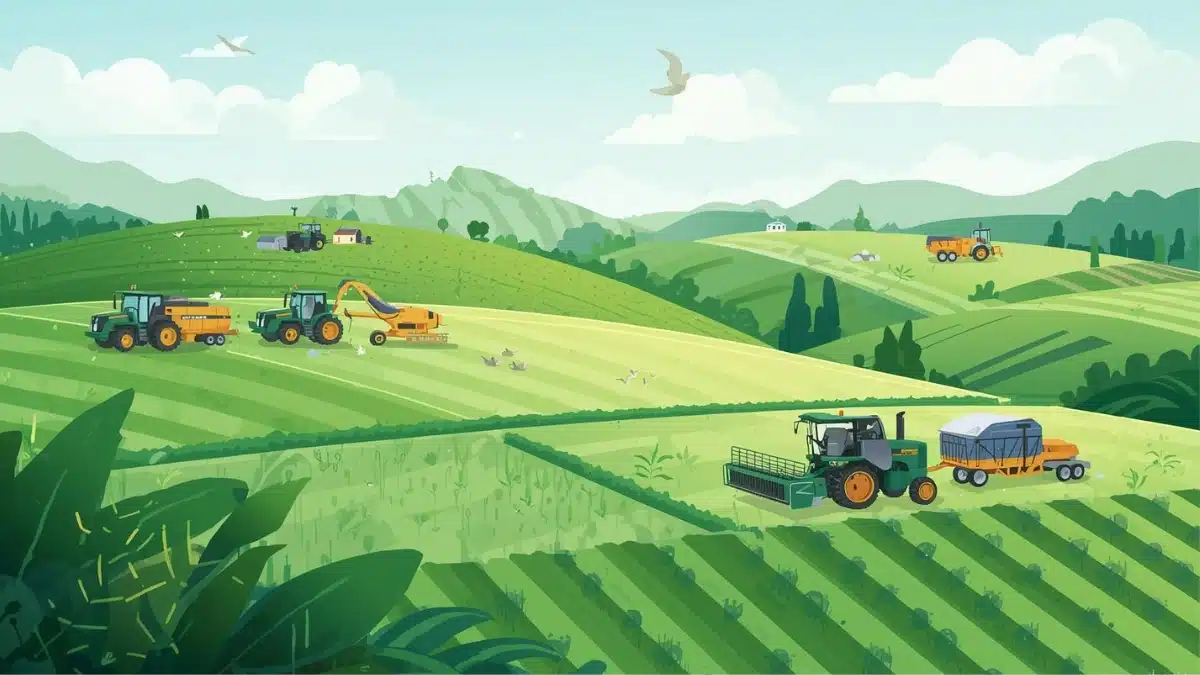 The importance of precision agriculture extends beyond merely increasing crop yields; it is a strategic response to complex global challenges and evolving market demands. According to data from the Food and Agriculture Organization (FAO), the world’s population is projected to reach nearly 10 billion by 2050, requiring an estimated 70% increase in food production.
From a business perspective, adopting precision farming is key to maintaining competitiveness and profitability amidst rising operational costs and market pressures. Increases in the prices of fertilizers, fuel, and labor are squeezing profit margins, making efficiency a top priority. Precision agriculture allows companies to significantly reduce input costs by preventing waste.
Key Technologies in the Application of Precision Agriculture
Precision agriculture is not a single technology but an integrated ecosystem of hardware and software working in unison to collect, analyze, and act on data. Each component plays a specific role, from determining geographical locations with centimeter-level accuracy to applying differentiated treatments across various land zones.
The following are some of the fundamental technologies that form the pillars of the modern precision agriculture ecosystem, each contributing to a more efficient and productive operation.
1. GPS and Geographic Information System (GIS)
GPS provides accurate location data for field mapping, automated tractor guidance, and asset tracking. GIS then stores and visualizes this geospatial data. Together, they create layered digital maps showing topography, soil types, and historical yields, forming the foundation for all precision agriculture decisions.
2. Sensors and Remote Sensing
From soil sensors measuring moisture and nutrient levels to drones and satellites equipped with multispectral cameras, these tools continuously monitor field conditions. They help detect issues like water stress, pest infestations, or nutrient deficiencies early on, even before they become visible to the naked eye.
3. Variable Rate Technology (VRT)
VRT allows farm machinery to automatically adjust input rates for seeds, fertilizers, or pesticides across different field zones. Using prescription maps built from GIS and sensor data, it ensures each area receives exactly what it needs. This reduces waste, lowers costs, and minimizes environmental impact.
4. Farm Management Software (FMS) and ERP
FMS or a more comprehensive ERP system serves as the brain of the operation. It pulls all data into a single dashboard where managers can analyze trends, monitor performance, manage inventories, track costs, and plan activities. In short, it turns raw data into actionable decisions.
5. Internet of Things (IoT)
IoT connects all devices, sensors, and machines across the farm, enabling real-time communication throughout the ecosystem. For example, a GPS-equipped tractor sends location data while soil sensors automatically trigger irrigation. This reduces manual intervention and keeps the entire operation running in sync.
Significant Benefits of Precision Agriculture for Companies
 The implementation of precision agriculture delivers strategic advantages that directly impact the financial and operational health of an agribusiness. These benefits extend far beyond simply increasing production volume; they touch upon fundamental business aspects such as cost efficiency, risk management, and long-term sustainability. B
Let us delve deeper into the strategic advantages that can be gained through precision agriculture.
1. Increased efficiency and productivity
By delivering targeted treatments, precision agriculture ensures that every plant receives optimal conditions for growth, which directly increases yield per hectare. The use of auto guidance systems on tractors also reduces overlap during tillage, planting, and spraying, thereby maximizing coverage of the working area and saving time.
2. Reduction in operational costs
This is one of the most significant benefits of precision farming, where VRT technology can reduce the use of inputs such as fertilizers, pesticides, and water by up to 30%. By applying inputs only where they are genuinely needed, companies can drastically cut operational costs.
3. Supporting sustainable agriculture
Precision agriculture is inherently more environmentally friendly because it reduces the runoff of agricultural chemicals into water sources and minimizes carbon emissions from farm machinery. More efficient water use is also crucial in drought-prone areas. These sustainable practices are not only good for the environment but also enhance the company’s image and meet the demands of a global market increasingly concerned with sustainability.
4. Data-driven decision making
With accumulated historical and real-time data, managers can make more accurate and strategic decisions, from selecting the most suitable crop varieties for specific zones to planning crop rotations for the next season. Analysis of yield data allows for the identification of low-performing areas that require intervention, transforming intuition into measurable insight.
A Step-by-Step Guide to Implementing Precision Agriculture
Adopting precision agriculture may seem like a significant and costly technological leap, but its implementation can be done in phases, depending on the scale, budget, and priorities of the business. The key is to start with clear objectives and build the technological foundation in a modular fashion, rather than trying to implement everything at once.
Here are the strategic steps a company can follow to begin adopting precision agriculture in a structured, manageable way, ensuring a smooth transition and maximizing long-term benefits.
| Phase | Goal | Key Actions | Practical Output |
|---|---|---|---|
| Phase 1: Evaluation & Planning | Define priorities and measurable targets based on current conditions. | Assess land and operations, identify major inefficiencies, set clear goals, and build a staged adoption roadmap aligned to budget. | A realistic plan with clear targets and a phased technology roadmap. |
| Phase 2: Initial Data Collection | Build a reliable data foundation. | Conduct soil sampling, create fertility maps, and map field boundaries using GPS or drones. | Accurate soil and field maps to support better zone management. |
| Phase 3: Core Technology Implementation | Improve operational efficiency quickly. | Implement GPS autoguidance and basic satellite monitoring such as NDVI. | Fuel savings, time efficiency, and early crop health insights. |
| Phase 4: VRT Application | Apply inputs more precisely. | Use soil and crop data to create prescription maps for variable-rate application. | Reduced input waste and improved productivity per zone. |
| Phase 5: Integration & Optimization | Centralize and scale data usage. | Adopt a centralized management system to integrate operational and financial data. | Unified reporting and stronger long-term operational control. |
Challenges in Adopting Precision Agriculture and Their Solutions
Although the benefits of precision agriculture are immense, the journey is not without its challenges that need to be anticipated and managed effectively. Realistically acknowledging these hurdles is a crucial step for business leaders to formulate effective mitigation strategies.
Below are some common challenges often faced in the implementation of precision agriculture, along with practical solutions.
1. High initial investment costs
Equipment such as GPS-enabled tractors, drones, and advanced sensors requires a substantial initial investment, which can be a barrier for many companies. The solution is to start with a modular approach, investing in technologies that offer the quickest ROI, like GPS guidance systems. Additionally, many service providers now provide subscription models for satellite imagery or data analysis, as well as equipment rental options, which can reduce the upfront financial burden.
2. Need for technical expertise
Operating advanced equipment and interpreting complex data require new skills that the field team may not yet possess. To address this, companies must invest in continuous training programs for their employees. Partnering with agritech consultants or technology providers who offer comprehensive support and training is also a critical strategy to ensure the technology is utilized to its full potential.
3. Data management and interpretation
The amount of data generated by various sensors can be overwhelming and confusing if not managed properly. The challenge is to turn a pile of raw data into easily understandable and actionable insights. The solution lies in using intuitive farm management software (FMS) or ERP systems equipped with visual dashboards, automated analysis, and user-friendly reporting to simplify decision-making.
4. Device interoperability
Often, hardware and software from different manufacturers cannot talk to each other, creating data silos that hinder integration. Before making a purchase, it is crucial to ensure that the chosen technology uses open-standard protocols or has an API (Application Programming Interface) that enables integration with other systems. Selecting an integrated solution provider, such as HashMicro, that offers a complete ecosystem can minimize these compatibility issues.
Optimize Your Agribusiness Management with the Right ERP Solution
Running an agribusiness means juggling a lot of moving parts, from monitoring crop health across multiple fields to managing seasonal inventory and keeping operational costs under control. An ERP system designed specifically for agriculture brings all of these together in one place, replacing scattered spreadsheets and disconnected tools with a single source of truth.
What makes an agriculture focused ERP different from a generic one is its ability to handle the unique rhythms of farming. It can track crop progress from planting to harvest, factor in seasonal demand when managing input stock, and tie field activities directly to financial records. This means when a batch of fertilizer is applied, the cost automatically reflects in your project budget without anyone having to enter it twice.
Cross department integration is where things get really practical. Your procurement team can see real-time inventory levels for seeds and pesticides, your finance team can pull accurate cost per hectare reports, and your operations team can monitor fleet usage and maintenance schedules all from the same system.
Key Features to Look for in Agriculture ERP Software:
- Crop Lifecycle Tracking: Monitor every stage from soil preparation to harvest, with real-time field data helping you spot problems early and protect yields.
- Agricultural Cost Control: Break down expenses by field, crop type, or season so you know exactly where your money is going and where you can cut waste.
- Input Inventory Management: Keep track of seeds, fertilizers, and pesticides with automatic low stock alerts timed to your planting calendar.
- Fleet and Equipment Tracking: Schedule maintenance for tractors and harvesters based on actual usage, not guesswork, to avoid breakdowns during critical periods.
- Field to Finance Reporting: Generate profit and loss reports that connect directly to field operations, giving you a clear picture of which crops and fields are actually profitable.
The right ERP does not just digitize your paperwork. It gives you the visibility to make smarter decisions at every stage of the growing season.
Conclusion
Precision agriculture has grown from a futuristic idea into a proven strategy for modern agribusinesses. By putting data and technology to work, companies can increase productivity while keeping costs and environmental impact in check.
For business leaders, investing in the right agriculture software is a practical step toward building a more efficient operation. A phased approach, starting with a needs assessment before moving to full system integration, makes the transition manageable.
If you are considering making the switch, exploring a free demo is a good way to see how these tools fit into your operations and support long term profitability.

FAQ About Precision Agriculture
-
What is the primary goal of precision agriculture?
The main goal is to increase crop yields and profitability while reducing the amount of traditional inputs needed to grow crops (land, water, fertilizer, etc.). It focuses on applying the proper treatment in the right place at the right time.
-
What are the main components of precision agriculture?
The core components include GPS/GIS for mapping, sensors and remote sensing (drones, satellites) for data collection, Variable Rate Technology (VRT) for targeted application, and farm management software (FMS/ERP) for data integration and analysis.
-
Is precision agriculture expensive to implement?
The initial investment can be high, but implementation can be done in stages. Many businesses start with more affordable technologies, such as GPS guidance or data analysis services, which can offer a quick return on investment through input savings before scaling up to more advanced equipment.