








You might assume that your onboarding ends once the laptop is set up and the team is introduced, yet for many new hires, this is where the confusion begins. Statistics show that organizations with weak onboarding lose 17% of their new hires within the first 90 days. What follows is often months of missed expectations and an early resignation that your leadership team never saw coming.
A structured onboarding program is your most strategic asset, capable of improving new hire retention by 82% and productivity by over 70%. Unlike a one-day orientation, this journey spans months, covering everything from role clarity and cultural integration to performance milestones that ensure your talent provides a measurable return on investment (ROI) much faster.
In this guide, we break down the framework of an effective onboarding process and why most organizations still struggle with talent leakage. By shifting your focus from administrative tasks to cultural immersion, you can stop the cycle of constant rehiring and start building a stable, high-performing workforce. Read on to discover the strategies that separate top-tier organizations from those still relying on fragmented, manual orientation methods.
Key Takeaways
|
You can take full control of your team growth and simplify your management tasks with a smart digital system.

What is Employee Onboarding?
Employee onboarding is the strategic journey of integrating your new hire from the moment they sign an offer letter until they are fully contributing to your business goals. It covers everything your staff needs to reach full proficiency, including role clarity, cultural alignment, and building key relationships within your team.
It is important to distinguish this from orientation, which is merely a one-day event for administrative formalities. Onboarding is a long-term commitment that can span from three months to a full year, ensuring your talent stays engaged and understands exactly how to deliver the performance you expect.
The Strategic Importance of Effective Onboarding

The strategic value of your integration program is a critical driver for business stability. In a competitive market where the cost of turnover is exorbitant, your organization must prioritize the initial experiences of your workforce. If the first few months are disorganized, you risk damaging the psychological contract with your new hire, leading to an early exit that could have been avoided.
Impact on Employee Retention
A structured introduction directly improves your retention rates, as well integrated employees are significantly more likely to stay for three years or longer. By supporting your new hires from day one, you eliminate new hire remorse and build a loyal workforce. This investment prevents the high costs of early turnover that otherwise drain your resources and disrupt team dynamics.
Accelerating Time to Productivity
Every new hire starts with a learning curve where they consume resources before they generate value. A primary objective of your journey is to shorten this time to productivity by providing clear expectations and targeted resources. When you provide a streamlined process, your staff reaches full proficiency faster, contributing to your bottom line without unnecessary delays.
Boosting Engagement and Morale
Establishing a positive initial experience creates a culture of mutual respect and high discretionary effort. This early investment pays dividends through better collaboration and a more positive workplace atmosphere. To truly maximize these outcomes, you must ensure that your integration strategy aligns with your broader efforts in workforce dedication and professional passion to sustain high performance throughout the entire lifecycle of your people.
The 4 C’s of Employee Onboarding
The 4 C’s framework is your roadmap to transforming new hires into productive assets by balancing administrative necessity with human integration.
1. Compliance
Handle legalities and administrative duties efficiently. You should automate paperwork like non disclosure agreements during pre boarding to ensure your staff is ready to work from day one.
2. Clarification
Define roles and performance metrics clearly. By eliminating ambiguity around short term and long term goals, you empower your team to take full ownership of their results.
3. Culture
Align your talent with your company values and norms. Ensuring a strong cultural fit is a key predictor of long term retention and resilience within your leadership vision.
4. Connection
Build the interpersonal networks your employees need to succeed. Implementing buddy programs fosters a sense of belonging, allowing your new hire to reach full productivity much faster.
Step-by-Step Implementation of an Onboarding Program
Transitioning to a strategic integration process requires deliberate planning. Follow these core steps to build a robust framework that supports your talent from day one:
Map the Employee Journey
You must outline specific milestones from the moment they sign the offer letter through pre boarding up to their one year anniversary. Define what success and proficiency look like at each stage to ensure alignment with your business goals.
Automate Administrative Tasks
Leverage your HRIS to handle tax forms and policy acknowledgments before the official start date. This reserves the first day for meaningful cultural immersion and team building rather than tedious paperwork.
Implement a Buddy System
Pair your new hire with a seasoned peer who can explain unwritten cultural norms and provide a social anchor. This peer to peer support reduces anxiety and helps your staff integrate into the team social landscape much faster.
Establish Structured Feedback Loops
Schedule formalized check ins at the 30, 60, and 90 day marks. These meetings allow you to monitor resource needs and role alignment, ensuring you can course correct early if any issues arise.

Key Roles and Responsibilities in Onboarding
Successful onboarding is a shared responsibility across your organization. To ensure a seamless transition, you must clarify the specific roles of each stakeholder involved in the process:
Human Resources (The Architects)
Your HR team designs the strategic framework and manages pre boarding logistics. They ensure legal compliance and provide the necessary tools for managers to execute a consistent experience across all departments.
Direct Managers (The Execution Leaders)
The manager is the most critical driver of your new hires success. They translate broad business goals into actionable expectations and provide the one on one feedback required to reach full proficiency.
Peer Buddies (The Cultural Guides)
Buddies facilitate faster social integration by providing informal peer to peer support. They help your new staff navigate unwritten cultural norms and build the internal networks needed for long term collaboration.
The New Employee (The Proactive Owner)
While you provide the structure, the individual must take full ownership of their learning journey. Success requires a proactive mindset where they actively seek feedback and align their personal growth with your leadership vision.
Common Onboarding Mistakes to Avoid
Even with the best intentions, subtle mistakes can undermine your integration strategy. To protect your talent investment, you must recognize and avoid these common traps:
Information Overload
Avoid bombarding your new staff with excessive manuals and presentations in their first few days. This leads to cognitive overload and retention failure. You should adopt a phased approach to deliver digestible information when it is actually needed.
Neglecting Pre boarding
Silence between the offer acceptance and the first day breeds anxiety. A lack of preparation including missing equipment or unconfigured email accounts sends a message of disorganization. Proactive pre boarding ensures your talent feels valued before they even step through the door.
Dominance of Administrative Tasks
Spending the first week isolated with paperwork leads to immediate disengagement. You should automate compliance tasks to free up time for cultural immersion and meaningful hands on learning.
Ambiguity in Expectations
Ambiguity is the enemy of productivity within your team. Waiting for an annual review to provide feedback is a recipe for failure. Establish continuous feedback loops to ensure your staff understands exactly how to deliver the results you expect.
Ignoring Cultural Alignment
Technical skills are insufficient if your new hire does not understand your communication style and values. You must facilitate cultural integration through mentorship and social connection to ensure long term collaboration.
Measuring Onboarding Success and Metrics
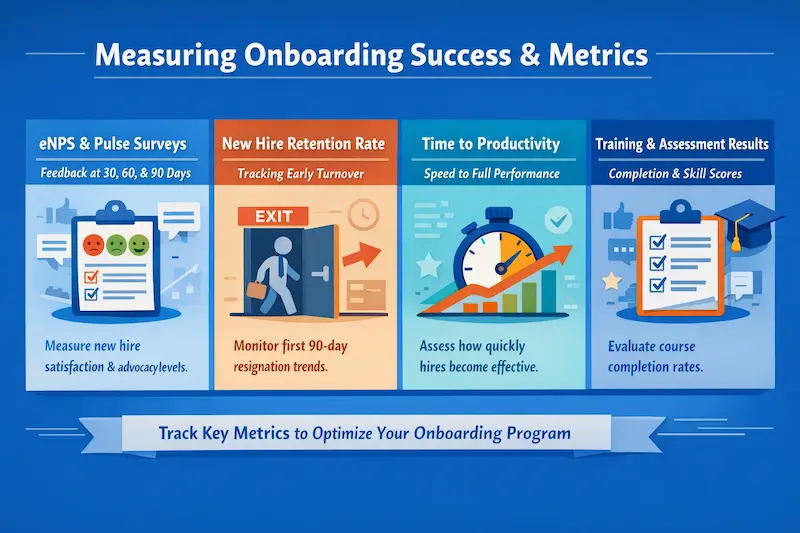
To ensure your integration program provides a measurable return you must move beyond anecdotal evidence and utilize data driven insights. Tracking these key performance indicators allows you to identify structural weaknesses and optimize your talent investment:
- eNPS and Pulse Surveys: Gauge how likely your new hires are to recommend your organization at the 30 60 and 90 day marks. These insights capture how supported your staff feels during their critical first weeks and their level of advocacy for your brand.
- New Hire Retention Rate: High turnover within the first 90 days is the clearest sign that your onboarding is failing. You should track voluntary resignation rates among first year employees to identify patterns that threaten your business stability.
- Time to Productivity: Measure how long it takes for your new talent to reach full proficiency and start generating value. A shorter average interval indicates that your training and resources are successfully accelerating your bottom line results.
- Training Completion and Assessment Results: Low completion rates often signal that your content is the problem rather than your people. Use these metrics as a signal to refine your material and ensure your staff has the necessary tools to succeed in your organization.
The Role of Technology in Modern Onboarding
Technology is the primary support for your integration journey within your remote or hybrid work models. You should use digital tools to handle tasks and guide new hires step by step. By storing your data in one place you ensure every staff member gets high quality training for your company regardless of their location.
A strong platform reduces the paperwork load on your team through simple electronic signatures and digital checklists. To improve this process you should implement the best HR software system which lets you give your staff on demand access to learning modules. This modern way changes a manual task into a professional experience.
Smart digital solutions allow you to connect your onboarding tasks directly with payroll and performance management. This complete setup removes manual data entry and gives your leadership team clear facts to improve the journey. By picking the right tech you protect the future of your team and your daily operations.
Conclusion
Building a stable workforce starts with how you treat people from the very beginning. Shifting to a long term strategy protects your business from the high costs of employee turnover. This focus ensures your new talent stays committed to your success for many years.
You succeed when you balance clear roles with strong social bonds and cultural fit. Giving your staff a sense of belonging helps them take ownership of their results with confidence. These connections ensure your team reaches full productivity much faster than using manual methods.
Adopting a modern digital system lets you focus on your people instead of manual paperwork. A smart tool keeps your progress organized and simplifies your daily operations for a better team experience. You can see how this works for your organization by exploring a free demo today.
Frequently Asked Questions
-
How can you adapt the onboarding journey for your senior leadership hires?
You should focus more on strategic alignment and building deep stakeholder relationships rather than basic operational training. This specialized approach ensures your high level talent understands the subtle cultural nuances and leadership expectations required to drive your long term vision.
-
In what way does your introduction process help you build a stronger employer brand?
A positive initial experience turns your new hires into vocal advocates for your company in the job market. When your people share their success stories you build a strong reputation that naturally attracts more high performing candidates to your organization without extra recruitment costs.
-
How can you ensure your program supports diversity and inclusion from the very start?
You must provide personalized resources that respect the unique backgrounds and perspectives of your diverse workforce. By creating an inclusive environment during the first week you help every individual feel safe to contribute their authentic ideas to your business goals.