









Did you know that 60% of job seekers abandon applications when the process feels too long or complicated? In Malaysia’s 2026 hiring landscape, where speed and candidate experience can decide who wins top talent, those drop-offs can quietly shrink your pipeline.
Good hiring still depends on human judgment, but the right recruitment software can remove friction from the workflow. It helps automate repetitive tasks, reduce candidate drop-offs, and maintain consistent communication for both recruiters and applicants.
To make the selection easier, this guide compares 18 recruitment software options available in Malaysia, highlighting what each tool is best suited for, so teams can choose a fit based on their hiring process, volume, and growth plans.
Key Takeaways
|
As performance management becomes harder to handle manually, many businesses start considering HRM software to keep employee data, reviews, and day to day HR processes more organized.
Shortlisted Best Recruitment Software
After comparing various recruitment tools, I’ve shortlisted the best software in 2026 that balance functionality and ease of use. These platforms streamline hiring by sourcing candidates, screening resumes, managing communication, and supporting onboarding for a smooth transition.



Best Because Supports global hiring with AI scoring, onboarding integration, and compliance.


Best Because Adapts to both HR teams and agencies with Smart Assist and multilingual portals.

Finding the right recruitment software is only half the equation. The other half is having an HR system that keeps everything connected. From hiring to onboarding to payroll, all in one place.
What is Recruitment Software?
Recruiting software is a digital tool designed to support hiring managers and HR professionals throughout the recruitment process, from sourcing top talent to onboarding new hires.
Although it’s commonly called an applicant tracking system (ATS), that label no longer captures the full picture. An ATS is just one component, whereas modern hiring and recruitment tools offer a broader set of features to manage the entire hiring journey.
What are the Benefits of Recruitment Software?
Recruiting software helps businesses create a consistent and efficient hiring process. It allows HR teams to save time and reduce costs while attracting top talent for open roles.
This type of software addresses real and often expensive recruitment challenges, such as:
Improved productivity and efficiency: Recruiting software helps speed up the hiring process from the start. Tasks such as reviewing applications and screening resumes become much easier, especially when AI features are included.
Centralized information management: Recruiting software provides a centralized system where all candidate information is securely stored. This creates a single source of truth, making it easier for teams to collaborate and share feedback.
Enhance candidate experience: Research shows that 63% of job seekers may reject a job offer if the experience is poor. To avoid that, recruiting software helps improve the candidate experience by automating tasks like job postings and campaign creation.
Streamlined onboarding: Recruiting software bridges the gap between recruitment and HR by integrating with other systems, such as compensation data, allowing recruiters to make stronger job offers and ensure a seamless transition.
Hiring processes become even smoother when recruitment tools connect with integrated business management systems, giving teams better visibility and a more seamless transition from candidate to employee. You can explore the full workflow to understand how this integration strengthens HR operations.
Key Features of the Recruitment Software
Most recruitment software solutions offer a range of features that support different stages of the hiring process, such as:
| Key Features | Description |
|---|---|
| Finding Candidates | Recruitment tools assist in sourcing qualified applicants, including passive candidates who may not actively search for job openings but fit the criteria. |
| Resume Screening | When applications start coming in, the software gathers and organizes them automatically. This makes it easier for recruiters to identify applicants whose skills closely match the job description. |
| Candidate Communication | Built-in tools like email templates and shared notes help hiring teams maintain consistent, timely communication. |
| Shortlisting Applicants | To make selection faster, many platforms include AI-powered screening, skills assessments, and evaluation tools that highlight the most suitable candidates. |
| Offer Letter Management | Recruitment software often includes offer letter templates that autofill candidate information and job details. Some also support digital signatures to speed up acceptance. |
| Onboarding New Hires | Some systems extend into onboarding, helping HR teams move candidates smoothly into the employee stage. |
Hashy AI Fact

Need to know!
Hashy AI streamlines leave and expense approvals, providing real-time updates on absences, lateness, and leave status.
Request a free demo today!
18 Best Recruitment Software in Malaysia
If you’re searching for the best software for your organization and don’t know where to start, no worries. We have compiled an assortment of the top 18 recruitment software in Malaysia, complete with their overview of features, pros, and cons to help you choose.
-
- HashMicro: A complete recruitment and HR system that automates job posting, candidate tracking, and onboarding for growing Malaysian businesses.
- PeopleHum: An HR and recruitment platform with AI assistance that helps organize applications and improve hiring efficiency.
- Workable: A cloud-based applicant tracking system that automates job postings, resume screening, and interview scheduling.
- Oracle HR: An enterprise recruitment solution designed for large organizations that need structured hiring, analytics, and global talent management.
- SAP HANA: A powerful recruitment and onboarding system offering deep HR integration for companies with complex hiring needs.
- Humanly: A hiring platform focused on high-volume recruitment and automated candidate communication to speed up early screening.
- Manatal: An affordable ATS for SMEs and agencies that supports AI matching, candidate pipelines, and collaborative hiring.
- Boss-i-net: A recruitment and HR platform used in Malaysia to manage hiring tasks and basic applicant information.
- Zoho: A cloud ATS that helps HR teams and agencies publish vacancies, track applicants, and manage hiring from one place.
- HR2eazy: A recruitment and HR tool that supports Malaysian SMEs in handling candidate information and employee onboarding.
- Swingvy HR: An HR platform with built-in recruitment features that simplifies hiring, onboarding, and employee lifecycle management.
- factorHR: A recruitment and HR solution used for basic hiring workflows within Malaysian organizations.
- altHR: A modern HR platform with simple recruitment functions suitable for SMEs that need lightweight hiring tools.
- Info-Tech: A Malaysian HR software that includes basic recruitment and employee record management features.
- Greenhouse: A globally recognized ATS designed for structured interview pipelines, candidate management, and hiring analytics.
- Pinpoint: A recruitment system that helps teams organize applicant information and improve hiring collaboration.
- Deel ATS: A hiring tool suitable for companies recruiting international candidates and contract workers.
- GoodTime: A scheduling and recruitment coordination tool that helps manage interviews and hiring timelines more smoothly.
1. Recruitment Software That Helps Simplify Hiring
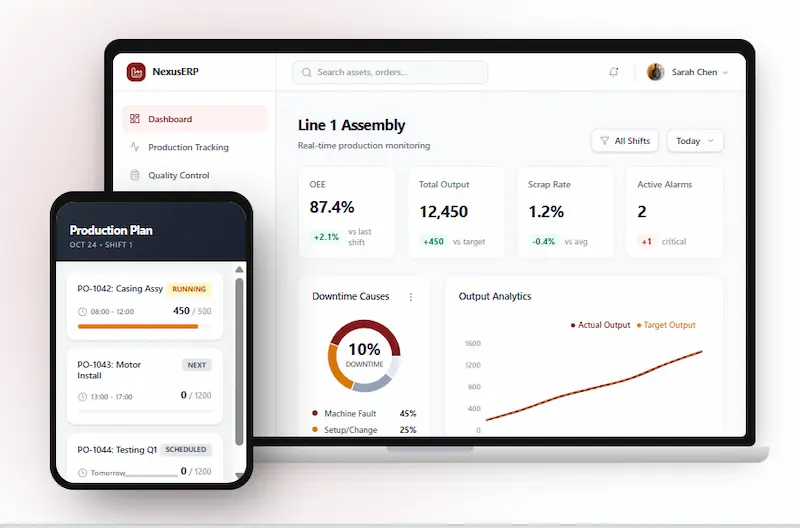
It comes packed with intelligent features like auto-shortlisting and synchronised interview scheduling that align with everyone’s availability. These tools, combined with automated follow-ups, keep the recruitment pipeline moving smoothly without the need for constant manual reminders.
Crucially for Malaysian businesses, the software ensures strict compliance with the Employment Act 1955 (Amendment 2022) during the hiring process. It standardises digital onboarding by automatically generating employment contracts that align with the latest regulations on working hours and benefits, safeguarding the company from potential legal disputes from the moment of signing.
Demonstrating its capability to serve large enterprises, Mitsubishi has successfully deployed an enterprise HR management system to streamline its workforce management. To see how this solution fits your specific needs, you can schedule a free consultation with their expert team to discuss a tailored implementation.
Why I picked this: This recruitment software provides an end to end hiring solution that automates candidate tracking and streamlines the entire recruitment workflow, helping HR teams hire faster and work more efficiently.
Pricing: Available upon request, contact the team (custom pricing based on modules and company scale).
Key features:
- Auto-Shortlisting by Qualifications: Automatically shortlist candidates based on preset qualifications for each role, so your team reviews only the most relevant profiles.
- Online Job Portal for Candidates: Provide a clean, branded job portal where candidates can easily browse openings and apply, streamlining their first interaction with your company.
- Interview Scheduling Made Simple: Allow candidates to select interview slots based on interviewer availability, eliminating the back-and-forth and saving hours for both sides.
- Online Personality & Psychometric Testing: Offer built-in DISC, MBTI, Kraeplin, and other tests with auto-scoring and interpretation for smarter hiring decisions.
- Candidate Recommendations via Quadrant Analysis: Receive intelligent recommendations based on custom-set criteria, visually mapped using Quadrant Analysis for easier decision-making.
- Automated Candidate Follow-Ups: Send timely, automated updates to candidates and alerts to recruiters, keeping everyone informed without manual chasing.
- Flexible One-Way Video Interviews: Let candidates record video responses within a set time limit, giving your team flexibility to review applications asynchronously.
| Pros | Cons |
|
|

Before moving forward, it helps to look at the pricing structure first so you can compare what fits your needs without stretching your budget unnecessarily.
2. PeopleHum recruitment management software
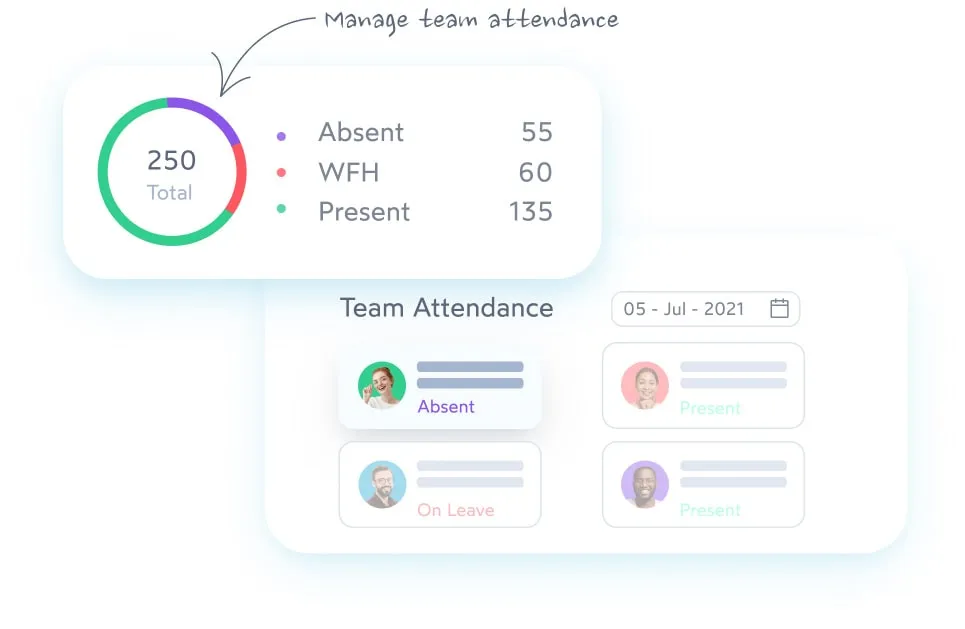
PeopleHum is an all-in-one HR platform that includes recruitment, employee engagement, performance management, and HR automation features. Its recruitment module is designed to support end-to-end hiring and other HR processes.
The platform is especially useful for businesses looking to centralize their HR tools while maintaining a modern, AI-powered recruitment experience.
Why I picked this: PeopleHum is a user-friendly recruitment management platform that streamlines candidate tracking and team collaboration, making it ideal for growing businesses that need a scalable hiring solution.
Pricing: Available upon request, contact the team.
Key features:
- AI-powered applicant tracking system
- Resume parsing
- Job posting to multiple platforms
- Candidate engagement tools
- Interview scheduling
| Pros | Cons |
|
|
3. Workable recruitment management software
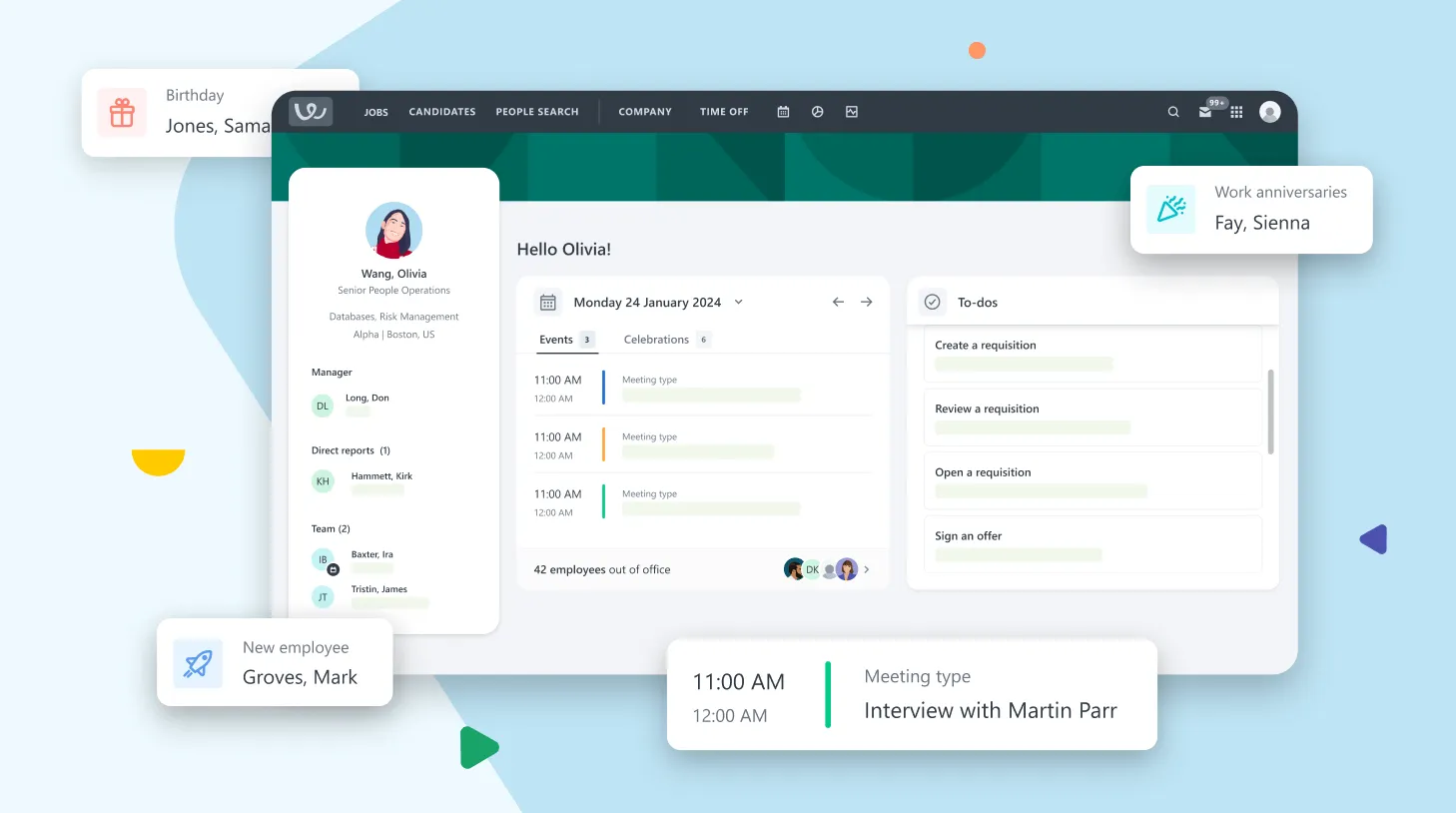
Workable stands out for its well-developed AI-powered tools, particularly its job description generator, multilingual candidate interface, and flexible communication templates.
These features automate key interactions, such as pre-assessment emails, interview scheduling, and rejection messages, making the hiring process more efficient and engaging.
Why I picked this: Workable is an excellent pick for SMBs that want to automate hiring while keeping the candidate experience smooth and engaging. Its intuitive tools, like automated sourcing and smart filters.
Pricing: Starts from $299/month ≈ RM1,405/month.
Key features:
- Candidate profile anonymization tool
- AI-powered job description generator
- Pre-built and customizable communication templates
- Automated email workflows (e.g. rejections, scheduling, follow-ups)
| Pros | Cons |
|
|
4. Oracle HR recruitment software
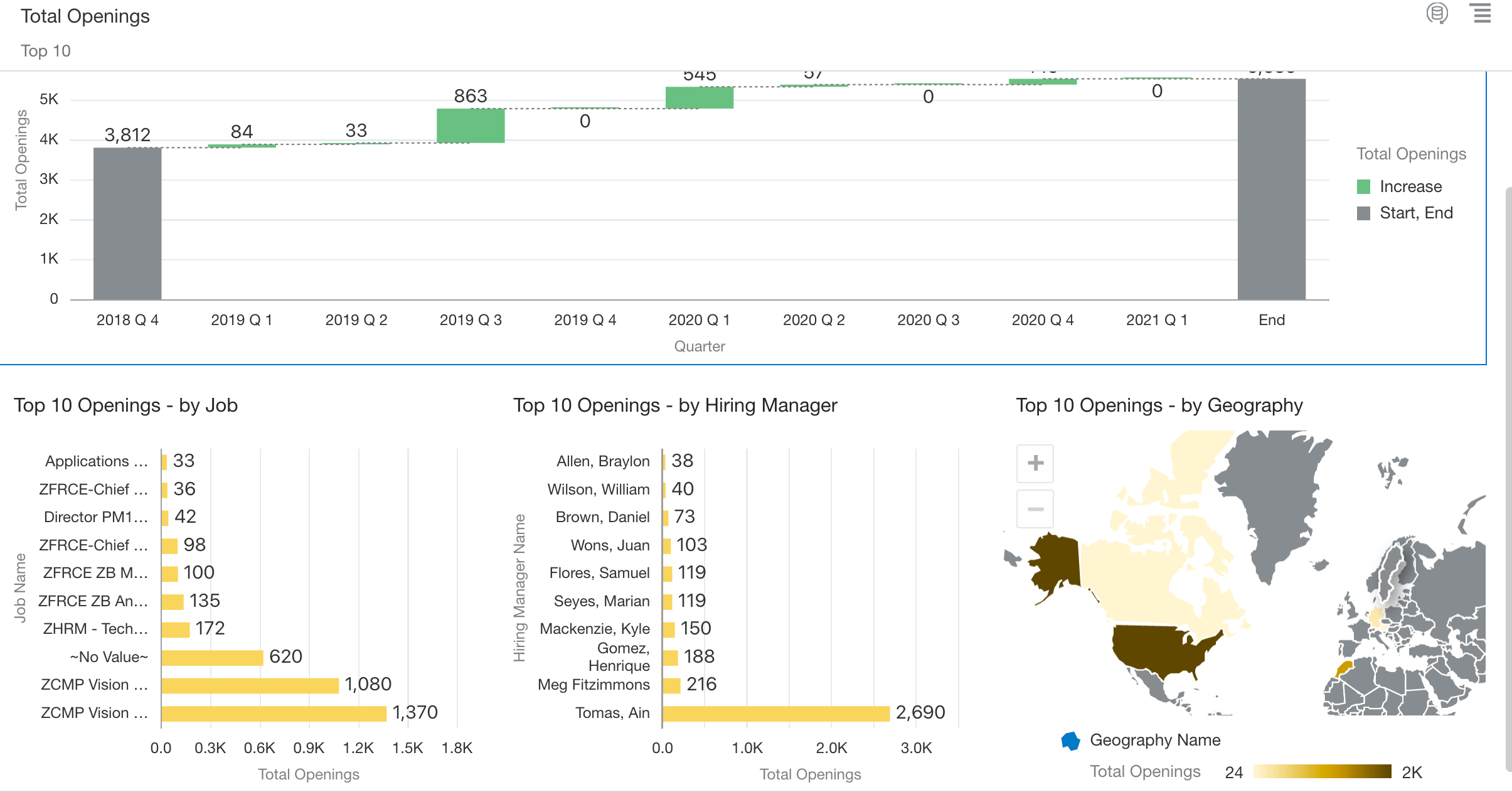
Oracle Recruiting Cloud is an enterprise-grade recruitment platform built into the broader Oracle Fusion Cloud HCM suite. It’s designed for large organizations seeking a unified system for talent acquisition, onboarding, and long-term workforce planning.
With robust automation, AI capabilities, and deep integration with Oracle’s HR tools, the platform is best suited for companies with complex hiring processes and high-volume recruitment needs.
Why I picked this: Oracle HR Recruitment Software is a strong choice for organizations that need a scalable, enterprise-grade hiring solution. It offers advanced automation and AI-powered candidate matching.
Pricing: Available upon request, contact the team (enterprise-level, quote-based).
Key features:
- End-to-end applicant tracking system
- AI-driven candidate recommendations
- Integrated career site and job posting tools
- Automated interview scheduling and workflows
- Talent pool and campaign management
| Pros | Cons |
|
|
5. SAP HANA Recruitment Software

SAP SuccessFactors Recruiting is a comprehensive talent acquisition platform integrated into the SAP SuccessFactors HCM suite, which runs on SAP HANA.
It’s designed to support global hiring needs with robust tools for attracting, engaging, and onboarding top talents. Ideal for large enterprises, the platform offers deep customization and integration with SAP’s HR systems.
Why I picked this: SAP HANA Recruitment Software is ideal for large enterprises that need data-driven hiring. Built on SAP’s in-memory HANA platform, it accelerates candidate screening and delivers real-time analytics.
Pricing: Available upon request, contact the team (SAP SuccessFactors modules are quote-based).
Key features:
- Global applicant tracking system
- Interview scheduling and evaluation workflows
- Offer management and digital signatures
- Integrated onboarding module
- AI-powered candidate scoring and matching
| Pros | Cons |
|
|
6. Humanly recruitment management software
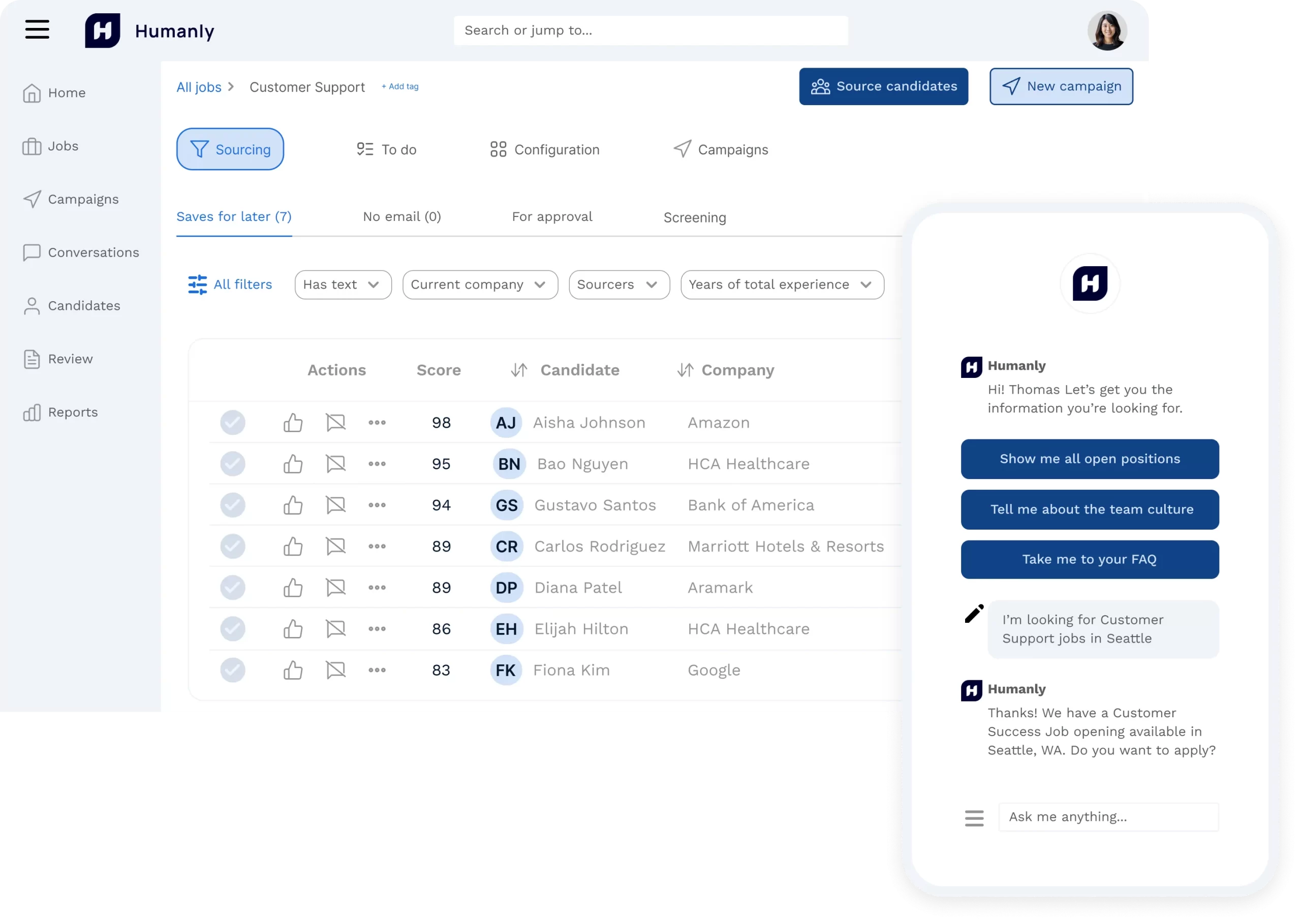
Humanly is an AI-driven recruitment platform focused on automating top-of-funnel hiring tasks. From sourcing to pre-screening and candidate engagement, the tool helps recruiters reduce manual work and accelerate time-to-hire.
It’s especially well-suited for companies that want to automate high-volume outreach and early-stage communication while maintaining a personal touch.
Why I picked this: Humanly is an excellent choice for businesses that want a customizable, AI-driven sourcing and hiring assistant. Its conversational chatbot automates candidate screening and schedules interviews.
Pricing: Available upon request, contact the team.
Key features:
- Automated job profile syncing with ATS postings
- Reporting dashboard for tracking engagement, conversion, and hiring metrics
- Real-time Q&A to share company culture, role details, and salary info
- Pre-vetted candidates delivered directly to calendars
- Calibration-based sourcing
| Pros | Cons |
|
|
7. Manatal HR recruitment software
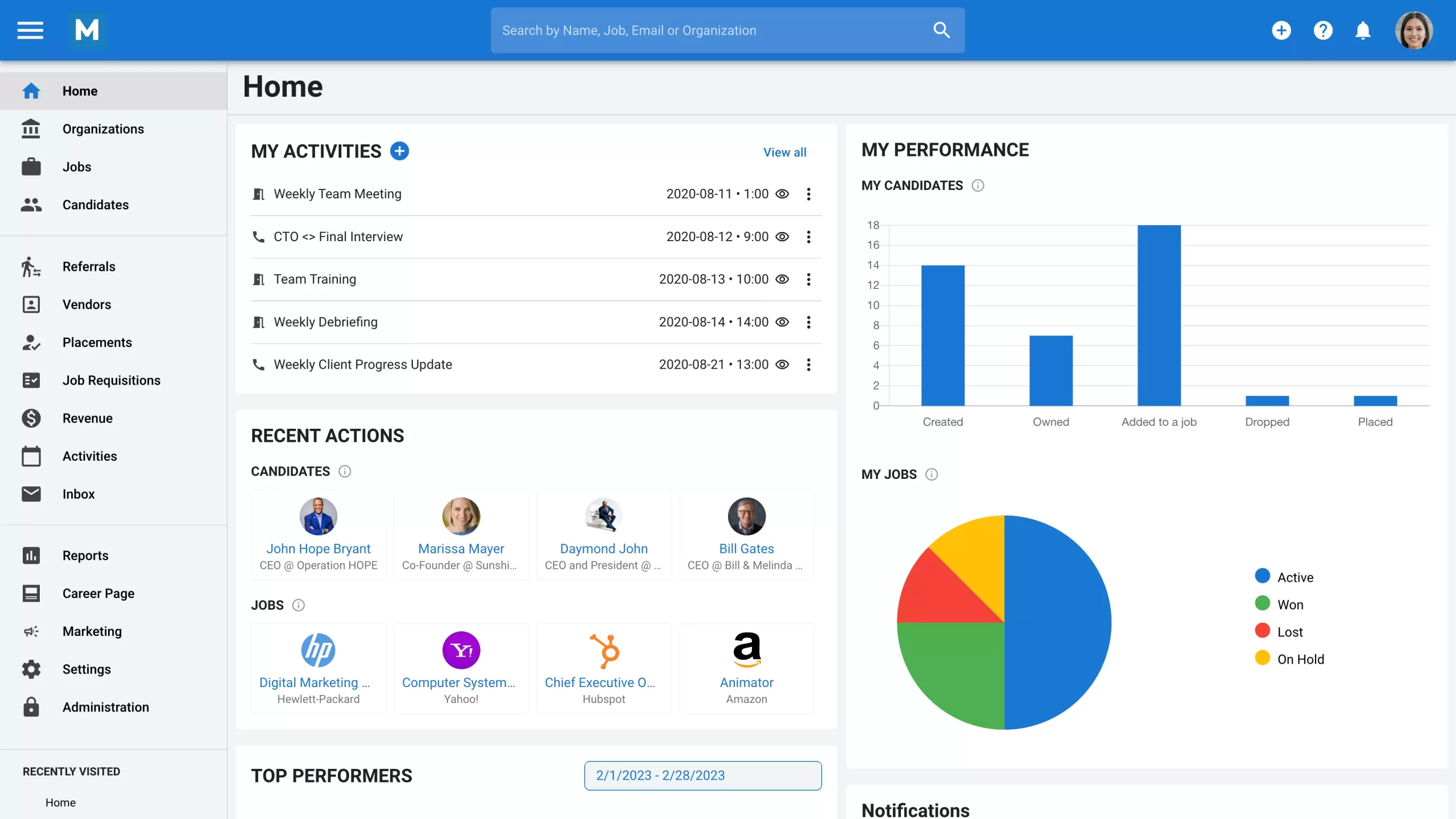
Manatal provides features suitable for in-house recruitment teams, headhunters, and staffing agencies alike. It also stands out in the recruitment software market for offering one of the most competitive pricing models.
However, its native integration options remain somewhat limited. While it integrates with many job boards, it has limited HRMS support, with API access only on top plans.
Why I picked this: Manatal is an excellent choice for businesses that rely heavily on social media recruitment. Its AI-powered sourcing tools help recruiters find, score, and manage candidates across platforms.
Pricing: Starts from $15/user/month, RM71/user/month.
Key features:
- Candidate enrichment
- AI recommendations
- Applicant tracking
- Drag-and-drop pipelines
- Kanban and list view options
| Pros | Cons |
|
|
8. Boss-i-net ATS recruitment software
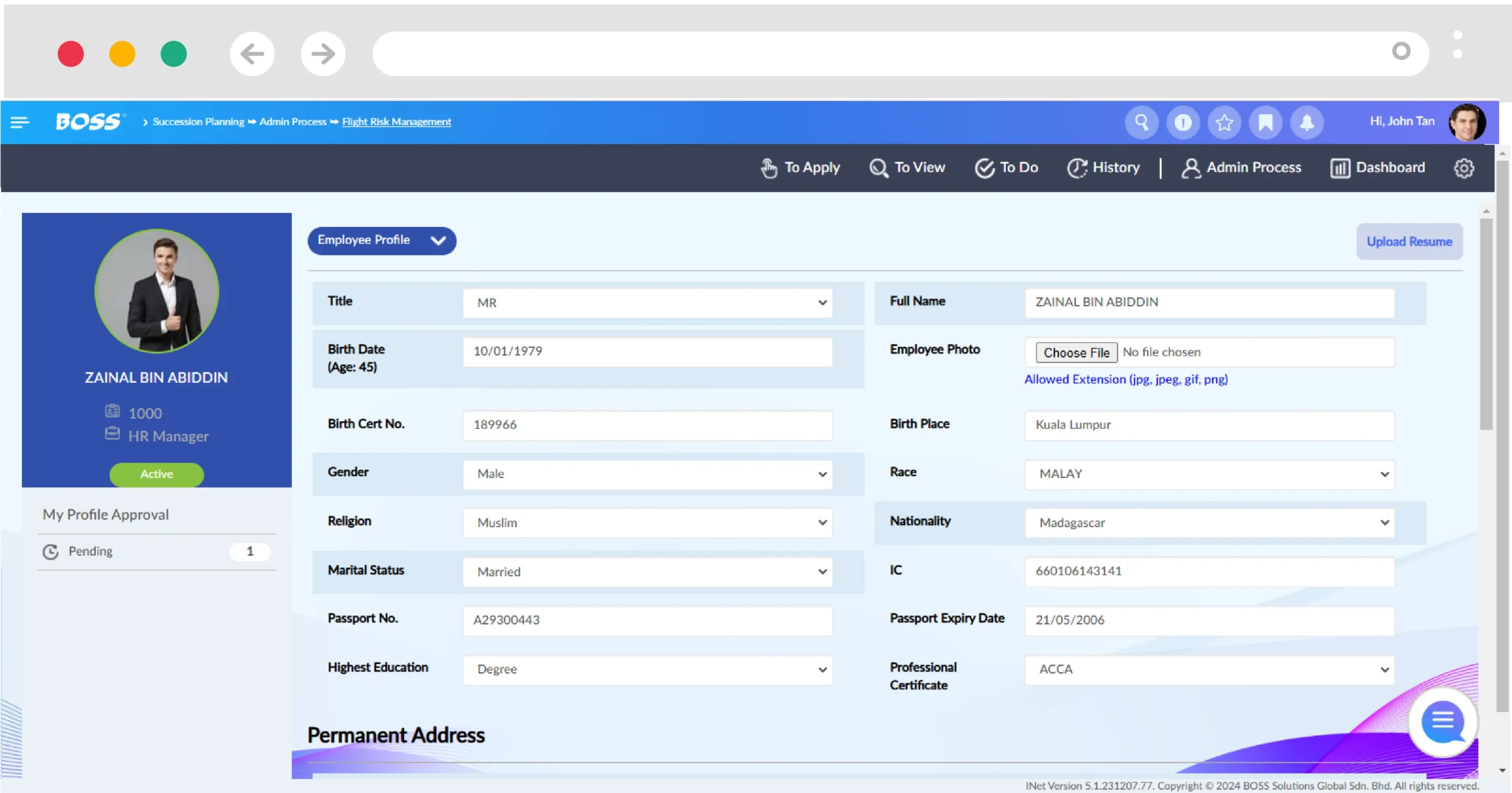
Boss-i-Net is a recruiting platform that makes the hiring process simpler and faster for both employers and jobseekers. With its subscription-based model, it offers essential tools suited for companies that want quick access to pre-screened, active candidates.
While it’s not as feature-heavy as full-scale applicant tracking systems, Boss-i-Net is best for businesses prioritizing speed, affordability, and direct talent access.
Why I picked this: Boss-i-Net ATS is ideal for businesses seeking a simple, locally focused recruitment system that streamlines candidate screening and shortlisting in one platform.
Pricing: Available upon request, contact the team.
Key features:
- Access to Bossjob’s talent pool
- Smart candidate matching
- Employer dashboard
- Interview scheduling
- Instant messaging with applicants
| Pros | Cons |
|
|
9. Zoho Recruit
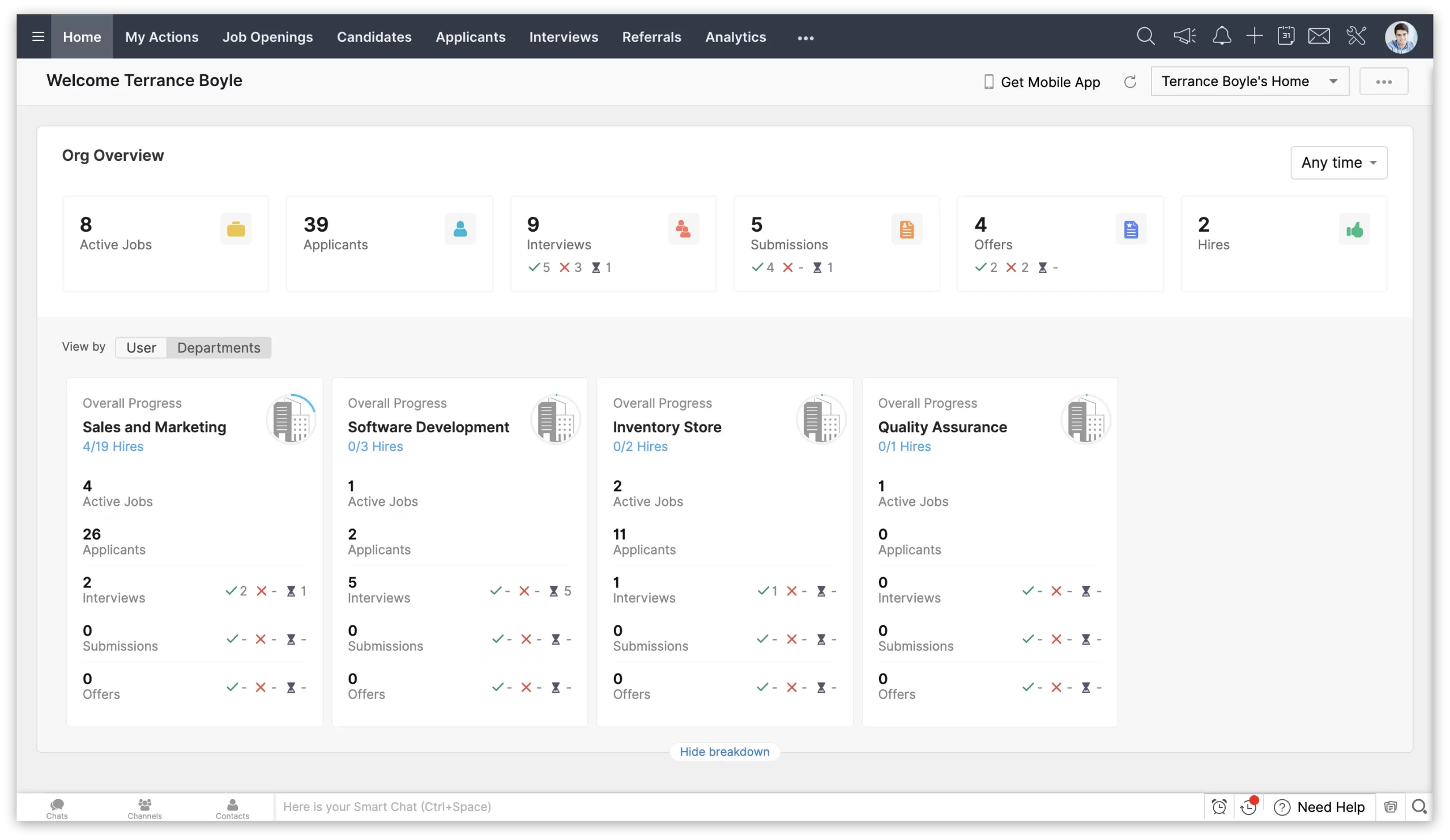
Zoho Recruit is a versatile recruitment platform designed for both corporate HR teams and staffing agencies that offers separate interfaces tailored to each use case.
The corporate dashboard provides tools for resume parsing, interviews, and referral tracking, while the agency interface includes a client portal, communication tools, and contact management to support ongoing client relationships.
Why I picked this: Zoho Recruit is ideal for small businesses looking for a powerful yet free recruitment automation tool that streamlines candidate sourcing, tracking, and communication.
Pricing: Starts from $25/user/month (annual billing), RM118/user/month.
Key features:
- Smart Assist for job descriptions and offer letters
- Resume parsing and candidate tracking
- Client portal and in-app communication (agency version)
- Job posting customization and multilingual career pages
- Custom workflows and automation rules
| Pros | Cons |
|
|
10. HR2eazy Recruitment Software
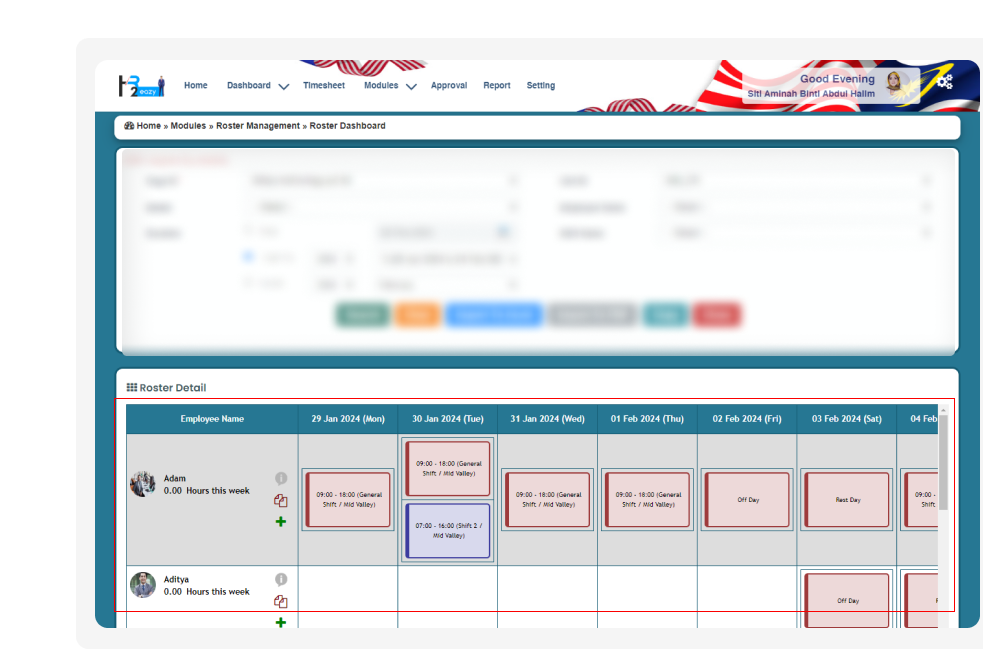
HR2eazy is a Malaysia-based HR and payroll software designed to support SMEs and larger organizations with essential HR functions. The platform covers a broad range of modules, including payroll, leave, claims, and employee management.
While it’s not a recruitment-first tool, HR2eazy includes features that can support the hiring process, such as employee database management, onboarding modules, and attendance tracking.
Why I picked this: HR2eazy Recruitment Software simplifies hiring by centralising candidate data, job postings, and application tracking in a single platform. It’s a practical choice for Malaysian SMEs looking for an easy-to-use tool.
Pricing: Available upon request, contact the team.
Key features:
- Payroll management
- Leave management
- Employee self-service portal
- Claims and expense management
- Time and attendance tracking
| Pros | Cons |
|
|
11. Swingvy HR recruitment software
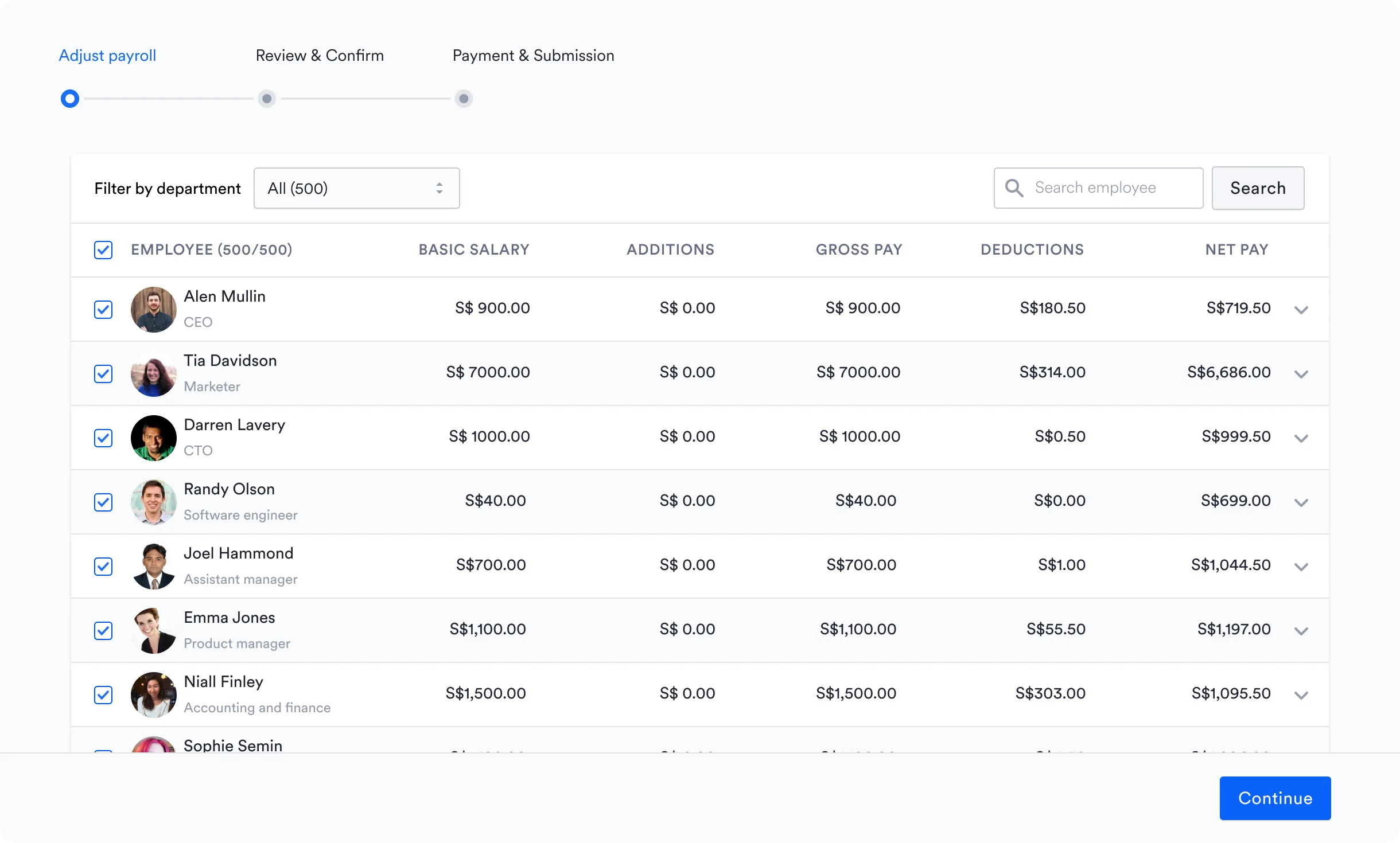
Swingvy is a cloud-based HR platform built for modern businesses in Malaysia and across Southeast Asia. While its core strength lies in HR, payroll, and employee management, Swingvy also offers essential recruitment-related features to support growing teams.
Though not a dedicated applicant tracking system, Swingvy provides a solid foundation for companies that want integrated recruitment support within their broader HR operations.
Why I picked this: Swingvy HR Recruitment Software is ideal for small to mid-sized businesses seeking a simple, all-in-one HR platform with built-in hiring tools. It streamlines recruitment with easy job posting.
Pricing: Available upon request, contact the team.
Key features:
- Employee management
- Leave management
- Automated hiring process
- Employee onboarding
- Payroll management
| Pros | Cons |
|
|
12. factoHR Talent Management Software
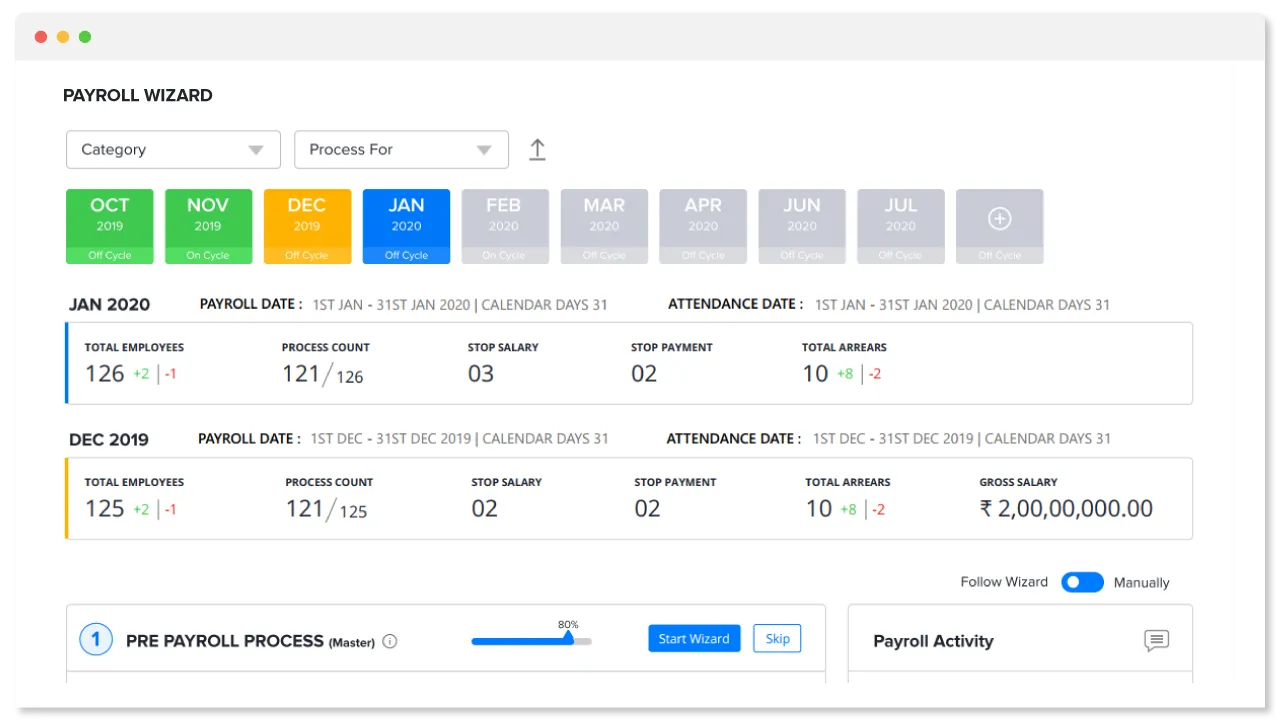
factoHR is a cloud-based HR platform that brings structure and automation to end-to-end workforce management. While it’s often recognized for its payroll and core HR modules, the platform also offers a capable recruitment system that covers job posting to onboarding.
One standout feature is its built-in Applicant Tracking System (ATS), which helps HR teams streamline the entire hiring pipeline. Users can create job openings, track applicant progress, and coordinate interviews, all from a centralized dashboard.
Why I picked this: factoHR Talent Management Software is ideal for organisations that want an all-in-one platform to manage recruitment, onboarding, performance, and employee lifecycle workflows.
Pricing: Available upon request, contact the team.
Key features:
- Applicant tracking system (ATS)
- Job posting integration
- Resume parsing and management
- Interview scheduling
- Offer letter generation
| Pros | Cons |
|
|
13. altHR recruitment management software
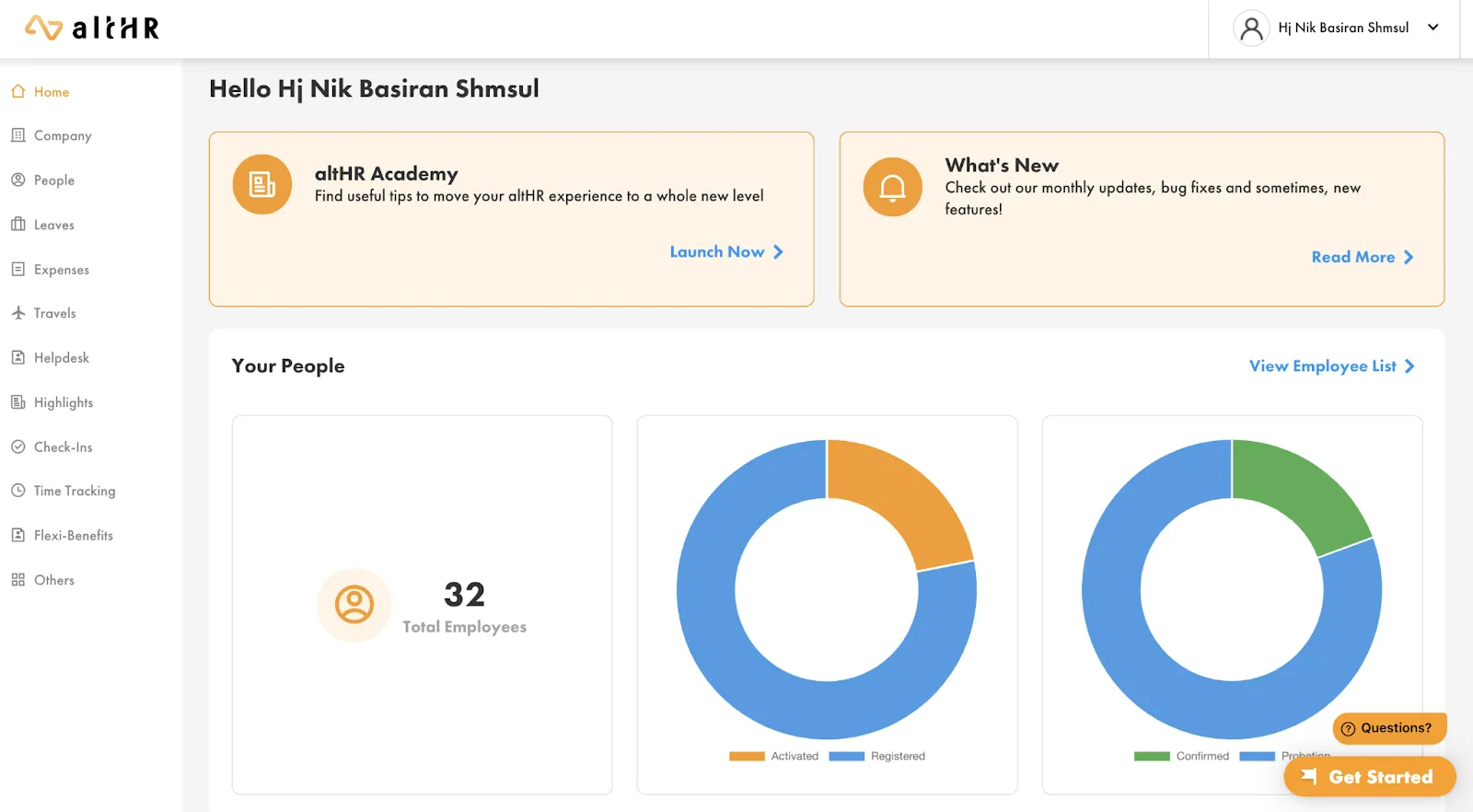
altHR is a modern HR platform developed in Malaysia by CelcomDigi, designed primarily for SMEs and growing teams to manage essential HR operations, including recruitment and onboarding.
While not a full-fledged applicant tracking system, altHR offers structured tools to support the hiring journey. The onboarding module enables HR teams to welcome new hires with interactive checklists, pre-arrival tasks, and digital document distribution.
In parallel, the People module acts as a centralized employee database, streamlining the transition from candidate to active staff.
Why I picked this: altHR Recruitment Management Software is ideal for companies seeking a simple, mobile-first hiring solution. It streamlines applicant tracking, interview scheduling, and onboarding within a single platform.
Pricing: Available upon request, contact the team.
Key features:
- Employee onboarding module
- Employee data management
- Document management
- Task management
- Company module
| Pros | Cons |
|
|
14. Info-Tech HR Recruitment System
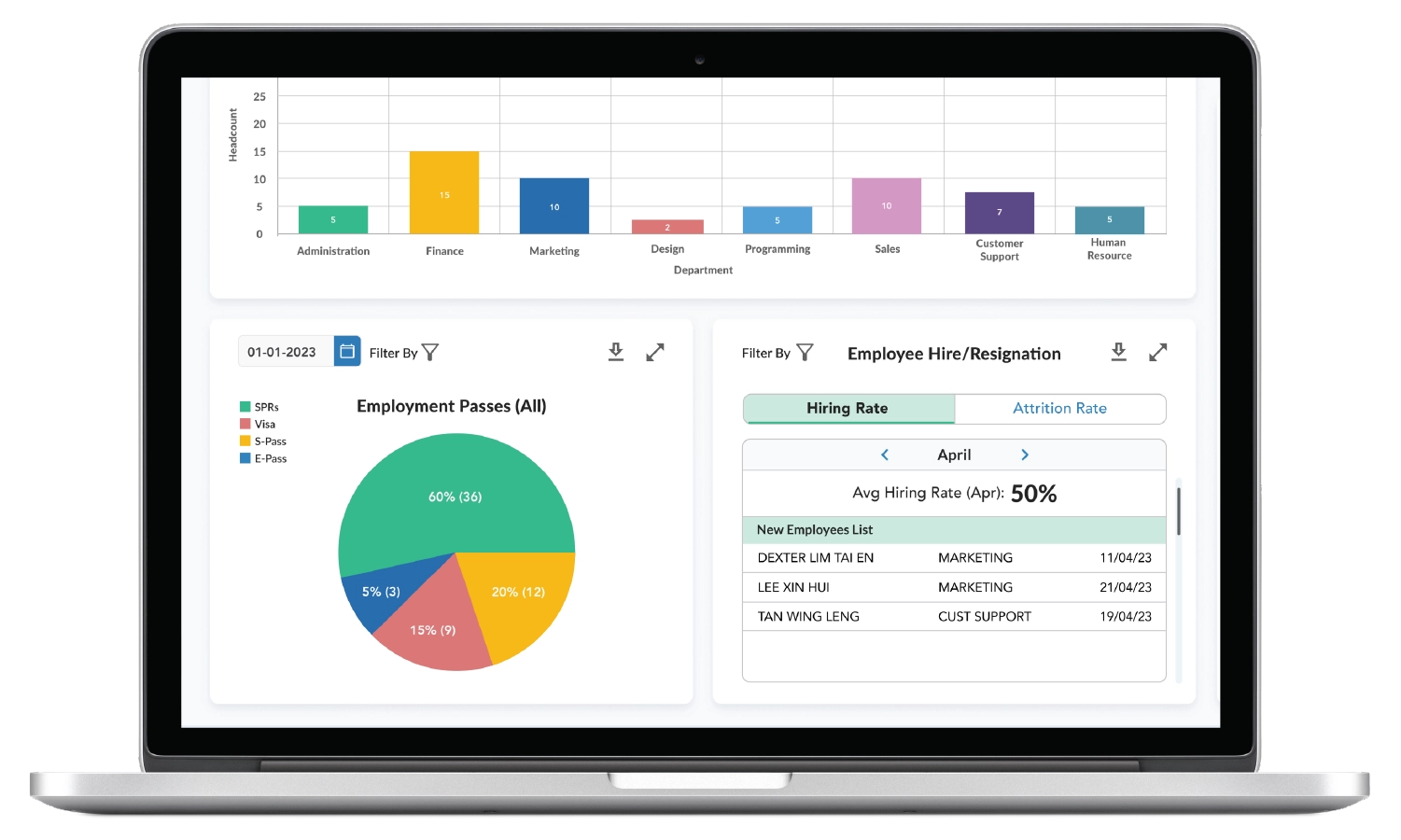
Info-Tech is a comprehensive, cloud-based HRMS platform designed to streamline various human resource functions. It also offers features that support the recruitment and onboarding processes.
The platform’s Employee Management module serves as a centralized hub for managing employee profiles and personal information. As a result, candidate data can be tracked efficiently during the hiring process.
For organizations seeking an all-in-one HR solution with foundational recruitment support, Info-Tech provides a cohesive platform that enhances overall HR efficiency.
Why I picked this: Info-Tech HR Recruitment System is best for businesses that want a simple, all-in-one hiring solution integrated with broader HR functions. It streamlines candidate tracking, shortlisting, and onboarding.
Pricing: Available upon request, contact the team.
Key features:
- Automated recruitment management
- Applicant tracking system (ATS)
- Employee onboarding module
- Centralized employee database
- Integration with other modules
| Pros | Cons |
|
|
15. Greenhouse Recruitment Software

Greenhouse is a cloud-based HR and recruitment platform designed to optimize every stage of the hiring process. Best known for its structured hiring framework, Greenhouse enables organizations to attract, evaluate, and onboard top talent efficiently.
Why I picked this: Greenhouse excels at helping teams run a consistent, structured hiring process with clear workflows and data-driven decision-making. Its powerful automation and integrations make it ideal for companies scaling their recruitment.
Pricing: Available upon request, contact the team (quote-based).
Key features:
- Sourcing automation
- Report dashboards
- Tracking progress
- Job ad market
| Pros | Cons |
|
|
16. Pinpoint ATS recruitment software
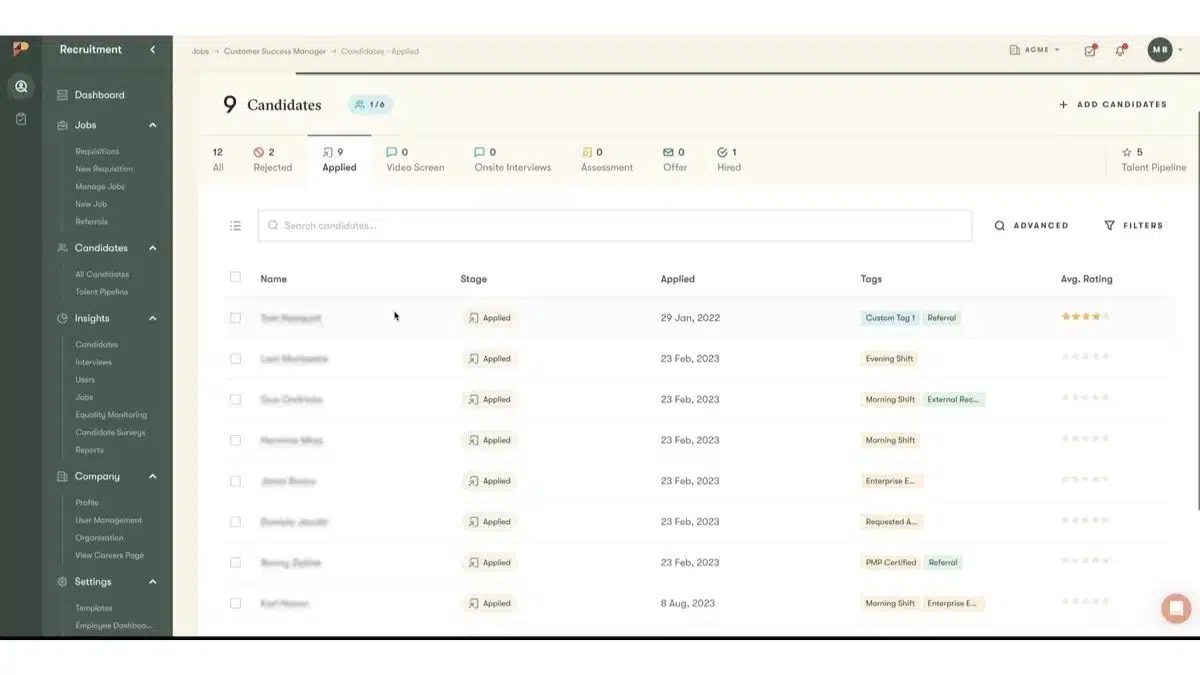
Pinpoint is a recruitment management software tailored for in-house HR teams and talent acquisition departments. Designed to simplify internal hiring processes, it combines intuitive navigation with powerful ATS recruitment software tools to streamline candidate tracking and team collaboration.
If you want to explore more tools that can elevate your recruitment process, check out the complete guide on the best ATS. The article breaks down top solutions, key features, and expert recommendations to help you choose the right system with confidence.
Why I picked this: Pinpoint excels as a recruitment platform tailored for in-house talent acquisition and HR teams. Its intuitive workflows and automation tools help internal hiring teams streamline sourcing and screening.
Pricing: Available upon request, contact the team (quote-based).
Key features:
- Blind screening to minimize unconscious bias
- Automated workflows and custom job board posting
- Scorecards and reporting tools for hiring evaluations
- Multi-user support with no per-seat cost
| Pros | Cons |
|
|
17. Deel ATS recruitment software
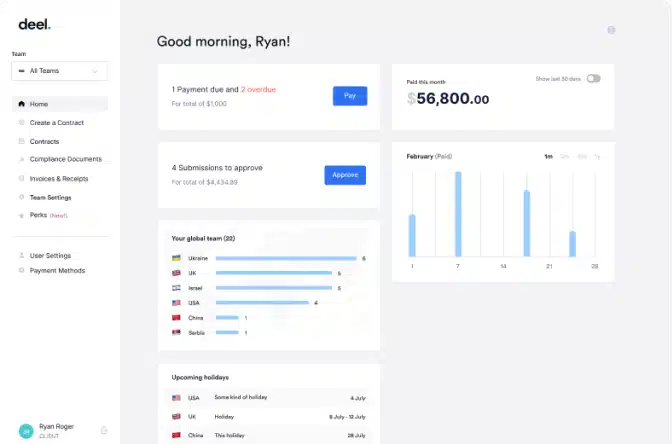
Deel is a recruitment software solution designed for global talent acquisition, especially when working with international hiring agencies. As an ATS recruitment software, it gives businesses access to a global network of sourcing partners, letting them manage job postings, candidate CVs, and recruitment performance in one place.
The platform simplifies global hiring with built-in compliance support, automated onboarding, and contractor classification tools. Deel is ideal for companies that need to scale fast across borders without the complexity of handling multiple vendors or systems manually.
Why I picked this: Deel is ideal for companies that hire global talent through agencies, offering streamlined onboarding and compliant contract management across multiple countries.
Pricing: Starts from $29/user/month ≈ RM136/user/month.
Key features:
- Access to agency networks for global recruitment
- Integrated hiring compliance tools
- Performance tracking of recruitment partners
- Detailed role and job spec customization
| Pros | Cons |
|
|
18. GoodTime recruitment management software
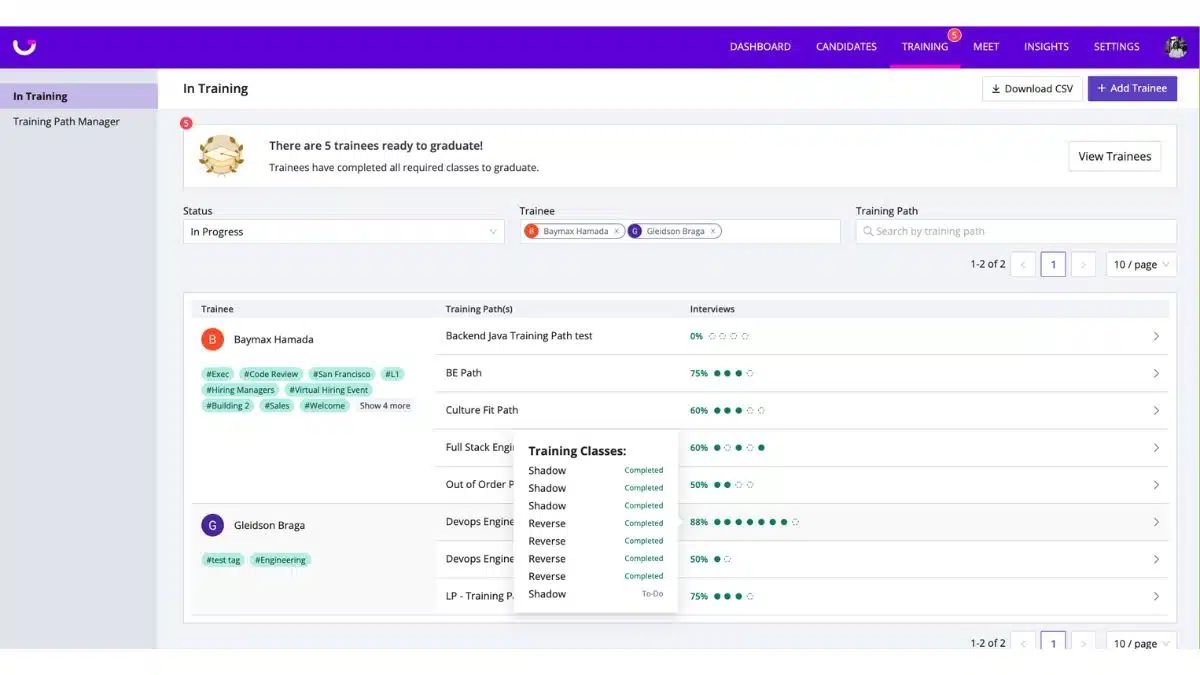
GoodTime focuses on one of the most critical hiring stages: interview scheduling. This HR recruitment software uses AI to automate scheduling, manage interview panels, and coordinate across time zones, reducing manual effort for busy recruiting teams.
Ideal for teams managing high-volume hiring or panel interviews, it offers branded candidate portals, auto-reminders, and interviewer training workflows. While not a full-suite ATS, it integrates well with other recruitment platforms to enhance efficiency in the scheduling and communication process.
Why I picked this: GoodTime is chosen for its ability to automate complex interview scheduling at scale, making it ideal for large, global hiring teams. Its AI-driven coordination significantly reduces manual work while improving candidate and recruiter efficiency.
Pricing: Available upon request, contact the team.
Key features:
- AI interview scheduling and panel coordination
- Branded self-service candidate portals
- Interviewer readiness tools and reminders
- Operational dashboards for scheduling
| Pros | Cons |
|
|
Comprehensive Comparison of Recruitment Software
| Provider | Connection Quality | Bank Coverage | Ease of Integration | Data Enrichment |
|---|---|---|---|---|
| Hashmicro CRM | ||||
| PeopleHum | ||||
| Workable | ||||
| Oracle | ||||
| SAP HANA | ||||
| Humanly | ||||
| Manatal | ||||
| Boss-i-net |
Best Use Cases for Recruitment Automation Software
Automation is changing recruitment fast. With the right recruitment software, you can attract, assess, and onboard talent more efficiently. Here are the top ways automation can transform your hiring process.
1. High-Volume Hiring
This is ideal if you regularly need to hire in large numbers, such as during seasonal peaks or for entry-level roles. With automation, recruiters can handle hundreds of applications effortlessly, speeding up screening and keeping the process organized from start to finish.
2. Urgent and Time-Sensitive Roles
When critical roles need to be filled quickly, recruitment software can speed up sourcing, scheduling, and shortlisting. Automation reduces manual steps so teams can secure top candidates before competitors do.
3. Promoting Diversity and Inclusion
Automation also supports fair and unbiased hiring. With structured assessments and standardized workflows, recruitment tools can help reduce unconscious bias and support equal opportunity for every applicant.
4. Building and Managing Talent Pools
Recruitment management software helps HR teams stay connected with potential candidates. It lets recruiters organize, tag, and engage passive talent, keeping a pipeline of ready-to-hire candidates for future roles.
5. Remote and Global Hiring
Ideal for companies with remote teams, multiple offices, or international operations, automation helps keep recruitment processes consistent across locations while improving efficiency and supporting compliance.
6. Enhancing Candidate Experience
Timely communication, automated status updates, and smoother onboarding all contribute to a positive impression. A well-implemented hiring system helps candidates feel valued throughout the process.
7. Reducing Operational Costs
By automating repetitive tasks like sorting resumes and scheduling interviews, companies can save money on manual work and recruitment agencies, while also boosting productivity.
How to Find Recruitment Software That Actually Fits Your Business
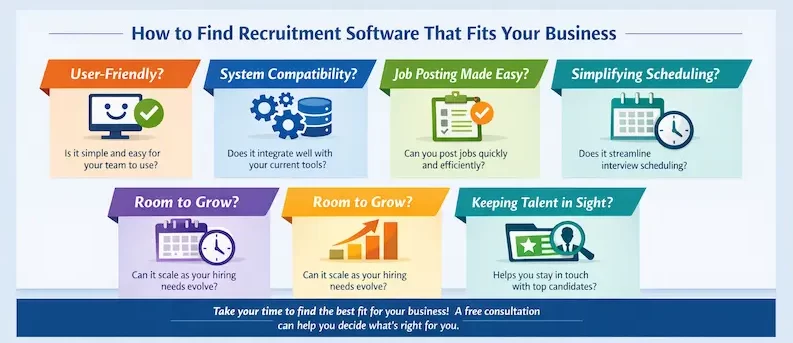
When choosing recruitment software, it’s worth slowing down and asking the right questions. Here are a few things to keep in mind:
1. Is it easy to use?
It’s tempting to go for software packed with features, but if it’s hard to navigate, your team won’t use it to its full potential. The best tools feel natural, like an extension of how your team already works.
2. Will it fit into what you already have?
Recruitment doesn’t happen in isolation. Your new software should connect smoothly with existing systems, HR, payroll, employee records, and long-term workforce planning platforms, so you’re not duplicating work or losing valuable data in the shuffle.
3. How simple is posting a job?
Posting roles should feel like ticking a box, not jumping through hoops. A centralized dashboard makes it easier to track openings and keep listings up to date. It also helps present your company as organized and professional from the first touchpoint.
4. Can it take the headache out of scheduling?
Coordinating interviews can be surprisingly time-consuming. If the software handles calendar syncs, auto-reminders, or even lets candidates choose slots, it’s one less thing to worry about.
5. Does it grow with you?
Your hiring needs today won’t look the same a year from now. Look for something that can scale, custom workflows, automation options, the ability to handle more complex processes as your team expands.
6. Does it help you stay close to good candidates?
Sometimes the right hire isn’t right now. Features like candidate history and tagging can help you stay connected to promising applicants who just need the right timing or role.
Conclusion
Ultimately, the best recruitment platform depends on what your team needs most. It helps to look for software that balances automation, ease of use, and enough flexibility to support your hiring process as it grows.
A well chosen system should make everyday hiring tasks feel more manageable, from shortlisting to scheduling, so your HR team can spend more time focusing on the right candidates instead of getting stuck in admin work.
If you are still weighing your options, a free consultation can give you a clearer picture of which setup makes the most sense for your hiring needs before you make a final decision.
FAQ about Recruitment Software
-
What is the difference between recruitment software and an applicant tracking system (ATS)?
While the terms are often used interchangeably, recruitment software typically encompasses a broader range of features beyond just tracking applicants. An ATS focuses on managing applications and candidates, whereas recruitment software may also include tools for sourcing candidates, scheduling interviews, onboarding, and analytics.
-
Can recruitment software integrate with other HR tools?
Yes, many recruitment software solutions offer integrations with various HR tools such as payroll systems, employee databases, and performance management platforms. These integrations help streamline the hiring process and ensure seamless data flow across different HR functions.
-
How does recruitment software enhance the candidate experience?
Recruitment software can improve the candidate experience by providing timely communication, easy application processes, and transparency throughout the hiring journey. Features like automated updates, interview scheduling, and user-friendly interfaces contribute to a more positive experience for applicants.
-
Is recruitment software suitable for small businesses?
Absolutely. There are recruitment software options designed specifically for small to medium-sized enterprises (SMEs), offering scalable features that cater to their unique hiring needs without the complexity or cost of enterprise-level systems.
-
What other talent acquisition technology is important to use?
Alongside recruitment software, consider using tools like ATS, HR management systems, and skills assessment platforms to streamline hiring. When integrated, these technologies create a smoother, data-driven talent acquisition process.
-
How Much Does Recruiting Software Cost?
Recruiting software costs vary depending on features, company size, and pricing model.
For small teams or startups, entry-level ATS solutions typically start from RM70–RM150 per user per month. Mid-sized businesses can expect to pay around RM300–RM1,500 per month, depending on automation, reporting, and integration needs. Enterprise recruiting software is usually quote-based, with pricing tailored to hiring volume, modules, and customization requirements.