








When a construction project lacks clear oversight, small issues pile up quickly, including late materials, overlapping subcontractor tasks, and shifting schedules. The result is predictable: rework, cost overruns, and a hit to credibility.
In Malaysia, that risk matters even more as construction activity continues to rise. The Department of Statistics Malaysia reported a value added of RM41.1 billion in Q3 2024, a 22.9% increase from the previous quarter.
This guide explains what a general contractor actually owns day to day, the responsibilities that typically sit under their scope, and the practical value of construction management software for keeping plans, people, and documentation aligned.
Key Takeaways
|

What is a General Contractor?
A general contractor is a licensed professional or firm responsible for managing construction projects from start to finish. They act as the central authority—coordinating timelines, labor, budgeting, and subcontractors to ensure efficient project delivery.
General contractors provide peace of mind for business owners by overseeing every step of the construction journey. Unlike renovation contractors, who may handle only small-scale upgrades or remodeling, general contractors manage full-scale builds.
This includes everything from obtaining permits to post-construction cleanup. Whether it’s a commercial facility, a residential tower, or a retail center, general contractors must ensure the project meets safety, regulatory, and quality standards.
In Malaysia, general contractors must meet strict requirements under the BCA registration framework. These standards are in place to maintain quality and safety, especially in public infrastructure projects. Many adopt advanced construction management guidelines to ensure smooth project execution and stakeholder alignment.
Key Responsibilities of a General Contractor
A general contractor wears many hats, ensuring that every component of a construction project runs according to plan. Below are the core duties typically handled by building contractors:
1. Project planning and scheduling
General contractors create detailed schedules that outline project phases, deadlines, and resource needs. They coordinate labor, materials, and equipment to ensure that tasks are completed without delays. This planning minimizes disruptions and keeps the project on track from start to finish.
2. Budgeting and construction estimating
They prepare accurate construction estimating reports covering labor, materials, and unforeseen costs. This helps clients manage expenses efficiently and avoid overruns. Well-estimated budgets provide financial clarity and reduce risks throughout the project lifecycle.
3. Subcontractor coordination
General contractors oversee subcontractors such as renovation contractors, electricians, and plumbers to ensure smooth collaboration. They assign responsibilities, monitor daily progress, and address on-site challenges. Effective coordination results in higher productivity and consistent quality.
4. Regulatory compliance and safety
They ensure the project complies with safety laws and building regulations while minimizing legal risks. This includes proper documentation, worker training, and regular site inspections. A strong focus on compliance promotes a safe working environment and prevents costly delays.
Still unsure whether a construction management system is the right fit for your projects? No worries! Try a pricing scheme today and consult with our experts to explore how this solution can transform the way you manage construction operations. Click the banner below to get started!
General Contractor vs Renovation Contractor
While both general and renovation contractors operate in the construction industry, their roles differ significantly in terms of scope and responsibility. Understanding this distinction helps businesses hire the right professional for the job.
General contractors oversee the entire building process, from structural work to finishing touches. They manage large teams and ensure the project aligns with architectural plans, engineering standards, and budget goals.
In contrast, renovation contractors typically handle smaller, specialized tasks such as upgrading office interiors, repainting, or installing new plumbing. They’re ideal for projects that don’t require full construction oversight.
For businesses undertaking ground-up development or major structural expansion, hiring a general contractor is essential for complete project control and long-term value.
Read more: Site Inventory Control Guide for Construction Sites
Benefits of Using Construction Management Software

Incorporating construction management software into project execution has become a game-changer for contractors. These digital platforms streamline real-time communication, documentation, and progress tracking. By automating and centralizing key functions, they enhance accuracy, efficiency, and decision-making across all construction phases.
1. Centralized project oversight
All project data, including schedules, documents, and updates, is stored in one unified platform. This makes it easier for stakeholders to monitor progress and identify issues early. A centralized system reduces confusion and improves overall coordination among teams.
2. Accurate construction estimating
The software provides built-in construction estimating tools that calculate real-time costs based on updated project data. This enhances budgeting precision and helps avoid cost overruns. With clear cost visibility, contractors can make more confident financial decisions.
3. Improved communication and collaboration
Project teams, subcontractors, and clients can communicate through integrated messaging and task management features. This eliminates delays caused by miscommunication or missed updates. Better collaboration leads to faster approvals and smoother project execution.
4. Real-time reporting and analytics
Users can generate instant reports on budgets, schedules, resource use, and performance metrics. These insights support faster, data-driven decisions and highlight potential bottlenecks. Real-time analytics ensure that adjustments are made before issues escalate.
5. Enhanced document management
Construction management software organizes contracts, blueprints, RFIs, and compliance documents in a structured system. This reduces the risk of losing important files and ensures quick retrieval when needed. Efficient documentation helps maintain legal and regulatory compliance.
Read more: A Comprehensive Guide to Punch List in Construction
The Importance of Construction Management Guidelines
Adhering to proven construction management guidelines ensures that every project phase meets industry standards and client expectations. These frameworks establish best practices for planning, communication, quality control, and safety. They serve as a roadmap to minimize errors and deliver predictable outcomes.
Standard guidelines cover essential areas like pre-construction risk assessments, resource allocation, quality assurance protocols, and post-construction evaluations. Consistently following these principles leads to better efficiency, accountability, and stakeholder satisfaction. Moreover, it aligns the entire team with clearly defined roles and responsibilities.
Companies that enforce strict adherence to management guidelines benefit from fewer project delays, reduced costs, and improved team coordination. These guidelines are a cornerstone of successful project delivery, whether through manual processes or advanced construction management software, including construction inventory software that streamlines material tracking and resource allocation.
Improve Construction Efficiency and Accuracy with Construction Management Software
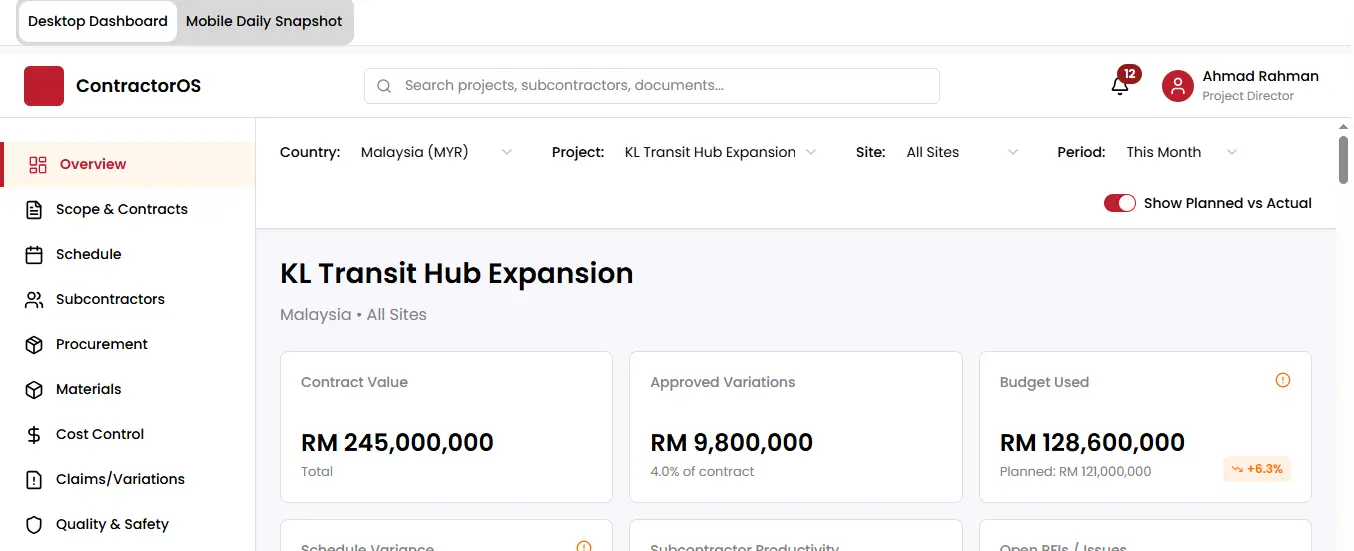
Coordinating budgets, schedules, and teams across multiple sites can get complicated fast, especially when updates are scattered across spreadsheets and chat threads. That setup often creates delays, mismatched handovers, and cost leakage that only shows up when it’s already expensive to fix.
Construction management software helps contractors centralise project data, automate approvals, and track progress with clearer accountability. Instead of chasing status updates, teams can work from the same timeline, budget baseline, and documentation, so decisions happen faster, and fewer tasks fall through the cracks.
Here are key capabilities to look for in a construction project management platform:
1. Tender and contract management
Track tender status, deadlines, and required documents in one place, so submissions don’t rely on manual reminders. A structured contract workflow also shortens review cycles and reduces version confusion.
2. Purchasing and vendor control
Use an approval matrix to keep purchases aligned with project needs and authorised budgets. Vendor portals and bid comparisons help standardise procurement and improve price visibility while keeping records audit-ready.
3. Real-time project monitoring
Monitor progress against budget and timeline, with clear assignment tracking across projects. Visual tools like S-curves and claim reporting make it easier to spot deviations early and document cost impacts properly.
4. Material and inventory management
Maintain accurate stock visibility per site and track deliveries and consumption across locations. Forecasting and reorder suggestions help prevent last-minute shortages without overbuying materials that sit idle.
5. Financial and budgeting controls
Build more accurate cost estimates, then track actual spending in real time against the budget baseline. Integrated accounting and multi-branch reporting support cleaner reconciliation and more consistent compliance documentation.

Also Read: Construction accounting software for general contractors.
Conclusion
General contractors play a vital role in the success of construction projects by managing timelines, coordinating subcontractors, and ensuring compliance with construction management guidelines. Their ability to oversee all aspects of a project, from budgeting to execution, is essential in delivering results on time and within budget.
With Construction Management Software, contractors, renovation contractors, and building contractors can automate workflows, improve construction estimating accuracy, and centralize project data. The system provides real-time insights, streamlined communication, and efficient resource management across every job site.
HashMicro is an innovative solution for construction management, from precise planning to successful project delivery. With advanced features tailored for the industry, it boosts accuracy, speeds up operations, and reduces costly errors. Try a free consultation today and transform the way you manage construction projects!
Question About General Contractor
-
How much do most general contractors make?
In Malaysia, general contractors typically earn between RM60,000 and RM120,000 annually, depending on their level of experience, the complexity of the projects they manage, and the size of the construction firm. Those handling large-scale developments or working with established companies may also receive performance-based bonuses and additional project allowances, increasing their overall compensation.
-
What is the difference between a general contractor and a project manager?
A general contractor oversees the construction work, manages subcontractors, and ensures legal and safety compliance. A project manager focuses more on planning, budgeting, and communication with stakeholders to ensure the project stays on track.
-
What type of contractor makes the most money?
Specialized contractors such as electrical, HVAC, and structural contractors typically earn more due to the technical expertise required. Design-build contractors and those handling large commercial projects also tend to have higher profit margins.
-
What does a contractor do?
A contractor manages construction work by organizing labor, materials, and equipment. Their responsibilities include hiring subcontractors, interpreting blueprints, ensuring timely project delivery, and adhering to building codes.