













A purchase return can look like a small operational task, but I’ve seen it quickly become a finance and relationship issue when credits, stock, and timelines don’t match. On the customer side, Narvar’s research found 96% of shoppers would buy again from a business that offers an “easy” return experience, proof that return handling directly shapes trust and repeat behavior.
A purchase return happens when a company sends goods back to a supplier due to defects, wrong deliveries, or failed quality checks. When teams manage it with clear steps, they keep inventory counts, supplier credits, and accounts payable aligned, rather than chasing down mismatched records later.
That’s why I recommend treating purchase returns as a standard workflow with defined reasons, approvals, and traceability from receipt to credit note. With a simple audit-ready checklist, we can make the process consistent across departments while keeping reporting accurate and operations moving.

Key Takeaways
|
What is a Purchase Return?
A purchase return is the process of returning goods that a company has previously purchased from a supplier. This typically occurs when the delivered goods are defective, damaged, incorrect, or fail to meet agreed-upon quality standards.
In procurement, effectively managing purchase returns in enterprise solutions helps businesses maintain financial accuracy, optimize stock levels, and strengthen supplier relationships.
The purchase return process generally involves:
- Identifying the issue: Assessing the reason for the return, such as damage, incorrect specifications, or surplus stock.
- Notifying the supplier: Communicating the return request in accordance with the supplier’s return policy.
- Adjusting inventory records: Deducting returned goods from stock to maintain accurate inventory levels.
- Issuing a credit note or refund: The supplier either refunds the amount or provides a credit for future purchases.
- Updating financial accounts: Recording proper journal entries to reflect the return in company financials.
By implementing a structured approach to purchase returns, businesses can minimize financial risks, prevent overstocking, and maintain strong supplier relationships.
How to Manage Accounting for Purchase Returns in Your Business
Managing purchase returns in accounting is essential for maintaining accurate financial records, optimizing cash flow, and ensuring smooth procurement processes. Here are five key steps businesses should follow:
- Record Returns Promptly: Businesses should document purchase returns immediately, including the date, reason, and item details. Proper records prevent discrepancies and simplify financial reconciliation with suppliers.
- Update Inventory Records: Adjusting stock levels after a return is crucial to avoid overstocking or shortages. Keeping inventory records up to date ensures efficient stock control and prevents operational disruptions.
- Issue Credit Notes or Adjust Payments: Suppliers may provide credit notes or payment adjustments instead of refunds. Businesses must record these adjustments accurately to maintain cash flow stability and financial accuracy.
- Leverage an ERP System: Using an ERP system like HashMicro automates purchase return management, enhances inventory tracking, updates inventory in real time, and integrates with financial records, reducing manual errors and inefficiencies.
- Maintain Supplier Communication: Clear return policies and open communication with suppliers minimize disputes and ensure a smooth return process, strengthening business relationships.
Following these steps helps businesses improve financial accuracy, ensure compliance, and enhance procurement efficiency.
Journal Entries for Purchase Returns
Recording journal entries for purchase returns is crucial for maintaining accurate financial reporting and ensuring compliance with accounting standards. Below is a breakdown of how purchase returns are typically recorded in the books of accounts:
1. Credit Purchase Return
In a credit purchase return, the buyer receives goods on credit and agrees to pay later. When goods are returned, the accounts payable is debited to reduce the liability, and the purchase returns account is credited to reflect the decrease in expenses. This ensures that the company’s financial records remain accurate, showing the reduction in both liabilities and costs.
Example:
A business returns goods worth MYR 500 from a credit purchase. The journal entry would be:
Debit: Accounts payable – MYR 500
Credit: Purchase returns – MYR 500
2. Cash Purchase Return
In a cash purchase return, goods that were initially paid for in cash are returned. The receivable account is debited to reflect the amount owed to the buyer, while the purchase returns account is credited to adjust the expenses. This ensures that the financial records are updated to show the refund or credit due to the buyer.
Example:
A buyer returns goods worth MYR 300 paid in cash. The journal entry would be:
Debit: Receivables – MYR 300
Credit: Purchase returns – MYR 300
By accurately recording these journal entries, businesses can ensure financial transparency, compliance with accounting practices, and a clear picture of financial health.
The Benefits of Recording Purchase Return Journal Entries

Recording purchase return journal entries accurately is essential for maintaining financial accuracy and ensuring smooth business operations. Here are the key benefits:
- Accurate Financial Records: Properly documenting purchase returns ensures that your financial statements reflect the correct expenses and liabilities. This reduces discrepancies and maintains accurate records for audits and tax compliance.
- Improved Inventory Management: Keeping track of returned goods helps maintain real-time inventory updates, preventing overstocking and shortages. This leads to better inventory control and fewer operational disruptions.
- Better Supplier Relationships: Transparent and well-documented returns build trust with suppliers, leading to stronger partnerships. This can help negotiate future deals and ensure smoother transactions.
- Informed Decision-Making: With accurate records, businesses can better assess the impact of returns on their financials. This enables smarter decisions regarding procurement, inventory, and cost management.
- Compliance with Accounting Standards: Recording purchase returns in the purchasing system in accordance with accounting standards helps ensure that businesses meet financial regulations and avoid potential penalties for inaccurate reporting.
Recording purchase return journal entries helps businesses streamline financial operations, optimize inventory, maintain healthy supplier relationships, and ensure compliance with accounting regulations.
Example of a Purchase Return
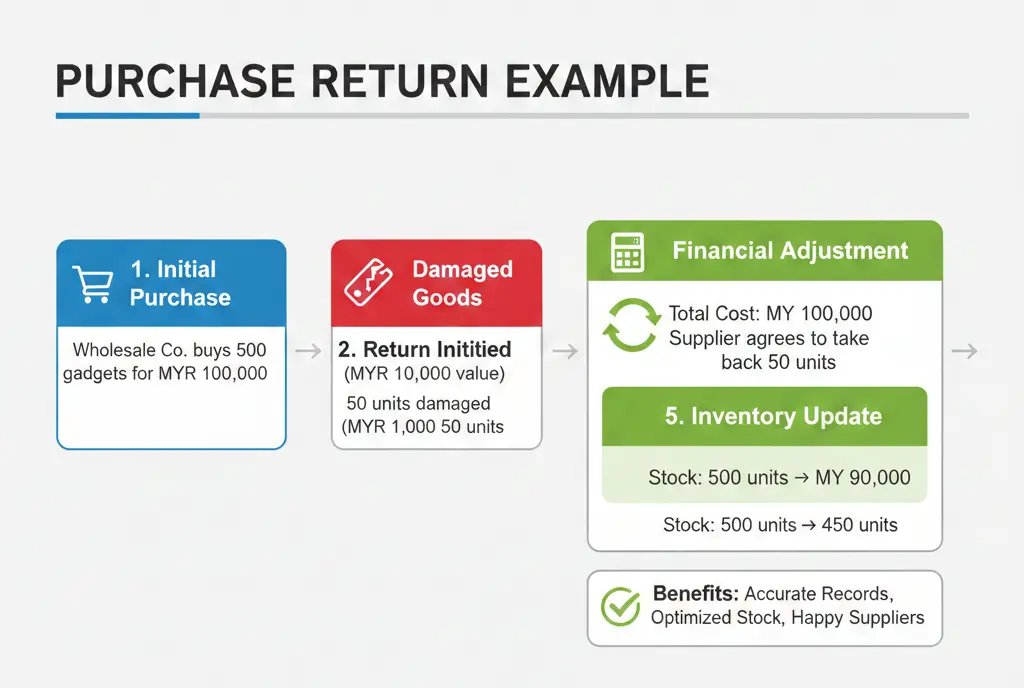
To better understand how purchase returns work, let’s consider a real-world example:
Imagine a wholesale company that purchases 500 units of electronic gadgets from a supplier for MYR 100,000. Upon inspection, the company finds that 50 units are damaged during shipping. The company contacts the supplier, who agrees to accept the return of the damaged units.
The company initiates a purchase return for the 50 damaged units, valued at MYR 10,000 (50 units x MYR 200 per unit). After processing the return, the total purchase cost is reduced to MYR 90,000 (MYR 100,000 – MYR 10,000).
This adjustment is recorded in the company’s financial records, ensuring that the purchase expenses reflect only the goods actually received. The company also updates its inventory system, including its wholesale inventory software, to remove the returned units from stock.
By effectively managing this return process, the company can maintain accurate financial statements, optimize inventory levels, and avoid supplier disputes.
How to Maximize Purchase Return with an Integrated Software
Managing purchase returns can be complex, but HashMicro Purchasing System offers a comprehensive solution to simplify and optimize this critical process. Here are some key features of HashMicro that can help businesses maximize the efficiency and accuracy of purchase return management:
- Automatic Vendor Rating: HashMicro evaluates vendors based on performance metrics such as timeliness, pricing, and completeness. This feature helps businesses identify reliable suppliers and ensures that returns are handled efficiently by cooperative vendors.
- Cost Savings Tracking and Reporting: HashMicro tracks cost savings derived from efficient returns processes, such as reducing losses from defective goods. The system provides detailed reports that help businesses analyze how returns impact profitability and identify areas for improvement.
- Budget Tracking & Limit Per Purchase: HashMicro allows businesses to set purchase and return limits, preventing overexpenditure and ensuring that frequent returns do not disrupt financial plans. This helps businesses maintain control over their procurement budgets.
- Custom Printout in RFQ: HashMicro enables businesses to create customized printouts in Request for Quotation (RFQ) documents, clearly outlining return policies and expectations for defective or incorrect goods. This upfront communication reduces potential disputes and ensures a smooth return process.
By using these features, businesses can optimize their purchase-return process, maintain financial control, and strengthen supplier relationships. HashMicro helps you streamline returns management, contributing to better efficiency, cost savings, and improved supplier collaboration.
Conclusion
Properly managing purchase returns is essential for businesses looking to maintain accurate financial records, optimize inventory levels, and build strong supplier relationships. By following best practices for handling returns and recording journal entries, businesses can ensure smoother procurement operations and prevent financial discrepancies.
Implementing an advanced purchasing software solution streamlines the entire process, from tracking returns and adjusting inventory to ensuring accurate financial reconciliation. With features such as vendor ratings, cost-savings tracking, and budget monitoring, HashMicro enables businesses to handle purchase returns more efficiently, saving time and improving overall operational efficiency.
Take the next step in optimizing your procurement process. Explore with a free consultation today and discover how our ERP solution can enhance your business operations.
FAQ about Purchase Return
-
What is a purchase return?
A purchase return occurs when a company returns goods to a supplier due to issues like defects, incorrect items, or quality problems. It’s an essential process in procurement that helps businesses maintain accurate financial records and inventory levels.
-
How to record purchase return in accounting?
To record a purchase return, businesses should debit the accounts payable account (to reduce the liability) and credit the purchase returns account (to reduce expenses). The inventory system should also be updated to reflect the returned goods.
-
Can purchase returns affect supplier relationships?
Yes, the way purchase returns are handled can significantly affect supplier relationships. Clear communication, adherence to return policies, and maintaining proper documentation are key to fostering trust and minimizing conflicts with suppliers.
-
What is the impact of purchase returns on inventory management?
Properly managing purchase returns helps businesses maintain accurate stock levels. When returns are tracked and recorded correctly, it prevents overstocking, understocking, and inventory discrepancies, leading to better inventory control.