












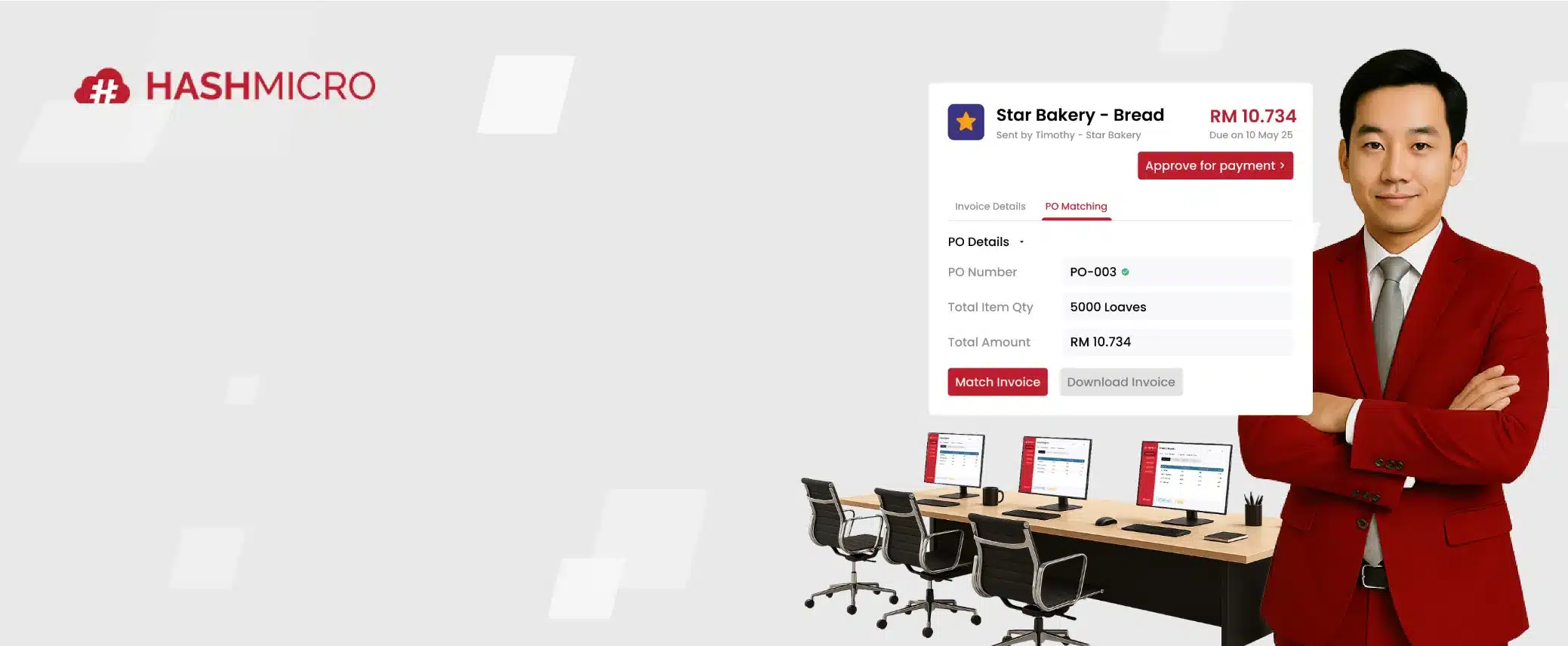
Since Malaysia’s e-Invoice rollout began, procurement is no longer only about issuing purchase orders and paying suppliers on time. Businesses now need clearer links between purchase requests, approvals, supplier invoices, tax details, and payment records so every transaction can be traced properly before it reaches finance.
The Procure to Pay (P2P) process connects those steps into one end-to-end cycle, from identifying a business need to completing supplier payment. According to LHDN’s e-Invoice implementation timeline, Malaysia’s e-Invoice rollout is phased by annual turnover or revenue, making cleaner invoice, tax, and payment records more important for businesses entering their compliance phase.
A well-structured P2P process helps Malaysian businesses improve transparency, stay compliant, and reduce maverick spending through a clearer procurement and purchasing management workflow.
Key Takeaways
|
In reality, most procurement teams in Malaysia still juggle spreadsheets, scattered email approvals, and piles of paper invoices every single day. These manual habits quietly drain hours of productive time, create room for costly data errors, and make it harder to stay aligned with the new e-Invoice requirements.
What is Procure to Pay (P2P)?
Procure to Pay (P2P) is the process of managing a purchase from the moment a business identifies a need until the supplier is fully paid. It connects procurement and finance so companies can control purchasing, track spending, and handle payments more efficiently.
In simple terms, the procure to pay process combines purchasing, invoice management, and payment into one connected workflow. Instead of treating procurement and accounts payable as separate functions, P2P helps businesses improve visibility, reduce manual errors, and maintain better financial control.
Today, this process is increasingly facilitated by modern procurement software, which helps automate routine tasks, improve invoice accuracy, reduce fraud risk, and give businesses a clearer view of their spending.
Procure to Pay (P2P) vs. Source to Pay (S2P)
It is common to hear the terms P2P and S2P used interchangeably, but they represent different scopes of the procurement journey. Understanding the difference is key to building a comprehensive procurement strategy.
| Aspect | Procure to Pay (P2P) | Source to Pay (S2P) |
| Scope | Transactional | Strategic + Transactional |
| Starts with | Approved vendor & signed contract | Identifying new suppliers |
| Includes | Requisition → PO → Receipt → Payment | Sourcing, contract management, supplier performance + everything in P2P |
| Primary goal | Operational efficiency & financial accuracy | Long-term value & supplier strategy |
| Best for | Companies focused on “how we buy” | Companies focused on “who we buy from and why” |
In short, most mature organisations first optimise their P2P cycle to gain immediate control over cash flow, then expand into a full S2P model to unlock long-term strategic value.
The Comprehensive P2P Workflow: A Step-by-Step Breakdown
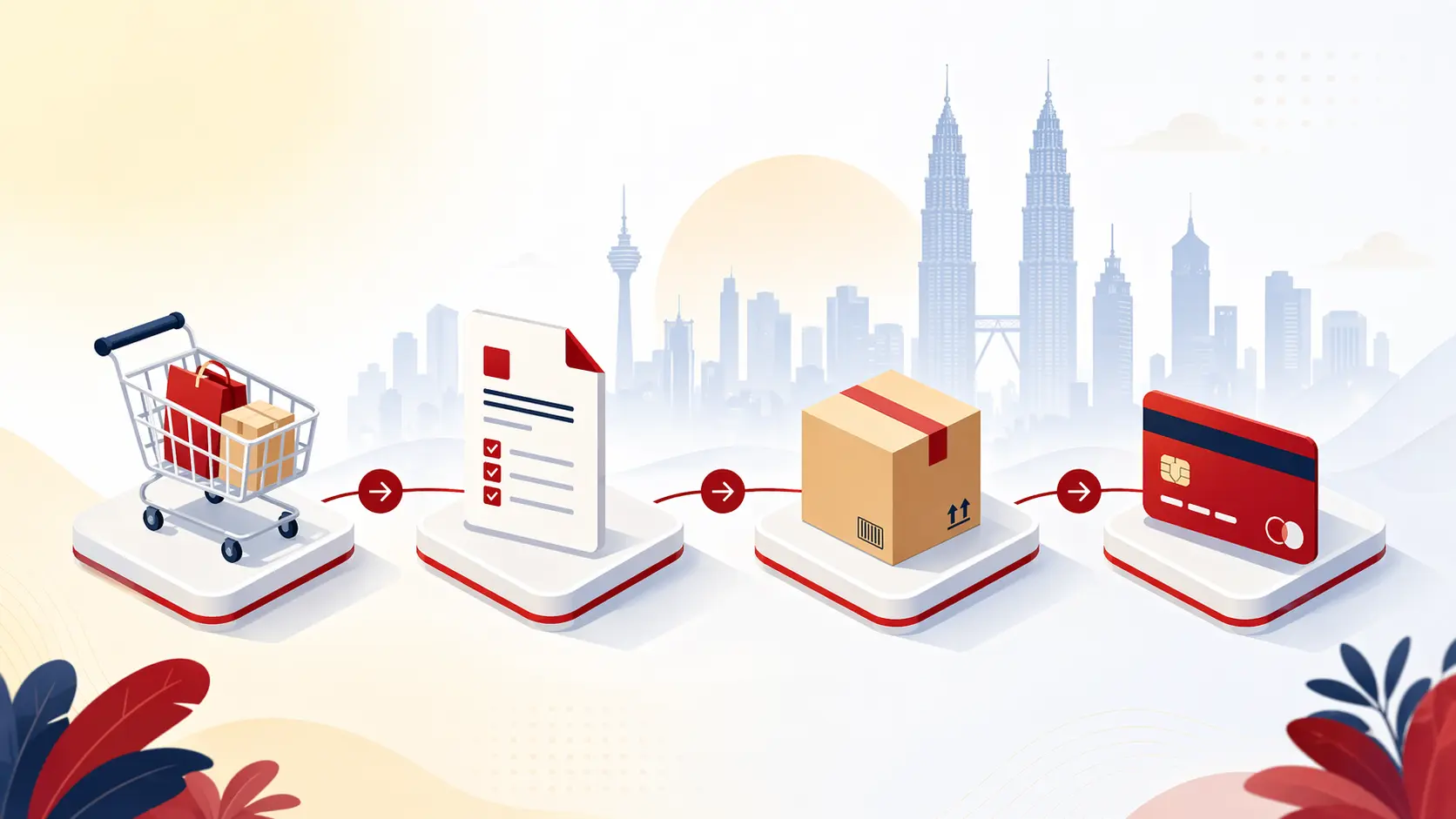
To fully grasp P2P, it helps to look at the specific stages that make up the cycle. Each step acts as a checkpoint to ensure that capital is spent wisely and that the organisation receives exactly what it paid for.
1. Identification of Needs
The cycle begins when a department identifies a specific need office supplies, raw materials, or construction procurement for project-based companies. Clear specifications at this stage prevent costly returns and operational delays.
2. Purchase Requisition (PR)
Next, the requester submits a formal Purchase Requisition. This internal document includes the item, quantity, estimated cost, and budget code. In an automated system, the platform instantly checks whether the request fits within the remaining budget before routing it further.
3. Requisition Approval
Then, the PR is routed to the appropriate approver based on value and internal policy. A clear approval hierarchy is essential — too slow, and operations stall; too lax, and financial leakage follows. Modern P2P tools use automated workflows to push requests to the right stakeholder in seconds.
4. Purchase Order (PO) Creation
Once approved, the PR is converted into a Purchase Order (PO) a legally binding document sent to the supplier. It specifies what is being bought, delivery timelines, and agreed pricing. Once accepted, the vendor is contractually obliged to deliver as stated.
5. Goods Receipt and Inspection
When the supplier delivers, the organisation records the receipt and inspects whether the goods match the PO in quantity and quality. Any discrepancy such as damaged goods should be flagged immediately, often triggering a debit note to the supplier.
6. Invoice Receipt and Three-Way Matching
Subsequently, the supplier issues an invoice. This triggers the three-way match, arguably the most critical control point in the entire P2P process. The accounts payable team compares:
- The Purchase Order (what we ordered)
- The Goods Receipt (what we received)
- The Supplier Invoice (what we are being charged)
If all three align within tolerance, the invoice is approved. Otherwise, it is flagged for investigation preventing overpayment, duplicate payments, and payment for goods never received.
7. Payment Fulfilment
Finally, funds are transferred to the supplier. Timing here is strategic: some companies pay early to capture discounts, while others wait until the credit term ends to maximise cash flow. Once paid, the transaction closes in the accounting system and the cycle completes.
How P2P Supports LHDN e-Invoice Compliance in Malaysia
Since Malaysia’s e-Invoice rollout, every business transaction must be submitted to the MyInvois portal for validation. A modern P2P system automatically generates compliant e-Invoice formats, submits them to LHDN, and stores validated QR-coded invoices all without manual effort.
Consequently, Malaysian SMEs adopting a digital P2P system not only streamline operations but also stay aligned with local tax regulations, SST reporting, and cross-border compliance when trading with Singapore, Indonesia, or Thailand.
Procure to Pay in Accounts Payable
While P2P is often associated with procurement, its final stages invoice receipt, three-way matching, and payment fall squarely within the Accounts Payable (AP) function. In fact, how smoothly the AP team processes supplier invoices determines whether the entire P2P cycle ends with on-time payments or with disputes and late fees. A well-connected P2P workflow gives AP clear visibility into every PO and goods receipt, which removes the guesswork from invoice validation.
For many Malaysian businesses, the biggest bottlenecks actually sit inside AP such as invoice backlog, duplicate entries, missed early-payment discounts, and long approval chains. Integrating AP tightly with procurement through a single system helps eliminate these issues and turns the finance team into a true strategic partner. If you are looking to benchmark options, this guide on the best accounts payable software in Malaysia offers a practical starting point for evaluation.
Strategic Benefits of P2P Optimization
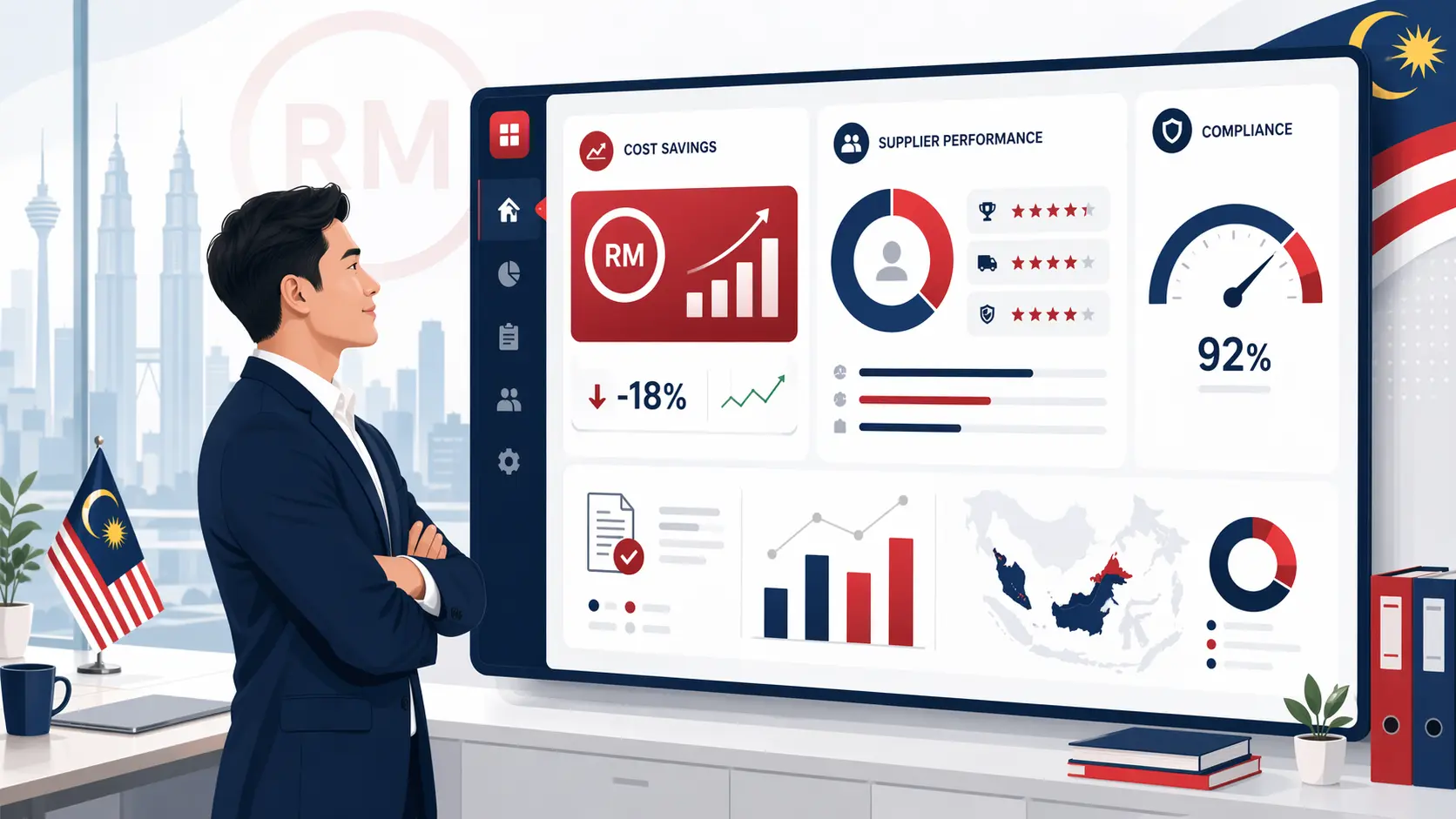 Optimizing the Procure to Pay process offers benefits that extend far beyond the procurement and finance departments. It impacts the entire organization’s bottom line and operational stability.
- Enhanced Financial Visibility
Above all, a structured P2P process lets managers see where every ringgit is going in real time. Rather than waiting for end-of-month reports, leadership can monitor live data through integrated purchasing reports, spot anomalies instantly, and adjust budgets proactively.
- Improved Supplier Relationships
Suppliers value consistent, timely payment. When an organisation streamlines its P2P cycle, it becomes a “customer of choice” gaining better negotiation leverage, priority service during supply chain disruptions, and earlier access to vendor innovations. - Cost Savings and Efficiency
Manual P2P processes are expensive. In fact, the cost per invoice in manual systems can be up to 5x higher than in automated ones. Automation, therefore, significantly lowers operating expenses by reducing headcount needs and eliminating maverick spending through enforced use of preferred suppliers. - Regulatory Compliance and Fraud Prevention
Finally, a documented P2P audit trail who requested, who approved, when received, when paid acts as a powerful deterrent against internal fraud. In addition, it simplifies LHDN audits, SST reporting, and external financial reviews.
To put the difference into perspective, the comparison below shows how key procurement metrics such as cost per invoice, PO cycle time, error rate, and straight-through processing typically shift when businesses move from manual workflows to an automated P2P system.
| Metric | Manual Process | Automated P2P |
| Cost per invoice | RM 40 – RM 60 | RM 8 – RM 15 |
| PO cycle time | 5 – 10 days | < 1 day |
| Invoice error rate | 15 – 20% | < 2% |
| Straight-through rate | < 10% | 60 – 80% |
How to Overcome Common P2P Challenges (Best Practices)
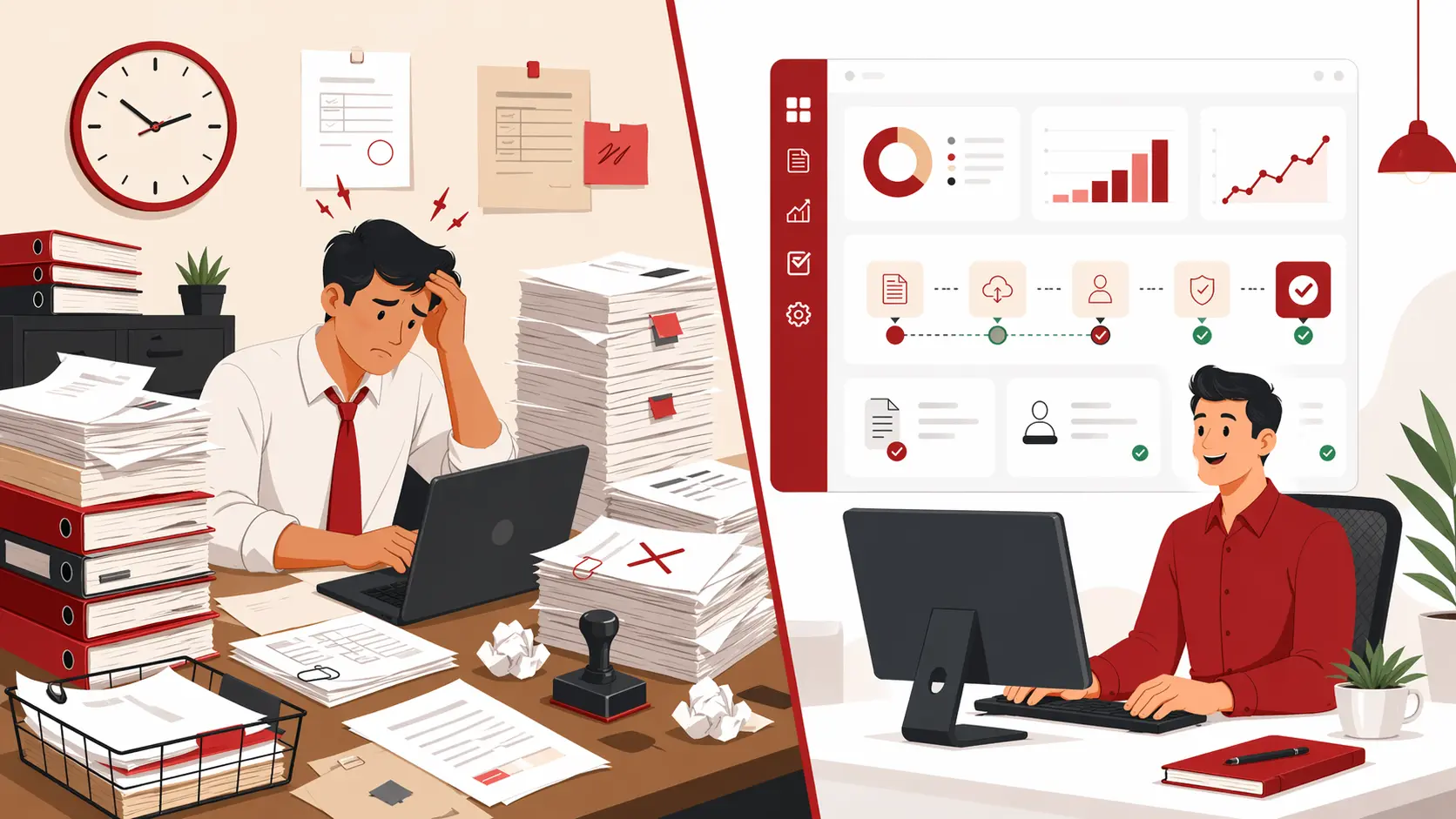
Implementing a successful P2P process requires more than software it demands process discipline. Here are the most common pitfalls and how to solve them.
1. Tackle Maverick Spending Head-On
Maverick spending happens when employees bypass the official process due to slow approvals. To fix this, simplify the requisition UX, empower managers with reasonable spending limits, and make preferred-supplier catalogues easy to search.
2. Break Down Data Silos
When procurement and finance use different systems, discrepancies multiply. For this reason, Malaysian enterprises increasingly adopt two-tier ERP or unified platforms to create a single source of truth across departments and regional offices.
3. Eliminate Paper-Based Workflows
Even in 2026, many businesses still rely on physical signatures and paper invoices. However, with LHDN mandating digital invoicing, the shift to paperless P2P is now unavoidable and overdue.
4. Standardise & Centralise the Process
Use the same forms, approval workflows, and vendor master data across the entire organisation. Additionally, centralise procurement and accounts payable so a dedicated team can negotiate enterprise-wide contracts and maintain tighter cash flow control.
5. Enable Your Suppliers
Encourage suppliers to adopt digital invoicing and use vendor portals. In some cases, offering training or incentives for early adopters speeds up the transition to a fully digital PO-to-payment loop.
Essential P2P KPIs to Track
To manage P2P effectively, you must measure it. These KPIs highlight bottlenecks and justify further investment in automation.
| KPI | What It Measures | Target Benchmark |
| PO Cycle Time | Days from requisition to PO sent | < 1 day |
| Invoice Processing Cost | Cost per invoice processed | < RM 15 |
| Straight-Through Invoice % | Invoices with zero human intervention | > 60% |
| Maverick Spend Ratio | % of spend outside formal P2P process | < 5% |
| Supplier Lead Time Accuracy | Delivery on promised date | > 95% |
| First-Time Match Rate | Invoices matched on first attempt | > 85% |
Case Example: A Malaysian Distribution Company
A mid-sized distribution company based in Selangor previously processed over 1,200 invoices monthly using spreadsheets and email approvals. As a result, PO cycle time averaged 7 days and invoice errors hit 18%. After implementing an automated P2P system:
- PO cycle time dropped to under 24 hours (86% reduction)
- Invoice errors fell to below 2%
- The company achieved full LHDN e-Invoice compliance within 3 months
- Annual savings on processing costs exceeded RM 320,000
This illustrates how even mid-market Malaysian businesses can realise measurable ROI through P2P digitalisation.
The Role of Technology in Modern P2P
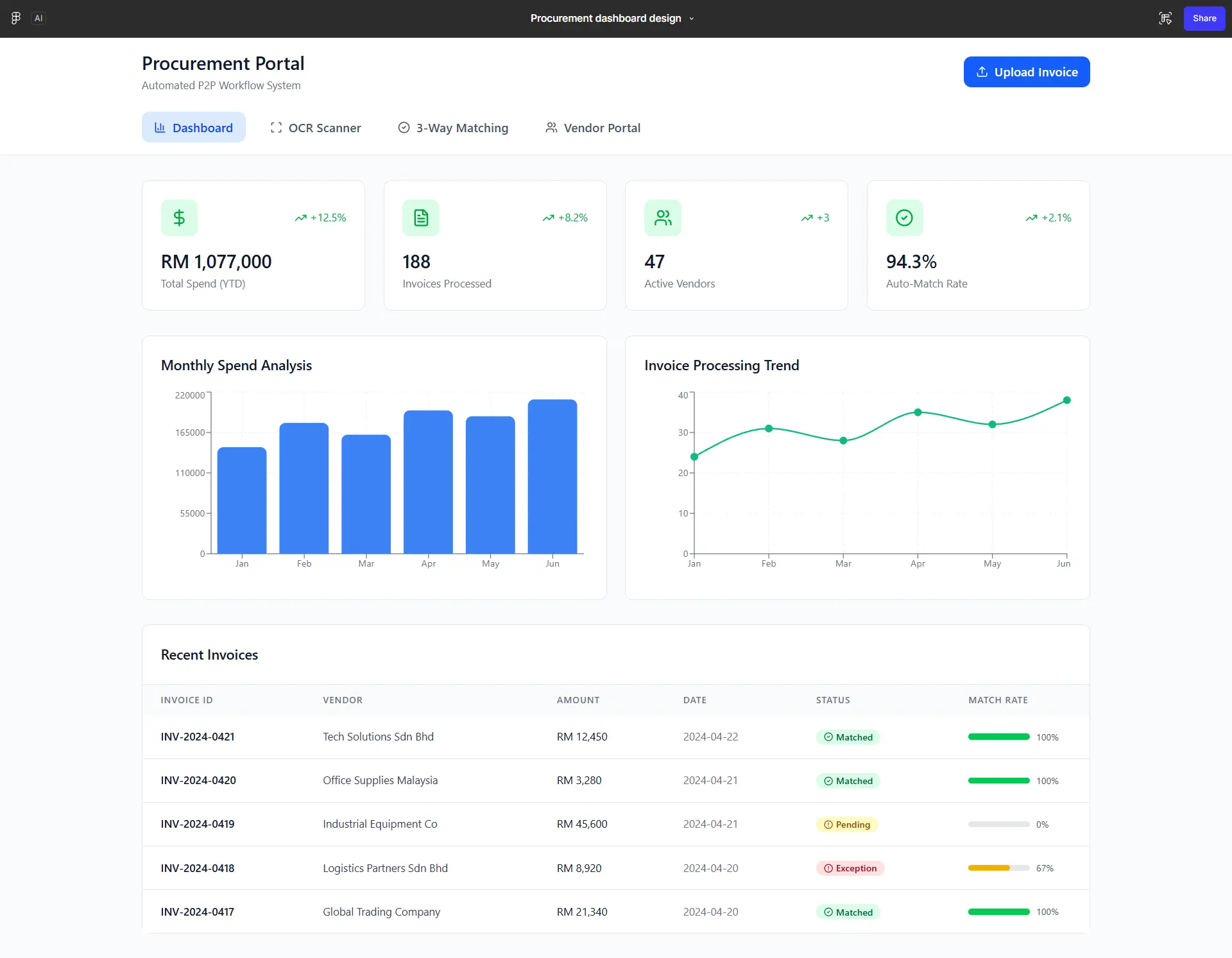
How Technology Improves Modern Procure-to-Pay (P2P) Processes
| Feature | Why It Matters for Malaysian Businesses |
|---|---|
| Optical Character Recognition (OCR) | OCR technology automatically reads invoice data and transfers it into the procurement system without manual input. This helps Malaysian businesses reduce data entry errors, accelerate invoice processing, and improve overall finance team productivity. |
| AI-Powered Workflow Automation | Artificial intelligence can perform automated three-way matching between purchase orders, invoices, and goods receipts within seconds. This allows finance teams to focus only on discrepancies and exceptions instead of repetitive verification work. |
| Cloud-Based Supplier Portals | Vendor portals give suppliers the ability to upload invoices, monitor payment progress, and maintain their own account information. This self-service functionality minimizes administrative workload while improving supplier communication and transparency. |
| Mobile Approval Capabilities | Mobile approvals allow managers to review and approve purchase requests or invoices directly from smartphones or tablets. This prevents workflow bottlenecks, speeds up procurement cycles, and supports faster supplier payments even when decision-makers are away from the office. |
| Automated Remittance Notifications | Modern P2P systems can automatically send remittance advice after payments are completed. This improves payment visibility for suppliers, reduces payment-related disputes, and strengthens long-term vendor relationships. |
Conclusion
The Procure to Pay (P2P) process sits at the heart of how a business manages spending, suppliers, and financial accuracy. From raising a requisition to creating a PO, receiving goods, and performing three-way matching, every stage ensures capital is used wisely. When these stages are connected through a structured workflow, businesses gain real-time visibility and reduce manual errors.
For Malaysian businesses, the urgency to optimise P2P has never been greater. With the LHDN e-Invoice mandate and rising expectations around SST compliance, manual processes are no longer sustainable. Adopting digital P2P practices backed by standardised workflows, clean data, and clear KPIs helps businesses stay compliant and build stronger supplier partnerships over time.
If you are curious to see how a modern P2P system could work within your own operations, you are welcome to explore HashMicro’s Procurement Software through a free product demo.
FAQ About Procure to Pay (P2P)
-
What is the procure to pay (P2P) process in simple terms?
Procure to pay is the complete cycle of buying goods or services for a business starting from identifying a need, creating a purchase order, receiving the goods, and ending with paying the supplier. It connects procurement and finance into one continuous workflow.
-
Why is three-way matching important in the P2P process?
Three-way matching compares the purchase order, goods receipt, and supplier invoice to make sure the company only pays for what was actually ordered and received. It helps prevent overpayment, duplicate payments, and fraud.
-
What are the main benefits of automating the procure to pay process?
Automating P2P reduces manual errors, shortens approval cycles, improves spending visibility, and cuts the cost per invoice significantly. It also strengthens supplier relationships through faster, more reliable payments.
-
What KPIs should I track to measure P2P performance?
The most important P2P KPIs include purchase order cycle time, invoice processing cost, percentage of straight-through invoices, maverick spend ratio, and supplier lead time accuracy. Tracking these helps identify bottlenecks and areas for improvement.
-
Which businesses in Malaysia benefit most from P2P automation?
Mid-sized and large enterprises, distribution companies, manufacturers, construction firms, and any business handling more than 200 invoices per month benefit the most. SMEs scaling their operations also gain significant ROI from P2P automation.