













Workplace culture today goes beyond office perks or casual traditions. It shapes how teams work, interact, and compete in a fast-changing business environment. A strong culture supports decision-making, innovation, and long-term growth, as discussed in the following article.
Creating a positive workplace culture requires clear intent and ongoing evaluation, especially within Malaysia’s diverse and multicultural workforce. HR and business leaders must adapt to local expectations, regulatory frameworks, and evolving employee needs across different industries. Understanding these factors helps build a more aligned and productive workforce, as explained in the following article.
This guide covers the key elements of organizational culture and outlines practical ways to build and maintain a strong work environment supported by modern HR software.
Key Takeaways
|
To foster better engagement and long-term employee retention, many HR leaders now prioritize building a strong workplace culture as a strategic business foundation.
Decoding Workplace Culture: Beyond the Buzzwords
Mastering workplace culture requires looking beyond superficial definitions to understand the core values driving your business environment. These shared behaviors dictate how employees solve challenges and interact without direct supervision. This foundation ensures every team member remains aligned with your broader organizational mission.
Edgar Schein’s Model of Organizational Culture
Edgar Schein, a leading expert from MIT Sloan School of Management, introduced a widely recognized framework for understanding organizational culture. Three distinct levels reflecting how culture is seen and experienced within a company:
- Artifacts: Visible elements such as office layout, dress code, branding, and daily practices. They are easy to observe but often difficult to interpret without deeper insight into the organization. Their meaning becomes clearer when connected to underlying values.
- Espoused Values: The company’s stated goals, strategies, and guiding principles. These are often communicated through official documents, internal messaging, and leadership communication. However, they may not always reflect actual practices.
- Basic Underlying Assumptions: Consisting of unconscious beliefs that shape employee behavior. These assumptions are rarely questioned but strongly influence daily decisions. When they conflict with stated values, they tend to define the real culture.
The Difference Between Culture and Climate
Leaders must distinguish between organizational culture and climate, as these concepts differ in depth and long-term business impact. Understanding their unique stability helps management make better decisions for the workplace. This clarity ensures more effective strategies for improving overall company performance.
| Aspect | Organizational Culture | Organizational Climate |
|---|---|---|
Definition |
Deep-rooted values, beliefs, and assumptions that shape the organization | Short-term mood or atmosphere felt by employees |
Nature |
Long-term and stable | Temporary and easily influenced |
Formation |
Built over years through shared experiences and leadership direction | Shaped by recent events or situations in the workplace |
Visibility |
Less visible and often implicit | More visible and directly experienced by employees |
Change Speed |
Slow to change and requires strategic effort | Changes quickly based on current conditions |
Impact Scope |
Influences behavior, mindset, and long-term strategy | Affects daily motivation and employee sentiment |
Example |
A company with a strong innovation-driven mindset | Excitement after a successful product launch |
The Undeniable Business Impact of a Positive Culture
Investing in workplace culture is not just about employee satisfaction, it is a strategic move that delivers measurable business results. While toxic cultures increase turnover and reduce productivity, positive cultures strengthen overall business outcomes.
1. Financial Performance and Profitability
Organizations with strong, aligned cultures often achieve higher revenue growth and profitability than their competitors. Shared values help employees understand their roles, reduce operational friction, and support faster decision-making. This also lowers the need for excessive supervision, as trust becomes a key driver of performance.
2. Driving Innovation and Organizational Agility
In a volatile, uncertain, complex, and ambiguous (VUCA) business environment, agility is essential. A strong culture fosters innovation by creating a safe space for employees to share ideas and take calculated risks. When fear of failure is reduced, teams are more likely to experiment, collaborate, and respond quickly to market changes, which encourages continuous improvement and adaptability.
3. Enhancing the Employee Journey
Workplace culture plays a key role in creating a comprehensive employee experience from hiring to retention. A positive environment helps employees feel valued, supported, and motivated to perform at their best. When personal and organizational values align, engagement increases and long-term commitment improves.
The Competing Values Framework: 4 Primary Culture Types
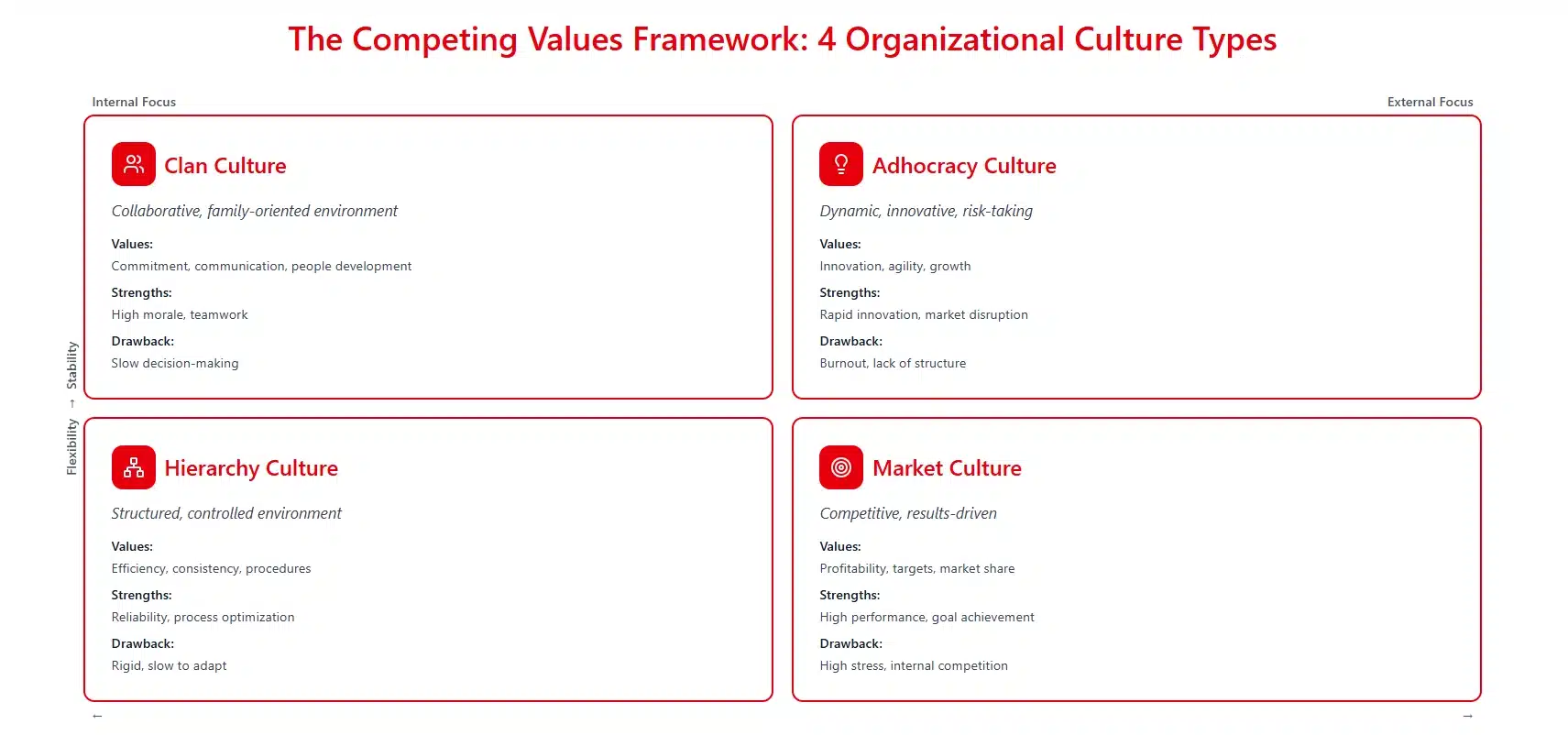
HR professionals often use the Competing Values Framework (CVF), developed by Robert Quinn and John Rohrbaugh, to understand and shape organizational behavior. This model evaluates organizations based on internal versus external focus as well as stability versus flexibility. From these dimensions, four distinct types of organizational culture emerge.
1. Clan Culture: Collaborative and Family-Oriented
Clan culture sits within organizations that emphasize internal focus and flexibility, creating a highly collaborative environment similar to an extended family. This culture values teamwork, employee involvement, and shared decision-making across all levels. Leaders act as mentors rather than authority figures, with a strong belief that supporting employees will drive business success.
- Value Drivers: Commitment, communication, and human development.
- Effectiveness Criteria: Cohesion, high morale, and internal harmony.
- Potential Drawbacks: Decision-making can be slow due to the need for consensus, and the organization may struggle to make tough, unpopular business decisions when market conditions require rapid restructuring.
2. Adhocracy Culture: Dynamic and Entrepreneurial
Adhocracy culture focuses on external growth and flexibility, creating a dynamic and creative work environment. These organizations encourage risk-taking and prioritize innovation in products and services. The fast-paced nature values agility, often seen in tech startups and creative agencies.
- Value Drivers: Innovation, agility, and transformation.
- Effectiveness Criteria: Cutting-edge output, rapid growth, and market disruption.
- Potential Drawbacks: The constant drive for innovation can lead to employee burnout, a lack of established processes, and chaotic daily operations if not managed with a degree of structural discipline.
3. Market Culture: Results-Oriented and Competitive
Market culture emphasizes external focus and stability, with strong attention to results and competition. Organizations aim to increase market share, reach new customers, and outperform competitors. Leaders focus on targets and measurable outcomes, while employees are expected to stay highly goal-oriented.
- Value Drivers: Market share, goal achievement, and profitability.
- Effectiveness Criteria: Hitting quotas, defeating competitors, and maximizing shareholder value.
- Potential Drawbacks: The hyper-competitive atmosphere can foster internal rivalries, diminish cross-departmental collaboration, and create a high-stress environment that may compromise long-term employee well-being.
4. Hierarchy Culture: Structured and Controlled
Hierarchy culture focuses on internal stability with a structured and formal work environment. Clear procedures, policies, and authority lines guide daily operations. This culture is common in large organizations and regulated industries, with efficiency, reliability, and consistency as key priorities.
- Value Drivers: Efficiency, consistency, and timeliness.
- Effectiveness Criteria: Smooth execution, error reduction, and optimized processes.
- Potential Drawbacks: Excessive red tape can stifle creativity, slow down response times to market changes, and alienate employees who feel like mere cogs in a massive corporate machine.
Modern Variations of Organizational Culture
Beyond traditional frameworks, modern organizations adopt new culture models to match evolving workforce expectations and business trends. These approaches help companies stay relevant while building a strong and distinct identity. Many organizations combine classic and modern cultures to remain competitive.
1. The Purpose-Driven Culture
A purpose-driven culture focuses on impact beyond profit, including social and environmental goals. Employees are motivated by meaningful work and a clear sense of contribution. This model is effective in attracting millennial and Gen Z talent, who increasingly prioritize corporate social responsibility and ethical business practices over traditional compensation packages.
2. The Customer-Centric Culture
Customer-centric culture places customer needs at the center of every decision and process. The focus is on solving problems and improving user experience, not just outperforming competitors. Employees are encouraged to prioritize customer satisfaction at all levels.
3. The Learning-Oriented Culture
A learning-oriented culture emphasizes continuous development, upskilling, and knowledge sharing. Mistakes are treated as opportunities to learn and improve with actively invests in professional development programs, mentorship, and cross-functional training. This approach helps organizations stay adaptive in a fast-changing business environment.
The Role of Human Resources in Shaping Culture
Human Resources plays a key role in building and maintaining organizational culture. While leadership defines the vision, HR turns it into policies, hiring practices, and daily operations. HR also ensures that the company’s cultural promises are fulfilled at every stage of the employee lifecycle.
1. Aligning Culture with Strategic Goals
HR must ensure that workplace culture supports the company’s strategic direction. Misalignment between goals and internal practices can create conflict and reduce performance. Regular reviews of policies and reward systems help reinforce the right behaviors.
2. Integrating Culture into the Hiring Process
Cultural alignment starts during recruitment, not after onboarding. HR should assess both technical skills and cultural fit through structured interviews. Hiring candidates who match company values helps reduce turnover and improve long-term performance.
3. Effective Talent Development and Succession Planning
Building a strong culture requires continuous investment in employee growth. Through strategic talent management, HR can identify and develop future leaders who reflect core values. This approach ensures cultural consistency and supports long-term business success across generations of the workforce.
How Can We Use Technology to Measure Workplace Culture with High Accuracy?
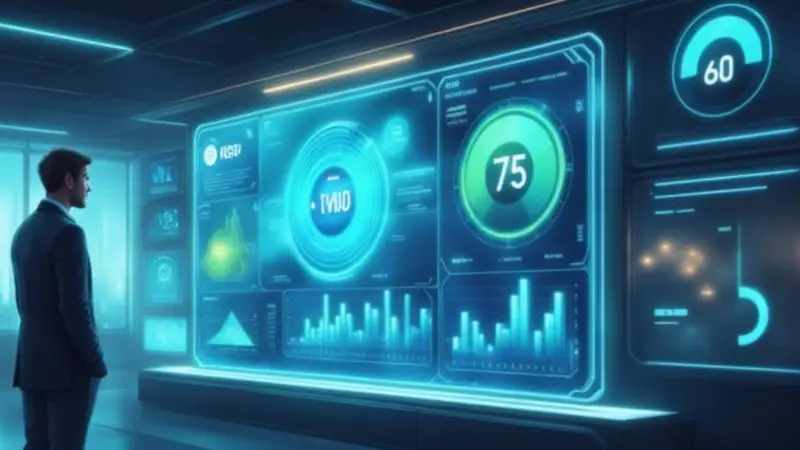
Many business leaders assume that organizational culture cannot be measured, but modern digital systems prove this is not accurate. Culture can be evaluated with high precision using a mix of automated quantitative data and tech-driven qualitative insights. Regular digital culture audits help HR identify gaps, assess initiatives, and address issues early before they become larger problems.
1. Automated Quantitative Metrics
Quantitative metrics offer a clear overview of organizational culture through centralized platforms. One key tool is the automated Employee Net Promoter Score (eNPS), which measures how likely employees are to recommend the company as a workplace. Tracking this score via digital dashboards over time helps reveal overall employee sentiment more objectively.
HR should also monitor voluntary turnover rates through integrated HRIS data, especially among high-performing employees. A high turnover rate often signals cultural issues or misalignment detected by data trends. Other digitized indicators such as absenteeism, internal promotions, and employee complaints provide additional insight into the workplace environment.
2. Digital Qualitative Insights
While quantitative data shows that an issue exists, digital feedback analysis explains the reasons behind it. HR can gather deeper understanding through virtual focus groups, town halls, and recorded one-on-one discussions. Pattern-recognition tools used during stay interviews with high-performing employees are especially useful, as they provide proactive feedback on what works well and what needs improvement.
3. Integrated Digital Audits
An effective digitized cultural audit combines real-time quantitative and qualitative data to assess the organization’s current condition against its desired goals. This automated process includes reviewing communication flows, performance systems, and daily behavior supported by digital tracking. These integrated insights help HR identify gaps, strengthen talent acquisition strategies, and build a focused cultural improvement plan based on verifiable data.
Proven Strategies to Transform and Sustain Company Culture

Changing organizational culture requires time, consistency, and strong commitment from leadership and managers. It cannot be enforced through policies alone but must be reflected in daily actions. Culture becomes effective when it is consistently practiced across the organization.
- Defining Core Values and Expected Behaviors
Cultural transformation starts with clear core values. These values must be translated into specific and observable behaviors to avoid confusion. Clear expectations help employees understand standards and stay accountable.
- Empowering Middle Management
Middle managers play a key role in maintaining culture at the team level. Employees experience culture through their direct supervisors, making their role critical. HR should equip managers with the skills to build trust and manage teams effectively.
- Implementing Robust Retention Initiatives
Strong culture is supported by retaining experienced employees through effective employee retention strategies. Organizations should offer competitive benefits, flexible work options, and career growth opportunities. This encourages long-term commitment and strengthens the workplace environment.
- Fostering Psychological Safety
Psychological safety allows employees to speak up without fear. Leaders should encourage feedback, accept different views, and treat mistakes as learning opportunities. This creates open communication and helps resolve issues faster.
Recognizing and Fixing a Toxic Work Culture
Even with strong intentions, workplace culture can decline over time. Identifying early signs of a toxic environment is essential to avoid broader organizational issues. Toxicity often develops gradually through unchecked behavior, weak communication, and misaligned incentives.
Red Flags to Watch Out For
HR professionals need to stay alert to early signs of a toxic workplace culture. Common indicators include frequent office gossip, poor collaboration between departments, a blame-focused mindset, and increasing employee burnout. These issues often signal deeper cultural problems that require immediate attention.
Another major warning sign is the presence of “brilliant jerks,” or high performers who mistreat others but are still tolerated. Allowing this behavior shows that results are valued more than respect and teamwork. Over time, this can damage trust and negatively affect overall workplace culture.
Remediation Steps for HR Leaders
Fixing a toxic culture requires clear and decisive action from leadership and HR. Leaders must openly acknowledge the problem and show accountability, while HR focuses on addressing the root causes. This may include retraining or removing toxic individuals, even if they are high performers.
Organizations also need to rebuild trust through transparent communication and consistent enforcement of behavioral standards. Strong feedback systems should be in place to protect employees who speak up. Using advanced HR tools can help track issues and identify harmful patterns early.
Conclusion
Workplace culture is what separates average organizations from high-performing ones. It requires continuous effort, clear alignment with business goals, and active management. When companies understand employee behavior and apply the right frameworks, they can build an environment that supports engagement and innovation.
Human Resources plays a key role in shaping and maintaining this culture. By acting as a bridge between company values and daily practices, HR helps ensure consistency across the organization. This creates a strong foundation for long-term business performance.
As business environments continue to change, companies that prioritize culture will stay ahead of the competition. Building a strong workplace culture is an ongoing process that requires adaptation and commitment. Book a free demo to explore how the right HR system can support your culture strategy.
FAQ about Workplace Culture
-
What role does multicultural diversity play in shaping workplace culture in Malaysia?
Malaysia’s workforce comprises Malay, Chinese, Indian, and other ethnic communities, each bringing distinct communication styles, values, and professional norms. A strong workplace culture in this context must actively foster inclusivity, cultural sensitivity, and mutual respect. HR leaders should design onboarding programs, team rituals, and communication policies that acknowledge and celebrate this diversity rather than flattening it with a one-size-fits-all approach.
-
Can a small or medium-sized enterprise (SME) build a strong workplace culture with limited HR resource?
Malaysia’s workforce comprises Malay, Chinese, Indian, and other ethnic communities, each bringing distinct communication styles, values, and professional norms. A strong workplace culture in this context must actively foster inclusivity, cultural sensitivity, and mutual respect. HR leaders should design onboarding programs, team rituals, and communication policies that acknowledge and celebrate this diversity rather than flattening it with a one-size-fits-all approach.
-
What are the legal and compliance considerations when building workplace culture in Malaysia?
Building workplace culture in Malaysia must align with key legal frameworks including the Employment Act 1955, the Industrial Relations Act 1967, and the Occupational Safety and Health Act 1994. Cultural policies around working hours, leave entitlements, grievance procedures, and anti-discrimination practices must comply with these regulations. HR professionals should also stay updated on guidelines issued by the Ministry of Human Resources, as non-compliance can undermine the trust and fairness that a healthy culture depends on.