








You might not notice it at first, but small issues in your logistics can quietly pile up. Orders get delayed, stock numbers feel unreliable, and your team keeps double checking things that should already be accurate. Instead of moving faster, operations start feeling heavier every day. What is worse, your team spends more time fixing problems than actually improving the business. If this sounds familiar, it is probably already affecting your customer experience more than you realize.
As your business grows, these issues do not stay small. More orders mean more moving parts, and suddenly your current setup starts showing its limits. Coordination becomes harder, visibility becomes unclear, and simple processes begin to take longer than they should. You might start asking yourself, is this still efficient, or are we just getting used to the chaos? Scaling should feel like progress, not constant firefighting behind the scenes.
This is usually the point where businesses begin to rethink how their logistics should actually work. Instead of handling everything internally, many start exploring support from partners who already have the systems and experience in place. With the right approach, logistics can shift from being a daily headache into something that actually supports your growth. If you are in that phase right now, understanding how this model works could change the way you run your operations moving forward.
Key Takeaways
|
Stock issues often come from poor visibility and disconnected processes. See how inventory management software can help you stay in control.
What is Third-Party Logistics (3PL)
Third Party Logistics, or 3PL, means outsourcing ecommerce logistics to an external provider. These services usually cover inventory storage, warehousing, order fulfillment, and shipping. Instead of handling these operations on your own, you rely on a 3PL partner to manage them more efficiently.
Over time, 3PL has grown beyond basic transportation and freight support. Many providers now offer technology driven services that connect with ecommerce platforms and give better visibility into inventory, orders, and fulfillment performance.
The Logistics Spectrum: 1PL to 5PL Explained
To understand where 3PL fits, you need to see how logistics models are grouped based on how much control stays in house and how much is outsourced.
1PL First Party Logistics: You manage all logistics internally, including storage, transportation, and delivery using your own resources.
2PL Second Party Logistics: You use an external provider for transportation, but your business still controls the rest of the logistics process.
3PL Third Party Logistics: You outsource key logistics activities such as warehousing, inventory handling, picking, packing, and shipping to one provider.
4PL Fourth Party Logistics: A 4PL manages your overall supply chain by coordinating multiple logistics partners and systems.
5PL Fifth Party Logistics: A 5PL handles large scale supply chain networks using advanced technology to optimize complex operations.
The Core Services Offered by 3PL Providers
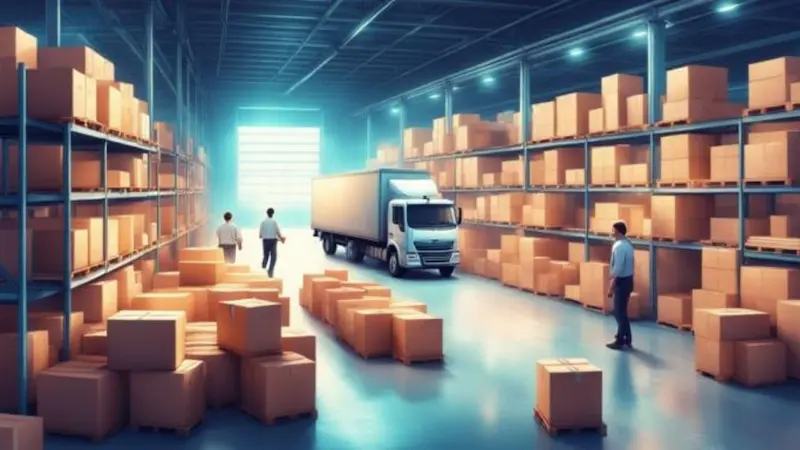
The capabilities of a 3PL provider can vary depending on their size, specialization, and technology. However, most providers offer a core set of services that cover the full product journey, from inbound logistics to final delivery. This allows your business to manage fulfillment in one connected system instead of handling each process separately. For growing operations, having these services under one provider helps reduce coordination issues and improves overall efficiency.
Transportation and Freight Management
Transportation is a critical part of any supply chain, and 3PL providers use their shipping volume to secure better rates from carriers. This service usually covers both inbound and outbound freight. Inbound freight focuses on moving goods from manufacturers to warehouses, including international shipping, customs handling, and port to warehouse transfers. Outbound freight handles deliveries to customers or retail partners using LTL, FTL, or parcel shipping. With better routing and coordination, 3PLs help ensure faster and more cost efficient deliveries.
Warehousing and Storage
Storing inventory properly is one of the core services offered by 3PL providers. Most operate fulfillment centers located near key transport hubs or high demand areas to reduce delivery time. These facilities are equipped with racking systems, security controls, and environment settings for sensitive goods. An optimized warehouse storage system helps maximize space, improve stock organization, and speed up picking processes. This setup also supports better stock rotation, such as FIFO, which is important for maintaining product quality and reducing waste.
Inventory Management
Inventory management goes beyond tracking stock levels. 3PL providers use Warehouse Management Systems to monitor inventory in real time and sync data with your sales channels. This ensures stock availability is always updated as orders come in. They also perform regular checks, such as cycle counts and audits, to maintain accuracy. With better visibility into stock movement, your business can avoid stockouts, reduce overstocking, and plan replenishment more effectively.
Value Added Services VAS
Many 3PL providers also offer value added services to support your branding and fulfillment needs. These include kitting, where multiple products are combined into one package, and custom packaging to create a better unboxing experience. Other services may include labeling, barcoding, and quality checks before shipping. Some providers even handle light assembly or product adjustments when needed. These services help your business deliver a more consistent and branded customer experience without adding internal workload.
How to Onboard a 3PL
Switching to a third party logistics provider is a major operational move. When done right, it can streamline fulfillment and support your business growth. But if the transition is rushed or poorly planned, it can lead to stock discrepancies, delayed shipments, and frustrated customers. That is why onboarding a 3PL should be treated as a structured process, not just a handover. The goal is to move operations without disrupting your day to day performance.
Phase 1 Know Your Numbers First
Before speaking with any 3PL provider, you need a clear picture of your current operations. Look at your daily order volume, peak periods, product dimensions, and storage requirements. These details are not just technical, they directly affect pricing, capacity, and service fit. The more accurate your data, the easier it becomes to filter out unsuitable partners. Without this step, you risk choosing a provider that cannot handle your actual needs.
Phase 2 Run an RFP and Choose Wisely
Once your data is ready, send a Request for Proposal to several 3PL candidates. Do not focus only on pricing, because the cheapest option is not always the most reliable. Pay attention to their experience, warehouse locations, and how well they understand your business model. If possible, visit their facilities to see how operations actually run on the ground. This step helps you avoid surprises after signing the contract.
Phase 3 Connect Your Systems
System integration is often the most critical and sensitive part of onboarding. Your ecommerce platform, ERP, or order system must connect properly with the 3PL warehouse management system. Even small errors here can affect order processing and inventory accuracy. That is why testing in a controlled environment is necessary before going live. It is better to catch issues early than deal with operational disruptions later.
Phase 4 Move Your Inventory Carefully
Inventory transfer should be done in stages, not all at once. Start with a smaller group of high moving products so you can monitor how the 3PL handles receiving and storage. Make sure all items are checked, recorded, and placed in the correct locations. This reduces the risk of misplaced stock or data mismatch. Once everything is verified, you can gradually move the rest of your inventory.
Phase 5 Soft Launch Before Full Rollout
Before fully switching operations, run a soft launch with a small percentage of live orders. This allows you to test picking accuracy, packing quality, and shipping processes in real conditions. Use this phase to identify gaps and fix them quickly. Once performance is stable and meets your expected KPIs, you can increase the order volume step by step. This approach helps ensure a smoother transition without risking your entire operation.
How the 3PL Process Works: Step-by-Step
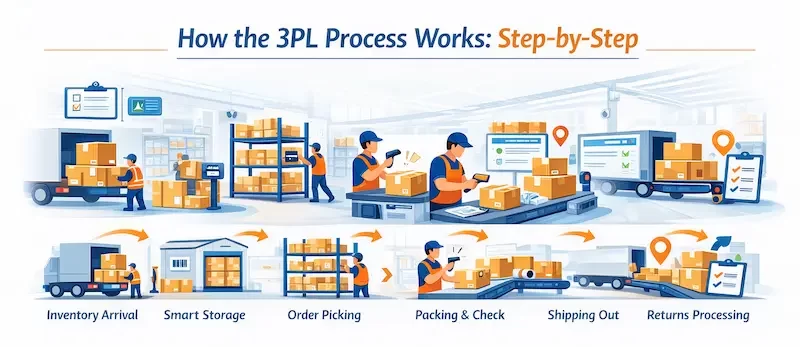
To understand the real value of outsourced logistics, you need to see how operations run inside a fulfillment center. Every activity follows a structured flow, from receiving goods to shipping orders. This process runs continuously and is supported by clear SOPs and integrated systems. Each step is designed to keep inventory accurate and orders moving without delay. When done right, this flow keeps your operations efficient and predictable.
Step 1 Receiving Inventory
The process starts when inventory is sent to the 3PL warehouse and scheduled through an Advanced Shipping Notice. Once the shipment arrives, the team unloads and checks every item carefully. They count quantities and inspect for any damage before accepting the goods. Each item or pallet is then scanned into the Warehouse Management System. This step officially records the inventory and makes it visible in your system dashboard.
Step 2 Stowing and Put Away
After receiving, inventory needs to be stored in the right location. Items are not placed randomly, because the system assigns storage based on product movement and characteristics. Fast moving products are positioned closer to packing areas to reduce travel time. Slower items are stored in deeper or higher storage zones. Every item is tracked by its exact location in the warehouse. This setup helps maintain accuracy and speeds up the fulfillment process.
Step 3 Order Picking
When a customer places an order, the data flows directly into the 3PL system through integration. This triggers the picking process, where staff follow a guided route to collect items efficiently. Depending on volume, different picking methods may be used to save time and improve accuracy. Each movement is directed by the system to avoid errors. Accurate picking is what ensures the right items are selected. This step becomes the foundation of successful order fulfillment.
Step 4 Packing and Quality Control
After picking, items move to the packing station for final checks. Each product is scanned again to confirm it matches the order details. The system may suggest the most suitable packaging size to reduce material use and shipping costs. Protective materials are added to keep items safe during delivery. If needed, branding elements or inserts are included at this stage. Once complete, the package is sealed and prepared for shipment.
Step 5 Shipping and Carrier Handoff
The system generates a shipping label and selects the best carrier option automatically. This decision is based on cost, delivery speed, and destination. Packages are sorted by carrier and prepared for dispatch. Once shipped, tracking details are sent back to your system and shared with customers. This allows customers to monitor their orders in real time. A smooth handoff at this stage helps maintain delivery reliability.
Step 6 Returns Management Reverse Logistics
Returns are part of the process, especially in ecommerce operations. When items are returned, the 3PL inspects them based on your return policy. Products in good condition are restocked and made available for sale again. Damaged items are handled based on predefined actions such as repair or disposal. This process helps recover value while maintaining customer trust. Managing returns properly keeps your operations balanced and controlled.
Cost Structures and Pricing Models of 3PL
One of the most challenging parts of switching to a third party logistics provider is understanding how the pricing works. Most 3PL providers do not use a fixed one size fits all model, because costs usually depend on the type and volume of services you use. This means pricing can change based on storage, fulfillment activity, and shipping needs. For growing businesses, this setup can be more flexible because logistics costs can scale along with order volume and revenue.
Onboarding and Setup Fees
When a business starts working with a 3PL, there is usually an onboarding phase that involves system setup and operational alignment. This fee often covers account configuration, integration between the 3PL warehouse system and the client’s ecommerce platform or ERP, and the receiving of the first batch of inventory. It may also include staff preparation for specific handling, kitting, or packaging requirements. A proper setup process helps reduce friction before operations go live.
Receiving Fees
Receiving fees cover the work required when inventory arrives at the warehouse. This includes unloading, counting, inspecting, and entering the products into the warehouse system. 3PL providers usually charge for this service in several ways, such as per hour, per pallet, or per unit. The final cost often depends on how the inventory arrives and how much labor is needed to process it. For example, mixed cartons may require more time than neatly arranged pallets.
Storage Fees
Storage fees work like warehouse rent, but instead of paying for an entire facility, you only pay for the space your inventory actually uses. These charges are usually billed monthly and may be calculated per pallet, per cubic foot, or per storage bin. The model can vary depending on how the 3PL organizes its warehouse operations. In some cases, storage costs may rise during peak seasons when warehouse space becomes more limited.
Pick and Pack Fees
Pick and pack fees, often called fulfillment fees, cover the labor involved in retrieving items from storage and packing them for shipment. A common pricing structure includes a base fee for the first item in an order and a smaller fee for each additional item. This keeps the model relatively simple while still reflecting the amount of work involved. If an order includes special kitting or custom branded packaging, extra service charges may also apply.
Shipping Costs
Shipping is usually the biggest cost in ecommerce logistics. Because 3PL providers manage large shipping volumes, they can often secure better rates from major carriers than individual businesses can get on their own. Part of that pricing advantage is then passed on to the client. Shipping costs are usually based on package weight, dimensions, delivery speed, and travel distance. These factors all affect the final rate charged for each shipment.
Major Benefits of Partnering with a 3PL
Outsourcing logistics is a major decision for any business. Handing over inventory and fulfillment to an external partner can feel risky at first. However, the right 3PL can bring strong operational and financial benefits. For many businesses, this move helps make logistics more efficient, flexible, and easier to scale.
Significant Cost Reduction and Capital Savings
Running a private warehouse requires major capital and ongoing costs. You need space, equipment, software, and a full team to keep operations moving. There are also expenses for utilities, security, and insurance. By using a 3PL, these fixed costs become variable costs based on actual usage.
Unmatched Scalability and Flexibility
Demand does not stay the same throughout the year. Peak seasons can push order volume up fast, while quieter periods leave unused space and labor. A 3PL gives your business more flexibility by adjusting capacity based on demand. This helps you scale without carrying unnecessary overhead all year.
Access to Advanced Technology and Industry Expertise
Logistics runs better when supported by the right systems and experience. Many 3PL providers use advanced tools for inventory tracking, fulfillment, and shipping optimization. These systems can be expensive to build internally. By partnering with a 3PL, you gain access to both the technology and the expertise without building everything yourself.
Pricing often feels unclear at first, especially when costs depend on multiple variables. Understanding how the pricing structure works can help you plan your logistics more confidently.
Conclusion
As logistics becomes more complex, managing everything internally can start to slow your business down without you realizing it. What used to work at a smaller scale may no longer be efficient once order volume and customer expectations increase. Small gaps in coordination, inventory visibility, or delivery timing can quickly add up and affect overall performance. That is why having a more structured approach to logistics starts to matter more over time.
Partnering with a 3PL is not just about outsourcing tasks, but about finding a way to run operations more efficiently. With the right setup, you can simplify processes, improve fulfillment consistency, and reduce unnecessary pressure on your internal team. It also gives you more room to focus on areas that directly drive growth, instead of constantly managing operational details. The value often comes from how well everything works together, not just from cost savings alone.
If you are currently reviewing how your logistics should evolve, it may help to take a step back and look at what is working and what is not. Understanding your operational gaps can give you a clearer direction before making any changes, especially if you want to approach the next step more carefully. From there, exploring different approaches, including external support or even a free consultation, can help you see what setup fits your business best without rushing into a decision.
Frequently Asked Questions About 3PL
-
What is a 3PL provider?
A 3PL provider is a third party company that manages logistics activities on behalf of a business. These services usually include warehousing, inventory handling, order fulfillment, transportation, and returns management. For growing businesses, a 3PL helps simplify logistics without building the full infrastructure internally.
-
When should a business consider using a 3PL?
A business usually starts considering a 3PL when order volume increases, fulfillment becomes harder to manage internally, or logistics starts taking too much time and cost. This often happens when storage becomes limited, delivery expectations rise, or internal teams are stretched too thin.
-
What services are typically included in a 3PL solution?
Most 3PL providers offer warehousing, inventory management, picking and packing, shipping, transportation coordination, and returns handling. Some also provide value added services such as kitting, labeling, custom packaging, and system integration with ecommerce platforms or ERP software.
-
What is the difference between 3PL and 4PL?
A 3PL focuses on carrying out logistics operations such as storage, fulfillment, and shipping. A 4PL takes a broader role by managing the overall supply chain and coordinating multiple logistics providers. For most growing businesses, 3PL is usually the more practical option.
-
How do 3PL pricing models usually work?
3PL pricing is usually variable rather than fixed. Costs often depend on onboarding, receiving, storage, pick and pack activity, and shipping volume. This model gives businesses more flexibility because logistics costs can grow in line with operational needs.