








Running a sales team in Malaysia is harder than it looks on paper. Your reps are in the field, prospects are waiting, and deals are moving but somewhere between the meetings and the follow-ups, things start slipping through the cracks.
This is not a small problem, according to HubSpot’s State of Sales Report, sales reps spend only around 2 hours per day actually selling, with the rest consumed by admin work like data entry, note-taking, and manual follow-up scheduling. For a country where SMEs make up nearly 97% of all business establishments and contribute 39.1% of GDP, that kind of inefficiency adds up fast and most businesses do not even realise how much revenue it is costing them.
That is exactly where sales force automation (SFA) comes in. At its core, SFA is a system that takes the repetitive, manual work out of the sales process from lead routing and follow-up scheduling to pipeline tracking and performance reporting.
Key Takeaways
|
If your sales team still spends more time updating spreadsheets than talking to prospects, that’s not a discipline problem, it’s a tool problem. See how the right SFA changes the game.
What Is Sales Force Automation and Why Does It Matter?
Picture your sales team spending more than half their working hours on data entry, writing follow-up notes, and manually scheduling reminders. That is the reality most businesses in Malaysia still face today and that is precisely the problem sales force automation (SFA) is built to solve.
SFA is a software system that automates the repetitive tasks within the sales process including lead management, pipeline tracking, follow-up scheduling, and performance reporting. Unlike a basic CRM that simply stores customer data, SFA actively moves the sales process forward from the very first touchpoint all the way to a closed deal.
Simply put: SFA is not about replacing your sales team. It is about freeing them from admin work so they can focus on what actually drives revenue building relationships and closing more deals.
Why Malaysian Businesses Need SFA Now
Malaysia is at a critical stage of its digital transformation. With the government’s MyDIGITAL initiative pushing the country toward becoming ASEAN’s leading digital economy, businesses of all sizes especially SMEs are under real pressure to modernise the way they operate.
Here is why SFA is particularly relevant for the Malaysian market right now:
- Manufacturing companies in Johor and Selangor: Many sales managers still rely on Excel spreadsheets to track pipelines and inventory levels. This leads to inaccurate delivery promises and lost deals due to stock mismatches.
- Retailers and F&B businesses in the Klang Valley: With stiff competition from e-commerce platforms like Lazada and Shopee, B2B sales teams need real-time data to make faster and more informed decisions.
- Bumiputera agencies and distributors: Many still manage prospects through WhatsApp chats and handwritten notes. SFA can replace these informal systems in a way that is affordable and easy to adopt.
Beyond saving time, SFA also helps businesses streamline customer acquisition by standardising how prospects are approached and followed-up ensuring every potential client gets a consistent, professional experience from the very first interaction. On top of that, Malaysia’s tightening labour market means businesses cannot afford to have their sales reps wasting time on admin. Every hour saved through automation is one more hour they can spend generating income.
The 4 Core Components of SFA You Need to Know
Before choosing any SFA software, it helps to understand the four core components that determine how effective it will actually be. Without these, any system you buy is just an expensive digital address book.
1.Contact and Account Management
This is the foundation of everything. A good system does more than store names and phone numbers it builds a complete profile for every prospect and customer, including communication history, purchase records, and past interactions. When a new sales rep takes over an account, they never need to ask the client to repeat information they have already shared.
2.Pipeline and Opportunity Management
This component gives you a clear view of where every deal stands in your sales process from early prospecting all the way to closure. For product-based businesses in Malaysia, it also connects directly to tracking sales inventory, so reps can confirm stock availability in real time before making any commitment to a customer. More importantly, a good system sends automatic alerts when a deal has been sitting at the same stage for too long without any movement.
3.Activity and Task Tracking
Every phone call, email, and meeting gets logged automatically. When a prospect downloads your product brochure, the system instantly creates a follow-up task for the assigned rep. No lead goes cold simply because someone forgot to follow up.
4. Analytics and Sales Forecasting
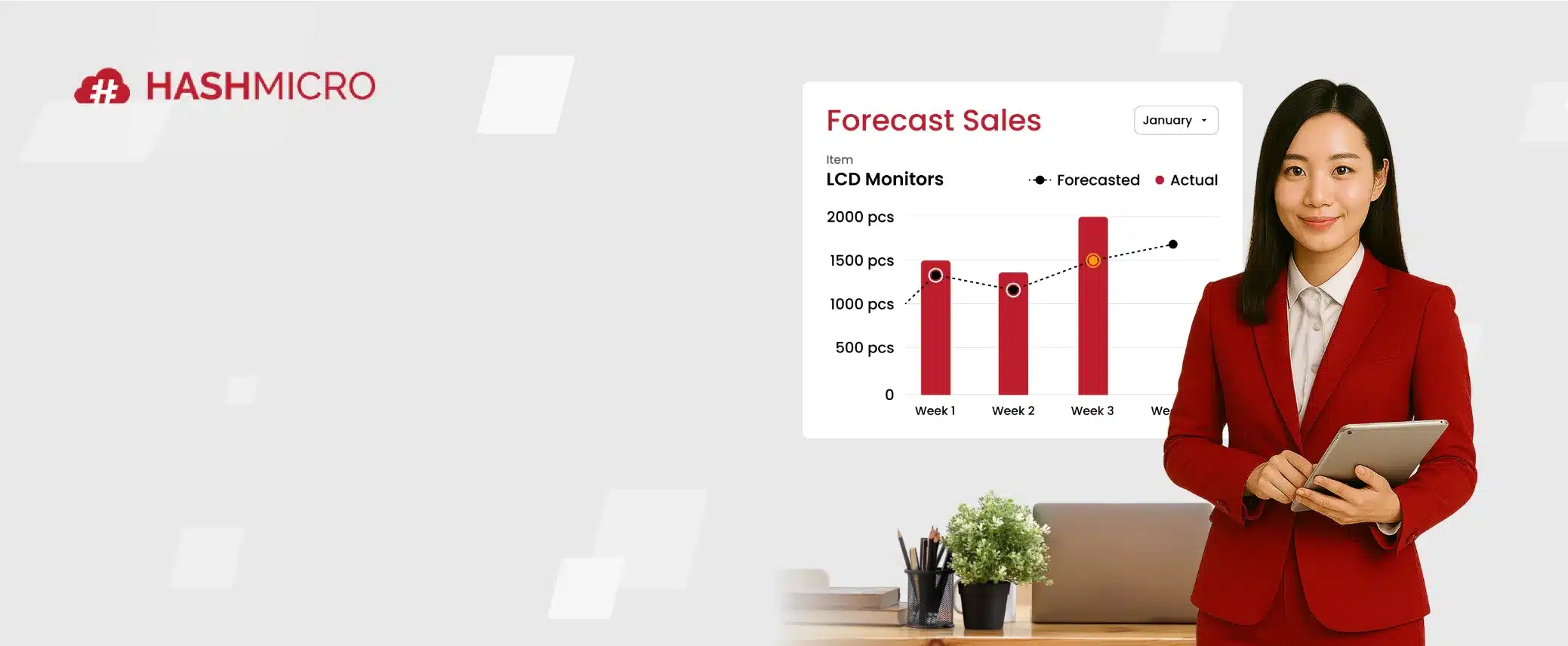
This is where management gets the most value. Real-time performance reports, win/loss ratios, and reliable demand forecasting all available in just a few clicks. Managers no longer need to wait until the edn of the month to know whether the team is on track or whether inventory levels need to be adjusted ahead of a busy season.
SFA vs CRM: What Is the Difference and Which One Do You Need?
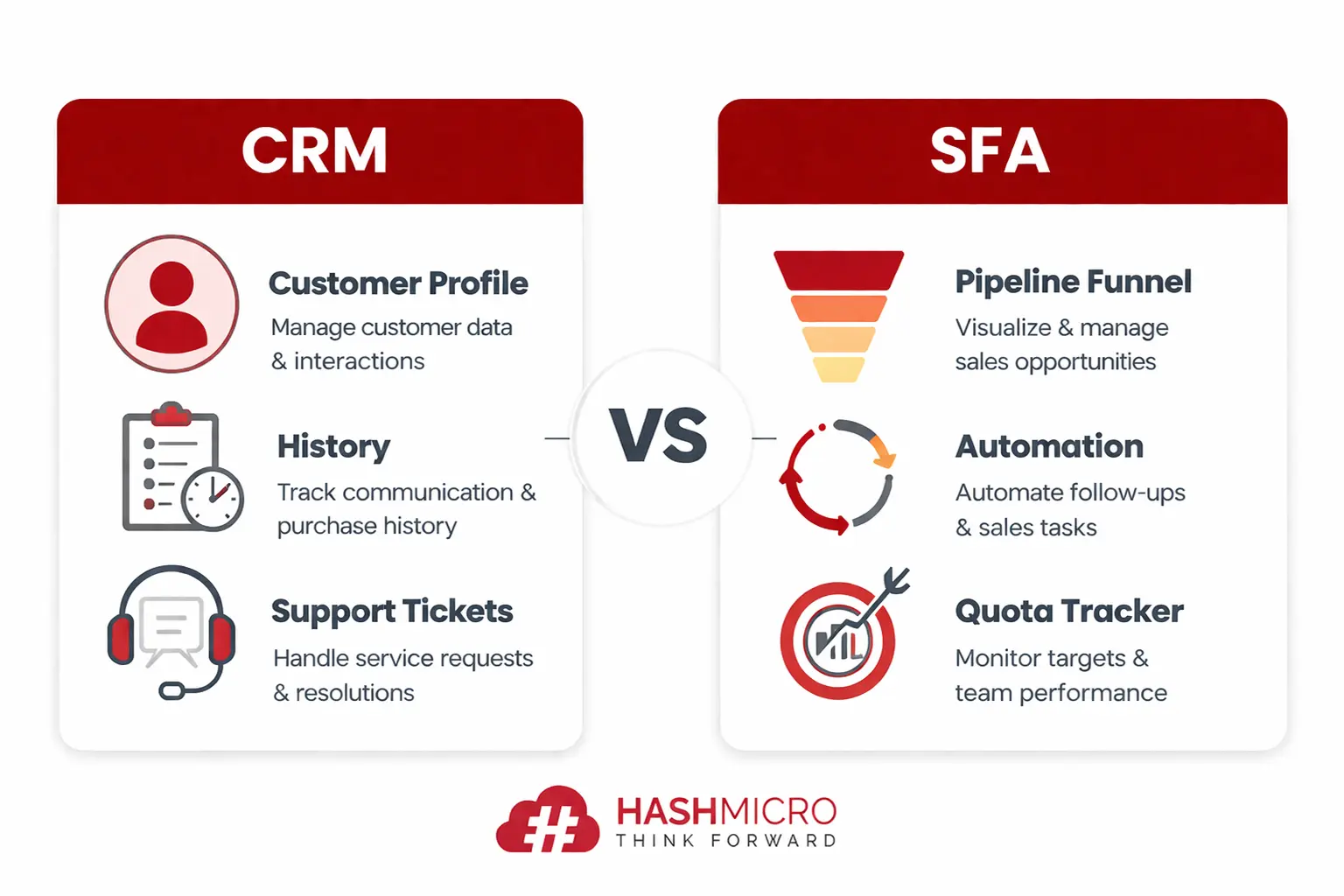
Many businesses in Malaysia use SFA and CRM interchangeably and this confusion often leads to choosing the wrong software. Here is a straightforward breakdown of how they difference:
| Aspect | CRM | Sales Force Automation (SFA) |
|---|---|---|
| Primary focus | Overall customer relationships | Sales process and execution |
| Main users | Sales, Support, Marketing | Sales team only |
| Core functions | Customer history, support tickets | Pipeline, lead scoring, follow-up automation |
| Key output | Customer satisfaction and retention | Conversion rates and sales revenue |
In practice, most modern platforms including HashMicro combine both functions into a single system. This means you get the full picture: from the very first contact with a prospect all the way through to post-sale support.
How to Implement SFA the Right Way (And the Mistakes to Avoid)
Many managers in Malaysia make the same mistake: they invest in a new software system, only to find their sales team has stopped using it after a few weeks. The problem is rarely the software it is almost always the way the implementation was handled.
Follow these four steps to set your rollout up for success:
Step 1: Set Clear, Measurable Goals
Before selecting any software, answer this question: what specific problem are you trying to solve? Whether it is cutting the sales cycle from 60 days to 45 days, or eliminating manual data entry entirely, having a measurable target will guide your entire implementation and give you a benchmark to evaluate success.
Step 2: Choose the Right Vendor for Malaysia
For businesses in Malaysia, key factors to consider include support for SST/GST compliance, availability of a local support team, and whether the system integrates with your existing tools. HashMicro, for example, offers local implementation support and can customise the platform to meet the specific needs of Malaysian industries.
Step 3: Clean Your Data Before Migrating
If you move duplicate records, outdated phone numbers, and incomplete profiles into a new system, the analytics will be unreliable and your team will quickly lose trust in the platform. Audit and clean your existing data before migration not after.
Step 4: Make Training an Ongoing Process
A single one-day training session is not enough. Field sales reps need different training from managers reps need to know how to use the mobile app to log meeting notes on the go, while managers need to understand how to read pipeline forecasting reports. Provide a support channel for questions that come up after training ends.
How AI Is Changing Sales Force Automation
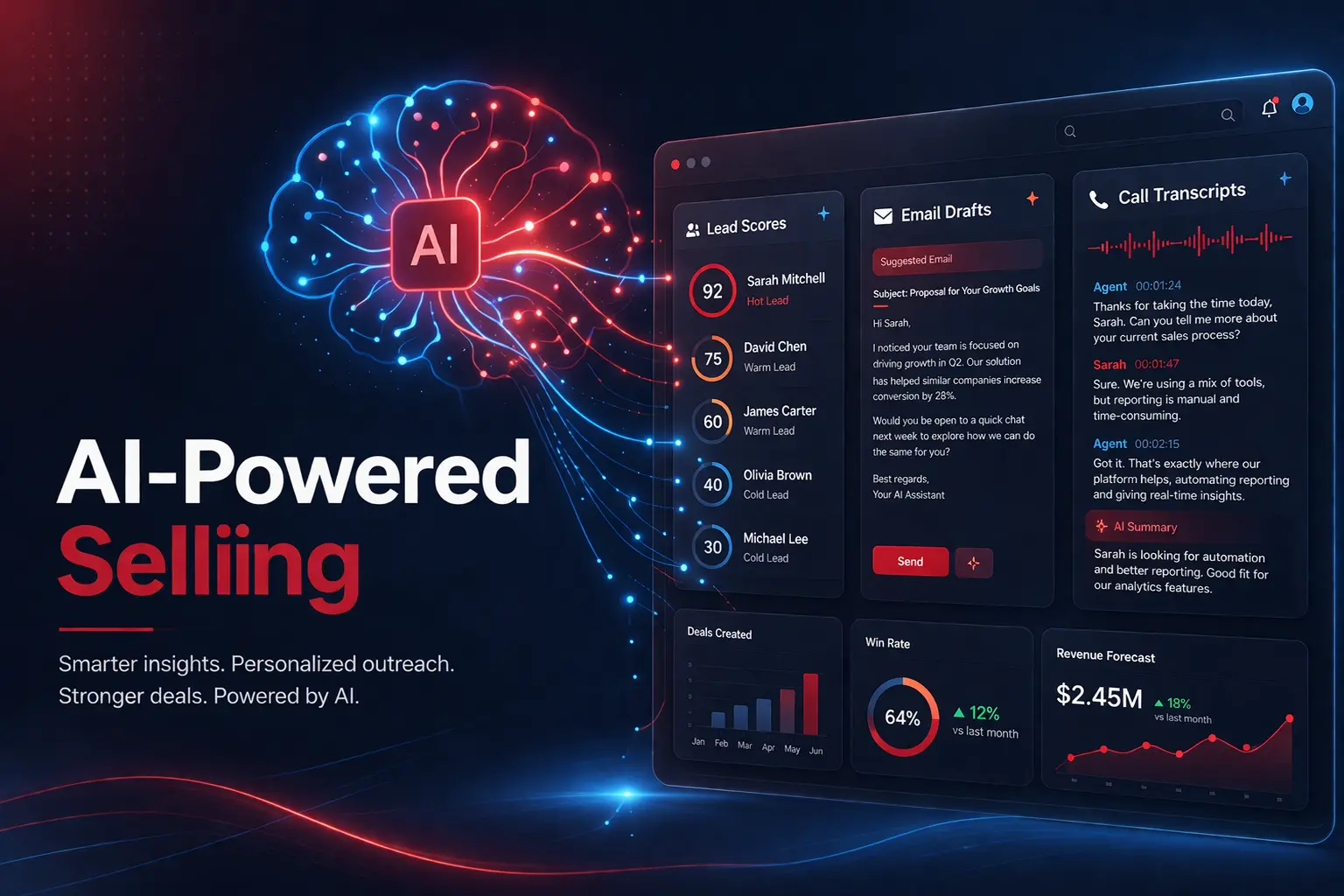
AI is no longer a future technology it is already built into most SFA platforms available today. Here are three practical ways AI is changing how sales teams work:
- Predictive Lead Scoring: AI analyses historical win/loss data to assign each lead a score based on its likelihood to close. Sales reps no longer need to guess they know exactly which leads to prioritise each day.
- Automated Email Drafting: Using natural language processing (NLP), the system can suggest or even write personalised follow-up emails based on the context of previous conversations with that prospect.
- Sales Call Analysis: AI tools can transcribe calls, flag key moments (such as when a prospect mentions price, a competitor, or hesitation), and give the sales rep immediate feedback after every call.
For SMEs in Malaysia that are not yet ready for a full AI investment, start with the basics: automated lead scoring and email scheduling. Build from there once your team is comfortable with the system.
Mobile SFA: A Must-Have for Field Sales Teams in Malaysia
For sales reps moving between clients across Klang Valley, Penang, or Johor Bahru, the ability to access customer data and log notes directly from a phone is not a luxury it is a necessity.
A good mobile SFA app allows field reps to:
- Pull up a client’s full profile and purchase history before walking into a meeting
- Dictate meeting notes straight into their phone the moment they step out of the client’s office
- Receive automatic alerts when a nearby client has not been visited in the last 30 days
- Access up-to-date product information and pricing even without an internet connection (offline mode)
That last point is especially important in Malaysia, where sales reps frequently visit industrial estates or locations with limited mobile coverage. Offline capability ensures productivity is never interrupted regardless of connectivity.
How to Measure the ROI of Sales Force Automation
The most common question from finance managers in Malaysia is: “Is this investment actually worth it?” Here is how to measure that in practical terms.
Direct Revenue Impact: Compare your deal close rate, average deal size, and sales cycle length before and after SFA implementation. If your sales cycle drops from 60 days to 50 days, that means your team can potentially close two additional deals per year per rep a direct, measurable increase in revenue.
Time Recovered: Calculate how many hours per week are saved through automated data entry, report generation, and follow-up scheduling. If each of your 10 sales reps saves just 5 hours a week, that is 50 additional selling hours every week equivalent to adding more than one full-time employee without any additional headcount cost.
Reduced Staff Turnover: The cost of recruiting and onboarding a new sales rep in Malaysia can easily reach RM15,000 to RM30,000 when you factor in lost productivity during the ramp-up period. A system that reduces admin frustration and helps reps hit their quotas consistently is one of the most effective retention tools available.
Conclusion
Sales force automation is no longer an exclusive tool for large multinationals. Today, SMEs and local businesses across Malaysia can use the same technology to compete at a higher level without the enterprise price tag.
The most important thing to remember is that SFA works best when it is shaped around your actual sales process, not the other way around. Start with the biggest pain point in your team, choose a system that solves that specific problem, and build from there.
For Malaysian businesses looking to take the first step, HashMicro offers a free demo tailored to your industry whether you are in manufacturing, retail, F&B, or B2B services. It is the easiest way to see whether SFA is the right fit for your business before committing to anything.
FAQ About Sales Force Automation
-
How long does SFA implementation take?
For SMEs, a basic implementation can be completed in 4 to 8 weeks. For larger companies requiring ERP integration, the process may take 3 to 6 months. The main factors that determine the timeline are the quality of your existing data and the level of customisation required.
-
How does SFA help field sales teams in Malaysia?
A mobile SFA app allows field reps to access customer profiles, log meeting notes, and receive follow-up tasks directly from their phones even without internet access in offline mode. This is especially useful for reps visiting industrial estates or areas with limited mobile coverage.
-
What are the most common mistakes during SFA implementation?
The three most common mistakes are: (1) migrating duplicate and outdated data into the new system, (2) delivering training only once with no ongoing support, and (3) over-customising the system to the point where it becomes too complex for daily use. Always start with a simple configuration and add features gradually based on user feedback.
-
Is SFA secure enough to store sensitive customer data?
Enterprise-grade SFA platforms use role-based access control (RBAC), data encryption, and detailed audit trails. In Malaysia, businesses should also ensure that any platform they choose complies with the Personal Data Protection Act (PDPA) 2010 to avoid legal and regulatory risks.