














Inventory inconsistencies across multiple outlets remain a major challenge for retailers in Malaysia, often causing overselling, inaccurate stock data, and inefficient operations. To compare the best retail POS systems, businesses need to look at how well each platform supports real-time inventory synchronization, sales tracking, and daily store operations.
With LHDN e-Invoicing requirements continuing to evolve alongside the growth of omnichannel (O2O) selling in 2026, Malaysian retailers need connected systems that unify online and offline sales data. The top retail POS systems can help businesses maintain accurate inventory management, improve operational efficiency, and support more consistent customer experiences.
This review compares 24 POS systems in Malaysia based on usability, integration, scalability, and compliance readiness, helping you choose the best fit for your retail operations.
Key Takeaways
Managing sales, inventory, and customer data manually can slow down business operations and lead to costly errors.
A reliable POS system simplifies transactions, tracks stock, and provides real-time insights for better decision-making.
Choosing the right POS software ensures smooth integration, automation, and scalability as your business grows.
Choosing the wrong retail POS software can lead to stock discrepancies, slow checkout processes, and missed compliance with Malaysia’s e-invoicing regulations, all of which directly impact your revenue and daily operations.
Best Retail POS Software
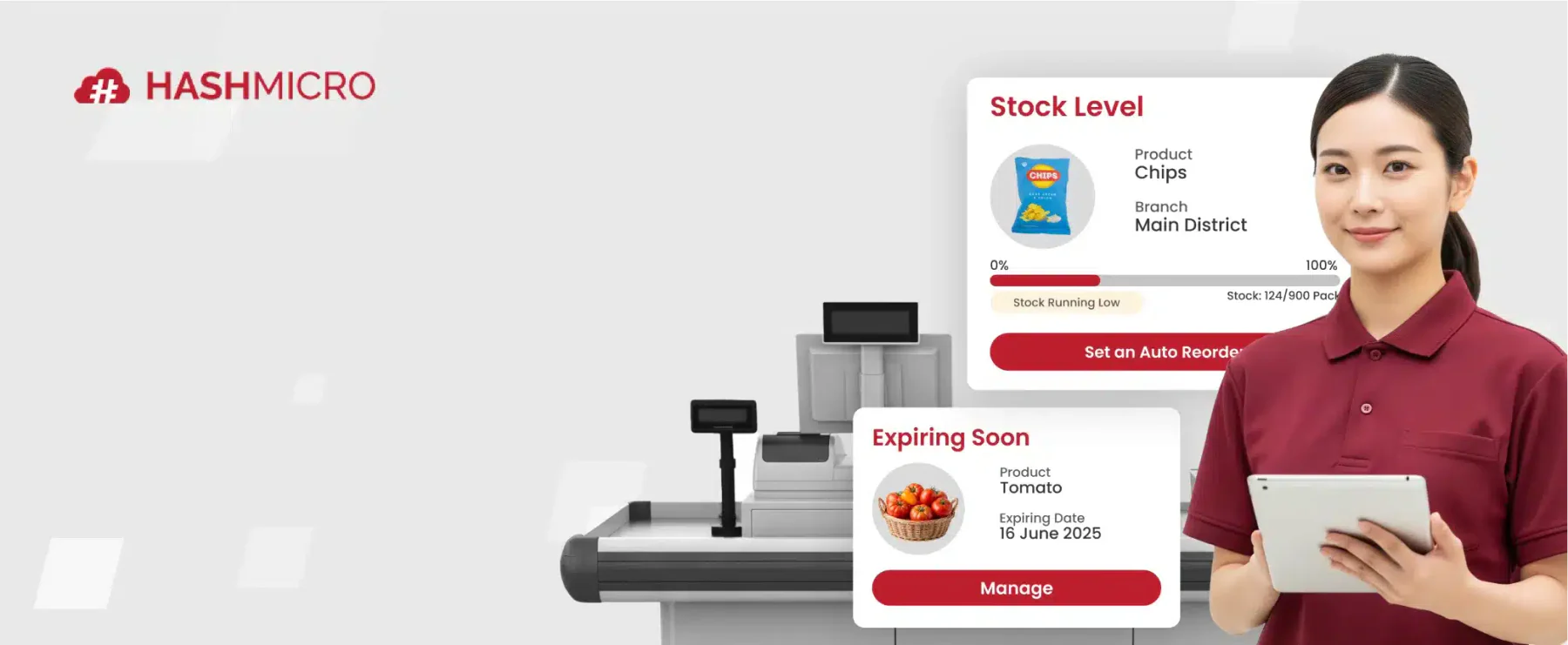
Based on my research, here is a shortlist of the best POS software for retail to help businesses simplify sales, manage inventory, and improve the customer experience. These solutions provide real-time insights, efficient transaction processing, and reliable tools to support smooth retail operations.






After reviewing the top retail POS systems in Malaysia, you may need a clearer comparison of how each solution performs across key operational needs. The table below highlights essential features to help you choose the right POS system for maintaining synchronized inventory, supporting compliance, and scaling your retail operations effectively.
Quick POS System Comparison Overview
| Software | Key Strengths | Local MY Support & Compliance | Pricing |
|---|---|---|---|
HashMicro POS Retail Software | End-to-end ERP integration, multi-outlet management, offline sync & enterprise scalability | Full SST & LHDN e-Invoice ready; Local MY Office & direct support | Custom Pricing (Quote-based on scale & modules) |
Revel POS Retail Software | Enterprise iPad POS, multi-location inventory & detailed reporting | SST & LHDN compliant via local partner network | Subscription (Starts RM 445/month) |
Lightspeed Retail POS Software | Advanced omnichannel catalog sync, multi-store inventory & loyalty management | SST & LHDN compliant; Partner-based local support | Subscription (Starts RM 400/month) |
Red Zone Retail POS | On-premise stability, offline reliability & dedicated retail hardware setups | SST & partial LHDN support; Direct local MY vendor support | One-time (Starts RM2,599 - Lifetime license) |
POSERVA POS Software | Retail counter POS, hybrid offline mode & simple catalog management | SST compliant; Local MY support team | Custom Pricing (Quote-based, est. RM100–300/mo) |
Waffle POS Retail Software | Lightweight cloud terminal, multi-outlet sales tracking & simple user interface | SST compliant & LHDN ready; Local MY support | Custom Pricing (Quote-based on deployment) |
Shopify Retail POS Software | Industry-leading e-commerce integration, unified online-offline customer profiles | SST & LHDN compliant; Online & community support | Subscription ( RM 355–400/month) |
GO POS Retail Software | Local retail POS, offline transaction buffering & multi-store stock visibility | Full SST & LHDN e-Invoice ready; Direct local MY support | Custom Pricing (Quote-based) |
ePOS Retail POS Malaysia | All-in-one hardware bundle, robust offline desktop database & local retail control | SST compliant & LHDN ready; On-site local MY support | One-time (Starts RM4,599 - Lifetime license) |
Sapaad Retail POS Software | Pure cloud architecture, multi-outlet retail workflows | SST & LHDN e-Invoice compliant; Regional online support | Subscription (Starts RM 180/month) |
Loyverse POS Software | Free mobile POS app, simple single-store inventory tracking & rapid setup | SST compliant; Online global support | Freemium (Free base app + paid add-ons) |
MegaPOS | Multi-terminal retail setup, integrated barcode scanning & offline operational safety | SST & LHDN e-Invoice compliant; Local MY technical team | Subscription (Starts RM 270/month) |
Qashier Retail POS Software | Portable smart POS terminals, integrated payment processing & multi-branch management | Full SST & LHDN e-Invoice ready; Local MY Office & support | Freemium / Subscription (RM158–238/month) |
Erply | Enterprise multi-store inventory engine, high-volume retail & open API flexibility | SST & LHDN e-Invoice compliant; Regional partner network | Subscription ( RM 265–445/month) |
HitPay Retail POS Software | Zero-monthly-fee payment POS, instant local payment gateway integration & mobile checkout | Full SST & LHDN e-Invoice ready; Regional & MY support | Transaction-based (No subscription fee, per tx fee) |
StoreHub POS Software | Popular Malaysian ecosystem, integrated QR ordering, loyalty & multi-outlet management | Full SST & LHDN e-Invoice ready; Dedicated local MY Office | Subscription (Starts RM102/month) |
Xilnex Retail POS Software | Comprehensive cloud retail suite, multi-branch inventory & real-time analytics | Full SST & LHDN e-Invoice ready; Local MY HQ & support | Subscription ( RM 85–445/month) |
Cegid Retail POS Software | Global luxury & chain retail POS, omnichannel enterprise management | SST & LHDN e-Invoice compliant; Enterprise partner network | Custom Pricing (Enterprise quote-based) |
Raptor Retail POS Software | Heavy-duty hardware reliability, multi-terminal networking for retail | Full SST & LHDN e-Invoice ready; Local MY support | Custom Pricing (Quote-based) |
EasyStore Retail POS System | Unified Malaysian omnichannel platform, multi-outlet sync & local e-commerce | Full SST & LHDN e-Invoice ready; Local MY HQ & support | Subscription (RM249–899/month) |
ConnectPOS | High-speed cloud POS for Magento/Shopify/WooCommerce, real-time multi-warehouse inventory | SST & LHDN e-Invoice compliant; Partner & online support | Subscription ( RM 220–445/month) |
AutoCount POS | Seamless integration with AutoCount Accounting, reliable offline desktop POS & trade compliance | Full SST & LHDN e-Invoice ready; Extensive local MY support network | One-time (RM2,000–2,800 - Lifetime license) |
MillionPOS | Affordable traditional desktop POS, offline standalone system & simple inventory | SST compliant & LHDN ready; Local MY support | One-time (RM1,499 - Lifetime software license) |
Synergy POS | Entry-level local retail POS, straightforward stock control & one-time setup | Full SST & LHDN e-Invoice ready; Local MY support | One-time (RM848 - Lifetime software license) |
What is Retail POS Software?
Retail POS software is a system that helps retailers process sales, accept payments, issue receipts, and manage customer transactions from one platform. Modern POS systems do more than record purchases; they are connected to inventory management, so stock levels are automatically reduced every time an item is sold.
At the cashier counter, barcode scanning works as the main input method to speed up checkout and reduce manual entry errors. This helps retailers keep sales, stock management, and payment records accurate across cash, card, e-wallet, and contactless transactions.
Retail POS software is a system that helps retailers process sales, accept payments, issue receipts, and manage customer transactions from one platform. Modern POS systems do more than record purchases; they are connected to inventory management, so stock levels are automatically reduced every time an item is sold.
Retail POS software is a system that helps retailers process sales, accept payments, issue receipts, and manage customer transactions from one platform. Modern POS systems do more than record purchases; they are connected to inventory management, so stock levels are automatically reduced every time an item is sold.
Retail POS software is a system that helps retailers process sales, accept payments, issue receipts, and manage customer transactions from one platform. Modern POS systems do more than record purchases; they are connected to inventory management, so stock levels are automatically reduced every time an item is sold.
Retail POS software is a system that helps retailers process sales, accept payments, issue receipts, and manage customer transactions from one platform. Modern POS systems do more than record purchases; they are connected to inventory management, so stock levels are automatically reduced every time an item is sold.
Retail POS software is a system that helps retailers process sales, accept payments, issue receipts, and manage customer transactions from one platform. Modern POS systems do more than record purchases; they are connected to inventory management, so stock levels are automatically reduced every time an item is sold.
It processes payments, records purchases, and generates receipts, allowing retailers to operate efficiently both online and offline. At the counter, barcode scanning acts as the main input to speed up checkout and reduce wrong entries. Retail POS software supports multiple payment methods, including cash, various card types, and e-wallet options such as DuitNow and contactless payments.
Hashy AI Fact

Hashy AI from HashMicro can simplify your retail POS by allowing you to manage transactions efficiently, easily track products, and manage different product prices across multiple outlets.
Request a free demo today!
What are the Benefits of Using POS System for Retailers?
Implementing a POS retail software offers retailers far more than just faster payments or inventory control. It provides a range of benefits that enhance daily operations and drive business growth. A reliable retail POS software also supports multi-store efficiency by centralizing data and improving visibility across locations.
Faster Transactions: POS systems simplify checkout by automating payment and inventory updates, while supporting multiple payment methods such as cash, cards, e-wallets, DuitNow, and contactless payments. Barcode scanning further speeds up service, especially during peak hours.
Real-Time Stock Monitoring: Automatically tracks and updates inventory management across every outlet, supporting multi-outlet management so retailers prevent shortages or overstocking.
Actionable Sales Insights: Generates in-depth analytics and a real-time sales report across outlets on product performance, peak shopping times, and sales trends to support faster decision-making.
Customer Engagement & Loyalty: Enables retailers to identify customer preferences, store customer purchase history, personalize promotions, and run a loyalty program that encourages repeat purchases.
Workforce Optimization: Tracks employee performance and working hours efficiently, making it easier to reward achievements and identify areas for improvement.
Enables Data-Driven Decisions: By analyzing sales data, POS systems reveal customer preferences, seasonal trends, and top-selling products.
Automates Operations: Simplifies operations by automating accounting, inventory, and sales tracking, reducing manual work and improving accuracy.
24 Best Retail POS Software in Malaysia
The right retail POS system in Malaysia can significantly improve daily operations and customer experience. Here are the details of the 24 best retail POS systems in Malaysia for 2026.
1. HashMicro POS Retail Software
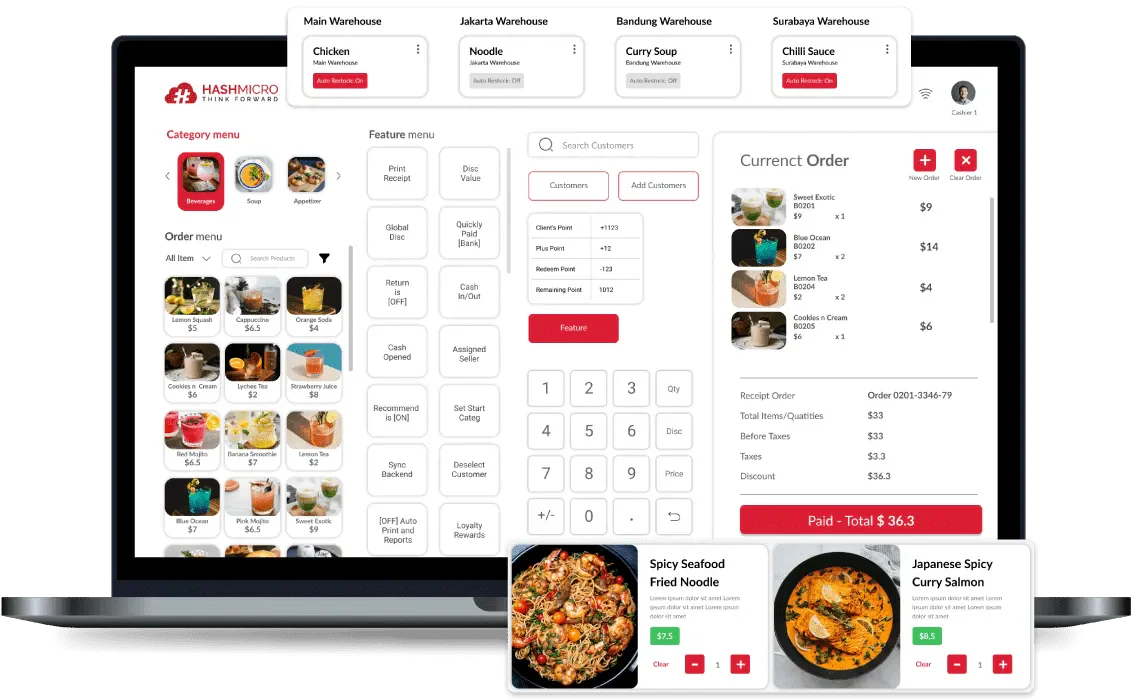
HashMicro offers an enterprise-grade POS solution that bridges the gap between offline stores and online marketplaces. Moving beyond simple transaction processing, the system serves as a central hub that synchronises inventory, promotions, and customer data across all branches in real-time, eliminating the risk of overselling or stock discrepancies.
Critically for Malaysian retailers, the software is fully optimisedC for the LHDN e-Invoicing initiative. It automates the generation of validated e-invoices directly from the POS terminal, ensuring that every transaction complies with the latest tax regulations without slowing service at the checkout counter.
HashMicro POS Retail Software has proven its capability to handle high-volume transactions securely, reduce the daily administrative workload by 40%. To understand how this system can be configured to meet your specific retail needs, you can schedule a free consultation with their retail experts.
Pricing : HashMicro uses a custom pricing model because the total cost depends on the modules, features, and implementation requirements selected by each business. Companies can request a free demo and personalized quotation to estimate the cost of their preferred configuration.
Features:
- Automated promotion and loyalty points management
- Price checker screen
- Auto reconciliation with banks
- Home delivery and shipping management
- Automated inventory tracking and performance insights
- Order Picking & Packing
- Resource Utilization
- Inbound Goods Management
- Smart Storage Allocation
| Pros | Cons |
|
|
Suitable for Malaysian retailers that need an integrated POS system with inventory, accounting, purchasing, and multi-store management in one centralized platform. It is especially useful for growing businesses that want better operational visibility and support for LHDN e-Invoicing compliance.
Not only is this software powerful, but it also offers competitive pricing with all the features you’re getting. Moreover, it’s also able to integrate the data with inventory, sales, finances, and purchasing modules, so you don’t need to manually update the data one by one.
"With the right POS software, retailers can simplify operations, respond faster to customer needs, and make smarter decisions backed by real-time data."
To explore the best solutions for your business financial, discover out pricing schemes below and find the right package for your needs.
2. Revel
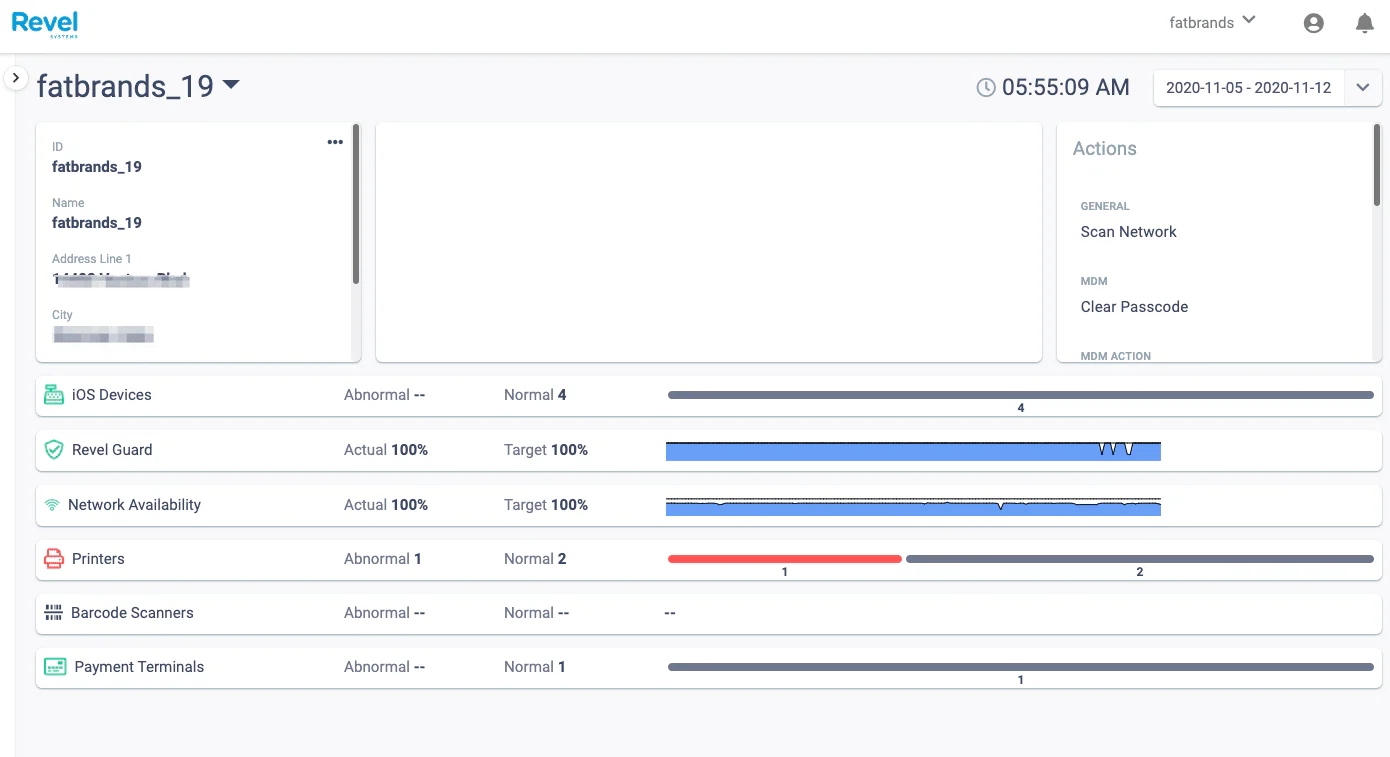
Revel is an advanced cloud-based point-of-sale (POS) system designed to help businesses simplify sales, manage inventory, and enhance customer experiences. Built for scalability and efficiency, Revel’s POS system caters to businesses of all sizes, from small retailers to large multi-location enterprises.
With a user-friendly interface, real-time data analytics, and smooth integrations, Revel provides a complete solution for modern retail management.
Pricing: (Starts ~RM 445/month) per terminal with a 2-terminal minimum; hardware billed separately.
Features:
- Real-time reporting
- Customer relationship management (CRM) integration
- Multi-location support
- Employee management tools
| Pros | Cons |
|
|
Fits medium to large retail businesses in Malaysia that require advanced POS capabilities, detailed reporting, and strong CRM features. Its cloud-based system also supports multi-location retail operations efficiently.
3. Lightspeed
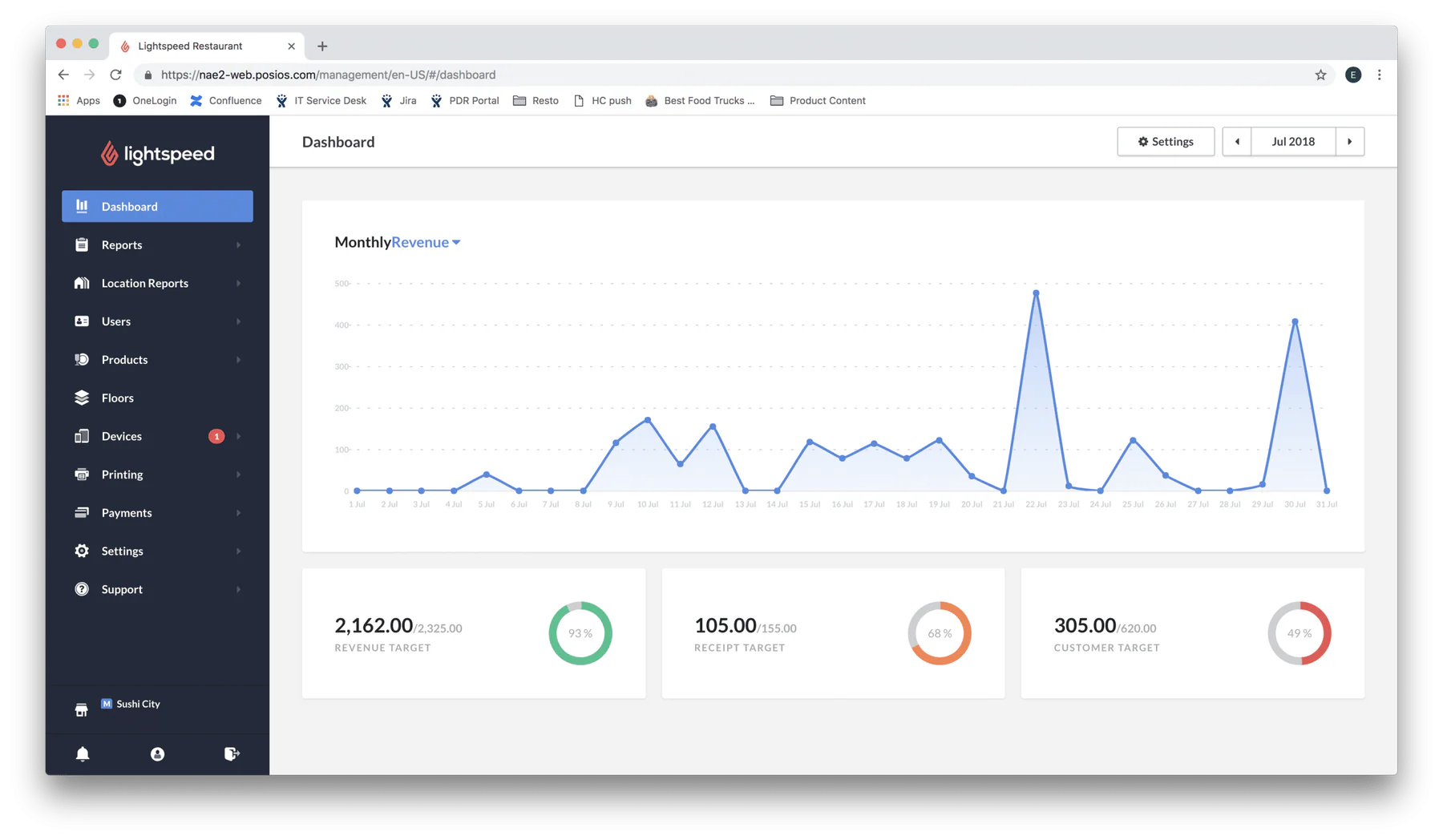
Lightspeed is a cloud-based point-of-sale (POS) and commerce platform designed to simplify operations for retail, hospitality, and golf businesses. It offers a comprehensive suite of tools to manage sales, inventory, customer relationships, and analytics, all within a unified system.
For businesses in Malaysia interested in implementing the Lightspeed retail POS system, local expertise is available through third-party partners. They offer consultation and support for Lightspeed products.
Pricing: (Starts ~RM 400/month) for Lean plan; higher tiers required for e-commerce and analytics.
Features:
- E-commerce integration
- Payment processing
- Customer loyalty programs
- Multi-channel sales integration
- Inventory and order management
| Pros | Cons |
|
|
Ideal for retailers looking to manage both physical stores and online sales channels through one platform. Its inventory tracking and omnichannel capabilities make it suitable for modern retail businesses in Malaysia.
4. Red Zone
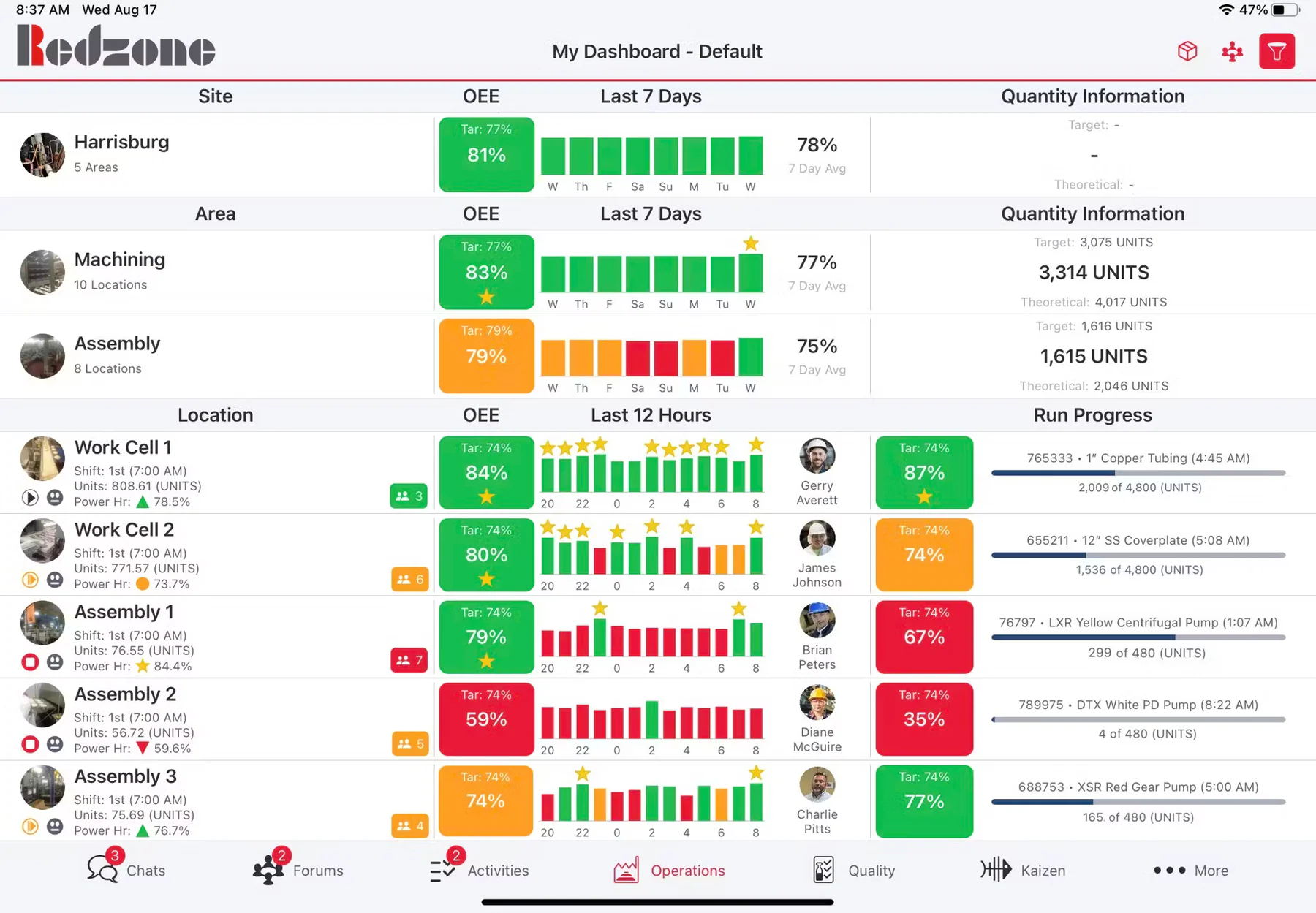
RedZone Solution develops POS systems compatible with Android smartphones, cloud technology, SQL, and other platforms. Its Cloud POS system is a web-based system designed for iPads, storing business data in online cloud storage.
Authorized users can securely access this data from anywhere via the internet. Fast, easy to manage, and highly portable, this system is ideal for Malaysian retailers with international operations.
Pricing: Red Zone Retail POS in Malaysia starts at about RM 2,599 when bundled with POS hardware and a printer.
Features:
- Improved inventory management
- Easy installation
- Store sales tracking
- Staff management
- Membership with points
| Pros | Cons |
|
|
Suitable for Malaysian retailers that prefer a cloud-based and portable POS system with easy remote access. It works well for businesses operating across multiple stores or regions.
5. POSERVA
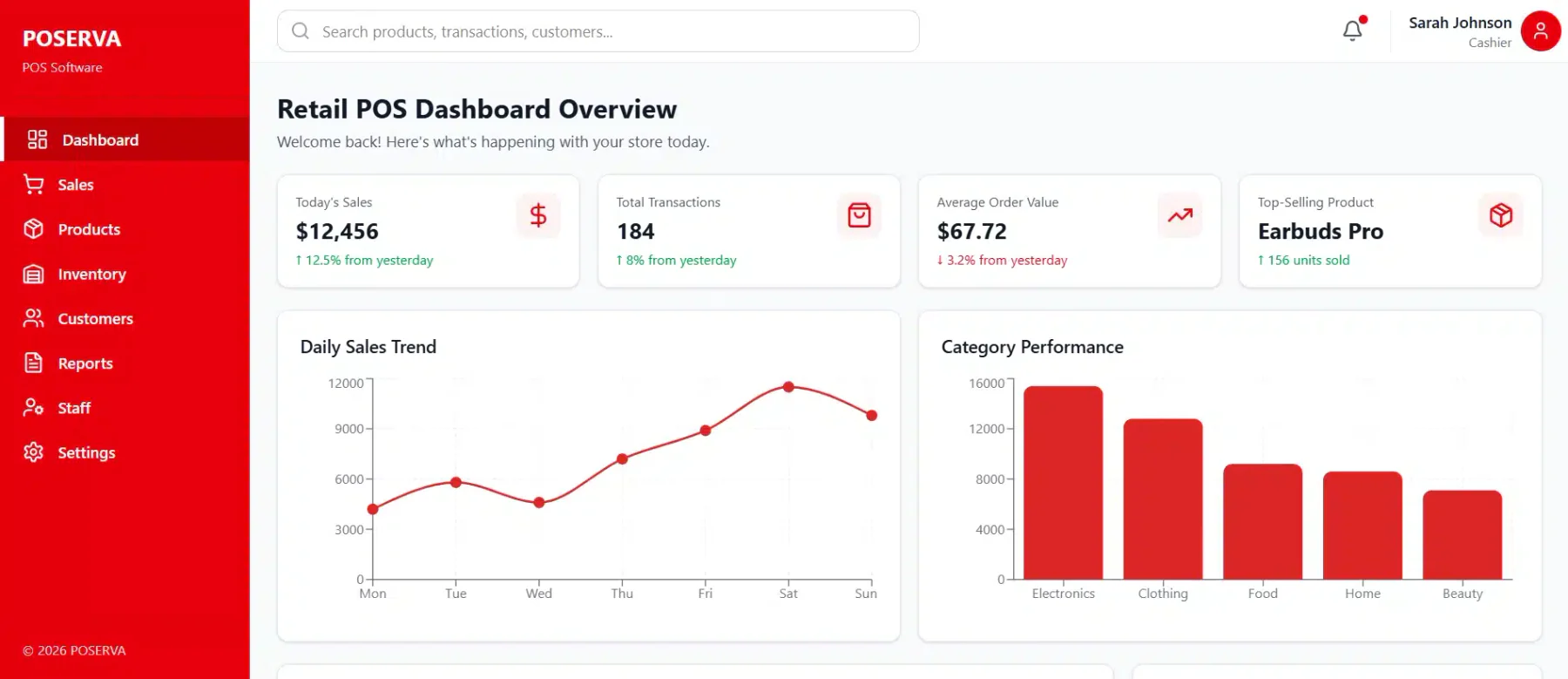
POS software specialized to help retail businesses optimise their operations. POSERVA utilises analytical data to provide a comprehensive overview of business performance, enabling informed decision-making.
Users can access live visibility on company insights, including customer behavior and preferences. Additionally, the system enables real-time tracking of inventory and voucher activity for better business management.
Pricing: POSERVA POS software generally uses a “pricing-on-request” model rather than a fixed public price. You need to contact the vendor for a quote.
Features:
- Statistic reporting in real time
- Cloud storage
- Offline work synchronization
- Reorder alert
| Pros | Cons |
|
|
Fits small retail businesses in Malaysia seeking affordable POS software with real-time reporting and inventory monitoring. Its simple interface is useful for businesses with basic operational needs.
6. Waffle
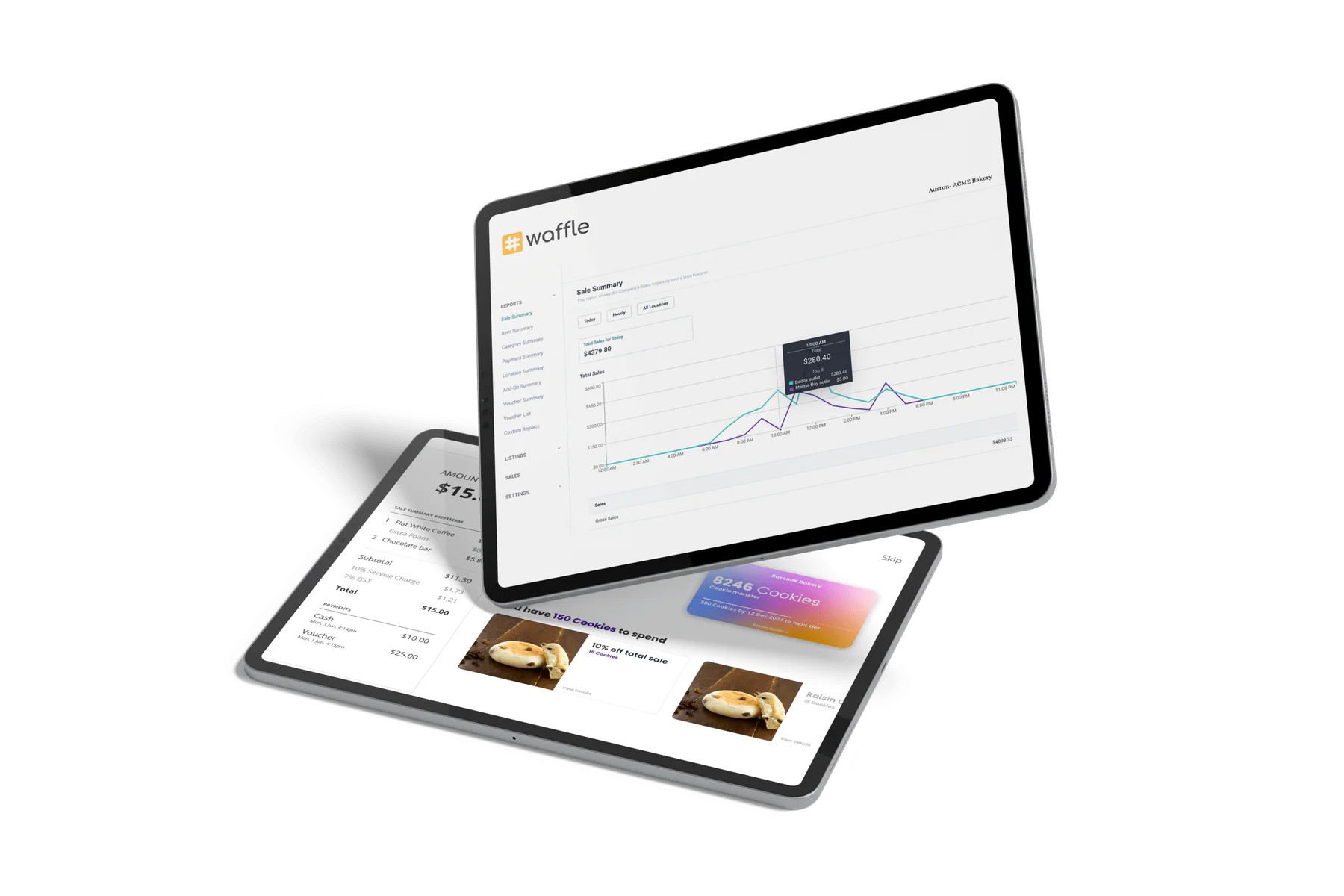
Waffle POS system is a retail point-of-sale (POS) system designed for retail and restaurant businesses, offering a user-friendly interface with reliable features for managing restaurants and cafés. Its smooth integration connects with inventory management and payment systems for efficient operations.
Pricing: Waffle POS does not publish fixed public pricing; costs vary by business needs. You can contact the vendor for exact pricing information.
Features:
- Kitchen display integration for simplified order management.
- Mobile ordering is used to speed up service and improve customer experience.
- Staff performance tracking to monitor employee efficiency.
- Real-time sales reports for data-driven decision-making.
| Pros | Cons |
|
|
Best for F&B retailers and cafés in Malaysia that need kitchen integration, mobile ordering, and real-time sales tracking. It helps improve service speed and daily restaurant operations.
7. Raptor
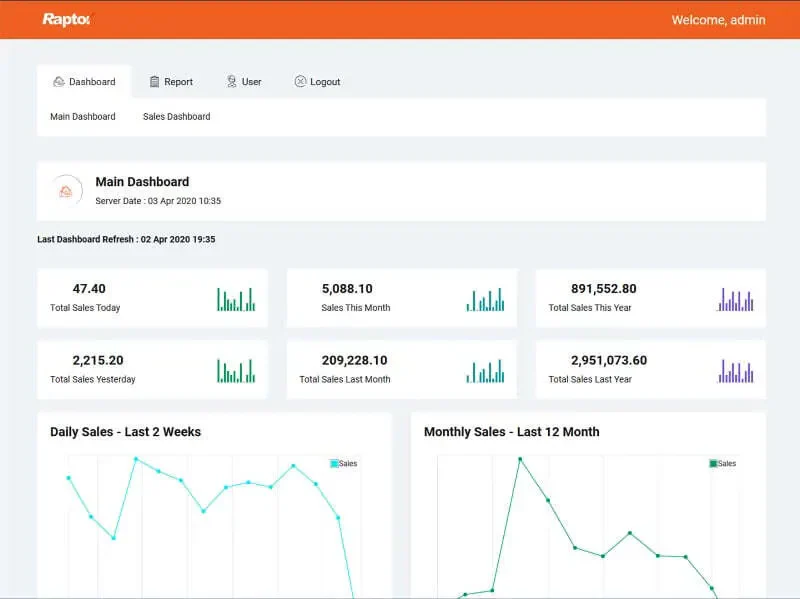
Raptor POS delivers high-performance solutions tailored for retail brands, emphasizing speed, security, and simplicity. With its intuitive interface and reliable backend, the system is built to handle high-volume transactions and complex operations efficiently.
Pricing: Contact the vendor for exact pricing information.
Features:
- Rapid transaction processing
- Real-time inventory and stock management
- Mobile and kiosk ordering support
- Web-based reporting and analytics
| Pros | Cons |
|
|
Fits high-volume retail and F&B businesses needing fast transaction processing, strong operational stability, and real-time inventory visibility.
8. GoPOS
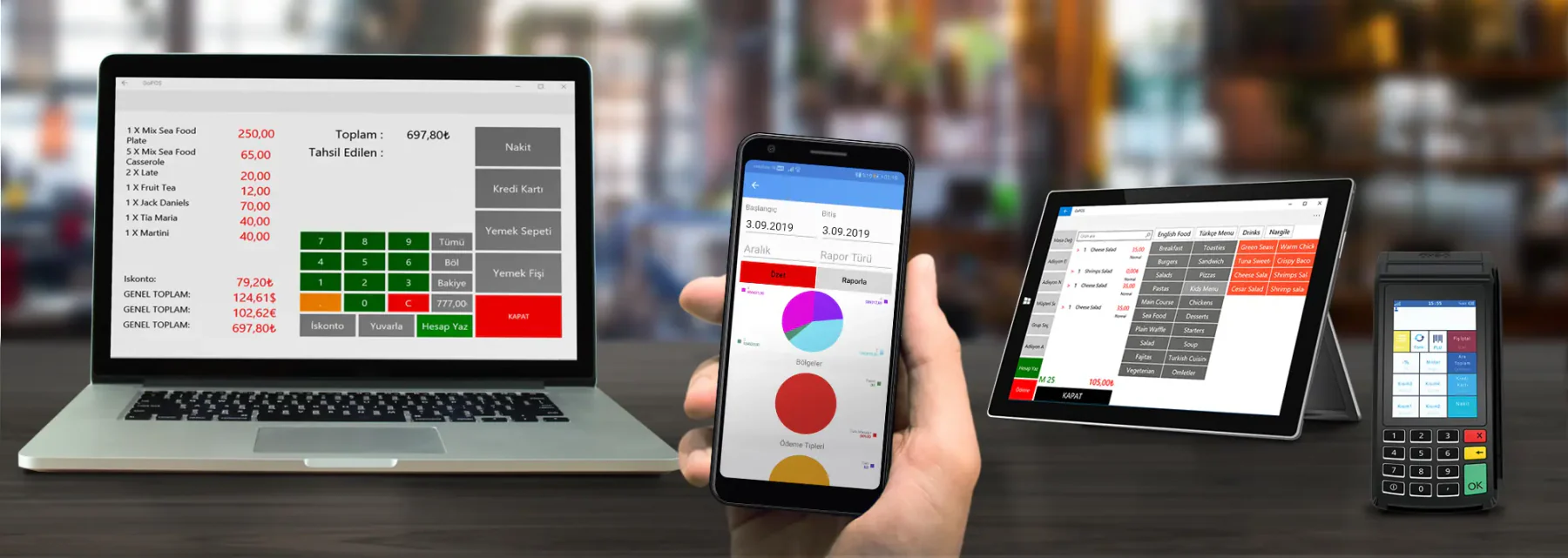
GOPOS offers a POS system built for retail and services businesses, with particular support for multi-location operations. Their system covers order management and stock tracking while also allowing businesses to monitor transactions and gain immediate visibility into every branch activity.
Pricing: GOPOS does not publish fixed public pricing. You can contact the vendor for exact pricing information.
Features:
- Customize orders
- Multi-location support
- Mobile reporting
- Membership program
- Deposit payment
| Pros | Cons |
|
|
Suitable for retail, service, and F&B businesses that require flexible multi-location management and customizable operational tools. It works well for businesses handling different store branches.
9. ePOS
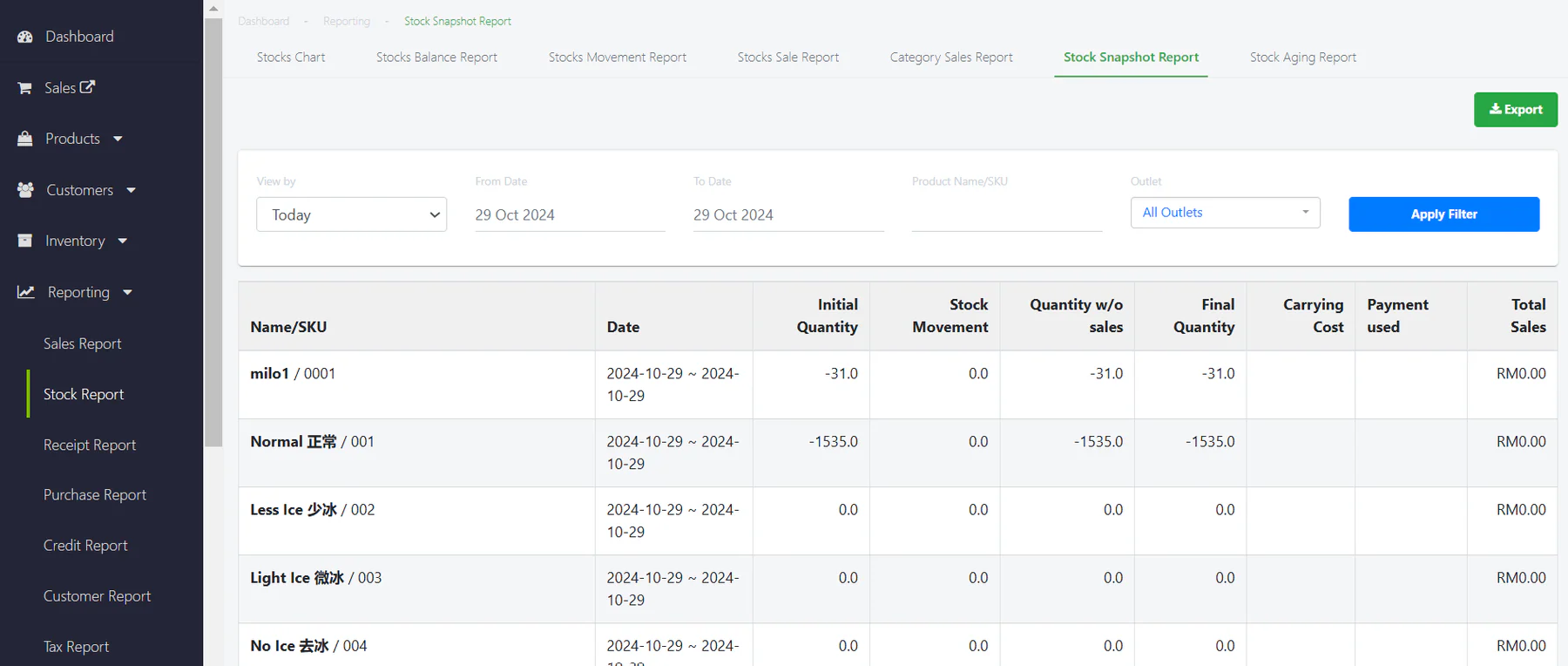
ePOS provides an easy-to-use yet effective retail management system tailored for small and medium-sized businesses. Designed with simplicity in mind, this software offers essential tools for tracking sales, managing customers, and handling inventory without unnecessary complexity.
Pricing: EPOS Retail POS in Malaysia is advertised at around RM4,599 for a complete package that includes software and basic hardware.
Features:
- Sales and inventory tracking
- Support for multiple payment methods
- Customizable receipts
- Real-time transaction reports
| Pros | Cons |
|
|
Fits SMEs in Malaysia looking for a straightforward retail POS solution with essential sales, payment, and inventory management features. Its user-friendly design makes onboarding easier for smaller teams.
10. Sapaad
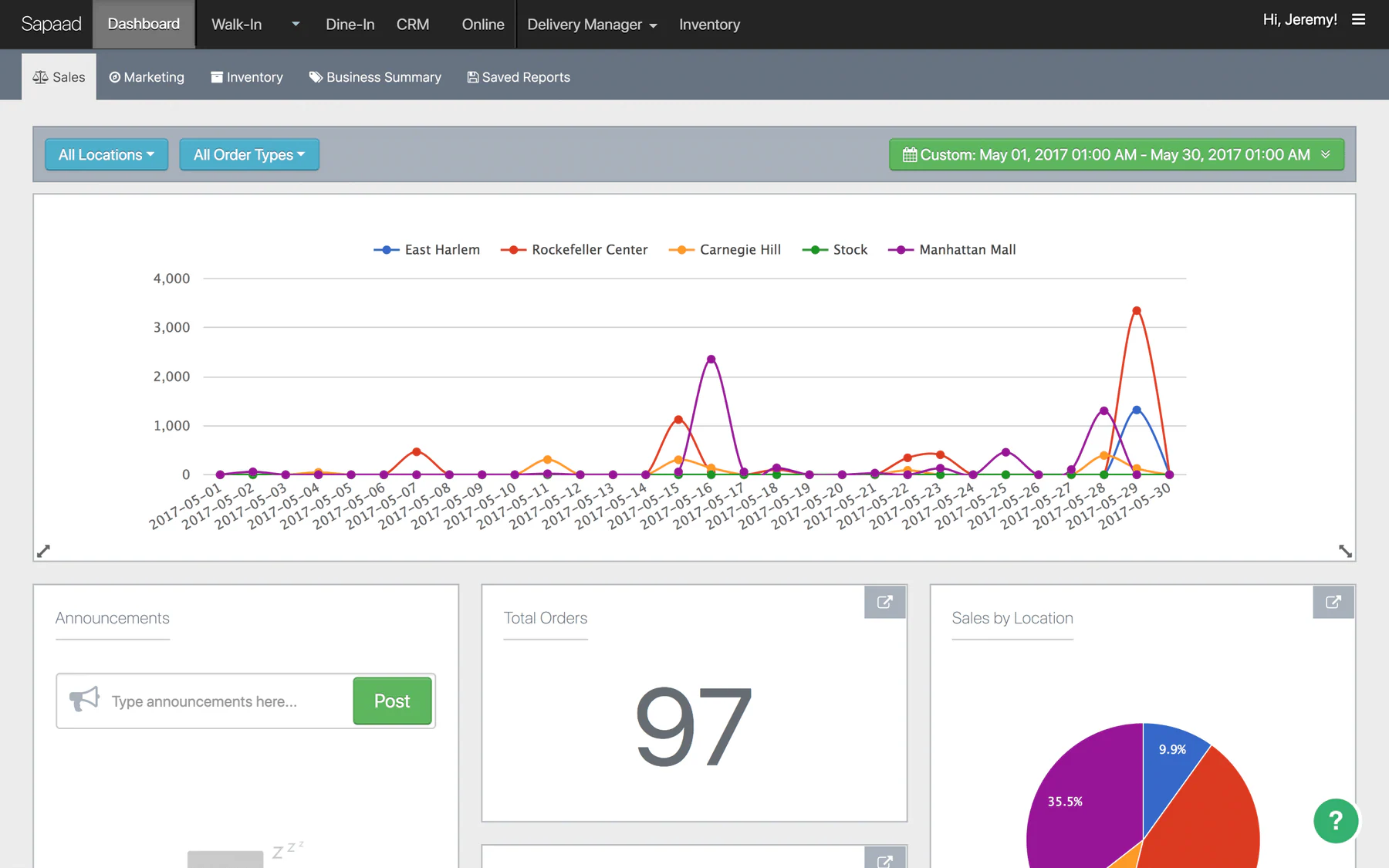
Designed specifically for restaurant POS systems, Sapaad Pte Ltd can help businesses streamline their and payment management. This POS system features stock tracking, operational cost calculation, order management, and integration with payment gateways.
As it is cloud-based, their system can enhance the management of on-site dining services with table layouts, real-time order tracking, and a tablet-based ordering app for waitstaff.
Pricing: Subscription (Starts ~RM 180/month) per location; optional features available as pay-as-you-go add-ons.
Features:
- Delivery and takeaway coordination
- Cloud-based kitchen display
- Focused inventory management
- Real-time sales analytics
| Pros | Cons |
|
|
Best for restaurants and F&B retailers that need integrated dine-in, takeaway, and delivery management within one cloud-based platform. It also supports inventory and kitchen operations effectively.
11. Loyverse
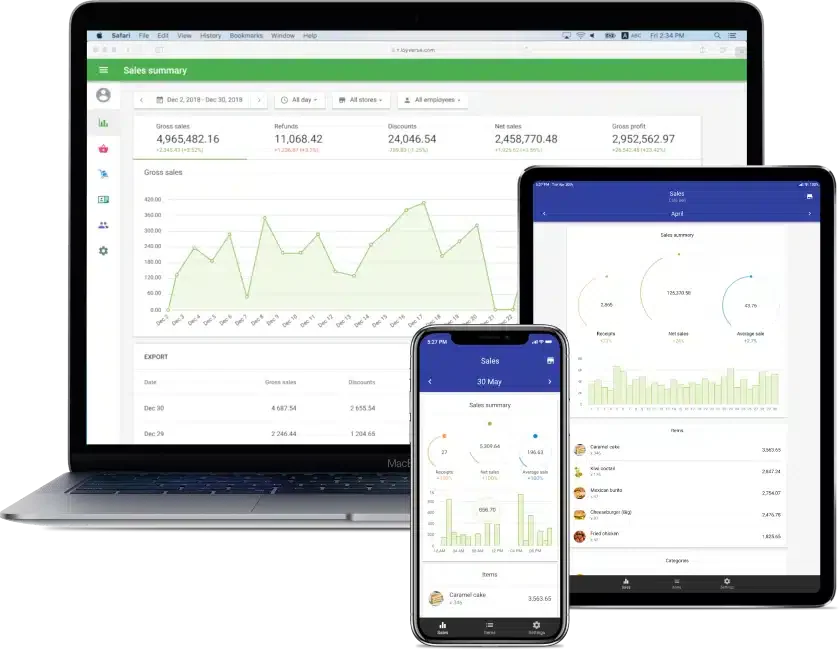
Loyverse POS system is a free, cloud-based point-of-sale (POS) system in Malaysia designed to simplify operations for small and medium-sized businesses across various industries, including retail, restaurants, and salons.
Accessible via iOS and Android devices, this software offers a comprehensive suite of tools to manage sales, inventory, and customer relationships.
Pricing: Freemium — Free core cashier app; essential add-ons range from ~RM 25 to RM 115/month.
Features:
- Complementary core POS functions
- Staff management tools
- Support for multiple store locations
- Inventory tracking
| Pros | Cons |
|
|
Suitable for small Malaysian retailers that want free POS software with basic inventory tracking and employee management. It is ideal for startups and businesses with limited budgets.
12. MegaPOS
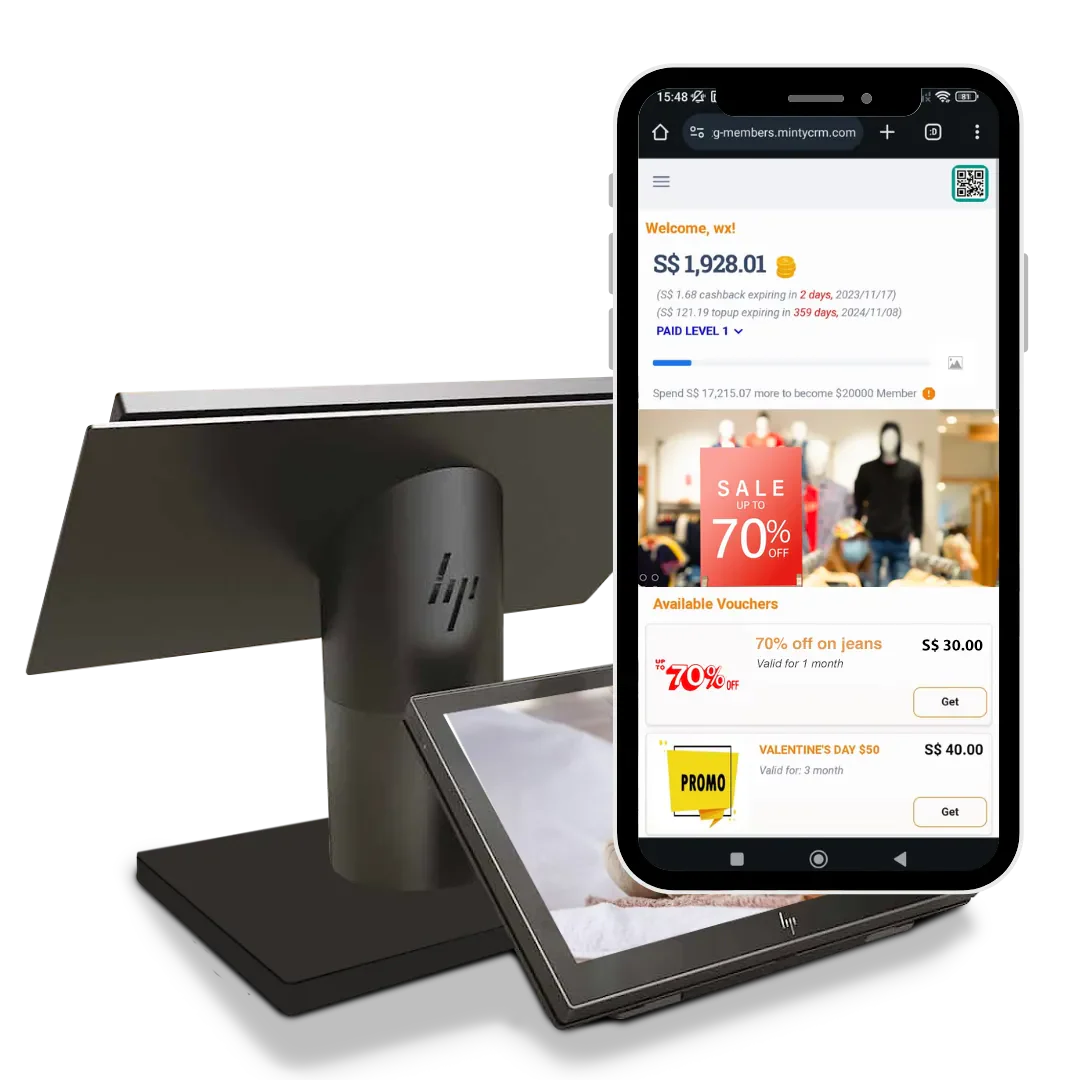
MegaPOS is a feature-rich point-of-sale system designed to help businesses in retail and beauty & wellness manage sales, inventory, and customer interactions more efficiently.
It supports multiple payment options, offers real-time data insights, and integrates with self-ordering solutions to improve service speed and accuracy.
Pricing: Subscription (Starts ~RM 270/month); physical hardware and on-site tech support quoted separately.
Features:
- Self-ordering kiosks & QR code ordering
- Customer loyalty & CRM tools
- Comprehensive sales record
- Inventory tracking
- Multi-location management
| Pros | Cons |
|
|
Fits retail and F&B businesses that need scalable POS software with loyalty programs, CRM tools, and self-ordering features. It supports businesses planning long-term expansion.
13. Qashier
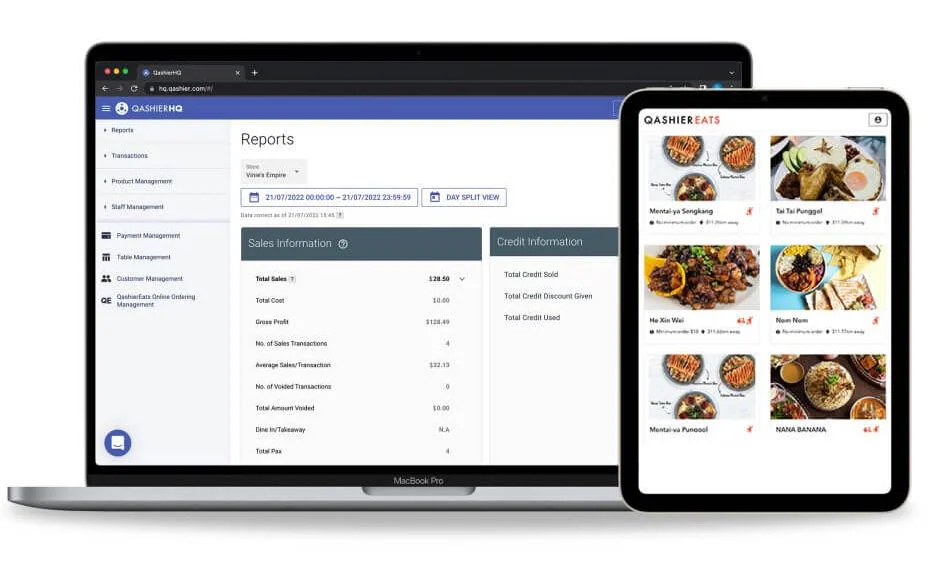
Qashier is a POS that Specialized in retail businesses. Its a Singapore-based POS solution designed for affordability and smooth integration across various platforms. The Qashier POS system combines an EDC machine and a QR code scanner into a single sleek and portable device. This integrated POS solution streamlines business management within a single integrated system.
The Qashier machine functions as a till display, receipt printer, and payment terminal via the QashierPay feature. QashierPay supports various payment methods, including major credit and debit cards (Visa, Mastercard), contactless payments (PayWave, Apple Pay, Samsung Pay, Google Pay), and mobile payments and e-wallets (e.g., GrabPay).
Pricing: Qashier Retail POS in Malaysia ranges from a free Lite plan to paid plans at RM158–238 per month, with optional add-ons charged separately.
Features:
- Compact hardware integration
- Multi-store management
- Real-time sales insights
- Contactless payment options
| Pros | Cons |
|
|
Ideal for SMEs looking for an affordable and compact POS solution with integrated payment processing and business management tools. It is suitable for smaller retail spaces with limited hardware requirements.
14. Erply
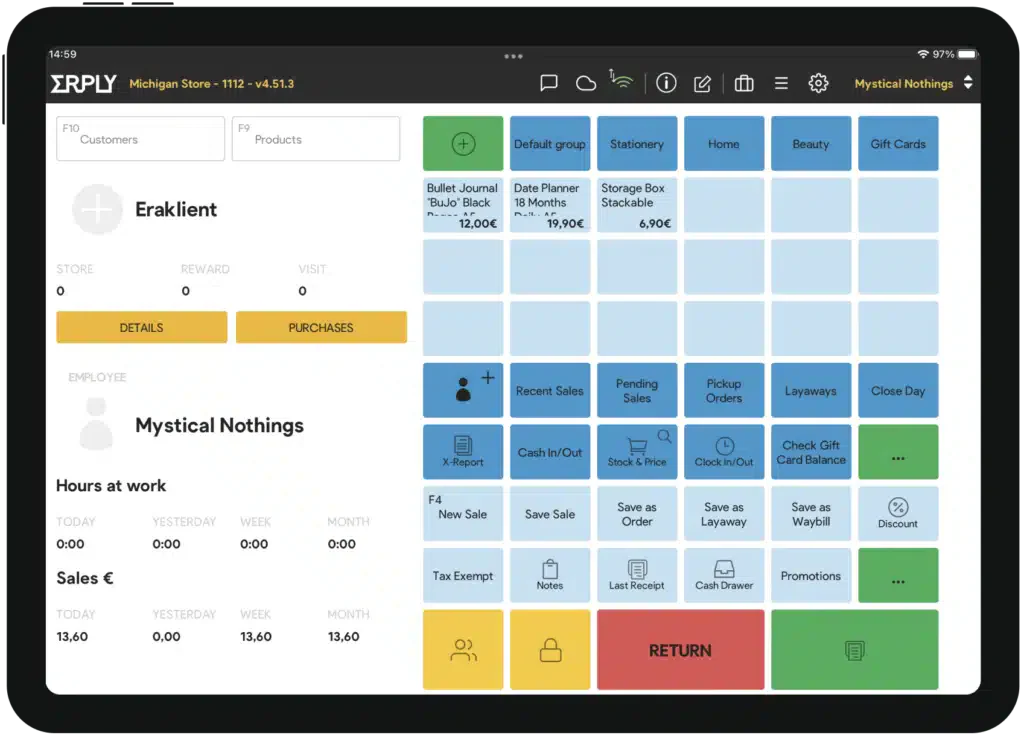
Erply is a retail management system that integrates POS, inventory control, and customer relationship management (CRM) into a single solution. Established in 2009, it serves various business types and provides reliable tools to enhance operational efficiency and customer engagement.
Pricing: Subscription (~RM 265–445/month) per register; includes a 14-day free trial.
Features:
- Advanced inventory control
- CRM integration
- Customizable reports
- Employee time tracking
| Pros | Cons |
|
|
Suitable for retailers needing advanced inventory management and CRM integration to improve customer engagement and operational efficiency. It works well for businesses managing large product catalogs.
15. HitPay
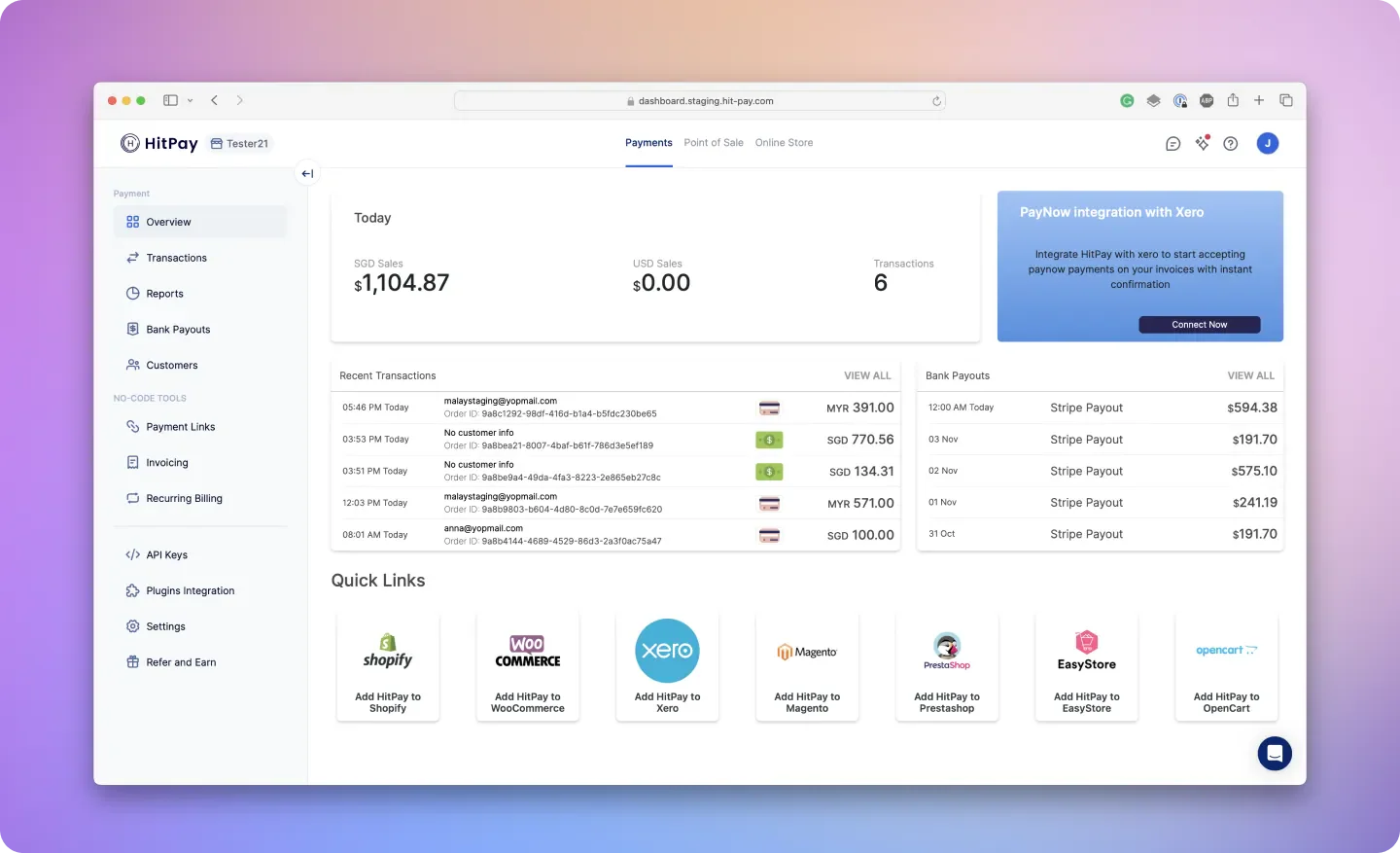
HitPay is a cost-effective POS software Malaysia designed for small and medium-sized businesses, offering easy payment processing and smooth integration with existing tools. It supports multiple payment gateways and e-commerce platforms.
In addition to its core functionalities, HitPay’s POS system offers multi-location management, as well as tipping options, surcharge management, and tax rate configurations.
Pricing: Transaction-based (RM 0/month) — No fixed monthly fee; charges 0.8% to 1.5% per transaction.
Features:
- Payment gateway support
- Inventory and sales tracking
- Real-time sales reporting
- User-friendly interface
| Pros | Cons |
|
|
Best for Malaysian SMEs prioritizing digital payments and simple transaction management. Its integration with e-commerce platforms makes it suitable for businesses with online selling channels.
16. StoreHub
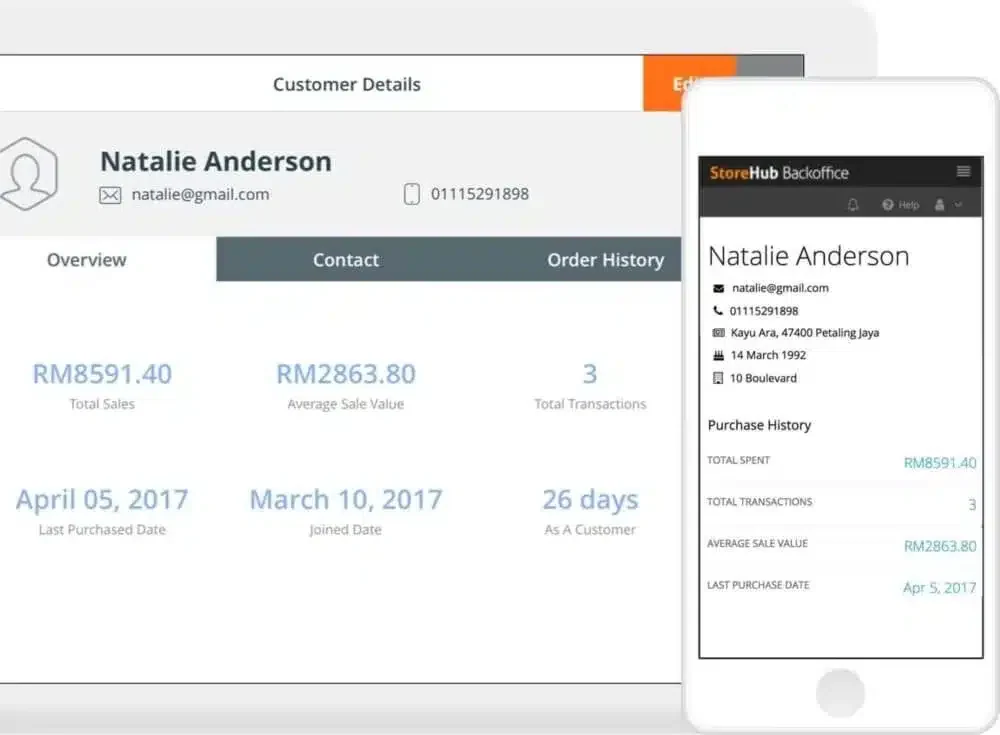
StoreHub is a comprehensive cloud-based platform built to support retail businesses across Southeast Asia. Based in Kuala Lumpur, it combines key operational tools such as POS systems, table management, and QR order-and-pay features, all integrated within one smooth system.
Pricing: StoreHub POS in Malaysia starts from around RM 102 per month (on the basic plan) if billed annually, with higher tiers up to about RM 393/month for more advanced features.
Features:
- Cloud-based POS system
- QR order & pay
- Customer loyalty program
- Inventory and reporting tools
| Pros | Cons |
|
|
Fits retail and F&B businesses in Malaysia that need cloud-based POS software with QR ordering, loyalty programs, and centralized operational management.
17. Xilnex
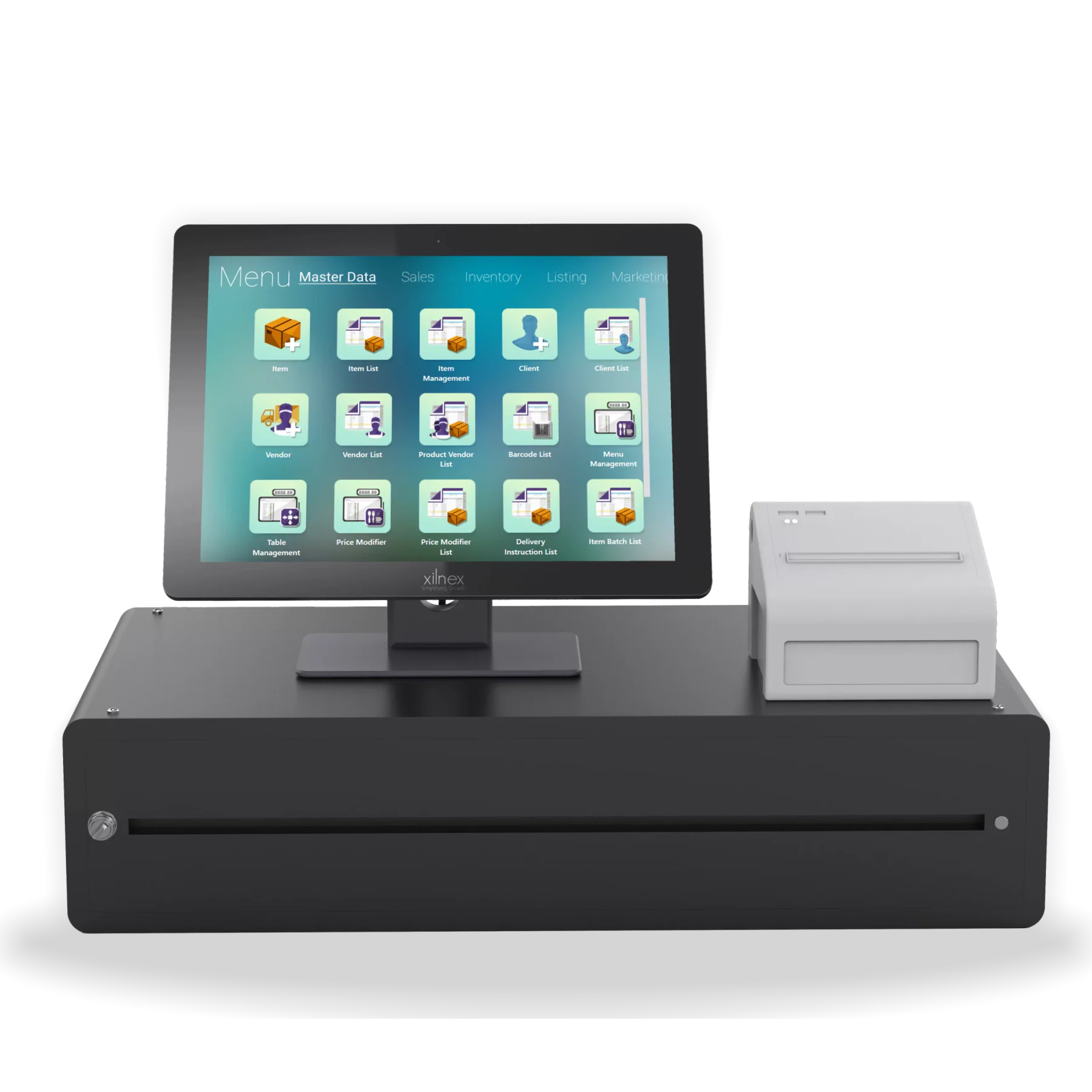
Xilnex POS is a cloud-based point-of-sale system designed to simplify retail operations through automation and real-time data tracking. It enables retailers to manage sales, inventory, and customer information efficiently within one integrated platform.
With features such as stock monitoring, loyalty programs, and detailed reporting, Xilnex helps retail businesses enhance accuracy, improve customer experiences, and make data-driven decisions to support growth.
Pricing: Subscription (~RM 85–445/month) scaling from basic retail to multi-branch enterprise chains.
Features:
- Support for diverse payment methods
- Multi-channel & marketplace integration
- Real-time inventory and sales tracking
- CRM and loyalty module for customer engagement
| Pros | Cons |
|
|
Suitable for retailers focusing on automation, customer loyalty, and multi-channel retail management. Its real-time inventory tracking supports more accurate operational decisions.
18. Cegid
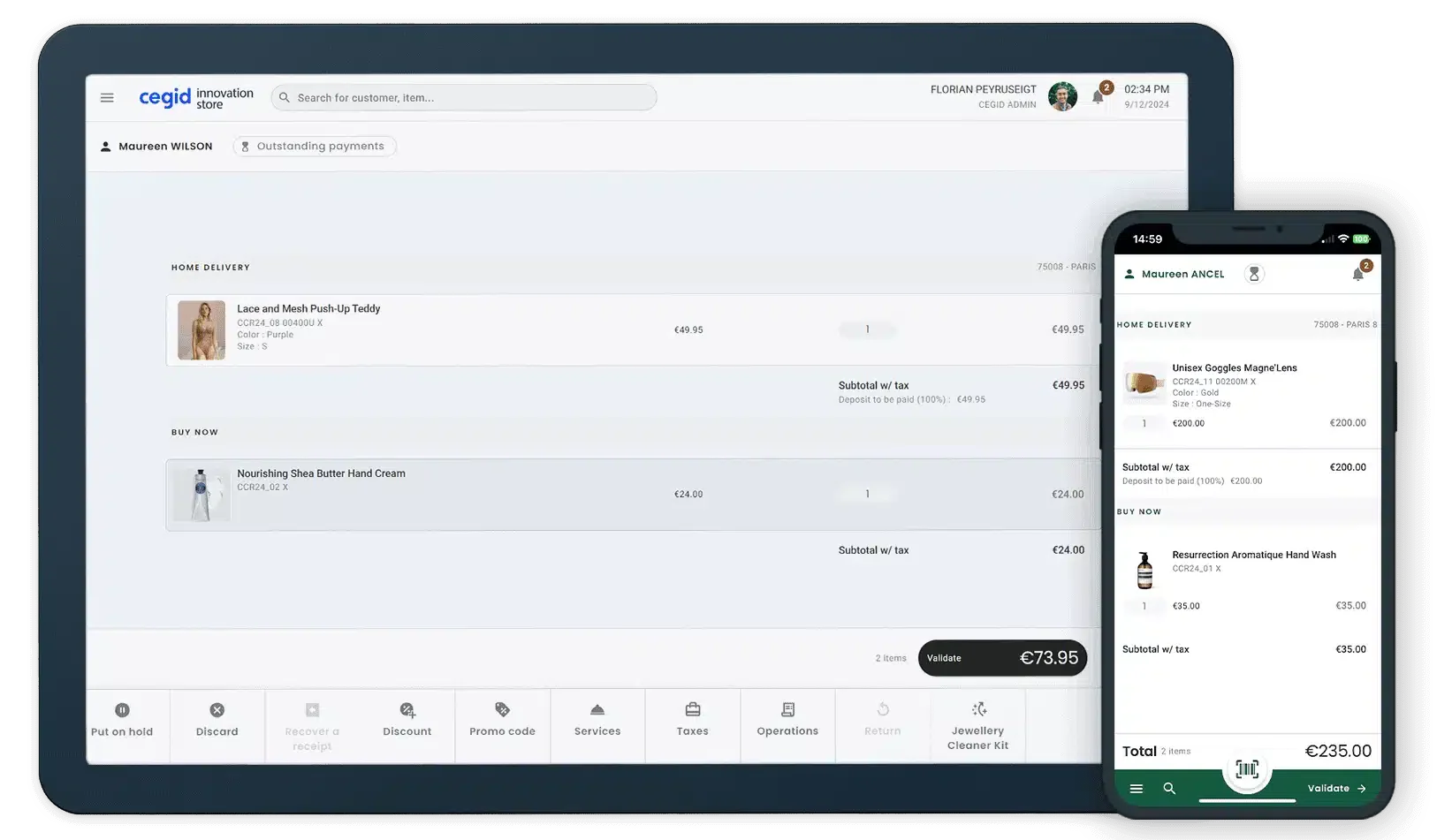
Cegid POS is a powerful retail platform designed to support fashion, lifestyle, and specialty stores by streamlining operations and enhancing the customer journey.
With features that span inventory, sales, annd omnichannel engagement, Cegid POS enables brands to manage complex retail environments and deliver smooth shopping experiences across online and offline channels.
Pricing: Contact the vendor for exact pricing information.
Features:
- Full omnichannel capabilities
- Real-time analytics and reporting
- CRM and loyalty program tools
- Real-time inventory and stock management
| Pros | Cons |
|
|
Best for fashion, lifestyle, and specialty retailers that require strong omnichannel capabilities and advanced customer experience management across online and offline channels.
19. Shopify
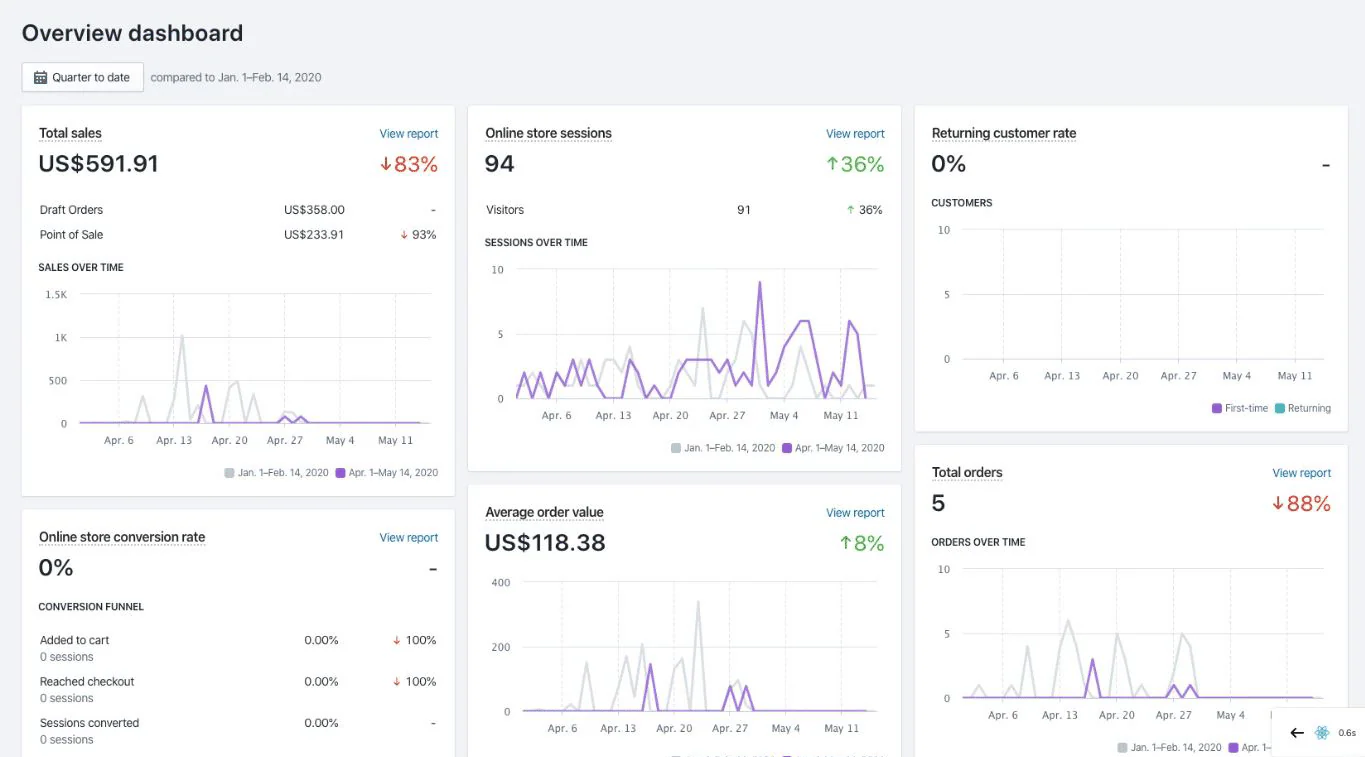
The POS system provided by Shopify is designed for retail businesses, enabling smooth integration of in-store and online sales.
It includes essential features such as inventory tracking, omnichannel selling, and mobile checkout to enhance the customer experience.
Additionally, the Shopify POS system Pro version provides advanced functionalities, including comprehensive staff management, in-depth reporting and analytics, and enhanced inventory control.
Pricing: Subscription (~RM 355–400/month) combining base Shopify plan + POS Pro add-on (~RM 300-387/mo) per location.
Features:
- Unified online and offline sales
- Customer profile tracking
- Mobile-friendly design
- Customizable sales reports
| Pros | Cons |
|
|
Ideal for Malaysian retailers combining e-commerce and physical stores within one system. It supports omnichannel selling, customer tracking, and centralized inventory management.
20. EasyStore
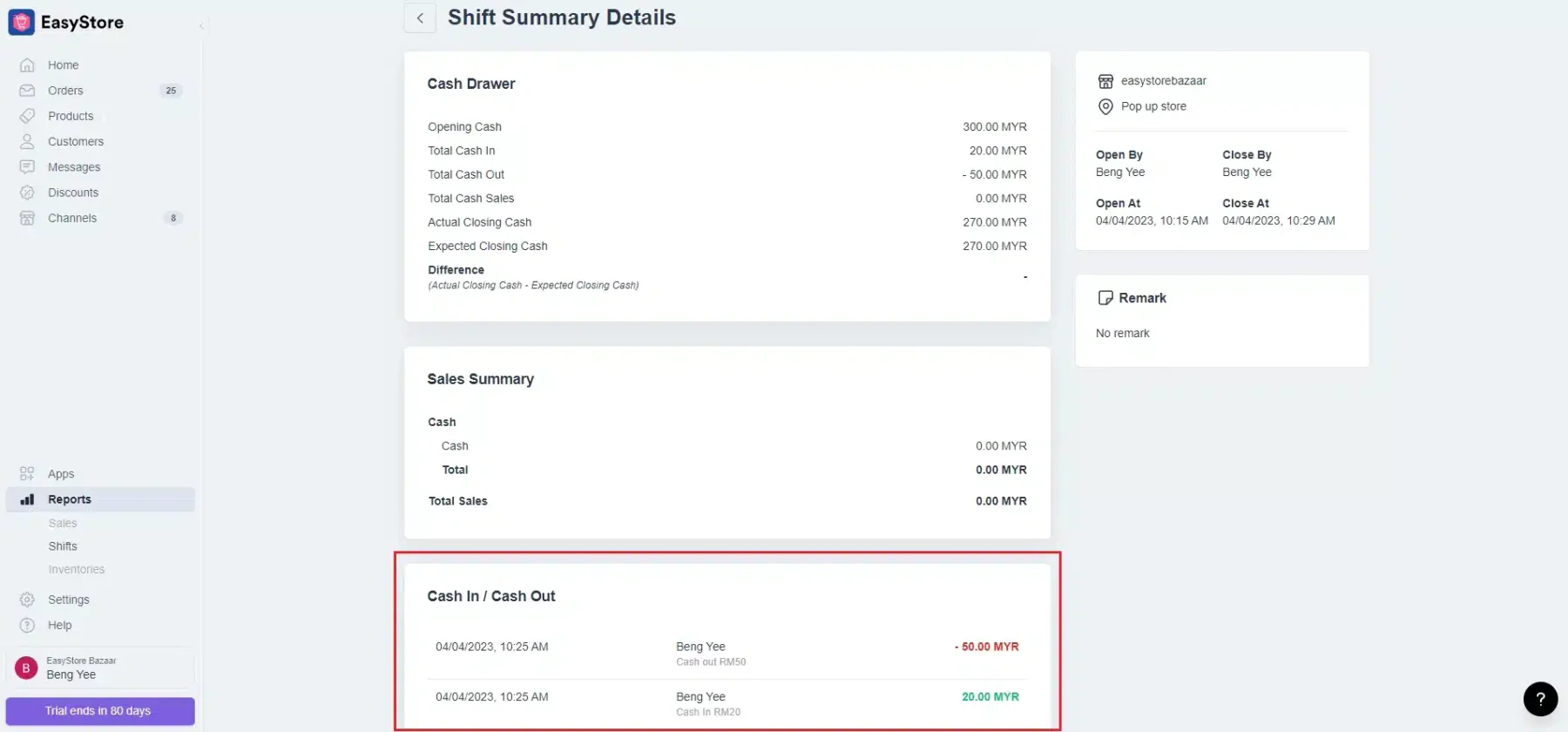 EasyStore is a unified commerce platform designed to help brands sell both online and in-store through a single backend. It offers point-of-sale (POS) functionality for retail, plus e-commerce, marketplace and social-commerce integrations, inventory management, loyalty programs and customer-engagement tools.
Pricing: EasyStore charges from RM 249/month (Standard plan) up to RM 899/month (Growth plan), depending on your needs.
Features:
- Omni-channel sales integration
- Inventory & order management
- Customer loyalty & CRM features
- Real-time reporting and dashboard
| Pros | Cons |
|
|
Ideal for Malaysian brands that want to manage online marketplaces, social commerce, and physical retail operations within one unified commerce platform.
21. ConnectPOS
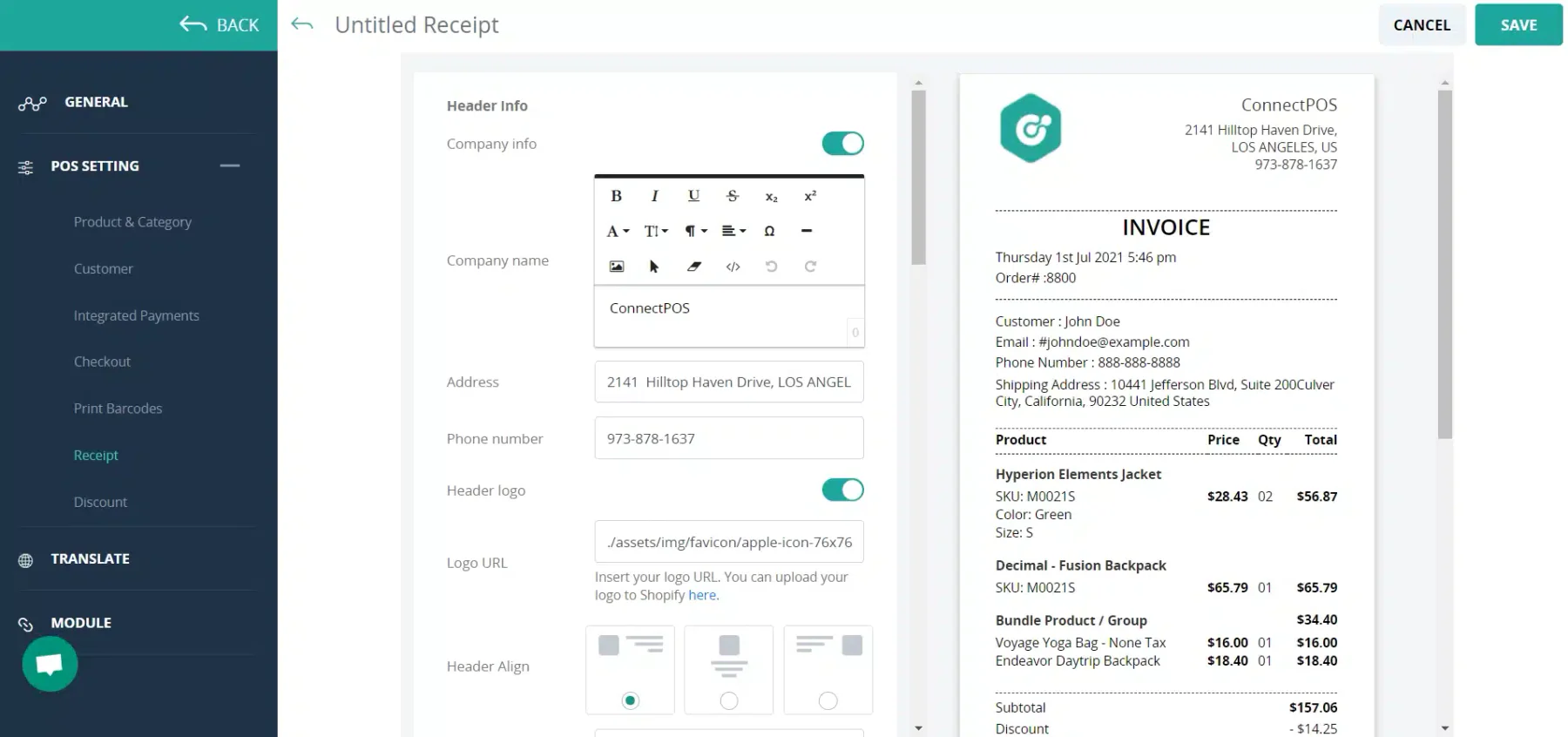 ConnectPOS is a cloud-based, omnichannel retail point-of-sale system designed for both in-store and online operations. Its target users range from small retailers to multi-store chains that require real-time inventory tracking, multi-store management, and smooth online/offline integration.
Pricing: Subscription (~RM 220–445/month) per register with real-time e-commerce platform integration.
Features:
- Multi-device and multi-platform compatibility
- Real-time inventory synchronization & multi-store support
- Omnichannel order management & loyalty programs
- Comprehensive reporting & analytics
| Pros | Cons |
|
|
Suitable for multi-store retailers requiring real-time inventory synchronization and strong omnichannel integration between online and offline stores.
22. AutoCount
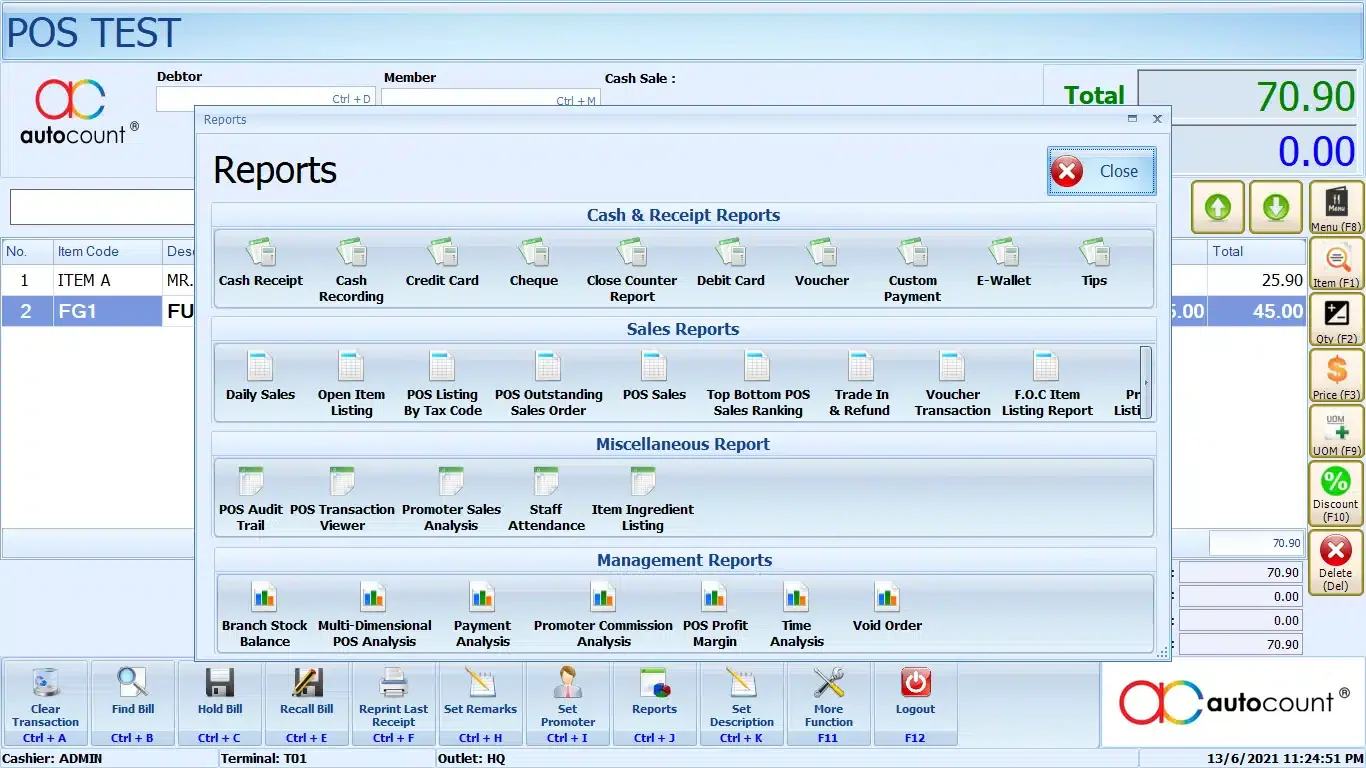 AutoCount POS is a point-of-sale and retail system designed to integrate front-end retail and F&B operations with back-end accounting and inventory modules. It supports real-time sync between outlets, multi-location inventory, multiple payment methods, including e-wallets, and smooth posting to AutoCount Accounting.
Pricing: AutoCount POS is typically priced as follows: the “POS Basic” package costs around RM 2,000 (one-time, lifetime license), while the “POS Standard” package costs about RM 2,800 per unit.
Features:
- Multi-payment methods
- Inventory & stock control
- Customer & promotion management
- Real-time reporting & dashboard
| Pros | Cons |
|
|
Integrated directly with accounting and inventory systems for more accurate financial and stock management.
23. MillionPOS
 Million POS System Software is a retail-focused point-of-sale solution developed by Million (Malaysia). It is designed for businesses in the retail channel, allowing sales transactions, inventory tracking, reduce the likelihood of running out of stock during operations, and integration with accounting modules.
Pricing: MillionPOS in Malaysia is typically priced at RM 1,499 for a one-time license purchase (including SST), according to its official pricing plan.
Features:
- Real-time inventory & sales posting
- Multiple payment methods supported
- User-friendly touch screen interface
- Integration with accounting/inventory modules
| Pros | Cons |
|
|
Suitable for retailers seeking affordable POS software with integrated inventory and accounting functions. It works well for SMEs with traditional retail operations.
24. Synergy
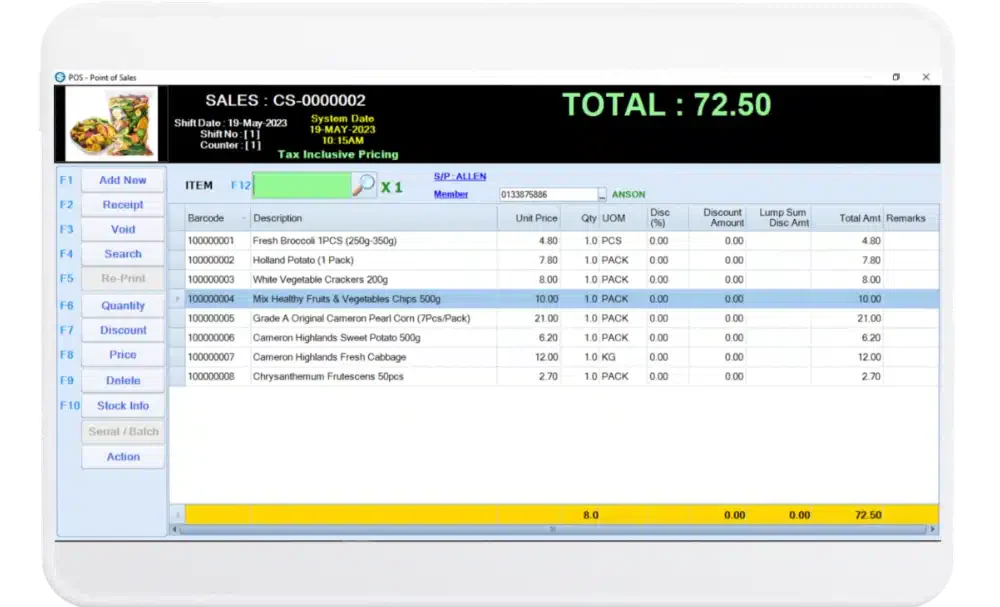
Synergy POS is a POS system that’s deeply integrated with your accounting and inventory systems. It is beneficial for Malaysian SMEs with multi-store operations. It balances affordability (one-off payment) with powerful features.
Pricing: For Synergy POS in Malaysia, one-time license pricing is available around RM 848 for the retail + stock version.
Features:
- Integrates POS and accounting in one system
- Supports multi-store inventory control
- Loyalty features like memberships and reward points
- Supports e-wallets and credit card terminals
| Pros | Cons |
|
|
Best for Malaysian SMEs that require integrated POS, accounting, and inventory control features to manage multiple stores more efficiently.
Key Features of POS Software for Retail
A well-designed retail POS system simplify sales processes, benefiting both businesses and customers. Here are the key features of POS software for retail to enhance operations:
- Real-Time Inventory Management: Automatically updates stock levels after every sale, return, or restock. Helps retailers prevent overstocking or running out of popular products.
- Multi-Payment Method Support: Accepts various payment types such as cash, credit/debit cards, eWallets (like GrabPay, Touch ’n Go, Boost), online banking, and even QR Pay — a must-have in Malaysia’s cashless ecosystem.
- Sales Tracking & Reporting: Provides detailed insights into sales performance, daily transactions, best-selling items, and profit margins — helping business owners make data-driven decisions.
- Customer Management (CRM Integration): Stores customer data, purchase history, and preferences to support loyalty programs, promotions, and personalized marketing campaigns.
- Multi-Outlet Management: Enables centralized control of inventory, pricing, and sales across multiple retail outlets or branches, making it ideal for expanding retail chains or franchises.
What Are the Differences Between Cloud POS and Unified POS Systems?
While both systems aim to simplify sales operations, they differ significantly and understanding these differences is crucial for retailers in Malaysia to select the right system that aligns with their growth strategy and operational requirements.
| Aspects | Cloud POS Systems | Unified POS Systems |
| Definition | Internet-based platform storing data remotely for multi-device access. | Integrates sales, inventory, and customer data across all channels. |
| Function | Provides real-time synchronization and remote accessibility. | Unifies in-store, online, and mobile operations. |
| Cost and Scalability | Lower upfront cost with scalable cloud solutions. | May require higher setup cost but offers full ecosystem integration. |
| Customer experience | Focuses on operational flexibility. | Delivers consistent customer experience and loyalty programs. |
| Best for | Businesses seeking affordable, flexible POS management. | Businesses manage both physical and digital sales channels. |
Tips to Choose the Best POS Software for Retail

Finding the perfect POS retail software can make running your business smoother and set you up for growth. Here’s what to keep in mind:
Match Features to Your Needs: Pick a POS that supports your daily operations, including the payment methods your customers use, such as e-wallet and contactless (DuitNow).
User-Friendly Interface: Your staff should be able to learn and use it with ease.
Scalability: Choose POS software that grows with your business and handles increasing demand, including multi-outlet / multi-store management.
Strong Inventory Management: A good POS helps you track stock levels accurately and prevent shortages, especially with centralized stock visibility across outlets.
Smooth Integration: Ensure the POS works with your current tools, and confirm e-invoice and LHDN readiness as part of Malaysia compliance.
Insightful Reporting: Get detailed reports that help you make smarter business decisions, with centralized sales reporting across multiple outlets.
Customization Options: Look for a POS that adapts to your unique business processes.
You’ll find a retail POS system that suits your workflow, needs, and dynamics with customers if you keep those considerations in mind.
Which Retail POS System Suit The Most for Your Business?
Choosing the right retail POS system also depends on how well it fits your specific business model. The comparison matrix below maps each solution against common retail scenarios to help you identify which systems align best with your operational needs.
| Software | Key Capabilities | Strengths | Best Fit For |
|---|---|---|---|
| HashMicro | Omnichannel POS, inventory sync, e-invoicing, ERP integration | Highly customizable, scalable, strong compliance support | Retailers needing full ERP + POS integration |
| Revel | Cloud POS, CRM, analytics, multi-store | Advanced features, strong reporting | Mid to large retail businesses |
| Lightspeed | Inventory, ecommerce integration, loyalty tools | Strong omnichannel capabilities | Retailers selling online & offline |
| Red Zone | Cloud POS, mobile access, inventory tracking | Portable and easy to deploy | Small retailers with mobility needs |
| POSERVA | Real-time analytics, inventory tracking | Free and simple system | Startups & small outlets |
| Waffle | Inventory integration, mobile ordering | Optimized for retail workflows | Restaurants & cafes |
| Shopify POS | Omnichannel sales, mobile POS | Smooth ecommerce integration | Online-first retail brands |
| GoPOS | Multi-industry POS, inventory, reporting | Flexible deployment | Retail & service businesses |
| ePOS | Sales tracking, payment integration | Simple and reliable | SMEs with basic POS needs |
| Sapaad | POS, delivery, inventory | Strong restaurant features | Food & beverage chains |
| Loyverse | Free POS, inventory, CRM basics | Cost-effective entry solution | Micro businesses |
| MegaPOS | Self-ordering, CRM, analytics | Scalable and feature-rich | Growing retail brands |
| Qashier | All-in-one POS + payment system | Compact and affordable | SMEs & kiosks |
| Erply | POS + CRM + inventory | Advanced retail management | Mid-size retailers |
| HitPay | Payment-focused POS, real-time tracking | No subscription cost | SMEs prioritizing payments |
| StoreHub | Cloud POS, loyalty, QR ordering | Strong local ecosystem | Retail & F&B in Southeast Asia |
| Xilnex | Inventory, CRM, analytics | Data-driven insights | Scaling retail chains |
| Cegid | Omnichannel retail platform | Enterprise-grade system | Fashion & lifestyle brands |
| Raptor | High-speed POS, analytics | Strong performance | High-volume retailers |
| EasyStore | Unified commerce, ecommerce + POS | Strong omnichannel selling | Brands scaling online + offline |
| ConnectPOS | Omnichannel POS, multi-store sync | Strong integrations | Retail chains |
| AutoCount POS | POS + accounting integration | Strong local compliance | Malaysian SMEs |
| MillionPOS | Sales, inventory, accounting sync | One-time license model | Budget-conscious retailers |
| Synergy POS | POS + accounting integration | Affordable and practical | SMEs with multi-store setup |
Conclusion
A retail POS system supports day-to-day operations by processing sales, updating inventory, and organizing customer data in one place. With the right setup, teams can work faster at checkout, keep stock accurate, and make better decisions using clearer reports.
A strong POS should fit your workflow, integrate smoothly with the tools you already use, and scale as the business grows. Features such as multi-store control, promotion automation, and role-based access can also reduce manual work and maintain consistent operations across locations.
If you’re comparing options, a free consultation can help clarify your needs and match them to the right POS capabilities or you might want to take another look at the matrix we’ve provided above to help you make a decision. This way, you can choose a system that improves efficiency without adding unnecessary complexity.

Frequently Asked Questions on Retail POS Software Malaysia
A Virtual POS (vPOS) system is a cloud-based platform that processes transactions without dedicated hardware. It operates through web browsers or apps, allowing businesses to accept payments online or remotely.
Cloud-based POS systems store data on remote servers, whereas traditional POS systems keep data locally on a physical machine. Cloud-based systems require an internet connection for full functionality, while conventional POS systems can operate offline but may lack remote access.
While cloud-based systems offer convenience, they require strong security measures to prevent data breaches. Encryption, multi-factor authentication, and regular software updates help protect sensitive business and customer data.
POS system costs in Malaysia range from a few hundred to several thousand ringgit depending on features and deployment type. Prices vary further based on add-ons like inventory tracking, CRM, and multi-outlet support.
Mobile systems enable sales transactions on the go, allowing staff to assist customers anywhere in the store. These systems typically run on tablets or smartphones and connect to external payment terminals for processing transactions.
HashMicro is one of the best POS retail software options thanks to its comprehensive features, ease of use, and local support. Other strong choices include Lightspeed, Vend, and Square, depending on your business size and needs.
There are four main types of POS systems commonly used by businesses: Terminal POS, Mobile POS, Cloud-Based POS, and Self-Service POS. Terminal POS refers to the traditional setup found in retail stores and restaurants. Mobile POS systems utilize tablets or smartphones, providing portability and flexibility for businesses such as cafes or pop-up stores. Cloud-Based POS stores all data online, allowing real-time access to sales and inventory information from anywhere. Meanwhile, Self-Service POS enables customers to complete transactions independently through kiosks or touchscreens, improving speed and reducing wait times.