








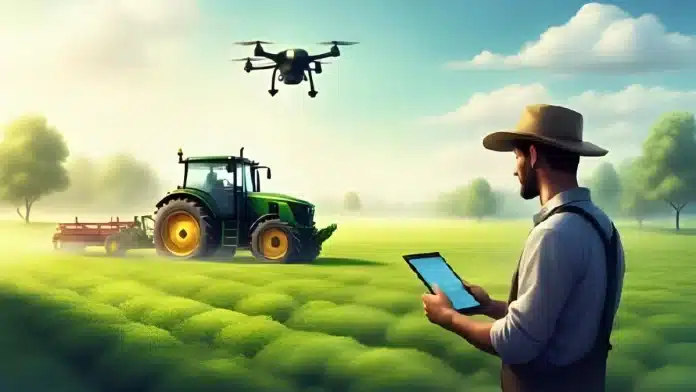
Farming costs keep climbing, labor is harder to find, and profit margins are getting tighter every season. For many agribusiness owners, automation is no longer a luxury. It’s how you stay in the game.
Most farm operations feel the pressure in small moments that add up fast, a delayed harvest because a crew is short, fuel and input costs that spike mid-season, or stock and equipment records that don’t match what’s happening on the ground. When those issues pile up, it gets harder to plan confidently and protect margins.
That’s why agriculture automation has become less about “future tech” and more about day-to-day control. The goal is simple; reduce manual work, tighten coordination, and make decisions based on what’s actually happening in the field.
Key Takeaways
|
What Is Agriculture Automation and Why Is It So Important?
Agriculture automation uses technology like robotics and AI to perform tasks with minimal human intervention. Its main goal is to improve efficiency in operations, from planting to harvesting.
This is crucial for modern agribusiness as it enables data-driven decisions for resource optimization. By automating, businesses can address labor shortages and increase overall productivity.
Key Technologies in Agriculture Automation
Understanding the core technologies is the first step toward building an effective automation strategy. These tools work together to create a smarter and more connected farming ecosystem.
- Robotics and autonomous machinery: These machines perform physical tasks like planting and harvesting with high precision. For example, GPS-guided tractors can operate 24/7 without a driver.
- Drones and satellite imagery: This technology provides aerial views for comprehensive field analysis and problem detection. Drones use special cameras for advanced crop monitoring to spot issues early.
- Internet of Things (IoT) and sensors: A network of sensors collects real-time data on soil moisture, temperature, and nutrient levels. This information can trigger automated irrigation systems when needed.
- Artificial Intelligence (AI) and machine learning: AI algorithms analyze data from various sources to predict outcomes like crop yield or disease outbreaks. For instance, AI can differentiate between crops and weeds for robotic weeders.
- Centralized farm management software (ERP): This software integrates all farm data and technologies into a single dashboard. It provides a holistic view for monitoring and controlling all operations.
Benefits of Implementing Agriculture Automation

Adopting automation offers significant competitive advantages beyond simple efficiency. It transforms core business aspects, leading to greater profitability and sustainability.
- Increased productivity and crop yield: Automated machinery operates continuously, leading to faster planting and harvesting cycles. This consistent operation directly boosts the total output per acre.
- Operational cost and labor efficiency: Automation reduces the need for manual labor, lowering payroll expenses significantly. It also optimizes the use of resources like fertilizer, cutting material costs.
- Improved product quality and consistency: Automated systems ensure tasks are performed with uniform precision, from planting depths to harvesting times. This consistency results in a higher-quality and more valuable final product.
- Supporting sustainable farming practices: Precision technology applies water and pesticides only where needed, reducing waste and environmental impact. This targeted approach promotes long-term soil health and sustainability.
- Accurate data-driven decision-making: Real-time data from sensors and drones provides actionable insights for better management. This allows managers to make informed choices that optimize resource allocation and mitigate risks.
Implementation Challenges of Automation and How to Overcome Them
While the benefits are clear, transitioning to automation presents several challenges. A strategic approach is needed to navigate these obstacles for a successful implementation.
| Aspect | Automation Challenge | How to Overcome It |
|---|---|---|
| Initial Investment | High upfront costs for hardware, software, and infrastructure can delay adoption. | Start with a pilot project, prioritize high-impact areas, and explore financing or phased implementation. |
| Technical Expertise | Automation systems require new technical skills that existing teams may not have. | Invest in structured training programs and work closely with technology vendors for ongoing support. |
| Data Security & Connectivity | Connected systems increase exposure to cyber risks and network reliability issues. | Apply strong security protocols, regular system updates, and use edge computing to reduce connectivity dependency. |
| System Integration | Integrating multiple technologies from different vendors can create data silos. | Choose a unified ERP or automation platform to ensure seamless data flow and simpler system management. |
Guide to Implementing Agriculture Automation
Embarking on the automation journey requires a clear and structured plan. This step-by-step guide helps ensure a smooth and successful transition for your agribusiness.
- Evaluate needs and set goals: First, assess your current operations to identify key pain points and inefficiencies. Then, set clear and measurable goals for what you want automation to achieve.
- Start small: Begin with a focused pilot project instead of a full-scale overhaul. This approach minimizes risk and allows your team to gain valuable hands-on experience.
- Choose the right technology and vendors: Research and select technology partners with a proven track record in agriculture. Prioritize solutions that are scalable and offer excellent support and integration capabilities.
- Integrate with a centralized management system: Ensure all your new technologies feed data into a central ERP system. This creates a single source of truth for comprehensive operational control.
- Train your team and evaluate periodically: Invest in training to empower your team to use the new systems effectively. Regularly review performance against your goals and make adjustments as needed.
With these steps, you can confidently adopt automation without overwhelming your resources. If you’re ready to see how these strategies can be tailored to your business, click the banner below to explore the implementation cost.

Optimize Your Agribusiness Management with Agriculture Software Solutions
 If you want the transition to automation to feel more manageable, the key is using a system that brings core agricultural processes into a single, connected workflow. The goal is not simply adopting new technology, but making sure data, schedules, and day-to-day operations stay aligned from the field to reporting.
- Structured financial management: Helps build and track budgets by location while recording income and expenses consistently, making cost control more transparent.
- Clear operational oversight: Farm activities, from land preparation to harvest, can be scheduled and monitored in one place, reducing coordination issues across teams.
- Yield forecasting support: Uses historical records and field updates to produce more realistic yield estimates for better planning.
- Integrated inventory tracking: Monitors input materials and harvested produce across multiple storage locations in real time, helping prevent shortages or overstocking.
- Workforce and asset oversight: Tracks labor productivity and schedules equipment maintenance to reduce the risk of downtime during critical periods.
Overall, this kind of system supports greater efficiency and transparency without adding unnecessary administrative burden. To understand how automation could fit your specific operation, consider discussing your current challenges with an expert team to get practical, field-relevant recommendations.
What’s Coming Next
The future of farming will be defined by hyper-automation, where the entire agricultural ecosystem is connected. Machines will communicate with each other to coordinate tasks in real-time.
Predictive analytics will become even more precise, forecasting yields and market demand with incredible accuracy. Adapting to these trends is essential for any business aiming to lead the market.

Conclusion
Agriculture automation has become a practical way for agribusinesses to stay efficient as costs rise and operations get more complex. When it is applied to the right workflows, it can reduce manual work, improve visibility, and help teams make decisions with more confidence.
To get real results, it helps to avoid scattered tools and focus on a unified approach where planning, field execution, inventory, and reporting can work together. This makes day-to-day operations easier to manage and keeps information consistent across teams and locations.
If you are considering automation, start by mapping your current processes and identifying the areas with the biggest impact. From there, you can evaluate solutions and consult with an expert team to choose a setup that fits how your operation actually runs.
FAQ about Agriculture Automation
-
What is the most practical first step to start agriculture automation?
The most practical first step is to conduct a thorough assessment of your current operations to identify the most significant pain points. Starting with a small pilot project, such as automating irrigation in one area, allows you to test technology and measure its impact before a larger investment.
-
Will automation completely replace human labor in farming?
Automation is unlikely to completely replace human labor. Instead, it will transform roles by handling repetitive and physically demanding tasks, allowing human workers to focus on more strategic responsibilities like system management, data analysis, and decision-making.
-
Is agriculture automation only suitable for large-scale farms?
While large-scale farms can benefit significantly, automation is increasingly accessible for smaller operations. Scalable solutions and modular technologies allow small and medium-sized farms to adopt automation incrementally, starting with affordable tools like drones or basic sensor systems.
-
How do you measure the Return on Investment (ROI) of agriculture technology?
ROI is measured by comparing the total cost of investment against the financial gains. This includes calculating cost savings from reduced labor and resource use, as well as increased revenue from higher yields and better product quality over a specific period.
-
What is the main role of ERP software in an agriculture automation ecosystem?
ERP software acts as the central brain of an automated farm. It integrates data from all technologies, such as sensors, drones, and machinery, into a single platform to provide a holistic view of operations, streamline workflows, and support data-driven decision-making.