














Inventory forecasting is the process of predicting future stock needs using historical data, market trends, and demand patterns. Efficient inventory management strategies are a cornerstone of business success because they ensure smooth operations and stronger profitability.
A compelling statistic shows the importance of modern tools: businesses using inventory technology saw a 43.5% reduction in human error, improving accuracy and helping them allocate resources more effectively in a competitive landscape.
By forecasting inventory proactively, companies can prevent overstocking or stockouts, maintain operational flow, and reduce unnecessary costs. This article explores the methods, benefits, and strategies of inventory forecasting tailored for Malaysian businesses.
Key Takeaways
|

What is Inventory Forecasting?
Inventory forecasting is the process of estimating the amount of stock a business will need to meet future customer demand. By analyzing historical sales data, demand patterns, and market trends, businesses can make informed decisions about when and how much inventory to order. This proactive approach not only reduces the likelihood of overstocking or stockouts but also enhances operational efficiency.
Imagine the consequences of neglecting inventory forecasting, customers’ needs remain unmet due to stock shortages, leading to dissatisfaction and a tarnished reputation. Conversely, overstocking ties up capital in unsold goods, increasing storage costs and waste. In either case, poor inventory management directly impacts profitability and customer trust.
Inventory forecasting incorporates factors like lead times, seasonal demand fluctuations, and business cycles to determine optimal stock levels. This comprehensive approach allows businesses to align inventory with actual market needs, enabling smoother operations and better resource allocation.
Multiple Inventory Forecasting Methods
Inventory forecasting encompasses various methods, each suited to different business needs and available data, including the economic order quantity. Understanding and implementing these methods can significantly enhance accuracy and efficiency in stock management. Below are the most commonly used approaches:
1. Graphical Forecasting
Graphical forecasting visually represents historical sales data using charts or graphs to reveal seasonal trends, demand spikes, and recurring patterns, often supported by ERP dashboard insights. For example, retailers may spot higher demand during the festive season.
2. Trend Forecasting
Trend forecasting identifies long-term demand patterns so businesses can adjust inventory levels proactively. However, this method can be less reliable when external factors, such as economic changes or sudden shifts in consumer behaviour, are present.
3. Quantitative Forecasting
Quantitative forecasting uses mathematical models, such as regression analysis and exponential smoothing, to predict demand objectively, mainly when ample historical data are available. However, it may miss sudden market shifts, such as unexpected demand spikes or supply chain disruptions.
4. Qualitative Forecasting
Qualitative forecasting relies on expert opinions, customer surveys, and focus groups to predict demand, making it valuable when historical data is limited. However, its subjective nature can lead to biased predictions, so combining these insights with data-driven methods helps create a balanced forecast.
Each method brings unique strengths and challenges, and the choice depends on a business’s specific needs. In many cases, combining multiple methods ensures a more comprehensive and accurate forecast.
Inventory Forecasting Formula

Implementing inventory forecasting effectively requires applying specific formulas and calculations. These tools help businesses predict stock needs with precision, ensuring optimal inventory levels and reducing associated costs.
Here are the key formulas used in inventory forecasting:
1. Calculating Lead Time Demand
Lead time demand refers to the estimated quantity of products required during the time it takes for an order to be fulfilled. The formula is: Lead Time Demand = Average Daily Usage × Lead Time.
For example, if a business sells 100 units daily and the lead time is five days, the lead time demand would be 500 units. This calculation ensures that the business has enough stock to meet customer needs during the lead time, preventing stockouts.
2. Setting the Reorder Point
The reorder point is the stock level at which a new order should be placed to avoid running out of inventory. The formula for this is: Reorder Point = Lead Time Demand + Safety Stock.
Safety stock acts as a buffer against unexpected demand or delays in delivery. By maintaining inventory levels above the reorder point, businesses can ensure consistent availability of products.
3. Measuring Sales Trends
To anticipate demand fluctuations, businesses analyze sales trends over time. These trends could include seasonal spikes, gradual increases, or declining interest in specific products. The insights gained allow businesses to adjust order quantities and inventory placement strategically.
For instance, a food inventory supplier might observe increased demand for certain products during festive seasons and prepare accordingly.
4. Calculating Safety Stock
Safety stock is the extra inventory held to guard against variability in demand or lead times. The formula is: Safety Stock = (Maximum Daily Usage × Maximum Lead Time) – (Average Daily Usage × Average Lead Time).
This calculation ensures that the business remains prepared for unforeseen circumstances, such as supplier delays or unexpected demand surges.
Streamlining each step of the inventory forecasting process is essential for maintaining accurate stock levels and ensuring smooth operations. Want to make it easier? Discover a tailored software solution to enhance your inventory management—click the banner below for an instant price estimate.
Advantages of Implementing Inventory Forecasting
Effective inventory forecasting offers numerous benefits that enhance operational efficiency, reduce costs, and improve customer satisfaction. Here’s how adopting forecasting techniques can transform your business:
- Optimizing Stock Management: Inventory forecasting ensures that businesses maintain the right amount of stock, preventing overstocking or understocking. Overstocking leads to increased storage costs and potential waste, while understocking can result in missed sales opportunities and customer dissatisfaction. By accurately predicting demand, conducting regular stocktake, and optimizing stock replenishment, businesses can strike the perfect balance.
- Improving Operational Efficiency: Forecasting helps streamline production and procurement activities, allowing businesses to plan more effectively. This eliminates disruptions caused by stock shortages or excess inventory, ensuring that daily operations run smoothly and efficiently.
- Maximizing Customer Satisfaction: By aligning stock levels with customer demand, businesses can avoid situations where products are unavailable. Meeting customer expectations consistently leads to higher satisfaction, increased loyalty, and positive brand perception.
- Reducing Costs and Risks: Inventory forecasting, combined with minimum order quantity, helps minimize excess stock and stockouts. Businesses save money by lowering storage costs, preventing obsolescence, and ensuring sufficient inventory to avoid lost sales.
- Supporting Demand Planning and Inventory Optimization: With precise forecasting, businesses can better allocate resources, ensuring that high-demand products are prioritized. This proactive approach allows companies to respond quickly to market changes and maintain a competitive edge.
Read more: What is Order Processing? A Comprehensive Guide
Inventory Forecasting Challenges
Effective forecasting is challenging because real-world conditions often disrupt accuracy and planning. Addressing these barriers helps businesses make better stock decisions and maintain smooth operations.
Below are the key challenges of inventory forecasting:
- Variability in customer demand: Customer preferences shift quickly due to trends, promotions, or events, making historical data less reliable. Forecasts must remain flexible and be updated frequently to reflect sudden changes in buying behaviour.
- Supply chain disruptions: Unexpected delays, whether from suppliers, transportation issues, or global events, can disrupt supply chains and reduce forecast accuracy. Forecasting must include contingency plans to maintain availability.
- Seasonality: Holiday periods and seasonal patterns significantly influence demand. Incorporating seasonal data and calculating seasonal indexes prevents overstocking or running out of stock during predictable fluctuations.
- Data quality in warehouses: Incorrect or incomplete inventory records undermine planning. Accurate, timely, and well-organized data enables more reliable forecasting and better identification of demand patterns.
- Product lifecycle: Demand shifts as products move through the introduction, growth, maturity, and decline stages. Forecasts must adjust accordingly to avoid excess inventory or missed sales opportunities.
nventory Forecasting and Minimize Errors
Accurate inventory forecasting requires careful planning and execution. By following these practical tips, businesses can enhance their forecasting accuracy and reduce errors, ensuring smoother operations and better decision-making.
1. Use Accurate Historical Data
Ensure that the sales and demand data you use for forecasting are complete, up-to-date, and reliable. Accurate historical data, with periodic inventory system and perpetual, allows businesses to identify trends and patterns that form the foundation of precise forecasts. For example, analyzing sales during peak seasons can help predict future demand more effectively.
2. Consider External Factors
In addition to historical data, external factors such as market trends, seasonal variations, and changes in consumer behavior must be considered. For instance, festive seasons or economic shifts can significantly influence demand patterns, and factoring these into forecasts improves responsiveness to real-world conditions.
3. Leverage Advanced Technology
Modern tools like inventory management software Malaysia can automate data collection and analysis, offering real-time insights for more accurate forecasting. These technologies process complex data quickly, provide deeper analytics, and enable automation, reducing manual errors and saving time.
4. Monitor and Adjust Regularly
Forecasting is not a one-time activity; it requires continuous monitoring and adjustment. Businesses should regularly review forecasts against actual performance and update their models to reflect any changes in demand patterns or market conditions.
5. Integrate Forecasting with Other Business Functions
Forecasting should not operate in isolation. By integrating it with production, procurement, and sales, businesses can ensure that inventory levels align with overall operational goals. For example, collaboration between sales teams and inventory planners ensures that forecasts are based on actual customer demand.
Achieving Error-Free Inventory Forecasting with HashMicro’s Inventory System
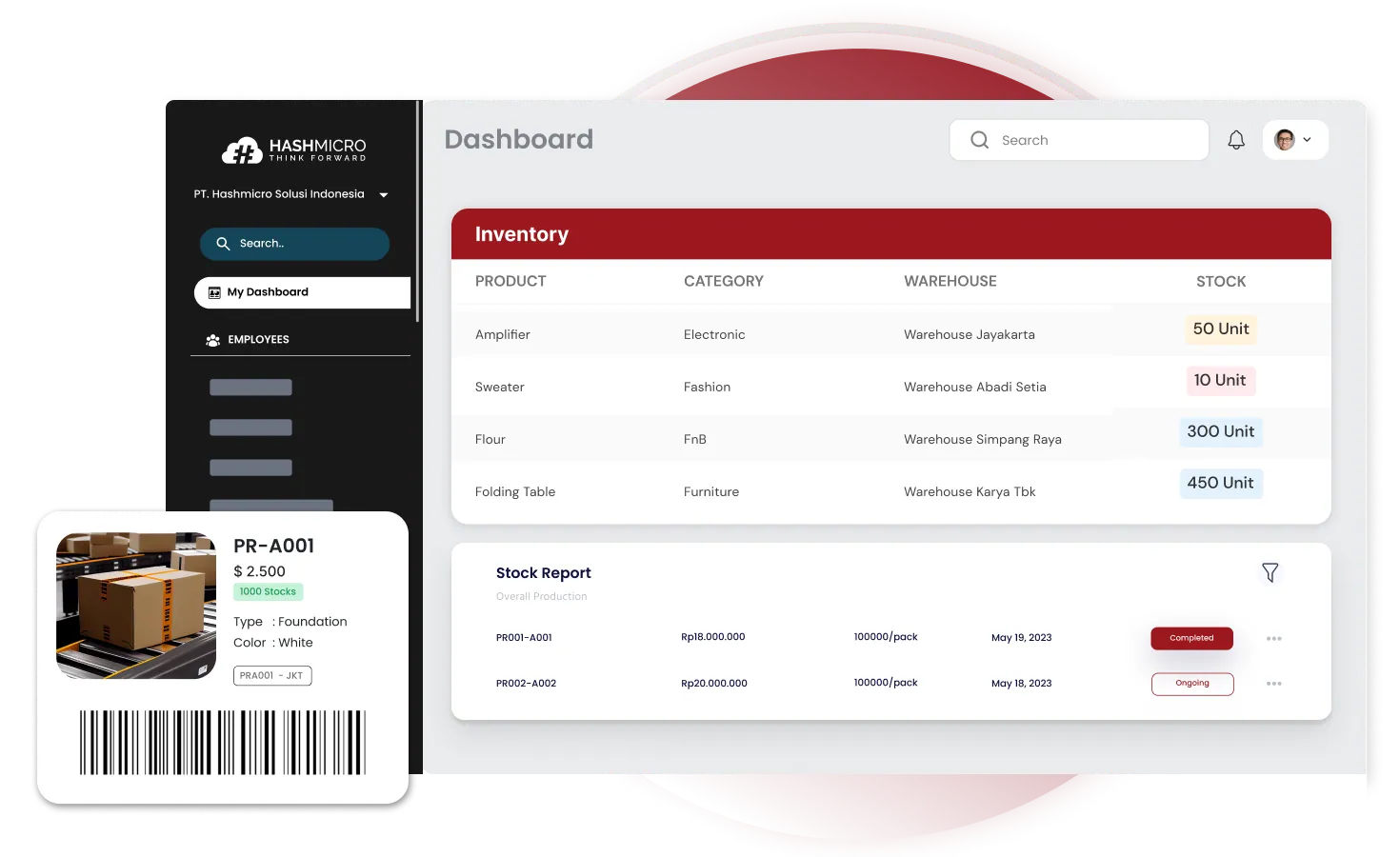
Implementing accurate inventory forecasting can be challenging, especially for businesses managing complex supply chains. However, integrating a robust system like HashMicro’s inventory management software simplifies the process, ensuring precision and efficiency.
HashMicro’s system is specifically designed to address inventory forecasting needs with advanced features that enhance accuracy and streamline operations. It eliminates manual errors, saving businesses time and resources while improving decision-making.
- Run Rate Reordering Rules: The system calculates the average daily usage of goods, enabling businesses to reorder stock based on actual demand. This feature is vital for maintaining optimal inventory levels without overstocking or understocking.
- Fast-Moving and Slow-Moving Stock Analysis: This feature identifies items with high and low turnover rates, allowing businesses to strategize better and optimize inventory placement.
- Stock Forecasting: The system analyzes historical sales data, seasonal patterns, and market trends to predict future inventory needs accurately. This proactive approach supports better planning and demand fulfillment.
- User-Friendly Interface and Scalability: Designed to be intuitive, the system is scalable to accommodate growing business needs, making it suitable for enterprises of all sizes.
By integrating all aspects of inventory management, HashMicro’s system provides businesses with real-time insights and automated processes. This reduces the need for manual intervention and ensures that forecasts are consistently aligned with actual market conditions.
Conclusion
Effective inventory forecasting is essential for businesses in Malaysia to maintain optimal stock levels, reduce costs, and meet customer demands seamlessly. By anticipating future inventory needs, companies can prevent overstocking, minimize waste, and avoid the risks of stockouts.
Leveraging advanced tools like HashMicro’s Inventory Management Software Malaysia can simplify the forecasting process. The system’s automated features reduce human errors, provide real-time insights, and enhance overall efficiency, allowing businesses to focus on growth and customer satisfaction.
Ready to transform your inventory management? Schedule a free demo of HashMicro’s system today and discover how it can streamline your operations and drive success in the competitive Malaysian market.
FAQs about Inventory Forecasting
-
What are the 4 stages of inventory?
The four stages of inventory are raw materials, work-in-progress (WIP), finished goods, and maintenance, repair, and operations (MRO) supplies. Each stage represents a different phase in the production and supply chain process, with raw materials being the initial inputs and finished goods being the final products ready for sale.
-
What are the four types of forecasting?
The four types of forecasting are qualitative, quantitative, trend analysis, and graphical forecasting. Qualitative methods rely on expert opinions, while quantitative methods use statistical models. Trend analysis identifies patterns over time, and graphical forecasting visualizes data to spot trends and fluctuations.
-
How do you forecast inventory in Excel?
To forecast inventory in Excel, you can use formulas like moving averages or exponential smoothing to analyze historical data. Excel’s built-in functions, such as FORECAST or LINEST, allow you to calculate future demand based on past trends. Visualizing data with charts further enhances the accuracy of predictions.
-
How to forecast inventory monthly?
To forecast inventory monthly, analyze historical sales data, identify seasonal patterns, and account for lead times. Use tools like Excel or inventory management software to calculate monthly demand, adjust for trends, and set reorder points. Regularly updating and refining your forecast ensures it aligns with market changes.