












According to CIDB Malaysia’s National Construction Policy 2030, Malaysia’s construction sector is moving toward stronger digitalisation, including procurement and project monitoring. Yet, even well-structured procurement plans can still face scope creep when project requirements expand beyond the original agreement without proper adjustments to time, cost, or resources.
Within procurement, scope creep can appear as extra service demands, broader product specifications, or extended timelines outside the initial contract. A clear procurement and purchasing management process helps teams track these changes before they disrupt workflows.
By understanding how scope creep develops, procurement teams can build stronger strategies that keep objectives, budgets, and expectations aligned.
Key Takeaways
|
The right procurement system makes it significantly easier to prevent scope creep from the start.

What is Scope Creep in Procurement?
Scope creep in procurement refers to the gradual expansion of project requirements after a contract or statement of work has already been agreed. It usually happens when new tasks, features, or requests are added without proper review, approval, or contract changes.
In procurement, scope creep can create serious problems because it affects budget, timelines, and vendor responsibilities. Small unplanned changes may seem harmless at first, but over time they can lead to higher costs, unclear expectations, and contract disputes.
Unlike planned scope changes, scope creep in procurement often happens informally and without proper documentation. This is why businesses need clear requirements, strong contract management, and a formal approval process to keep projects under control.
Common Causes of Scope Creep in Procurement
Scope creep in procurement usually happens when project requirements are not controlled properly from the start. In many cases, the problem comes from unclear documentation, informal requests, and weak change management.
- Unclear project requirements
Vague language in an RFP, contract, or statement of work can lead to different expectations between the buyer and the vendor. This makes it easier for extra work to be added later. - Informal stakeholder requests
End-users or internal teams may ask for small additions during project delivery without realizing they fall outside the agreed scope. Over time, these requests can grow into major changes. - Weak change control process
Without a formal process for reviewing and approving changes, businesses may struggle to manage project scope changes properly. This increases the risk of undocumented work and budget overruns. - Vendor overcommitment
Some suppliers agree to additional requests to maintain a good relationship or improve client satisfaction. However, this can create hidden costs, resource strain, and delivery issues later on.
Implementation Steps: Establishing a Scope Management Plan
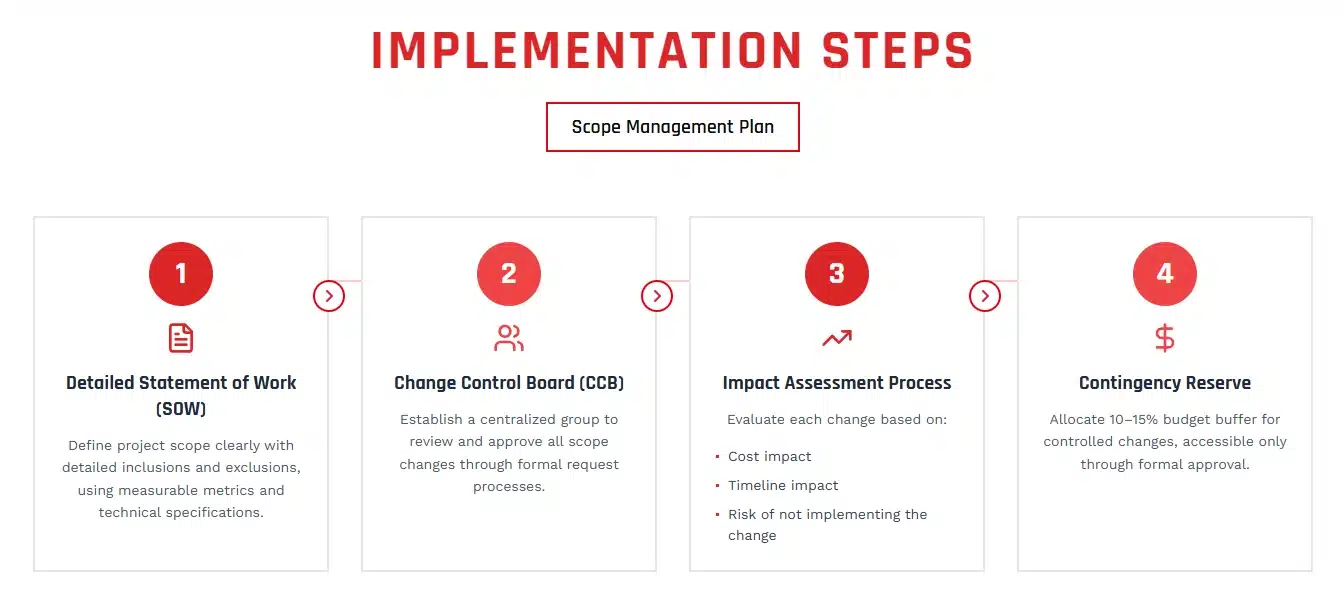
To prevent scope creep, procurement teams must move beyond reactive management and implement a proactive Scope Management Plan. This plan serves as the “rulebook” for how changes are handled throughout the project lifecycle.
Step 1: Create a Detailed Statement of Work (SOW)
The SOW is the foundation of scope control. It must be as granular as possible, detailing not only what is included but also explicitly stating what is not included (the “Out of Scope” section). Use quantitative metrics whenever possible, specify the number of units, the hours of training, the frequency of reports, and the exact technical specifications required.
Step 2: Establish a Formal Change Control Board (CCB)
A Change Control Board is a group of stakeholders responsible for reviewing, evaluating, and either approving or rejecting changes to the project scope. By centralizing this authority, you prevent “backdoor” agreements between project managers and vendors. Every requested change must be submitted via a formal Change Request Form that outlines the impact on budget, timeline, and resources.
Step 3: Define the Impact Assessment Process
Before any change is approved, a mandatory impact assessment must be conducted. This assessment should answer three questions:
- How much will this change cost in direct and indirect expenses?
- How will this change affect the final delivery date?
- What are the risks if we don’t implement this change?
This process forces stakeholders to justify their requests and realize that “small” changes have real-world consequences.
Step 4: Set a Contingency Reserve
In procurement, it is wise to assume that some degree of change is inevitable. Establishing a contingency budget (typically 10-15% of the total contract value) allows for controlled flexibility. However, this reserve should only be accessible through the formal change control process, ensuring it isn’t used to mask poor planning or unauthorized scope creep.
Measuring the True Cost of Scope Creep
The impact of scope creep extends far beyond the immediate invoice. To truly understand its cost, procurement professionals must look at:
- Opportunity Cost: The resources tied up in managing scope creep could have been used for other strategic initiatives.
- Quality Degradation: As teams rush to accommodate new tasks within existing deadlines, the quality of the original work often suffers.
- Relationship Strain: Constant disputes over what is “in scope” versus “out of scope” erode trust between buyers and suppliers, making future negotiations more difficult.
- Legal Risk: Unauthorized changes can lead to contract breaches, insurance complications, and protracted legal battles if the project fails to meet expectations.
By treating scope creep as a systemic risk rather than an occasional nuisance, procurement departments can safeguard their budgets and ensure that every project delivers its intended value without compromising the organization’s financial health.
Identifying Early Warning Signs of Scope Creep
Scope creep in procurement usually does not happen all at once. It tends to build slowly through small changes, informal requests, and shifting expectations that are not properly documented. Because of this, procurement teams need to spot the warning signs early before those changes start affecting costs, timelines, and supplier performance.
- Communication starts becoming unclear
One of the earliest signs of scope creep in procurement is vague communication. If project updates become less specific, or meetings focus more on new ideas than agreed deliverables, the scope may already be starting to shift. - Stakeholders keep making urgent requests
A sudden increase in “urgent” additions is another common warning sign. In many cases, these requests come from stakeholders who realize something was missed and try to fit it into the current project without going through a formal review process. - The vendor begins falling behind schedule
If a supplier starts missing deadlines or reporting delays without a clear external cause, it may be because extra work is being requested outside the original agreement. This is often a sign that project expectations are expanding informally. - Budget usage rises faster than project progress
When spending increases more quickly than milestone completion, it may indicate that the team is doing work that was not included in the original cost estimate. This is one of the clearest signs that scope changes are happening without proper control. - Too many requests happen outside formal channels
Informal conversations between internal teams and vendors can also create hidden scope changes. If new requests are discussed casually but not added through proper procurement contract management, the project can drift away from its original plan without anyone realizing it immediately.
How to Mitigate Scope Creep?

Mitigating scope creep in procurement requires clear structure, strict control, and proactive decision-making. Without a defined approach, small changes can quickly grow into major risks that affect cost, timelines, and project outcomes.
- Create a clear statement of work
A detailed statement of work defines exactly what is included—and excluded—in the project. This clarity sets firm boundaries and reduces the risk of unexpected or unauthorized requests. - Align stakeholders from the beginning
Scope creep often arises from misaligned expectations. Ensuring all stakeholders agree on deliverables early helps prevent conflicting requests later in the project. - Use project control to track changes
Strong project control allows teams to compare actual progress against the original scope, budget, and timeline. This makes it easier to detect and address deviations before they escalate. - Set staged approvals or milestone reviews
Controlling project into phases creates checkpoints to validate progress and scope alignment. These reviews help ensure the project stays on track at every stage. - Apply formal change management
Any request outside the original agreement should go through a structured review and approval process. This ensures all changes are documented, evaluated, and controlled effectively.
The Role of Procurement Software
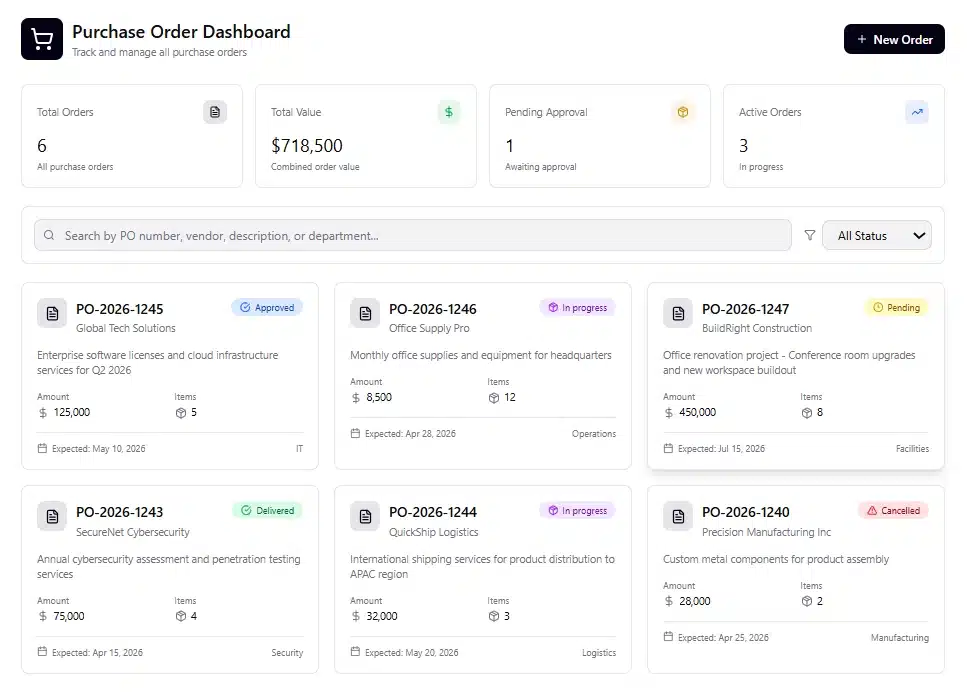
In today’s business environment, handling complex procurement cycles manually often leads to mistakes and inefficiencies. Using procurement software system creates a centralized system where requirements, contracts, and communications are stored in one place. This single source of truth helps teams quickly identify requests that fall outside the agreed scope.
Modern procurement platforms support automated workflows to improve control. A study by industry analysts shows automation reduces financial risk and increases budget visibility, for example by flagging invoices that exceed purchase order values or pausing payment until changes are approved.
In addition, digital tools improve collaboration across departments. When procurement systems are integrated with project management tools, teams can see how changes impact the overall timeline. With an integrated ERP solution, procurement becomes part of a connected strategy, helping organizations maintain better control over project scope and execution.
Conclusion
Scope creep remains a constant risk in procurement, but it can be controlled with the right approach. Clear documentation, disciplined project control, and the use of suitable technology help prevent unnecessary scope expansion. Taking a proactive approach from the beginning is key to maintaining project alignment.
From the initial Statement of Work (SOW) to final delivery, every stage should support the original project objectives. Strong processes ensure that any changes are properly evaluated and managed. This helps protect project value and keeps expectations consistent across stakeholders.
By applying structured change management, educating stakeholders, and using integrated systems, organizations can keep projects on track and budgets under control. Explore our free demo to see how the right solution can support your process.

FAQ about Prevent Scope Creep in Procurement
-
What is the primary difference between scope creep and scope change?
Scope creep is the unauthorized and undocumented expansion of project requirements, often occurring incrementally. Scope change is a formal, documented, and approved modification to the project scope that usually includes adjustments to the budget and timeline.
-
How does an ambiguous Statement of Work (SOW) lead to scope creep?
An ambiguous SOW uses vague language that allows for multiple interpretations. This leads to ‘expectation gaps’ where the buyer assumes certain tasks are included in the price, while the vendor does not, eventually forcing the vendor to do extra work to satisfy the client.
-
What is ‘Gold Plating’ in the context of procurement?
Gold plating occurs when a vendor or project team adds extra features or higher quality materials that were not requested, hoping to please the customer. While well-intentioned, it consumes resources and time not accounted for in the original plan.
-
How is scope creep calculated?
Scope creep is usually calculated by comparing the approved project scope, budget, and timeline against the actual work completed. Procurement teams can measure it by tracking the number of unapproved changes, extra costs, delayed milestones, or additional deliverables outside the original contract or purchase order.
-
What is the best way to manage scope creep?
The best way to manage scope creep is to set a clear statement of work from the start and apply a formal change control process. Every new request should be reviewed for cost, timeline, resource, and contract impact before approval. This helps procurement teams prevent informal changes from disrupting budgets and supplier responsibilities.