












Many businesses suffer from hidden budget leaks when employees ignore official procurement rules. These unauthorized buys create fragmented data and waste negotiated discounts that damage the bottom line. Over time rogue spending builds up and weakens your entire financial health.
Data from The Hackett Group shows that unmanaged purchases can consume 40 percent of indirect spending in organizations with low visibility. Research by CIPS also confirms that professional management saves an average of 15 percent on total expenditure. Using the right tools allows leaders to stop this leakage and protect their profit margins.
Fixing these gaps is essential for gaining total control over your organizational budget, and an effective procurement system plays a key role in preventing Maverick Spend. Read on to discover strategies that can secure your purchasing process for long term stability.
Key Takeaways
|
Manual tracking fails to control modern corporate spend. A digital platform provides real time visibility to ensure every purchase follows policy.

What Is Maverick Spend?
Maverick spend is any purchase made outside official procurement policies or preferred vendor contracts. It happens when employees buy goods and services without following the established company process.
Staff often choose unauthorized options to save time or avoid slow approval cycles. These actions weaken budget control and prevent the business from using negotiated prices that protect profit margins.
Finance teams struggle to track these transactions because they often lack a proper purchase order. This creates gaps in budgeting and forecasting. Using a central system is the only way to maintain accurate vendor management and long term financial stability.
Maverick Spend vs. Tail Spend: Understanding the Difference

Professionals often confuse these two terms but they represent different financial challenges. While both can lead to budget leaks they require different management strategies.
- Tail Spend
Tail spend covers the 20 percent of expenditure across 80 percent of vendors. These high volume low value transactions are inefficient to manage manually and create heavy administrative friction. Automation streamlines the massive number of invoices to reduce the workload on finance teams.
- Maverick Spend
Maverick spend is a compliance failure where employees ignore official contracts and preferred vendors. Unlike tail spend it involves rule breaking that leaks profit margins. Implementing a digital procurement and purchasing workflow is essential to track every dollar and identify unauthorized buys before they impact the budget.
Key Factors Behind Maverick Spend in Modern Businesses
To reduce maverick spend companies must identify why it happens. Rogue purchasing usually stems from internal friction and a lack of visibility across the business.
- Complicated procurement processes
When the official process is too slow or involves too many steps employees find faster ways to buy what they need to avoid delays. - Low awareness of approved suppliers
Staff often do not know which vendors have active contracts. Without clear information they turn to familiar external platforms instead. - Poor user experience in procurement systems
Tools that are difficult to navigate discourage adoption. Teams expect the same speed and ease they find in their daily online shopping. - Decentralized spending decisions
Departments that manage budgets independently often ignore central policies. This leads to inconsistent habits and more purchases made outside of existing contracts.
How to Identify Maverick Spend in Your Organization?
Identifying maverick spend is important for maintaining purchasing control and reducing unnecessary costs. The following points highlight several ways organizations can detect unusual spending behavior effectively.
- Review Purchasing Data
Regularly review purchasing records to identify transactions made outside official channels. This helps organizations detect purchases from unapproved vendors or situations where employees ignore existing contracts and purchasing policies. - Analyze Spending Patterns
Examine spending by department and category to identify unusual purchasing behavior. Frequent purchases from multiple suppliers despite having preferred vendors can indicate inefficiencies and weak spending control. - Monitor Purchase Orders and Vendor Activity
Track purchase orders, invoices, and vendor requests to identify activities that do not follow the proper process. Missing purchase records or frequent requests for new vendors can be signs of non-compliant purchasing behavior. - Use Digital Tools and Reporting
Use digital tools to improve visibility into purchasing activities and spending behavior across the organization. Better reporting allows businesses to identify issues earlier and take corrective action before they affect the budget.
Common Mistakes in Managing Maverick Spend
Aggressive or poorly planned strategies can cause internal pushback within the organization.
- Over-Regulation and Bottlenecks: If the purchasing process involves excessive bureaucracy staff will find workarounds. The goal is to make the compliant path the easiest option. High frequency and low value spend should be automated to avoid unnecessary delays.
- Ignoring the Why: Teams often view unauthorized buys as a disciplinary issue instead of a data point. If a department avoids a contract the vendor might be underperforming or slow. Addressing the root cause of the problem is more effective than using penalties.
- Lack of Executive Buy-In: If leaders do not support procurement policies the rest of the company will not follow them. Managing budget leaks requires a culture of accountability starting from the top. When executives ignore the rules they signal that policies are optional.
Strategies for Reducing Maverick Spend Effectively
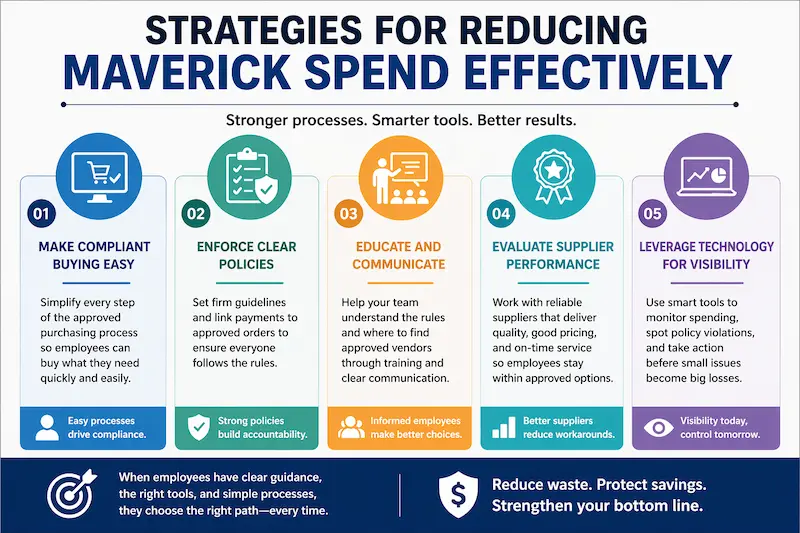
Reducing maverick spend starts with making the approved purchasing process easier, faster, and more reliable for employees. When the official process is too complicated, people are more likely to buy outside procurement policies.
- Simplify the purchasing process
The best way to reduce maverick spend is to make compliant buying the easiest option. A user-friendly procurement portal, pre-approved items, and faster approvals can help employees follow the right process. - Apply clear procurement rules
Policies such as No PO, No Pay can help enforce compliance by preventing payments for unauthorized purchases. This encourages employees to create approved purchase orders before buying. - Improve communication and training
Many cases of maverick spend happen because employees do not fully understand procurement policies. Clear guidance, internal training, and accessible lists of approved suppliers can reduce confusion and improve compliance. - Monitor supplier performance
Sometimes employees bypass approved vendors because those suppliers are slow, expensive, or unreliable. Regular vendor evaluation helps ensure preferred suppliers still meet business needs. - Use procurement software for better control
Modern procurement software helps companies track spending, manage approved vendors, and identify non-compliant purchases more quickly. This gives procurement teams better visibility and stronger control over buying behavior.
Audit Checklists: A Practical Approach to Oversight
Regular audits act as a control for purchasing strategies. An audit should identify patterns rather than just individual errors. Monthly reviews of records show which departments fail to comply and which categories are prone to unauthorized buys. If a department consistently ignores policies it might mean current vendors fail to meet their speed requirements.
An audit checklist should include:
- Reviewing invoices over a specific limit that lack a matching order
- Comparing prices for common items across different locations or teams
- Checking the new vendor log for duplicates or services already covered by contracts
- Interviewing staff to understand why they chose to buy outside the official system
- Verifying that emergency purchases were real emergencies rather than bad planning
Making these audits a regular and transparent process shows that the company monitors compliance. This visibility reduces unauthorized behavior because staff are less likely to break rules when they know the data is being tracked.
The Role of a Procurement Management System
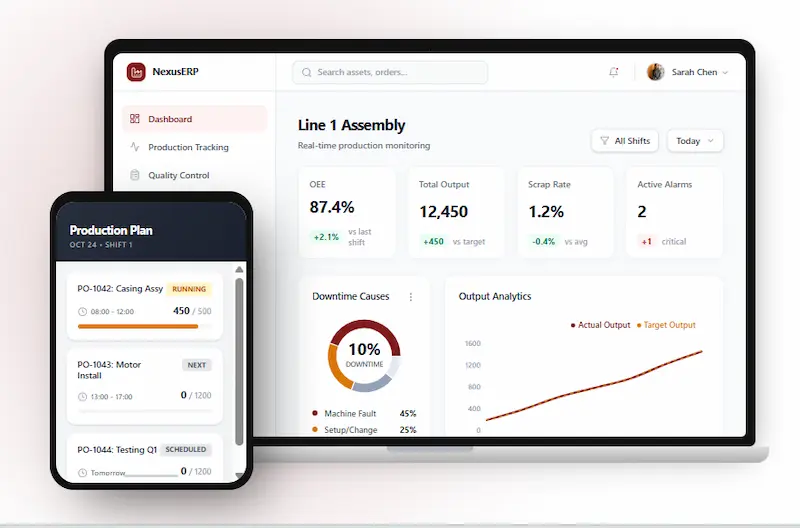
Manual tracking is no longer enough to control corporate spending. A digital purchasing platform centralizes every transaction to provide real time visibility. This ensures that all buying activities remain within official channels and follow company policy.
The software guides employees toward preferred vendors and pre negotiated prices. By enforcing budget limits at the point of entry it stops unauthorized spending before it happens. Faster approval cycles also remove the delays that often drive staff to seek outside alternatives.
These tools provide the data needed to identify and stop savings leakage. Advanced reporting flags non compliant transactions and helps leaders track spending trends. This allows the organization to adjust policies and maintain total financial control without the need for manual oversight.

Selecting the Best Procurement Software for Compliance
To effectively control spending and strengthen compliance, businesses need procurement software with features that support both operational efficiency and purchasing oversight. The table below highlights key features and explains why they play an important role in an effective procurement system.
| Feature | Why It Matters |
| Intuitive Interface | Helps employees easily adopt the system and reduces the chance of returning to old purchasing habits. |
| Mobile Access | Allows employees to make quick purchasing decisions anytime and anywhere. |
| ERP & Accounting Integration | Ensures the procurement system works smoothly with existing tools, eliminating manual entry and reducing operational errors. |
| Automated Three-Way Matching | Compares purchase orders, receipts, and invoices to detect unauthorized or incomplete transactions before payment. |
| Scalability | Ensures the system can support business growth, including multi-currency and multi-location operations. |
Selecting the right solution ultimately helps organizations build a more efficient and controlled purchasing process. A system with the right capabilities can support long term operational efficiency and help businesses adapt as their needs continue to evolve.
Conclusion
Maverick spend impacts financial stability and risk management across every department. While often caused by a need for speed or low awareness the results are costly. Success requires combining clear policies with simple technology that helps staff follow official rules.
Controlling rogue purchases allows the organization to act as a single unit with full visibility. Intentional buying protects the bottom line and prepares the business for market changes. Using the right strategies now creates long term savings and better financial health.
Professional guidance helps teams identify and stop budget leaks before they grow. A free consultation can show you how digital tools transform your purchasing behavior into a strategic advantage. Contact us today to secure your financial future.

FAQ About Maverick Spend
-
Does maverick spend impact corporate sustainability and ESG goals?
Purchasing from unvetted vendors makes it impossible to track the environmental and social impact of the supply chain. Controlling these transactions ensures that the organization only supports suppliers that meet specific sustainability standards and ethical requirements. This visibility is essential for accurate ESG reporting and maintaining corporate reputation.
-
Can strict reimbursement caps effectively reduce unauthorized buys?
Setting clear limits on personal expense claims for business items discourages staff from bypassing the official system. When employees know that purchases made without a prior order will not be reimbursed, they naturally shift toward approved channels. This creates a financial boundary that reinforces policy compliance without needing constant manual monitoring.
-
What legal risks do off contract purchases create for the business?
Rogue buys often bypass the legal review of terms and conditions. This exposes the organization to unfavorable liability clauses or data privacy risks if a vendor handles sensitive information. Ensuring all transactions go through official channels protects the company from hidden legal vulnerabilities and ensures that every contract is properly vetted.
-
How should teams manage spending behavior during a corporate merger?
Mergers often create confusion regarding which vendor list is active. Organizations must consolidate their supplier data into a single platform immediately to prevent staff from using legacy vendors that are no longer authorized. Clear communication during this transition prevents a surge in unauthorized spending while the new structure is being finalized.
-
Does the rise of remote work increase the risk of rogue spending?
Decentralized teams often purchase digital subscriptions or small equipment independently to maintain productivity. Providing virtual payment cards with built-in spending limits allows remote staff to be agile while keeping every transaction visible to the finance team. This approach balances employee flexibility with the need for total budget control.