












Agriculture has always balanced human effort with unpredictable environmental factors. In Malaysia, farmers must protect crops from pests, diseases, and changing weather patterns that can affect production. As the global population is expected to reach 10 billion by 2050, crop protection is becoming increasingly important for maintaining food security.
Without proper protection, crop yields could drop by up to 40 percent due to pests, diseases, and weeds. For Malaysia’s agriculture sector, this creates added pressure to maintain stable production while meeting local demand and reducing reliance on imports.
Today, crop protection goes beyond basic chemical use, combining biological methods, technology, and data-driven practices. This article explores key threats, the evolution of crop protection, and modern innovations in sustainable farming.
Key Takeaways
|
Why Crop Protection Is Important in Modern Agriculture?
Crop protection plays a vital role in modern agriculture software by reducing yield losses caused by pests, diseases, and weeds. Effective protection methods help maintain consistent production, minimize the risk of food shortages, and support overall food security across the supply chain.
It also increases farming efficiency by ensuring key inputs such as water, seeds, fertilizers, and labour are used effectively. Techniques like integrated pest management allow farmers to control threats in a more targeted way while supporting sustainable agricultural practices.
In addition, crop protection contributes to food safety. Certain plant diseases can produce harmful mycotoxins that pose risks to human and animal health. Preventing these issues helps ensure safer, higher-quality crops and supports a more reliable food system.
Traditional vs. Modern Approaches to Crop Protection
Adopting this modern, balanced approach requires a careful evaluation of the trade-offs inherent in each era of pest management. To navigate the complexities of modern crop protection, it is essential to analyze how each methodology performs regarding cost, labor intensity, and long-term environmental viability:
Aspect |
Traditional Crop Protection |
Modern Crop Protection |
Main Approach |
Manual and cultural practices such as hand-weeding, roguing, and physical barriers. | Integrated approach combining biological, cultural, chemical, and technological methods. |
Pest Control Method |
Basic chemicals (sulfur), botanical extracts, and natural predators like predatory insects. | Targeted agrochemicals, biological controls, and integrated pest management (IPM). |
Technology Use |
Minimal, relied on observation and manual labor. | High, includes precision farming, sensors, drones, and data-driven decision-making. |
Chemical Usage |
Limited chemical use; mostly natural substances. | More controlled and regulated chemical use, often biodegradable and highly targeted. |
Environmental Impact |
Low environmental impact but often less effective against large-scale outbreaks. | Lower impact than early synthetic pesticides, focused on sustainability and ecological balance. |
Goal |
Remove or eliminate visible pests and diseases. | Manage pest populations below economic thresholds to maintain long-term productivity. |
Yield Stability |
Less stable, heavily dependent on weather and manual effort. | More stable and predictable due to technology, data, and precision tools. |
By identifying where these methods overlap and where they conflict, it becomes possible to design a cohesive pest management strategy. This integrated perspective ensures that today’s farmers leverage every available resource to foster a truly resilient agricultural system.
Step-by-Step Implementation of a Crop Protection Strategy
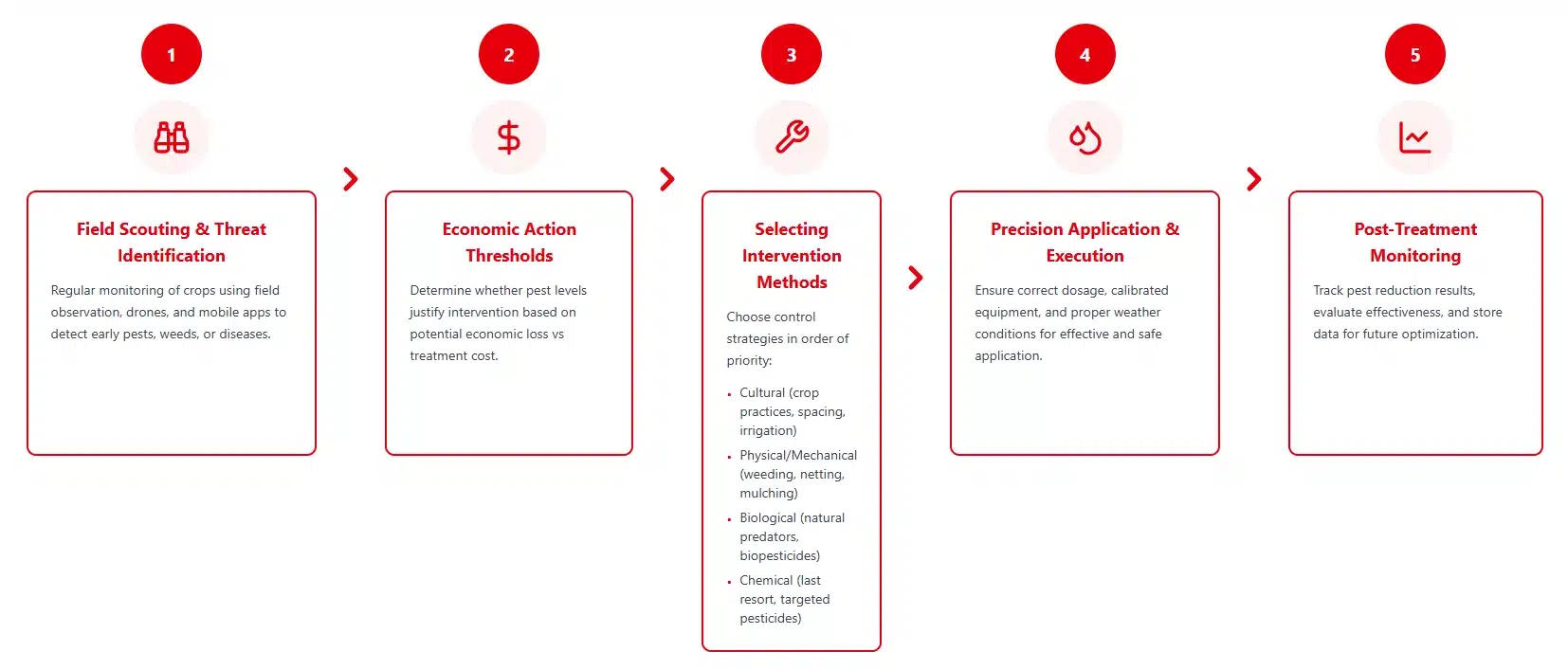
Turning crop protection knowledge into practice requires a structured approach. Today, many agronomists apply Integrated Pest Management (IPM), which combines different control methods to manage pests efficiently while reducing environmental impact. Building an effective crop protection plan involves several key steps.
Step 1: Field Scouting and Threat Identification
A strong strategy begins with regular field monitoring. Farmers need to observe crop conditions and detect early signs of pests, weeds, or diseases. This process is now supported by technology such as drones and mobile apps, which help identify problems faster and more accurately, reducing the risk of incorrect treatment.
Step 2: Establishing Economic Action Thresholds
Not all pest activity requires action. Farmers use economic thresholds to determine when intervention is necessary, based on the potential financial loss compared to treatment costs. This approach helps avoid unnecessary chemical use and keeps production costs under control.
Step 3: Selecting the Appropriate Intervention Modality
Once an economic threshold is breached, the farmer must choose the best method of intervention. This decision follows a hierarchy of control tactics:
- Cultural Controls: Can the problem be mitigated by altering farming practices? Examples include modifying irrigation schedules to reduce leaf wetness or adjusting crop spacing.
- Physical/Mechanical Controls: Can the pest be removed physically? This includes mechanical weeding, installing insect netting, or using mulch to suppress weed emergence.
- Biological Controls: Can natural enemies be introduced or encouraged? This involves releasing predators, parasitoids, or applying biopesticides like Bacillus thuringiensis (Bt).
- Chemical Controls: If the above methods are insufficient, synthetic pesticides are used as a last resort. The selection must prioritize the most targeted, least toxic chemical available that will effectively neutralize the threat.
Step 4: Precision Application and Execution
Proper application plays a major role in effectiveness. Farmers must ensure the right dosage, equipment calibration, and suitable weather conditions to avoid uneven coverage or environmental risks. Variable agriculture tools help improve accuracy and reduce waste.
Step 5: Post-Treatment Monitoring and Evaluation
After treatment, continuous monitoring is essential to assess results. Farmers track whether pest levels decrease and record outcomes for future reference. This data helps improve decision-making and build more effective crop protection strategies over time.
Primary Threats to Agricultural Yields
Effective crop protection begins with understanding the main threats to productivity. Agricultural losses are typically driven by four groups: arthropods (insects and mites), plant diseases, weeds, and vertebrate pests. Each group poses distinct risks and requires specific management strategies to protect crop yield and quality.
- Insects and Other Arthropods
Insects are among the most visible and economically significant agricultural pests. Chewing insects such as caterpillars, beetles, and locusts damage leaves, stems, and fruits, reducing photosynthesis and market value. Sap-feeding insects like aphids and whiteflies weaken plants and can transmit harmful pathogens, leading to severe crop losses if not controlled. - Plant Pathogens (Diseases)
Plant diseases are caused by fungi, bacteria, viruses, and nematodes, with fungi responsible for most outbreaks. These pathogens spread rapidly through spores carried by wind, water, or farming tools, infecting large areas in a short time. They disrupt plant systems, block water and nutrient flow, and can cause widespread crop failure under favorable conditions. - Weeds
Weeds are unwanted plants that compete aggressively with crops for essential resources. They absorb sunlight, soil moisture, and nutrients, often growing faster due to strong adaptation to local environments. Some species also release toxic compounds that inhibit crop growth and act as hosts for pests and diseases between planting cycles. - Vertebrate Pests
Vertebrate pests include rodents, birds, and larger animals that can cause serious localized damage. Rodents are known for eating seeds, damaging crops, and contaminating stored produce after harvest. Birds and other animals may feed on crops near harvest time, reducing yield and requiring targeted control measures.
Chemical Crop Protection Methods: Benefits and Risks
Chemical crop protection uses synthetic or natural compounds to kill, repel, or suppress pests. Despite the rise of organic farming, it remains widely used because it is cost-effective, fast-acting, and dependable, especially during severe pest outbreaks. However, its use requires careful management to balance effectiveness with safety.
1. Herbicides, Insecticides, and Fungicides
Agrochemicals are grouped based on the type of pest they are designed to control, helping farmers select the most effective solution for crop protection.
- Herbicides: Control weeds using pre-emergent or post-emergent applications and can be either selective or non-selective.
- Insecticides: Manage arthropod pests through various modes of action, including disrupting the nervous system or growth processes.
- Fungicides: Prevent or treat fungal diseases by forming surface protection or working systemically within plant tissues.
2. The Challenge of Pesticide Resistance
Pesticide resistance is a major issue in modern agriculture. Repeated use of the same chemical allows resistant pests to survive and reproduce, gradually making the treatment ineffective. To reduce this risk, farmers rotate chemicals with different modes of action and avoid using doses that fail to fully eliminate pests.
3. Environmental and Non-Target Risks
Agrochemical use can impact the environment if not properly controlled. Runoff may carry pesticides into water bodies, while spray drift can affect nearby crops and ecosystems. Certain chemicals also threaten beneficial insects like pollinators, leading to tighter regulations and reduced use of high-risk substances.
Cultural and Mechanical Crop Protection Strategies
Cultural and mechanical methods act as the first line of defense in crop protection. These approaches focus on adjusting farming practices and the growing environment to reduce pest and disease risks before outbreaks occur.
- Crop Rotation and Polyculture: Growing the same crop continuously increases pest and disease buildup, while crop rotation helps break their life cycles by changing host plants each season. Polyculture, or intercropping, improves biodiversity, limits pest spread, and supports beneficial insects.
- Sanitation and Soil Management: Proper farm sanitation reduces the presence of pests and pathogens that survive in crop residues after harvest. Removing or treating infected debris and improving soil health with organic matter can lower disease pressure and support fertigation system.
- Mechanical and Physical Barriers: Mechanical methods remove weeds through tools or manual labor, reducing reliance on herbicides. Physical barriers such as nets, row covers, and greenhouses block pests, while soil solarization uses heat to eliminate weed seeds and harmful organisms in the soil.
Common Mistakes in Crop Protection and How to Avoid Them
Even with advanced tools, crop protection still faces many challenges. Poor decisions in planning or execution can harm both yields and the environment. Recognizing common mistakes helps farmers improve efficiency and reduce risks.
- Over-Reliance on Chemical Interventions and the Pesticide Treadmill
Frequent use of the same pesticide can lead to resistance, reducing its effectiveness over time. This may push farmers to increase doses or switch to stronger chemicals. Rotating products and combining control methods can help prevent this cycle. - Ignoring Soil Health and the Microbiome
Soil health is a key factor in plant defense but is often neglected. Beneficial microbes improve nutrient uptake and help plants resist diseases. Maintaining soil quality supports long-term crop protection. - Poor Timing and Weather Neglect
Applying treatments at the wrong time can reduce effectiveness and waste inputs. Pest control should align with life cycles and weather conditions. Careful timing ensures better results and minimizes losses.
- Misidentification of Pests and Benefits
Incorrect pest identification can lead to ineffective or harmful actions. Some beneficial insects resemble pests and may be mistakenly targeted. Using proper identification methods helps avoid unnecessary damage.
Conclusion
Crop protection is a constantly evolving field that plays a crucial role in global food security. With climate change, shrinking farmland, and a growing population, farming systems must continuously adapt their protection strategies. This shift also reflects a move away from heavy chemical use toward more precise, biology-based, and technology-driven approaches.
Modern agriculture now focuses on smarter systems such as Integrated Pest Management, supported by innovations like AI tools and genetic improvement technologies. When combined effectively, these approaches help farmers increase productivity while reducing environmental impact. This balance is essential to meet future food demand without damaging natural ecosystems.
Avoiding common mistakes and adopting modern strategies can make farming more sustainable and efficient. If you want to explore how these methods work in practice, try a free demo to see the results yourself.

FAQ about Crop Protection
-
What are the most common crop pests in Malaysia?
The most damaging pests in Malaysia include the rice field rat (Rattus argentiventer) in paddy fields, the rhinoceros beetle (Oryctes rhinoceros) in oil palm, and fruit flies (Bactrocera spp.) in tropical fruit crops. Thrips and leafminers are also frequently reported in highland vegetable farms like Cameron Highlands.
-
How does climate change affect crop pest pressure in Malaysia?
Prolonged dry spells increase mite and thrips activity, while excessive humidity accelerates fungal outbreaks like rice blast and chilli anthracnose. Rising temperatures also cause pests to reproduce faster and spread into previously unaffected growing regions across Malaysia.
-
What is the difference between contact and systemic pesticides?
A contact pesticide kills pests only upon direct physical contact, while a systemic pesticide is absorbed into the plant and kills pests that feed internally. For common Malaysian pests like aphids and whiteflies, systemic pesticides generally provide more thorough and longer-lasting control.
-
What is the pre-harvest interval (PHI) and why does it matter?
The PHI is the minimum number of days between the last pesticide application and harvest to ensure residues fall within safe limits. In Malaysia, the Department of Agriculture enforces Maximum Residue Limits (MRL) on all produce. Ignoring PHI requirements can result in rejected produce at domestic markets or export checkpoints.