













Global food systems have reached a critical threshold. As climate change, soil degradation, and biodiversity loss converge, the traditional ‘manual’ farming model is no longer just inefficient,it is becoming obsolete. Leading research from ResearchGate talk about the role of transforming agriculture toward sustainable growth confirms that we are entering an era where technological integration is the only path to survival.
However, there is a catch: sustainable farming is much more complex than traditional methods. It creates a massive amount of data from soil nutrients to water usage that is becoming nearly impossible for farmers to track by hand.
To understand how to make this transition without getting overwhelmed, we need to look at what sustainable agriculture actually looks like in practice. It is a big project with many moving parts. Let’s break down the core principles and see exactly why we need the right tool for sustainable farm in today’s world.
What is Sustainable Agriculture?
Sustainable agriculture is a farming approach that focuses on producing food in a way that protects the environment, uses natural resources responsibly, and supports long-term farm productivity. Beyond just crop yields, this model prioritizes the responsible use of natural resources specifically soil health, water conservation, and biodiversity.
It is built on three essential pillars: environmental care, economic viability for farmers, and social responsibility. Together, these ensure a resilient food system that supports the planet and the farming community over time.
The Three Pillars of Sustainability
The framework of sustainable agriculture is universally understood to be supported by three interconnected pillars: environmental health, economic profitability, and social equity. Often referred to as the “triple bottom line,” these three components must be addressed simultaneously for any agricultural system to be deemed truly sustainable.
1. Environmental Health (Planet): Environmental stewardship focuses on natural resource preservation plus regeneration. Practices prevent soil erosion and naturally replenish nutrients while protecting water quality plus biodiversity. Recognizing farms as living ecosystems allows for the minimization of synthetic inputs in favor of biological processes. This holistic approach manages pests effectively without disrupting the local atmosphere or watershed.
2. Economic Profitability (Profit): Economic viability allows farmers to stay operational while investing in their land. Profitability grows by reducing reliance on expensive inputs like synthetic fertilizers. Diversifying income plus pursuing sustainable certifications captures higher market premiums. Local supply chains retain wealth within the farming community to ensure long term success.
3. Social Equity (People): The social pillar is a vital yet overlooked dimension advocating for fair treatment across the entire food system. It guarantees workers and consumers receive fair wages plus access to healthcare and collective bargaining. Maintaining safe conditions and addressing food security ensures broad community equity for all participants. This approach provides universal access to nutritious and affordable food while protecting essential human rights.
Main Principles of Sustainable Agriculture
Transitioning from an industrial farming model to a sustainable one requires a fundamental shift in perspective. Sustainable farmers view their land as a complex, interconnected web of life rather than a simple medium for extracting calories. This holistic worldview is guided by several core scientific principles that dictate how agricultural ecosystems should be managed.
Prioritizing Soil Health and Conservation
Sustainable agriculture recognizes soil as a living ecosystem where microorganisms cycle nutrients and improve structure. Minimizing physical disturbance protects Soil Organic Carbon plus the delicate microbiome and fungal networks. These practices enhance water infiltration while ensuring superior crop resilience compared to conventional anchoring methods. This holistic management preserves long term fertility plus vital biological diversity.
Water Management and Conservation
Efficient management is vital since agriculture consumes 70% of global freshwater and threatens scarce aquifers. Drip irrigation maximizes productivity by delivering water directly to roots while effectively minimizing evaporation. Increasing soil organic matter allows the ground to function as a sponge for superior water retention. This builds resilience against droughts plus floods while reducing the overall need for supplemental irrigation
Fostering Biodiversity and Ecosystem Services
Sustainable farming replaces vulnerable monocultures with ecosystem diversity to increase long term resilience. Integrating varied crops and livestock leverages natural pollination plus biological pest control services. Protecting habitats like hedgerows supports beneficial insects that naturally fertilize and defend crops. This strategy establishes a stable farm environment powered by biological diversity rather than chemical uniformity.
Closing the Nutrient Loop
Sustainable agriculture replaces the linear industrial model with a circular economy by closing the nutrient loop. Recycling organic waste like manure and compost replenishes soil fertility naturally while preventing nutrient runoff. This process eliminates the need for energy intensive synthetic fertilizers through self sustaining production cycles. Closing the loop ensures a resource efficient system that protects both the farm and local waterways.
Key Sustainable Farming Methods and Techniques
Translating the core principles of sustainability into tangible action requires the implementation of specific, scientifically backed farming methods. While the exact combination of techniques varies depending on the local climate, soil type, and market demands, the following practices are universally recognized as cornerstones of sustainable agriculture.
Sustainable Method |
What is it? |
Primary Benefit |
Crop Rotation |
Systematically changing the types of crops planted in a specific field across different growing seasons. | Naturally replenishes soil nutrients and breaks the life cycles of pests and diseases without synthetic inputs. |
Cover Cropping |
Planting specific species like clover or rye during the off-season to ensure the soil is never left bare. | Prevents wind and water erosion while adding valuable organic matter back into the soil structure. |
Agroforestry |
The intentional integration of trees and shrubs into crop and animal farming systems. | Creates microclimates that protect crops, improves water retention, and sequesters carbon from the atmosphere. |
Integrated Pest Management (IPM) |
A science-based approach that combines biological, physical, and cultural tools to manage pests. | Minimizes the use of toxic chemicals, protecting both human health and local biodiversity. |
Rotational Grazing |
Moving livestock frequently between small pastures to mimic natural herd behaviors. | Stimulates plant growth, improves water infiltration, and turns animal waste into a vital soil resource. |
Environmental Benefits of Sustainable Farming
The widespread adoption of sustainable agriculture has the potential to dramatically reverse many of the ecological crises currently facing our planet. By transitioning from extractive to regenerative practices, agriculture can transform from being a leading cause of environmental degradation into a primary solution.
Mitigating Climate Change through Carbon Sequestration
Sustainable practices like no-till and agroforestry sequester carbon dioxide to reverse the Methane and Nitrous Oxide emissions typical of conventional farming. This sequestration is a pillar of climate-smart agriculture, which supports development plus food security. By increasing organic matter, farmers mitigate warming and improve crop resilience against rising droughts plus floods. This integrated approach transforms agriculture from a climate problem into a vital environmental solution.
Reducing Pollution and Protecting Waterways
Industrial agriculture causes nutrient runoff plus eutrophication which creates aquatic dead zones through oxygen depletion. Sustainable farming prevents this pollution by using slow-release organic composts and precision nutrient management. Cover crops keep nutrients in the soil while eliminating chemical pesticides safeguards human drinking water supplies. This holistic approach protects local waterways from toxic contamination and prevents the collapse of aquatic ecosystems.
Preserving Natural Habitats and Wildlife
Sustainable agriculture halts global deforestation by improving the productivity and ecological health of existing farmland. This shift reduces the pressure to clear wild ecosystems while prioritizing biodiversity within the farm itself. Preserving wetlands and planting hedgerows creates vital corridors plus refuges for diverse wildlife. These strategies support everything from essential pollinators to large mammals to protect the planet’s natural habitats.
Economic and Social Impacts of Sustainable Agriculture

While the environmental benefits of sustainable agriculture are profound, the movement cannot succeed if it is not economically viable for the farmers and socially beneficial for the communities they serve. Fortunately, sustainable practices offer robust economic and social advantages that build long-term resilience.
Long-Term Economic Viability for Farmers
Sustainable farming offers superior long-term profitability by breaking the cycle of dependency on expensive, proprietary inputs. Utilizing internal biological processes reduces variable costs and insulates farmers from volatile agrochemical prices. Additionally, certifications like organic or regenerative command market premiums, ensuring producers capture a larger share of consumer spending.
Community Health and Food Security
Sustainable agriculture addresses the vulnerabilities of centralized industrial systems by promoting decentralized local food networks. Building robust regional supply chains ensures consistent access to nutrient-dense foods through direct channels like farmers’ markets and food hubs. Additionally, reducing toxic pesticide use directly protects the health of farmworkers plus rural communities from chemical exposure. This shift enhances community food security while fostering a more resilient and equitable food system.
Fair Labor Practices and Rural Revitalization
The push for high-volume, low-cost food production in conventional agriculture frequently results in the exploitation of agricultural labor. The social equity pillar of sustainable agriculture demands a departure from this model. Sustainable certifications often include strict criteria for fair labor practices, ensuring that farmworkers receive living wages
Step-by-Step Implementation for Farmers
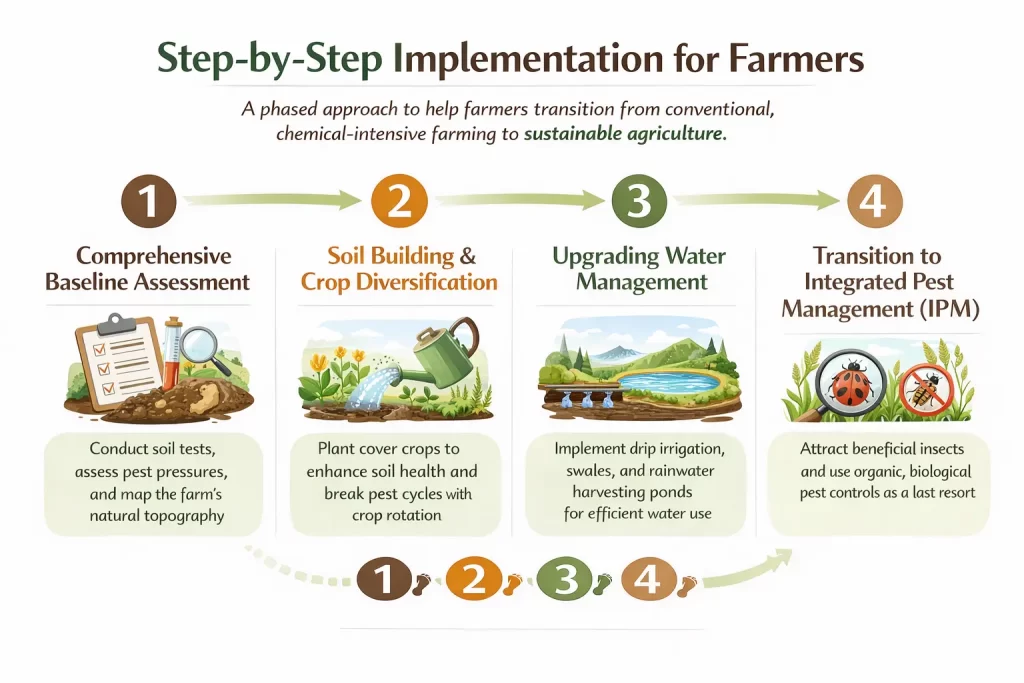
Transitioning from conventional, chemical-intensive farming to a sustainable model can seem daunting. However, by following a structured, phased approach, agricultural professionals can mitigate risks and ensure a successful ecological and economic shift.
Phase 1: Comprehensive Baseline Assessment
The first step requires a thorough audit of the farm’s current ecological health. Farmers should conduct extensive soil testing to determine nutrient profiles, organic matter percentages, and microbial activity levels. Additionally, assessing local water tables, identifying prevailing pest pressures, and mapping out natural topography will inform the site-specific strategies required for a successful transition.
Phase 2: Soil Building and Crop Diversification
Rather than relying on synthetic fertilizers, the focus must shift to building living soil. Farmers should introduce cover crops such as clover, rye, or vetch during off-seasons to prevent erosion and naturally fix nitrogen into the soil. Simultaneously, implementing a robust crop rotation schedule breaks pest cycles and prevents the depletion of specific soil nutrients that inevitably occurs in monoculture systems.
Phase 3: Upgrading Water Management
Efficient water use is a cornerstone of sustainability. Implementing drip irrigation systems ensures that water is delivered directly to the plant roots, minimizing evaporation and runoff. Farmers should also consider constructing swales, keyline designs, or rainwater harvesting ponds to capture and store seasonal rainfall, thereby recharging local aquifers and building vital drought resilience.
Phase 4: Transitioning to Integrated Pest Management (IPM)
Moving away from broad-spectrum pesticides involves adopting IPM strategies. This includes establishing habitat buffers to attract beneficial predatory insects, utilizing trap crops to draw pests away from primary cash crops, and applying organic, biological controls only as a last resort. Continuous monitoring and scouting are essential to address pest outbreaks before they reach economic injury levels.
Common Mistakes and How to Avoid Them
Despite the best intentions, the journey toward sustainable agriculture is fraught with challenges. Recognizing these common pitfalls early can save farmers significant time, money, and frustration.
Underestimating the Transition Period
One of the most frequent mistakes is expecting immediate results. Transitioning involves a 1 to 3 year “valley of death” where yields drop while soil microbiology recovers. Financial risks are mitigated through grants, income diversification, and gradual plot scaling. These strategies prevent failure until yields stabilize and long term growth begins.
Over-Reliance on a Single Alternative Practice
Sustainability requires ecosystem redesign rather than simple input substitution. Swapping chemical pesticides for organic alternatives fails if soil health or monoculture issues remain unaddressed. Farmers must focus on building balanced environments that naturally suppress pests and diseases. This holistic approach ensures long-term agricultural resilience.
Ignoring Local Climate and Soil Nuances
A practice that works wonders in a temperate, loamy environment may be disastrous in a semi-arid, sandy region. Copy-pasting sustainable models from other regions without adapting them to local microclimates is a major pitfall. Successful implementation requires deep observation of local weather patterns, native plant species, and indigenous farming wisdom.
Conclusion
Resilient food systems require rethinking land relationships. Sustainable agriculture is a global necessity for food security rather than just a niche trend. Focusing on environmental health and social equity ensures long term productivity plus resource protection for future generations.
Transitioning to sustainable models presents significant operational challenges. Techniques like Integrated Pest Management and rotational grazing require constant monitoring plus precise record keeping. Manual data management for soil health and labor standards quickly becomes overwhelming for large estates.
Success depends on turning sustainable principles into organized daily actions. Organization is the essential first step toward achieving long term profitability during implementation.
Frequently Asked Questions About Sustainable Agriculture
-
What is the ultimate goal of sustainable agriculture?
The ultimate goal is to meet our current need for food and textiles without damaging the ability of future generations to meet theirs. It balances three equal pillars: environmental health, economic profitability for the farm, and social responsibility for communities and workers.
-
Why is soil health a main focus of sustainable farming?
Healthy soil is a living ecosystem that holds more water and cycles nutrients naturally. By protecting the soil microbiome, farmers reduce their reliance on expensive chemical inputs, improve crop resilience against droughts and floods, and actively sequester carbon from the atmosphere.
-
What is the difference between Crop Rotation and Cover Cropping?
While both methods protect the soil, their primary purposes differ. Crop Rotation systematically plants different cash crops in a sequence to break pest cycles. Cover Cropping involves planting “non-harvest” crops during the off-season simply to shield and nourish the soil, preventing erosion.
-
Does sustainable agriculture actually improve farm profitability?
Yes, over the long term. Conventional farming requires purchasing increasingly expensive synthetic chemicals and proprietary seeds. Sustainable methods significantly reduce these variable input costs. Furthermore, sustainably produced goods often command premium prices in the market due to growing consumer demand.