








In today’s agribusiness, managing farm machinery effectively presents a significant challenge for operational efficiency. Without the right strategies and tools, businesses often face unnecessary downtime and scalability issues.
These challenges can lead to rising operational costs and reduced profitability, directly hindering business growth. Implementing modern agriculture software is the key to streamlining processes and overcoming these hurdles effectively.
This comprehensive guide explores the essential machinery that forms the backbone of modern farming. Read on to discover the tools and strategies needed to build a more resilient and profitable agribusiness.
Key Takeaways
|
What is the Difference Between Farm Machinery and Farm Equipment?
Farm machinery refers to complex, self-powered machines with engines and moving parts designed for heavy-duty tasks. Prime examples include tractors, combine harvesters, and self-propelled sprayers.
Farm equipment is a broader term for all tools used in farming, including both motorized and non-motorized implements. Therefore, all machinery is equipment, but not all equipment, like a simple plow, is machinery.
Why is Farm Machinery Important for Modern Agribusiness?
Investing in the right farm machinery is a strategic imperative for any modern agribusiness aiming for sustainable growth. It directly impacts operational efficiency, production scale, and overall business profitability.
- Increases efficiency and productivity: Machines perform tasks like planting and harvesting much faster and more consistently than manual labor. This allows for larger-scale operations and significantly higher yields per season.
- Reduces dependency on manual labor: Mechanization helps bridge the significant gap caused by agricultural labor shortages in many regions. This ensures critical farming operations can continue without interruption, stabilizing the production cycle.
- Improves harvest quality and quantity: Modern harvesters are engineered to minimize crop damage and loss during and after the harvest. This results in a higher quantity of marketable produce and better overall quality.
- Optimizes resource utilization: Precision technologies like GPS-guided tractors ensure the efficient use of seeds, fertilizers, and water. This reduces waste and lowers operational costs while also minimizing environmental impact.
Types of Farm Machinery Based on Their Functions
To maximize agricultural potential, each stage from soil preparation to post-harvest processing requires specific machinery. Categorizing machines by their function helps in systematic operational planning and strategic investment.
- Soil cultivation machinery: These machines prepare the land for planting by breaking up soil, controlling weeds, and creating a suitable seedbed. Key examples include tractors, plows for tilling, and harrows for refining the soil.
- Planting machinery: Planting machinery is used to sow seeds or plant seedlings with precision to ensure uniform crop development. This category includes row-crop planters, grain drills, and specialized transplanters.
- Maintenance and irrigation machinery: This machinery cares for crops during the growing season by applying nutrients and water in a controlled manner. Sprayers for fertilizers and pesticides, along with large-scale irrigation systems, are common examples.
- Harvesting machinery: Harvesting machinery efficiently gathers mature crops from the field while minimizing loss and preserving quality. Examples range from complex combine harvesters for grains to specialized cotton pickers.
- Post-harvest machinery: After being harvested, these machines process and prepare crops for storage or market to add value. This includes equipment like threshers to separate grain, sorters to grade produce, and balers for hay.
Key Factors in Choosing the Right Farm Machinery
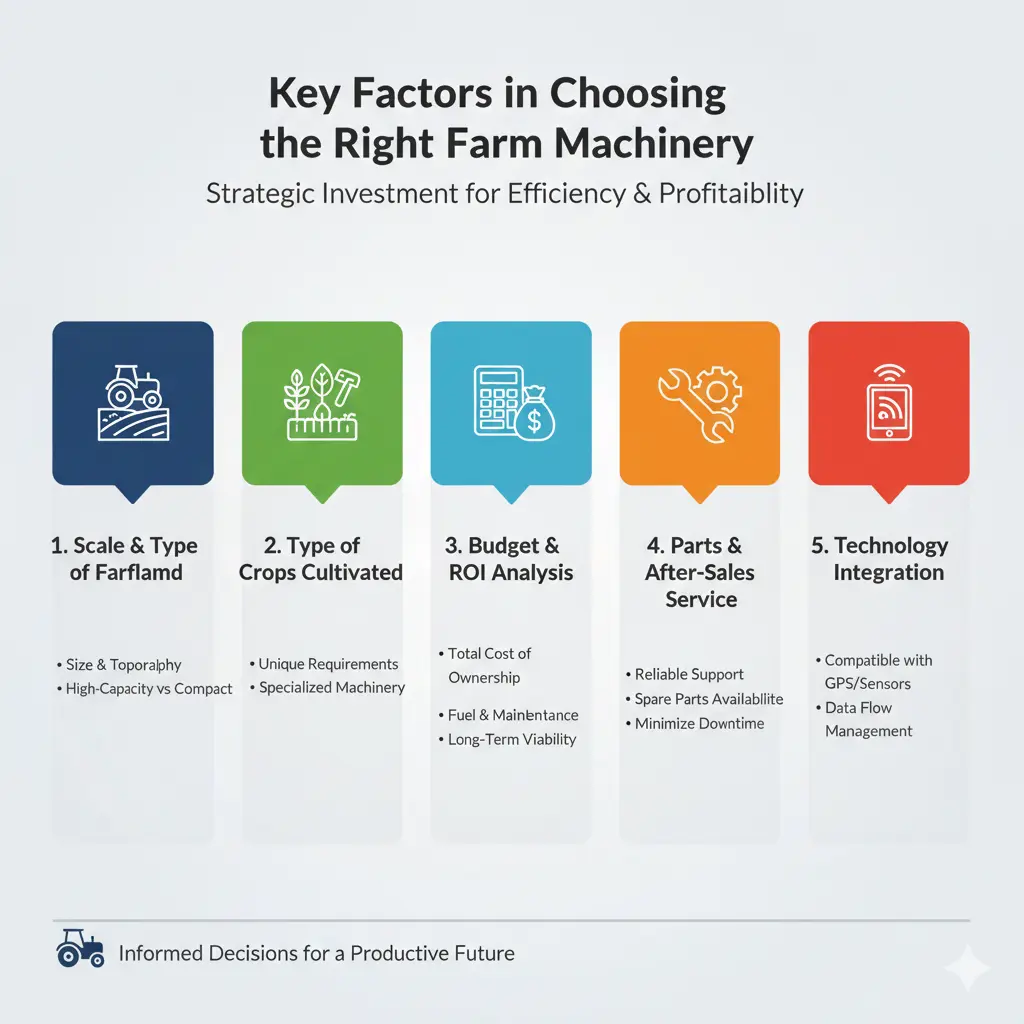
Choosing the right farm machinery is a critical investment that directly impacts long-term efficiency and profitability. A careful analysis of several key factors ensures the selected equipment aligns with your specific business goals.
- Scale and type of farmland: The size and topography of your land are primary determinants in machinery selection. For instance, large, flat farms require high-capacity machines, while hilly terrain needs more compact options.
- Type of crops cultivated: Different crops have unique requirements for planting, maintenance, and harvesting, dictating the need for specialized machinery. A corn harvester, for example, is fundamentally different from a vegetable transplanter.
- Budget and return on investment (ROI) analysis: You should evaluate the total cost of ownership beyond the initial price, including projected fuel and maintenance costs. A thorough ROI analysis determines the machine’s long-term financial viability and payback period.
- Availability of spare parts and after-sales service: Reliable after-sales support and readily available spare parts are crucial for minimizing operational downtime. Ensure your dealer can provide quick service, especially during critical planting or harvesting seasons.
- Integration with existing technology: New machinery should be compatible with your current precision agriculture tools and management software. Seamless integration allows for better data flow and more cohesive operational management across systems.
Strategies for Managing Farm Machinery for Optimal Performance
Acquiring the right machinery is just the first step; effective and proactive management unlocks its true value. A solid strategy prevents breakdowns, extends asset lifespan, and ensures every machine operates at peak efficiency.
- Create a preventive maintenance schedule: Establish a proactive schedule for inspections and servicing based on operational hours or manufacturer guidelines. This step significantly reduces the likelihood of unexpected failures during critical periods like planting or harvesting.
- Track asset utilization and fuel consumption: Use GPS and IoT sensors to monitor operational hours, location, and fuel usage for each asset in real-time. This data helps identify underutilized machines and instances of inefficient operation, such as excessive idling.
- Manage spare parts inventory: Analyze maintenance records and usage history to accurately forecast future needs and maintain an optimal inventory of parts. This ensures critical components are available for quick repairs without overstocking and tying up capital.
- Utilize a centralized asset management software: Integrate all asset management software activities into a single digital platform to gain complete visibility and control. This software automates maintenance scheduling and generates detailed reports to support data-driven decisions.
Latest Trends and Innovations in the World of Farm Machinery
The agribusiness industry is constantly evolving with technological innovations that are revolutionizing food production. Understanding these latest trends is crucial for staying competitive and addressing future challenges effectively.
- Precision agriculture with GPS and IoT: This technology uses sensors, GPS, and data analytics for crop monitoring with extreme precision. For example, machinery can variably apply seeds and fertilizer based on different soil conditions in a field.
- Autonomous agricultural machinery: Self-driving tractors and robotic harvesters are becoming commercially viable solutions that address labor shortages. These autonomous machines can operate 24/7 with minimal supervision, performing tasks with high accuracy.
- Electrification and eco-friendly machines: In response to growing environmental concerns, manufacturers are developing electric and hybrid-powered farm machinery. These machines produce fewer emissions, operate more quietly, and often have lower maintenance costs.
- Drone utilization for monitoring: Drones equipped with advanced cameras and sensors have become powerful tools for monitoring crop health from the air. They can quickly survey large fields to identify issues like pest infestations or irrigation problems for timely intervention.
Study Case: How Farm Machinery Improved Field Productivity
A group of small-scale farmers managing rice and maize fields faced ongoing challenges with manual labor, slow harvesting times, and inconsistent output. Seasonal labor shortages often delayed planting and harvesting, which affected crop quality and overall income. As operational pressures increased, relying solely on traditional methods became harder to sustain.
The farmers began adopting mechanized equipment such as tractors for land preparation and harvesters during peak seasons. This shift reduced the time needed for key field activities and lowered dependency on manual labor. With faster turnaround between planting cycles, they were able to manage larger cultivated areas more efficiently.

Conclusion
The way farm machinery is selected and managed plays a major role in shaping the performance of modern agribusiness operations. When equipment use is guided by clear data and planning, every asset can contribute more effectively to productivity, efficiency, and long-term sustainability.
A structured management approach helps businesses monitor utilization, control maintenance, and align machinery investments with real operational needs. With better visibility and coordination, equipment shifts from being just operational support to becoming part of a broader performance strategy.
Taking time to evaluate how machinery is currently managed can open opportunities for more efficient workflows and stronger cost control. Discussing your operational priorities through a consultation can help identify the most practical path forward.
FAQ About Farm Machinery
-
What is the most common farm machinery?
The tractor is widely considered the most common and versatile piece of farm machinery. It serves as a power source for a vast array of implements used in soil cultivation, planting, and maintenance, making it an indispensable asset for farms of all sizes.
-
What does technology improve farm machinery?
Technology improves farm machinery through precision agriculture, automation, and data analytics. GPS guidance optimizes resource use, autonomous capabilities reduce labor dependency, and IoT sensors provide real-time data for proactive maintenance and better decision-making.
-
What is the main purpose of farm machinization?
The main purpose of farm mechanization is to increase productivity and efficiency in agricultural operations. By replacing manual labor with machines, farmers can cultivate larger areas, reduce operational time, improve crop quality, and lower overall production costs.
-
How to maintain farm machinery?
Maintaining farm machinery involves implementing a preventive maintenance schedule. This includes regular inspections, fluid and filter changes, lubrication of moving parts, and timely replacement of worn components based on manufacturer guidelines and operational hours to prevent unexpected breakdowns.