









Malaysian SMEs take an average of 64 days to receive payment from their customers, according to Experian Malaysia’s State of Credit 2025 report. That gap between issuing an invoice and actually getting paid is where cash flow problems start.
In Malaysia, many SMEs drive GDP growth, but they often struggle with inflation, supply chain issues, and labour shortages. Worse, they are heavily affected by cash flow issues even though they have seen revenue growth.
Even large enterprises aren’t immune; poor cash flow management can hurt business stability and growth. One overlooked factor? Inefficient quotation processes that lead to delays, miscommunication, and lost sales.
So, if you’re managing purchasing for a while and want to refine your quotation skills, this article is for you. We will guide you to understanding what a quotation letter is, what types there are, and how to write one. Let’s get started!
Key Takeaways
|
Overcoming quotation delays and cash flow issues is essential for your business stability. Click the banner below to see how our software handles your sales process.
What a Quotation Letter Actually Covers
A quotation is a document a seller gives to a buyer, detailing the price and conditions for goods or services. Also called quotes, sales quotes, or sales quotations, they inform potential buyers of costs before making a purchase decision.
While not typically legally binding unless included in a contract, accepting a quote generally indicates a commitment to the sale at the specified price. It follows a structured format and plays a key role in various business situations, such as responding to requests for quotations and providing pricing information to customers.
Types of Quotation Letters
Let’s take a closer look at the different types of price quotation letters.
| Type | Purpose | Key details usually included |
|---|---|---|
| Standard Price Quotation | Offers a proposed price for products or services. | Company name, client details, quotation validity/expiry date, product or service description, pricing. |
| Sales Quotation | Breaks down costs for a buyer’s requested order and is sent upon request. | Itemised cost breakdown, quantities, unit price, total price, terms and validity period. |
| Purchase Order (PO) | Confirms a purchase from buyer to seller and formalises the transaction. | Agreed price, quantity, item/service type, delivery details, payment terms, PO number. |
| Business Travel Quotation | Estimates travel-related costs for corporate trips. | Accommodation, transportation, itinerary details, taxes/fees, validity period. |
| Corporate Event Quotation | Summarises costs for organising company events, often across multiple suppliers. | Venue, catering, decorations, entertainment, timelines, supplier breakdown, total cost. |
Customers usually request quotations to compare options before committing to a purchase. Responding quickly gives you an advantage, but make sure your pricing is accurate and realistic before sending it out. A quotation is not legally binding, but quoting a price you cannot honor damages credibility and wastes both sides' time.
Components of Quotation Letter
No matter how you create a quotation, it’s essential to have a well-structured and professional template ready to use whenever needed.
Unlike invoices, which are subject to various legal requirements, quotations have fewer formal regulations. However, including key details in your quotation template helps potential customers understand what they’re agreeing to.
- Price: Clearly state the total cost of the order along with itemized pricing for products or services. You may also include a breakdown of expenses, such as labor, materials, and VAT (if applicable).
- Expiration date: Specify how long the quotation remains valid so customers know the timeframe for accepting or declining the offer.
- Company details: Provide your business name, address, email, phone number, and, if applicable, VAT or business registration number.
- Customer details: Include the recipient’s name, phone number, and email address.
Additional details, such as payment terms or an estimated timeline for project completion or delivery, can also be added for clarity.
Expert Insight
Brent Ladd, Digital Procurement Leader at Deloitte, shared a case where an AI-assisted review process reduced manual purchase request validation from 80% to just 10%. His team noted that once the repetitive work was handled, procurement staff could shift their focus to higher-value tasks.
Reference:
Trustpair – The Evolving Procurement Landscape: Deloitte Experts Tell All
How to Write a Quotation Letter

There are several ways to create a quotation, including using online software, a Word or Excel template, or writing it by hand.
When choosing a method, consider a few key factors:
- First, think about the best way to communicate with customers. Since speed matters, many businesses prefer invoicing software to generate quotes quickly and send them via email, text, or messaging apps like WhatsApp and Facebook.
- Next, consider professionalism. While there’s no required format, a poorly presented quotation can leave a bad impression and affect how customers perceive your business.
To maintain both speed and consistency, many companies now use ERP software with built-in quotation features to create polished, branded quote letters in just minutes.
How to Format a Quotation Letter
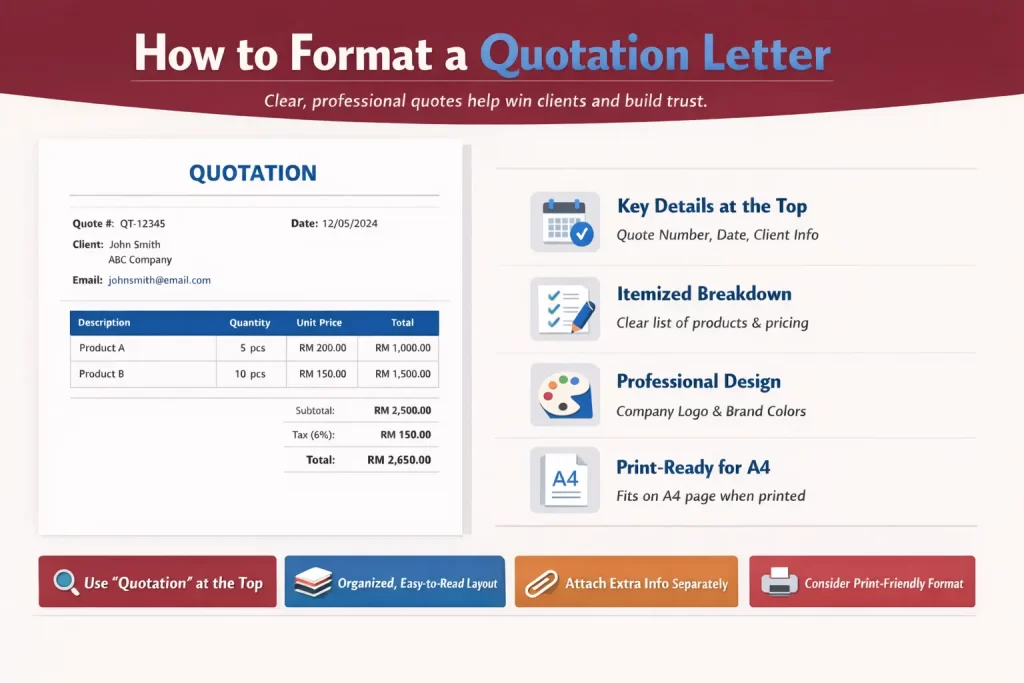 There are no strict legal rules for formatting a sales quotation, but following standard formatting guidelines ensures clarity and professionalism. Many businesses design their quotations similarly to their invoices for consistency.
A quotation template should prominently display the word “Quote” or “Quotation” at the top, making it easy to identify. Key details such as the date, document number, and customer contact information should be included at the top, followed by a breakdown of products and the total price.
To maintain readability, use a clear font and organized layout. Adding a company logo or using brand colors can help personalize the document while keeping it professional.
Even when sending quotations via email, consider how they will appear when printed. Since some customers prefer hard copies, it’s best to format them to fit on an A4 page, with additional details attached as separate files if needed.
Example of a Quotation
Companies can use templates designed for different purposes to generate accurate price quotations. Here is a basic A4 quote letter example that can be created in Word:
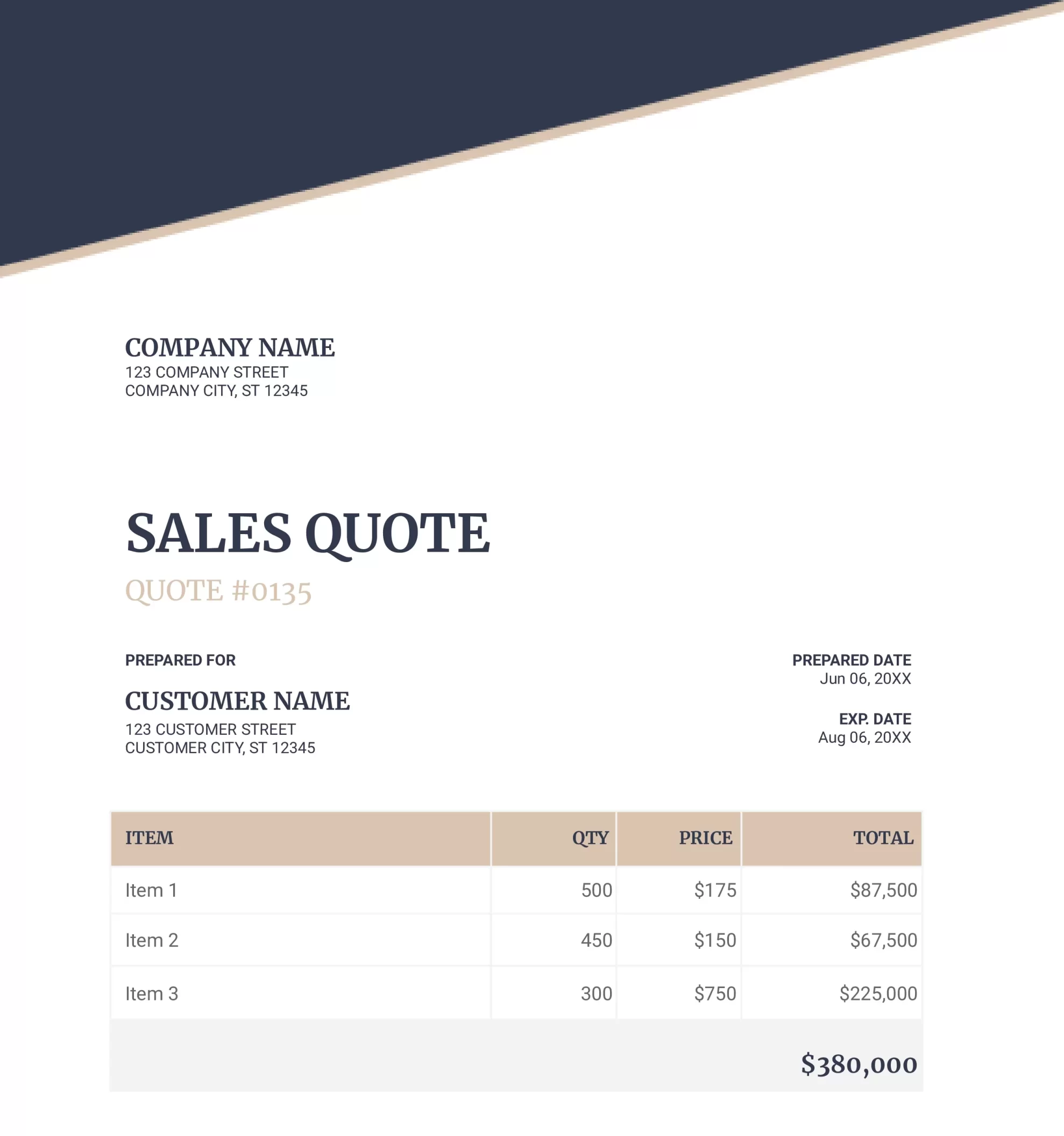 If you want more quotation templates that can be generated and already customized to your brand colors and design, why don’t you try using procurement software? Aside from generating quote letters, it can also act as a bridge for your entire purchasing processes. Click the banner below to try it out!
Create Quote Letters Efficiently with Procurement Software
Templates help keep things consistent, but someone still has to fill them in, chase approvals, and track every version. Once quotation volume picks up, doing all of that manually gets slow and mistakes start slipping through.
Procurement software takes the repetitive work off your team. When comparing options, focus on features that actually matter for quotation handling:
- E-Procurement: Conduct tenders and request quotations online for a faster, more efficient procurement process.
- OCR for RFQ: Automatically scan and process RFQ documents, eliminating manual data entry.
- Automatic Vendor Rating: Evaluate vendors based on factors like punctuality, pricing, and order accuracy.
- Periodic Vendor Reviews: Regularly assess supplier performance to maintain high standards.
- KPI Tracking per Purchaser: Monitor each purchaser’s performance to keep procurement goals on track.
- Cost Savings Reports: Track procurement savings and identify further cost-cutting opportunities.
- Vendor Promotion Management: Organize and manage vendor deals for better collaboration.
- Custom RFQ Printouts: Create tailored RFQ templates for clear, precise requests.
- Budget Tracking & Purchase Limits: Set spending limits and monitor budgets to prevent overspending.
Conclusion
A quotation letter helps businesses provide clear pricing details, ensuring transparency and professionalism in customer transactions. While templates can streamline the process, managing multiple quotes manually can become tedious and time-consuming.
Why waste time on repetitive tasks when you can automate everything with Procurement Software? It lets you generate and send accurate, professional quotes in seconds. No more errors, no more back-and-forth edits.
With features like e-procurement and automatic vendor rating, HashMicro makes your purchasing process smoother and smarter. Try the free demo now and see how effortless procurement can be!

Frequently Asked Questions on Quotation Letter
-
How does a price quote differ from an estimate?
A price quote provides a fixed price for goods or services, which the seller commits to once accepted by the buyer. An estimate, on the other hand, offers an approximate cost that may change based on variables like project scope or material costs.
-
Is a sales quotation legally binding?
While a sales quotation itself isn’t typically a legally binding contract, once the buyer accepts the quoted terms, it can form the basis of a binding agreement between both parties.
-
Can a price proposal include terms and conditions?
Yes, a price proposal can and often should include terms and conditions, such as payment terms, delivery schedules, and warranties, to ensure both parties have a clear understanding of the agreement.
-
How long should a quotation document remain valid?
The validity period of a quotation document depends on factors like market conditions and company policy. Common practice is to set a validity period ranging from 30 to 90 days to account for potential changes in costs or availability.