









 Limited to 100 registrants

You receive your salary on the 7th, but something looks off. Your take-home pay is RM200 less than last month, and you’re not sure why. Was it a tax adjustment? Did your EPF rate change? Or did someone in payroll make a mistake?
This happens more often than you’d think. Without a clear payslip, or the knowledge to read one properly, employees either accept unexplained deductions or spend hours chasing HR for answers.
A payslip isn’t just a receipt for your salary. It’s your proof of income for bank loans, your record for tax filing, and your first line of defense if something goes wrong with your pay. In Malaysia, giving payslips isn’t optional. It’s required by law under the Employment Act 1955. Yet many employees still receive vague or incomplete pay statements, and some don’t receive any at all.
Key Takeaways
Payslips detail income, including basic salary, overtime, and deductions, helping employees understand their earnings.
They are essential for loans, taxes, and salary negotiations, providing proof of income and aiding financial management.
HRIS automates payslip management, streamlining payroll and enhancing accuracy for businesses.

What is Payslip?
A payslip, or salary slip, is more than just a piece of paper or an email attachment on payday. It’s a detailed breakdown of your earnings, showing your base salary, bonuses, deductions, and contributions like taxes and EPF. Understanding the payslip meaning helps employees see where their money goes and what remains as take-home pay, making it a valuable tool for managing finances.
In Malaysia, payslips play a key role in ensuring transparency and accountability between employers and employees. It’s not just about seeing your net salary; it’s about understanding how each deduction adds up, helping you make informed decisions when planning your budget or applying for a loan.
Why Payslip Matters?

Payslips offer employees a complete view of their payroll details, making it easier to understand where each portion of their earnings goes. This transparency builds trust between employees and employers and ensures employees have a clear record of their income.
- See Exactly What You Earn: Payslips show all the details of your pay, including your basic salary, overtime, and deductions. This means you know exactly what you’re getting and what’s being taken out.
- Easier Loan and Credit Approvals: When you want a loan or a credit card, banks look at your payslip to check your income. A payslip makes applying easy and shows banks you’re financially stable, increasing your chances of approval.
- Power in Salary Negotiations: Your payslip proves what you earned at your last job, which can be a strong tool when asking for a higher salary in a new job. This aspect of financial transparency is crucial in talent management, as it empowers employees during negotiations.
- Qualify for Government and Other Services: Payslips help you access services like government benefits or rental agreements since they show you have a steady income.
- Stay on Top of Taxes: Payslips list all your tax deductions, making it easy to track what you’ve paid and helping you prepare for tax season without hassle.
In summary, payslips are a powerful tool beyond just showing salary details. They assist employees with loan applications, government services, and tax management, reinforcing their financial stability and planning abilities.
Payslip Format Example
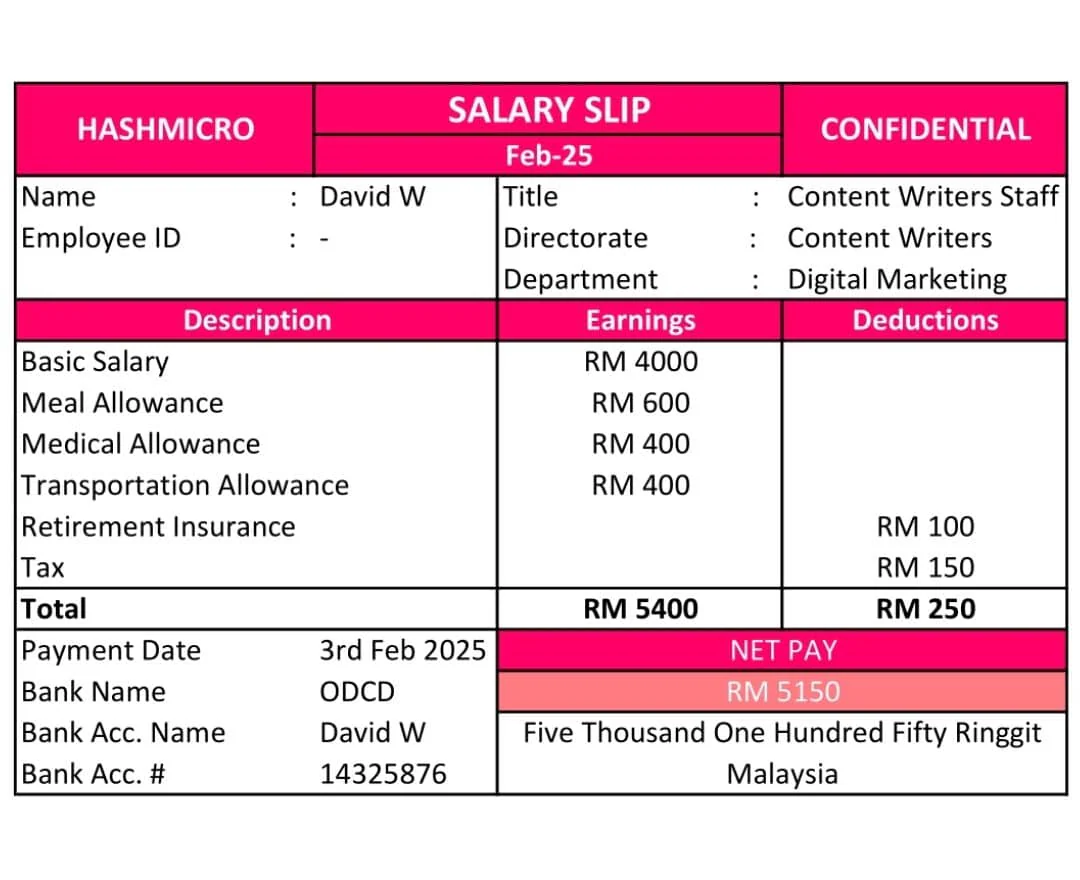 A payslip provides a straightforward breakdown of an employee’s earnings and deductions, making it easy to understand where the final take-home pay comes from. Each section is designed to provide clarity on the payment details, ensuring transparency.
- Company Info: The top of the payslip lists the company name for authenticity and record-keeping.
- Employee Details: Basic information, including the employee’s name, job title, and department, identifies the person receiving the salary.
- Payment Date & Bank Info: This section shows when and where the company paid the salary, listing the payment date, bank name, account name, and account number.
- Earnings Breakdown: Includes the base salary and additional allowances for meals, transportation, and medical expenses.
- Deductions: Lists retirement insurance and tax deductions, providing a total deduction amount.
- Net Pay: After all deductions, the final amount received is prominently shown in the “NET PAY” section.
This payslip layout gives employees a clear picture of their earnings, deductions, and actual take-home pay, making it easier to manage finances and understand compensation.
How to Create Payslips
Creating payslips requires gathering precise information on employee earnings, deductions, and contributions. This process ensures that employees understand their compensation details clearly.
- Include Basic Information: Start by listing essential details such as the company name, employee information (name, position), and the pay period.
- Itemize Earnings: Break down the earnings into sections, including base salary, bonuses, and allowances, to provide a clear overview of total income.
- Detail Deductions: List deductions like taxes and EPF contributions to reflect the amount withheld.
- Calculate Net Pay: After accounting for deductions, show the net pay—the final amount the employee will receive.
Consider using HR software Malaysia to automate payslip creation for an easier, more efficient process, ensuring accuracy and saving time.
Common Payslip Errors (And How to Spot Them)
Most payslip problems fall into a few categories:
- Wrong EPF calculation: Your employer deducts 11%, but calculates it on basic salary instead of total wages (which should include fixed allowances). Result: you’re under-contributing, which affects your retirement fund.
- Missing overtime: You worked extra hours, but they don’t appear on your payslip. This often happens when overtime isn’t recorded on time or submissions miss the scheduled monthly payroll cut off date.
- Incorrect tax bracket: If your salary increased mid-year, your PCB deduction should adjust accordingly. If it doesn’t, you’ll face a tax shortfall when filing
- Unauthorized deductions: Under the Employment Act, employers can only deduct what’s legally required (statutory contributions, tax) or what you’ve authorized in writing. Random deductions without explanation are not allowed
- Outdated personal details: Wrong bank account number, old IC number, misspelled name. These create problems for tax filing and EPF records.
How to Manage Payslips

Effectively managing employee payslips using a payroll system is essential for businesses to maintain transparency, build trust, and ensure accurate payroll records. Here’s how companies can streamline the process of handling pay slip with the right payroll software Malaysia:
- Regularly Review Payslip Accuracy: For each pay cycle, verify that all payslips reflect the correct salary, deductions, and allowances. Ensuring accuracy builds trust with employees and reduces the likelihood of payroll disputes.
- Store Digital Records Securely: Maintain a secure digital record of each payslip. This facilitates employee access and simplifies compliance with financial and legal audits.
- Clarify Deductions and Contributions: Make sure employees understand their deductions, including taxes and retirement contributions. Clear communication helps employees feel confident about their compensation.
- Utilize HRIS Software: Implementing HRIS (Human Resources Information System) software can automate the generation, distribution, and management of payslips. This reduces manual errors, saves time, and ensures employees can easily access their payslip information.
- Provide Clear Channels for Queries: Establish a straightforward process for employees to reach HR with any payslip-related questions. This fosters a transparent workplace and enhances employee satisfaction.
By managing payslips efficiently with the help of HRIS software, businesses can strengthen employee trust and ensure compliance. This maintains accurate financial records that benefit both the organization and its workforce.
"Most payroll errors we see come from manual calculation, not bad intentions. When HR is copying numbers between spreadsheets at month-end, mistakes happen. A good HRIS removes that risk by pulling attendance data and applying statutory rates automatically. The payslip is just the output of a clean process."
How HRIS Software Changes the Process

HRIS software simplifies payslip management by automating tasks such as attendance tracking, overtime calculations, and payroll processing. For businesses looking for a Malaysia payslip solution, this reduces manual errors, speeds up payroll preparation, and keeps employee pay records more consistent and organized.
When integrated with an ERP ecosystem, the HRIS can connect employee records, payroll inputs, and approval workflows in one system. This makes it easier for HR and finance teams to manage payslip software processes, reduce back-and-forth between departments, and maintain clearer payroll documentation.
Key Features for Smooth Payslip Management:
- Face Recognition and GPS Attendance: This feature uses face recognition and GPS to track attendance accurately, ensuring reliable data for payroll.
- Payslip Management for Daily and Hourly Workers: HashMicro’s HRIS easily calculates pay for daily and hourly workers, generating accurate payslips based on actual hours worked.
- Professional Templates for Payslips and Contracts: The software includes ready-to-use templates for payslips and contracts, keeping documents professional and consistent.
- Localized Payroll with Automatic Tax Calculations: HashMicro’s HRIS handles payroll with built-in tax calculations, ensuring compliance with local rules and keeping the payroll process smooth.
Beyond speed, the real win is trust. Employees can access clearer, more consistent pay records, and HR teams can answer payroll questions with audit-ready data, not guesswork. Over time, that transparency reduces payroll friction, improves confidence in compensation, and helps payroll feel like a dependable process rather than a recurring monthly fire drill.
Conclusion
Your payslip is more than administrative paperwork. It’s your financial record, your proof of income, and your protection if something goes wrong. In Malaysia, employers are legally required to provide clear, itemized payslips every pay period. As an employee, your job is to actually read them.
Check your deductions against the statutory rates. Make sure your allowances match your contract. Keep your own records. And if something doesn’t add up, raise it immediately and put it in writing.
For HR teams managing payroll, accuracy and timeliness aren’t just nice to have. They’re compliance requirements with real penalties attached. If your current process involves manual calculations and scattered spreadsheets, consider whether HRIS automation can reduce errors and free up time for work that actually needs human judgment.
FAQ about payslip
In Malaysia, employers are required to provide payslips to employees, detailing earnings and deductions. This ensures transparency and compliance with labor laws, helping employees understand their compensation.
Yes, payslips are confidential documents in Malaysia. Employers must ensure that payslip information is shared only with the employee and kept secure to protect personal data.
Yes, it is compulsory for employers in Malaysia to issue payslips to employees. This practice ensures transparency in payroll details and helps maintain trust between employers and employees.
A payslip advice is a document that provides a detailed breakdown of an employee’s salary, including earnings, deductions, and net pay. It serves as a record of payment and helps employees understand their financial compensation.