





Customer data can look fine on paper, but still fall apart in daily work. One salesperson keeps the latest WhatsApp chat, another tracks notes in Excel, and pipeline updates happen only when someone is reminded. That’s how follow-ups get missed and good leads quietly go cold.
This delay has a real cost. A Harvard Business Review study found that companies responding to leads within one hour are far more likely to qualify them than those that respond later.
A CRM brings everything into one shared place. Customer details, conversations, deal status, and next actions stay connected, so teams can follow up consistently and keep deals moving as sales activity and channels increase.
Key Takeaways
|

Shortlisted CRM Software for Companies in Malaysia
After reviewing different platforms, the safest way to shortlist is to start with your workflow, not the feature list. Some CRMs are built for fast-moving pipelines and high activity volume. Others are better for longer sales cycles, multi-branch teams, or stricter reporting needs. The shortlist below reflects those differences, so you can compare options based on fit, not hype.



Best Because
Seamless connection with Microsoft apps

Best Because
Built-in phone and email integration
Selecting the right CRM software is a key step toward improving customer engagement and achieving long-term success. I trust these recommendations will guide you in finding the most suitable solution for your business.
What is CRM Software?
CRM software is a system that records customer information and links it to the actions your team needs to take. It keeps contacts, deal stages, calls, emails, meeting notes, tasks, and follow ups connected, so you can see the full story in one place.
It matters because most sales problems are not caused by a lack of leads. They come from weak execution, slow responses, unclear ownership, inconsistent follow ups, and managers working with outdated updates. A good CRM makes daily work easier and gives leaders a clearer view of what is actually happening.
Hashy AI Fact

Need to know!
Strengthen your customer relationships with Hashy AI by tracking interactions, identifying sales opportunities, and guiding your team with smart follow-up suggestions.
Request a free demo today!
What CRM Software Actually Does?
A CRM isn’t just a digital address book. In practice, it’s where your sales and customer service teams track every conversation, deal, and task related to a customer or prospect.
Here’s what that looks like day to day:
- Centralizing customer data: Every email, call note, meeting summary, and purchase history tied to one record. No more asking colleagues “have we talked to this company before?”
- Managing sales pipeline: Deals move through stages (lead, qualified, proposal sent, negotiation, closed). Managers see where deals are stuck. Reps know what to follow up on.
- Automating repetitive tasks: Follow-up reminders, email sequences, task assignments. The system handles the routine so reps focus on conversations that move deals forward.
- Reporting on what matters: Conversion rates by stage, average deal cycle, rep performance. Data that helps you spot problems before they become patterns.
- Connecting with your existing tools: A good CRM integrates with what you already use: email platforms, marketing automation, ERP solutions, and e-commerce systems. Data flows between systems instead of living in silos.
The value isn’t the software itself. It’s the visibility and consistency it creates across your team.
What are the Benefits of CRM Software for Businesses in Malaysia?
Using CRM software in Malaysia enables businesses to manage customer interactions, enhance team collaboration, and efficiently track follow-up opportunities within a single platform. In contrast, retail SCM solutions complements this by streamlining supply chain processes to ensure smooth operations.
- One source of truth for customers: everyone works from the same history, so handovers don’t break the relationship.
- Cleaner follow-ups: tasks and reminders reduce “I forgot to reply” and stop leads from going cold.
- More consistent sales execution: managers can spot stuck deals early and coach based on what’s actually happening.
- Better forecasting: you can estimate revenue based on deal stages and conversion patterns, not gut feel.
- Higher productivity: less time chasing updates, rewriting notes, or re-confirming what was already discussed.

22 Best CRM Software in Malaysia for Businesses
We’ve selected the best CRM software options for Malaysian businesses to help boost customer engagement and profitability. Utilise these trusted solutions to streamline customer interactions, enhance team productivity, and foster sustainable growth.
Each CRM on this list has been carefully reviewed for its key features, scalability, and ease of use, allowing you to select the right fit for your business.
1. HashMicro Best CRM Software
HashMicro CRM is built for teams that want customer management and sales tracking in one place, with room to adapt the workflow to how the business actually sells. The focus is on keeping pipeline activity, customer data, and reporting consistent, so managers are not chasing updates across chats and spreadsheets.
It tends to work best when you want a CRM that can sit close to other business systems, especially when sales reporting and operational handoffs need cleaner visibility. The real value is not “more features.” It is fewer gaps between what sales says is happening and what the numbers show at the end of the week.
- Sales forecast & actualization
- Customer segment (RFM) analysis
- Sales mobile apps (Android & iOS)
- Upselling recommendation
- Custom printout in quotation
- Commission tracking management
| Pros | Cons |
|
|
Best for: Malaysian businesses seeking an integrated ERP and CRM solution with local support and the flexibility to scale with evolving operational needs.
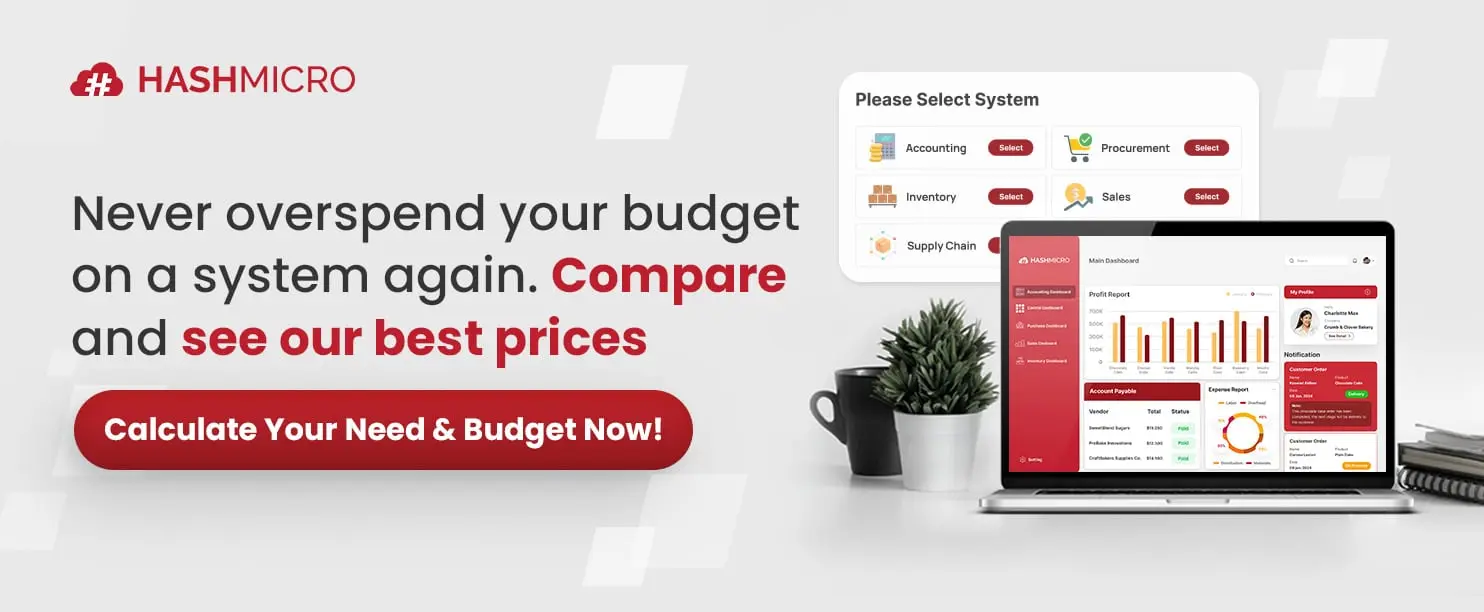
Considering HashMicro’s CRM Software for your business? Click on the pricing calculator below to get a personalized quote and understand the potential investment.
2. Sage CRM System

Sage Sales CRM Software helps businesses streamline customer service, focus on valuable leads, and maintain a clear overview of customer interactions across the company.
It provides tools for capturing and assigning leads, supporting customers through web self-service, managing product catalogs and quotations, facilitating team collaboration, and creating customer surveys.
Best features:
- Lead capturing and routing
- Web self-service
- Product catalogs and quotes
- Internal team collaboration
- Customer survey creation
| Pros | Cons |
|
|
Best for: Companies that already use Sage accounting or ERP and need a CRM tightly connected to finance and back-office processes.
Pricing: To obtain accurate pricing details per user, please request a callback and discuss available options directly with a company representative.
3. Salesforce Cloud CRM Software

Salesforce Cloud CRM is a comprehensive platform that enables businesses to manage leads, contacts, and customer relationships more effectively, thereby increasing their chances of closing deals.
With robust features and flexible customization, it fits the needs of various industries. Additionally, this CRM software integrates seamlessly with other solutions, providing companies with a highly adaptable and versatile system.
Best features:
- Extensive customization
- Lead management and scoring
- Powerful reporting
| Pros | Cons |
|
|
Best for: Large or fast-scaling organizations that need highly customizable, enterprise-grade CRM with extensive integrations and advanced automation.
Pricing: For detailed pricing and licensing information, please get in touch with your local Salesforce Partner or reach out directly to the Salesforce team.
4. Microsoft Dynamics 365 CRM System

Microsoft Dynamics 365 offers sales, marketing, and service features as both cloud and on-premises solutions. It integrates smoothly with other Microsoft tools to improve customer engagement and operational efficiency.
Known for its AI-driven sales and marketing capabilities, it can be easily customized and connected within the Microsoft ecosystem.
Best features:
- AI-powered insights
- Sales navigator integration
- Unified customer data
| Pros | Cons |
|
|
Best for: Enterprises running SAP ERP that require a CRM layer aligned with complex, multi-country operations and governance.
Pricing: Dynamics 365 CRM pricing ranges from $50 to $162 per user per month for Sales, Customer Service, and Field Service, while Marketing starts at $1,500 per tenant per month.
5. SAP CRM Software Malaysia

SAP CRM is a component of the SAP Business Suite, offering companies a comprehensive view of their customers and integrating seamlessly with other SAP modules, such as SAP ERP and SAP HCM, to provide a unified business experience.
Renowned for managing complex transactions and robust workflows, this CRM software Malaysia is ideal for large enterprises, especially in high-tech industries or businesses with sophisticated customer engagement needs.
Best features:
- Sales management
- Marketing management
- Service management
| Pros | Cons |
|
|
Best for: Startups and SMEs that want an easy-to-use CRM with strong marketing, sales, and service tools plus a generous free tier.
Pricing: For detailed pricing and licensing information, please get in touch with SAP.
6. HubSpot CRM Software Malaysia

HubSpot helps businesses manage leads, contacts, and sales pipelines efficiently, with easy-to-use tools and broad integration options trusted by B2B and B2C companies. In Malaysia, HubSpot CRM offers a free plan for small businesses, along with scalable features to support their growth.
Best features:
- Free core CRM
- Email integration
| Pros | Cons |
|
|
Best for: Growing SMEs that need flexible, budget-friendly CRM capabilities with AI assistance and a wide range of add-on apps.
Pricing: HubSpot CRM is available at no cost, while its Marketing Hub, Sales Hub, and Service Hub are offered in four tiers: Free, Starter (starting at $50/month), Professional ($400–$890), and Enterprise ($1,200–$3,200). For added value, the Growth Suite combines all these tools into a single package at a discounted rate.
7. Zoho CRM System Malaysia

Zoho CRM is an easy-to-use platform for managing sales, marketing, customer service, and inventory. It includes key tools like lead tracking, deal management, sales forecasting, and email and social media marketing.
Ideal for small businesses, it offers a free plan for individuals or small teams, as well as budget-friendly plans for larger companies.
Best features:
- Sales automation
- Analytics and reporting
- Omnichannel communications
- Collaboration tools
| Pros | Cons |
|
|
Best for: Sales-driven teams that want a simple, visual pipeline CRM to improve deal tracking and closing rates.
Pricing: Zoho offers transparent pricing with monthly or annual plans, along with four service bundles to choose from. Each bundle includes a complimentary trial. The Standard plan builds on the free version by adding more advanced features.
8. Pipedrive CRM Software

Pipedrive Sales CRM is valued for its simple interface and flexible sales pipelines. It offers tools for managing leads and deals, integrating emails, automating workflows, and using a smart sales assistant powered by machine learning.
Best features:
- Workflow automation
- Call integration
- Customizable sales pipelines
| Pros | Cons |
|
|
Best for: Organizations invested in the Microsoft ecosystem that need CRM tightly integrated with Microsoft 365, Azure, and ERP modules.
Pricing: Pipedrive’s plans range from around $14 to $99 per user per month, offering options from basic pipeline tools to full-featured CRM for large teams.
9. Second CRM Software Malaysia

Second CRM helps Malaysian businesses streamline sales, customer support, service management, and marketing automation, offering an all-in-one solution to manage customer interactions and boost sales. It is highly adaptable across industries and integrates well with other business applications.
Best features:
- Sales force automation
- Customer support and service
- Marketing automation
| Pros | Cons |
|
|
Best for: Malaysian SMEs seeking a no-fuss, locally supported CRM to manage leads, deals, and customer activities quickly.
Pricing: Second CRM Foundation starts at US$ $4.25 per user/month (first five users free lifetime); Sales and Service add-ons cost US$ 25.50 per user/month.
10. Bitrix24 CRM Malaysia

Bitrix24 CRM provides comprehensive lead management, project tracking, team collaboration, and communication tools in a single platform, making it an ideal solution for SMEs, startups, and solopreneurs.
Known for its generous free plan and affordable upgrades, Bitrix24 is a flexible, cost-effective solution for managing customer relationships and business tasks.
Best features:
- Project management
- Lead generation
- File management
- Advanced email features
| Pros | Cons |
|
|
Best for: Teams that want an all-in-one platform combining CRM with collaboration, telephony, and basic project management.
Pricing: For detailed pricing and licensing information, please contact Bitrix24.
11. Zendesk Sell CRM Software Malaysia

Zendesk Sell CRM streamlines sales with tools for account management, email and voice integration, task tracking, and sales monitoring. It’s ideal for small to midsize businesses that need a simple way to manage leads and sales activities.
Best features:
- Lead management
- Dashboard view
- Native integration with Zendesk Support
| Pros | Cons |
|
|
Best for: Businesses that already use Zendesk for support and want a sales CRM that syncs naturally with customer service operations.
Pricing: Zendesk Sell starts at $19 per user per month for the Team plan, with the Growth plan at $55, the Professional plan at $115, and the Enterprise plan at $169 (all billed annually).
12. Freshsales CRM System

Freshsales CRM provides a comprehensive solution for managing the sales cycle, featuring advanced contact management, workflow automation, and detailed reporting.
Its user-friendly interface boosts sales productivity and helps teams engage customers effectively, providing valuable insights to close deals faster.
Best features:
- AI-powered tools
- Chat campaigns
- Sales sequences
| Pros | Cons |
|
|
Best for: Sales teams that prioritize multichannel outreach and AI-driven lead scoring to speed up deal closures.
Pricing: Starts from $0 and the highest pricing are $83 per user/month for the enterprise version. Visit Freshworks pricing for more information.
13. Oracle CRM Software Malaysia

Oracle CRM Software Malaysia is a widely used solution that helps businesses across various industries manage and strengthen their customer relationships, supporting growth and long-term customer loyalty.
Best features:
- Email Marketing
- Sales Force Automation
- Upsell, Quote, and Order Management
| Pros | Cons |
|
|
Best for: Large enterprises with complex processes that require robust, scalable CRM tightly integrated with Oracle’s business applications.
Pricing: Though NetSuite CRM doesn’t publicly list its prices, sources like Capterra list its price at $129 per month per user.
14. Monday.com CRM Malaysia
 Monday CRM is a flexible, cloud-based customer-relationship-management solution built on the monday.com Work OS platform. It allows companies to manage leads, contacts, deals, sales pipelines, and post-sales processes all in one place.
It is highly customizable and integrates smoothly with other tools, enabling teams to automate workflows and visualise their sales data via dashboards.
Best features:
- Customizable Pipelines & Contact Management
- Automation & Integration
- Dashboard & Reports in Real-Time
| Pros | Cons |
|
|
Best for: Project-heavy teams that prefer a board-based, low-code workspace where CRM lives alongside projects and operations.
Pricing: Monday.com CRM starts its pricing list with the Pro Plan at $28 per month per user.
15. Lark CRM Software
 Lark offers CRM‐style capabilities such as lead capture, deal management, and workflows for customer engagement. It is positioned as a platform to help manage the entire sales cycle from lead generation through to deal-closing.
Lark can function as one within a broader workspace ecosystem: communication, tasks, docs, and customer-relationship workflows are integrated in one environment.
Best features:
- Lead Capture & Workflow Automation
- Unified Communications & Document Collaboration
- Cross‐Platform & Global Friendly
| Pros | Cons |
|
|
Best for: Malaysian businesses wanting a flexible CRM embedded in a powerful collaboration suite to boost teamwork and sales productivity simultaneously.
Pricing: According to TrustRadius, Lark CRM starts its pricing list with the Pro Plan at $12 per month per user.
16. Ontraport CRM Malaysia
 Ontraport is an all-in-one business automation platform designed for small to mid-sized businesses and entrepreneurs. It combines CRM (customer relationship management) with marketing automation, e-commerce, membership site tools, and workflow automations into one unified package.
Ontraport aims to reduce the need to use many different tools by providing a single platform that handles CRM, sales pipelines, marketing automation, and operations.
Best features:
- Flexible CRM & Unified Contact History
- Smart Pipelines & Sales Automation
- Marketing Automation + Multi-Channel
| Pros | Cons |
|
|
Best for: Online businesses, coaches, and service providers that need strong marketing automation bundled with CRM and payments.
Pricing: Ontraport CRM starts its pricing list with the Enterprise Plan at $249 per month.
17. Nimble CRM Software
 Nimble CRM is a cloud-based relationship-focused CRM designed especially for small to medium-sized businesses (SMBs) that want to centralise their contacts, communication history, and social/business data in one platform.
It integrates with Google Workspace and Microsoft 365, captures communications (email, calendar), social profiles, and helps users follow up with leads and customers in a meaningful way.
Best features:
- Unified Contact Management & Relationship Intelligence
- Pipeline & Deal Management
- Integrations & Smart Widgets
| Pros | Cons |
|
|
Best for: Small teams that rely heavily on social media and email and want a lightweight, relationship-focused CRM.
Pricing: Nimble CRM starts its pricing list with the Enterprise Plan at $29.9 per user per month.
18. Membrain CRM Malaysia
 Membrain is a CRM and sales-enablement platform designed specifically for B2B sales teams. It goes beyond storing contacts by focusing on how you sell, helping embed sales process, coaching, pipeline management, and performance tracking into a single tool.
It offers modules such as Prospecting, Active Pipeline, Account Growth, and Elevate (for coaching), and includes a built-in CRM database (accounts, contacts, activities) to support those workflows.
Best features:
- Visual Sales Pipeline & Process Enforcement
- Playbooks & Sales Coaching
- Data Enrichment & Custom Fields
| Pros | Cons |
|
|
Best for: B2B companies with complex, consultative sales cycles that need structured sales processes and deep pipeline coaching.
Pricing: According to SoftwareAdvice, Membraid offers a paid version that starts at US $65/month.
19. Salesmate CRM Software Malaysia
 Salesmate CRM is a cloud‐based customer relationship management platform designed to help sales, marketing, and customer support teams streamline their workflows, capture and nurture leads, manage deals and pipelines, and ultimately close more business.
It offers an intuitive interface, customizable pipelines, built-in telephony (calling/texting), email tracking, and a broad set of automation tools to reduce administrative tasks and let teams focus on selling.
Best features:
- Pipeline & Deal Management
- Contact & Lead Management
- Automation & Workflows
| Pros | Cons |
|
|
Best for: Small and midsize sales teams looking for built-in calling, SMS, and simple pipelines in one streamlined CRM.
Pricing: Salesmate CRM starts its pricing list with the Enterprise Plan at $63 per user per month.
20. Nutshell CRM Software Malaysia
 Nutshell CRM is a web-based customer relationship management solution designed especially for small to mid-sized sales teams.
It provides tools for contact and lead management, sales pipeline tracking, email automation, and integration with communication tools (such as Gmail/Outlook) so your sales and customer-engagement efforts are consolidated in one platform.
Best features:
- Sales Pipeline & Lead Management
- Contact & Communication Hub
- Email Automation & Integration
| Pros | Cons |
|
|
Best for: B2B SMEs that want an easy CRM with built-in email marketing and clear reporting without excessive complexity.
Pricing: Nutshell CRM starts its pricing list with the Business Tier at $67 per user per month.
21. Keap CRM Software Malaysia
 Keap CRM is an all-in-one platform designed primarily for small and growing businesses, combining customer relationship management (CRM) with marketing automation, sales pipelines, e-commerce/invoicing, and payment processing.
It allows you to manage contacts, capture leads via web forms/landing pages, automate follow-up workflows (email & SMS), track sales opportunities, schedule appointments, send invoices and collect payments all within one system.
Best features:
- Contact & Lead Management
- Marketing Automation (Email & SMS)
- Invoicing & Payments Integration
| Pros | Cons |
|
|
Best for: Solopreneurs and small businesses that need an all-in-one tool combining CRM, email marketing, and basic automation.
Pricing: According to Business News Daily, Keap CRM’s Max plan starts at US$199/month (3 users, 2,500 contacts).
22. ClickUp CRM Project Management Software Malaysia

ClickUp is an all-in-one work management platform that doubles as a powerful CRM, letting Malaysian businesses manage projects, tasks, and customer relationships in a single workspace. Its highly customizable fields, stages, and workflows make it ideal for teams that want full control over how they track leads, deals, and customer activities.
Best features:
- Highly customizable sales pipelines with drag-and-drop stages
- Centralized customer data with custom fields and views
- Built-in automation to handle repetitive follow-ups and status updates
- Real-time collaboration with chat, comments, and document sharing
| Pros | Cons |
| Flexible all-in-one platform
Strong customization and templates Robust free plan and scalable paid tiers |
Can feel overwhelming for new users
Reporting can be limited for very complex needs Setup time needed to fully optimize |
Best for: Growing teams that want to manage projects, tasks, and sales pipelines in one customizable work management and CRM platform.
Pricing: Free forever plan available; Unlimited at $7/user/month, Business at $12/user/month, and Enterprise with custom pricing (all billed annually).
Overall Comparison of CRM Software in Malaysia
| Provider | Connection Quality | Bank Coverage | Ease of Integration | Data Enrichment |
|---|---|---|---|---|
| HashMicro | ||||
| Sage | ||||
| Salesforce | ||||
| SAP | ||||
| HubSpot | ||||
| Zoho | ||||
| Pipedrive | ||||
| Microsoft Dynamics |
How to Choose The Right CRM Software for Your Business
With numerous CRM options available in Malaysia, it’s essential to choose wisely, as the right solution can significantly impact your customer relationships and business success. Consider these key factors before making a decision.
- Start with your sales process, not the feature list: Map out how leads come in, how they’re followed up, and where deals tend to stall. The CRM should support that flow, not force you to change it.
- Check for local relevance: Does the vendor have customers in Malaysia? Is support available in your timezone? Can the system handle local tax formats or Bahasa Malaysia if your team needs it? These details matter more than global brand recognition.
- Test with real users, not just decision-makers: A CRM might look impressive in a demo but feel clunky in daily use. Get two or three reps to try the system with actual prospects before you commit.
- Verify integration with your current tools: Your CRM needs to talk to your email, accounting software, and any marketing tools you use. Ask vendors specifically: what integrations are native, what requires third-party connectors, and what breaks when systems update?
- Look at total cost, not just subscription price: Factor in setup fees, training, customization, and per-user charges. Some CRMs look affordable until you add the features you actually need.
- Evaluate support like it’s part of the product: When something breaks during a busy sales period, response time matters. Ask for references and find out how fast the vendor actually resolves issues, not just how friendly their sales team is.
- Don’t skip the trial period: Use the free trial to test your actual workflow, not just click around the interface. If the vendor doesn’t offer a trial, ask why.
Why Should Malaysian Companies Use CRM Software?
Here are some crucial reasons why CRM software is critical for Malaysian businesses.
- Strengthen customer relationships: CRM software stores detailed customer information and communication history, helping teams deliver personalised service and build long-term trust.
- Increase sales efficiency: Automated workflows and real-time sales tracking help teams manage leads more effectively, close deals faster, and drive consistent revenue growth.
- Enhance collaboration across departments: By centralising customer data, CRM software ensures that sales, marketing, and support teams work with the same accurate information, improving teamwork and response time.
- Make better business decisions: CRM tools provide clear reports and insights, allowing managers to analyse customer trends and sales performance, which supports smarter, data-driven strategies.
Conclusion
The right CRM doesn’t just store contacts. It gives your team a shared view of every customer relationship, removes the guesswork from follow-ups, and surfaces the data you need to make better decisions.
But no CRM works if your team doesn’t use it. The best system is one that fits your actual sales process, not one that forces you to rebuild how you work. Before committing to any vendor, get clear answers on three things: total cost over three years, how the system handles your specific workflow exceptions, and how fast support responds when something breaks.
If you’re still comparing options and want to see how a CRM handles your sales process, a free consultation with our team can help clarify which setup makes sense for your business.
FAQ About CRM Software
-
Which industries benefit the most from using the best CRM software in Malaysia?
Industries such as retail, real estate, manufacturing, finance, and professional services benefit the most from CRM software in Malaysia. These sectors rely heavily on managing large volumes of customer interactions, tracking sales pipelines, and providing personalized service.
-
What key features should businesses look for when choosing CRM software in Malaysia?
When selecting a CRM software, businesses should consider features such as lead and contact management, sales pipeline tracking, marketing automation, reporting and analytics, and mobile accessibility. Integration capabilities with email, social media, and accounting systems are also crucial.
-
Can a CRM system in Malaysia integrate with other business platforms and tools?
Yes, modern CRM systems in Malaysia are designed to integrate seamlessly with other essential business platforms such as ERP, accounting, marketing, and eCommerce tools.
-
Is a cloud-based CRM Malaysia easy to learn and implement for teams?
Absolutely. A cloud-based CRM in Malaysia is generally easy to learn and implement because it offers a user-friendly interface, guided onboarding, and access from any device.