






When a salesperson leaves a Malaysian business, so does the customer data they were managing. Contacts, follow-up notes, and deal progress stored in personal phones rarely transfer, leaving the next team member to start over with no context.
According to CRM statistics compiled by CRM.org, 68% of organizations struggle with data silos and 70% of sales time is lost to manual admin, both patterns that point to the same root issue: customer data is not being managed in a shared, structured system.
This guide compares 15 CRM options in Malaysia by features, pricing, and business fit, to help teams manage sales, leads, and customer accounts more consistently from first contact to retention.
Key Takeaways
CRM software centralises leads, customer details, communication histories, deal stages, and follow-up activities in one shared record so every team member works with the same information.
A CRM fixes ownership issues, missed follow ups, and unclear pipeline status by keeping every activity connected in one place.
When CRM works properly, expect fewer missed follow ups, a cleaner pipeline, and better forecasting across reps and branches.
Choosing the right CRM starts with matching your actual sales process, not chasing the most popular brand.
Sustaining a competitive edge depends on how effectively your organization nurtures its most valuable asset: the customer. By centralizing lead management and communication histories within an integrated CRM, your teams can deliver the personalized experiences that drive long-term business growth.

The CRM software Shortlisting Rule that Saves You Time
Start with your workflow, not brand popularity. A CRM that works for a high volume pipeline can feel wrong for a long cycle B2B team. A tool that looks perfect for one branch can create chaos when you run multi branch operations.





Best Because
Built-in phone and email integration
Best Because
Flexible project management with powerful automation features.
After exploring the top CRM software options above, you may want a clearer comparison of each solution’s strengths and the types of businesses they are best suited for. The table below highlights key advantages and ideal use cases, helping you choose the right CRM for your sales and customer management needs.
Quick Overview of Top CRM Software
| Software | Strength | Why we choose this software | Pricing Model |
|---|---|---|---|
HashMicro |
All-in-one CRM with sales tracking, forecasting, RFM analysis, and customizable pipelines | Built for Malaysian teams needing integrated CRM with strong reporting, mobile access, and scalable workflows | Custom Pricing |
Sage CRM |
Structured CRM with lead handling, customer service workflows, and back-office integration | Ideal for businesses already using Sage ecosystem and needing better visibility across teams | Custom Quote |
Salesforce |
Highly customizable CRM with advanced reporting, automation, and integrations | Best for large or scaling organizations needing enterprise-grade flexibility | Custom Quote |
Microsoft Dynamics 365 |
CRM integrated with Microsoft tools and AI-powered insights | Perfect for teams using Microsoft ecosystem needing unified customer data and enterprise coverage | Subscription ($50–$162/user/month) |
SAP CRM |
Enterprise CRM with strong governance, real-time analytics, and SAP integration | Suitable for large enterprises managing complex workflows and requiring deep system integration | Custom Quote |
HubSpot CRM |
User-friendly CRM with free tier and strong marketing automation tools | Great for SMEs wanting easy onboarding and scalable CRM with add-ons | Free / Subscription ($50–$3,200/month) |
Zoho CRM |
Affordable CRM with automation, analytics, and omnichannel communication | Popular among SMEs needing flexible and cost-effective sales tracking tools | Subscription (varies by plan) |
Pipedrive |
Visual sales pipeline CRM with workflow automation and deal tracking | Best for sales-focused teams wanting simple, fast adoption and productivity tools | Subscription ($14–$99/user/month) |
Second CRM |
Locally supported CRM with sales automation and practical SME features | Ideal for Malaysian SMEs needing easy setup and localized support | Subscription ($4.25/user/month + add-ons) |
Bitrix24 |
All-in-one CRM with collaboration, task management, and communication tools | Suitable for teams wanting CRM combined with internal collaboration features | Free / Subscription |
Zendesk Sell |
CRM integrated with customer support workflows and dashboards | Best for teams already using Zendesk and aligning sales with support | Subscription ($19–$169/user/month) |
Freshsales |
CRM with AI-driven lead scoring, automation, and multichannel outreach | Good for teams focusing on faster conversions and efficient sales processes | Free / Subscription (up to $83/user/month) |
Oracle CRM |
Enterprise CRM with strong security, compliance, and scalability | Best for large organizations needing robust infrastructure and governance | Subscription (around $129/user/month) |
Monday CRM |
Flexible CRM with visual pipelines, automation, and dashboards | Suitable for teams wanting customizable workflows in a visual work OS | Subscription (from $28/user/month) |
Salesmate |
Simple CRM with automation, communication, and pipeline tracking | Ideal for SMEs needing affordable and easy-to-use CRM with built-in communication tools | Subscription (from $63/user/month) |
What Is CRM Software?
CRM software is a system that centralises lead, prospect, customer, and sales activity data in one place. It helps teams assign lead ownership, track deal stages, schedule follow-ups, store communication history, and measure conversion and forecast performance.
Unlike spreadsheets or contacts stored on personal phones, CRM gives managers and sales representatives a shared record of every customer journey. For Malaysian businesses, the right CRM should match their sales workflow, communication channels, reporting needs, integrations, access controls, and growth plans.
Benefits of a CRM Software
A CRM is not just a contact list. It is where your team records customer information and ties it to action. Calls, emails, meeting notes, tasks, and follow ups stay connected, so the next rep can continue without guessing.
In practice, CRM software helps you solve ownership issues, missed follow ups, and unclear pipeline status. It also gives managers a clearer view of what is happening, because the data is updated through daily activity, not through weekly reminders.
| Key Feature | Without This Feature | With This Feature |
|---|---|---|
| Omnichannel Communication | Leads from WhatsApp, email, and web forms are tracked separately. | Customer conversations stay in one record, making follow-ups easier to continue. |
| Visual Pipeline & Lead Management | Sales reps rely on memory or spreadsheets to track deal progress. | Each deal stage is visible, so stalled leads and next actions are easier to spot. |
| Accounting & ERP Integration | Sales teams need to check invoices or payment status in another system. | Customer, invoice, and account details can be reviewed from connected systems. |
| Cloud-Based Mobile Access | Field sales updates are delayed until reps return to the office. | Reps can update calls, notes, and deal stages directly from their phone. |
| Automated Follow-up Reminders | Leads go cold when follow-ups depend on manual tracking. | Tasks and reminders are triggered based on deal stage or inactivity. |
| Real-Time Sales Reporting | Managers wait for weekly updates to understand pipeline status. | Pipeline value, conversion rates, and sales activity can be reviewed in real time. |
"A strong and well-implemented CRM system doesn’t just store customer data, it transforms it into actionable insights that drive sales, improve retention, and strengthen customer loyalty"
15 Best CRM Software in Malaysia for Businesses
After reviewing different platforms, the safest way to shortlist is to start with workflow fit. Some CRMs are built for fast pipelines and high activity volume. Others are better for longer cycles, multi branch teams, or stricter reporting needs. The shortlist below reflects those differences, so you can compare options based on fit. Their order does not represent an absolute performance score, as the right CRM depends on team size, sales workflow, required integrations, budget, and implementation scope.
Their order does not represent an absolute performance score, as the right CRM depends on team size, sales workflow, required integrations, budget, and implementation scope.
1. HashMicro Best CRM Software
HashMicro CRM suits teams that want customer management and sales tracking in one place, with room to adapt the workflow to how you sell. The focus is keeping pipeline activity, customer data, and reporting consistent, so managers are not chasing updates across chats and spreadsheets.
- Sales forecast and actualization
- Customer segment analysis using RFM
- Sales mobile apps for Android and iOS
- Upselling recommendation
- Custom printout in quotation
- Commission tracking management
| Pros | Cons |
|
|
HashMicro offers a localized ecosystem that facilitating sales automation for growing firms. This enables your leadership to scale via the best CRM software in Malaysia while maintaining SST and LHDN MyInvois compliant records with unlimited user access.
Considering HashMicro’s CRM Software for your business? Click on the pricing calculator below to get a personalized quote and understand the potential investment.
2. Sage
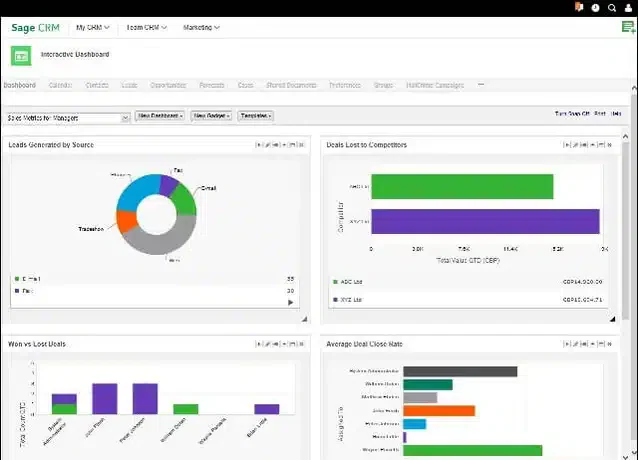
Sage CRM enables businesses to maintain better control over customer interactions by centralizing information and improving collaboration across departments. This helps teams respond more efficiently, make informed decisions, and strengthen long-term customer relationships.
Sage CRM connects with Sage 200 and Sage X3, allowing users to view customer data, invoice history, and order records in one place. Its web self-service feature also lets customers submit and track service requests independently.
Best features:
- Lead capturing and routing
- Web self service
- Product catalogues and quotations
- Internal team collaboration
- Customer survey creation
| Pros | Cons |
|
|
Sage CRM provides strong financial integration to synchronize your sales data with core accounting workflows. This connectivity allows your leadership to maintain SST and LHDN MyInvois compliant records through a scalable CRM system in Malaysia to ensure total financial accuracy as you scale.
3. Salesforce
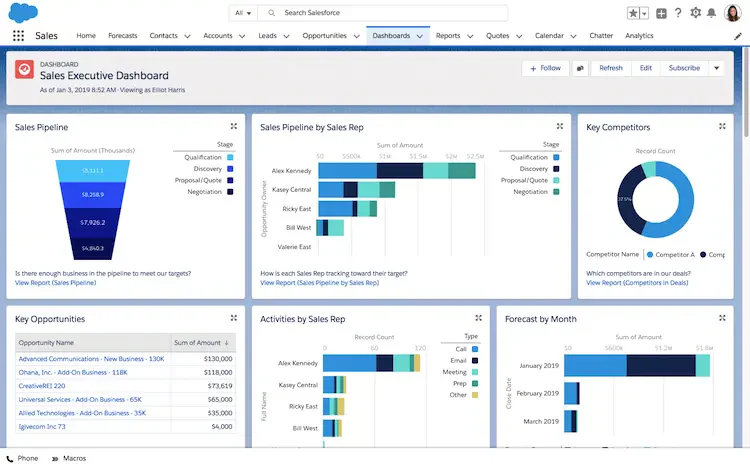
Salesforce known for having one of the largest third-party app ecosystems through Salesforce AppExchange. Salesforce is a widely used CRM platform that helps businesses improve customer relationship management and operational efficiency. Its scalable ecosystem makes it suitable for organizations with complex and growing business requirements.
Salesforce stands out through AppExchange, which lets teams add marketing, service, analytics, and automation tools as needs grow. It also supports multiple pipelines and approval layers across departments.
Best features:
- Extensive customization
- Lead management and scoring
- Advanced reporting
| Pros | Cons |
|
|
Salesforce is more commonly used by mid-to-large organizations in Malaysia with complex sales cycles, multiple teams, or cross-border operations that require a CRM capable of scaling alongside growing business requirements.
4. Microsoft Dynamics 365
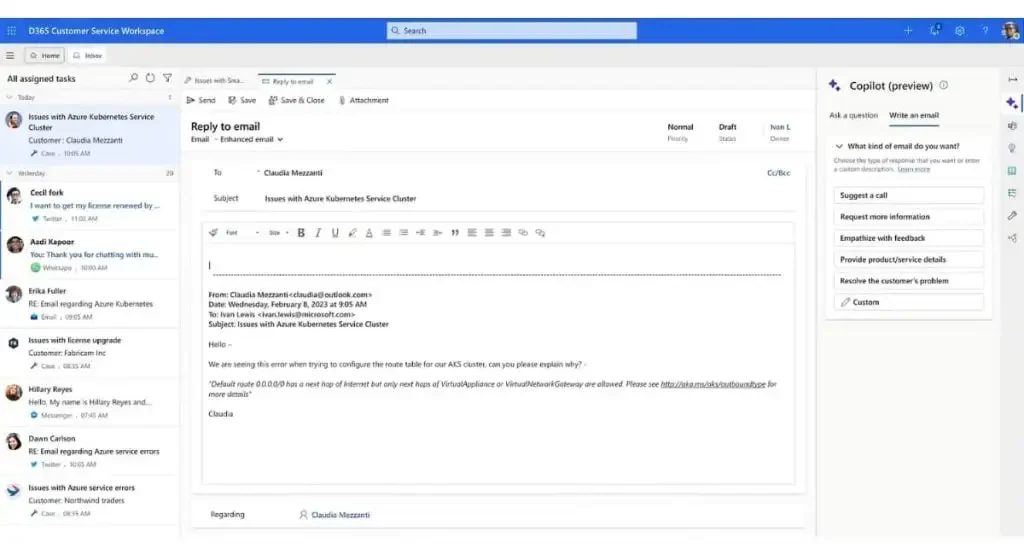
Microsoft Dynamics 365 is widely used by mid-to-large organizations in Malaysia that already operate within the Microsoft ecosystem, including Outlook, Teams, and Power BI for daily business functions. It suits companies that need CRM integrated into an existing technology infrastructure rather than a standalone system.
Microsoft Dynamics 365 connects natively with Microsoft tools such as Outlook, Teams, and Power BI, helping organizations centralize customer information within a familiar working environment.
Best features:
- AI powered insights
- Sales Navigator integration
- Unified customer data
| Pros | Cons |
|
|
Microsoft Dynamics 365 suits organizations in Malaysia that already run Microsoft tools across daily operations, making it a practical fit for teams that want CRM data connected to the same environment as their email, collaboration, and reporting workflows.
5. SAP
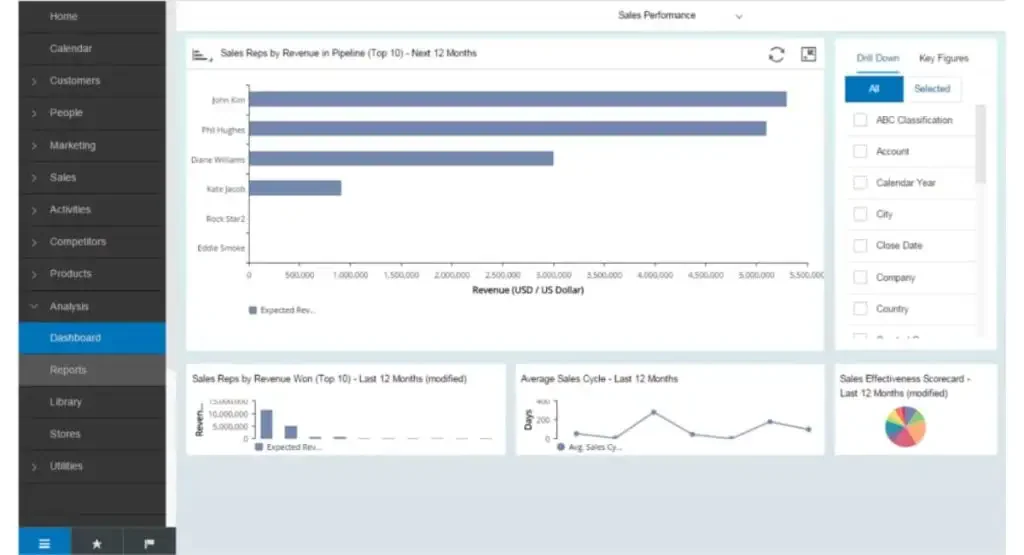
SAP CRM is designed for complex enterprise environments that need strong governance and integration with SAP systems. This integration allows your leadership to maintain SST compliance and operational transparency through a unified enterprise CRM software in Malaysia.
SAP CRM’s main strength is its connection with the broader SAP environment. For businesses already using SAP systems, customer data, sales activity, and service records can follow existing enterprise workflows without relying on separate manual records.
Best features:
- Sales management
- Marketing management
- Service management
| Pros | Cons |
|
|
Large Malaysian manufacturers, GLCs, and multinationals already running SAP for finance or supply chain typically find it more practical to keep CRM within the same environment rather than managing customer records separately.
6. HubSpot
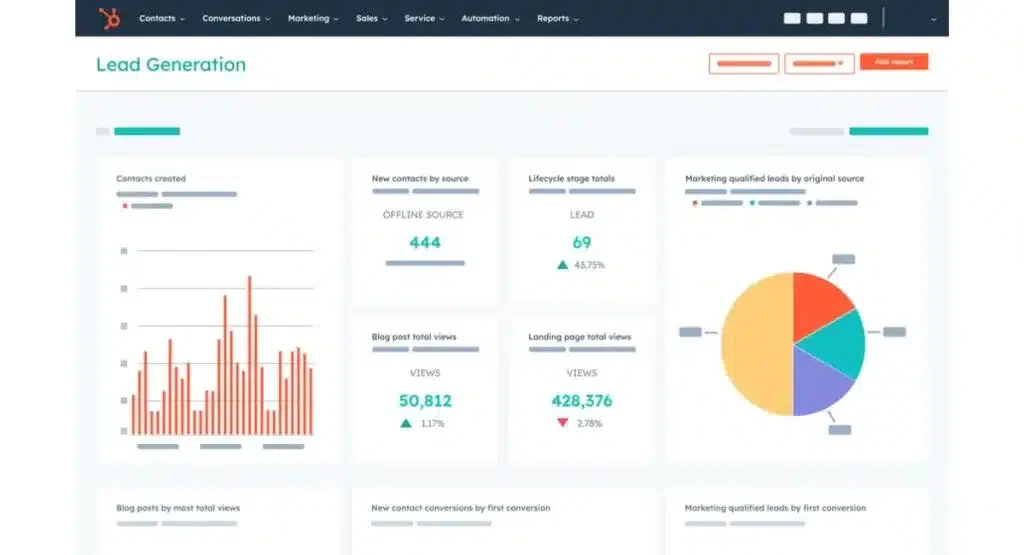
HubSpot is known for ease of use and strong onboarding, and it can suit teams that want a simple start and flexible growth options. This intuitive design allows your leadership to accelerate user adoption through a flexible CRM software in Malaysia while ensuring all records remain SST compliant as your business scales.
HubSpot’s key distinction is its connected contact timeline across sales, marketing, and service. Teams can view email activity, chat history, and deal progress from one customer record.
Best features:
- Free core CRM
- Email integration
| Pros | Cons |
|
|
Why this suits Malaysian businesses: HubSpot offers an intuitive platform that streamlines inbound marketing and sales automation for scaling teams. This enables your leadership to accelerate user adoption through a flexible HubSpot CRM software in Malaysia while maintaining SST and LHDN MyInvois compliant records.
Malaysian businesses with dedicated marketing teams, particularly those in digital services, e-commerce, or B2B tech, tend to find HubSpot practical because the sales and marketing functions share the same contact data without requiring a separate integration layer between them.
7. Zoho
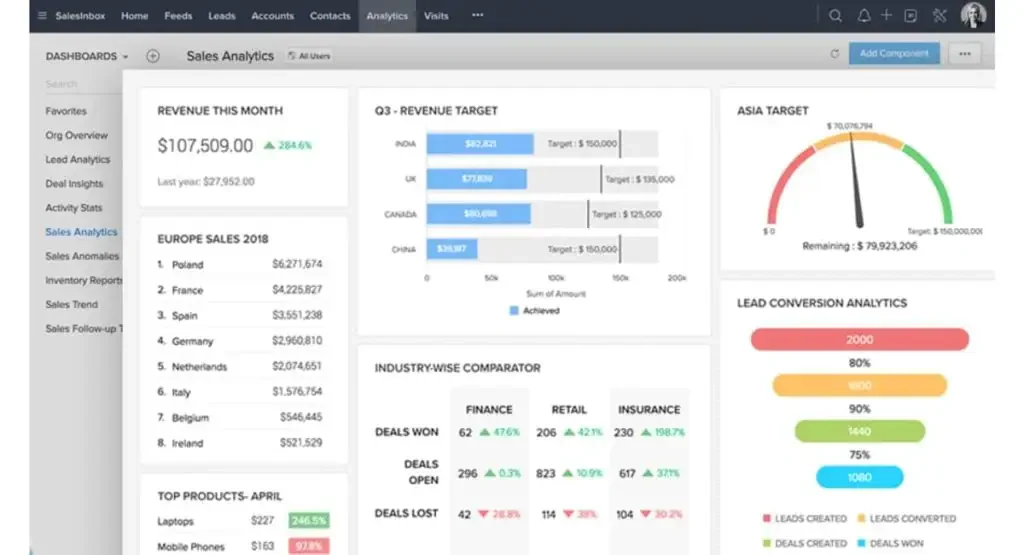
Zoho CRM is a flexible platform designed to help businesses manage customer relationships more effectively while maintaining operational visibility. Its affordable pricing and scalable functionality make it a popular choice for businesses seeking a cost-effective CRM software in Malaysia.
Zoho CRM includes Zia, a built-in AI assistant that surfaces deal predictions, detects unusual sales activity, and suggests optimal contact times. Available across most subscription levels without requiring an enterprise plan.
Best features:
- Sales automation
- Analytics and reporting
- Omnichannel communications
- Collaboration tools
| Pros | Cons |
|
|
Malaysian SMEs that already use other Zoho products, such as Zoho Books or Zoho Inventory, tend to find Zoho CRM practical because customer, sales, and financial data can stay within the same ecosystem without needing separate third-party connectors.
8. Pipedrive CRM Software
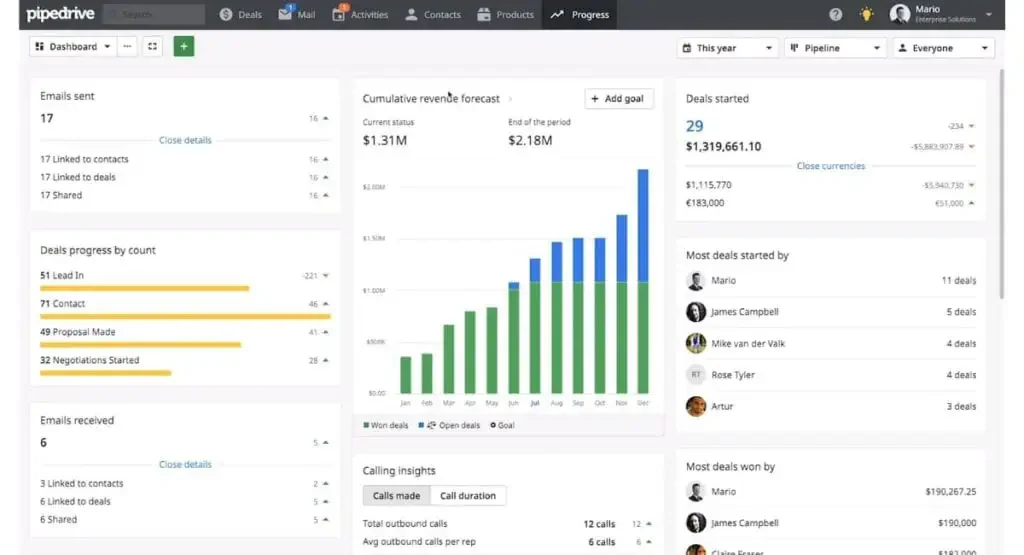
Pipedrive is commonly used by small to mid-sized sales teams in Malaysia, particularly in industries such as property, insurance, and B2B services, where the main priority is tracking deal stages and managing follow-up timing across a structured pipeline rather than deep back-office integration.
Pipedrive suits for simple pipelines and quick adoption, especially for sales teams that want visual deal tracking. This visual interface allows your team to maintain sales momentum through a user friendly CRM software in Malaysia while protecting your business from missing high-value local leads.
Best features:
- Workflow automation
- Call integration
- Customisable pipelines
| Pros | Cons |
|
|
Sales teams in Malaysian property, insurance, and B2B services often use Pipedrive because the pipeline view gives each rep a clear picture of where every deal stands, which reduces the coordination overhead that tends to build up when follow-ups are tracked manually.
9. Second
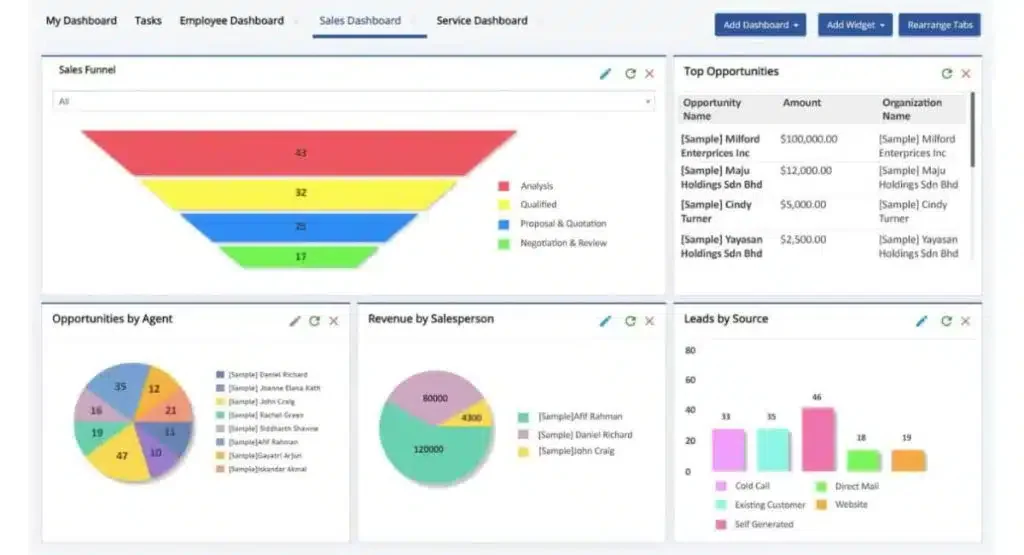
Second is a CRM built specifically for the Malaysian market, suited for local SMEs that prioritize ease of onboarding and local support over a broad feature ecosystem.
Second CRM supports Malaysian SMEs with a focus on practical setup, sales automation, and local support. This presence allows your leadership to leverage dedicated local MY support while ensuring workflows remain SST compliant through a specialized CRM system for Malaysian SMEs.
Best features:
- Sales force automation
- Customer support and service tools
- Marketing automation
| Pros | Cons |
|
|
Second CRM is built for the Malaysian market, which means its onboarding, pricing structure, and support channels are set up for local SMEs rather than adapted from a global product, a distinction that tends to matter most during implementation and when issues need to be resolved quickly.
10. Bitrix24
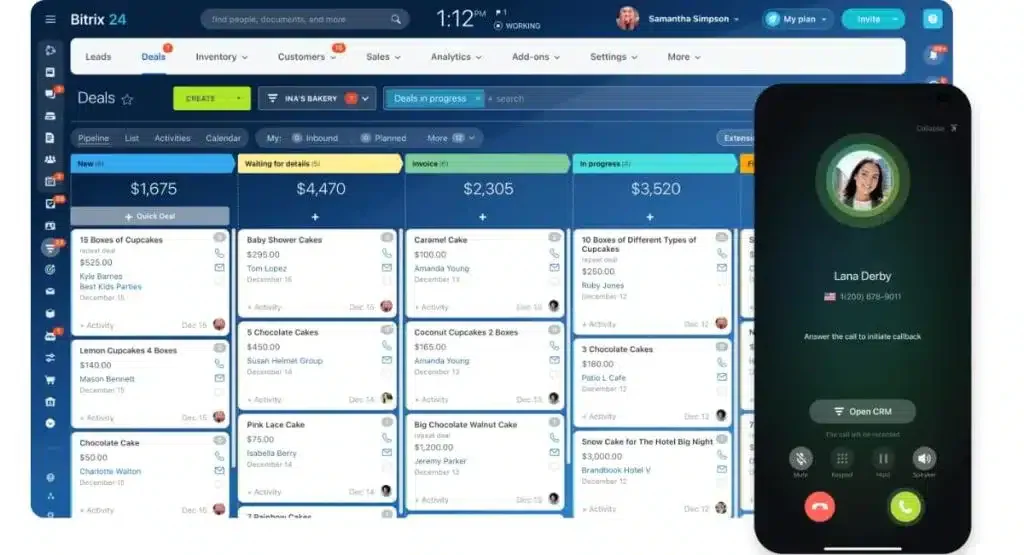
Bitrix24 is commonly used by small to mid-sized teams in Malaysia that need CRM and internal collaboration in the same workspace, particularly businesses where sales, task management, and team communication currently run across separate tools.
Bitrix24 combines CRM with collaboration tools, which suits teams that want communication, tasks, and pipeline tracking in one place. This unified approach allows your leadership to manage internal workflows through a collaborative CRM software in Malaysia while maintaining high operational visibility.
Best features:
- Project management
- Lead generation
- File management
- Advanced email tools
| Pros | Cons |
|
|
Malaysian teams that currently split sales tracking, task assignment, and internal messaging across different tools often find Bitrix24 practical because all three functions share the same contact and deal records without needing separate integrations between them.
11. Zendesk Sell CRM Software Malaysia
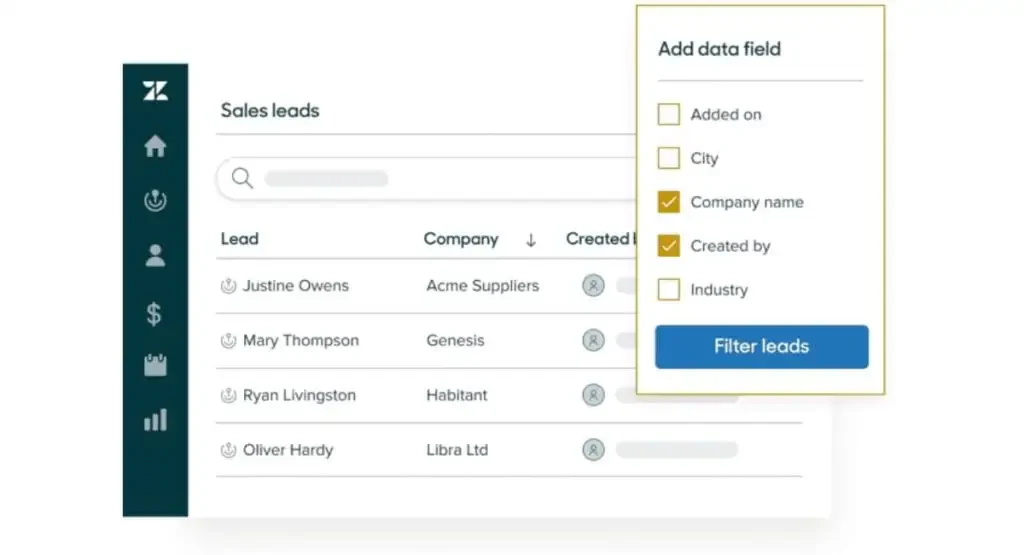
Zendesk Sell is used by Malaysian businesses where sales and customer support teams share the same customer data, particularly in service-based industries where post-sale follow-up and pipeline tracking need to stay in the same system.
Zendesk Sell suits teams that want sales tracking connected closely with support operations. This integration allows your leadership to synchronize customer data through a unified CRM software in Malaysia while ensuring all records remain SST compliant.
Best features:
- Lead management
- Dashboard view
- Zendesk Support integration
| Pros | Cons |
|
|
In Malaysian service-based businesses, sales reps and support agents often deal with the same customers at different points, and Zendesk Sell is structured so that deal history and support tickets share the same contact record rather than sitting in two separate systems.
12. Freshsales
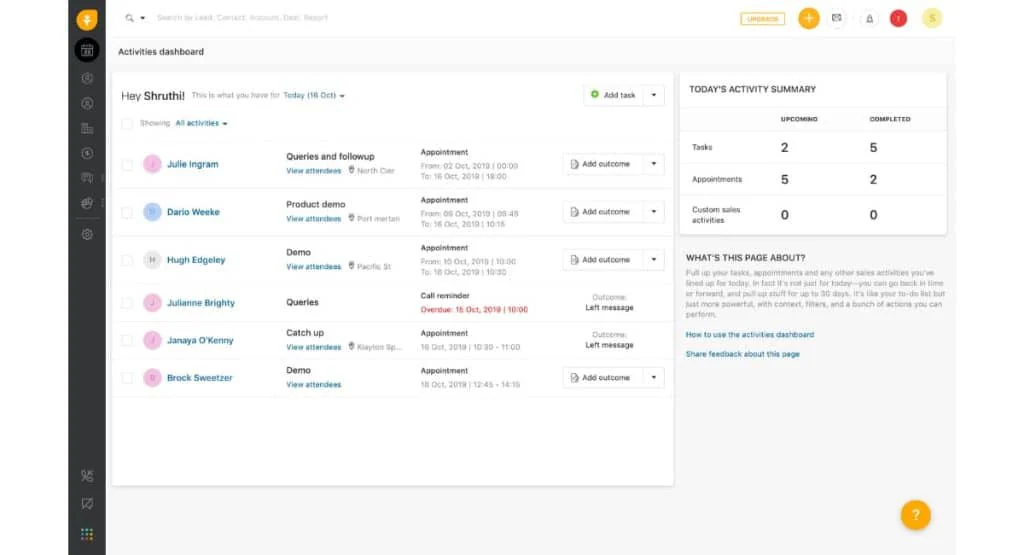
Freshsales is commonly used by small to mid-sized sales teams in Malaysia that need contact management, pipeline tracking, and workflow automation in one system, particularly teams that currently handle follow-ups and lead updates manually across multiple tools.
Freshsales supports contact management, workflow automation, and reporting in one platform, with tools designed to help sales teams manage daily work more consistently.
Best features:
- AI powered tools
- Chat campaigns
- Sales sequences
| Pros | Cons |
|
|
Malaysian sales teams that manage a high volume of follow-ups tend to use Freshsales for its AI scoring and automated sequences, which help prioritize which leads to contact next without the team having to sort through the pipeline manually each day.
13. Oracle
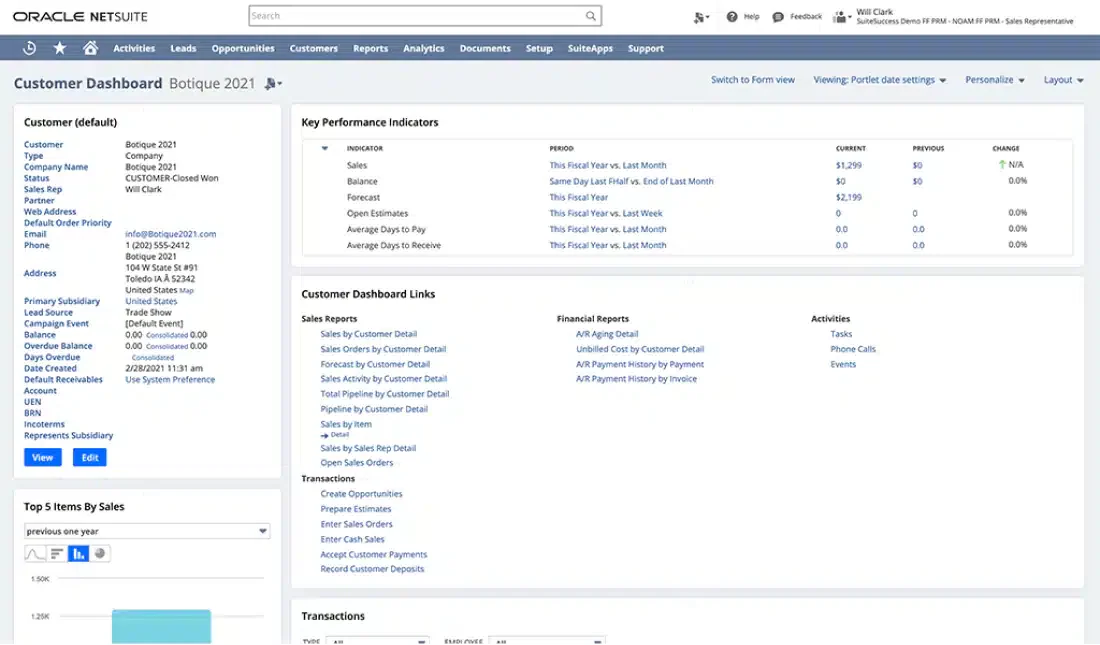
Oracle CRM is designed for large organizations that require greater control, scalability, and oversight across their customer management processes. Its enterprise-grade capabilities make it a suitable CRM software in Malaysia for businesses with complex operational requirements and long-term growth objectives.
Oracle CRM connects natively with Oracle ERP Cloud and Oracle Analytics Cloud, so organizations already running Oracle for finance or supply chain can keep customer and sales data within the same enterprise system.
Best features:
- Email marketing
- Sales force automation
- Upsell and order management
| Pros | Cons |
|
|
Large Malaysian organizations operating at regional or multinational scale, particularly those already using Oracle for finance or supply chain, tend to keep CRM within the same Oracle environment so that customer data, sales activity, and reporting align with existing enterprise governance structures.
14. Monday.com
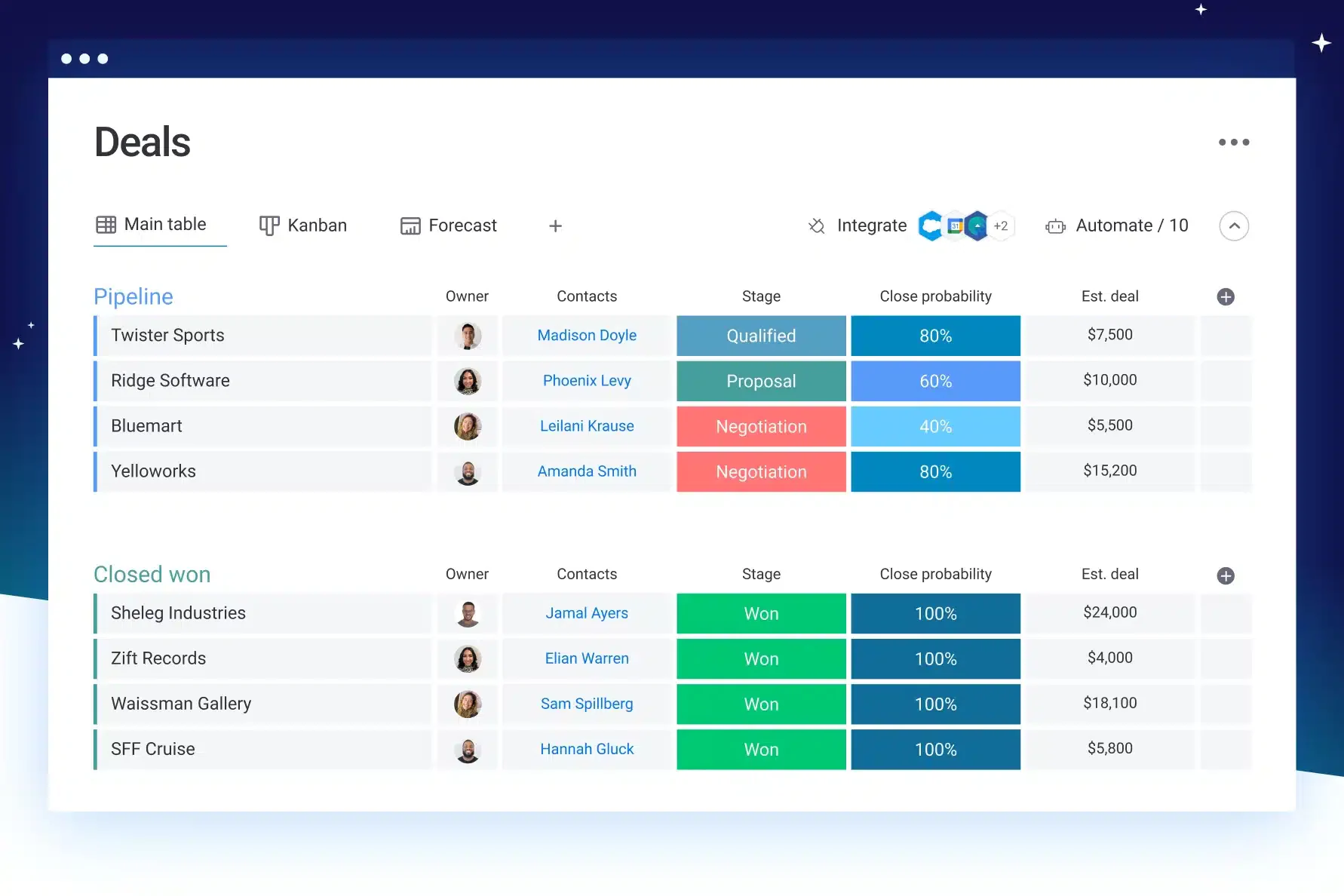 Monday CRM is commonly used by small to mid-sized teams in Malaysia that need a flexible, visual system for tracking deals and contacts, particularly teams that already manage tasks and projects on Monday.com and want to run sales activity on the same platform.
Monday CRM’s main distinction is its board-based structure, which lets teams configure pipelines, contact views, and automation rules without developer support. Sales stages, deal ownership, and follow-up triggers can be adjusted directly within the workspace to match how the team already works.
Best features:
- Customisable pipelines
- Automation and integration
- Real time dashboards
| Pros | Cons |
|
|
Malaysian teams that already run projects or task management on Monday.com tend to add CRM on the same platform because deal tracking, follow-up assignments, and contact updates can live alongside existing workflows without switching between separate tools.
15. Salesmate
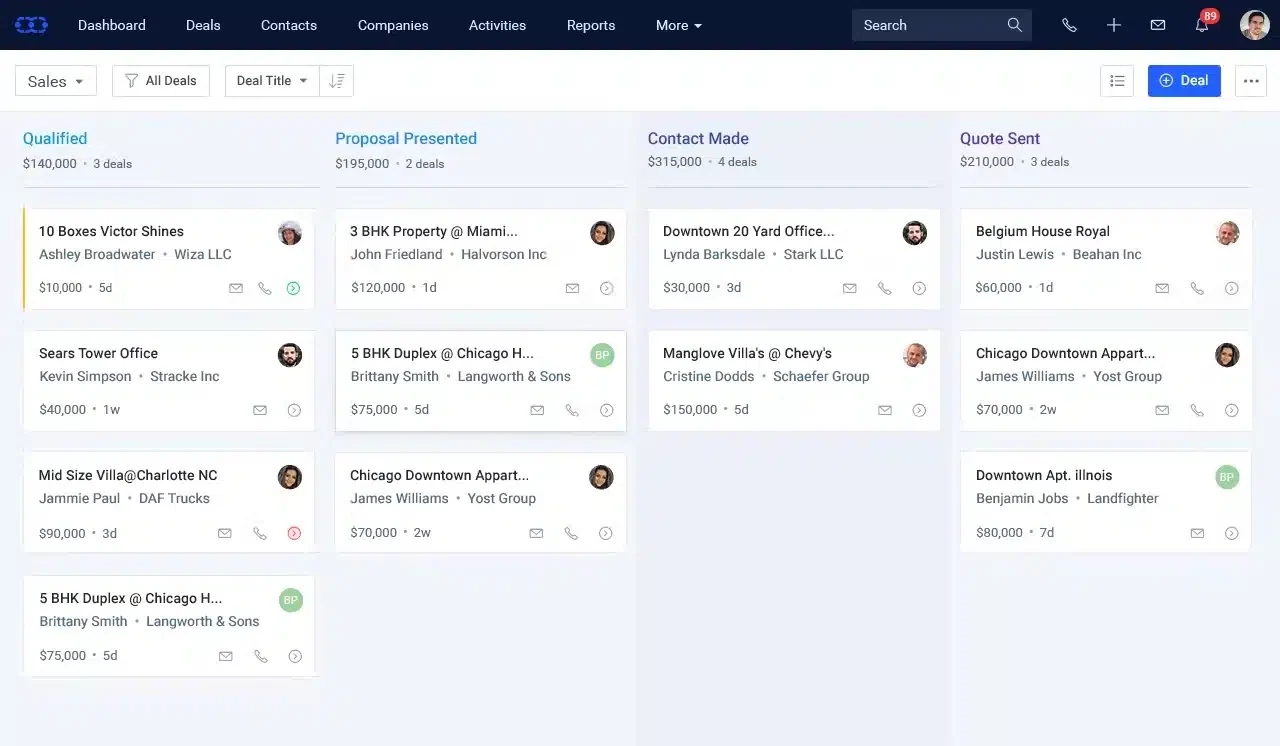
Salesmate is used by small to mid-sized sales teams in Malaysia that need deal tracking and follow-up automation in a system that does not require significant setup or technical resources to maintain.
Salesmate’s key distinction is its built-in communication tools, including calling, texting, and email sequences within the same platform. Teams can run follow-up workflows directly from the CRM without switching between separate communication apps.
Best features:
- Pipeline management
- Lead and contact management
- Automation workflows
| Pros | Cons |
|
|
Malaysian SME sales teams that handle a steady volume of leads often use Salesmate because calls, texts, and email sequences run from the same platform as pipeline tracking, which reduces the time spent switching between communication tools and the CRM.
Overall Comparison of CRM Software in Malaysia
After reviewing all 15 options, the table below provides a focused comparison of five shortlisted CRM platforms based on sales features, integrations, ease of use, and automation. The ratings are intended as a quick reference rather than an absolute ranking, as the best fit will still depend on your sales process, team size, existing systems, and implementation requirements.
| Provider | Feature | Integration | Ease of Use | Automation |
|---|---|---|---|---|
| HashMicro | ||||
| Zoho | ||||
| Pipedrive | ||||
| Freshsales | ||||
| Monday.com |
Why Most Malaysian Sales Teams Struggle Without a CRM System
You run a growing sales team with leads from WhatsApp, email, and web forms. According to The Malaysian Reserve, many Malaysian SMEs still face gaps in digital adoption, which can lead to scattered customer data, delayed replies, and unclear deal ownership.
After customer history and next actions move into one CRM, every lead has an owner, a stage, and a due follow-up. Managers can spot stalled deals earlier, reps keep context across channels, and handovers become easier because follow-ups no longer depend on memory.
Why CRM Becomes a Growth Tool for Malaysian Teams
A CRM matters because it protects consistency as your sales activity grows. It keeps customer history in one place, so handovers do not break relationships. It also makes follow ups cleaner, because reminders and tasks reduce missed replies and stop leads from quietly going cold.
You also get more predictable execution. Managers can see stalled deals earlier and coach based on what is actually happening, not based on guesswork. Over time, forecasting improves because your pipeline reflects real progress. When sales, marketing, and support work from the same customer record, collaboration gets easier and response time improves without extra meetings.
Pick a CRM That Matches How You Sell in Malaysia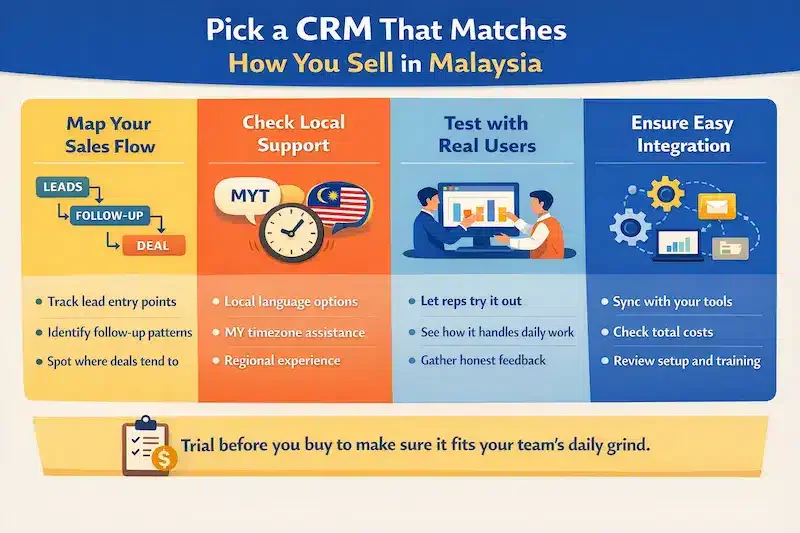
Choosing the right CRM is less about finding the best system and more about finding the one your team will actually use every day. Start with your sales process. Map where leads come from, how follow ups happen, and where deals usually stall. A good system should support that flow, not force you to rebuild your habits from scratch.
Then check local fit. You want support that works in your timezone, and a setup that makes sense for your team’s language and reporting needs. After that, test with real users. A CRM can look smooth in a demo and still feel frustrating in daily work, so get two or three reps to run real prospects through it before you commit.
Next, look at how it connects with what you already use. Email, accounting, marketing tools, and your existing workflow should not live in separate islands. Finally, evaluate total cost properly. Subscription price is only one part. Setup effort, training time, customization, and per user charges can change the real cost fast. If a vendor offers a trial, use it to test your actual workflow, not just click around for five minutes.
Key Features Every CRM Software Must Have for Malaysian Businesses
- Omnichannel Communication (Local WhatsApp & Email Integration)
Malaysian sales teams often handle leads through WhatsApp, email, and web forms. A CRM should keep these conversations under one customer record so follow-ups do not depend on separate chats. - Visual Pipeline & Interactive Lead Management
A visual pipeline helps teams see each deal stage clearly. It also makes stalled leads, pending tasks, and ownership easier to track. - Localized Accounting & ERP Integration (AutoCount, SQL Accounting, etc.)
Many Malaysian SMEs use local accounting tools such as AutoCount or SQL Accounting. CRM integration helps teams check invoices, payment status, and customer records without switching systems. - Cloud-Based Mobile Access for On-the-Go Sales Reps
Sales reps often update deals after meetings or client visits. Mobile access lets them log notes, calls, and follow-ups directly from their phone. - Automated Follow-up Workflows & Activity Reminders
Automated reminders help reduce missed follow-ups. Teams can assign tasks, schedule emails, or trigger actions based on deal stage or inactivity. - Real-Time Performance Analytics & Sales Reporting
Real-time sales reporting helps managers monitor pipeline value, conversion rates, and team activity. This makes sales performance easier to review without waiting for manual updates.
Which CRM Software Suits Your Business Most?
Choosing the right CRM depends on the scale of your business, your sales processes, and how you manage customer data across your teams. However, some of the best CRM providers are also selected based on their pricing. To make things easier, the matrix below maps common business scenarios to the most suitable CRM solutions.
| Business Scenario | Recommended Software | Why It Fits |
|---|---|---|
SMEs or startups needing affordable and scalable CRM |
HubSpot CRM or Zoho CRM | Both offer easy onboarding, flexible pricing, and essential CRM features suitable for small teams starting their sales processes. |
Malaysian SMEs needing integrated CRM with operations and local support |
HashMicro or Second CRM | HashMicro provides integrated CRM with reporting and operational modules, while Second CRM offers practical setup with strong local support for Malaysian SMEs. |
Growing businesses needing sales tracking, forecasting, and pipeline customization |
HashMicro or Pipedrive | HashMicro supports forecasting, RFM analysis, and customizable pipelines, while Pipedrive focuses on visual pipelines and sales activity tracking. |
Businesses already using accounting or ERP systems |
Sage CRM or SAP CRM | Both align CRM with existing ERP/back-office systems, improving visibility across finance, operations, and customer data. |
Large enterprises needing advanced customization and scalability |
Salesforce or Oracle CRM | Both support complex workflows, enterprise-grade integrations, and scalable infrastructure for large organizations. |
Companies using Microsoft tools across departments |
Microsoft Dynamics 365 | Integrates smoothly with Microsoft 365 ecosystem and provides AI-powered insights with unified customer data. |
Businesses wanting CRM with strong marketing and automation capabilities |
HubSpot CRM or Freshsales | HubSpot offers strong marketing automation and onboarding, while Freshsales provides AI-driven lead scoring and multichannel engagement. |
Teams needing CRM connected with customer support operations |
Zendesk Sell or Freshsales | Zendesk Sell aligns sales with support workflows, while Freshsales supports communication and faster deal execution. |
Organizations wanting CRM plus collaboration tools in one platform |
Bitrix24 | Combines CRM with task management, communication, and document sharing in a single platform. |
Mid-to-large businesses needing full CRM integration across departments |
HashMicro or Microsoft Dynamics 365 | HashMicro connects CRM with broader business operations, while Dynamics supports enterprise-wide integration across functions. |
Companies needing customizable workflows and scalable system |
HashMicro or Monday CRM | HashMicro adapts to complex workflows and reporting needs, while Monday CRM offers flexible visual pipeline and workflow customization. |
Small and midsize sales teams needing simple pipelines with communication tools |
Salesmate or Pipedrive | Salesmate provides built-in communication tools with automation, while Pipedrive focuses on simple, visual pipeline management. |
Conclusion
The right CRM doesn’t just store contacts. It gives your team a shared view of every customer relationship, removes the guesswork from follow-ups, and surfaces the data you need to make better decisions.
But no CRM works if your team doesn’t use it. The best system is one that fits your actual sales process, not one that forces you to rebuild how you work. Before committing to any vendor, get clear answers on three things: total cost over three years, how the system handles your specific workflow exceptions, and how fast support responds when something breaks.
If you’re still comparing options and want to see how a CRM handles your sales process, a free consultation with our team can help clarify which setup makes sense for your business.

FAQ About CRM Software
Industries such as retail, real estate, manufacturing, finance, and professional services benefit the most from CRM software in Malaysia. These sectors rely heavily on managing large volumes of customer interactions, tracking sales pipelines, and providing personalized service.
When selecting a CRM software, businesses should consider features such as lead and contact management, sales pipeline tracking, marketing automation, reporting and analytics, and mobile accessibility. Integration capabilities with email, social media, and accounting systems are also crucial.
Yes, modern CRM systems in Malaysia are designed to integrate smoothly with other essential business platforms such as ERP, accounting, marketing, and eCommerce tools.
Absolutely. A cloud-based CRM in Malaysia is generally easy to learn and implement because it offers a user-friendly interface, guided onboarding, and access from any device.