












A finance team in Penang spends three days every month reconciling inventory data between their warehouse system and accounting spreadsheets. A distributor in Johor Bahru loses a major contract because their quotation took too long, sales couldn’t see real-time stock levels. These aren’t rare cases. They’re what happens when business functions run on disconnected systems.
According to a McKinsey analysis, nearly 70 percent of ERP projects fail to reach their full potential, usually due to poor planning rather than the technology itself. Despite this risk, ERP adoption is rising quickly. This trend is especially evident in Southeast Asia, where more businesses are looking to implement a reliable erp system in malaysia to improve their regional operational efficiency.
Choosing an ERP software solution requires a strategic look at more than just a popular brand name. The ideal framework depends on your industry, transaction volume, and the amount of customization your team is willing to manage. This guide analyzes prominent ERP software system models in Malaysia to determine which configurations best support specific business goals.
Key Takeaways
|
Our Top Picks of ERP Software in Malaysia
Choosing the right ERP software goes beyond features, as it should align with your business needs and growth plans. To make the selection easier, here are our top picks of ERP software in Malaysia, featuring five reliable and scalable options.



Best Because Cloud ERP for unified finance and operations.


If your team still spends days every month reconciling data between systems, that’s not a process problem, it’s a system problem. See how the right ERP eliminates it.
Quick ERP Comparison Overview
Before diving deeper into each solution, it helps to get a quick overview of how they compare. This section provides a concise review of each ERP software, making it easier to identify which option best fits your business needs and priorities.
| ERP System | Best For | Strength | Malaysia Support | Key Features | Pricing |
|---|---|---|---|---|---|
| HashMicro | Retail, F&B, manufacturing, distribution, and professional services | Complete modules, unlimited user access, real-time integration, and customizable workflows | LHDN MyInvois, native API. SST compliance built in. Local office in Kuala Lumpur with dedicated Malaysian support team | CRM, Accounting, Inventory, HRM, Procurement, Manufacturing, and more | Custom quote. Contact HashMicro for pricing |
| SAP HANA | Large enterprises with global operations and complex data volumes | Enterprise-grade ERP with real-time analytics and in-memory database processing | LHDN MyInvois via SAP DRC, MDEC accredited. SST supported. Local SAP partners available in Malaysia | Finance, procurement, manufacturing, digital supply chain, HR | From RM12,330 one-time (on-premises list price) |
| Oracle NetSuite | High-growth businesses needing multi-entity and multi-currency operations | Cloud ERP for unified finance, inventory, CRM, and operations | LHDN MyInvois via partner integration. SST supported. Available via local NetSuite partners in Malaysia | Financials, project management, procurement, SCM, CRM | From RM407 to RM818 per user/month |
| Microsoft Dynamics 365 | Businesses already using Microsoft 365, Teams, and Excel across departments | ERP and CRM tightly integrated with the full Microsoft stack including Power BI and Outlook | LHDN MyInvois via certified partners. SST supported. Local Microsoft partners available in Malaysia | Financial management, sales, procurement, WMS, CRM, HR, manufacturing | From RM288/user/month (Essentials). From RM411/user/month (Premium) |
| Epicor | Mid-sized manufacturers and distributors with shop-floor management needs | Modular ERP with strong manufacturing execution and Microsoft 365 integration | LHDN MyInvois support, verify with vendor. SST supported. Available via local partners in Malaysia | MES, supply chain, financial management, HCM, BI and analytics, CRM | From RM616 to RM822 per user/month |
| Infor | Mid to large manufacturers and distributors needing industry-specific modules | Pre-built industry processes for manufacturing and distribution with cloud-based scalability | LHDN MyInvois support, verify with vendor. SST supported. Available via Phitomas and local partners in Malaysia | Finance management, procurement, manufacturing, inventory, CRM, HR | From RM822 per user/month |
| Acumatica | Small to mid-sized growing businesses needing flexible cloud ERP with mobile access | Flexible cloud ERP with usage-based pricing and strong customization options | LHDN MyInvois support, verify with vendor. SST supported. Available via local partners in Malaysia | Financials, distribution, manufacturing, retail commerce, construction, CRM | From RM6,165 per package |
| SAGE | Mid-market businesses needing reliable finance, payroll, and operations management | Cloud-first ERP with strong accounting, payroll, and HR capabilities for the mid-market | LHDN MyInvois support, verify with vendor. SST supported. Available via local partners in Malaysia | Accounting, payroll, HR management, payment processing | From RM102,750 (implementation and scope dependent) |
| ECOUNT | Small to mid-sized businesses looking for affordable and modular cloud ERP | Cost-effective, fully cloud-based ERP covering inventory, production, sales, and accounting | LHDN MyInvois support, verify with vendor. SST supported. Local office in Kuala Lumpur at Soho Suites KLCC | Inventory, production, sales, purchasing, accounting, payroll, collaboration | RM600 for 3 months. RM1,200 for 6 months. RM2,400 per year |
| SYSPRO | Mid-sized manufacturers and distributors requiring simpler ERP than Tier-1 platforms | Scalable modular ERP with deep inventory, supply chain, and manufacturing functionality | LHDN MyInvois support, verify with vendor. SST supported. Available via Cosmo Synergy and local partners in Malaysia | Supply chain, sales and CRM, warehouse management, BI, e-commerce | From RM14,385 per user (perpetual licence). Core Finance Module from RM41,100 |
What is ERP Software and Why is It Important?
ERP software is a system that integrates core business functions such as finance, inventory, HR, procurement, and supply chain into one connected platform. It replaces separate tools and manual processes by providing real-time, shared data across teams.
Your business feel the impact in the messy parts of the week: when purchasing needs to match invoices to goods received, when inventory changes affect pricing and availability, and when month-end closing depends on clean transaction trails. For growing businesses, selecting the right erp system in malaysia matters because it reduces manual handoffs and prevents small data gaps from turning into delays.
Hashy AI Fact

Need to know!
Hashy AI enables you to manage multiple companies with different operations by generating comprehensive business performance reports anytime, anywhere, in real time.
Request a free demo today!
What are the Types of ERP Software?
ERP deployment isn’t just “installing software.” It’s deciding how the system will run, who manages it, and how much control you keep over your data.
- On-Premise ERP: You host everything on your own servers. Full control, but you handle maintenance, security patches, and hardware upgrades. Common in regulated industries or companies with strict data sovereignty requirements.
- Cloud-Based ERP: The vendor hosts and maintains the system. Lower upfront cost, faster deployment, automatic updates. But you’re dependent on internet connectivity and vendor uptime.
- Hybrid ERP: Some modules on-premise (e.g., financials with sensitive data), others in the cloud (e.g., CRM, HR). More complex to manage but offers flexibility for businesses in transition.
Key Modules of ERP Software
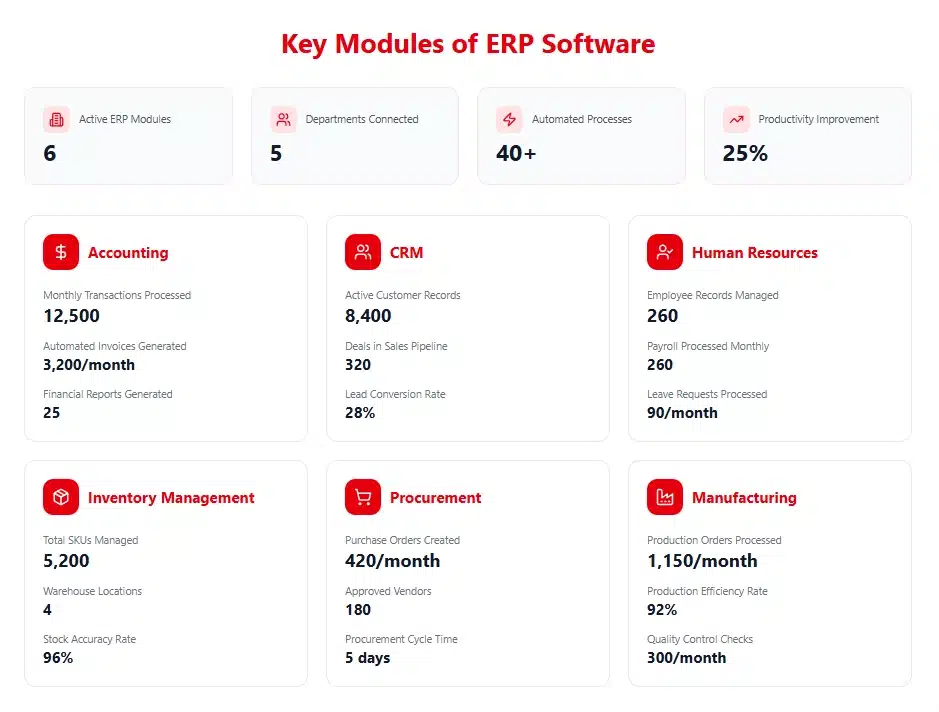
As a complete business solution, ERP includes different modules to aid in managing your company. Here are several essential modules commonly found in ERP software Malaysia:
- Accounting: ERP software simplifies financial operations by automating accounting, budgeting, invoicing, and financial reporting, ensuring precision and adherence to regulations.
- Customer Relationship Management (CRM): Keeps customer conversations, quotes, and deal stages in one place so sales handoffs don’t depend on someone’s inbox or spreadsheets.
- Human Resources: Manages employee records, payroll, leave, benefits, and basic performance tracking so HR processes stay consistent as headcount grows.
- Inventory: ERP tools facilitate inventory management tasks such as tracking, stock control, and material planning and procurement.
- Procurement: ERP software simplify procurement processes, ensuring efficiency from purchase requests to invoice processing and payment.
- Manufacturing: ERP platforms optimize manufacturing operations, encompassing production planning, scheduling, quality control, and maintenance, thereby improving productivity and reducing time-to-market.
10 Best ERP Software for Malaysian Businesses
Selecting the right enterprise software for your Malaysian business can be daunting, with numerous options to consider. Here’s a detailed list of the 10 best ERP systems in Malaysia. We’ve thoroughly analyzed user needs and outlined each solution’s strengths and drawbacks.
1. HashMicro ERP
HashMicro started in Singapore and has grown into a well-known ERP provider across Southeast Asia. In Indonesia, it’s widely used by large companies for its cloud-based ERP that helps manage core operations like sales, accounting, and inventory.
In Malaysia, HashMicro is positioned as a reliable ERP option that supports local needs and regulations, while also offering AI-powered features to speed up workflows. The system is flexible, easy to use, and supports both general and industry-specific modules (manufacturing, retail, F&B, and supermarkets).
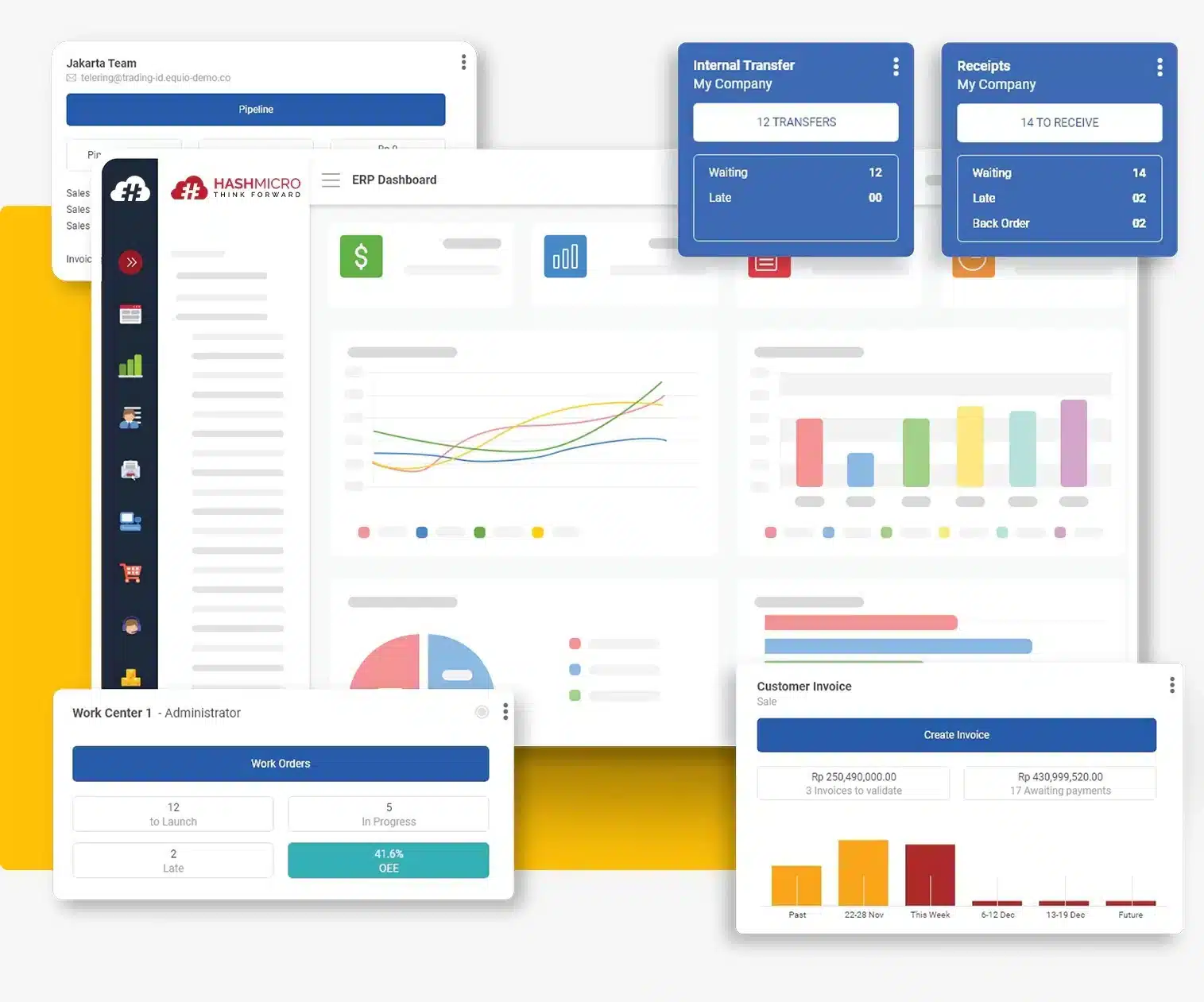
HashMicro offers various modules for each of your company’s needs, including but not limited to:
- CRM (Customer Relationship Management)
- Accounting
- Inventory (Inventory Management Software)
- HRM (Human Resource Management)
- Procurement
- Other modules
Price: Available upon request. To calculate your budget, download HashMicro’s pricing scheme.
What user says about it:

| Pros | Cons |
|
|
HashMicro stands out for its balance of advanced features and user-friendly design. Its flexibility and unlimited user policy make it a strong choice for fast-growing businesses that need a scalable, all-in-one solution.
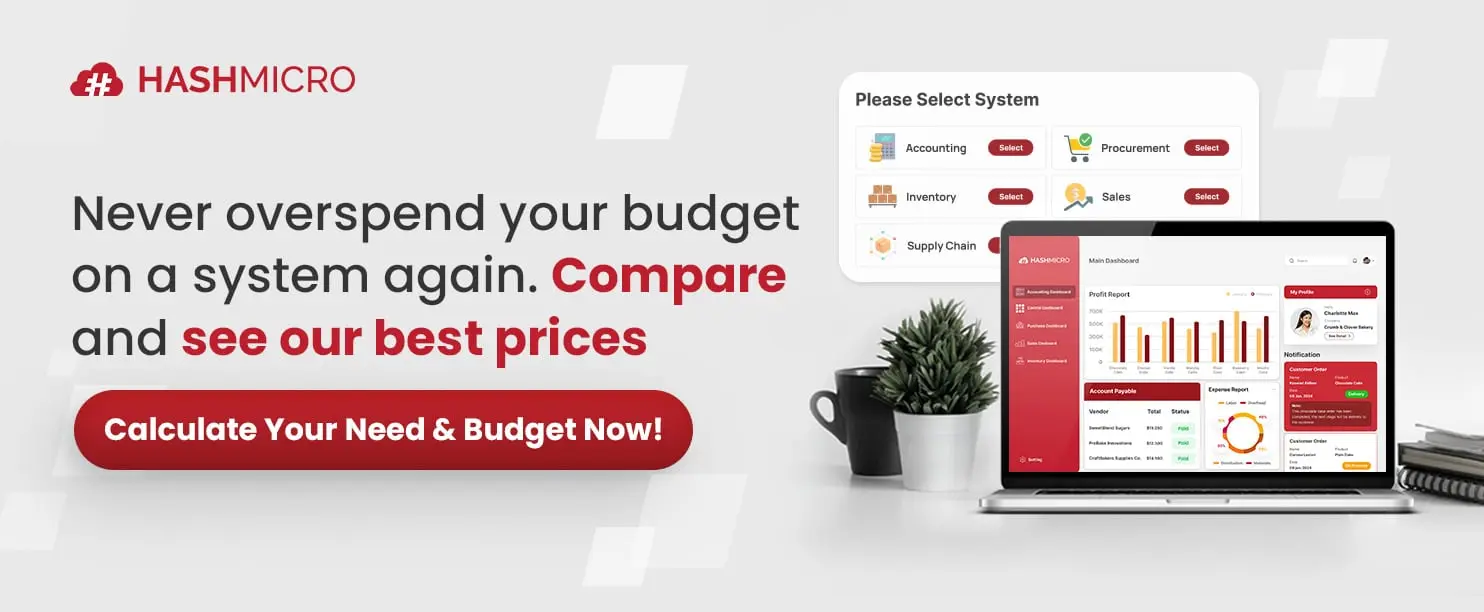
To explore the best ERP software solutions for your business, discover out pricing schemes below and find the right package for your needs.
2. Epicor
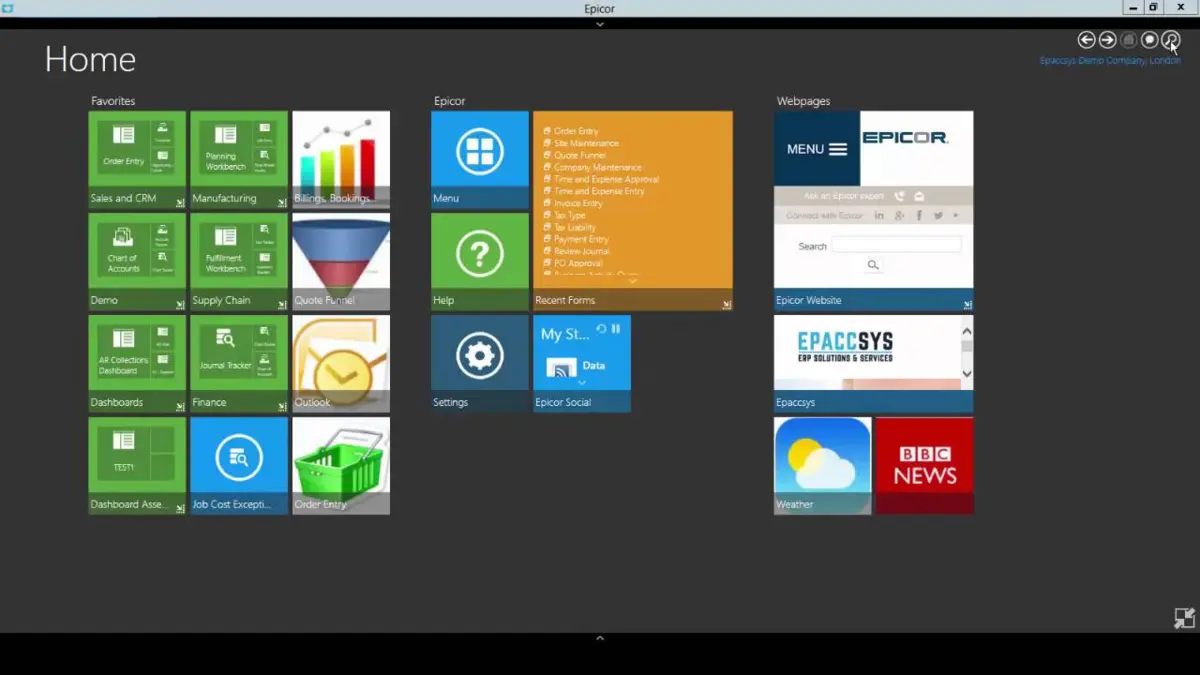
The Epicor ERP system is modular and tailored to specific industries, serving as comprehensive software for managing company-wide business processes. It handles various business processes effectively. Epicor software is accessible both on-premises and via SaaS cloud deployment.
Features
- Manufacturing execution system (MES)
- Supply chain management
- Financial management
- Human capital management (HCM)
- Business intelligence & analytics
- Customer relationship management (CRM)
Price: RM616–RM822 per user/month.
What user says about it:
| Pros | Cons |
|
|
Epicor shines in manufacturing and distribution with its modular approach, allowing businesses to deploy only what they need. Still, ongoing maintenance often requires expert involvement, which can increase operational costs
3. Acumatica
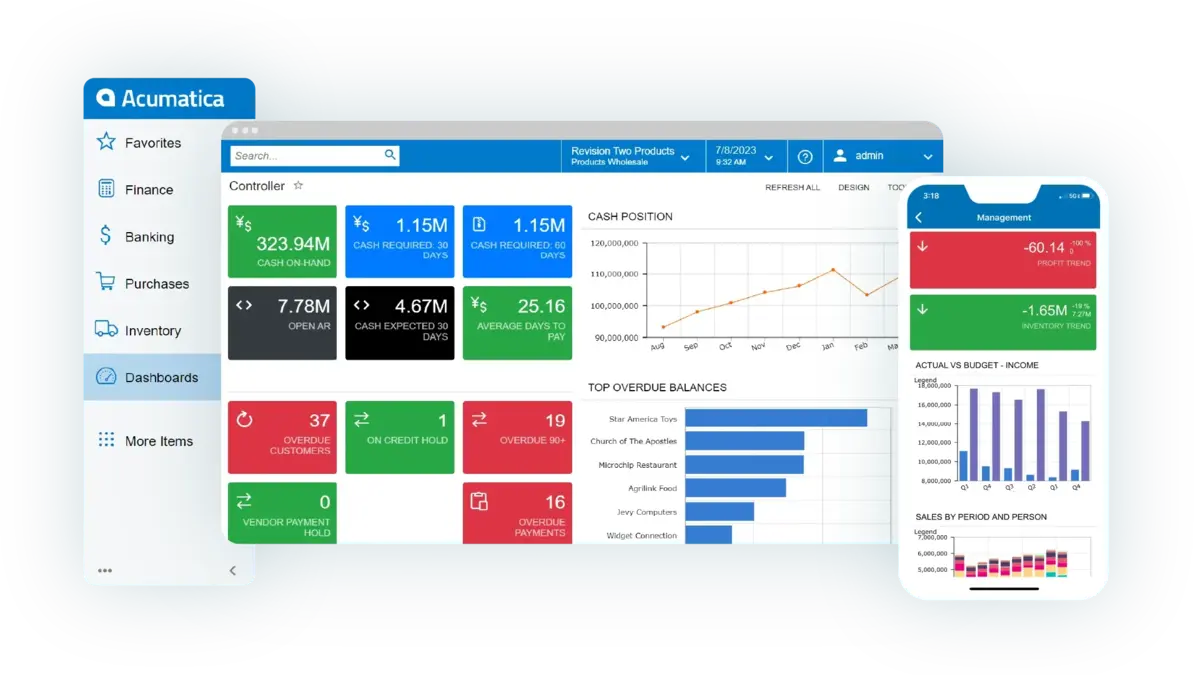
Acumatica is a cloud-based ERP software in Malaysia that provides functionalities like financial management, distribution, project accounting, and customer management. Its flexibility allows easy customization to suit individual business requirements.
Features
- Financials
- Distribution
- Manufacturing
- Retail-Commerce
- Construction
- CRM
Price: From approx. RM6,165 (pricing structure varies by package).
What user says about it:
| Pros | Cons |
|
|
Acumatica is known for its flexible deployment and user-friendly interface, making it a great fit for SMBs looking for cloud-first ERP. Yet, it lacks deep vertical features compared to some larger competitors.
4. Oracle NetSuite
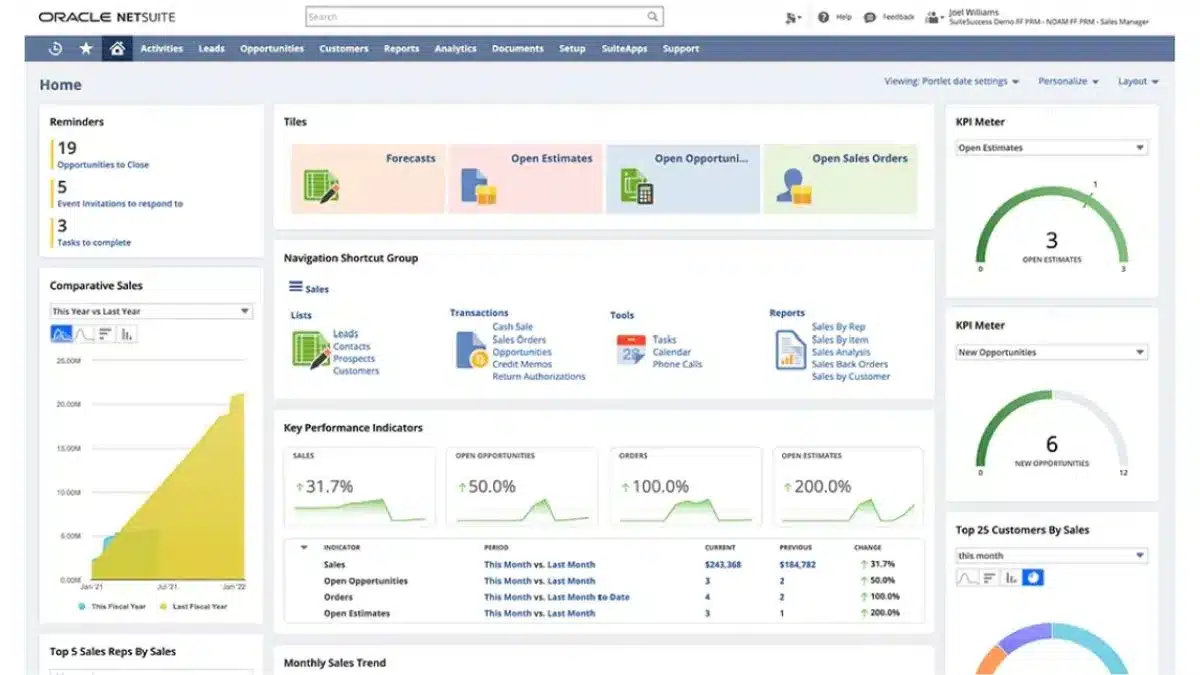
NetSuite, a cloud-based ERP software by Oracle, helps businesses automate and manage various aspects with its rich modules. It provides real-time insights into financials, CRM, inventory, and sales. Serving industries like manufacturing, retail, software, and e-commerce, NetSuite is adaptable for businesses of any size with advanced reporting and analytics.
Features
- Financials
- Project Management
- Procurement
- Risk Management
- Supply Chain Management (SCM)
- Customer Relationship Management
Price: Approx. RM407–RM818 per user/month.
What user says about it:
| Pros | Cons |
|
|
Oracle NetSuite offers reliable cloud-based ERP with impressive real-time reporting. While highly customizable, businesses should be prepared for subscription fluctuations and additional support costs.
5. SAP HANA
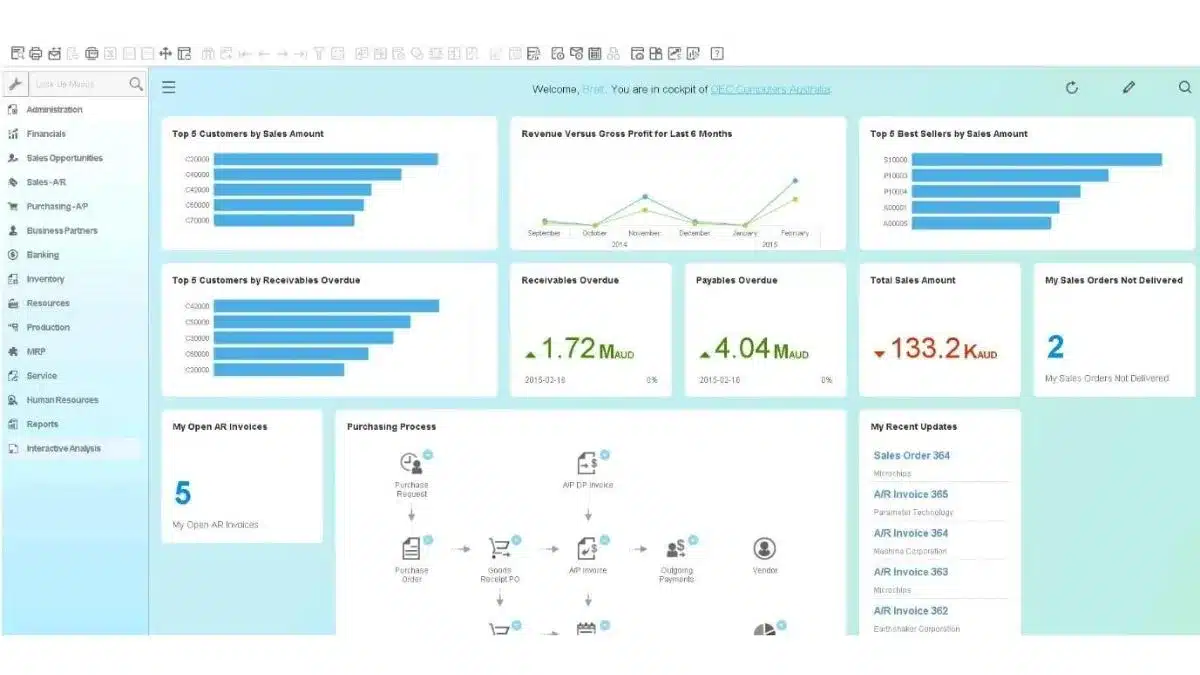
SAP S/4 HANA is one of the best ERP software Malaysia, harnessing in-memory databases for swift data processing. It offers various modules like financial management, procurement, manufacturing, and logistics. However, its implementation costs and extra fees may pose financial challenges for some businesses
Features
- Finance
- Customer Relationship Management
- Network and Spend Management
- Digital Supply Chain
- HR and People Engagement
- Experience Management
Price: RM12,330–RM24,660 one-time (on-premises list price range).
What users say about SAP HANA:
| Pros | Cons |
|
|
SAP HANA delivers enterprise-grade power and speed, ideal for large organizations with complex operations. However, the learning curve and cost make it best suited for companies with dedicated IT resources.
6. Microsoft Dynamics 365
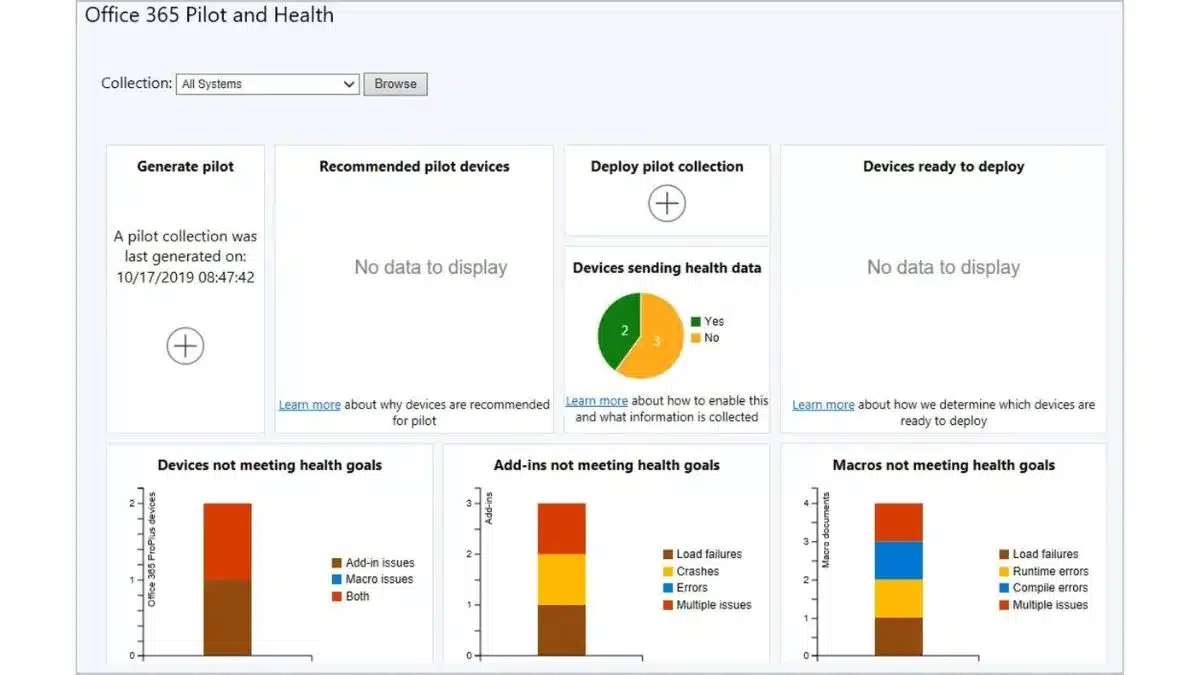
Microsoft Dynamics 365 comprises a suite of intelligent applications for both enterprise resource planning (ERP) solutions and customer relationship management (CRM), smoothly integrated with other Microsoft products. It provides a diverse array of features tailored to businesses’ needs.
Features
- Financial Management
- Sales
- Purchases
- Warehouse Management
- CRM
- Human Resources Management
- Manufacturing
Price: Starting from RM288 (Essentials) / RM411 (Premium) per user/month; Attach license ~RM82.
What user says about it:
| Pros | Cons |
|
|
Microsoft Dynamics 365 integrates smoothly with the Microsoft ecosystem, making it a smart move for businesses already using those products. It’s a versatile solution, though some customizations may require technical expertise.
7. Infor
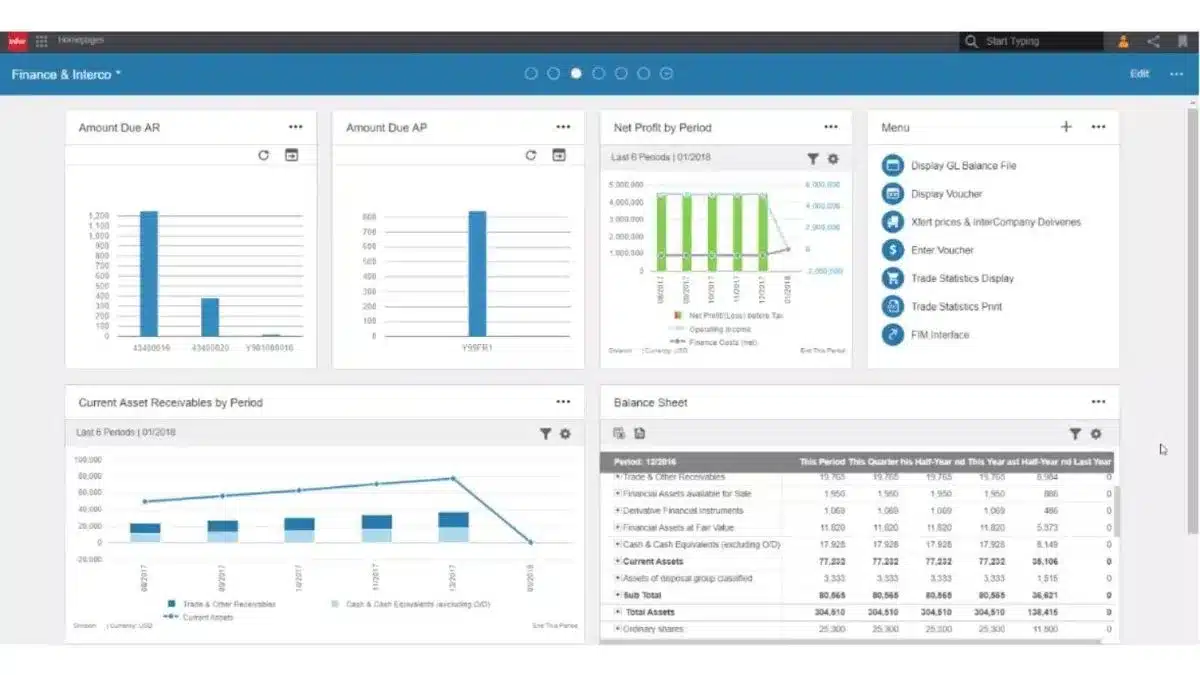
Infor ERP, a cloud-based ERP Malaysia, provides industry-specific solutions for manufacturing, distribution, healthcare, and more sectors. Its tailored approach ensures businesses have the tools they need to thrive in their respective fields.
Features
- Finance management
- Procurement
- Manufacturing
- Inventory management
- Customer relationship management (CRM)
- Human resources
Price: Starting from RM822 per user/month.
What user says about it:
| Pros | Cons |
|
|
Infor’s industry-specific focus provides tailored tools for niche sectors, ensuring businesses get solutions that fit their workflows. However, its lengthy deployment timeline can be a challenge for businesses needing quicker implementation.
8. Sage
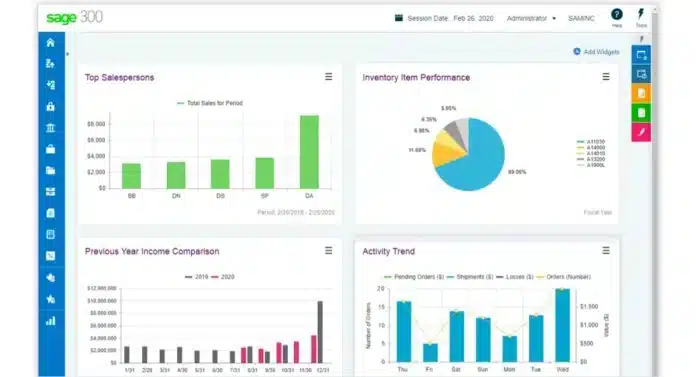
Sage is one of the prominent ERP Malaysia. Initially known for accounting software development, it has since diversified its product range. Sage’s software solutions primarily encompass accounting, payroll, human resource management, and payment functionalities.
Features
- Accounting tools
- Payroll management
- Human resource management
- Payment processing
Price: Approx. RM102,750–RM411,000 (implementation and scope dependent).
What user says about it:
| Pros | Cons |
|
|
Sage is a reliable choice for accounting-driven businesses seeking ERP capabilities. Its customizable dashboards are helpful, but customer support responsiveness remains a concern for many users.
9. ECOUNT
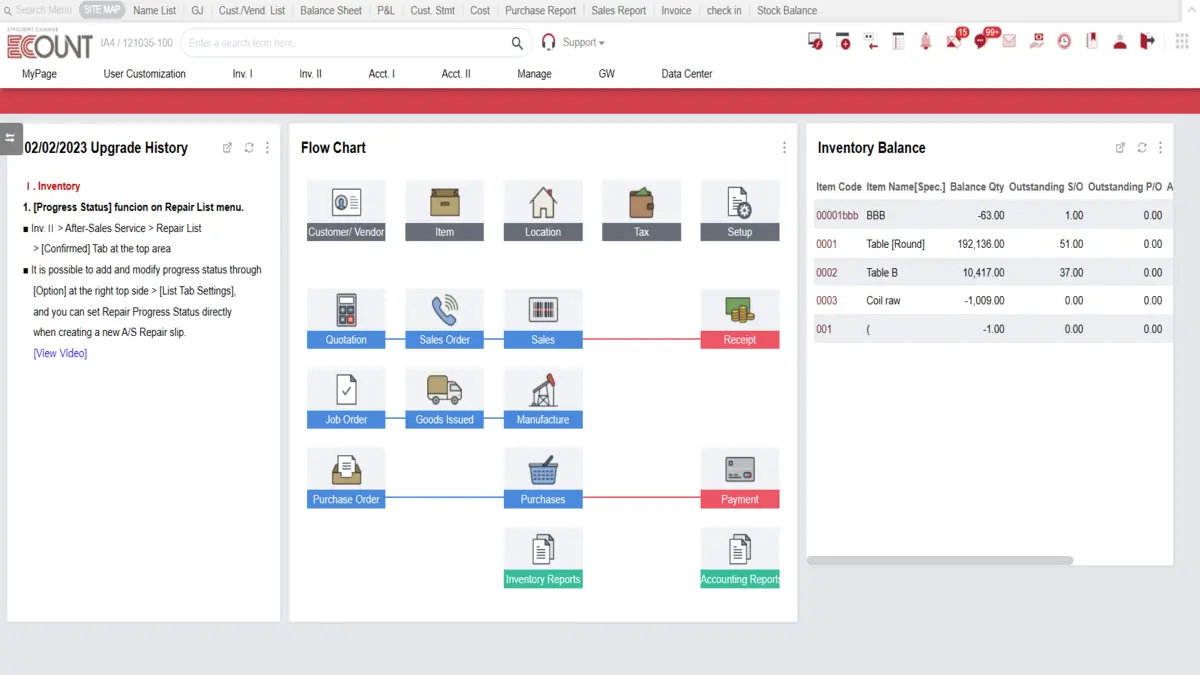
ECOUNT ERP system is designed to support the operational needs of Malaysian businesses. It offers comprehensive tools for managing inventory, production, logistics, sales, accounting, and payroll. ECOUNT’s inventory management feature allows users to track inventory movement across multiple locations.
Features
- Inventory
- Production
- Sales
- Purchasing
- Accounting
- Payroll
- Collaboration
Price: RM600 (3 months) / RM1,200 (6 months) / RM2,400 (1 year).
What user says about it:
| Pros | Cons |
|
|
ECOUNT offers an affordable, straightforward ERP with strong inventory tracking for multi-location businesses. However, limited integrations and customization may restrict its suitability for more complex operations.
10. SYSPRO

SYSPRO offers ERP Malaysia and integrated business software to manufacturers and distributors. Their software covers all business aspects, such as accounting, manufacturing, operations, and distribution, aiding in automating and integrating core processes
Features
-
-
- Supply chain management
- Sales management and CRM
- Business activity monitoring
- Warehouse management
- Business intelligence
- E-commerce
-
Price: Approx. RM14,385 per user (perpetual license); Core Finance Module ~RM41,100.
What user says about it:
| Pros | Cons |
|
|
SYSPRO excels in manufacturing and supply chain management, offering deep industry functionality. Still, its dated interface and reported security concerns mean businesses should evaluate it carefully before adoption.
Overall Comparison of ERP Software Systems and Vendors in Malaysia
To help you compare your options more effectively, we’ve compiled a comprehensive table comparing the top ERP software Malaysia, so you can make a data-driven decision based on your company’s specific needs.
| Provider | LHDN MyInvois | SST Compliance | Local MY Support | ERP Integration | Connection Quality | ||||
|---|---|---|---|---|---|---|---|---|---|
| HashMicro | Custom quote | ||||||||
| SAP HANA | From RM 12,330 one-time | ||||||||
| Oracle NetSuite | From RM 407/user/month | ||||||||
| Epicor | From RM616/user/month | ||||||||
| Acumatica | From RM6,165/package |
Choosing the right ERP company in Malaysia ensures better support, localized compliance, and a smoother implementation journey.”
Real Example: What Changes After ERP Implementation
Most ERP promises sound the same on paper. The difference shows up in the everyday work: whether teams can trust inventory numbers, whether purchasing matches what production actually needs, and whether finance can close the month without chasing missing transaction trails.
Here’s a real example from a manufacturing setup where ERP was implemented to reduce operational friction across planning, inventory, and costing.
Marimas didn’t adopt ERP just to “go digital.” The decision came from real operational pressure: demand was getting harder to predict, product lines kept expanding, and manual processes made it difficult to keep production, inventory, and finance on the same page. When different teams work from different numbers, small mismatches quickly turn into delays, stock imbalances, and last-minute fixes.
After implementing ERP system, Marimas focused on the areas that directly impact performance. Manufacturing and supply chain workflows were connected so demand signals, production planning, and supplier coordination could work together. Inventory control improved through barcode scanning and automated low-stock alerts, while the finance team gained better visibility into production costs and reporting.
The results showed up in daily operations. Planning and purchasing decisions became more consistent because everyone worked from the same real-time data, not manually reconciled spreadsheets. Inventory records became more reliable, cost tracking became more accurate, and managers spent less time fixing problems and more time focusing on growth.
What are the Benefits of ERP Software?
ERP software Malaysia do more than handle daily operations, they help businesses work smarter, cut costs, and boost efficiency. Here are the key ERP benefits:
- Maximize ROI: ERP simplifyworkflows and removes inefficiencies, with 83% of companies seeing ROI within the first year.
- Stay Compliant: Automation keeps Malaysian businesses aligned with IRBM regulations, making audits easier and reducing errors.
- Reduce Operational Costs: By unifying processes, ERP lowers labor, inventory, and admin costs by up to 23%.
- Enhance Scalability and Visibility: ERP grows with your business and gives real-time insights across all departments.
- Improve Collaboration: A single system helps teams share the same data, communicate better, and work more efficiently.
Where ERP Implementations Go Wrong
Understanding why ERP projects fail is just as important as knowing what they can do. Here are the common mistakes that cause implementations to stall
- Skipping data cleanup
Moving messy data into a new system doesn’t fix the mess. It just makes it easier to search. Take time to clean up customer records, product codes, and supplier details before you go live. - Picking based on the demo, not your real workflow
Every ERP looks impressive in a sales presentation. But the real question is whether it handles your specific situations, like partial shipments, credit note approvals, or invoicing in multiple currencies. Ask the vendor to show your actual process, not their prepared script. - No one inside the company owns the project
When ERP projects depend only on IT or outside consultants, they tend to lose momentum. You need someone from operations who takes ownership and can push things forward when teams resist change. - Launching without running both systems in parallel
Before fully switching over, run the new ERP alongside your old system for at least one complete cycle, whether that’s a monthly close or quarterly reporting. This helps catch problems before they turn into emergencies.
How to Choose the Right ERP for Your Business?

Choosing the appropriate erp system in malaysia configuration requires careful examination of several important factors before finalizing your investment. Thus, it’s crucial to thoroughly research these factors below before selecting the right ERP software for your needs.
1. Assess the specific needs of your business
First and foremost, evaluating your business’s particular needs and demands is crucial. This involves considering your company’s size, the sector you are involved in, and the intricacy of your operations.
Grasping these aspects will assist you in streamlining your choices and selecting an ERP solution that suits your business requirements.
2. Consider the scalability of the ERP
As your business expands and changes, your ERP software should grow alongside and adjust to new needs. Seek a solution with modular features for easy addition or removal.
Also, confirm smooth integration with current software and third-party apps to facilitate smooth data flow and communication.
3. Assess the customer support team
When selecting ERP Malaysia, it’s crucial to assess the support and training provided by the vendor. Implementing ERP can be intricate. Hence, opt for a vendor offering thorough training and continuous assistance.
Also, the reputation and performance history of the Malaysia ERP system vendor should be evaluated. Choose one with a strong track record and presence in Malaysia to ensure adequate support and expertise for your success.
Which Software Suits My Business?
| Business Profile | Recommended Software | Why It Fits |
|---|---|---|
| SME with tight budget needing basic accounting, inventory, and payroll in one system | HashMicro or ECOUNT | HashMicro covers all core modules with local MY support and LHDN compliance. ECOUNT is a more affordable entry point for businesses with simpler operational needs. |
| Growing Malaysian business needing multi-warehouse, procurement, and full ERP integration | HashMicro | Complete modules with unlimited user access, native LHDN MyInvois integration, SST support, and a local KL office, built to scale without reimplementation. |
| Manufacturer with complex production planning, shop floor tracking, and batch traceability | HashMicro or Epicor | HashMicro covers manufacturing end-to-end with MRP and production modules. Epicor adds deep shop-floor execution capabilities for businesses with highly specific manufacturing workflows. |
| Distributor managing multiple warehouses and inter-branch stock transfers | HashMicro or Acumatica | HashMicro provides real-time multi-warehouse visibility with native ERP integration. Acumatica suits distributors needing flexible cloud ERP with mobile access across locations. |
| Large enterprise already running SAP or Oracle infrastructure | SAP HANA or Oracle NetSuite | Best for businesses that need deep integration within an existing enterprise ecosystem. Expect higher investment and longer implementation timelines. |
| Business heavily using Microsoft 365, Teams, and Excel across departments | Microsoft Dynamics 365 | Native integration with the full Microsoft stack Outlook, Excel, Teams, and Power BI with flexible ERP and CRM in one platform. |
| Professional services or project-based business needing finance and project accounting | Oracle NetSuite or Acumatica | Both offer strong project accounting, multi-currency support, and real-time financial reporting suited for service-oriented operations. |
Conclusion
Choosing an ERP isn’t about finding the software with the longest feature list. It’s about finding the one that fits how your business actually runs, including your workflows, your team’s capacity, and where you’re headed in the next few years.
Before committing to any vendor, get clear answers on three things: total cost over three years (not just the license fee), who handles support when something breaks, and how the system manages the workflow that causes you the most pain today.
The right ERP won’t just digitize your current process. It should remove the friction that slows your team down. If you’re still comparing options and need help figuring out which setup makes sense for your operations, a free consultation with our team is a good place to start.

FAQ about ERP Software Malaysia
-
Can I customize my ERP system?
Yes, most ERP systems allow customization to meet specific business requirements. This may include modifying workflows, adding unique modules, or integrating with third-party applications. Keep in mind that customization might require additional costs and technical expertise.
-
How long does it take to implement an ERP system?
The implementation timeline varies depending on your business size, your processes’ complexity, and the customization level required. On average, ERP implementation can take anywhere from a few months to over a year, with smaller businesses often experiencing shorter timelines.
-
What are the key features to look for in a top ERP solution?
Look for core module coverage (finance, procurement, inventory, sales), real-time reporting, strong integrations/APIs, scalability, role-based security, and a clean UX. Bonus points for workflow automation, mobile access, and solid local compliance support.
-
How do industry-specific ERP systems differ from general ERP solutions?
Industry-specific ERPs come with prebuilt workflows, templates, and compliance features tailored to a sector (e.g., batch/expiry for F&B, job costing for construction). General ERPs are more flexible but often require more customization to match niche operational needs.
-
How do cloud based ERP systems comply with Malaysian data residency laws?
Most global providers host data in regional hubs while local vendors often utilize Malaysian data centers to ensure PDPA compliance. It is vital to verify that your provider maintains high encryption standards to protect sensitive financial records. This ensures your organization meets legal requirements while benefiting from real time data access and security.
-
What are the common hidden costs during a long term ERP deployment?
Beyond the initial license fee organizations often overlook expenses for data migration and extensive user training. Maintenance for custom integrations and API updates can also impact your total cost of ownership as business needs evolve. Factoring in these operational costs early ensures your budget remains stable throughout the entire system life cycle.