





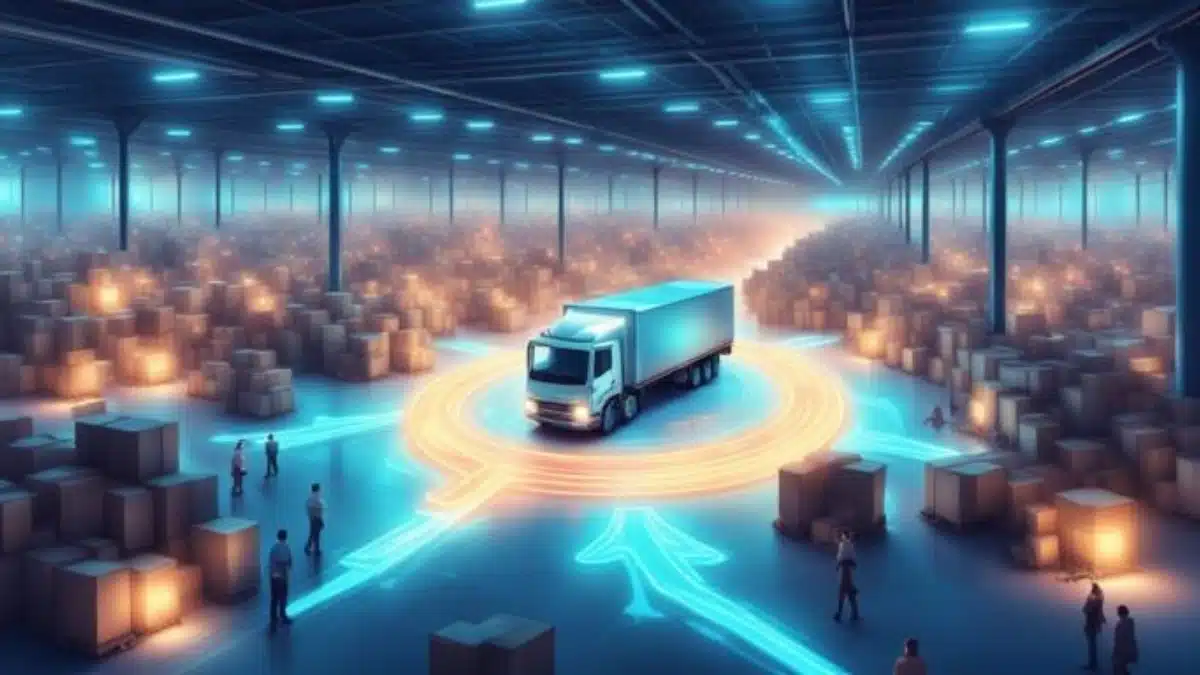
According to the National Retail Federation, consumers are expected to return close to $850 billion worth of merchandise in 2025. The year before, that number hit $890 billion. That is a staggering amount of products flowing backward through supply chains that most companies never really planned for.
This is where reverse logistics comes in. It is the process that kicks in after the sale, handling everything from returns and repairs to recycling and recovering value from unsold goods. A lot of businesses still see it as a headache, but the ones paying attention are turning it into something much more useful: recovered revenue, better customer retention, and a leaner, more sustainable operation.
We put this guide together to walk through the real mechanics of reverse logistics, what makes it difficult, where most companies get stuck, and how supply chain management software fits into the picture when you are ready to stop losing money on every returned product.
Key Takeaways
|
What Is Reverse Logistics?
Reverse logistics, in simple terms, is the process of moving goods from their final destination back to the point of origin to recapture value or ensure proper disposal. Unlike traditional logistics, which is a one-way street from supplier to consumer, reverse logistics manages the entire post-sale lifecycle of a product.
The primary goal is not just to handle defective items, but to manage the product lifecycle efficiently and sustainably. A deep understanding of this concept is fundamental for any business aiming to operate sustainably and optimize every facet of its supply chain, turning challenges into valuable opportunities for growth and customer satisfaction.
Why Reverse Logistics Is a Priority for Modern Businesses in 2026
According to a study by Invesp, 92% of consumers will buy again from a company if the product return process is easy. Furthermore, the ability to recover value from returned assets has a direct and positive impact on profit margins and overall financial health, making it a crucial element of modern business strategy.
- Most companies focus on making the sale
But what happens after the sale matters just as much. When customers know they can return a product without trouble, they feel more confident buying from you. That confidence turns into repeat purchases and long term loyalty. - Returned products still have value
A returned item does not have to be a loss. With the right process, companies can inspect, repair, and resell returned goods through secondary markets. Refurbished products, B-stock items, and reusable parts can all be turned back into revenue instead of being thrown away. - Sustainability matters more than ever
Customers today pay attention to how brands handle waste and environmental responsibility. Reverse logistics supports the circular economy by keeping products and materials in use longer through reuse, repair, and recycling. It also helps businesses prepare for environmental regulations that are becoming stricter every year. - Unprocessed returns cost you money
Every returned product sitting in your warehouse takes up space and ties up cash. The faster you process it, whether by restocking, refurbishing, or liquidating, the less it costs your business. Having better inventory visibility makes this easier by giving your team a clear view of what to keep and what to move out. - Compliance is not something you can ignore
Rules around e-waste disposal, battery recycling, and hazardous materials are getting tighter across the globe. Companies that do not follow these regulations risk heavy fines and legal problems. Building compliance into your reverse logistics process now saves you from bigger issues down the road.
5 Key Components of the Reverse Logistics Process
The reverse logistics process is a complex ecosystem composed of several interconnected stages, not merely a single activity. Each component plays a vital role in determining how efficiently a company can recover value from returned products.
By mapping out and optimizing each stage, a company can ensure that every returned product is handled in the most profitable and sustainable manner possible, turning a reactive necessity into a proactive strategic advantage.
| Component | What Happens | Main Goal |
|---|---|---|
| Returns Management | Handle return requests, issue RMAs, manage inbound shipping, and filter ineligible returns early. | Control costs and keep returns organized from the start. |
| Repairs & Refurbishment | Inspect items, then repair defects or refurbish (testing, cosmetic fixes, repackaging) to restore value. | Maximize recovery value and reduce waste. |
| Reselling | Resell usable items via outlets, marketplaces, or liquidators based on condition and demand. | Recoup costs and generate additional revenue. |
| Recycling | Dismantle products to recover materials (metals, plastics, glass) for reuse or scrap value. | Recover material value and support sustainability goals. |
| Disposal | Dispose of non-recoverable items safely and in compliance with environmental rules. | Minimize risk, ensure compliance, and reduce environmental impact. |
Common Challenges in Implementing Reverse Logistics
While offering numerous strategic benefits, implementing an effective reverse logistics system is not without its hurdles. Acknowledging and understanding these common challenges is the crucial first step toward designing robust and effective solutions.
According to a report by McKinsey, processing a return can cost up to 66% of the item’s original price, which is compounded by higher per-unit transportation and handling costs. Overcoming these obstacles requires meticulous planning, strategic investment in appropriate technology, and a fundamental shift in mindset to view reverse logistics as an integral and value-adding part of the supply chain rather than an afterthought.
- Lack of visibility and product tracking
Most companies have full visibility when shipping products out. But once a customer sends something back, it often disappears into a blind spot. You do not know where the item is, what condition it is in, or when it will arrive. That makes it hard to update customers, plan warehouse capacity, or decide what to do with the product once it shows up. - Unpredictable and high operational costs
Unlike forward logistics, which can be planned based on sales forecasts, return volume is often unpredictable and can fluctuate widely. This makes it difficult to allocate resources like labor, transportation, and warehouse space efficiently. - Everyone handles returns differently
When there is no standard process, returns become messy. One team sorts items by condition, another skips that step entirely. One location processes returns in a day, another takes a week. These inconsistencies create delays, errors, and wasted effort across the board. - Complex inventory management of returned goods
New products arrive in the same condition and go straight to the shelf. Returns do not work that way. Some items come back unopened, others are damaged, and some can only be used for parts. Each type needs a different workflow. Without a system that can handle this level of sorting, returned goods pile up, lose value, and take up space that could be used for sellable inventory.
Strategies to Optimize Reverse Logistics with Technology
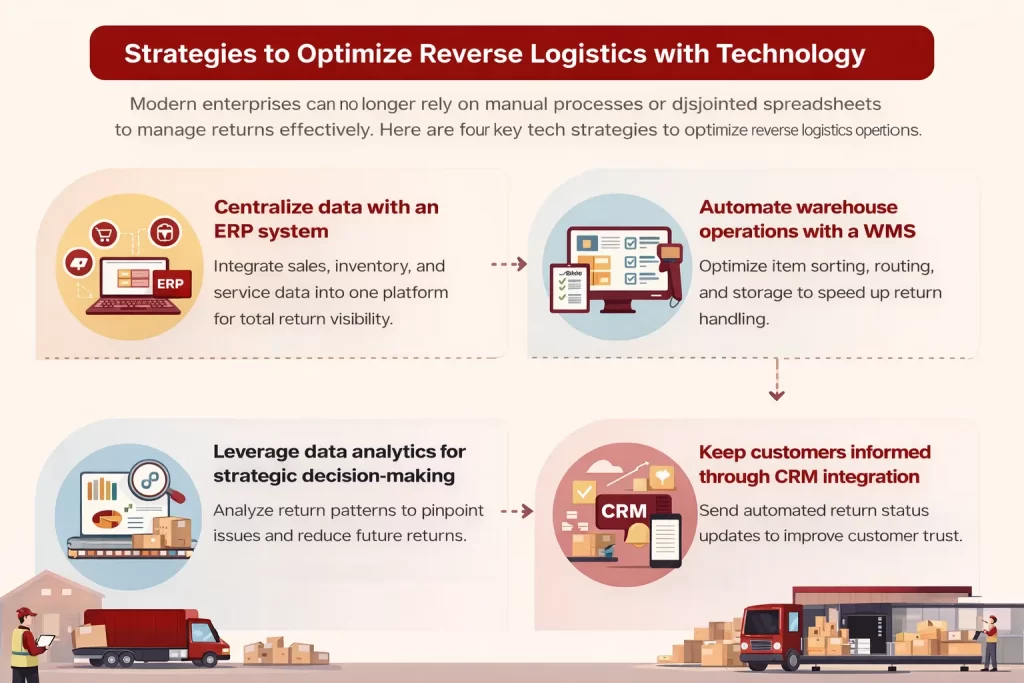
Modern enterprises can no longer afford to rely on manual processes and disparate spreadsheets to manage the inbound flow of returned goods. Leveraging integrated software solutions facilitates automation, provides complete visibility, and enables deep data analysis for smarter, faster decision-making.
An integrated Enterprise Resource Planning (ERP) system provides this end-to-end visibility, allowing managers to track every product from the moment a return is initiated to its final disposition. Here are the key technology-driven strategies to optimize every aspect of your reverse logistics operations.
1. Centralize data with an ERP system
An ERP system connects your sales, inventory, and customer service data in one place. That means when a return comes in, you can track it from start to finish without switching between tools. You see what is coming back, what condition it is in, and where it needs to go next. No more guessing or chasing updates across departments.
2. Automate warehouse operations with a WMS
A Warehouse Management System takes the guesswork out of handling returns on the floor. It tells your team where to sort, store, and route each item based on its condition. That means faster processing, fewer errors, and less wasted space from products sitting around waiting to be dealt with.
3. Leverage data analytics for strategic decision-making
Every return tells you something. When you start tracking patterns, like which products get sent back the most or what reasons customers give, you can address the root cause. Maybe it is a quality issue, maybe the product description is misleading. Either way, the data helps you reduce future returns instead of just reacting to them.
4. Keep customers informed through CRM integration
Customers get anxious when they do not know what is happening with their return. Connecting your reverse logistics process to a CRM system lets you send automatic status updates so customers always know where things stand. That alone reduces support tickets and turns a frustrating experience into one that actually builds trust.
How the Right Software Makes Reverse Logistics Actually Work
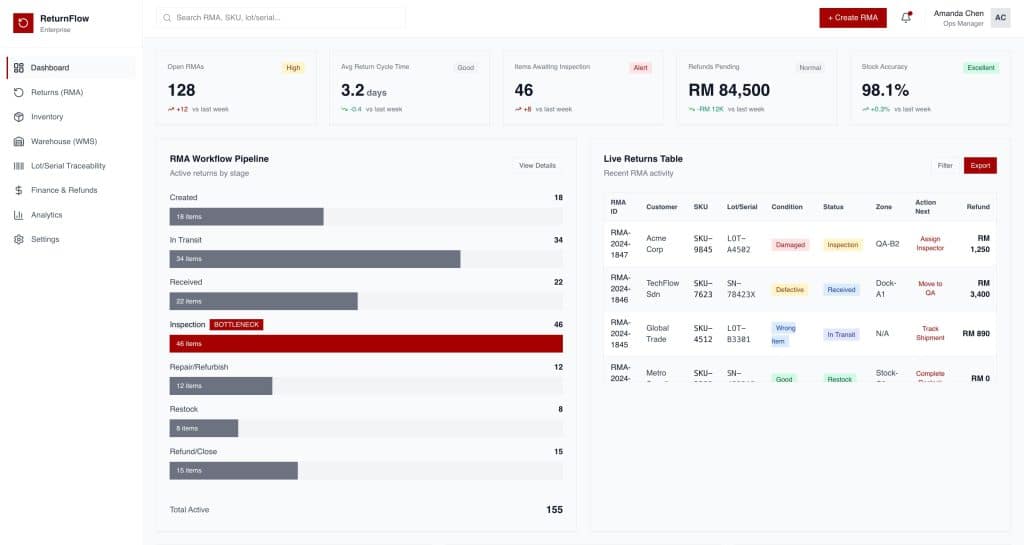
The real advantage comes from integration. When your inventory, purchasing, sales, and accounting data are all connected, you do not have to piece together information from different tools just to figure out where a returned item stands. Everyone works from the same data, and decisions happen faster because of it.
Key Features to Look for in Supply Chain and Inventory Software:
- Return Management Automation: Streamlines the creation of Return Merchandise Authorizations (RMAs) and automatically tracks the status of each returned item from start to finish, reducing manual workload and improving customer communication.
- Lot & Serial Number Tracking: Provides detailed tracking for individual items or batches, ensuring full traceability for returned products, which is crucial for quality control and warranty management.
- Real-Time Stock Reporting: Offers accurate, real-time visibility into the status and location of returned inventory, helping you make faster decisions on restocking, refurbishing, or liquidating items.
- Warehouse Management Integration: Seamlessly connects with WMS to direct the physical handling of returns, from designated receiving docks to specific zones for inspection, repair, or storage.
- Integrated Financial Reconciliation: Automatically syncs return and refund data with the accounting system, ensuring financial records are always accurate and reducing manual reconciliation time.
If your current setup makes it hard to keep up with returns, trying a free demo of an integrated supply chain solution is a practical way to see how a connected system handles what disconnected tools cannot. Want to see what fits your budget? Check the pricing estimate below.
Measuring Success: Essential KPIs for Reverse Logistics
To ensure your reverse logistics strategy is effective and delivers a positive business impact, it is crucial to track and analyze Key Performance Indicators (KPIs). Here are some of the most critical KPIs that every company serious about managing its reverse logistics should monitor to drive performance and profitability.
A. Product return rate
This fundamental KPI measures the percentage of total units sold that customers return. It is typically calculated as (Number of Units Returned / Number of Units Sold) x 100. A high return rate may indicate issues with product quality, inaccurate product descriptions, or damage during shipping. Tracking this metric over time helps identify problematic products or systemic issues that need to be addressed at their root cause, with the ultimate goal of reducing returns altogether.
B. Cost per return
This KPI calculates the total cost associated with processing a single returned item. It should include all related expenses, such as transportation, labor for inspection and processing, repackaging materials, and any necessary repairs. Understanding the cost per return helps quantify the financial impact of your reverse logistics operations. By tracking this metric, you can identify inefficiencies and implement cost-saving measures to make the entire process more financially sustainable.
C. Return cycle time
Return cycle time measures the total time it takes for a returned product to move through the entire reverse logistics process, from the customer’s return request to its final disposition (e.g., restocked, resold, or recycled). A shorter cycle time is desirable as it means capital is recovered faster and warehouse space is freed up more quickly. Reducing this time improves operational efficiency and often correlates with higher customer satisfaction, as refunds or replacements are processed faster.
D. Value recovery rate
Perhaps the most critical financial KPI, the value recovery rate measures how effectively your company recaptures value from returned assets. It is calculated by comparing the revenue generated from returned items (through resale, recycling, etc.) against the total cost of managing the reverse logistics process. A higher rate indicates a more profitable and efficient operation. This KPI directly demonstrates the success of your strategy in turning returns into a valuable asset.
Conclusion
Reverse logistics is no longer something businesses can afford to figure out as they go. The companies that treat it seriously are recovering more value from returns, keeping customers happy, and running leaner operations because of it. The ones that don’t are leaving money on the table every time a product comes back.
The first step is simple. Look at how your business handles returns right now and identify where things slow down, where you lose track of items, and where costs pile up without clear reasons. From there, the right supply chain management software can give you the visibility and control to turn that process around.
If you want to see what that looks like in practice, trying a free demo of an integrated system is a good place to start. The sooner you get your reverse logistics under control, the sooner it stops being a cost and starts working in your favor.
FAQ About Reverse Logistics
-
What is the difference between reverse logistics and green logistics?
Reverse logistics focuses on the return of products for value recovery or disposal. In contrast, green logistics is a broader concept that minimizes the environmental impact of all logistics activities, both forward and reverse.
-
What are some examples of reverse logistics?
Examples include customer returns of e-commerce products, recalls of defective items, refurbishing electronics for resale, recycling used packaging, and managing end-of-life products such as old appliances.
-
What is the first step in the reverse logistics process?
The first step is typically ‘gatekeeping,’ which involves initiating the return process through a Return Merchandise Authorization (RMA). This step validates the return and provides instructions to the customer.