







Construction sites operate in fast-paced, high-risk environments where even minor oversights can lead to serious accidents. When construction site safety protocols are neglected, teams face avoidable hazards that jeopardize both workers and ongoing projects.
These risks not only disrupt operations and increase legal exposure but also weaken overall productivity. With modern construction management software, companies can streamline safety processes, improve visibility, and reduce the likelihood of costly incidents.
To help you build a safer and more resilient project environment, this guide breaks down the essential principles of construction site safety. Keep reading to explore practical strategies and technology-driven solutions that can strengthen your safety culture.
Key Takeaways
|
Why Construction Site Safety Is Your Business’s Top Priority
In the competitive construction industry, prioritizing site safety is a strategic imperative that directly influences a company’s bottom line, legal standing, and market reputation. Far from being a mere operational cost, a robust safety program is an investment that yields significant returns. Companies that embed safety into their core values create a resilient framework that protects their workforce while simultaneously driving efficiency and profitability. This proactive stance is crucial for long-term success and sustainability in an industry fraught with inherent risks.
Neglecting construction site safety, on the other hand, can trigger a cascade of negative consequences. From direct financial losses due to accidents and regulatory fines to the intangible damage of a tarnished reputation, the costs of a reactive approach are substantial. A single serious incident can halt a project, lead to costly legal battles, and make it difficult to attract both clients and top talent. Therefore, understanding the multifaceted benefits of a safety-first culture is the first step toward building a more resilient and successful construction business.
1. Preventing financial losses from work-related accidents
Workplace accidents carry a significant financial burden that extends far beyond immediate medical expenses. According to the Occupational Safety and Health Administration (OSHA), businesses spend billions annually on costs associated with workplace injuries and illnesses. These direct costs include workers’ compensation payments, medical bills, and legal services. However, the indirect costs, which are often harder to quantify but substantially larger, include project delays, equipment damage, administrative time for incident investigation, and increased insurance premiums. A proactive safety program is designed to mitigate these risks before they translate into financial liabilities, preserving project profitability and ensuring financial stability for the company.
2. Complying with legal regulations and industry standards
The construction industry is heavily regulated to protect workers from its inherently dangerous environment. Government bodies and industry organizations establish strict safety standards that all construction companies must adhere to. Failure to comply can result in severe penalties, including substantial fines, suspension of operating licenses, and even criminal charges in cases of gross negligence. A comprehensive construction site safety program ensures that all operations are aligned with these legal requirements. This not only avoids costly penalties but also demonstrates a company’s commitment to ethical and responsible business practices, which is a key factor in building trust with clients, partners, and employees.
3. Increasing productivity and team morale
A safe working environment has a direct and positive impact on employee morale and productivity. When workers feel secure and valued, they are more engaged, focused, and motivated to perform their tasks efficiently. This heightened morale leads to lower rates of absenteeism and employee turnover, reducing the costs associated with recruitment and training. Furthermore, a well-organized and safe site minimizes disruptions and delays caused by accidents, allowing projects to proceed on schedule. By fostering a culture where safety is a shared responsibility, companies empower their teams to work more effectively, contributing to higher quality outcomes and improved project timelines.
4. Protecting company reputation among clients and the public
A company’s safety record is a critical component of its public reputation. In today’s interconnected world, news of a major worksite accident can spread rapidly, causing irreparable damage to a brand’s image. Clients are increasingly selective, preferring to partner with contractors who demonstrate a strong commitment to safety and ethical standards. A positive safety record serves as a powerful marketing tool, differentiating a company from its competitors and attracting high-value projects. It signals reliability, professionalism, and a commitment to quality, which are essential attributes for building and maintaining long-term client relationships and a positive public perception.
The Core Pillars of Construction Site Safety
A truly effective safety management system is built upon several fundamental pillars that work together to create a comprehensive shield against worksite hazards. These core principles go beyond mere compliance, forming the bedrock of a proactive safety culture that permeates every level of a project. From individual responsibilities like wearing Personal Protective Equipment (PPE) to collective duties such as emergency preparedness, each pillar is essential for mitigating risk. Understanding and implementing these elements consistently is crucial for any construction company aiming to achieve an exemplary safety record.
Mastering these pillars involves a combination of proper training, consistent enforcement, and the use of appropriate tools and procedures. It requires a holistic view of the construction environment, recognizing that safety is a dynamic process rather than a static checklist. Each pillar addresses a unique set of risks, and together they provide a layered defense system. By focusing on these key areas, construction managers can systematically reduce the likelihood of accidents and ensure that every worker returns home safely at the end of the day.
1. Personal Protective Equipment (PPE)
Personal Protective Equipment (PPE) serves as the first line of defense for workers against a multitude of site-specific hazards. It includes items such as hard hats, safety glasses, high-visibility vests, steel-toed boots, gloves, and respiratory protection. The effectiveness of PPE depends not only on its availability but also on proper selection, fit, and consistent use. Employers are responsible for conducting a thorough hazard assessment to determine the appropriate PPE for each task and ensuring that all equipment meets established safety standards. Furthermore, comprehensive training on how to properly wear, maintain, and inspect PPE is essential for all employees, as improper use can render the equipment ineffective and create a false sense of security.
2. Environmental awareness and hazard identification
Maintaining a high level of situational awareness is critical for identifying and mitigating potential hazards before they lead to an incident. This involves training workers to be vigilant about their surroundings, including recognizing risks from moving equipment, unstable ground, overhead obstacles, and changing weather conditions. Regular site inspections and Job Safety Analyses (JSAs) are formal processes that help systematically identify risks associated with specific tasks. Encouraging workers to report near misses and potential hazards without fear of reprisal creates a proactive feedback loop, allowing for continuous improvement and the timely correction of unsafe conditions. This pillar emphasizes that safety is a shared responsibility, requiring every individual on site to be an active participant in hazard identification.
3. Safe procedures for working at heights and in excavations
Falls from height and trench collapses are among the leading causes of fatalities in the construction industry, making specialized procedures for these activities non-negotiable. For working at heights, this includes the mandatory use of fall protection systems such as guardrails, safety nets, and personal fall arrest systems (harnesses and lanyards). Scaffolding and ladders must be inspected regularly and used in accordance with manufacturer specifications. Similarly, any excavation or trench deeper than a few feet requires protective systems like shoring, sloping, or trench boxes to prevent collapses. A competent person must inspect excavations daily and before each shift to ensure their stability and safety.
4. Equipment and electrical safety
Heavy machinery and electrical systems present significant risks if not managed properly. All equipment operators must be certified and trained on the specific machinery they use, and daily pre-operational checks are essential to identify any mechanical issues. Safe operating procedures, including maintaining clear communication with ground personnel and ensuring clear lines of sight, must be strictly followed. For electrical safety, procedures like lockout/tagout (LOTO) are critical to prevent the accidental energization of equipment during maintenance. All electrical tools and wiring must be regularly inspected for damage, and workers should be trained to recognize and avoid electrical hazards such as overhead power lines and exposed wiring.
5. Emergency procedures and effective communication
Despite the best preventive measures, emergencies can still occur. A well-defined and regularly practiced emergency action plan is vital for ensuring a swift and organized response. This plan should include clear procedures for medical emergencies, fires, structural collapses, and site evacuations. All personnel must know the location of first aid stations, fire extinguishers, and emergency exit routes. Effective communication is the backbone of emergency response. This includes establishing clear communication channels, such as two-way radios or designated signaling systems, and ensuring all workers know who to contact in an emergency. Regular drills and toolbox talks help reinforce these procedures, ensuring everyone on site is prepared to act decisively when it matters most.
How To Build a Strong Safety Culture on a Construction Site?
While checklists and procedures are essential components of any safety program, they are not sufficient on their own to create a truly safe work environment. A strong safety culture transcends written rules; it is an ingrained mindset where every individual, from executive leadership to the newest apprentice, is genuinely committed to prioritizing safety. This culture is built on a foundation of trust, open communication, and shared accountability. It transforms safety from a top-down mandate into a collective value that influences every decision made on the job site.
Fostering such a culture requires deliberate and sustained effort. It involves visible leadership, continuous education, and systems that empower workers rather than punish them for speaking up. When a company successfully cultivates a strong safety culture, the results are profound. It leads to a significant reduction in incidents, boosts morale, improves productivity, and ultimately becomes a powerful competitive advantage. This cultural shift is the key to moving from a reactive, compliance-based approach to a proactive, behavior-based safety model that delivers lasting results.
1. Visible commitment from top-level management
Leadership commitment is the single most important factor in shaping a company’s safety culture. When executives and senior managers actively and visibly champion safety, it sends a powerful message that safety is a non-negotiable core value. This goes beyond simply signing off on safety policies. It involves regularly visiting job sites, participating in safety meetings, investing in high-quality safety equipment and training, and holding all levels of management accountable for safety performance. When leaders consistently demonstrate that they prioritize the well-being of their employees over production schedules or cost-cutting, it builds trust and inspires the entire organization to follow suit.
2. Continuous safety training and education
A well-trained workforce is a safe workforce. Continuous education is essential to ensure that all employees are equipped with the knowledge and skills to perform their jobs safely. This starts with comprehensive onboarding for new hires but must extend throughout an employee’s career. Regular training sessions should cover topics such as hazard recognition, proper equipment use, emergency procedures, and any new safety regulations or technologies. Toolbox talks at the beginning of each shift are an effective way to address site-specific hazards and reinforce key safety messages. By investing in ongoing training, companies ensure that safety knowledge remains fresh and relevant, adapting to the evolving challenges of each project.
3. Encouraging open communication and no-blame incident reporting
A culture of fear is the enemy of safety. If workers are afraid of being blamed or punished for reporting a hazard or a near miss, valuable opportunities for prevention are lost. A strong safety culture promotes an environment of psychological safety where open communication is encouraged. This means establishing clear and accessible channels for reporting safety concerns and implementing a no-blame policy for incident reporting. When incidents are treated as learning opportunities rather than occasions for punishment, workers are more likely to report them. This allows management to identify root causes and implement corrective actions before a minor issue becomes a major accident, as noted in studies on unlocking construction productivity through better processes.
4. Empowering every worker to be a safety ‘guardian’
In the most effective safety cultures, every worker feels a sense of ownership and responsibility for their own safety and that of their colleagues. This is achieved by empowering them with the authority to stop work if they observe an unsafe condition. This “Stop Work Authority” is a powerful tool that transforms passive observers into active safety guardians. When employees know that their concerns will be taken seriously and that they have the full support of management to halt a potentially dangerous activity, they become deeply engaged in the safety process. This empowerment fosters a collective sense of vigilance and reinforces the message that no task is so urgent that it cannot be done safely.
The Role of Technology in Enhancing Construction Site Safety
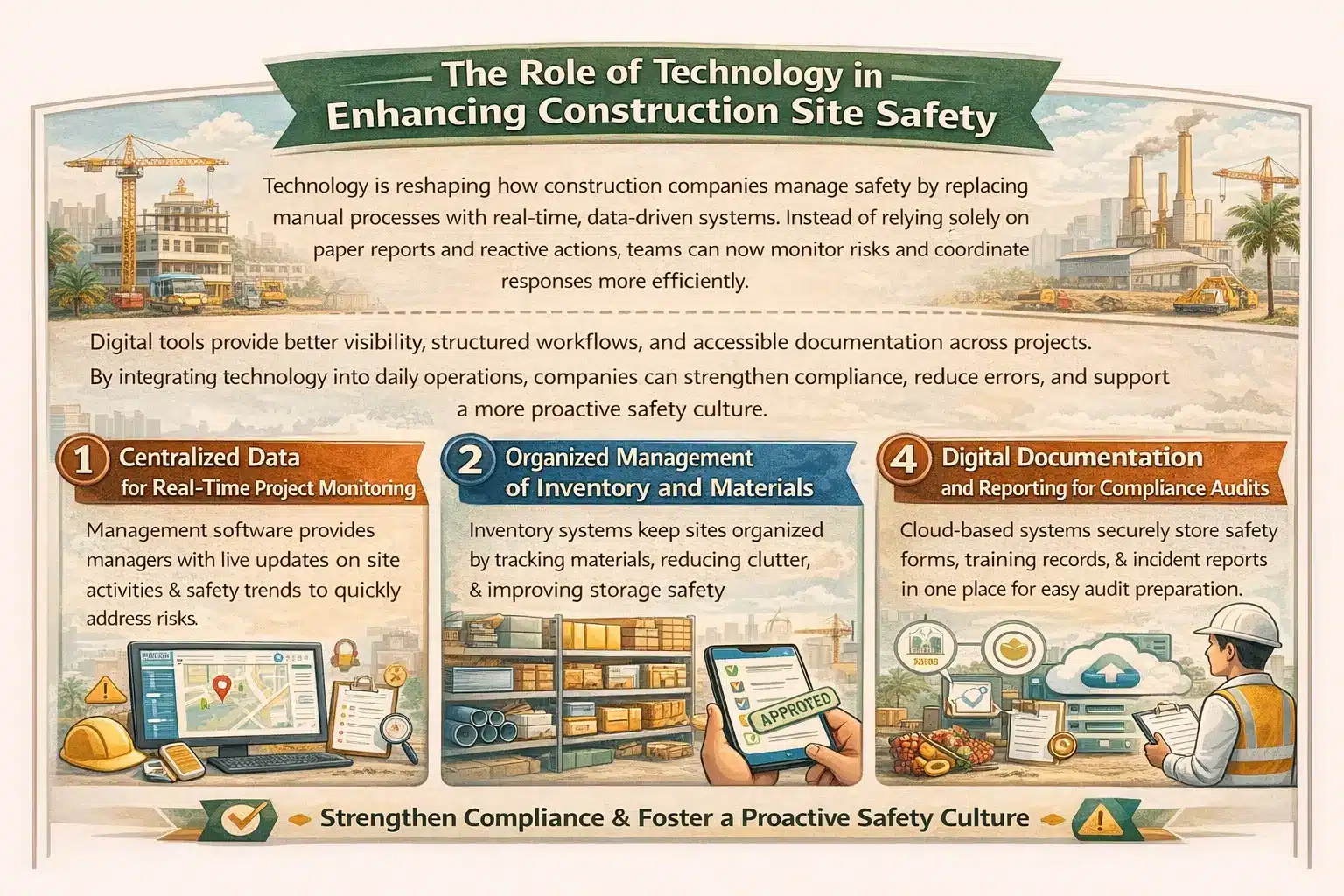
The construction industry is undergoing a digital transformation, and technology is emerging as a powerful ally in the quest for safer worksites. Modern technological solutions are moving safety management beyond traditional paper-based systems, offering tools for real-time data collection, proactive risk analysis, and streamlined communication. By leveraging these innovations, construction companies can gain unprecedented visibility into their operations, enabling them to identify and address hazards with greater speed and accuracy. This shift from a reactive to a predictive safety approach is fundamentally changing how risks are managed on site.
From wearable sensors that monitor worker vitals to software platforms that centralize safety documentation, technology provides a multi-layered approach to enhancing safety. These tools not only help in enforcing compliance but also provide valuable data that can be used to refine safety protocols and training programs over time. The integration of technology into daily workflows empowers teams with the information they need to make smarter, safer decisions, ultimately reducing the frequency and severity of incidents and fostering a more resilient safety culture.
1. Centralized data for real-time project monitoring
Modern construction management software provides a centralized platform for real-time data collection and analysis. This allows safety managers and project leaders to have a comprehensive, up-to-the-minute view of site activities, safety compliance, and potential risks from a single dashboard. Through effective construction project monitoring, teams can track incident reports, inspection results, and corrective actions as they happen. This real-time visibility enables a much faster response to emerging safety issues, allowing managers to intervene and mitigate hazards before they escalate. Centralized data also simplifies the process of identifying trends and patterns in safety performance across multiple projects, providing valuable insights for strategic improvements.
2. Organized management of inventory and materials
A disorganized worksite is an unsafe worksite. Poorly managed materials and equipment can create trip hazards, obstruct emergency access routes, and lead to inefficient workflows that encourage unsafe shortcuts. Technology, particularly inventory management systems integrated into a construction ERP, helps bring order to the chaos. These systems allow for precise tracking of materials from delivery to installation, ensuring that items are stored in designated, safe locations. By optimizing site logistics and reducing clutter, technology minimizes the risk of accidents related to disorganized materials. It also ensures that the right equipment and materials are available when needed, preventing delays that might tempt workers to use improper or unsafe substitutes.
3. Improved workflows to reduce human error
Human error is a contributing factor in a vast majority of workplace accidents. Technology can help reduce the likelihood of these errors by automating repetitive tasks and standardizing workflows. Digital checklists, for example, ensure that pre-task safety inspections are completed consistently and thoroughly, leaving no room for oversight. Automated approval workflows for high-risk activities, such as hot work or confined space entry, ensure that all necessary precautions and authorizations are in place before work begins. By digitizing and standardizing these critical processes, technology reduces reliance on memory and minimizes the potential for human error, creating a more reliable and consistent safety environment.
4. Digital documentation and reporting for compliance audits
Maintaining accurate and accessible safety documentation is a critical aspect of regulatory compliance. Traditional paper-based systems are often cumbersome, prone to being lost or damaged, and difficult to audit. Technology solves this problem by enabling digital documentation and reporting. Safety forms, incident reports, training records, and compliance certificates can all be stored securely in a centralized, cloud-based system. This not only ensures that records are safe and easily accessible but also dramatically simplifies the process of preparing for an audit. With a few clicks, safety managers can generate comprehensive reports to demonstrate compliance, saving significant time and administrative effort while ensuring a clear and defensible record of their safety program.
Practical Implementation of a Construction Safety Management System (CSMS)
Implementing a Construction Safety Management System (CSMS) is a structured process that transforms safety from a set of abstract goals into a tangible, day-to-day reality. A successful CSMS is a dynamic, cyclical system, not a one-time setup. It involves a continuous loop of planning, implementation, evaluation, and improvement. This systematic approach ensures that safety management is integrated into every phase of a project, from initial design to final handover. By following a clear, phased implementation, companies can build a robust framework that is both effective and sustainable.
The process begins with a foundational understanding of the specific risks inherent to a project and culminates in a culture of continuous improvement. Each stage builds upon the last, creating a comprehensive system that is tailored to the unique challenges of the construction environment. This practical, step-by-step approach demystifies the implementation process and provides a clear roadmap for any organization committed to achieving excellence in construction site safety.
Stage 1: Hazard Identification and Risk Assessment (HIRA)
The first and most critical stage of any CSMS is to systematically identify potential hazards and assess the risks they pose. This process, known as HIRA, involves a thorough examination of all project tasks, materials, and environmental conditions. Methods can include site walk-throughs, reviewing historical incident data, and conducting brainstorming sessions with the project team. Once hazards are identified, the risk associated with each one is evaluated based on its potential severity and likelihood of occurrence. This assessment allows the team to prioritize risks, focusing resources on mitigating the most significant threats first and forming the basis for all subsequent safety planning.
Stage 2: Operational planning and control
With a clear understanding of the project’s risks, the next stage is to develop specific plans and controls to mitigate them. This involves establishing safe work procedures, defining clear roles and responsibilities, and allocating the necessary resources, such as PPE and safety equipment. This stage translates the findings from the HIRA into actionable steps. For example, if working at height is identified as a high-risk activity, the operational plan would detail the specific fall protection systems to be used, the training requirements for workers, and the inspection protocols for equipment. These controls are then integrated directly into the project’s overall work plan to ensure safety is part of every task.
Stage 3: Routine inspections and audits
Planning and controls are only effective if they are consistently implemented. The third stage involves the ongoing process of monitoring and verification through routine inspections and audits. Daily or weekly site inspections, often conducted by supervisors or safety officers, help identify any deviations from established procedures or new hazards that may have emerged. Periodic audits, which are more formal and comprehensive, provide a deeper evaluation of the overall effectiveness of the CSMS. These verification activities create a crucial feedback loop, ensuring that safety controls are functioning as intended and identifying areas that require immediate correction or improvement.
Stage 4: Management review for continuous improvement
The final stage of the CSMS cycle is the management review, which is essential for driving continuous improvement. During this stage, senior management reviews the overall performance of the safety system, analyzing data from inspections, audits, and incident reports. The goal is to assess the effectiveness of the current system and identify opportunities for enhancement. According to the International Labour Organization, this principle of continuous improvement is key to adapting to changing conditions and preventing future incidents. This review process ensures that the CSMS remains a living system, evolving and improving over time to meet the dynamic challenges of the construction environment.
Optimize Your Construction Safety Management with HashMicro
HashMicro Construction Suite centralizes all project and safety data on one platform for easier oversight. Its advanced features help you track compliance, manage equipment maintenance, and keep teams aligned with the latest safety protocols, minimizing human error.
HashMicro’s system integrates safety management with project planning, inventory, accounting, and HR to keep all processes connected. This unified approach delivers clear, real-time visibility so every decision is supported by accurate information.
Features of HashMicro’s Construction Suite:
- Real-Time Project Monitoring: Gain complete visibility over every project site with a centralized dashboard that tracks progress, resource allocation, and safety metrics in real-time.
- Budget S-Curve Management: Proactively manage project finances by comparing planned budgets against actual costs, allowing for early detection of deviations and better financial control.
- Digital Documentation & Reporting: Digitize all safety documents, from inspection checklists to incident reports, for easy access, secure storage, and streamlined compliance audits.
- Integrated Asset Management: Schedule and track equipment maintenance automatically to ensure all machinery is in safe working condition, reducing the risk of mechanical failures and downtime.
- Subcontractor & Vendor Management: Manage subcontractor compliance and performance from a single portal, ensuring that all partners on your project adhere to your company’s safety standards.
With HashMicro, your construction company can elevate its safety standards, improve operational efficiency, and make data-driven decisions with confidence. To see how our solution can be tailored to your specific business needs, feel free to try our free demo today.
Conclusion
Achieving excellence in construction site safety is an ongoing effort that requires consistent commitment from every level of the organization. When teams understand risks and take proactive action, safety becomes a strong foundation that supports every project.
With HashMicro Construction Management Software, you gain complete visibility into schedules, workforce, and on-site risks to maintain high safety standards. Its integrated system helps reduce human error, improve compliance, and keep team coordination running smoothly.
If you want to see how technology can strengthen safety and efficiency across your projects, you can explore the free demo. This gives you a clear view of how HashMicro supports safer, more productive construction operations.
FAQ About Construction Site Safety
-
What are the most common causes of accidents on a construction site?
The most common causes, often called the ‘Fatal Four,’ are falls from height, being struck by an object, electrocutions, and getting caught-in or between objects. These four categories consistently account for the majority of fatalities in the construction industry.
-
Who is ultimately responsible for safety on a project site?
While safety is a shared responsibility, the primary legal and ethical responsibility rests with the employer or the principal contractor. They are tasked with providing a safe work environment, necessary training, and proper equipment. However, every individual, including supervisors and workers, has a role to play in maintaining site safety.
-
What is the difference between a hazard and a risk in construction?
A hazard is any source of potential harm or damage (e.g., an unguarded excavation, a faulty power tool). A risk is the likelihood that a hazard will actually cause harm, combined with the severity of that harm. Safety management focuses on identifying hazards and implementing controls to eliminate or reduce the associated risks.
-
How can construction management software help with safety regulations?
Construction software helps by digitizing and centralizing safety documentation, such as permits, inspection records, and incident reports. It automates compliance checklists, tracks employee training certifications, and provides a clear audit trail, making it much easier to demonstrate adherence to safety regulations.
-
How often should toolbox talks be held?
Toolbox talks, or safety meetings, should ideally be held at the beginning of every shift, or at least daily. These short, informal meetings are crucial for discussing the specific hazards and tasks for that day, ensuring that safety remains a top priority in everyone’s mind.