














Construction projects rarely go exactly as planned. Delays, miscommunication between teams, and unexpected cost increases are common across the industry. These problems often start small but build up quickly when site operations, procurement, and scheduling aren’t properly connected.
The financial impact is real. According to McKinsey, construction productivity grows at just 1% per year, far below other industries. When margins are already tight, even minor inefficiencies can eat into profits and hurt your reputation with clients who expect on-time delivery.
The good news is that most of these issues come down to coordination and visibility. When project data sits in different places and teams work in silos, problems slip through the cracks. A centralized system that connects planning, execution, and reporting can help catch issues early and keep projects on track.
Key Takeaways
|
Understanding Construction Productivity
Construction productivity is about how efficiently you turn labor, materials, and time into finished work. At its core, it compares what you put in versus what you get out. It is a critical ratio of output achieved against the input consumed to achieve it.
Improving this metric directly boosts project profitability and enhances your competitive edge. Consistently high productivity leads to timely project completion and greater client satisfaction.
Why Measuring and Improving Construction Productivity Is Crucial
Measuring productivity provides the data needed for strategic decision-making and continuous improvement. It turns guesswork into a clear, evidence-based process for managing your projects effectively.
1. Boosts project profitability
Higher productivity reduces wasted labor hours and optimizes equipment use, directly cutting costs. This ensures projects are completed within budget and maximizes your overall profit margins.
2. Enhances competitive advantage
A reputation for efficiency helps win more tenders and secure high-value clients. It allows you to offer competitive pricing without sacrificing quality or delivery timelines.
3. Informs strategic decisions
Accurate data helps identify which methods and teams are most effective. This allows you to allocate resources intelligently and invest in areas that yield the best results.
4. Improves client satisfaction
Completing projects on time and within budget is key to meeting client expectations. High productivity builds trust and leads to repeat business and valuable referrals.
How to Accurately Measure Construction Productivity
 You cannot improve what you do not measure, making accurate tracking essential for progress. This process involves establishing clear metrics and leveraging technology for reliable data collection.
1. Establish key performance metrics
Start by defining clear metrics, such as output per labor hour or cost per unit of work. This provides a consistent baseline to track performance and set improvement targets.
2. Overcome manual tracking challenges
Shift from error-prone paper timesheets and reports to digital data capture on-site. With online timesheet software for construction, delays and inaccuracies are eliminated, ensuring the information you receive is reliable.
3. Automate data collection with software
Use construction software to automatically gather progress and resource data in real-time. This provides instant insights through dashboards, enabling quick and informed decision-making.
Key Factors That Influence Construction Productivity
Understanding the core factors that affect performance is the first step toward managing them. These variables range from your workforce and planning to technology and external conditions.
1. Labor factors
The skill, motivation, and safety of your workforce directly determine the quality and pace of work. A well-supported team is fundamental to achieving high output on any project.
2. Management and planning
Clear project plans, effective supervision, and swift decision-making prevent costly downtime and rework. Strong leadership ensures all activities are coordinated and aligned with project goals.
3. Technology and equipment
The availability and condition of tools and machinery heavily impact operational flow. Modern, well-maintained equipment prevents bottlenecks and keeps the project moving smoothly.
4. External and environmental factors
Adverse weather, regulatory changes, and supply chain disruptions can cause unforeseen delays. Proactive contingency planning is essential to mitigate the impact of these external variables.
How to Accurately Measure Construction Productivity
You cannot improve what you do not measure, making accurate tracking essential for progress. This process involves establishing clear metrics and leveraging technology for reliable data collection.
1. Establish key performance metrics
Start by defining clear metrics, such as output per labor hour or cost per unit of work. This provides a consistent baseline to track performance and set improvement targets.
2. Overcome manual tracking challenges
Shift from error-prone paper timesheets and reports to digital data capture on-site. With online timesheet software for construction, delays and inaccuracies are eliminated, ensuring the information you receive is reliable.
3. Automate data collection with software
Use construction software to automatically gather progress and resource data in real-time. This provides instant insights through dashboards, enabling quick and informed decision-making.
Effective Strategies to Increase Construction Productivity with Technology
Technology is the cornerstone of modern productivity, offering tools to streamline every project phase. An integrated software approach dismantles information silos and automates critical workflows.
1. Optimize project planning and scheduling
Use project management tools to create detailed schedules and visualize task dependencies. This ensures resources are allocated efficiently and the entire team works from a coordinated plan.
2. Centralize team communication and collaboration
Implement a unified platform where all stakeholders can access the latest documents and drawings. This reduces rework caused by outdated information and ensures clear communication.
3. Streamline procurement management
Digitize your procurement process to track material orders and approvals in real-time. This helps ensure materials arrive on-site exactly when needed, preventing costly delays.
4. Manage inventory to prevent downtime
Use an inventory system to monitor material usage and automate reordering processes. This prevents stockouts or oversupplies, minimizing workflow disruptions and waste.
5. Digitize financial and budget management
Integrate accounting software to track actual project costs against the budget in real-time. This provides complete financial visibility, enabling better spending control and profitability.
6. Leverage data for continuous improvement
Utilize analytics dashboards to monitor key performance indicators and identify improvement areas. Analyzing historical data also helps create more accurate estimates for future projects.
Read more: Site Inventory Control Guide for Construction Sites
Case Study of Construction Productivity
Jaya Konstruksi, a mid-sized firm, constantly struggled with project delays and budget overruns. Communication gaps between the field and office led to significant rework and material waste.
The company implemented an integrated construction ERP to centralize project data and automate workflows. Field teams used mobile apps for real-time progress reporting and material tracking.
Within six months, rework costs fell by 80%, and overall labor productivity increased by 20%. The firm began completing projects on time, significantly boosting profitability and client satisfaction.
How Construction Software Helps Manage Complex Projects
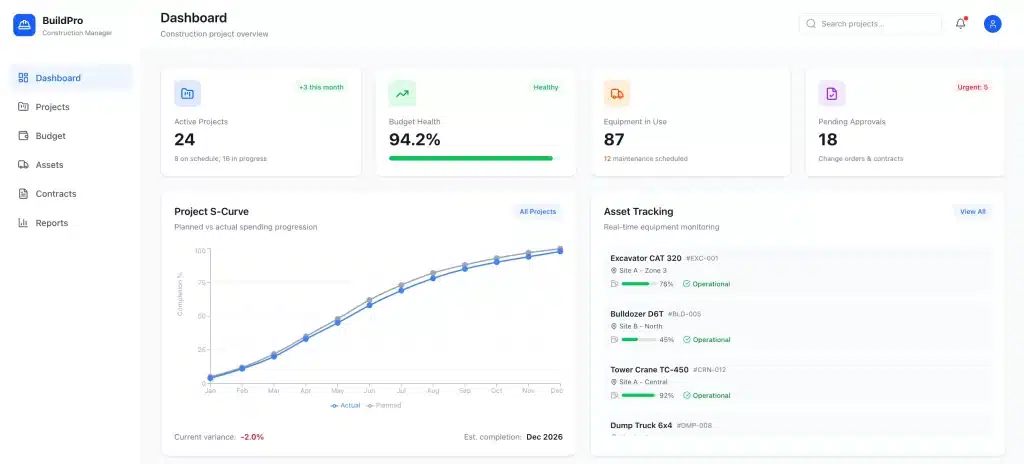
Construction projects involve a lot of moving pieces: budgets that shift, equipment that needs tracking, scope changes from clients, and reports that need to be pulled on short notice. Managing all of this manually creates gaps. Software built for construction helps close those gaps.
Here’s what to look for in a construction management system:
- Budget Tracking with S-Curve View Compare planned spending against actuals throughout the project. Helps you spot overruns early instead of at final reconciliation.
- Asset and Equipment Management Track machine locations, fuel usage, and maintenance schedules in one place. Reduces downtime and avoids last-minute repairs.
- Centralized Job Estimates (RAB) Keep budgets, contracts, and reports connected. No more version conflicts or scattered spreadsheets.
- Variation Order Handling Document and approve scope changes systematically. Keeps records clean for both internal review and client sign-off.
- On-Demand Reporting Access project status or contract details when needed without waiting for manual updates from the field.
These features are available across various construction management platforms. Compare a few providers, request demos, and test with your actual data before deciding.
Conclusion
Improving construction productivity doesn’t require a complete overhaul. It starts with better planning, clearer tracking, and tools that reduce manual work. When your team spends less time chasing updates, they have more time to keep the project moving.
Construction management software can help with that, whether it’s HashMicro or another provider that fits your workflow. The key is finding a system that matches how your team actually works on site.
Take the next step toward optimizing your operations and achieving sustainable growth. Explore our solutions and discover their impact by trying a free demo today.
Want to see what fits your budget? Check the pricing estimate below.

FAQ About Construction Productivity
-
What is a good productivity rate in construction?
There is no single universal ‘good’ rate, as it varies by trade, region, and project type. The best approach is to benchmark your own historical performance and aim for continuous, measurable improvement over time. An annual increase of 3-5% is often considered a strong and achievable target for many firms.
-
How does technology improve construction productivity?
Technology improves productivity by automating manual tasks, centralizing communication, providing real-time data for better decision-making, and optimizing resource management. This reduces errors, minimizes downtime, and ensures all stakeholders are working with the most up-to-date information.
-
What are the main causes of low productivity in construction?
The main causes include poor planning and scheduling, miscommunication between teams, supply chain delays, rework due to errors, and insufficient management of labor and equipment. These factors often lead to significant wasted time and resources on-site.
-
How can you improve labor productivity in construction?
Labor productivity can be improved by ensuring clear work plans, providing proper tools and training, fostering a safe work environment, and minimizing downtime. Implementing digital tools for time tracking and progress reporting also helps identify and address inefficiencies quickly.