










 Limited to 100 registrants

Accurately anticipating what customers will need next is what keeps operations steady, especially when lead times and supply availability can change quickly. Demand forecasting helps businesses plan production, set smarter inventory targets, and allocate resources based on expected market movement rather than guesswork.
In Malaysia, forecasting is a critical consideration because demand can shift with festive seasons, promotions, and fast-moving online purchasing patterns. Whether it is a retailer preparing for peak periods or a manufacturer balancing raw materials, stronger forecasts help teams meet expectations without tying up cash in excess stock.
One useful way to think about demand forecasting is as a shared language across the supply chain. When manufacturers, distributors, and retailers forecast from reliable data, the flow of goods becomes more balanced and operational risk drops, from avoidable stockouts to rushed replenishment costs.
Key Takeaways
Demand forecasting uses historical data, market signals, and analytics to predict demand and align inventory and production.
Accurate forecasting cuts costs, reduces overstock/stockouts, and improves service levels through better decisions.
Inventory Management Software supports forecasting with real-time stock visibility and tracking, helping teams respond faster and keep inventory efficient.

What is Demand Forecasting?

Demand forecasting is the process of predicting future customer demand by analyzing historical data, market trends, and consumer behavior. This practice is essential to ensure businesses have the right products available at the right time, meeting customer needs without overstocking or understocking.
By leveraging inventory forecasting, businesses can anticipate how much of a product will be required, when it will be needed, and in what quantities. For Malaysian companies, especially those in retail and manufacturing, this predictive capability ensures a seamless flow of operations and the ability to address fluctuating market demands with agility.
For instance, in markets with dynamic consumer preferences or seasonal variations, demand forecasting is a proactive way to manage inventory and streamline production planning. This not only prevents financial losses due to unsold stock or stockouts but also strengthens customer loyalty by consistently meeting their expectations.
Why is Demand Forecasting Important?
Demand forecasting is more than just an operational tool—it’s a strategic advantage. It plays a pivotal role in helping businesses remain competitive and efficient in a rapidly evolving marketplace like Malaysia. Here’s why it’s crucial:
- Optimized Resource Utilization: Accurate forecasts enable businesses to allocate resources such as labor, materials, and storage effectively. Coupled with efficient inventory tracking, this prevents over-investment in unnecessary stock while ensuring sufficient inventory to meet demand.
- Improved Decision-Making: Reliable demand data informs critical business decisions, such as market expansion, pricing strategies, and promotional planning. It provides a clear understanding of customer trends and preferences, empowering businesses to stay ahead.
- Enhanced Customer Satisfaction: When stock levels are aligned with customer demand, businesses can avoid delays or stockouts, ensuring customers always find what they need. This leads to higher satisfaction and brand loyalty.
- Cost Efficiency: Forecasting minimizes unnecessary expenses by aligning production and inventory levels with actual demand. This reduces costs associated with overstocking, warehousing, and waste.
Benefits of Demand Forecasting
Inventory forecasting offers a wealth of advantages that extend beyond inventory management. It’s a cornerstone for operational efficiency and strategic growth, especially for businesses operating in Malaysia’s competitive landscape. Here are the key benefits:
- Optimized Resource Allocation: With precise demand predictions, businesses can allocate manpower, production resources, and storage space more efficiently. For instance, a food distributor can better plan its supply chain, ensuring fresh goods are delivered promptly while minimizing spoilage.
- Improved Production Scheduling: Demand forecasting enables businesses to align production schedules with market needs. Manufacturers can plan their production cycles to avoid overproduction or underproduction, ensuring consistent product availability while reducing operational waste.
- Informed Strategic Planning: Businesses can use inventory forecasts to decide on new product launches, market expansions, or promotional strategies. This foresight ensures companies remain competitive while effectively meeting market demands.
- Reduced Costs and Risks: Accurate forecasts help minimize costs associated with excessive inventory holding or emergency restocking. It also mitigates risks of stockouts, which can damage brand reputation and lead to lost sales.
- Enhanced Customer Satisfaction: By ensuring that products are available when customers need them, businesses can foster loyalty and improve overall satisfaction. Consistently meeting demand strengthens the trust customers place in the brand.
- Increased Profitability: Proper demand forecasting reduces waste and holding costs, ensuring resources are utilized efficiently. These savings directly contribute to healthier profit margins.
Streamlining every step of demand forecasting is crucial for accurate inventory planning and cost efficiency. Want to make it easier? Explore a tailored software solution to enhance your demand forecasting and inventory management—click the banner below for an instant price estimate.
Types of Demand Forecasting
Demand forecasting is not a one-size-fits-all process. Different methods cater to varying business needs, ensuring that forecasts are tailored to specific market conditions. Here are the common types:
- Passive Demand Forecasting: Passive forecasting relies on historical data to predict future demand. This method is ideal for businesses with stable demand patterns, such as local retailers or wholesalers dealing in staple products.
- Active Demand Forecasting: Active forecasting is dynamic, using current market trends and consumer behaviors to predict demand. This approach suits businesses aiming for growth, such as tech startups or companies launching innovative products.
- Short-Term Projections: Short-term forecasting focuses on immediate operational needs, typically spanning a few months to a year. It’s essential for planning inventory levels, staffing, and production schedules.
- Long-Term Projections: Long-term forecasting looks ahead several years, aiding in strategic planning for market expansions, capital investments, and significant market shifts.
- External Macro Forecasting: This type considers external factors like economic conditions, regulatory changes, and industry trends. It’s beneficial for businesses aiming to mitigate risks tied to broader market dynamics.
- Internal Business Forecasting: Internal forecasting uses company-specific data, such as sales performance and production capacity, to predict demand. This method helps align forecasts with the business’s unique capabilities and goals.
Demand Forecasting Methods
Inventory forecasting employs various methods to provide businesses with the insights needed for precise planning and decision-making. These methods cater to different operational needs and data availability, making it easier for businesses to adapt to changing market dynamics.
- Graphical Analysis: Graphical analysis involves visualizing historical data using charts or graphs to identify patterns and trends. For instance, a retail chain may use seasonal sales graphs to predict demand spikes during festive periods. While this method is straightforward, it may need to be supplemented with quantitative techniques for more complex forecasts.
- Statistical Methods: Statistical methods rely on mathematical models to analyze historical data and predict future demand. Examples include: Moving Averages, Exponential Smoothing, and Regression Analysis.
- Qualitative Forecasting: This method leverages expert opinions, focus groups, and market research to forecast demand. It’s particularly useful for new products or when historical data is unavailable. However, qualitative methods are prone to bias and are best used alongside quantitative techniques.
- Predictive Analytics: Using advanced algorithms and machine learning, predictive analytics dives deep into historical data, market trends, and consumer behavior. This technology-driven method offers highly accurate forecasts, making it ideal for industries with rapidly changing demands.
- Market Research: Surveys, interviews, and customer feedback form the backbone of market research forecasting. This method is useful for understanding consumer preferences and predicting demand for niche products or services.
- Trend Analysis: Trend analysis focuses on identifying emerging market trends and leveraging them for demand forecasting. For example, businesses in Malaysia may analyze social media trends to predict demand for specific products like halal cosmetics or eco-friendly packaging.
- Time Series Analysis: Time series forecasting analyzes data points collected over time to identify seasonal patterns, growth trends, or cyclical movements. This method is particularly effective for businesses with predictable seasonal demand.
Challenges in Demand Forecasting

While demand forecasting offers immense value, it also presents challenges that businesses must address to achieve accuracy and reliability.
- Data Quality Issues: Forecasting depends heavily on the quality and completeness of historical data. Inconsistent or inaccurate data can lead to flawed predictions and misguided strategies.
- Market Volatility: Unpredictable changes in market conditions, such as economic fluctuations or global events, can impact forecast accuracy. For instance, during the pandemic, many businesses struggled to adapt to sudden shifts in consumer behavior.
- Changing Consumer Preferences: Rapidly evolving consumer preferences can render historical data less relevant. Companies need to monitor market trends continuously to keep their forecasts aligned with current realities.
- Complex Supply Chains: For businesses with intricate supply chains, synchronizing demand forecasts with supply-side operations can be challenging. Delays or disruptions in one part of the chain can affect the entire system.
Implementing Effective Demand Forecasting
To successfully implement demand forecasting, businesses need a structured approach that balances strategic planning and technological integration. Here’s how you can do it:
Set Clear Objectives
Define your demand-forecasting goals with precision. For instance, are you aiming to align production schedules with seasonal demands or reduce inventory-related costs? By identifying your priorities, such as enhancing customer satisfaction or optimizing stock levels, your forecasting process becomes more focused and relevant to business needs.
Leverage Accurate Data and Analytics
Data is at the heart of effective demand forecasting. Gather information from historical sales, current market trends, and external factors like economic conditions or seasonal patterns. Advanced predictive analytics tools can process this data to reveal actionable insights, ensuring your forecasts reflect real-world conditions.
Choose the Right Forecasting Methods
Not all forecasting methods suit every business. For example:
- Time Series Analysis works well for industries with predictable seasonal trends, such as fashion or retail.
- Qualitative Forecasting is ideal for new product launches where historical data is limited.
- Machine Learning Algorithms are best for industries with dynamic market behavior, such as e-commerce.
Pairing the right method with your business model ensures accurate predictions.
Regular Monitoring and Adjustment
Forecasting isn’t a one-time activity. Continuously review the accuracy of your forecasts by comparing them with actual performance. Identify gaps, refine your methods, and update your system to adapt to any changes in market trends or consumer behavior. This iterative approach ensures your demand forecasting remains effective over time.
Manage Demand Forecasting More Accurately with an Inventory System
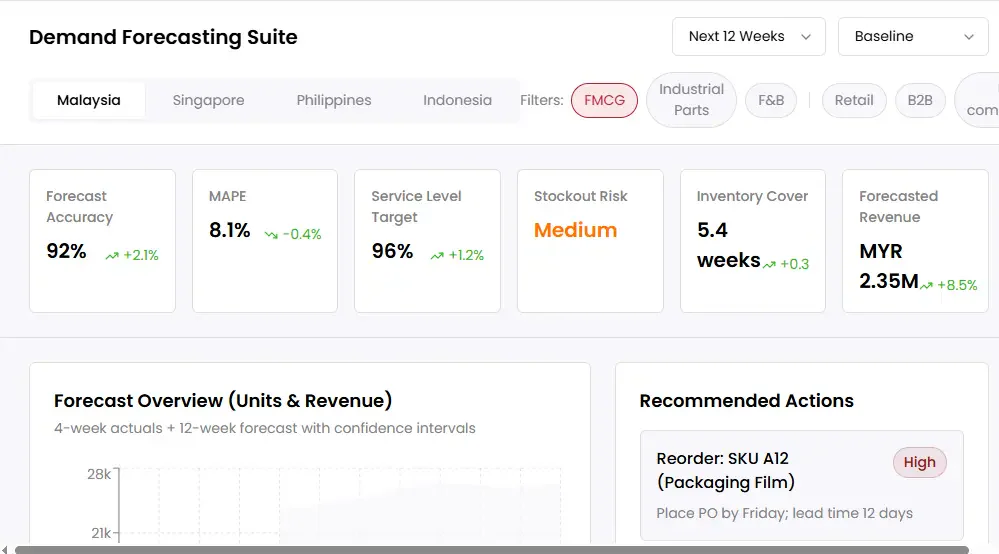
Reliable demand forecasting depends on clean data, consistent processes, and tools that reduce manual work. Modern inventory management software helps teams plan inventory with greater confidence by connecting stock movement, sales patterns, and warehouse activity in one place.
- Stock forecasting with predictive analytics: Uses historical sales and trend signals to estimate future demand, so inventory targets are set more realistically. This helps reduce overstock risk while keeping availability stable during peaks.
- Quality control management: Ensures items meet standards before release, reducing returns and preventing distorted demand signals from frequent replacements or rework. Cleaner quality data also makes forecasting more dependable.
- Warehouse stock optimization: Helps rebalance inventory across locations based on forecasts and consumption patterns to use storage space efficiently. This also reduces delays when demand shifts between regions.
- FEFO inventory management: Prioritizes picking by expiry date so fresher goods move first, reducing waste and improving turnover. It is especially valuable for businesses with shelf-life constraints.
- Stock aging reports: Shows how long items sit in storage, helping teams spot slow-moving stock early and adjust purchasing plans. This prevents obsolescence and keeps forecasting aligned with reality.
Solutions like HashMicro’s inventory system typically integrate with ERP modules and business tools such as accounting and CRM to keep inventory and forecast data synchronized. With real-time tracking and automated updates, teams gain a clearer view of what is selling, what is stuck, and what should be replenished next.
Conclusion
Demand forecasting is a vital strategy for businesses looking to stay competitive in Malaysia’s fast-moving market. It helps companies anticipate customer needs more accurately, optimize resources, and improve operational efficiency by aligning inventory, production, and distribution with real demand, reducing waste and protecting profitability.
However, achieving reliable forecasts takes more than spreadsheets and intuition. Many teams now rely on modern systems that combine predictive analytics with real-time data to capture shifts in sales patterns, lead times, and stock movement early, so planning decisions stay grounded and responsive.
For businesses that want to improve forecasting accuracy and execution, a structured approach supported by the right tools can make a measurable difference. Consider booking a free consultation to discuss practical ways to strengthen demand forecasting, inventory control, and planning processes based on your operational needs.
FAQs about Demand Forecasting
Basic demand forecasting refers to the process of estimating future demand for products or services using historical data and straightforward statistical techniques. It helps businesses anticipate market needs, align inventory levels, and plan resources effectively without relying on complex analytical tools.
The basic steps of demand forecasting include defining objectives, gathering historical sales data, analyzing market trends, applying appropriate forecasting methods, and periodically reviewing the outcomes to refine predictions. These steps ensure businesses can plan accurately for future demand and adjust their strategies accordingly.
The four main methods of demand forecasting are passive forecasting, which relies on historical trends; active forecasting, which incorporates market dynamics and consumer behavior; quantitative forecasting, using statistical models for precise predictions; and qualitative forecasting, relying on expert opinions and surveys for insights.
The four steps to demand forecasting involve collecting relevant data, analyzing it to identify trends, using suitable forecasting techniques to predict future demand, and implementing the forecast in operational planning while continuously monitoring its accuracy for adjustments. These steps form the foundation of effective demand forecasting processes.