















Mobile payment has reshaped commerce over the last decade as fintech adoption accelerates across Australia. Many consumers no longer carry cash or physical cards. A simple tap of a phone or smartwatch now completes secure payments in seconds.
For Australian businesses, adapting to mobile payment is essential for daily operations and growth. Customers expect fast, seamless checkouts in stores, cafés, and online. Without modern payment options, companies risk queues, abandoned carts, and lost loyalty.
To stay competitive, businesses must understand how mobile payment systems work and choose suitable platforms. The right setup improves speed, security, and customer experience. A clear payment strategy supports long term success in Australia’s cashless economy.
Key Takeaways
Learn how mobile payments work and why they are replacing cash and cards in Australia.
Discover the key factors driving mobile payment growth across Australian businesses and consumers.
Understand how mobile payments improve checkout speed, customer experience, and revenue.
See how different industries use mobile payments to solve operational challenges.

What Is Mobile Payment?
A mobile payment is a transaction made using a mobile device to pay for goods, services, or transfer money. In Australia, this is typically done through smartphones, smartwatches, or tablets using secure digital payment systems instead of cash or physical cards.
Early mobile payments were simple, often tied to SMS charges added to phone bills. Today, users can link their bank accounts or cards to payment apps, which connect directly with a store’s checkout or online payment system.
Integration within a POS system helps bring payment data, sales records, and customer transactions together in one platform, reducing manual entry and improving accuracy.
Mobile payments generally fall into two types: proximity and remote. Proximity payments are made in person using NFC or QR codes at checkout, while remote payments are made online through apps or mobile browsers.
For businesses, mobile payments speed up checkout, reduce friction, and improve the overall customer experience while making transactions more secure and efficient.
Why Mobile Payments Are Growing in Australia
Australia is one of the fastest adopters of digital payments globally. Even before mobile wallets, Australians were already using contactless “tap-and-go” payments, which made the shift to mobile payments feel like a natural progression rather than a major change.
Widespread smartphone ownership has also accelerated adoption. Most Australians carry NFC-enabled devices daily, and local banks have made it easy to link existing cards to mobile wallets with minimal setup.
This growth is supported by strong payment infrastructure, including real-time payment systems that enable faster and more reliable transactions for both consumers and businesses.
At the same time, POS software have become more flexible and widely available, with businesses now able to choose solutions that fit different operational needs rather than being locked into one option.
In major cities, customer expectations have also shifted. Fast, frictionless payments are now the norm, especially in retail, cafés, and transport. Businesses that do not support mobile payments risk falling behind these expectations.
How Mobile Payments Work

Mobile payments may seem instant, but several systems work together in just a few seconds. Each transaction involves secure communication between the device, the payment network, and the bank to keep payments both fast and safe.
The process begins when a customer opens a payment app and confirms their identity using a PIN or biometric check. They then tap their phone or scan a QR code that connects to a software for checkout to start the transaction.
Instead of sharing actual card details, the device generates a unique digital token for that specific payment. Even if it is intercepted, it cannot be reused or traced back to the original account.
That token is then sent through the payment network to the customer’s bank for verification. The bank checks available funds and runs fraud checks before approving or declining the payment. Once approved, confirmation is sent back to the terminal, and the transaction is completed in seconds.
What Is a Mobile Wallet?
A mobile wallet is an app that lets a smartphone or wearable device function as a payment tool. It stores digital versions of cards, tickets, and passes in one place, acting as a digital alternative to a physical wallet for everyday use in Australia.
Most modern devices come with built-in wallet apps such as Apple Wallet, Google Wallet, or Samsung Wallet. These apps are tightly integrated with device security features to help protect sensitive payment information.
To set it up, users simply add their cards and verify them with their bank. Once approved, a secure digital version of the card is stored in the wallet, allowing payments to be made directly from the device without needing the physical card.
Types of Mobile Payments

Mobile payments come in several formats, each suited to different shopping habits and business setups, involving checkout machine. Understanding these options helps Australian companies offer flexible checkout experiences.
Mobile Wallets (Apple Pay, Google Pay, Samsung Pay)
Mobile wallets are the most widely used form of mobile payment in Australia. Services like Apple Pay, Google Pay, and Samsung Pay allow customers to make contactless payments by tapping their phone or smartwatch at checkout.
For businesses, accepting mobile wallets is straightforward as most modern NFC-enabled terminals already support them. The checkout process works almost identically to standard tap-and-go card payments, making transactions fast and familiar for both staff and customers.
QR Code Payments
QR code payments let customers scan a code using a banking or payment app to complete a transaction. This method is popular with cafés, market stalls, and small businesses because it requires minimal hardware and setup costs.
Some payment systems generate a unique QR code for each transaction, helping reduce manual input and speeding up checkout. As digital payments continue growing in Australia, QR payments are becoming more common across retail and hospitality businesses.
In-App and Online Payments (PayPal, Click to Pay)
In-app and online mobile payments are commonly used for eCommerce and app-based purchases. Platforms such as PayPal and Click to Pay allow customers to complete payments without manually entering card details every time.
Faster checkout experiences help reduce cart abandonment, especially on mobile devices. Customers also tend to feel more secure using trusted digital payment platforms they already recognise.
Wearable Payments (Apple Watch, Garmin, Fitbit)
Wearable payments allow customers to make contactless payments directly from devices like the Apple Watch, Garmin watches, and Fitbit devices. Payments work the same way as mobile wallets by using NFC technology at compatible terminals.
For businesses, wearable payments require no additional setup beyond a standard NFC-enabled payment terminal. Customers simply tap their device at checkout, making payments quick and convenient.
Mobile Payment vs Contactless Payment
Mobile Wallet Technology
Mobile wallets combine secure hardware and software technologies to make digital payments fast and secure. Many Australians now trust mobile wallets as much as physical cards because of the extra protection built into modern devices and the growing use of an integrated POS solution in retail environments.
NFC technology powers most in-store mobile payments. It only works over very short distances, meaning users must intentionally place their phone or wearable near the payment terminal before a transaction can begin.
Behind the scenes, tokenisation protects sensitive payment details by replacing real card numbers with encrypted digital tokens. Each transaction also generates a unique security code, while biometric features such as Face ID or fingerprint scanning help verify the user before payment approval.
Mobile Payment Adoption and Trends
Mobile payment adoption continues to grow quickly across Australia and around the world. What was once mostly used by younger consumers has now become common across nearly all age groups, driven largely by convenience and faster checkout experiences.
The shift accelerated as more consumers became comfortable with contactless transactions during recent health-related disruptions. After experiencing faster and simpler payments, many customers continued using mobile wallets as part of their everyday spending habits.
As a result, businesses increasingly view mobile payment support as a standard customer expectation rather than an optional feature.
Security improvements have also strengthened trust in digital payments. Banks and payment providers now use AI-based fraud detection systems to monitor suspicious activity in real time, helping protect both businesses and consumers.
Flexible payment services such as Afterpay and Klarna have also contributed to adoption by integrating directly with mobile payment platforms. These options make checkout more flexible and can help businesses improve conversions and average transaction value.
Benefits of Mobile Payments for Businesses
Mobile payments deliver practical advantages that improve daily operations, customer experience, and revenue. For Australian businesses, they offer a clear edge in fast moving and competitive markets.
1. Faster and More Convenient Transactions
Mobile payments reduce checkout time compared to cash or chip card payments. Customers tap a phone or smartwatch and complete payment in seconds. Shorter queues help businesses serve more customers during peak periods.
2. Improved Customer Experience
Customers enjoy the convenience of paying with their phone or smartwatch. Shorter waits and familiar payment methods increase satisfaction. Happy customers are more likely to return.
3. Higher Transaction Volumes
Quick payments allow staff to serve more customers without extra labour. This is especially valuable during peak trading hours. Higher throughput directly supports revenue growth.
4. Lower Cash Handling Costs
Mobile payments reduce reliance on cash management. Businesses spend less time counting tills and arranging bank deposits. This also lowers the risk of theft or errors.
Industry-Specific Use Cases for Mobile Payments
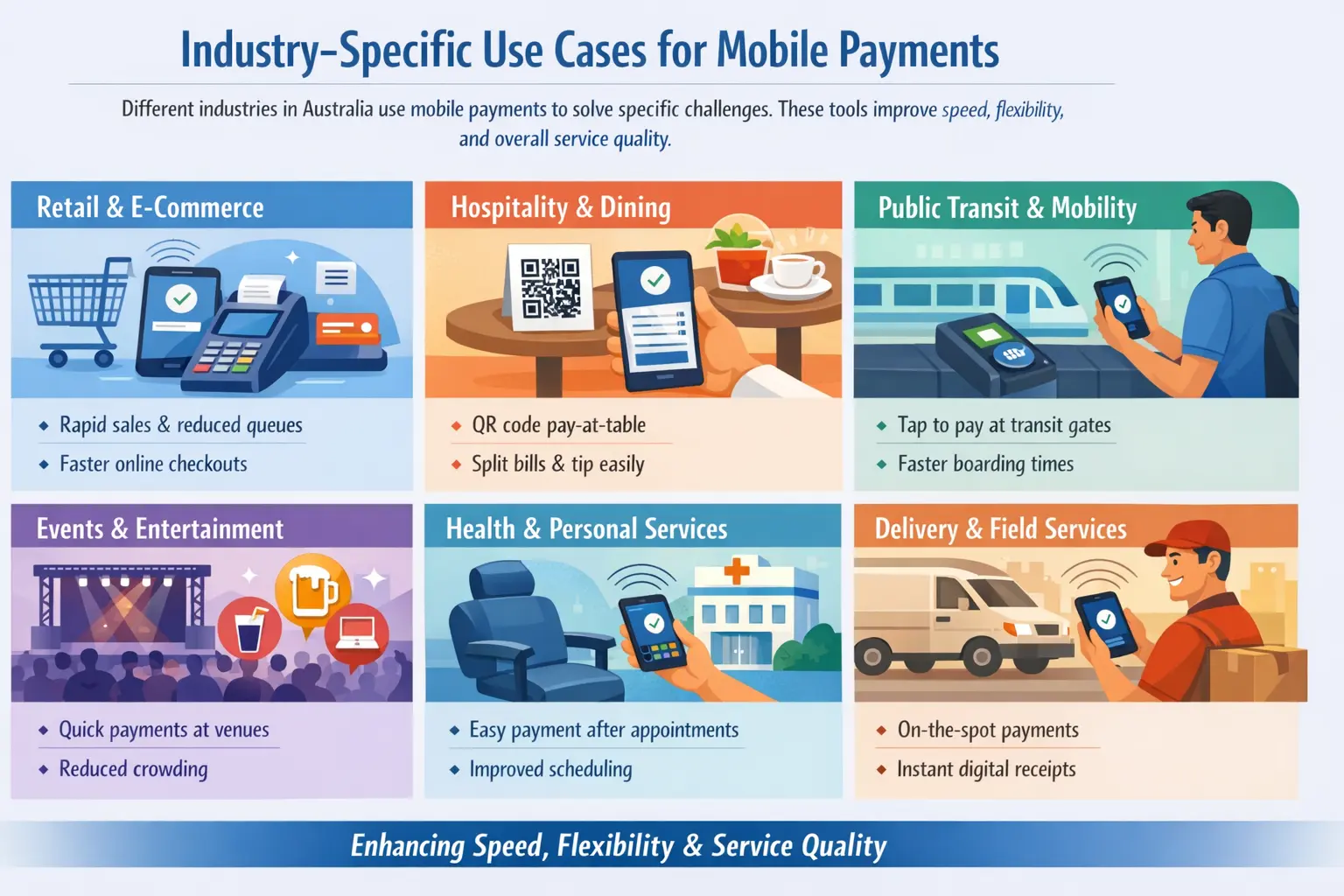
Different industries in Australia use mobile payments to solve specific challenges. These tools improve speed, flexibility, and overall service quality.
- Retail and E-Commerce
Retailers use mobile payments to process sales anywhere on the shop floor. This reduces queues during busy periods and improves customer flow. Online stores also benefit from faster checkouts and fewer abandoned carts.
- Hospitality and Dining
Cafés and restaurants use QR code payments for pay at table service. Diners can split bills, tip easily, and pay without waiting for staff. This speeds up table turnover and improves service efficiency.
- Public Transit and Mobility
Step-by-Step Implementation Guide for Businesses
Transitioning to a mobile-first payment infrastructure requires careful planning. Here is a strategic roadmap for businesses looking to implement these solutions effectively:
- Step 1: Audit Existing Infrastructure: Evaluate your current Point of Sale (POS) system. Determine whether your terminals support Near Field Communication (NFC) and dynamic QR code scanning, or if a hardware upgrade is necessary.
- Step 2: Select a Compatible Payment Processor: Choose a merchant services provider that offers competitive processing rates for digital wallet transactions and seamless backend integration with your existing accounting and inventory software.
- Step 3: Upgrade Hardware and Digital Touchpoints: Install NFC-enabled payment terminals in-store. Simultaneously, update your e-commerce checkout pages and mobile apps to display mobile wallet payment buttons prominently.
- Step 4: Train Your Staff: Ensure your frontline employees understand how the technology works. They should be able to troubleshoot failed taps, guide hesitant customers through the payment process, and securely process mobile refunds.
Common Pitfalls and How to Avoid Them
One common mistake is treating mobile payments as a separate feature instead of part of the broader business system. When payment tools are not connected to loyalty programs or customer data, businesses lose visibility into customer behaviour and sales opportunities.
Businesses also need reliable internet connectivity and strong security measures to support mobile payments properly. Choosing providers with encryption, PCI-DSS compliance, and backup payment options helps reduce downtime and protect customer data.
Advanced Practices in Mobile Payment Strategy
Leading businesses are increasingly using biometric authentication, including fingerprint and facial recognition, to improve payment security. These features help reduce fraud while keeping checkout quick and convenient for customers.
Contextual commerce is also becoming more common across digital channels. Businesses now integrate mobile payments directly into apps, social platforms, and connected devices, allowing customers to complete purchases without interrupting the shopping experience.
Frequently Asked Questions About Mobile Payment
-
What is a mobile payment?
A mobile payment is a transaction completed using a smartphone, smartwatch, or tablet. It replaces cash or physical cards with secure digital payments.
-
Are mobile payments safe to use for businesses?
Yes. Mobile payments use tokenisation, encryption, and biometric authentication. This often makes them more secure than traditional card payments.
-
Do businesses need special hardware to accept mobile payments?
Most businesses only need an NFC enabled POS terminal. QR code payments may not require any hardware at all.
-
What is the difference between mobile payment and contactless payment?
Mobile payment uses a mobile device to pay. Contactless payment includes both mobile devices and physical tap cards.
-
Are mobile payments popular in Australia?
Yes. Australia is one of the fastest adopters of mobile and contactless payments. Many customers now expect mobile payment options as standard.