






Managing a workforce today goes beyond hiring and payroll. Local, national, and international labor laws make HR a specialist field where following the rules is crucial. Strong HR compliance keeps a company legal and supports effective human resource oversight, protecting both the business and its staff.
Every stage of employment, from job ads to exit interviews, carries legal responsibilities. Ignoring these obligations can lead to fines, lawsuits, and a damaged reputation. Staying proactive and informed is essential for smooth operations.
A solid compliance plan builds trust, fairness, and efficiency across the business. By understanding key definitions, tackling common challenges, and following best practices, companies can navigate the complex HR landscape with confidence.
Key Takeaways
HR compliance turns complex labor laws into clear policies that protect both staff and the business.

What Is HR Compliance?
HR compliance ensures a company’s policies and actions align with labor laws and employment regulations. It governs how businesses treat employees, covering areas like safety, wages, anti-discrimination, and data privacy. Modern compliance management tools for HR help simplify and automate these processes.
It helps to break compliance into three pillars: statutory, regulatory, and contractual. Statutory covers laws like minimum wage and leave entitlements. Regulatory deals with government agency rules, while contractual ensures agreements with employees or unions are honoured. Together, they protect both staff and the business.
Laws are always changing, making compliance an ongoing effort. New rules for remote work, digital privacy, and taxes show how quickly the landscape can shift. HR teams must monitor, interpret, and update policies to keep the business safe and running smoothly.
Why HR Compliance Matters
Following employment laws isn’t just about avoiding fines. It protects a company’s finances, reputation, and long-term health. Miscalculating pay, ignoring breaks, or unsafe conditions can lead to hefty penalties or costly lawsuits, especially for small and medium businesses.
Compliance also strengthens employer branding and attracts top talent. Companies with a solid legal record earn trust and retain skilled staff more easily, especially when supported by a comprehensive set of rewards for employee programs that align with fair labor practices.
A compliant workplace boosts morale, focus, and productivity. Clear rules on pay, safety, and harassment reduce stress and confusion, letting employees concentrate on performance. Efficient, fair procedures also resolve disputes quickly and keep operations running smoothly.
Scaling a business relies on strong compliance systems. Expanding across regions or countries brings varied laws. A solid framework ensures smooth adaptation. Investors and partners value proactive legal management, which can improve growth and credibility.
Common HR Compliance Issues
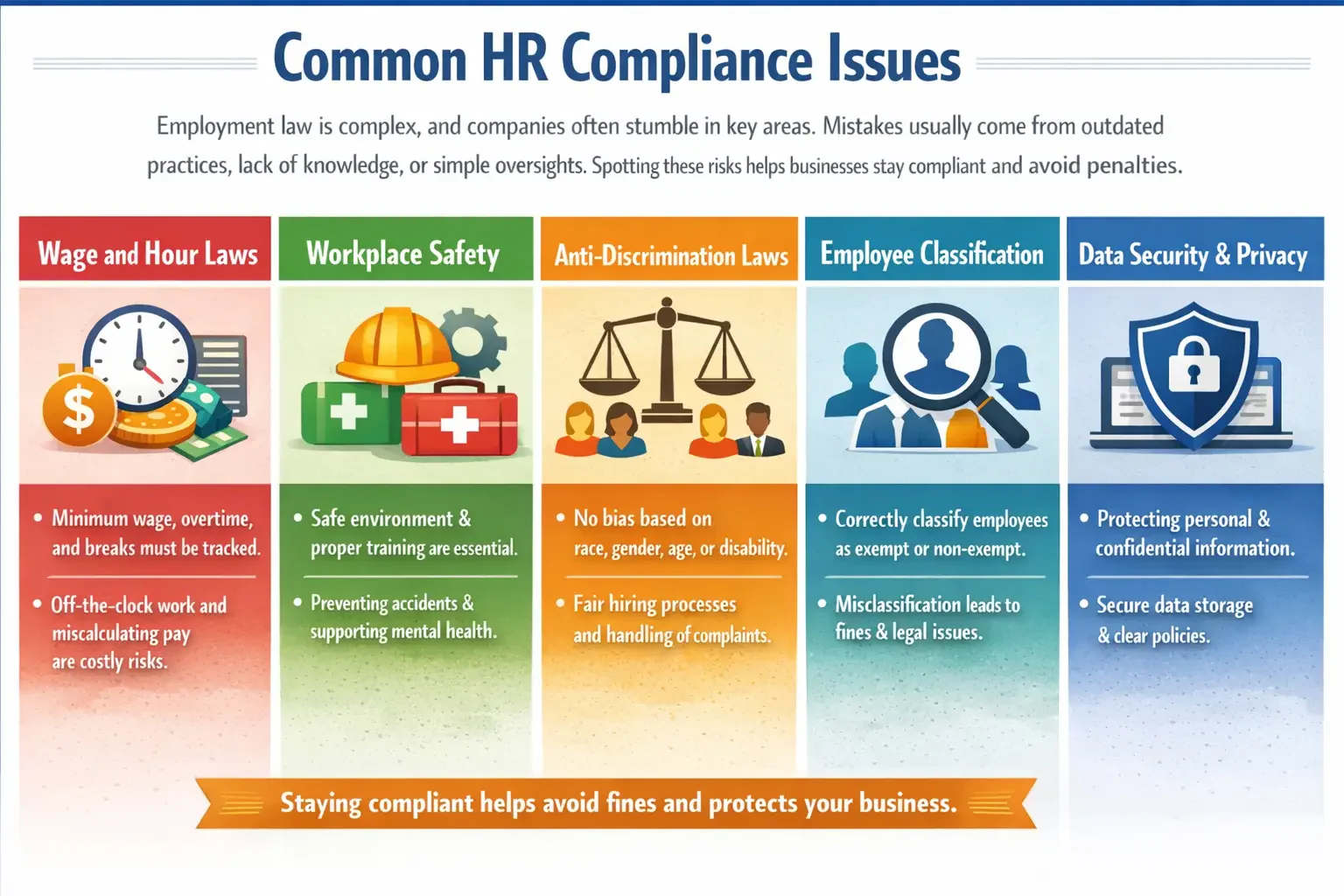
Employment law is complex, and companies often stumble in key areas. Mistakes usually come from outdated practices, lack of knowledge, or simple oversights. Spotting these risks helps businesses stay compliant and avoid penalties.
Wage and Hour Laws
Wage and hour rules set minimum pay, overtime, and break requirements. Companies must track all hours, including off-the-clock work, to stay legal. Mistakes here can lead to costly fines or back-pay obligations.
Calculating overtime can be tricky when bonuses, commissions, or shift differentials are involved. Travel time, on-call duties, and mandatory training may also count as work. Clear policies and accurate timekeeping reduce these risks.
Workplace Safety
Employers must provide a safe environment for staff, covering both physical and mental health. Proper training, emergency procedures, and PPE use are essential. Regular safety checks and detailed logs help maintain compliance.
Mental well-being and psychological safety are increasingly important. Preventing burnout, bullying, and harassment protects employees and morale. Leadership commitment and visible safety programs strengthen the workplace culture.
Anti-Discrimination Laws
Anti-discrimination rules prevent unfair treatment based on race, gender, age, disability, or religion. Inclusive job ads and unbiased interviews are key to staying compliant.
These laws also cover pay, promotions, and accommodations. Companies must provide clear reporting channels and investigate complaints fairly. Retaliation is strictly prohibited and heavily penalised.
Employee Classification
Misclassifying workers as contractors or exempt employees is a common compliance risk. Proper classification ensures staff receive correct pay, benefits, and protections.
Regular audits of job roles and duties are essential. Errors in classification can result in lawsuits, fines, and damaged reputation.
Data Security and Employee Privacy
HR handles sensitive information like banking, medical, and performance records. Strong cybersecurity and access controls are crucial to prevent breaches.
Employees must know what data is collected and how it’s used. Transparent policies, consent for background checks, and secure storage protect both staff and the company.
Certifications and Licensing Compliance
Certifications and licensing compliance covers the licences, permits, and competency certificates that prove a worker is trained and assessed as safe to perform a task or operate equipment.
Employers must verify these credentials before assigning work, then track renewal dates closely. An expired certificate creates the same legal exposure as an unlicensed worker performing the task.
Poor record-keeping is a common compliance gap. Centralised tracking systems help HR flag upcoming expiries, maintain audit-ready records, and reduce the risk of fines or workplace incidents.
Employment Contracts and Workplace Policies
Strong employment contracts set clear terms on duties, pay, hours, and termination conditions. They may include NDAs, non-compete clauses, or IP agreements, but these must be legally enforceable. Well-drafted contracts protect both staff and the company in case of disputes.
Employee handbooks guide workplace rules, culture, and compliance. Policies on harassment, leave, safety, and conduct must be clear and regularly updated. Requiring employees to acknowledge receipt ensures understanding and creates a legal record.
Managing Pay, Hours, Leave, and Employee Records
Payroll, time tracking, and record-keeping turn employment law into daily practice. Mistakes here affect morale and attract audits. A careful, systematic approach is essential for compliance.
Payroll and Wages
Pay must be accurate, on time, and follow statutory deadlines. This includes gross pay, overtime, bonuses, deductions, and taxes. Mistakes can lead to fines or personal liability for company officers.
Voluntary deductions, garnishments, and final pay require careful handling. Written authorisation is needed for deductions, and final wages must be paid promptly. Clear processes prevent costly compliance errors.
Working Hours and Leave
Hours and leave tracking must meet legal standards for pay, breaks, and maximum working time. Accurate records protect both employees and the business.
Leave rules are complex, covering sick, parental, bereavement, jury, and military leave. Coordinating overlapping laws and company policies ensures staff are not penalised and return to their roles smoothly.
Record-Keeping and Payslips
Keeping thorough records is key for audits or disputes. Documents include payroll, tax forms, hiring files, and incident reports. Secure storage and compliance with retention rules are essential.
Payslips and documentation must be accurate and accessible. They support transparency and provide evidence that legal obligations are being met consistently.
Industry-Specific HR Compliance Use Cases

Employment law principles apply to all businesses, but each sector faces unique challenges. Understanding these industry-specific cases helps companies tailor compliance strategies that match operational realities.
- Healthcare, HR must protect patient data and verify staff licenses. Proper training and credential checks prevent fines and safeguard patient care.
- Manufacturing, HR focuses on workplace safety and union rules. Injury records, safety drills, and adherence to agreements keep the business compliant.
- Technology, Tech companies manage remote staff and contractor classification. Following tax, leave, and employment rules avoids costly misclassification issues.
- Retail and Hospitality, HR tracks breaks, overtime, and tips for hourly staff. Accurate records ensure legal compliance and fair pay.
Step-by-Step Implementation Steps for a Robust Compliance Strategy
Shifting to proactive HR compliance requires a clear, structured approach. Following defined steps helps businesses build a resilient framework.
Step 1: Conduct a Comprehensive HR Audit
Start by reviewing policies, payroll, employee files, and safety protocols. Identify gaps in job descriptions, classifications, and workplace safety.
A self-audit lets HR fix risks early, reducing the chance of fines or legal issues during official inspections.
Step 2: Update and Distribute the Employee Handbook
Update the handbook to cover anti-discrimination, harassment, leave policies, and digital usage rules. Make sure language is clear and accessible.
Have all employees acknowledge receipt and store these confirmations securely. This creates proof that staff understand company policies.
Step 3: Roll Out Targeted Training Programs
Train staff on workplace safety, diversity, and anti-harassment practices to ensure they understand expectations.
Managers need additional guidance on handling accommodation requests, conducting interviews, and reporting violations properly.
Step 4: Establish Secure Reporting and Monitoring Mechanisms
Provide confidential reporting options, like hotlines or anonymous digital tools, to encourage staff to speak up safely.
Set procedures to investigate issues promptly and track annual compliance deadlines to keep operations fully aligned with regulations.
For businesses looking to strengthen their compliance framework, it is advisable to consult our expert with no cost to ensure all processes align with current legal standards and best practices.
Critical Pitfalls in HR Compliance to Avoid
Even well-intentioned organizations can fall into compliance traps that lead to litigation and financial penalties. Awareness of these common pitfalls is the best defense against them.
1. Inconsistent Policy Enforcement
Applying policies unevenly can trigger discrimination claims. HR must standardize disciplinary actions, performance reviews, and rules across all teams. Consistency builds a legally defensible HR strategy.
2. Ignoring Local and State Regulations
Focusing only on federal laws risks compliance failures. Local and state rules, like sick leave and pay transparency, often exceed federal requirements. Staying aware of local laws is essential for legal protection.
3. Inadequate Documentation Practices
If it isn’t documented, it didn’t happen. Managers must record performance issues, warnings, and accommodation requests accurately. Good documentation protects the business in disputes or legal claims.
Advanced Practices for Forward-Thinking HR Teams
Mature businesses move beyond basic compliance, integrating it into strategy. Modern tech and organisational psychology help HR teams stay proactive and ahead of risks.
Leveraging HRIS and Predictive Analytics
HRIS platforms automate alerts for certifications, visas, and training deadlines, often integrated within HRM system solutions used across Australia. Predictive analytics spot risks early, letting HR address safety issues or management problems before they escalate.






Global Compliance and Employer of Record (EOR) Utilization
Expanding internationally brings complex tax and labor laws. Partnering with an EOR transfers compliance responsibility, allowing the company to hire global talent safely and legally.
Cultivating an Ethical Corporate Culture
Ethical leadership ensures compliance isn’t just a checklist. When transparency, fairness, and safety are embedded, employees naturally follow rules, reducing risk and boosting engagement.
"A strong HR compliance strategy builds trust, boosts productivity, and protects your business from costly risks."
Conclusion
Strong HR compliance is essential for protecting your business, staff, and reputation. By staying proactive, monitoring changes in law, and applying best practices, companies reduce risk and boost workplace trust.
Investing in clear policies, thorough documentation, and staff training ensures smooth operations and long-term growth. Take the first step toward a secure HR framework and schedule a free consultation to assess your compliance strategy.