














The procurement process helps businesses purchase goods and services efficiently while controlling costs and maintaining quality. It involves a series of structured steps from identifying needs to supplier payment and record keeping.
For Australian businesses, a well-managed procurement process improves operational efficiency, strengthens supplier relationships, and supports compliance.
In this guide, you will learn the key stages of procurement, step-by-step processes, common challenges, and best practices for improving procurement performance.
Key Takeaways
Understand the fundamentals of the procurement process and its strategic value.
Explore the overarching stages from planning to record keeping.
A detailed walkthrough of the essential operational steps in procurement.
Learn the differences and how tendering fits into the broader picture.
What Is the Procurement Process?

The procurement process is the structured method businesses use to acquire goods and services from suppliers. It includes planning, supplier selection, purchasing, receiving, and payment activities.
The goal of procurement is to ensure businesses receive the right products or services at the right price, quality, and time. Effective procurement also helps reduce risks and improve supplier management.
Modern procurement processes often use software and automation to improve efficiency and visibility. Unified procurement operations bring planning, sourcing, purchasing, and payment into a single workflow that reduces duplication and gives management a consistent view of spending.
Key Stages of the Procurement Process
The procurement process consists of several stages that help businesses manage purchasing activities effectively. Each stage plays an important role in ensuring smooth operations.
1. Planning and Need Identification
The process begins by identifying what goods or services the business requires. Teams assess operational needs, budgets, and timelines before purchasing. Proper planning helps avoid unnecessary spending and delays.
2. Supplier Sourcing and Market Research
Businesses research suppliers and compare available options in the market. This helps identify reliable vendors that meet pricing, quality, and delivery requirements. Good sourcing improves procurement outcomes.
3. Evaluation and Supplier Selection
Suppliers are evaluated based on criteria such as pricing, experience, quality, and reliability. Businesses then select the vendor that best fits their needs. This stage helps reduce procurement risks.
4. Contracting and Order Management
After supplier selection, contracts and purchase orders are issued. These documents define pricing, delivery terms, and service expectations. Clear agreements improve accountability and communication.
5. Payment and Record Keeping
Once goods or services are received, invoices are verified and payments are processed. Businesses also maintain procurement records for auditing and compliance. Proper record keeping improves transparency.

Step-by-Step Procurement Process
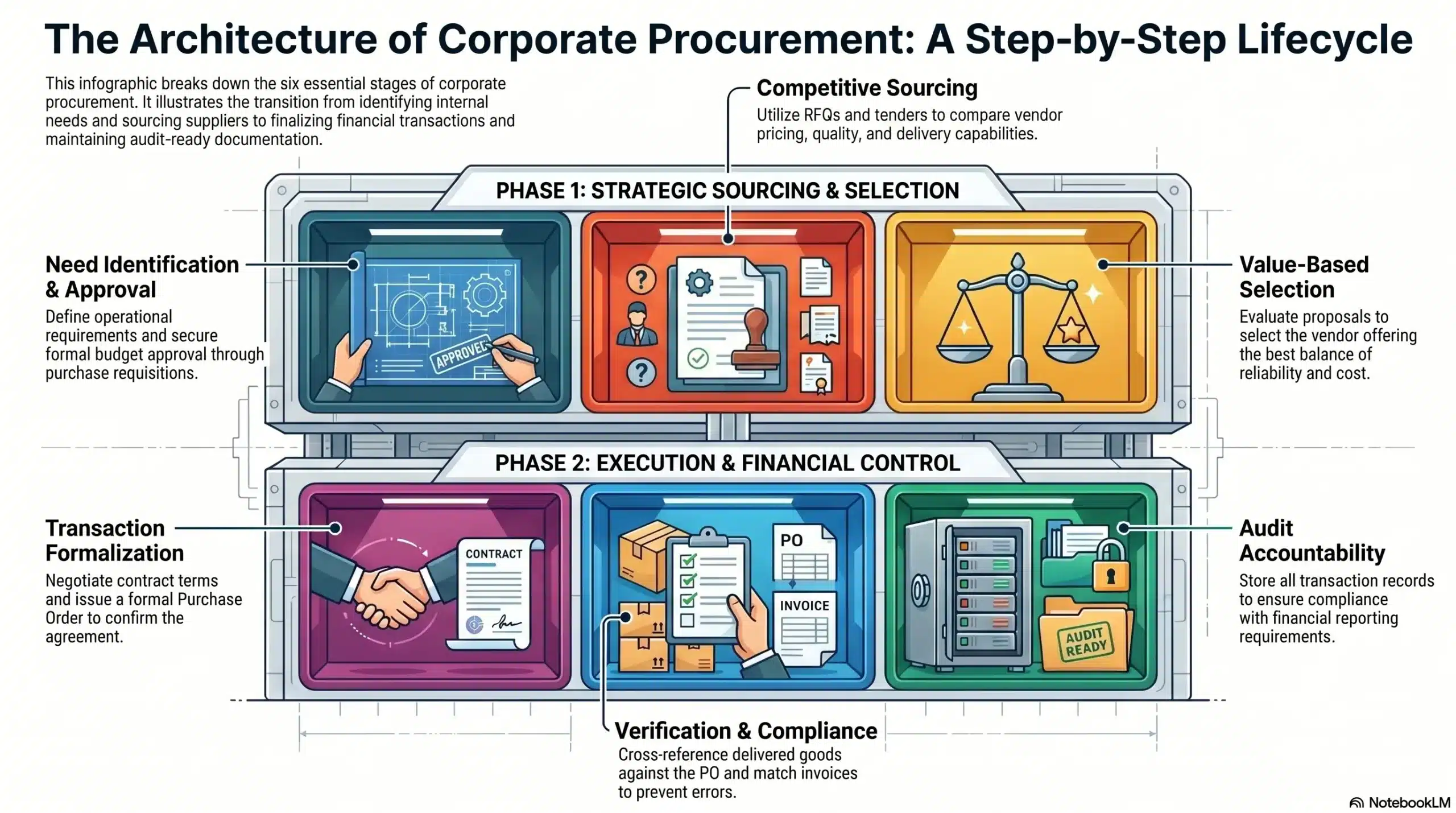
A structured procurement workflow helps businesses standardise purchasing activities and improve efficiency. Following clear steps reduces errors and delays.
1. Identify Business Needs
The procurement process starts by identifying operational or project requirements. Businesses determine what products or services are needed and why. Clear requirements improve purchasing decisions.
2. Create and Approve Purchase Requisition
A purchase requisition is created to request approval for procurement. Managers review the request to ensure it aligns with budgets and business needs. Approval workflows improve spending control.
3. Request for Quotation (RFQ) or Tender
Businesses request pricing and proposals from suppliers through RFQs or tenders. This helps compare costs and capabilities. Competitive sourcing improves value for money.
4. Evaluate Suppliers and Select Vendor
Supplier proposals are reviewed based on pricing, quality, delivery, and reliability. The best supplier is then selected. This supports better procurement outcomes.
5. Negotiate Contract and Issue Purchase Order
Contract terms such as pricing, delivery schedules, and payment conditions are negotiated. A purchase order is then issued to confirm the transaction. This formalises the procurement agreement.
6. Receive Goods or Services
The business checks delivered goods or completed services against the purchase order. This ensures accuracy and quality compliance. Proper verification reduces disputes.
7. Invoice Matching and Payment
Invoices are matched with purchase orders and delivery records before payment approval. This helps prevent errors and fraud. Accurate invoice matching improves financial control.
8. Record Keeping and Audit
Procurement documents and transaction records are stored for future reference and audits. This supports compliance and reporting requirements. Good documentation improves accountability.
Procurement Process vs Tendering Process
Procurement and tendering are related but different business processes. Understanding the distinction helps businesses manage sourcing more effectively.
1. What Is Tendering?
Tendering is the process of inviting suppliers to submit bids or proposals for a project or purchase. It is commonly used for large or competitive procurement activities. Tendering promotes transparency and competition.
2. Where Tendering Fits in Procurement
Tendering is one stage within the broader procurement process. It usually occurs during supplier sourcing and evaluation. Not all procurement activities require formal tendering.
3. Key Differences
Procurement covers the entire purchasing lifecycle, while tendering focuses specifically on supplier bidding and selection. Procurement is broader and includes planning, contracting, and payment. Tendering is mainly used for supplier competition.
Challenges in the Procurement Process
Businesses often face procurement challenges that can affect efficiency, costs, and supplier performance. Addressing these issues improves procurement outcomes.
1. Inefficient Approvals and Delays
Manual approvals and unclear workflows can slow down purchasing activities. Delays may affect operations and project timelines. Automation can help speed up approvals.
2. Poor Supplier Selection
Choosing unreliable suppliers can lead to quality issues, delays, and increased costs. Poor supplier evaluation increases procurement risks. Strong assessment processes improve supplier quality.
3. Lack of Visibility and Data
Limited visibility into spending and supplier performance makes decision-making difficult. Centralised systems improve procurement visibility by consolidating spend data, supplier records, and approval workflows in one accessible place.
Best Practices to Improve the Procurement Process
Following procurement best practices helps businesses improve efficiency, reduce risks, and strengthen supplier relationships.
1. Standardise Procurement Workflows
Standardised processes ensure consistent purchasing procedures across departments. This reduces errors and improves compliance. Clear workflows also improve accountability.
2. Use Procurement Software and Automation
Procurement software automates approvals, purchase orders, and supplier management. Digital tools for purchasing improve efficiency, reduce manual work, and provide the visibility and reporting that spreadsheet-based processes cannot deliver at scale.
3. Strengthen Supplier Relationships
Building strong supplier partnerships improves communication, reliability, and long-term collaboration. Good relationships can also improve pricing and service quality. Supplier engagement supports better procurement performance.
4. Monitor Spend and Performance
Tracking procurement spending and supplier performance helps businesses identify inefficiencies and savings opportunities. Performance monitoring supports continuous improvement.
Procurement Process Lifecycle
The procurement lifecycle represents the ongoing stages businesses follow to manage procurement activities effectively. Managing end-to-end procurement as a continuous cycle rather than a series of isolated transactions is what separates high-performing procurement functions from reactive ones.
1. Plan the Procurement
Businesses assess needs, budgets, and procurement strategies before purchasing. Building cost-efficient procurement plans at this stage ensures that spending aligns with business goals and that the right suppliers are engaged before timelines become pressured.
2. Source and Engage Suppliers
Suppliers are identified, evaluated, and engaged based on business requirements. Effective sourcing improves reliability and competitiveness. This stage supports stronger supplier relationships.
3. Manage Contracts and Delivery
Contracts, purchase orders, and supplier performance are managed throughout the procurement cycle. Businesses also monitor deliveries and service quality. Good contract management reduces risks.
4. Review and Optimise
Businesses review procurement performance, supplier outcomes, and spending patterns regularly. Continuous improvement helps optimise procurement processes. Regular reviews support long-term efficiency.
Conclusion
The procurement process helps businesses acquire goods and services efficiently while maintaining quality, cost control, and compliance. A structured procurement workflow improves visibility and supports better decision-making.
For Australian businesses, effective procurement practices can reduce operational risks, strengthen supplier relationships, and improve overall efficiency. Standardised processes and automation also help streamline purchasing activities.
As procurement becomes more complex, procurement software can improve visibility, automate workflows, and support better supplier management.
Book a free consultation with our experts to find the right solution for your business.
Frequently Asked Question
The procurement process is the structured method businesses use to purchase goods and services from suppliers, from identifying needs to payment and record keeping.
The main stages of the procurement process include planning, supplier sourcing, supplier evaluation, contracting, purchasing, receiving goods or services, and payment processing.
The procurement process helps businesses control costs, improve supplier relationships, maintain compliance, and ensure the timely delivery of quality goods and services.