















Employee compensation plays a major role in attracting and keeping talented people. In today’s job market, offering only a base salary is rarely enough. Employees expect fair pay, useful benefits, and rewards that recognize their work.
As workplaces evolve and remote jobs grow, compensation strategies must also adapt. Companies need to consider employee expectations, market competition, and rising costs. A strong compensation plan helps businesses stay competitive while keeping employees motivated.
Employee compensation includes more than just a paycheck. It may involve bonuses, health benefits, retirement plans, and other employee rewards. When companies build a balanced compensation system, employees feel valued and more motivated to do their best work.
Key Takeaways
Understand the foundational definition and scope of modern employee compensation.
Explore direct, indirect, variable, and equity-based compensation models.
Discover the impact of pay on retention, motivation, and talent acquisition.
Learn about base salary, performance incentives, and essential benefits.
What Is Employee Compensation?

Employee compensation is the total value an employee receives for the work they do. It includes salary, bonuses, benefits, and other rewards from the company. Many HR professionals call this “total rewards” because it covers everything employees gain from their job, not just money.
When someone accepts a job, they commit their time, skills, and effort to the organization. In return, the company provides compensation that reflects their value and supports their quality of life. Today, many businesses also use software for calculating compensation to improve accuracy, consistency, and speed when managing salaries, incentives, and benefits across teams.
Types of Employee Compensation
To create a fair and competitive pay structure, HR teams need to understand the different types of employee compensation. Most companies combine several forms of pay and benefits rather than relying on just one. This approach helps meet employee needs while encouraging strong performance.
1. Direct Compensation (Salary, Wages, Bonuses)
Direct compensation is the money employees receive directly for their work. It’s the most visible part of a compensation package and usually forms the foundation of employee pay. Companies use it to provide financial stability and reward the time and effort employees invest in their jobs.
- Base Salary: A fixed amount paid regularly, often yearly. It gives employees predictable income and financial stability.
- Hourly Wages: Pay based on the number of hours worked. Employees may receive overtime pay when they work beyond standard hours.
- Shift Differentials / Premium Pay: Extra pay for working nights, weekends, holidays, or risky jobs.
- Cost of Living Adjustments (COLA): Pay increases that help employees keep up with inflation.
2. Indirect Compensation (Benefits and Perks)
Indirect compensation includes benefits that don’t come as direct cash but still add real value to an employee’s life. Companies invest heavily in these benefits because they improve employee well-being and job satisfaction. In many organizations, benefits can equal a large portion of an employee’s total compensation.
- Health and Wellness Benefits: Medical, dental, vision insurance, and sometimes mental health or wellness programs.
- Retirement Plans: Programs that help employees save for the future, often with employer contributions.
- Paid Time Off (PTO): Paid vacation, sick leave, holidays, and parental leave.
- Lifestyle Perks: Extras like flexible schedules, remote work support, transportation subsidies, or education reimbursement.
3. Variable and Incentive-Based Pay
Variable compensation is pay that depends on performance rather than being guaranteed. It rewards employees when they reach certain goals or when the company performs well. This approach motivates employees to contribute directly to business success.
- Commissions: Common in sales roles, where employees earn a percentage of the revenue they generate.
- Performance Bonuses: Extra payments for meeting specific targets or goals.
- Profit-Sharing / Gain-Sharing: Employees receive a share of company profits or rewards for improving productivity or saving costs.
4. Equity Compensation (Stock Options, Shares)
Equity compensation gives employees ownership in the company instead of direct cash payments. It’s common in startups, tech companies, and executive compensation packages. Because equity often takes time to fully unlock, it encourages employees to stay with the company long term.
- Restricted Stock Units (RSUs): Company shares given to employees after a certain time or condition is met.
- Stock Options: The right to buy company shares later at a fixed price, which can be valuable if the company grows.
- Employee Stock Purchase Plans (ESPPs): Programs that let employees buy company stock at a discounted price.
Why Employee Compensation Is Important
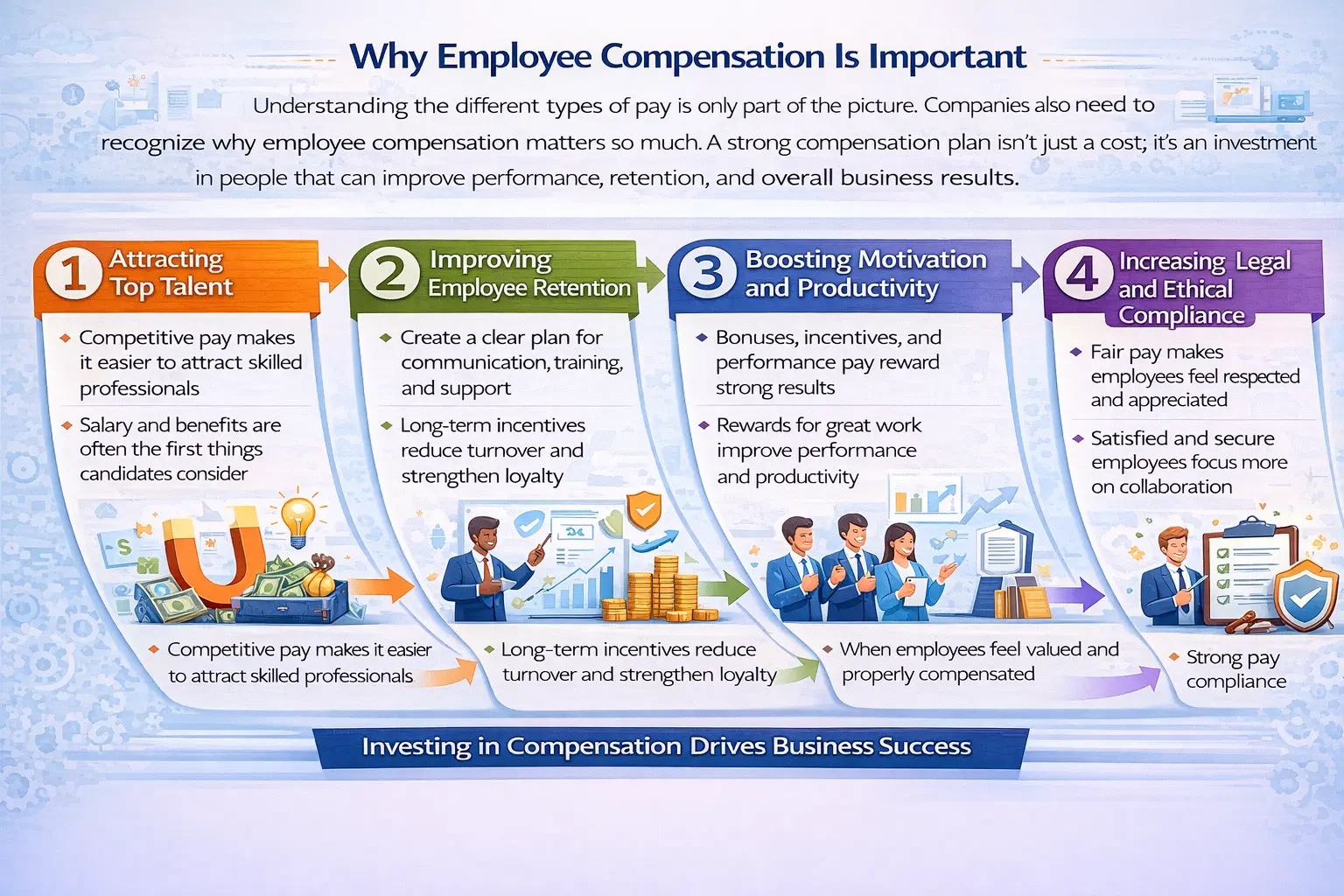
Understanding the different types of pay is only part of the picture. Companies also need to recognize why employee compensation matters so much. A strong compensation plan isn’t just a cost; it’s an investment in people that can improve performance, retention, and overall business results.
1. Attracting Top Talent
Competitive compensation helps companies attract skilled professionals in a competitive job market. Many candidates look at salary and benefits first before considering other factors like culture or career growth. A strong pay package often brings in better candidates and helps companies hire faster.
Companies that clearly offer fair and competitive pay can reach a stronger talent pool. When candidates know the compensation meets market standards, they are more likely to apply and stay interested in the role.
2. Improving Employee Retention
Employee turnover can be very costly for organizations. Recruiting, training new hires, and dealing with lost productivity during transitions can quickly add up.
Fair pay and long-term incentives encourage employees to stay with the company. When employees feel valued and properly compensated, they are less likely to look for opportunities elsewhere.
3. Boosting Motivation and Productivity
Employees are more motivated when their performance connects to meaningful rewards. Bonuses, incentives, and performance-based pay help employees understand what results the company values.
When employees see that strong performance leads to real benefits, they often work with more focus and energy. This can improve productivity and overall team performance.
4. Increasing Job Satisfaction and Morale
Compensation strongly affects how employees feel about their jobs. When people believe they are paid fairly, they often feel more respected and appreciated.
Fair pay also improves workplace morale and trust. Employees who feel secure about their compensation can focus more on collaboration and producing high-quality work.
5. Supporting Legal and Ethical Compliance
Organizations must follow labor laws related to wages, overtime, and equal pay. A clear compensation structure helps companies manage pay fairly and avoid legal risks.
Strong compensation systems also promote transparency and consistency. This protects the company while reinforcing trust and ethical treatment of employees.






Key Elements of a Compensation Structure
A compensation structure is the system a company uses to decide how employees are paid. It helps keep pay fair, consistent, and easier to manage across the organization. Most compensation structures rely on a few key elements that work together to form a clear total rewards strategy.
1. Base Salary
Base salary is the core part of a compensation structure. Companies use job analysis and evaluation to make sure similar roles receive similar pay. This helps create fairness and consistency across the organization.
- Job Evaluation: Companies compare roles based on skills, responsibility, effort, and working conditions to understand their value.
- Pay Grades and Ranges: Jobs are grouped into levels with a minimum, midpoint, and maximum salary range.
- Broadbanding: A modern approach that uses wider pay ranges, giving managers more flexibility to reward growth and performance.
2. Performance Incentives
Base salary pays employees for their role, but incentives reward results. Companies design incentive programs to encourage employees to reach specific goals that support the business.
- Goal Alignment: Incentives connect to clear goals such as increasing sales, improving profits, or gaining new customers.
- Thresholds, Targets, and Maximums: Bonus plans define the minimum performance needed, the target goal, and a limit on payouts.
- Individual vs. Team Incentives: Some rewards focus on personal performance, while others encourage teamwork and collaboration.
3. Benefits and Allowances
Benefits are another important part of a compensation structure. They support employees’ health, financial security, and work-life balance. Because employees have different needs, many companies offer flexible benefit options.
- Core Plus Options: Employees receive basic benefits like health insurance, plus optional benefits they can choose from.
- Geographic Allowances: Some companies adjust pay or provide allowances based on the cost of living in different locations.

How to Create an Effective Compensation Strategy
Many organizations now use digital tools to calculate compensation with AI, helping HR teams analyze salary benchmarks, predict pay trends, and make compensation decisions with greater precision.
Creating an effective compensation strategy requires more than simply setting salaries. Companies need to balance fair pay, market competitiveness, and employee expectations. A well-planned strategy helps attract talent, motivate employees, and support long-term business goals.
1. Benchmark Against Industry Salaries
Companies need to understand how their pay compares with others in the same industry. Salary benchmarking helps organizations stay competitive and avoid offering pay that is too low or too high. Using data from salary surveys, industry reports, and job platforms helps guide better compensation decisions.
Key actions:
- Review industry salary reports and compensation surveys
- Compare pay for similar roles in competing companies
- Update salary ranges regularly based on market trends
2. Ensure Internal Pay Equity
Internal pay equity means employees in similar roles receive fair and consistent pay. When people notice large pay gaps between similar positions, it can create frustration and lower morale. Reviewing job responsibilities, experience, and performance helps companies keep compensation fair and balanced, while regular pay audits can help detect and fix gaps.
Key actions:
- Evaluate roles based on responsibilities and required skills
- Use clear salary ranges for each job level
- Conduct periodic pay audits to detect unfair gaps
3. Align Compensation With Performance
Compensation should reflect the value employees bring to the organization. When pay increases and bonuses connect to performance, employees better understand expectations and goals. Linking rewards to clear results also motivates stronger performance while helping companies recognize and reward high achievers fairly.
Key actions:
- Set measurable performance goals for employees
- Use bonuses or incentives to reward strong results
- Review performance regularly before adjusting compensation
Common Pitfalls in Employee Compensation (And How to Avoid Them)
Even strong compensation plans can cause problems if companies don’t manage them carefully. Changes in the job market sometimes lead to pay decisions that feel unfair to employees. Understanding these common mistakes helps organizations fix issues early and maintain a fair compensation system.
1. Ignoring Pay Compression and Pay Inversion
Pay compression happens when employees with different experiences or responsibilities earn almost the same salary. Pay inversion is even more problematic—it occurs when new hires are paid more than experienced employees in the same role.
This usually happens when companies raise starting salaries to attract talent but forget to adjust pay for current employees. Regular salary reviews and compensation audits can help companies keep pay fair and aligned with the market.
2. Lack of Pay Transparency
Many companies used to treat compensation like a secret. Employees were often discouraged from discussing pay, which created confusion and distrust in the workplace.
Today, transparency matters more than ever. When companies clearly share salary ranges, pay policies, and promotion criteria, employees are more likely to trust the system and feel they are treated fairly.
3. Relying Too Much on Variable Pay
Bonuses, commissions, and incentives can motivate employees, but they should not replace a stable base salary. If employees depend too heavily on bonuses just to cover their basic needs, stress and burnout can quickly follow.
A strong compensation plan uses variable pay to reward great performance, not to make up for low base salaries. Employees should feel financially secure even before bonuses are added.
4. Ignoring Non-Monetary Benefits
Some companies try to solve retention problems by simply offering higher salaries. However, money alone does not fix issues like poor management, long working hours, or lack of work-life balance.
Benefits such as flexible schedules, career growth opportunities, and a supportive work environment are also important. When companies focus on both pay and workplace quality, employees are more likely to stay and remain engaged.
Conclusion
Employee compensation is a key factor in attracting, motivating, and retaining talent. It goes beyond just salary to include benefits, incentives, and other rewards that support employees’ financial and personal well-being. A well-designed compensation system helps employees feel valued and motivated to perform their best.
To be effective, a compensation strategy must balance market competitiveness, internal fairness, and performance-based rewards. Regular reviews, transparency, and flexibility ensure the system stays relevant as the job market evolves. Thoughtful compensation planning strengthens employee satisfaction and supports long-term business success.
Companies that want a more accurate and scalable approach can use software for calculating compensation and book a free consultation to explore the best solution for their workforce needs.

Frequently Asked Question
Employee compensation is everything an employee receives for their work, including salary, bonuses, benefits, and other rewards.
The main types are direct pay (salary/wages), benefits (health, retirement, perks), performance-based pay (bonuses), and stock or equity options.
Good compensation helps attract and keep talented employees, motivates them to perform well, and ensures pay is fair.
Companies should review pay at least once a year to stay fair, competitive, and up to date with the market.