






Many growing businesses in Malaysia assume their procurement is "good enough" just because goods arrive on time. However, relying on fragmented spreadsheets and manual chat approvals across competitive hubs like the Klang Valley or Penang creates massive invisible waste, leaving your daily operations highly vulnerable to cost leaks and sudden vendor delays.
This lack of control quickly stalls company growth. In fact, a recent academic study on Malaysian digital supply chain transformation from Universiti Malaya, highlights that modernizing the purchasing cycle is absolutely crucial for protecting corporate resilience. Sticking to legacy, manual tracking methods only results in double-paid invoices and hundreds of hours wasted on paper document reconciliation.
Eliminating these financial leaks requires moving away from reactive tracking. Implementing a modern purchase order software automates approval workflows, ensures strict three-way matching, and enforces instant budget controls. Here is our curated breakdown of the 15 best options in Malaysia to help you find the perfect fit for your team.
Key Takeaways
Most purchasing problems start because nobody tracks purchases properly until finance finds out too late. The right software puts requests, approvals, and supplier records in one place.
Enterprise tools like Oracle and Dynamics 365 suit companies with 200+ employees. For SMEs, lighter options like Precoro, Kissflow, or HashMicro get you running faster.
Before choosing, check three things: does it connect to your current systems (accounting, inventory), can your team learn it without heavy training, and does the vendor offer reliable support after go-live.
Fragmented procurement cycles often lead to manual data entry errors and a complete lack of spending visibility. Implementing a specialized purchase order platform automates these workflows, ensuring every requisition is instantly tracked and aligned with your budget.
How We Evaluated These 15 Platforms
Finding the right procurement tool goes beyond comparing standard feature checklists; it requires a structured benchmark tailored to actual operational demands in Malaysia. To separate high-performing platforms from rigid, low-adoption legacy systems, we evaluated each solution against a strict, weighted matrix.
| Criteria | Weight | What We Measured |
|---|---|---|
| Procurement Automation Depth | 25% | Seamless Purchase Requisition (PR) to Purchase Order (PO) conversion, multi-level custom approval workflow flexibility, automated three-way matching framework (PO + Goods Receipt Note + Invoice), and AI/OCR-driven line-item data capture. |
| Local Regulatory Compliance | 20% | Native capability to link purchasing records with the LHDN MyInvois portal (direct API connection), automated Sales and Service Tax (SST) coding for purchase transactions, and localized bank file generation for domestic supplier payments. |
| Vendor Management Capabilities | 15% | Availability of a secure, self-service supplier portal, automated onboarding documentation workflows, real-time order fulfillment updates, and vendor performance grading (tracking delivery speed, quality, and compliance). |
| ERP & Inventory Integration | 15% | Native modular connectivity (single platform) versus third-party API configurations, real-time synchronization between purchasing workflows and warehouse stock levels, and immediate cost allocation to the general financial ledger. |
| Pricing Transparency & Scalability | 15% | Evaluation of user licensing traps (per-seat penalty fees vs. cost-effective flat-rate unlimited user models), transparent breakdown of upfront implementation/training fees, and public pricing visibility. |
| User Sentiment & Regional Support | 10% | G2 and Capterra software ratings (filtering for platform friction or low user adoption scoring below 4.0), availability of a dedicated Malaysia-based customer service team, and localized time-zone SLA responsiveness. |
Shortlist of Best Purchase Order Software

Best Because
Best for enterprise companies that need an integrated and customizable ERP system.

 Oracle
Best Because
The undisputed powerhouse for massive, multi-national direct material supply chains.


What Can Purchase Order Software Do for Your Business?
Purchasing software handles the full buying process, from request to payment, in one system. Your team submits a request. The system sends it to the right approver automatically. Once approved, it creates the purchase order and sends it to the supplier. When goods arrive, the system matches what was received with the original PO and the invoice.
Everything is tracked. You can see every purchase order’s status, how much each department has spent, and which suppliers give the best deals. No more chasing approvals on WhatsApp or creating POs in Excel.
Types of Purchasing Software: Which Category Do You Actually Need?
Not every tool labelled “purchasing software” does the same job. Here are the nine categories you will run into, and what each one actually covers.
| Software Category | Core Scope | Key Capabilities | Best Fit For |
|---|---|---|---|
| Source-to-Pay (S2P) | End-to-end, from sourcing suppliers to settling payment | Sourcing events, contracting, PO issuing, invoicing, payment | Large companies with complex supply chains |
| Accounts Payable & Spend Analysis | Invoice processing and spending patterns | Invoice capture, payment scheduling, spend reporting by category | Finance teams handling high invoice volume |
| Contract Lifecycle Management | Every stage of a supplier contract | Drafting, negotiation, approval routing, renewal alerts | Companies tied to long-term supplier agreements |
| Purchasing System | Core day-to-day buying activity | Purchase requests, approval routing, delivery tracking | Most SMEs starting to formalise procurement |
| RFP Management | Structured vendor bidding | Issue RFPs, collect proposals, score and compare bids | Teams running competitive tenders |
| Spend Management | Visibility over all purchase-related expenses | Budget tracking by department, project, and category | Finance leads controlling company-wide spend |
| Strategic Sourcing | Planning and running sourcing projects | Supplier categorisation, sourcing pipelines, savings tracking | Procurement teams with dedicated sourcing roles |
| Vendor Management System | Everything about your suppliers, in one place | Onboarding, certifications, performance scoring, communication logs | Businesses managing 50+ active suppliers |
| Warehouse Purchasing Tools | Purchases tied directly to stock movement | Inbound goods tracking, storage organisation, reorder thresholds | Distributors and retailers with fast-moving stock |
Benefits of Using Purchase Order Software
Knowing what the software does is one thing. Knowing what actually changes in your week is another. Here is what teams notice first after moving off spreadsheets.
1. Full Visibility Across the Purchase Lifecycle
“I never saw that purchase order” is usually true, because the approval was buried in someone’s inbox. Purchasing software logs every step in one place: who raised the request, who approved it, when the supplier replied, and what was delivered. When audit season arrives, the trail is already there instead of being reconstructed from email threads.
2. One Centralized Purchasing Dashboard
Most procurement teams check three places to answer one question. The dashboard replaces that with a single screen showing order status, supplier responses, pending approvals, and budget usage in real time. Nobody has to ask around to find out whether an order was actually sent.
3. Tighter Budget and Approval Control
Department heads often approve purchases without seeing how much budget is left. Purchasing software lets you set spending limits per department or project, and the system automatically flags or blocks any request that exceeds them. Finance stops discovering overspend after the money is already gone.
4. Faster Vendor Evaluation and Quote Comparison
Comparing three quotes manually takes long enough that most teams skip it and reorder from the usual supplier. When quotes sit side by side in one view, your team can compare price, lead time, and terms in minutes. The better deal stops being the one nobody had time to look for.
5. A Complete Audit Trail for Every Purchasing Software
Every quote, approval, goods receipt, and invoice is stored against the same purchase order. You can trace any transaction by date, department, or supplier without digging through folders. This matters most when finance needs to prove why a payment was made, not just that it was made.
6. Real-Time Inventory Integration
Stockouts are rarely a supply problem. They are a timing problem. When purchasing connects to your inventory records, the system flags items approaching their reorder point and can raise the purchase request automatically. You find out before production stops, not after.
Quick Comparison of The Best Purchase Order Software
| Vendor | Key Features & Core Strengths | Target Market | Malaysian Compliance | Pricing |
|---|---|---|---|---|
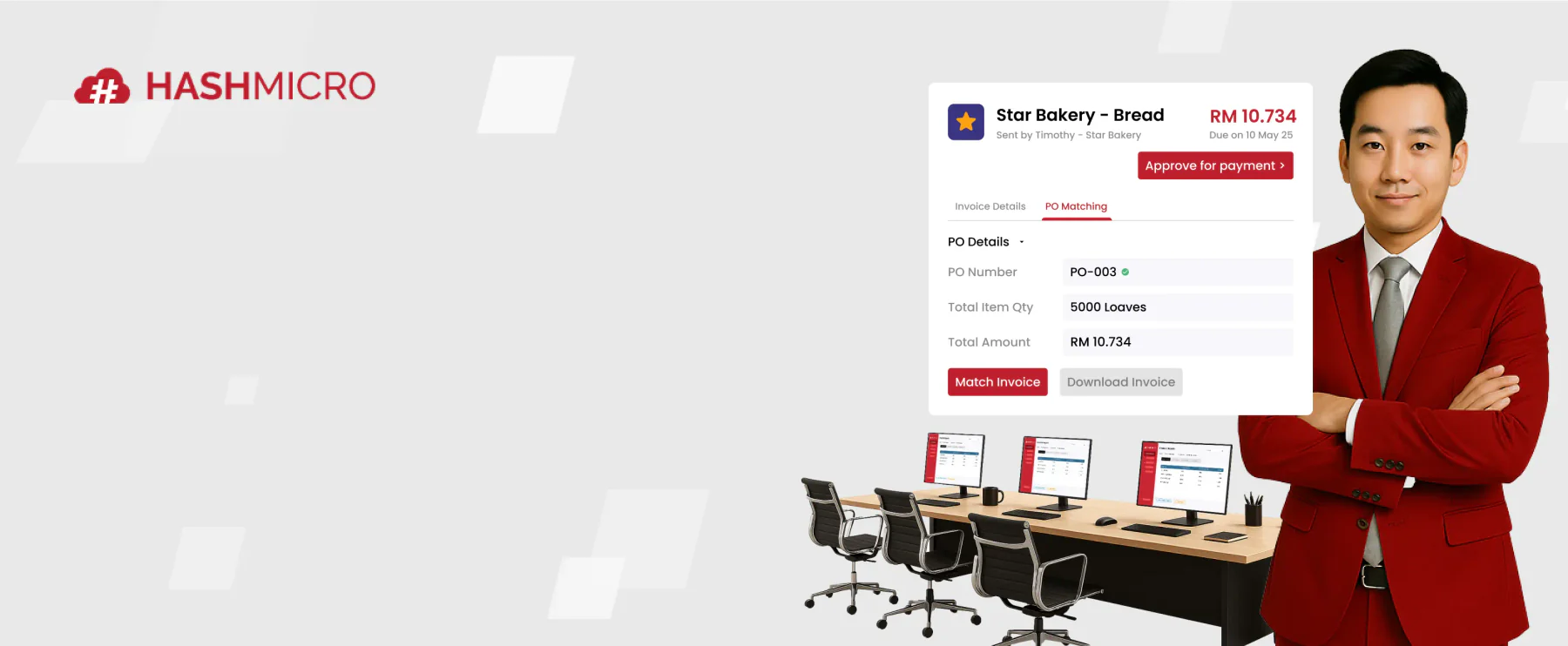
| HashMicro | Deep cross-module ERP connectivity, automated three-way document matching, and customizable multi-level approval hierarchies. | SME's - Large Enterprise | Local branch office in Malaysia; native, out-of-the-box compliance with LHDN e-invoicing mandates. | Custom corporate quotes; utilizes a cost-effective unlimited-user flat fee model. |
| Kissflow | No-code process workflow builder, drag-and-drop form creation, and automated purchase requisition tracking. | Growing Mid-Market Teams | Cloud-hosted system supported via regional APAC networks; workflows easily adapt to local corporate audit paths. | Procurement starter tier begins at $1,500/month (covering up to 50 users) or RM.6.116,40 |
| Procurify | Visual proactive spend tracking, real-time internal cost-center budgeting alerts, and mobile-friendly employee catalogs. | Scale-Ups & Mid-Market | Full multi-currency processing supporting MYR transactions and digital storage aligning with PDPA standards. | Single all-inclusive tier with customized pricing derived from individual company audits. |
| Odoo | Open-source modular architecture, automated supplier replenishment triggers, and integrated inventory control loops. | Small to Large Corporations | Supported by an extensive network of certified local Malaysian gold/silver implementation partners. | Standard plan averages between $24.90 to $31.10/user/month ( or RM.101 - RM.126) on subscription tiers. |
| Microsoft Dynamics 365 | Continuous business data integration, advanced predictive demand analytics, and unified core ledger tracking. | Large Multinational Enterprises | Heavy domestic footprint of localized Microsoft Malaysia system integrators for complex deployments. | Supply Chain Management module begins at roughly $180/user/month ( or RM.734 ) |
| Oracle | Enterprise source-to-settle lifecycle management, macro cross-border transaction visibility, and supplier risk analysis. | Global Conglomerates & Industrial Hubs | Dedicated regional service architecture provided directly through the Oracle Malaysia corporate office. | Premium annual enterprise commitments customized via corporate sales negotiations. |
| Precoro | Fast cloud-based setup, instant department expense monitoring, and clear duplicate document prevention. | Small-to-Medium Businesses (SMEs) | Multi-currency data capabilities that smoothly handle ringgit accounting alongside international vendor records. | Core flat-rate automated tier starts at $499/month or roughly around RM. 2.034,67 (billed annually). |
| Xero | Straightforward transaction logging, basic internal stock count logging, and instant digital receipt attachments. | Micro-SMEs & Startups | Tailored Malaysian country edition featuring native regional banking reconciliations and tax reporting structures. | Scaled monthly subscription plans ranging from $20 to $45/month (or around RM.81,54 - RM. 183,46) based on feature usage. |
| Ecount | Web-based operational ledger processing, standardized request for quotation (RFQ) loops, and unlimited ID generation. | Cost-Conscious Small Businesses | Multilingual interface options including native Malay language toggles for localized warehouse floor teams. | Fixed subscription rate of $55/month ( RM. 224,23 ) or $600/year ( RM. 2.446,20 ) for infinite. user capacities. |
| Procurement Express | Rapid mobile purchase order generation, immediate manager approval push alerts, and simple budget category grouping. | Distributed Teams & Field Operations | Provides clean digital verification histories that satisfy localized financial tracking and transparent auditing rules. | Packages scale upwards starting around $365/month ( or around RM. 1.488,10 ) based on organization infrastructure limits. |
| GEP Smart | AI-driven corporate tail spend analysis, strict automated contract compliance tracking, and structured sourcing event hosting. | Upper-Enterprise & Supply Hubs | High-tier B2B data encryption protocols aligning with global and regional personal data privacy laws. | Enterprise custom pricing quoted annually based on overall managed procurement value. |
| Procureport | Specialized reverse auction frameworks, centralized contract catalogs, and customizable electronic RFP portals. | Strategic Sourcing Teams & Agencies | Configurable cloud tax matrix parameters that accommodate localized Sales and Service Tax (SST) structures. | Custom module-based licensing dependent entirely on activated negotiation features. |
| ADAM | Purchase requisition and approval routing built around local Malaysian business practices, with straightforward order tracking. | Malaysian SMEs & Mid-Market | Direct local presence in Kuala Lumpur with native support for Malaysian SST tax rules and MyInvois e-invoicing workflows. | Custom quote based on procurement workflow complexity, module scope, and active user count. |
| SAP Concur | Integrated purchase request, invoice capture, and employee spend management under one corporate policy engine. | Mid-Market & Multinational Enterprises | Supported via SAP Malaysia partner ecosystem with native MYR transaction tracking and local tax audit compliance. | Pay-per-report model starting around $7 to $11 per report (approx. RM 28 - RM 45), with custom quotes for enterprise plans. |
| Coupa | Business spend management covering sourcing, procurement, invoicing, and supplier risk in a single suite. | Large Enterprises & Global Operations | Enterprise APAC infrastructure supported by regional implementation partners for SST rules and LHDN e-invoicing integrations. | Custom enterprise quote based on module selection and transaction volume, typically starting from around $2,500/month (RM 10,200+/month). |
15 Best Purchase Order Software in Malaysia 2026
Here are 15 recommendations for the best purchasing systems in Malaysia to improve your operational efficiency:
1. HashMicro Purchasing Software
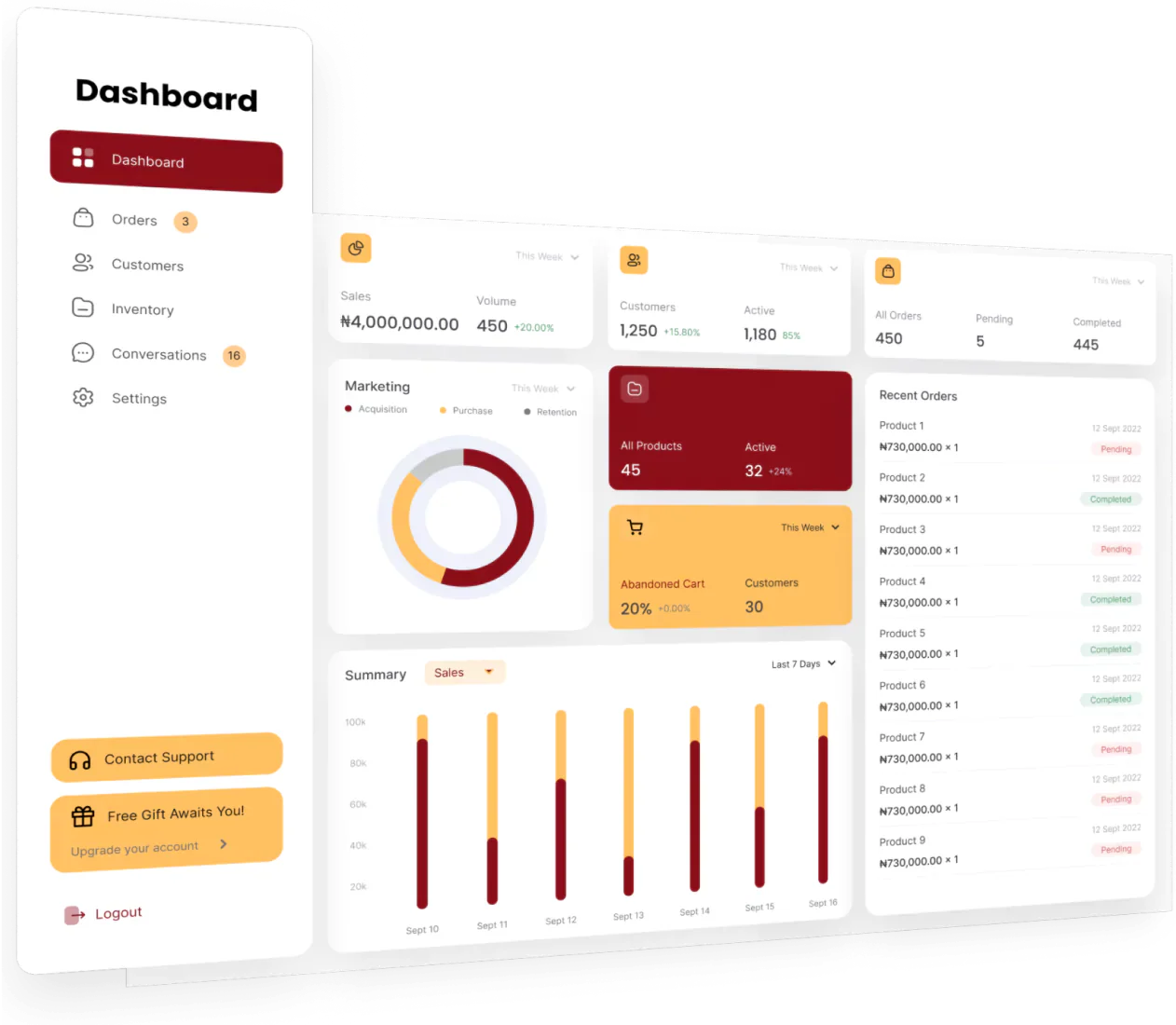
HashMicro Purchasing Software is a comprehensive procurement solution designed to help businesses automate and manage their purchasing activities more efficiently.
Known for its user-friendly interface and powerful integration capabilities, HashMicro allows companies to streamline purchase requests, approvals, vendor management, and invoice processing all within a centralized system.
With real-time tracking and customizable workflows, it supports better decision-making and ensures full visibility over procurement operations. Ideal for businesses of all sizes in Malaysia, HashMicro helps reduce manual work and improve overall procurement accuracy and compliance.
The top features offered by HashMicro’s procurement management system are:
- OCR for RFQ
- Automated Vendor Rating
- Cost Savings Tracking & Reporting
- Vendor Promotion Program Management.
|
Pros |
Cons |
|
|
HashMicro offers a pricing scheme to demonstrate how intelligent automation can scale without increasing your budget. Download the pricing scheme below to know how their purchasing system works!
"Modern purchasing platforms must shift from reactive order processing to strategic supplier management, and software that empowers this evolution becomes a true competitive asset."
2. Kissflow Procurement Software
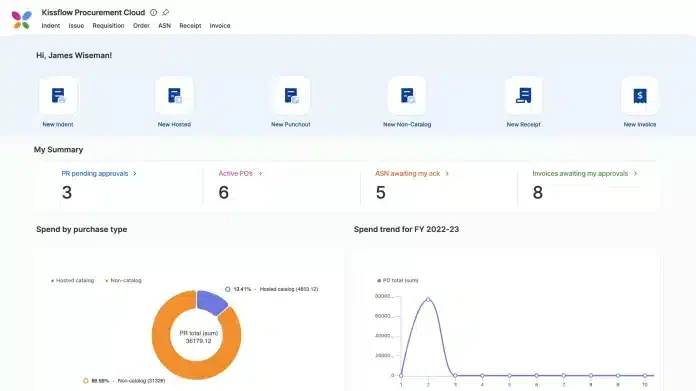
A flexible purchase order and vendor management platform built for growing Malaysian businesses. Kissflow Procurement Cloud automates purchase requests, multi-tier approvals, and live order tracking to maximize spending transparency. Additionally, its dedicated supplier portal allows local vendors to manage data and submit invoices directly, making regional B2B coordination highly efficient.
Key features:
- Invoice automation
- Spend analytics
- Inventory management
- Contract management
|
Pros |
Cons |
|
|
3. Procurify Automated Purchasing Software
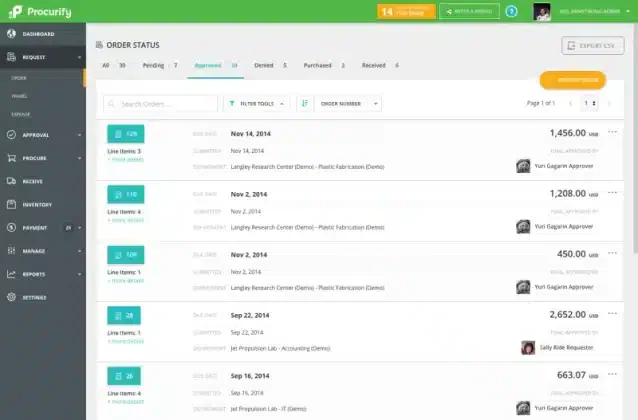
Procurify is a purchasing software designed to help businesses manage procurement in a more organized and efficient way. It streamlines the entire purchasing process with features that support each stage, from request to approval.
One key feature is the purchase request submission, which allows users to submit requests quickly and easily. This reduces delays and errors while ensuring all requests are tracked and handled within a centralized system.
Key features:
- Approval process
- Purchasing workflow
- Budget tracking
- Expense management
|
Pros |
Cons |
|
|
4. Odoo Procurement System
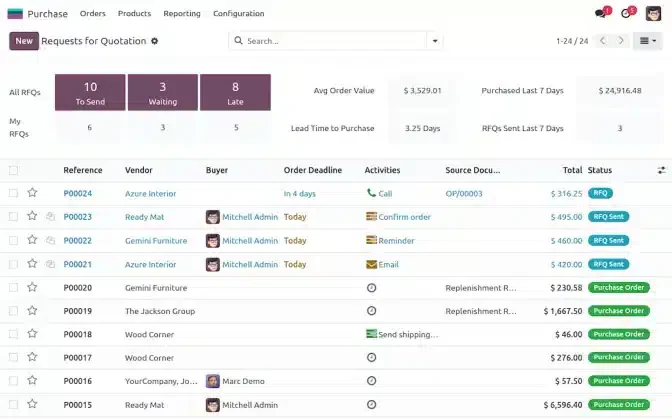
Odoo Purchase is a module within the Odoo ERP suite built to streamline and automate business procurement processes from request to payment.
With its user-friendly interface and integrated features, it helps reduce costs, improve control, and speed up purchasing workflows, making procurement more efficient and hassle-free.
Key features:
- Automated purchase requests
- Supplier management
- Purchase order
- Integration with inventory
|
Pros |
Cons |
|
|
5. Microsoft Dynamics 365
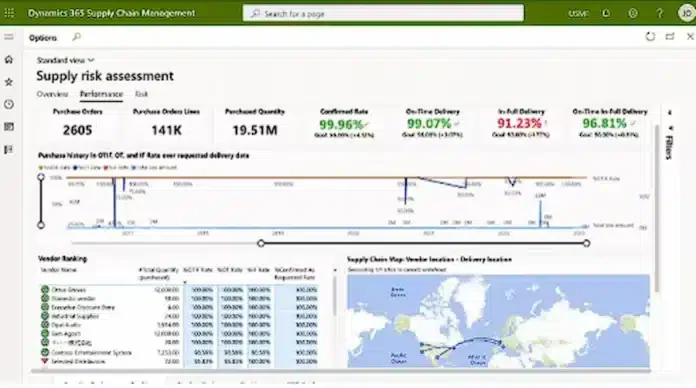
Microsoft Dynamics 365 purchasing system is an ERP solution designed to streamline and optimize a company’s procurement process.
It includes vendor management features that help businesses track and manage supplier relationships, including contracts, performance, and compliance.
Key features:
- Vendor management
- Purchase automation
- Expense analysis
- Custom workflows
|
Pros |
Cons |
|
|
6. Oracle Purchasing System
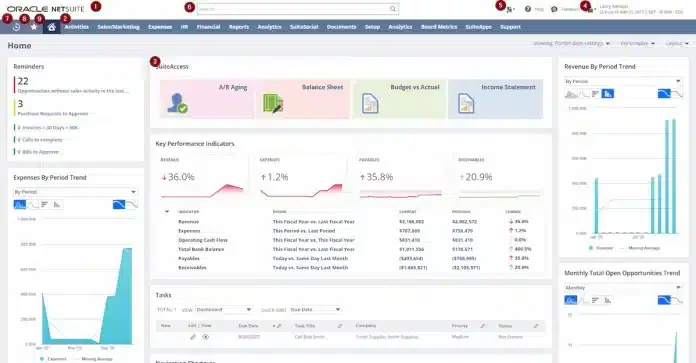
The Oracle procurement system is a web-based solution designed to simplify the procurement process. It enables employees to create, manage, and track purchase requisitions online, streamlining the ordering of goods and services.
The system also offers spend analysis, providing insights into spending patterns, supporting budget management, and identifying potential savings through real-time procurement data.
Key features:
- Web-based requisition management
- Integration with suppliers
- Expense analysis
- Process automation
|
Pros |
Cons |
|
|
7. Precoro Purchasing Requisition Software
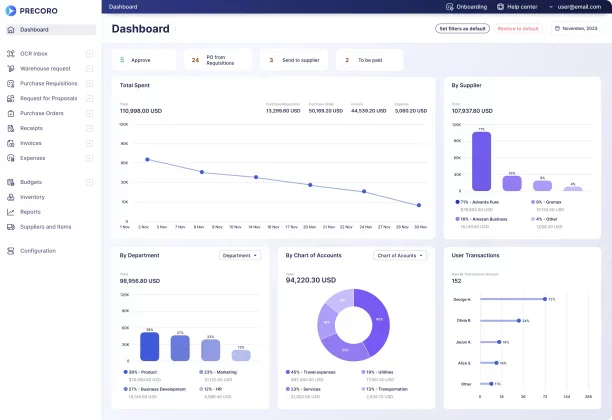
Precoro is a cloud-based procurement software in Malaysia that simplifies purchasing. Key features include purchase order management, blanket POs, visual analytics, invoicing, real-time budgeting, and catalog management with product links.
It also integrates with NetSuite and QuickBooks, offers a free API, and provides enhanced security and automated reporting for greater transparency throughout the procurement process.
Key features:
- Stock monitoring
- Real-time request handling
- Automated process management
|
Pros |
Cons |
|
|
8. Xero Procurement Software
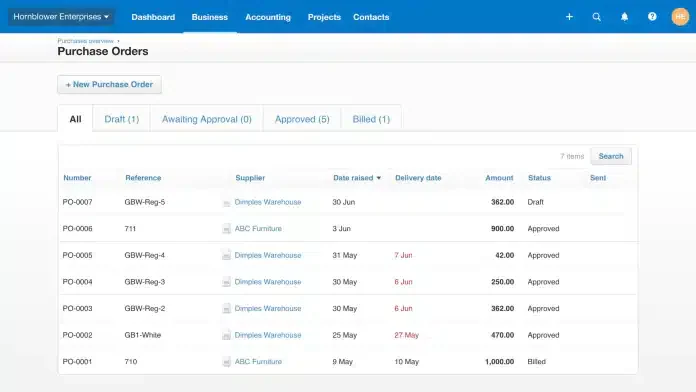
Xero offers a range of solutions to support business operations including its purchase order software. This tool helps companies streamline the procurement process by enabling efficient online creation and sending of purchase orders, reducing manual work and improving order accuracy.
It’s designed to optimize procurement workflows, ensuring timely and accurate order processing.
Key features:
- Purchase order creation and tracking
- Multi-application integration
- Automation of record keeping
|
Pros |
Cons |
|
|
9. Ecount Purchasing Software
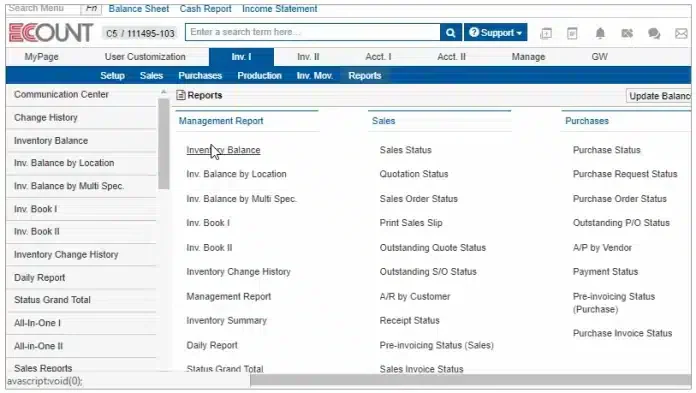
Ecount’s purchasing software, the Ecount ERP Purchasing Module, is designed to streamline and automate procurement processes within organizations. It is available to Malaysian businesses as a web-based subscription, with a multilingual interface that includes Malay.
The software improves procurement efficiency, reduces costs, and fosters better collaboration between departments and suppliers.
Key features:
- Inventory management
- Sourcing and RFQ
- Budgeting and spending analysis
|
Pros |
Cons |
|
|
10. ProcurementExpress Purchasing System
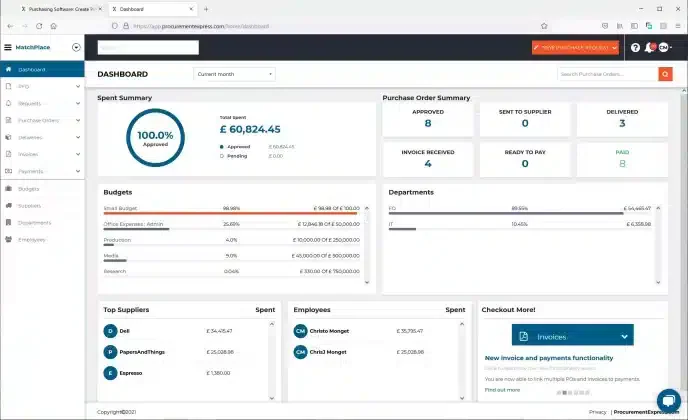
ProcurementExpress is a web-based purchase order application streamlining the purchasing process on a single cloud platform.
It integrates with accounting systems and helps management respond efficiently to customer requests recorded in the software.
Key features:
- Approval workflows
- Budget tracking
- Mobile access
|
Pros |
Cons |
|
|
11. GEP SMART Purchasing System
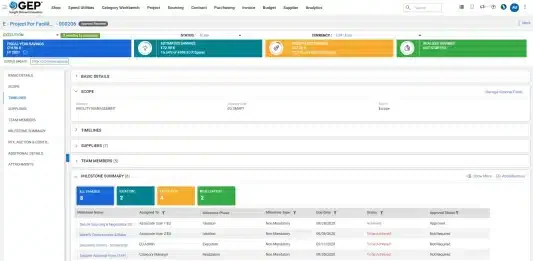
GEP SMART is a unified, cloud-based source-to-pay (S2P) solution that simplifies the management of direct and indirect spending. It combines multiple procurement tools in one platform, eliminating the need for separate systems.
The software boosts procurement efficiency, supports digital transformation, and enhances team performance. It offers advanced analytics for CPOs, comprehensive oversight for category managers, and an intuitive ordering experience for buyers.
Key features:
- Purchase to pay
- Vendor management
- Supplier sourcing
|
Pros |
Cons |
|
|
12. ProcurePort Purchasing System
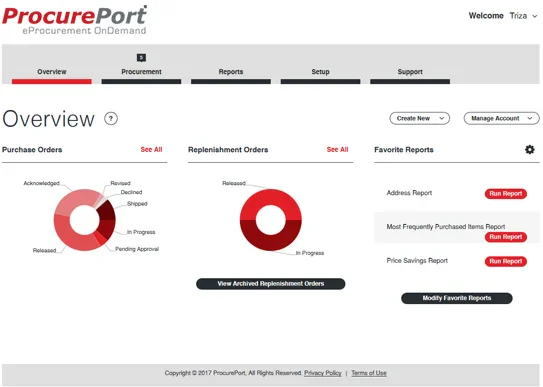
ProcurePort is a purchase order solution that helps businesses manage procurement more efficiently and centrally. It streamlines purchasing workflows and enables better decision-making by leveraging real-time data.
Key features:
- Supplier management
- Contract management
- Expense analysis
|
Pros |
Cons |
|
|
13. ADAM Purchasing Software
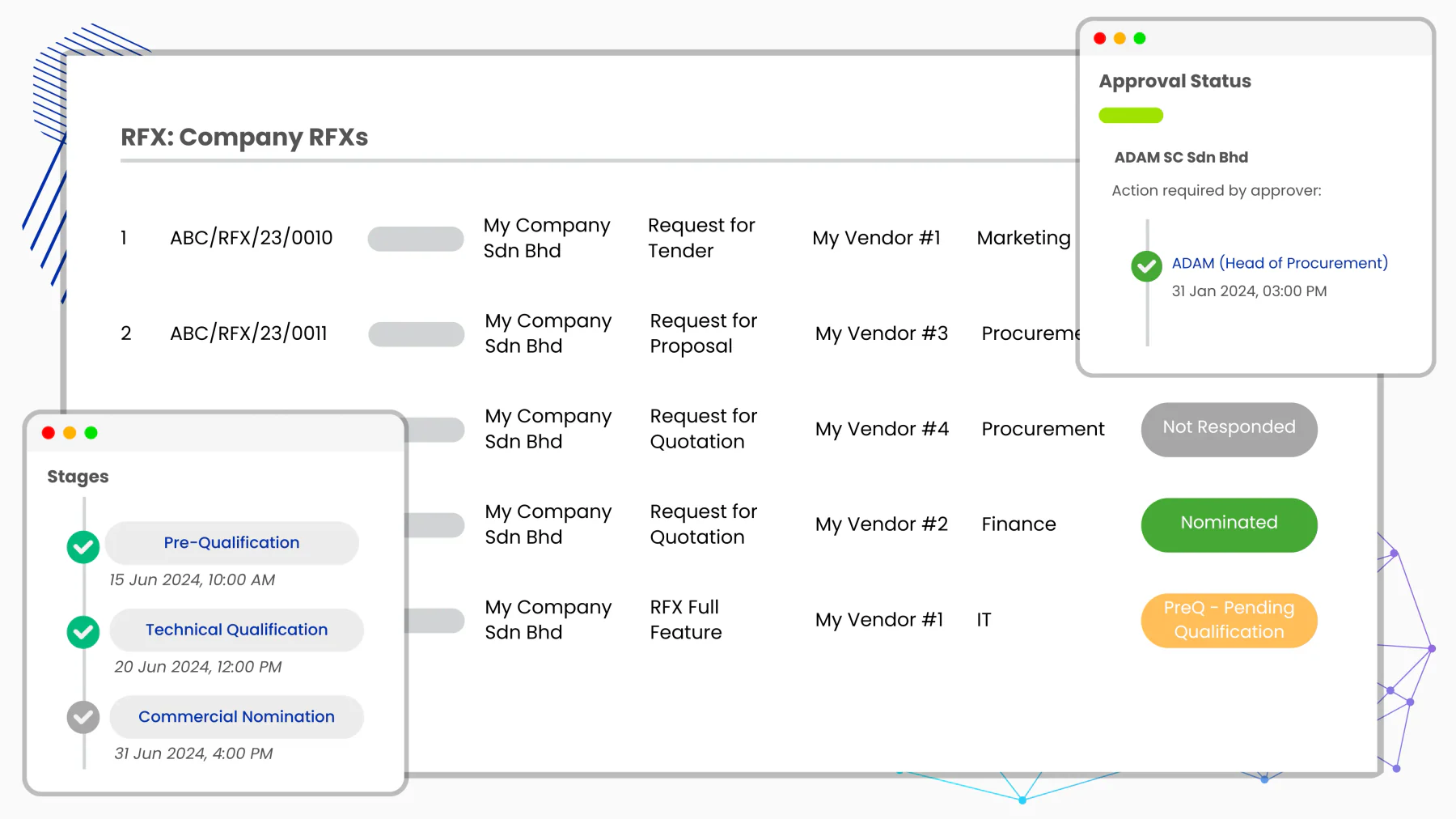
ADAM is a purchasing and requisition tool positioned for Malaysian businesses that want approval routing and order tracking without moving to a full enterprise suite. It covers the everyday procurement loop: raising a request, routing it for approval, issuing the purchase order, and recording what was delivered.
Its main draw for local buyers is proximity. Support and implementation sit in the same time zone, which shortens the gap between raising an issue and getting it resolved compared with vendors supporting Malaysia from another region.
Key features:
- Purchase requisition and approval routing
- Purchase order issuing and tracking
- Supplier record management
Pros |
Cons |
|
|
14. SAP Concur
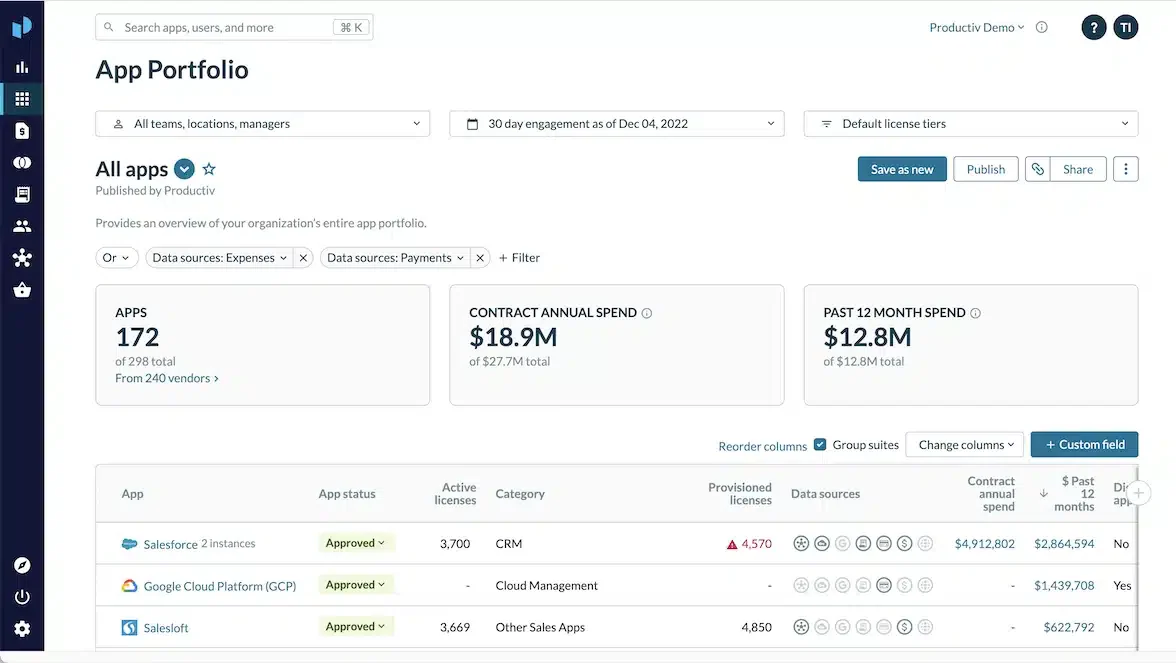
SAP Concur brings purchase requests, invoice capture, and employee spend under one policy engine. Rather than treating procurement as a separate workflow, it folds purchasing into the same approval and expense framework the rest of the company already uses.
That makes it a natural fit for organisations where a large share of spend happens outside formal purchase orders, such as travel, subscriptions, and departmental purchases that would otherwise never reach procurement.
Key features:
- Purchase request and approval routing
- Invoice capture and matching
- Employee expense and travel spend management
- Policy compliance controls
Pros |
Cons |
|
|
15. Coupa
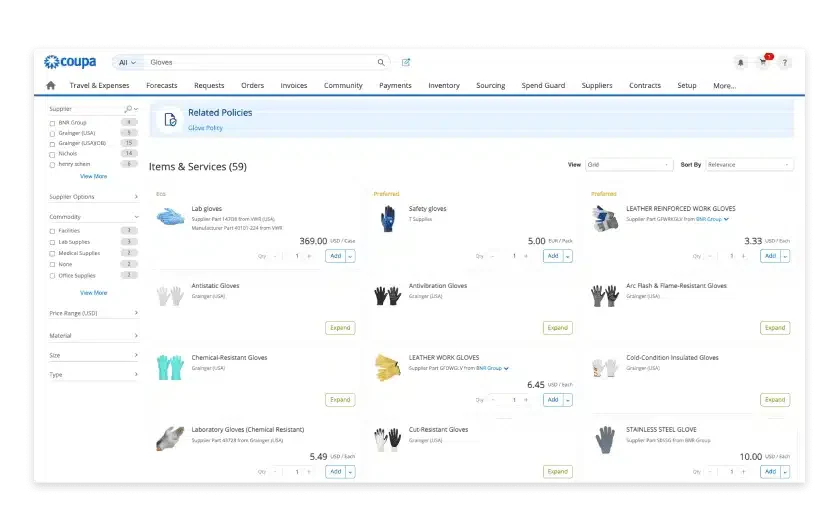
Coupa is a business spend management suite covering sourcing, procurement, invoicing, and supplier risk in one platform. It is built for organisations that treat procurement as a strategic function with dedicated sourcing roles, not as an administrative step.
Its strength is breadth: category managers, buyers, and finance each work from the same spend data rather than reconciling separate systems. That breadth is also why smaller teams often find it more platform than they need.
Key features:
- Sourcing and supplier onboarding
- Procurement and purchase order management
- Invoice processing and matching
- Spend analytics and supplier risk monitoring
Pros |
Cons |
|
|
Overall Comparison of the Best Purchasing Software for Businesses in Malaysia
The table below compares five platforms with the widest coverage across the four capabilities that most often decide a purchasing rollout: approval workflow, three-way matching, integration with inventory and accounting, and purchase order tracking. Vendors focused on a narrower slice of the process are covered in their individual reviews above.
| Provider | Approval Workflow | 3-Way Matching | Inventory & Accounting Integration | PO Tracking |
|---|---|---|---|---|
| Hashmicro | ||||
| Oracle | ||||
| odoo | ||||
| GEP SMART | ||||
| ProcurePort |
Who in Your Company Uses Purchasing Software?

Purchasing software is not just for the procurement team. Different people across your company interact with it in different ways.
1. Operations and production teams
They use it to raise purchase orders fast when materials run low. Instead of waiting days for approvals, the system routes the PO to the right person automatically so production keeps moving.
2. Finance teams
They use it to track every purchase order from approval to payment. They can see which POs are pending, which invoices have been matched, and where the budget stands without pulling manual reports.
3. Staff who buy things
They use it to submit requests and track their purchase orders. They pick what they need, submit, and the system handles the routing. No more filling forms and chasing approvers.
4. Management
They use it to see the full picture. Which departments are spending the most, which vendors perform well, and whether purchase orders stay within approved budgets. Every approval is recorded, so there is always a clear trail.
How to Choose the Right Purchasing Management
Understanding the right purchase order system is key to streamlining procurement and improving efficiency. Work through these five checks before you shortlist anything, and you will avoid the two most common outcomes: paying for a platform nobody uses, or outgrowing a tool within a year.
1. Start by Defining What You Actually Need Fixed
Write down the specific problem before looking at any vendor. Slow approvals, invoices that do not match deliveries, and no visibility on department spend are three different problems that need three different tools. Companies that skip this step usually buy the platform with the longest feature list, then use a tenth of it.
2. Check Whether It Connects to the Systems You Already Run
Ask specifically how the system talks to your ERP software or accounting package. In Malaysia that often means AutoCount, SQL Accounting, or an existing ERP, and the answer is rarely a simple yes. Find out whether it is a native connection, an API build, or a file export, because the last option means someone on your team is still doing manual work every month.
3. Make Sure Your Team Can Use It Without Weeks of Training
The people raising requests are usually not procurement specialists. If submitting a purchase request takes more clicks than sending a WhatsApp message, your team will go back to WhatsApp. Run a trial with the actual staff who will use it daily, not just the project lead.
4. Plan for the Size You Will Be in Three Years, Not Today
Check how pricing behaves as you add users, suppliers, and transaction volume. Per-seat licensing that looks cheap at ten users can become the largest line item at fifty. Weigh the total cost over a few years against the features you will genuinely use, rather than the monthly figure on the pricing page.
5. Look Into the Vendor’s Track Record and Local Support
Find out who answers when something breaks at 4pm on a Friday. A vendor supporting Malaysia from another region means your urgent issue waits until their working hours. Ask for references from companies of similar size in your industry, and ask specifically about what happened after go-live, not during the sales process.
Which Type Fits Your Company?
Not all purchase order software does the same thing. Some only handle purchase orders. Some cover everything from finding suppliers to paying invoices. Picking the wrong type means you either pay for features you don’t use, or you’re stuck without something you actually need.
| Your Main Problem | Type You Need | Software to Consider | Best For |
|---|---|---|---|
| Approvals are slow, POs are messy | PO & Approval Tools | Precoro, ProcurementExpress, Xero | SMEs that just need faster purchase order processing and basic approval routing. |
| No visibility on department spending | Spend Management | Procurify, GEP, Kissflow | Finance teams that need real-time view of who is spending what, and where. |
| Invoices don't match what was ordered or received | AP & Invoice Matching | Xero, Ecount, ProcurePort | Companies losing money from paying invoices that don't match actual deliveries. |
| Need full cycle covered: sourcing to payment | Source-to-Pay (S2P) | GEP, Oracle, Coupa | Large companies with complex supply chains needing end-to-end procurement control. |
| Vendor data scattered across emails and files | Vendor Management | Oracle, Procurify, ProcurePort | Businesses managing 50+ suppliers that need centralized records and performance tracking. |
| Employee and departmental spend happens outside formal POs | Spend & Expense Control | SAP Concur, Procurify | Companies where travel, subscriptions, and ad-hoc buying never reach procurement. |
| Want procurement + inventory + accounting in one system | ERP with Procurement Module | HashMicro, Odoo, Microsoft Dynamics 365 | Mid to large companies tired of copying data between separate systems. |
Conclusion
The best procurement software is not the one with the longest feature list, but the one that fits your company's actual buying workflow. The core differences boil down to three factors: the level of approval automation, seamless integration with inventory and accounting, and reliable local support. Everything else is secondary.
For fast deployment and simple purchase orders, tools like Precoro provide a low-friction start, while Procurify focuses heavily on spend visibility. Large enterprises with complex sourcing needs are better served by Coupa or SAP Ariba. If you need purchasing, inventory, and accounting fully integrated into a single system, HashMicro and Odoo offer the most complete coverage.
Uncertainty at this stage is normal, as shortlists usually clarify only after testing your real approval chains and supplier workflows in a live environment. HashMicro offers a free demo where you can test your actual purchasing processes and evaluate how procurement performs inside a unified ERP before making a commitment.

FAQ on Purchasing Software
Purchasing software focuses on the buying process: creating purchase orders, sending them to suppliers, and processing payments. Procurement software covers a wider scope, including finding suppliers, managing contracts, negotiating prices, and tracking compliance. Some tools like HashMicro and Odoo do both because they’re part of a full ERP system.
Purchase order software handles one specific job: creating, sending, and tracking POs. If that’s your only problem, tools like Precoro, ProcurementExpress, or Xero’s PO module are enough. But if you also need approval workflows, spend tracking, or supplier management, you’ll want a broader purchasing or procurement platform instead of a standalone PO tool.
Purchasing software helps manage compliance by keeping clear records of purchases, approvals, and vendor activities. It also simplifies audits by providing complete records and ensuring company rules and regulations are followed.
Purchase order management software is a system that handles the full life of a purchase order, from the moment someone raises a request to the moment the invoice is matched and paid. It replaces the usual mix of email approvals and Excel trackers with one record that everyone works from. At minimum it should cover request creation, approval routing, PO issuing to suppliers, goods receipt, and three-way matching between the PO, the delivery, and the invoice.
There is no single answer, because the right choice depends on your company size and what you already run. Malaysian SMEs that want purchasing, inventory, and accounting in one system tend to look at integrated ERP options such as HashMicro. Smaller teams that only need faster approvals often do fine with lighter tools like Precoro or ProcurementExpress. Large organisations with complex sourcing usually end up with Oracle, Coupa, or GEP SMART. The comparison tables earlier in this article break down where each option fits.
Five things matter more than the rest. First, approval routing you can configure yourself, so purchases above a certain value automatically go to the right person. Second, three-way matching, which catches invoices that do not match what was actually ordered and received. Third, a supplier record that holds quotes, contracts, and performance history in one place. Fourth, integration with your inventory and accounting systems, so nobody is retyping data. Fifth, reporting that shows spending by department, category, and supplier without waiting for month-end.
Most established purchasing systems can, though how it works differs. Some connect natively because purchasing and accounting sit in the same platform, which means an approved invoice posts to the ledger without any manual step. Others connect through an API or a file export to accounting tools commonly used in Malaysia. Before committing, ask the vendor specifically how their system handles SST treatment and whether it supports LHDN e-Invoice submission through MyInvois, since these are handled on the accounting side and gaps here create manual work every month.
In an ERP, purchasing is one module among several that share the same database. That changes how the process behaves. When stock drops below its reorder point, inventory can trigger a purchase request automatically. When goods are received, stock levels and inventory value update in the same moment. When the supplier invoice is approved, the accounting entry is already there. Standalone purchasing tools can achieve something similar through integrations, but the data still has to travel between systems, which is where delays and mismatches usually appear.