




Modern businesses operate in an environment shaped by rapid technological change and rising customer expectations. Organizations that rely on traditional systems often struggle to remain efficient and responsive in this increasingly digital landscape.
Because of this shift, many companies are investing in digital tools to streamline operations and improve decision making. However, technology adoption alone does not guarantee meaningful business transformation.
A digital transformation strategy provides the structure needed to align technology initiatives with long term business goals. With clear direction and priorities, organizations can ensure that digital investments create measurable value and sustainable growth.
Key Takeaways
Understand what a digital transformation strategy is and how organizations modernize operations through digital technologies.
Explore the core elements of a digital transformation strategy including leadership alignment, data infrastructure, and workforce enablement.
Learn the step-by-step process organizations follow to build and implement a successful digital transformation strategy.
Discover how organizations measure the ROI of digital transformation using operational efficiency and customer experience metrics.

What Is a Digital Transformation Strategy
A digital transformation strategy is a structured plan that guides how organizations use digital technologies to improve business processes, customer experiences, and operational efficiency.
Rather than focusing only on new tools, the strategy defines how technology supports broader business objectives. This includes redesigning workflows, improving data accessibility, and strengthening collaboration across departments.
By aligning technology, people, and processes, organizations can ensure that digital initiatives contribute directly to long term growth and competitiveness.
Digitisation vs Digitalisation vs Digital Transformation
The concepts of digitisation, digitalisation, and digital transformation are often used interchangeably, but they represent different stages of technological change.
Digitisation refers to converting physical information into digital formats. Examples include scanning paper documents or storing records in digital databases.
Digitalisation goes further by using digital data to improve existing processes. For instance, automated workflows can route invoices or approvals more efficiently than manual systems.
Digital transformation represents the most comprehensive shift. It involves redesigning business models, operations, and customer experiences through the strategic use of digital technologies.
Why Digital Transformation Is Critical for Modern Businesses
Digital transformation has become essential for organizations that want to remain competitive in rapidly evolving markets. Companies that rely on outdated systems often struggle with slow processes, fragmented data, and limited operational visibility.
By integrating digital technologies, businesses can streamline workflows, automate repetitive tasks, and gain deeper insights through real time data analytics.
More importantly, digital transformation enables organizations to respond quickly to market changes and evolving customer expectations.
Core Objectives of a Digital Transformation Strategy
The primary goal of a digital transformation strategy is to create measurable improvements in business performance. Organizations typically focus on increasing efficiency, improving customer engagement, and enabling data driven decision making.
Another key objective is scalability. Modern digital platforms allow companies to expand operations, launch new services, and enter new markets more efficiently.
Ultimately, a successful digital transformation strategy helps organizations build agility, resilience, and long term competitive advantage.
Key Elements of a Digital Transformation Strategy
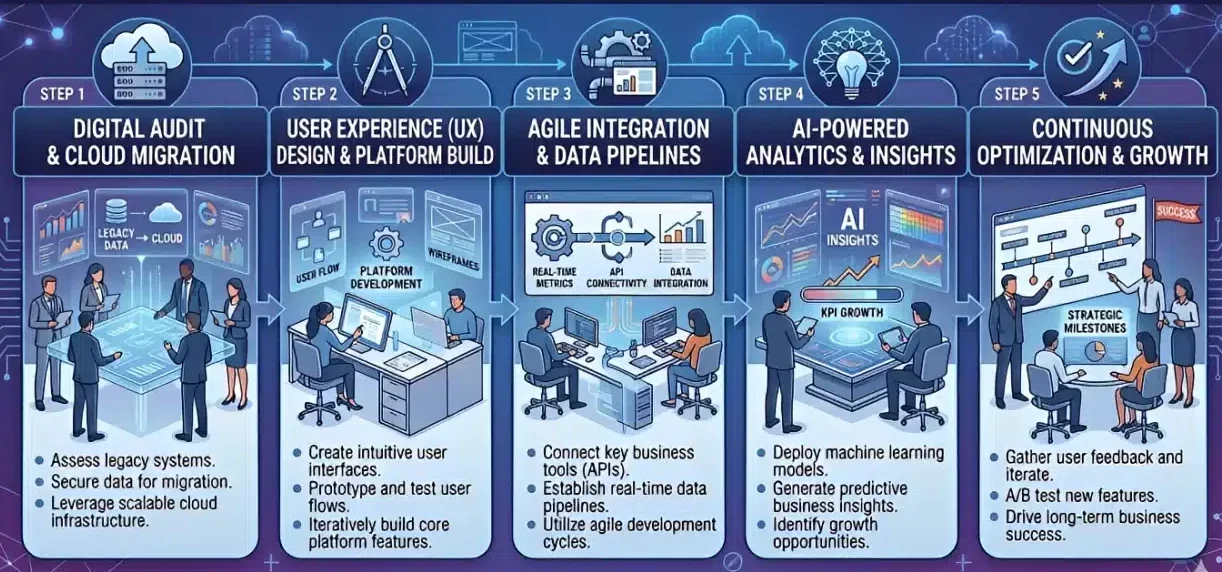
A successful digital transformation strategy requires more than adopting new technologies. Organizations must align leadership, processes, workforce capabilities, and data infrastructure to support meaningful change.
Several foundational elements help ensure that digital initiatives deliver measurable results and sustainable improvements across the business.
Clear Vision and Business Goals
Every digital transformation initiative should begin with a clear strategic vision. Organizations must define what they aim to achieve through digital adoption, whether it is improving operational efficiency, enhancing customer experience, or expanding into new markets.
This vision should translate into measurable goals that guide decision making and investment priorities.
When digital initiatives are directly linked to business objectives, organizations can ensure that technology investments generate tangible value.
Leadership Buy In and Change Management
Leadership support is essential for successful digital transformation. Without strong commitment from senior management, initiatives often lack direction, resources, and organizational alignment.
Executives must actively communicate the purpose and benefits of transformation across the organization. This helps employees understand why changes are necessary and how they contribute to long term success.
Effective change management also involves engaging employees, addressing concerns, and fostering a culture that supports innovation and adaptability.
Technology Infrastructure and Data
Modern digital transformation strategies rely on flexible and scalable technology infrastructure. Legacy systems often create barriers to innovation because they are difficult to integrate and maintain.
Organizations increasingly adopt cloud platforms, integrated enterprise systems, and data analytics tools to modernize their technology environments.
Equally important is effective data management. By consolidating data into unified platforms, businesses can gain deeper insights and make faster, more informed decisions.
Workforce Enablement and Training
Technology alone cannot drive transformation without a workforce capable of using it effectively. Employees need the skills, knowledge, and confidence to adopt new digital tools and workflows.
Training programs, digital learning platforms, and mentorship initiatives can help employees develop these capabilities.
By investing in workforce enablement, organizations ensure that digital transformation becomes a collaborative effort rather than a purely technical project.
Measurement and Performance KPIs
Measuring progress is critical for evaluating the success of a digital transformation strategy. Organizations should establish clear key performance indicators (KPIs) that reflect both operational improvements and business outcomes.
These metrics may include productivity gains, customer satisfaction levels, digital adoption rates, or cost reductions.
Continuous monitoring allows organizations to identify challenges early, refine their strategies, and maintain momentum throughout the transformation journey.
How to Build and Implement a Digital Transformation Strategy
Successfully implementing a digital transformation strategy requires a structured and well planned approach. Organizations must move beyond theoretical planning and translate their strategy into practical initiatives.
A phased implementation model allows companies to manage risk, improve adoption, and gradually scale digital initiatives across the organization.
Step 1: Assess Your Current Digital Maturity
The first step is understanding the organization’s current digital capabilities. This includes evaluating existing technology infrastructure, operational workflows, and workforce readiness.
Companies should identify outdated systems, manual processes, and data silos that limit operational efficiency.
This assessment provides the baseline needed to define realistic transformation goals.
Step 2: Define Strategic Goals and Transformation Roadmap
After assessing the current state, organizations must define clear goals for their digital transformation journey.
These goals should align with broader business objectives such as improving efficiency, enhancing customer experience, or expanding digital services.
A detailed transformation roadmap helps prioritize initiatives and ensures that implementation occurs in manageable phases.
Step 3: Select the Right Technologies and Partners
Choosing the right technologies is essential for supporting long term digital transformation. Organizations must evaluate solutions based on scalability, integration capabilities, and security.
Enterprise systems, cloud platforms, and data analytics tools are often central components of digital transformation initiatives.
Partnering with experienced technology providers can also help organizations accelerate implementation and reduce technical risks.
Step 4: Implement Changes Through Agile Rollouts
Large scale system deployments can disrupt operations if implemented all at once. Many organizations therefore adopt an agile rollout approach.
This involves introducing digital solutions in smaller phases, allowing teams to test, refine, and optimize systems before wider deployment.
Gradual implementation also helps employees adapt more easily to new tools and workflows.
Step 5: Monitor Progress and Optimize Continuously
Digital transformation should be viewed as an ongoing process rather than a one time project.
Organizations must continuously track performance metrics and gather feedback from users.
Regular evaluation allows leaders to adjust strategies, optimize processes, and ensure that digital initiatives continue delivering value.
Common Pitfalls in Digital Transformation
Despite the benefits of digital transformation, many organizations encounter challenges during implementation. These issues often arise from strategic misalignment or insufficient preparation.
Common pitfalls include:
- Technology first mindset
Some organizations adopt new technologies without clearly defining the business problems they intend to solve. - Poor change management
Without effective communication and training, employees may resist new systems and processes. - Data silos and low data quality
Fragmented or inaccurate data limits the effectiveness of digital systems and analytics. - Lack of leadership alignment
When executives and department leaders are not aligned, transformation initiatives often lose direction and support.
"A strong digital transformation strategy connects technology, people, and processes to help organizations adapt faster, innovate continuously, and remain competitive in the digital economy."
Industry Use Cases of Digital Transformation
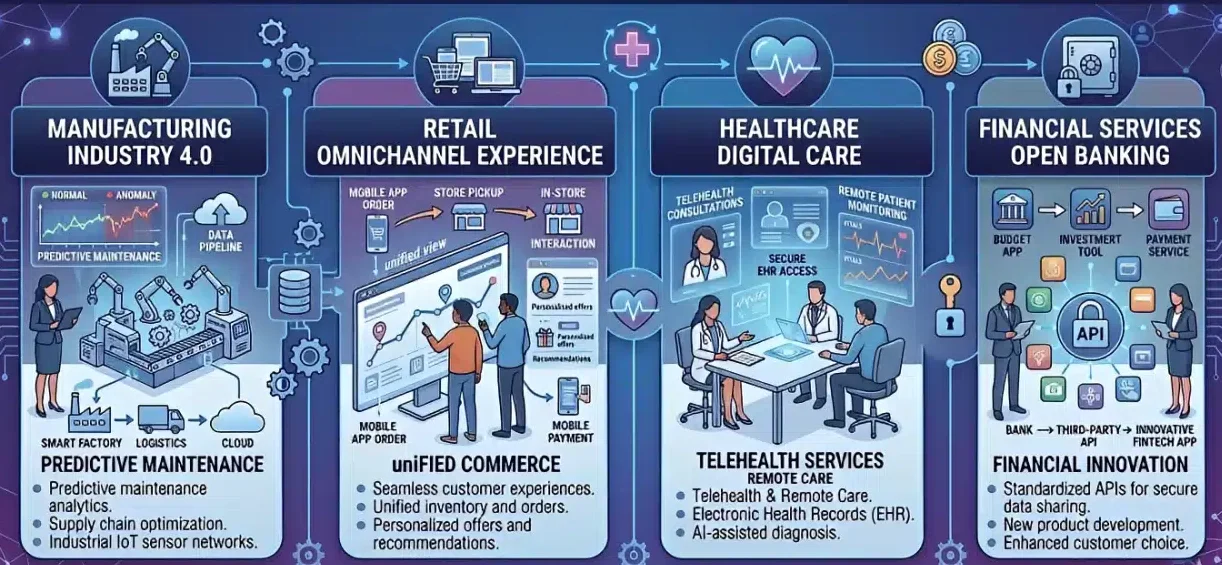
Digital transformation affects industries in different ways depending on operational complexity, customer expectations, and regulatory requirements. While the technologies may be similar, the way organizations apply them often varies significantly.
Understanding how digital transformation works across industries helps businesses identify practical opportunities for innovation and operational improvement.
Manufacturing and Industry 4.0
Manufacturing companies are adopting digital technologies through the concept known as Industry 4.0. This approach integrates connected machines, sensors, and real time analytics into production environments.
IoT devices allow manufacturers to monitor equipment performance and predict maintenance needs before failures occur. This reduces downtime and improves production efficiency.
Digital platforms also help manufacturers gain better visibility into supply chains, allowing them to respond faster to demand fluctuations and operational disruptions.
Retail and Omnichannel Customer Experience
Retail businesses are using digital transformation to deliver seamless omnichannel experiences. Customers now expect consistent interactions whether they shop online, through mobile apps, or in physical stores.
Integrated inventory systems allow retailers to track product availability across multiple channels. This enables services such as click and collect or real time stock updates.
Digital tools also support personalized marketing and customer engagement strategies, helping retailers strengthen loyalty and increase conversion rates.
Healthcare and Digital Patient Care
Healthcare organizations increasingly rely on digital technologies to improve patient care and operational efficiency.
Telehealth platforms enable doctors to provide remote consultations while maintaining access to electronic health records. This improves accessibility for patients and reduces hospital congestion.
Advanced analytics and wearable devices also allow healthcare providers to monitor patient health data in real time, supporting earlier diagnosis and more proactive treatment.
Financial Services and Open Banking
Financial institutions are undergoing rapid digital transformation as they compete with emerging fintech companies.
Automation technologies help streamline processes such as loan approvals, compliance checks, and transaction monitoring. This reduces operational costs while improving processing speed.
Open banking frameworks also allow secure data sharing between financial institutions and digital platforms. As a result, customers can access more personalized financial services and integrated financial management tools.
Advanced Strategies for Sustainable Digital Transformation
While many organizations successfully implement digital tools, sustaining transformation requires continuous innovation. Advanced strategies help businesses maintain agility and remain competitive in rapidly evolving markets.
By adopting flexible architectures and intelligent automation, organizations can ensure that digital transformation remains a long term capability rather than a short term initiative.
Composable Business Architecture
Composable business architecture allows organizations to build digital systems using modular components that can be easily modified or replaced.
Instead of relying on rigid, monolithic platforms, businesses create flexible ecosystems where individual services operate independently but remain connected.
This approach improves adaptability because organizations can update specific components without disrupting the entire system.
Hyperautomation and Intelligent Workflows
Hyperautomation combines multiple technologies such as robotic process automation, artificial intelligence, and machine learning.
These technologies allow organizations to automate complex workflows that previously required manual decision making.
By integrating intelligent automation into business processes, companies can improve efficiency while freeing employees to focus on strategic activities.
Digital Twins for Predictive Decision Making
A digital twin is a virtual representation of a physical system, process, or asset. It uses real time data to simulate operations and predict potential outcomes.
Organizations use digital twins to test scenarios before implementing changes in real environments.
This predictive capability allows businesses to reduce operational risks and make more informed strategic decisions.
Measuring the ROI of Digital Transformation
Investing in digital transformation requires significant financial and organizational commitment. Because of this, organizations must carefully evaluate whether their digital initiatives deliver measurable business value.
Measuring return on investment helps leaders understand the impact of transformation efforts and identify opportunities for further improvement.
Operational Efficiency Metrics
Operational efficiency is one of the most immediate benefits of digital transformation. Organizations often measure improvements through metrics such as process cycle time, system uptime, and automation rates.
Reduced operational costs and improved productivity also indicate successful digital implementation.
Tracking these metrics allows organizations to quantify the operational improvements created by digital technologies.
Customer Experience Metrics
Digital transformation also focuses heavily on improving customer engagement and satisfaction.
Metrics such as customer retention rates, Net Promoter Score (NPS), and digital channel conversion rates help organizations measure customer experience improvements.
When digital initiatives simplify interactions and improve service quality, customer loyalty often increases as well.
Innovation and Business Growth Indicators
Beyond efficiency and customer experience, digital transformation can create new revenue opportunities.
Organizations may evaluate the number of new digital services launched, growth in digital sales channels, or expansion into new markets.
These indicators demonstrate how digital transformation contributes to long term innovation and business growth.
Conclusion
Digital transformation strategy helps organizations adapt to rapid technological change while improving efficiency, customer experience, and long term competitiveness. By aligning technology with business objectives, companies can create more agile and data driven operations.
Successful transformation requires more than adopting new tools. Organizations must align leadership, processes, workforce capabilities, and data infrastructure to ensure that digital initiatives deliver measurable results.
If your organization is planning a digital transformation initiative, choosing the right strategy and technology platform is critical. Request a free consultation with our experts to explore how integrated digital solutions can support your transformation journey.

Frequently Asked Questions About Digital Transformation Strategy
A digital transformation strategy is a structured plan that guides how organizations use digital technologies to improve business processes, customer experiences, and operational performance while aligning technology initiatives with long term business goals.
Digital transformation helps organizations improve efficiency, automate processes, enhance customer experiences, and respond faster to changing market conditions.
Key elements typically include a clear vision and business goals, leadership support, modern technology infrastructure, workforce training, and measurable performance indicators.
Companies usually begin by assessing their current digital maturity, defining strategic goals, selecting the right technologies, implementing solutions in phases, and continuously monitoring performance.
Success can be measured through metrics such as operational efficiency improvements, customer satisfaction scores, digital adoption rates, and new business growth from digital initiatives.