














An employee onboarding checklist is a structured list of tasks used to prepare, welcome, and train new employees during the onboarding process. It helps businesses manage paperwork, compliance, training, and workplace setup consistently for every new hire.
An employee onboarding checklist helps businesses organise the steps required to welcome and set up new employees successfully. It ensures important tasks are completed on time, from paperwork and payroll setup to training and introductions.
For Australian businesses, onboarding also includes legal and compliance responsibilities such as tax forms, Fair Work documents, and workplace safety requirements. A clear checklist can reduce mistakes and improve the new hire experience.
In this guide, supported by an HR management platform for business, you will learn what an onboarding checklist is, what it should include, common mistakes to avoid, and when to move from manual checklists to HR software.
Key Takeaways
Learn the foundational elements of a structured onboarding process.
Understand the critical differences between these two HR phases.
Ensure your onboarding complies with Fair Work and ATO regulations.
A step-by-step timeline from pre-boarding to the 90-day mark.
What Is an Employee Onboarding Checklist?

An employee onboarding checklist supports a structured onboarding program by guiding tasks from pre-start through the first months. It helps businesses stay organised and consistent during the hiring process.
Common tasks may include contracts, payroll setup, IT access, policy training, and role-specific training. The checklist can be used by HR, managers, and team leaders.
A strong onboarding checklist helps employees feel prepared, engaged, and productive sooner.
Onboarding Checklist vs Induction Checklist
An onboarding checklist covers the full process of integrating a new employee into the business over weeks or months. It includes setup tasks, training, performance support, and regular check-ins.
An induction checklist is usually shorter and focuses on the employee’s first day or first week. It often covers introductions, policies, safety, and immediate workplace information.
Many businesses use both together, with induction forming one part of the wider onboarding process.

Australian Legal Requirements Every Onboarding Checklist Must Cover
Australian businesses should include key legal and payroll requirements in every onboarding checklist. Completing these tasks early can reduce compliance risks and payroll delays.
1. Tax File Number (TFN) Declaration
New employees should complete a TFN declaration before their first pay cycle. This allows the employer to apply the correct tax withholding and helps avoid payroll delays or incorrect tax deductions.
2. Superannuation Choice Form
Eligible employees should be given a superannuation choice form when they start employment. This allows them to nominate their preferred super fund where required under Australian rules.
3. Fair Work Information Statement
Employers generally need to provide the Fair Work Information Statement to all new employees. This document outlines important workplace rights and minimum employment entitlements.
4. Casual Employment Information Statement
Casual employees should also receive the Casual Employment Information Statement where applicable. It explains rights relating to casual work arrangements and employment conditions.
5. Bank and Payroll Details
Collecting bank details, tax information, and pay rate data helps ensure accurate payroll setup. It also reduces the risk of delayed or incorrect first payments.
6. Work Health and Safety Induction Requirements by State
Businesses should complete workplace safety inductions based on their industry and location. Requirements may vary by state, role, and workplace risks.
What to Include in an Australian Employee Onboarding Checklist
A strong onboarding checklist should cover administration, compliance, training, and employee experience. Including the right areas helps new hires settle in faster and reduces missed tasks.
1. HR and payroll documentation
Include contracts, tax forms, emergency contacts, and payroll setup documents. Having these completed early helps ensure accurate records and timely payments.
2. IT and systems access setup
Prepare email accounts, software logins, devices, and security access before the start date. This helps employees begin work productively from day one.
3. Workplace policies and compliance training
Provide key workplace policies such as leave, conduct, privacy, and safety procedures. Required compliance training should also be completed early.
4. Team introduction and culture orientation
Introduce team members, communication tools, and company values during onboarding. This helps new hires feel welcomed and connected to the workplace culture.
5. Role-specific training and resources
Provide training, systems guidance, and resources needed for the employee’s role. Clear support early on helps build confidence and performance.
The Complete Employee Onboarding Checklist by Phase
Breaking onboarding into phases makes the process easier to manage. It also helps employees receive the right support at the right time.
1. Before the first day
Complete contracts, payroll forms, IT setup, and workstation preparation before the employee starts. Sending a welcome email consisting of a schedule for Day 1, arrival time, dress code, and lunch plans can also create a positive first impression.
2. Day 1 checklist
Introduce the team, review policies, confirm system access, and explain the role. A short check-in at the end of the first day gives the new hire space to ask questions and helps HR or the manager identify anything that needs to be addressed early. Day one should feel clear, welcoming, and organised.
3. Week 1 checklist
Provide initial training, check progress, and clarify expectations during the first week. This is also a good time to answer early questions.
4. Month 1 checklist
Review goals, gather feedback, and address any challenges after the first month. Continue role training and support where needed.
5. 90-day onboarding checklist
Assess overall progress using a performance measurement framework, confirm expectations, and review development goals. Setting clear milestones for the 30, 60, and 90-day marks earlier in onboarding makes this review easier to run.
A structured 90-day survey or review also helps businesses identify gaps in the onboarding process and improve the experience for future hires. By this stage, employees should feel settled into the role.
Download Free Employee Onboarding Checklist Template
Templates help businesses standardise onboarding and save time. Different templates may suit different employment types and work arrangements.
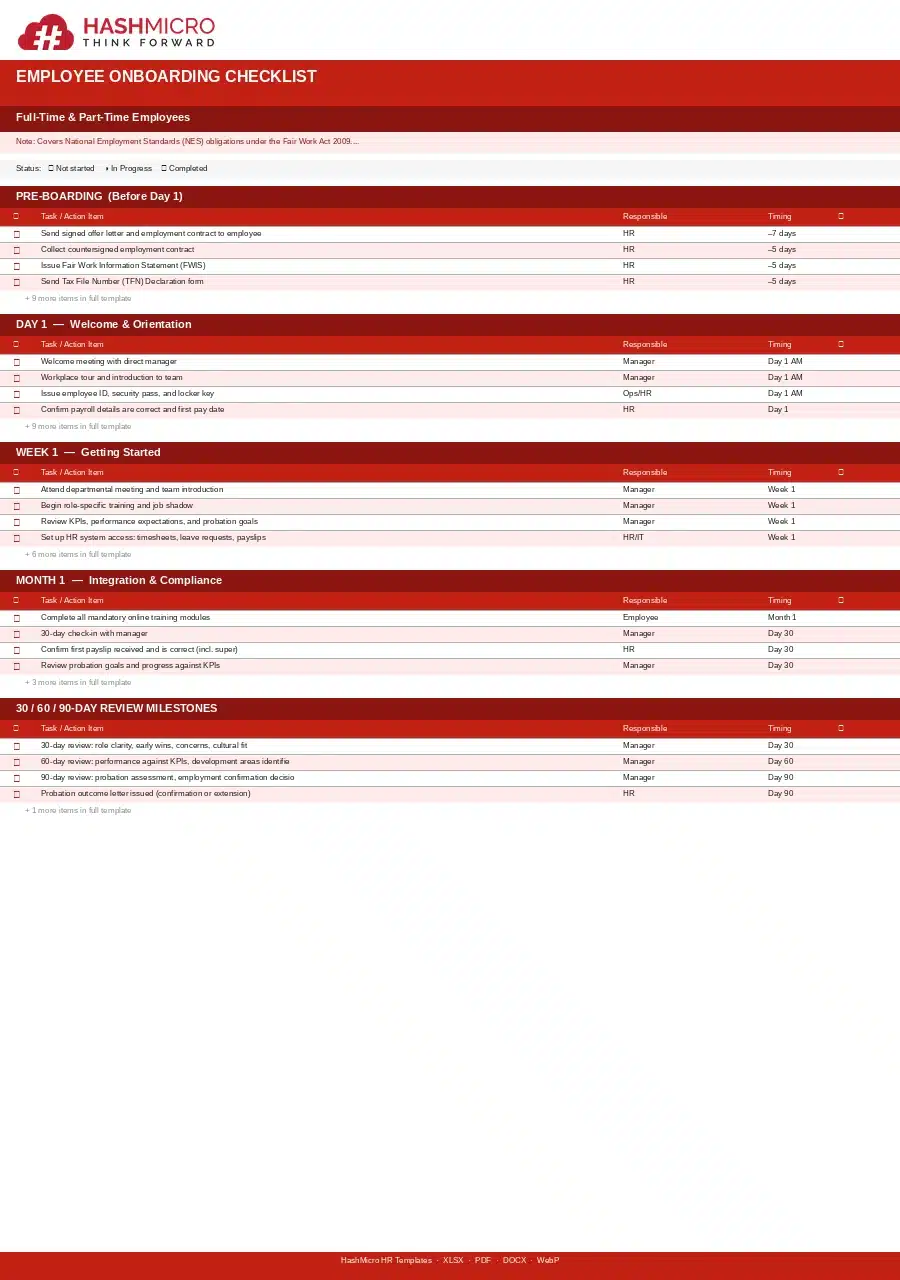
1. Onboarding checklist for full-time and part-time employees
This template covers standard payroll, contracts, compliance, and training tasks. It is suitable for most permanent and regular employees.
Onboarding Checklist For Full-Time and Part-Time Employees Template
2. Onboarding checklist for remote and hybrid employees
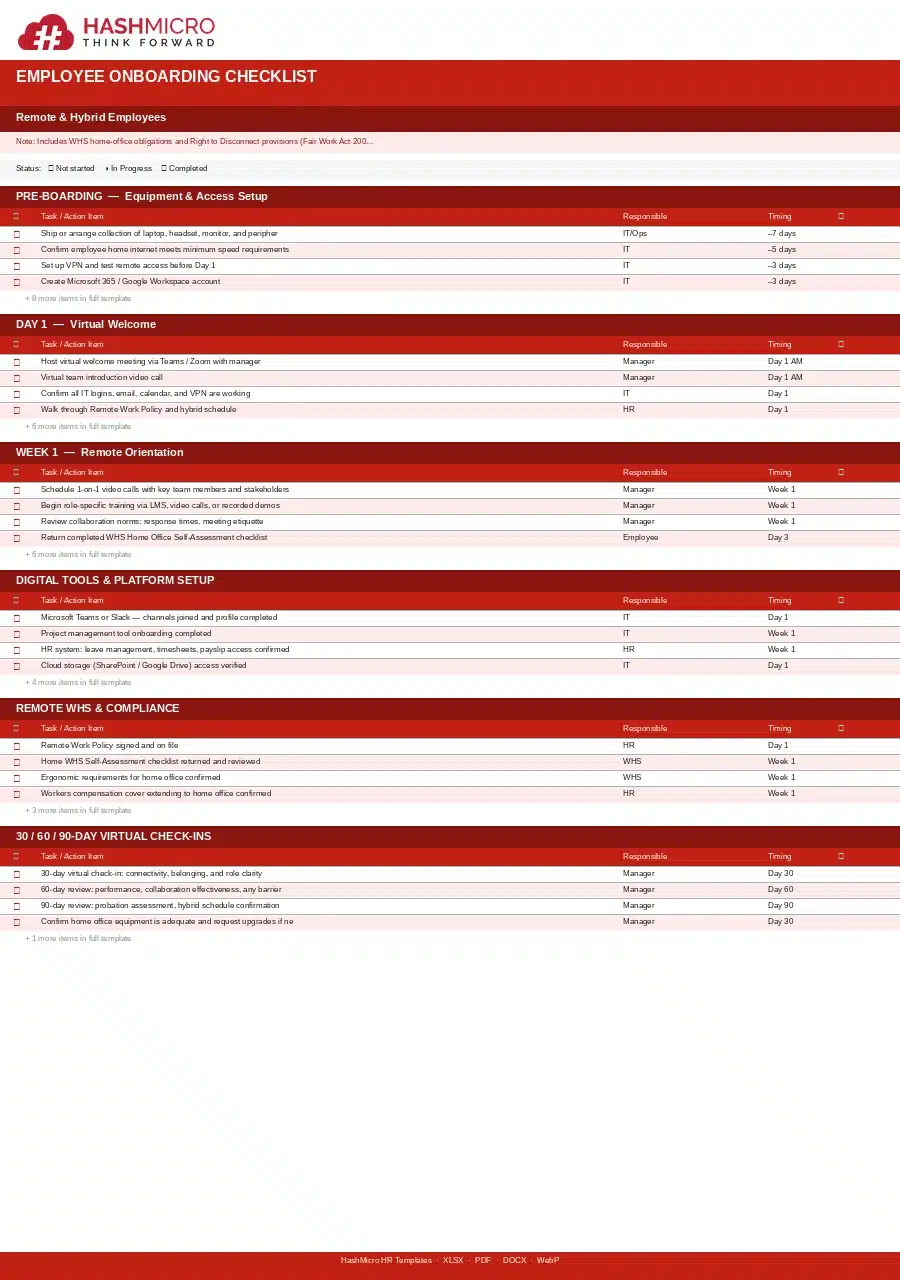
This template focuses on device setup, virtual access, communication tools, and remote support. It helps off-site employees stay connected from the start.
Onboarding Checklist For Remote And Hybrid Employees Template
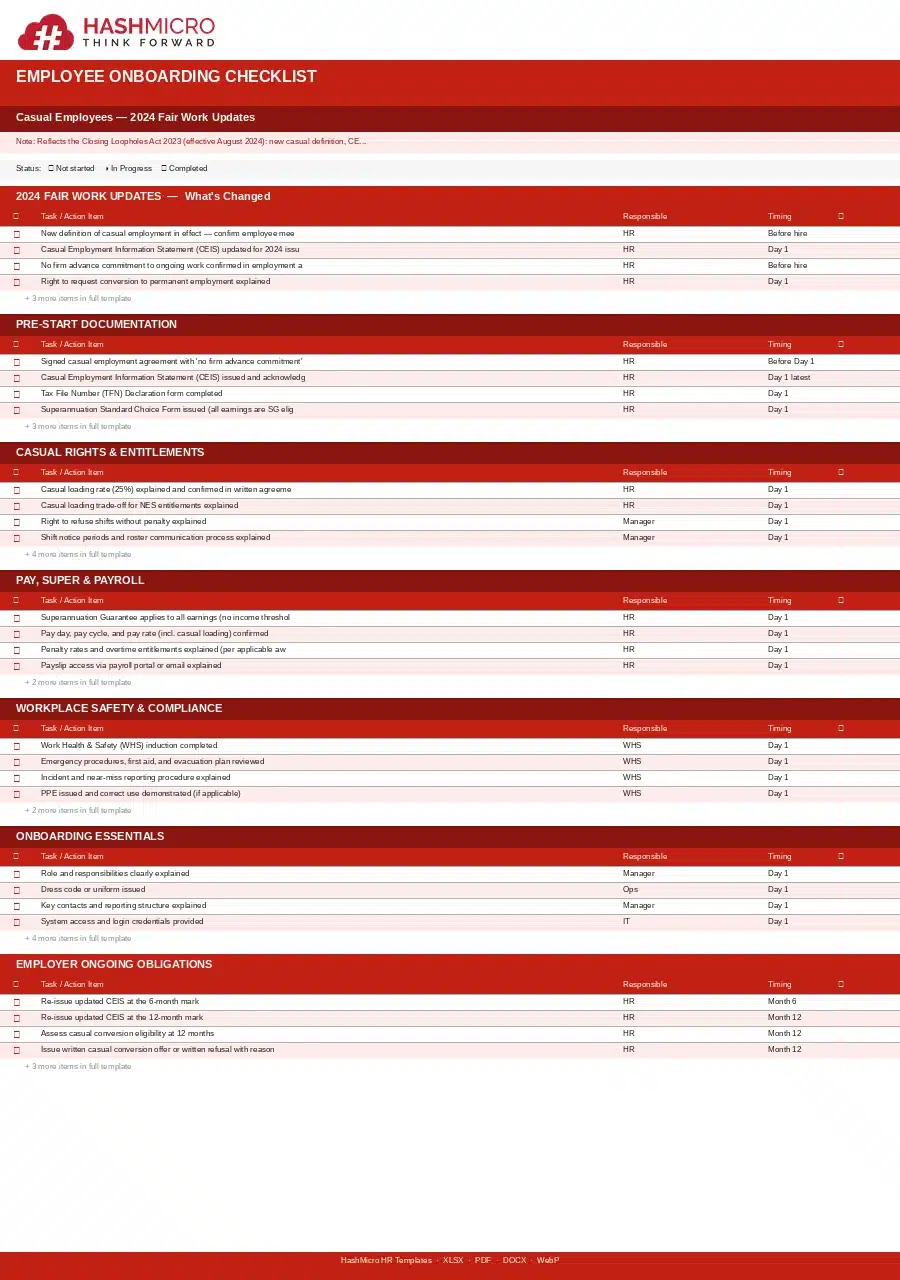
3. Onboarding checklist for casual employees (2024 Fair Work Updates)
This template supports casual onboarding tasks, including Fair Work documentation where applicable. It is useful for businesses hiring flexible or seasonal staff.
Onboarding Checklist For Casual Employees Template
How to Create an Effective Onboarding Process in 6 Steps
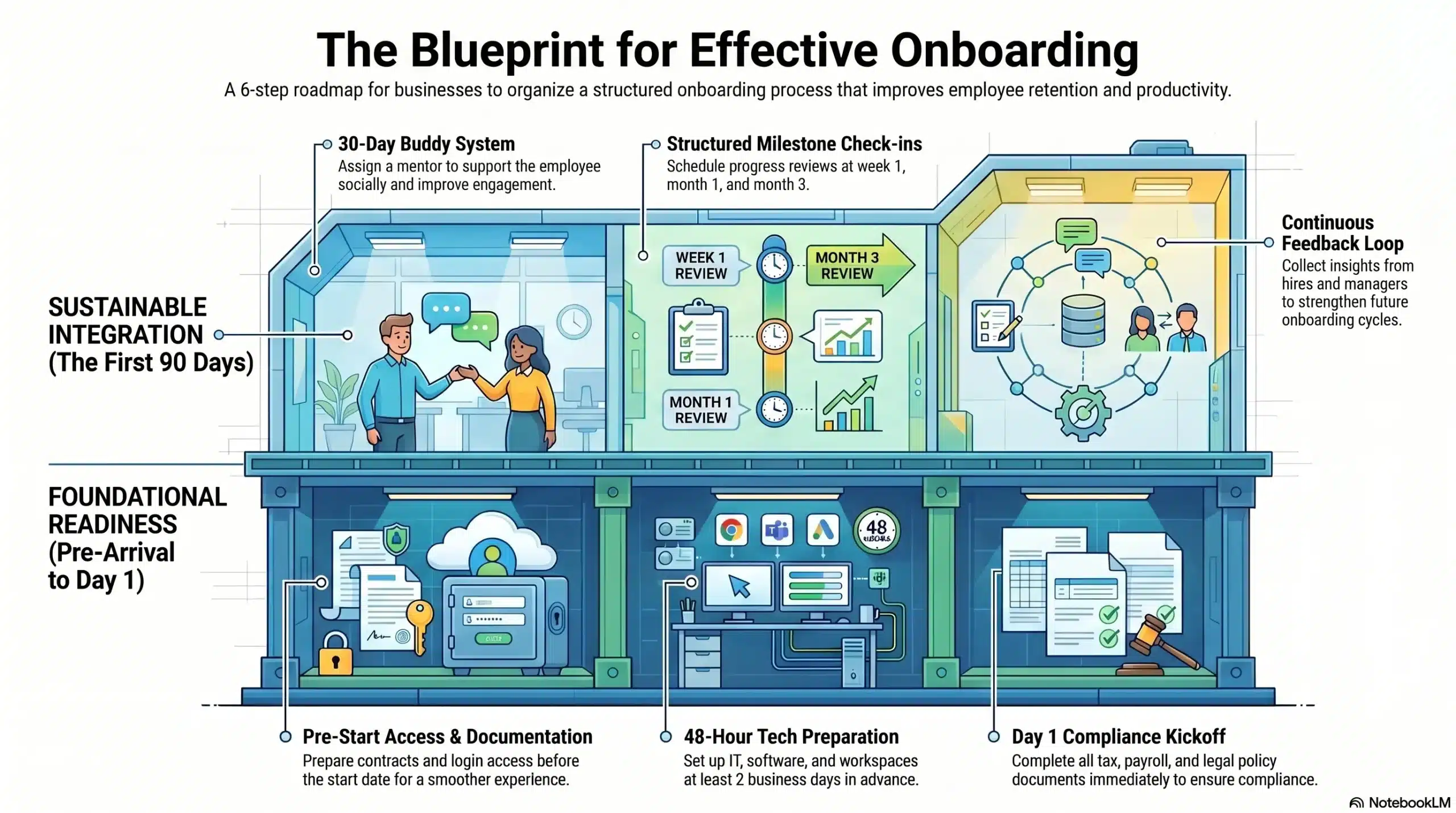
A structured onboarding process can improve retention, productivity, and employee confidence. Following clear steps helps businesses stay organised.
1. Prepare all documentation and access before the start date
Have contracts, forms, and login access ready before the employee begins. This creates a smoother first-day experience.
2. Set up IT, Tools, and workspace at least 2 business days in advance
Prepare devices, software, desks, and workspace needs early. This helps avoid delays and lost productivity on day one.
3. Complete all legal documentation on day 1
Ensure tax, payroll, Fair Work, and policy documents are completed promptly. This reduces compliance and payroll issues later.
4. Assign a buddy or onboarding mentor for the first 30 days
A buddy can help answer questions and support the employee socially. This often improves confidence and engagement.
5. Schedule structured check-ins at week 1, month 1, and month 3
Regular check-ins help managers track progress and offer support. They also create space for employee feedback.
6. Collect feedback to improve your onboarding process each cycle
Ask new hires and managers what worked well and what can improve. Use insights to strengthen future onboarding.
5 Onboarding Mistakes Australian Businesses Make
Avoiding common onboarding mistakes can improve employee experience and reduce turnover. Small process issues often create bigger long-term problems.
1. Delaying IT and system access until after the start date
Missing access on day one can create frustration and wasted time. Employees may feel unprepared before they even begin.
2. Overwhelming the employee with information on day 1
Too much information at once can be stressful and hard to retain. Spread learning across the first few weeks instead.
3. Missing mandatory legal documentation
Overlooking required forms or statements can create payroll and compliance risks. It may also delay setup processes.
4. No structured check-ins after week 1
Without follow-up support, employees may feel disconnected or unsure. Regular check-ins help solve issues early.
5. Treating onboarding as a one-day induction event
Strong onboarding continues beyond the first day. Ongoing training and support improve long-term success.
When Should You Move from Manual Checklists to HR Software?
Manual checklists work well for small teams, but growing businesses often compare shortlisted HR options and need better systems. HR software can reduce admin work and improve consistency.
1. Signs your manual onboarding process is creating risk
Missed forms, delayed setup, and poor tracking are common warning signs. These issues can affect compliance and employee experience.
2. What HR software automates that a checklist cannot
Workforce management tools for HR can automate task reminders, digital form collection, approvals, and compliance tracking across the full onboarding process. Unlike a manual checklist, HR software can connect onboarding directly to payroll setup and digital contracts, reducing the risk of missed steps when a new hire starts.
Conclusion
An employee onboarding checklist helps businesses create a smoother and more organised start for new hires. It ensures key tasks such as paperwork, payroll, training, and introductions are completed on time.
For Australian businesses, a strong checklist can also support compliance with Fair Work, payroll, and workplace safety requirements. It can reduce mistakes while improving the employee experience.
As your team grows, moving from manual checklists to HR software can make onboarding faster and more consistent. You can get expert’s advices to improve your onboarding process and ensure consistency.
Frequently Asked Question
An employee onboarding checklist is a structured list of tasks that helps businesses guide new employees through their first days and weeks, ensuring nothing important is missed.
Onboarding is important because it helps new employees feel prepared, supported, and confident in their role, which improves productivity and retention.
Employee onboarding usually takes between a few weeks and 90 days depending on the role, industry, and complexity of the business.
An Australian onboarding checklist should include legal documents, payroll setup, IT access, workplace policies, safety induction, and role-specific training.
Businesses should move from manual onboarding to HR software when processes become time-consuming, inconsistent, or difficult to track across multiple employees.