









 Limited to 100 registrants

An expense report is a business document used to track, record, and submit work-related expenses for reimbursement, budgeting, tax deductions, and financial reporting. It helps businesses maintain accurate financial records by documenting costs such as travel, meals, accommodation, and office supplies.
Managing business finances becomes easier with proper expense reports as an expense tracking system, helping track spending and show where money is used.
Expense reports also support better budgeting, cash flow, and faster employee reimbursements. They keep every business purchase properly recorded.
For Australian businesses, accurate expense reports are important for ATO compliance. They also help claim GST credits and eligible tax deductions.
Key Takeaways
Understand the fundamental definition and purpose of expense reporting in business accounting.
Ready-to-use expense report templates simplify expense tracking and help maintain consistent financial records.
Different types of expense reports support various business needs, from travel reimbursements to project and operational expenses.

What Is an Expense Report?
An expense report is a document used to record business-related spending. It helps employees claim reimbursements and allows businesses to track expenses properly.
It usually includes costs such as travel, meals, office supplies, or other work expenses. Receipts and invoices are often attached as proof of purchase.
Today, expense reports can be created using paper forms, spreadsheets, or expense software for Australia. No matter the format, they help keep financial records accurate and organised.
Why Expense Reports Matter for Australian Businesses
Expense reports act as a platform for expense reporting, helping businesses track spending, control budgets, and monitor cash flow. They also make employee reimbursements faster and more organised.
They are important for claiming GST input tax credits on BAS. With clear records and valid tax invoices, businesses can accurately report expenses and avoid missing eligible claims.
Expense reports also support ATO compliance by keeping proper records of business transactions. Storing reports, receipts, and approvals helps businesses meet the five-year record-keeping requirement.
"Efficient expense reporting is essential for maintaining financial control, ensuring compliance, and enabling faster reimbursements across the business."
Types of Expense Reports
Business expenses can vary depending on the situation, so different types of expense reports are often needed. Using the right report format helps businesses manage approvals, record accurate data, and support accounting or tax requirements.
1. Employee expense reimbursement report
This report is used when employees pay for business expenses using personal funds and need repayment. It commonly covers small purchases such as office supplies, software, or postage.
2. Travel expense report
A travel expense report records costs from business trips, such as flights, transport, hotels, and meals. It helps businesses control travel budgets and review trip spending.
3. Business mileage/vehicle expense report
This report tracks work-related use of personal vehicles, excluding normal commuting. It usually records kilometres travelled, trip dates, and business purpose for reimbursement or tax claims.
4. Project expense report
It helps businesses track budgets, act as a financial variance report, measure profitability, and bill clients accurately.
5. Department/cost centre expense report
This report tracks expenses by department such as marketing, IT, or HR. It helps managers monitor budgets and control spending across teams.
6. Client entertainment expense report
This report records meals, events, or entertainment provided to clients or staff. It is useful for managing costs and supporting tax treatment such as FBT requirements.
7. Monthly expense report
A monthly expense report combines all business expenses submitted within one month. It simplifies approvals, reimbursements, and monthly financial closing processes.
8. EOFY expense summary report
This report summarises expenses across the financial year from July to June. It supports tax reporting, GST reconciliation, and year-end financial reviews.
What to Include in an Expense Report
For an expense report to be valid, functional, and compliant with ATO standards, it must contain specific data points. Missing information can lead to delayed reimbursements, inaccurate accounting, and compliance risks.
1. Employee and business details
Every expense report should include the employee’s name, ID, department, and contact details. It should also show the company name, ABN, and payment details if reimbursement is required.
2. Date, expense category, and business purpose
Each expense should list the purchase date, category, and reason for spending. Clear descriptions help confirm the expense was for business use.
3. Amount
Each expense report should clearly show the amount spent for every claim. This helps finance teams verify reimbursement totals, compare receipts with submitted costs, and reduce errors during accounting checks.
4. Merchant
The report should include the merchant or supplier name for each expense. This makes it easier to confirm where the purchase was made, match the claim with receipts, and check whether the expense relates to business activity.
5. GST-exclusive amount, GST component, and total
Reports should show the pre-GST amount, GST paid, and total cost. This helps finance teams claim GST credits accurately on BAS reports.
6. Receipt reference and supporting documentation
Every claim should include receipts or invoices as proof of purchase. These documents help verify the amount, supplier details, and business expense validity.
7. Approval status and authorised signatory
Expense reports should include approval from the employee, manager, or finance team. This helps prevent errors, fraud, and unauthorised spending.
Common Business Expense Categories in Australia
Using standard expense categories helps keep accounting clear and organised. Below are some of the most common expense types for Australian businesses.
1. Travel and accommodation
This category includes flights, public transport, taxis, and hotel stays for business trips. It usually applies when employees travel for meetings, client visits, or work events.
2. Vehicle and mileage
This covers the use of personal vehicles for business purposes. Reimbursements are often calculated using ATO-approved kilometre rates or the logbook method.
3. Meals and entertainment
This category includes meals during business travel, client lunches, or staff events. Some expenses may be subject to FBT or different tax treatment.
4. Office supplies and equipment
This includes stationery, printer ink, keyboards, and other everyday office items. Larger purchases such as laptops or desks may require separate accounting treatment.
5. Work-from-home expenses
This covers costs related to remote work, such as internet, electricity, phone use, or office supplies. Businesses may reimburse these costs based on company policy or ATO methods.
6. Client and business development costs
These are expenses used to gain new clients or maintain business relationships. Examples include networking events, promotional materials, or client gifts.
When to Use Software Instead of a Template
One or two people submitting claims occasionally rarely justifies anything beyond a spreadsheet. The strain shows up once claims start arriving from more people, more often, with less time to chase each one down.
These are the signals worth watching for:
- More than a handful of staff submit claims each month. Chasing down individual spreadsheets by email turns into a part-time job for whoever's collating them.
- Manager approval keeps stalling in someone's inbox. A template has no way to flag a claim sitting unapproved for two weeks while an employee waits on reimbursement.
- GST components get calculated manually on every line. One missed decimal on a GST-exclusive amount is easy to catch once, hard to catch across fifty claims a month.
- Duplicate claims slip through unnoticed. Two employees expensing the same client dinner, or one person submitting a receipt twice, is nearly invisible in a spreadsheet.
- Mileage claims rely on someone remembering ATO rate changes. The logbook method still works, but the per-kilometre rate needs updating manually every time it moves.
Plenty of small teams run on a template for years without real issue. What eventually breaks isn't the format, it's the manual work behind it: chasing approvals, checking GST, catching duplicates by eye.
At that point, expense tracking software can route approvals automatically, flag duplicate or missing receipts, and keep GST and mileage rates current without anyone having to remember to update a formula.
Ready-to-Use Expense Report Templates
Creating an expense report from scratch can take time, so we have provided ready-to-use templates that you can copy into Microsoft Excel, Google Sheets, or a word processor.
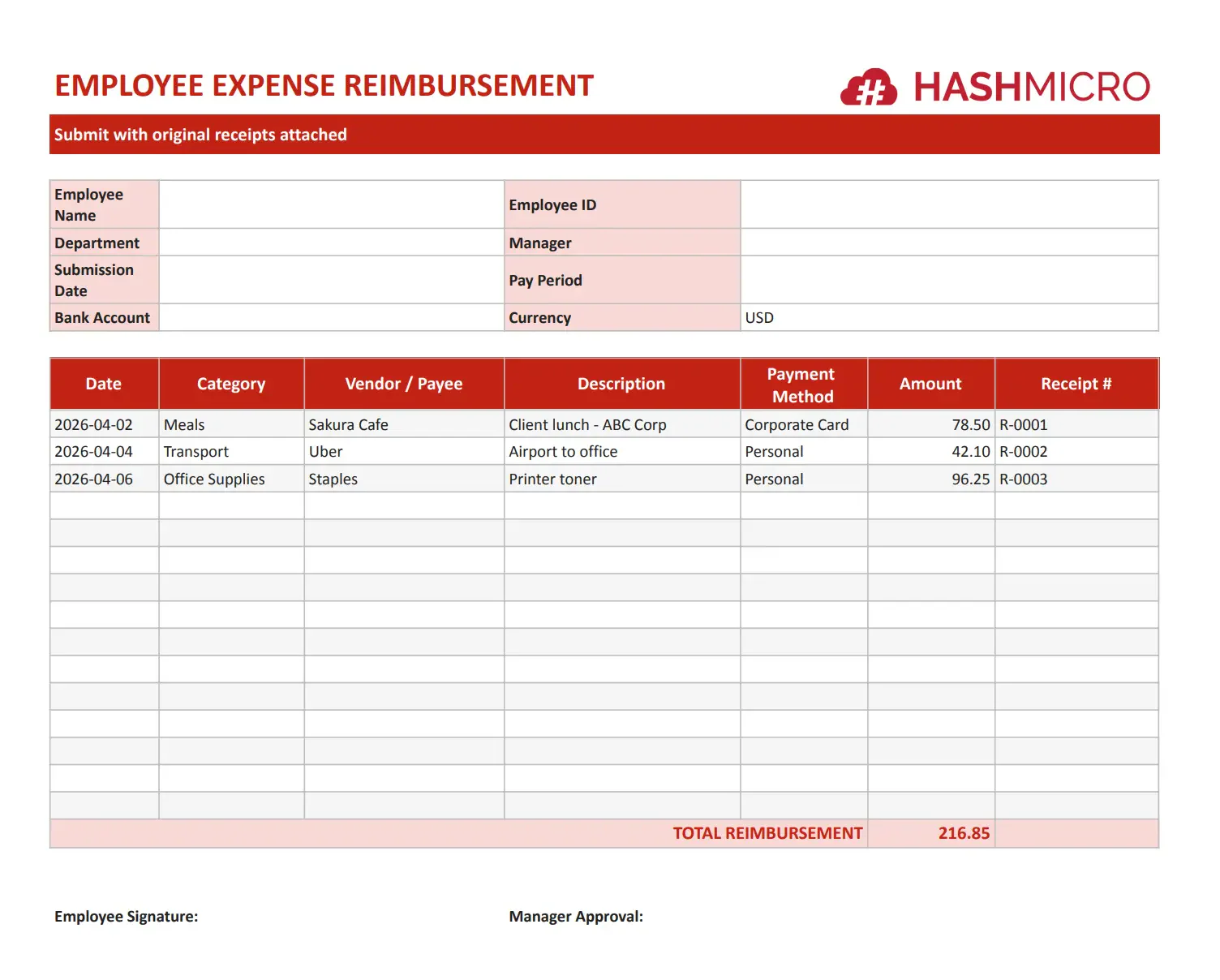
1. Employee expense reimbursement template
This standard template is ideal for ad-hoc, out-of-pocket expenses incurred by staff members.
TEMPLATE EMPLOYEE EXPENSE
2. Travel expense report template
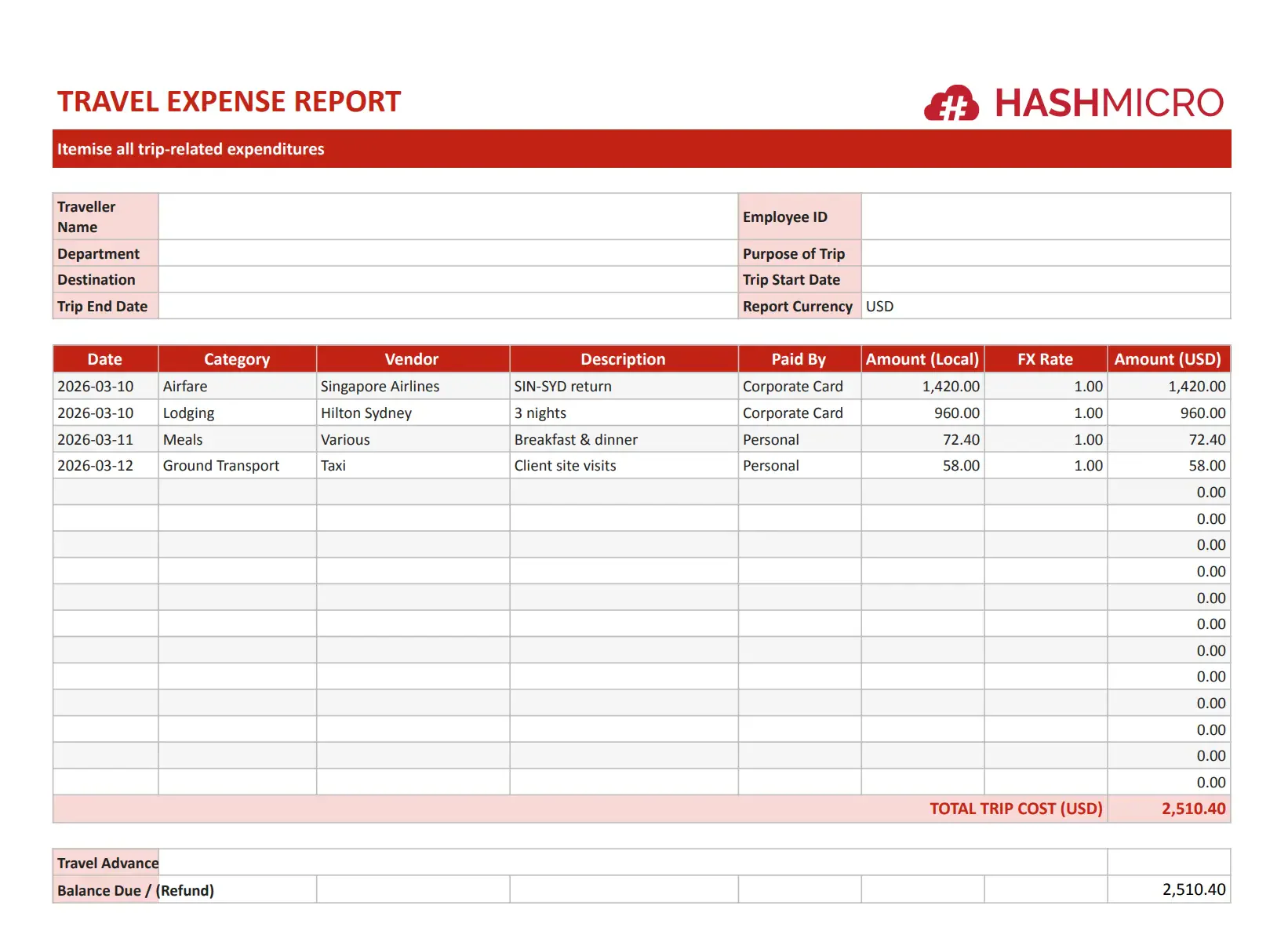
Use this template to consolidate all costs associated with a specific business trip.
TEMPLATE EMPLOYEE EXPENSE
3. Business mileage log template (ATO Logbook Method)
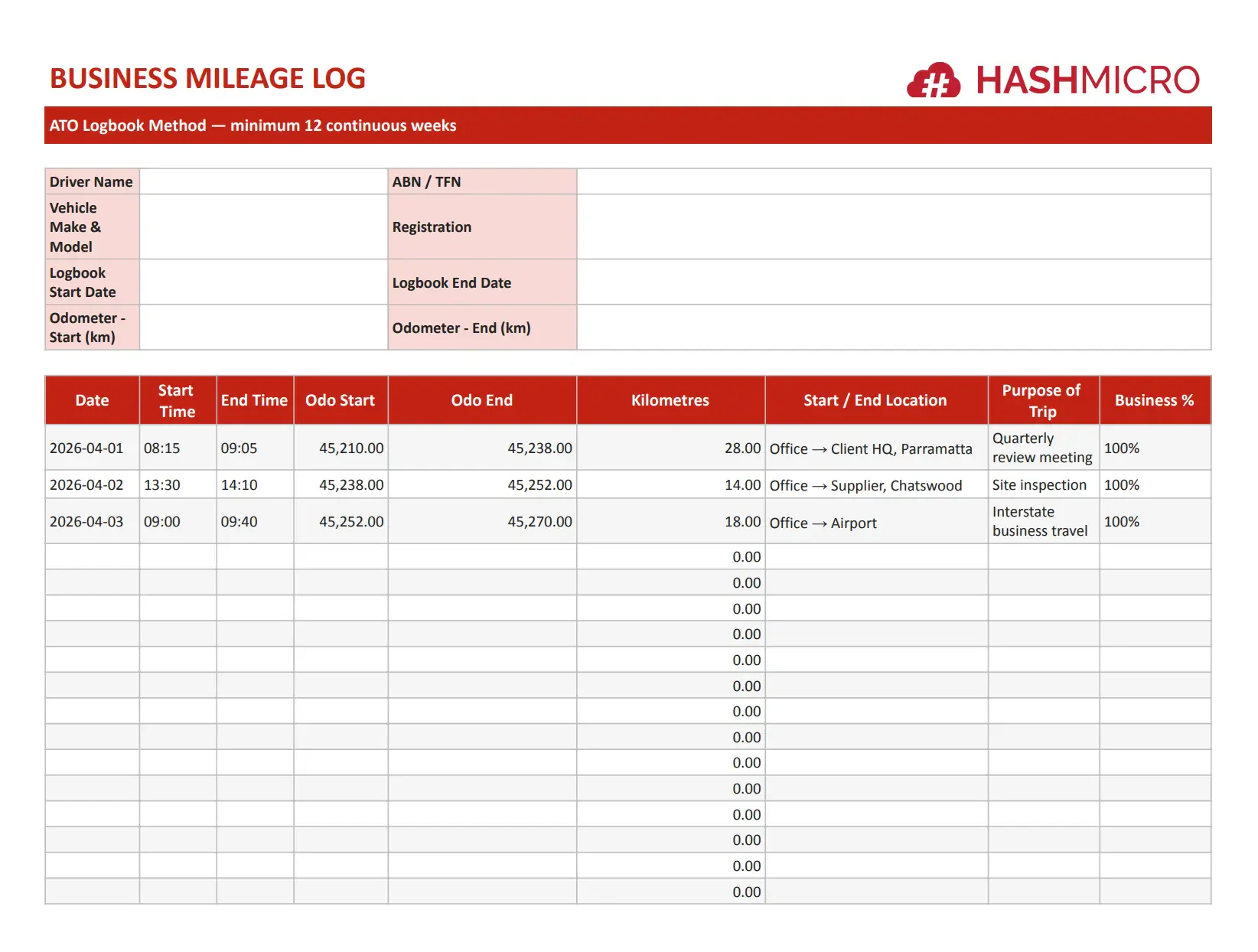
This logbook layout ensures you capture the exact data required by the ATO to substantiate motor vehicle claims.
TEMPLATE EMPLOYEE EXPENSE
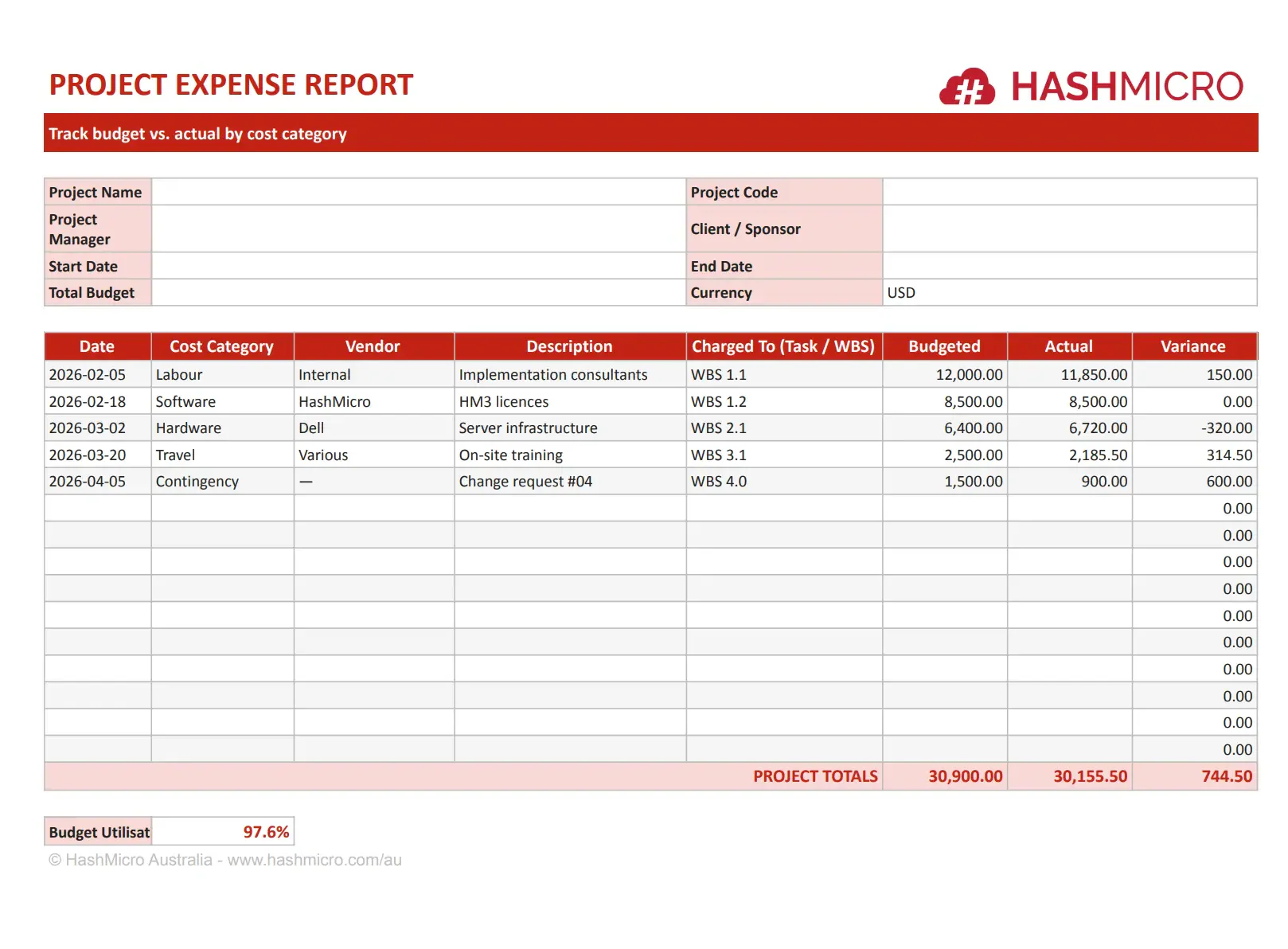
4. Project expense report template
Essential for agencies and contractors who need to bill expenses back to a specific client or project budget.
TEMPLATE EMPLOYEE EXPENSE
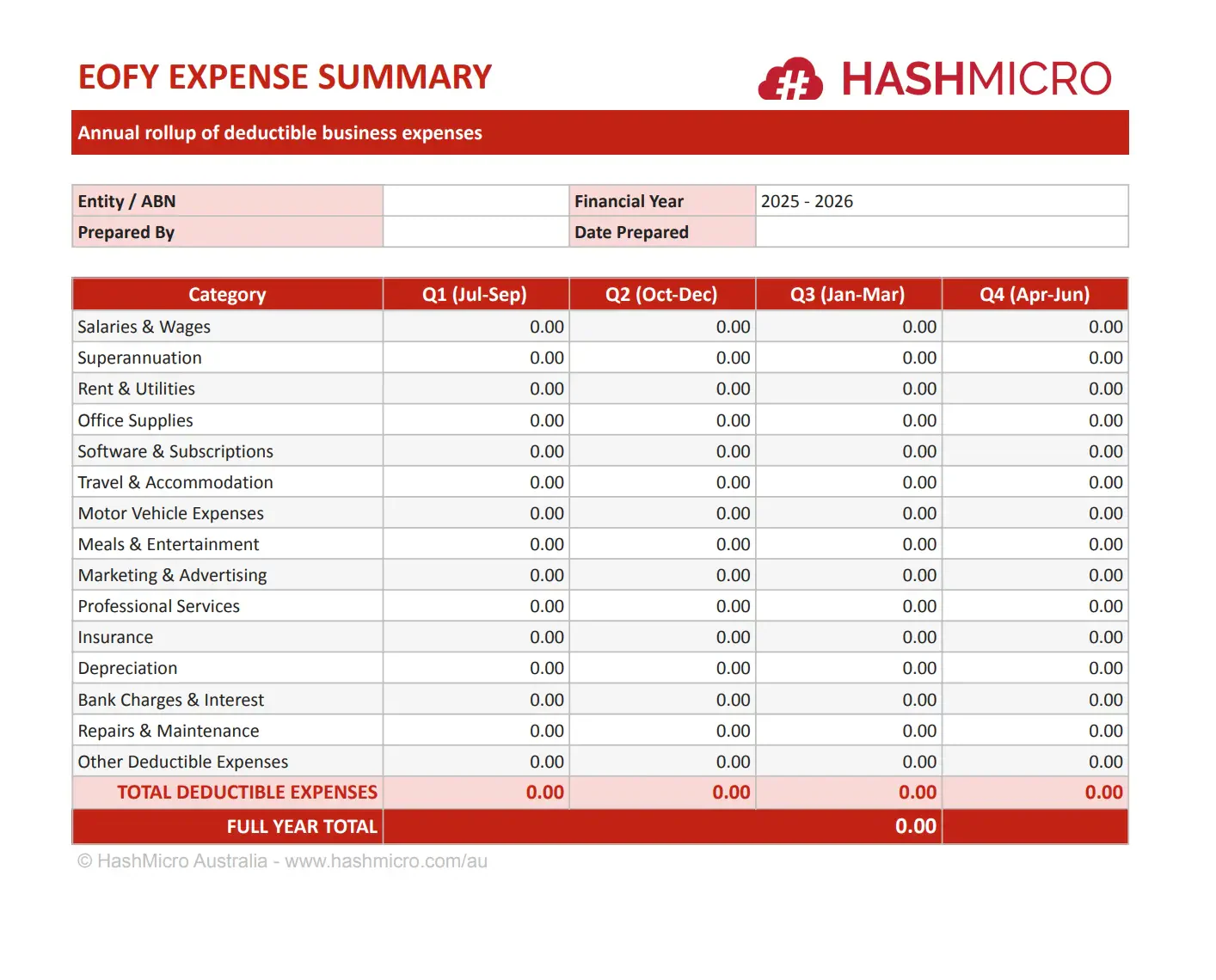
5. EOFY expense summary template
The EOFY expense summary template summarises all yearly expenses for tax and financial reporting.
TEMPLATE EMPLOYEE EXPENSE
Explore the banner below to see how Hashy AI organises expense data, checks supporting records, and prepares reports for faster review and approval.






How to Create an Expense Report: Step by Step
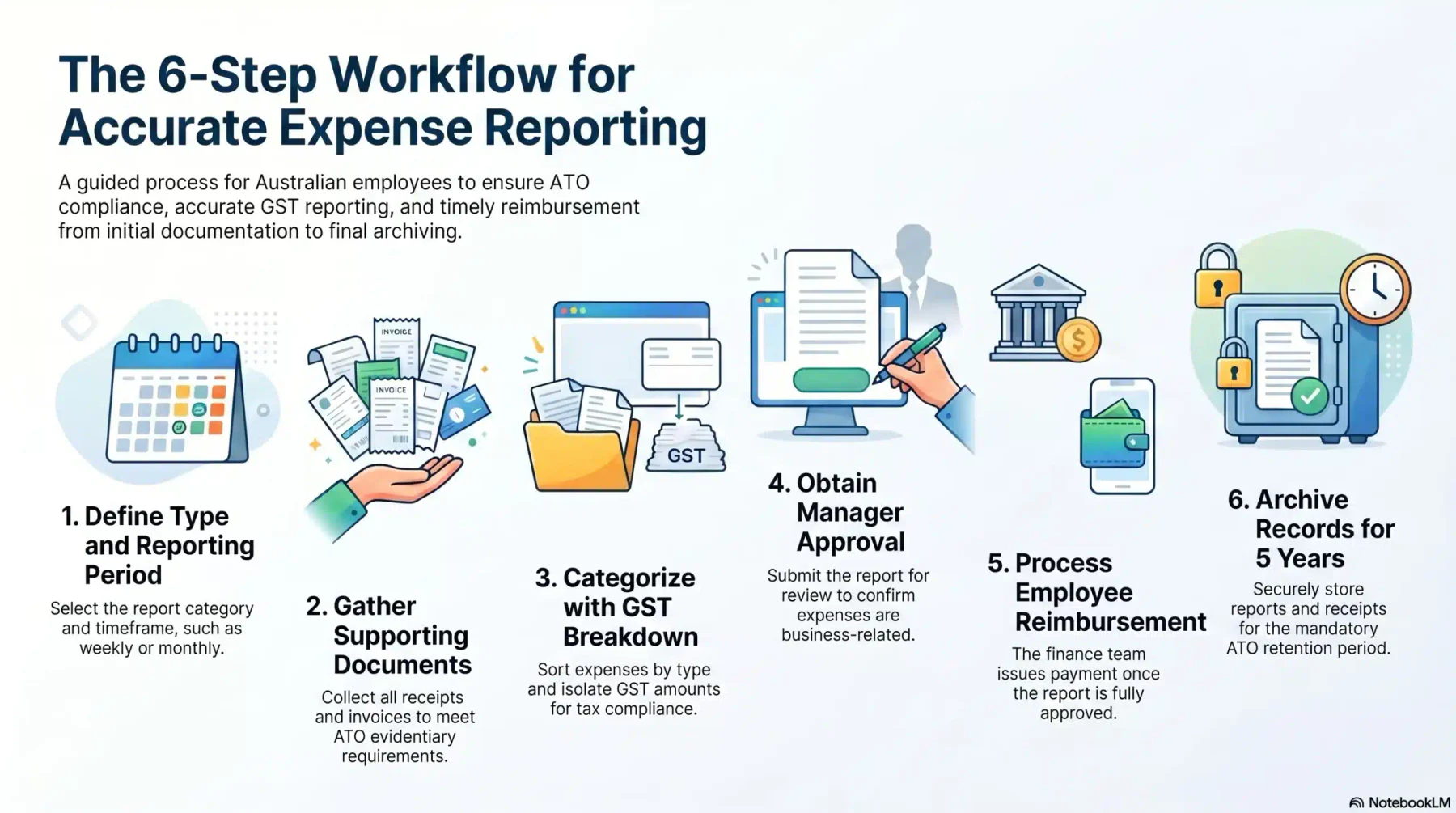
Creating an expense report is easier when you follow a clear process. It helps ensure accuracy, proper approvals, and compliance with ATO requirements.
1. Choose the report type and reporting period
Start by selecting the correct expense report type and defining the time period, such as weekly or monthly. This ensures all expenses are grouped correctly.
2. Collect receipts and supporting documents (ATO requirements)
Gather all receipts, invoices, and proof of payment for each expense. These documents help support claims and meet ATO record-keeping rules.
3. Record or log expenses into the reporting system
Enter each expense into the reporting system with the correct date, category, amount, and business purpose. This keeps the claim organised before review and reduces manual errors during approval.
4. Categorise expenses with GST breakdown
Sort each expense into the correct category and separate GST amounts. This helps ensure accurate reporting and tax compliance.
5. Submit for manager approval
Send the completed expense report to a manager for review. Approval confirms that the expenses are valid and business-related.
6. Review totals and reimbursement amount
Check the total claim value, GST component, and reimbursement amount before payment is processed. This helps finance teams catch duplicate claims, missing receipts, or incorrect totals.
7. Process reimbursement to employee
Once approved, the finance team processes the payment back to the employee. If any cash advances were issued beforehand, deduct these from the total before processing the final reimbursement amount.
8. File for ATO record-keeping (5 years)
Store the final approved report and supporting documents securely. Businesses generally need to keep most records for five years.
Australian Tax Rules for Expense Reporting
Australian businesses must follow Australian Taxation Office (ATO) rules when preparing expense reports. This ensures expenses are correctly recorded and eligible for tax deductions and GST claims.
Each expense must be supported by valid receipts or tax invoices showing details like the supplier, date, amount, and GST. Without proper documentation, claims may be rejected.
Businesses are also required to keep expense records for at least five years. This helps with BAS reporting, audits, and proving expenses are legitimate if reviewed by the ATO.
Expense Reporting Best Practices for Australian Businesses
Following consistent expense reporting practices helps Australian businesses improve financial accuracy, control spending, and streamline reimbursements. The best practices below can help make expense management more efficient and compliant.
- Standardise expense categories: Use consistent expense categories to improve reporting accuracy and simplify record-keeping.
- Require receipts and approvals: Collect supporting documents and follow clear approval workflows to reduce errors and support ATO compliance.
- Use digital expense management tools: Automate expense tracking, reimbursements, and approvals to improve efficiency and gain real-time visibility.
- Leverage AI for expense reporting: AI-assisted reporting can reduce manual work, identify missing information, and streamline expense management across the business.
Explore the banner below to see how Hashy AI organises expense data, checks supporting records, and prepares reports for faster review and approval.
Conclusion
Expense reports are an essential part of managing business spending and maintaining financial control. They help businesses track costs, manage reimbursements, and stay organised.
For Australian businesses, they also play a key role in meeting ATO requirements and claiming accurate tax and GST deductions. Proper reporting reduces compliance risks and financial errors.
By using clear processes, standard templates, and digital tools, businesses can make expense reporting faster, easier, and more efficient.
You can consult our experts to better understand expense reporting and improve your financial processes.

Frequently Asked Question
An expense report is used to record business-related spending, process employee reimbursements, and keep accurate financial records.
Yes, receipts or invoices are usually required to verify purchases and support tax or GST claims.
Australian businesses should generally keep expense records for at least five years to meet ATO requirements.